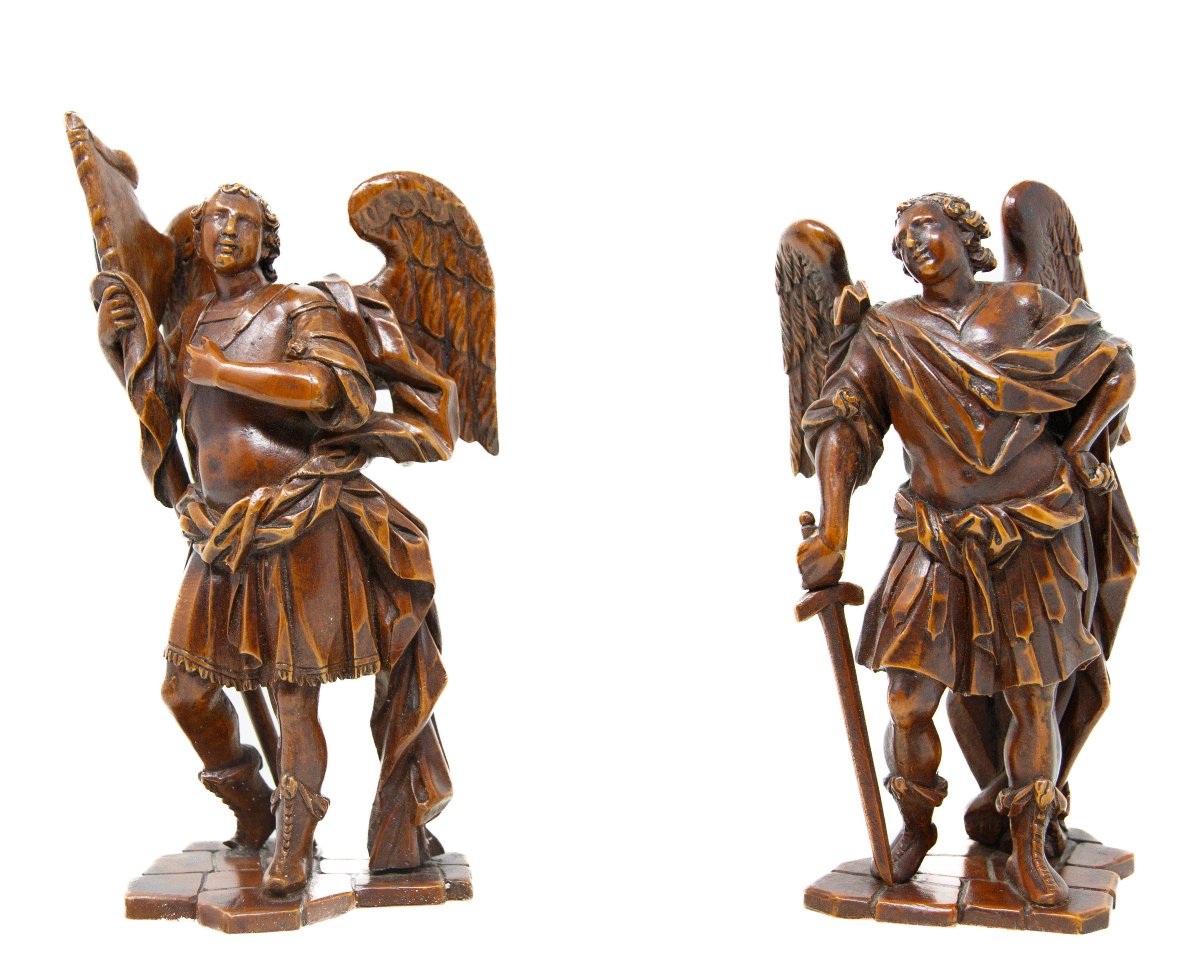
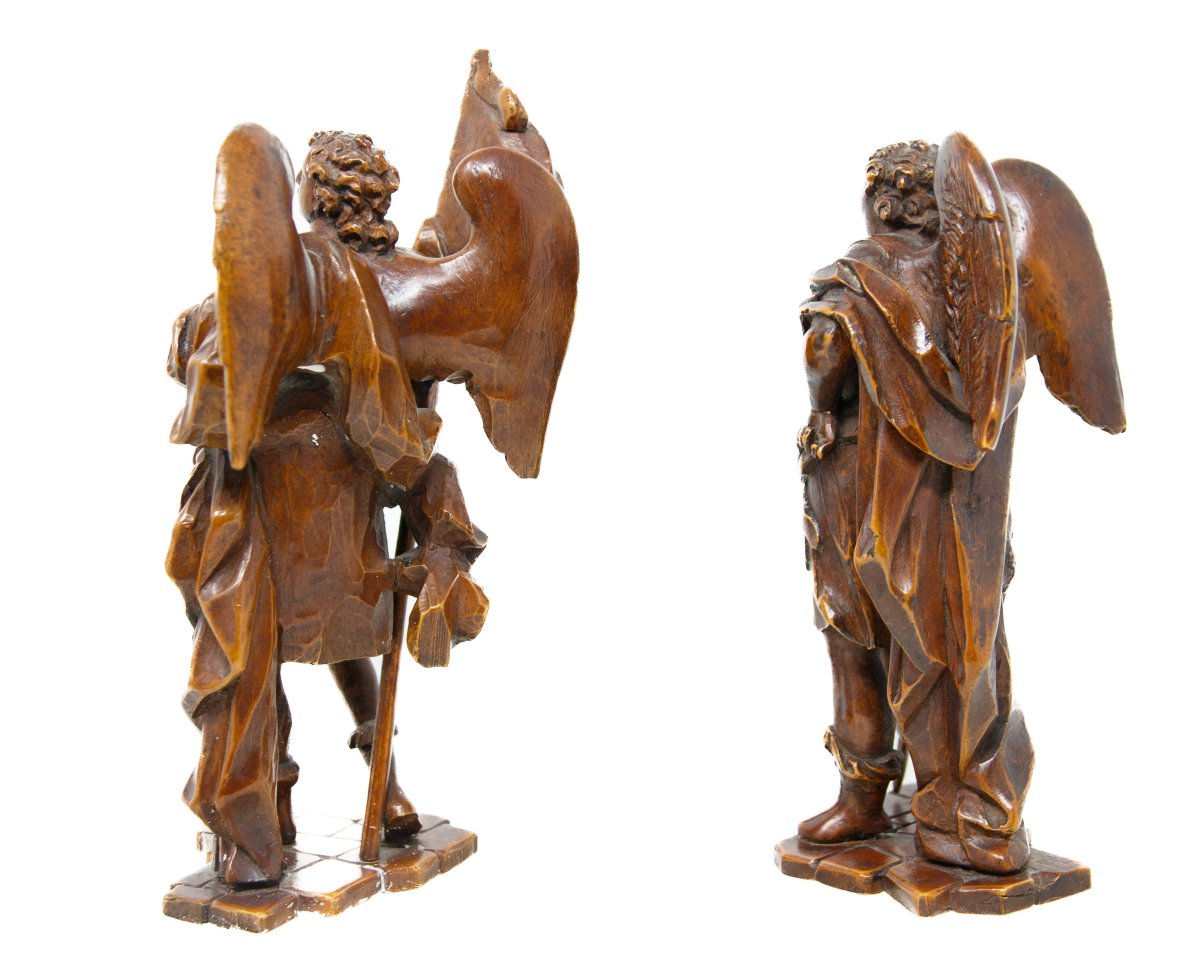
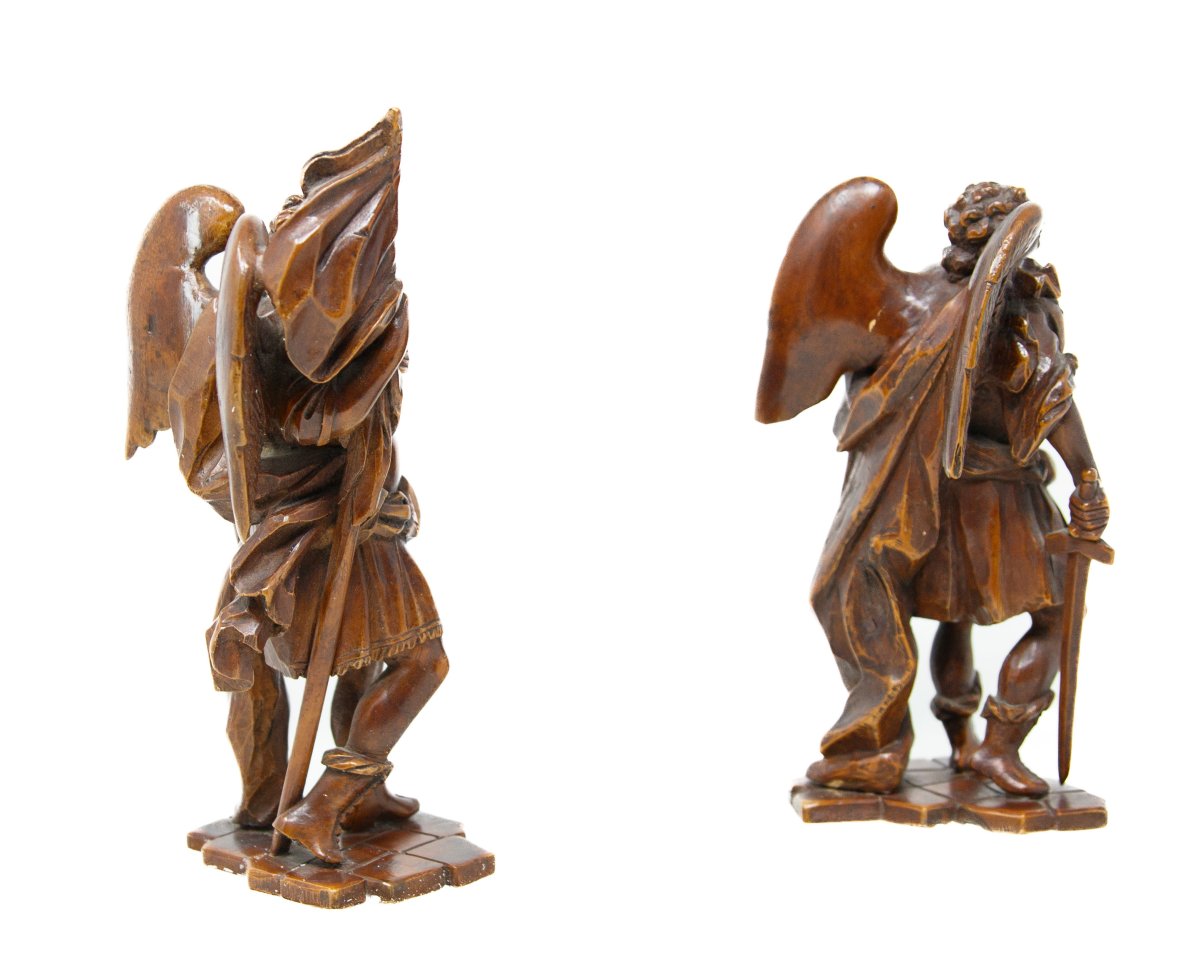


Germany, 17th Century, Archangel Michael And Archangel Raphael
Germany, 17th century
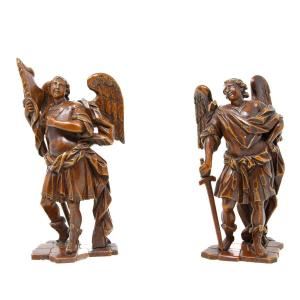
Archangel Michael and Archangel Raphael
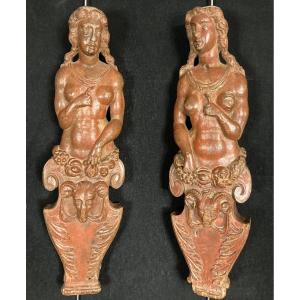
(2) Boxwood, 17.5 x 8 x 6 cm
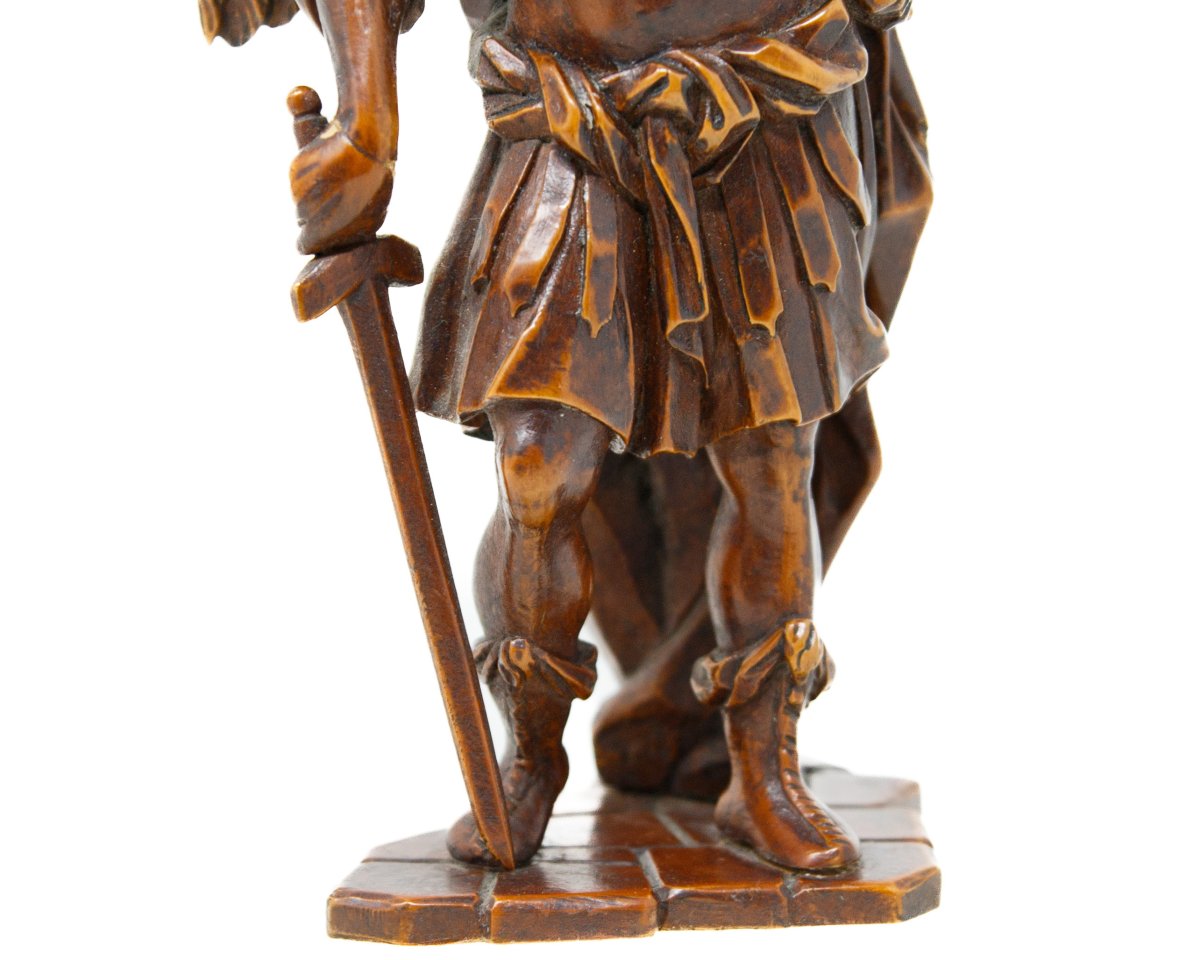
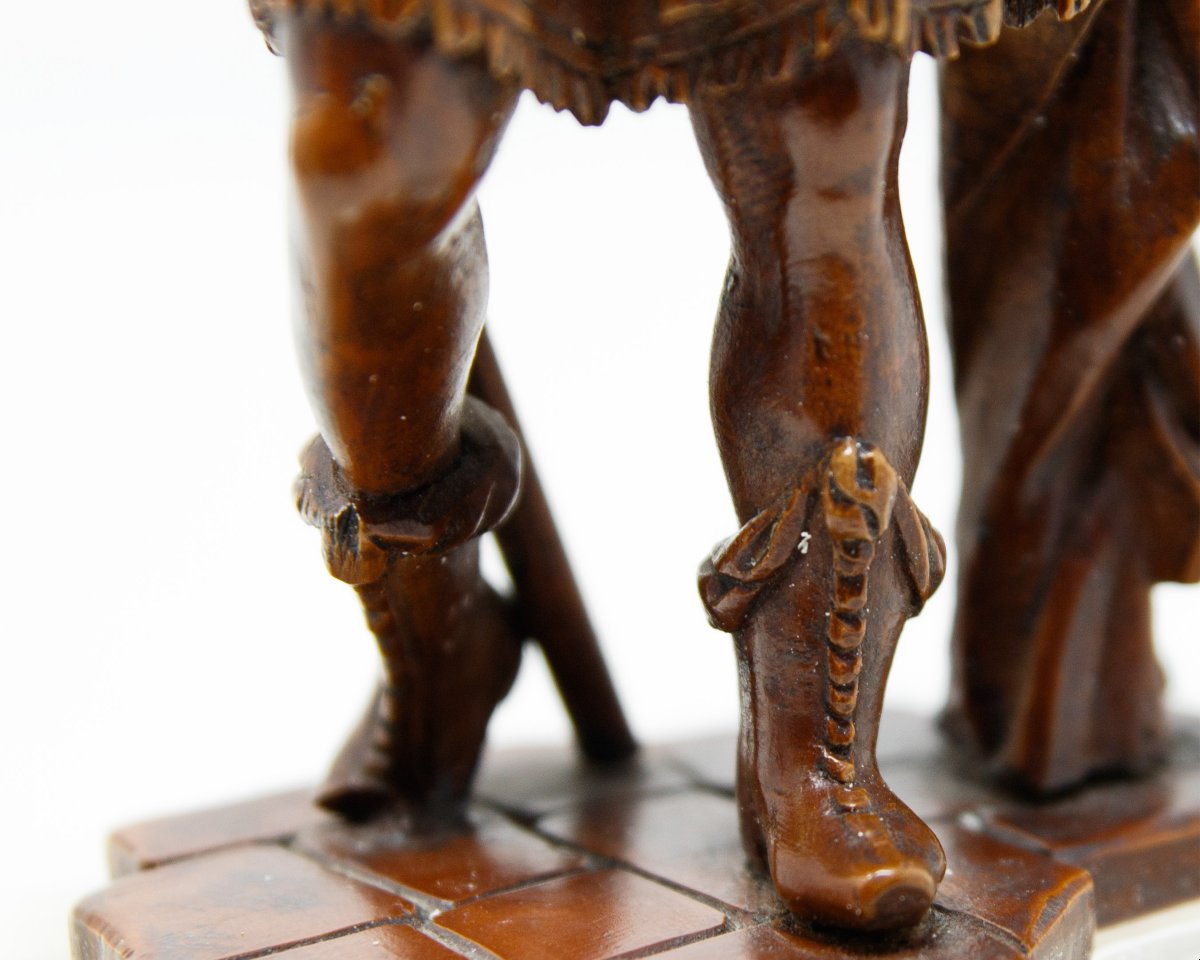
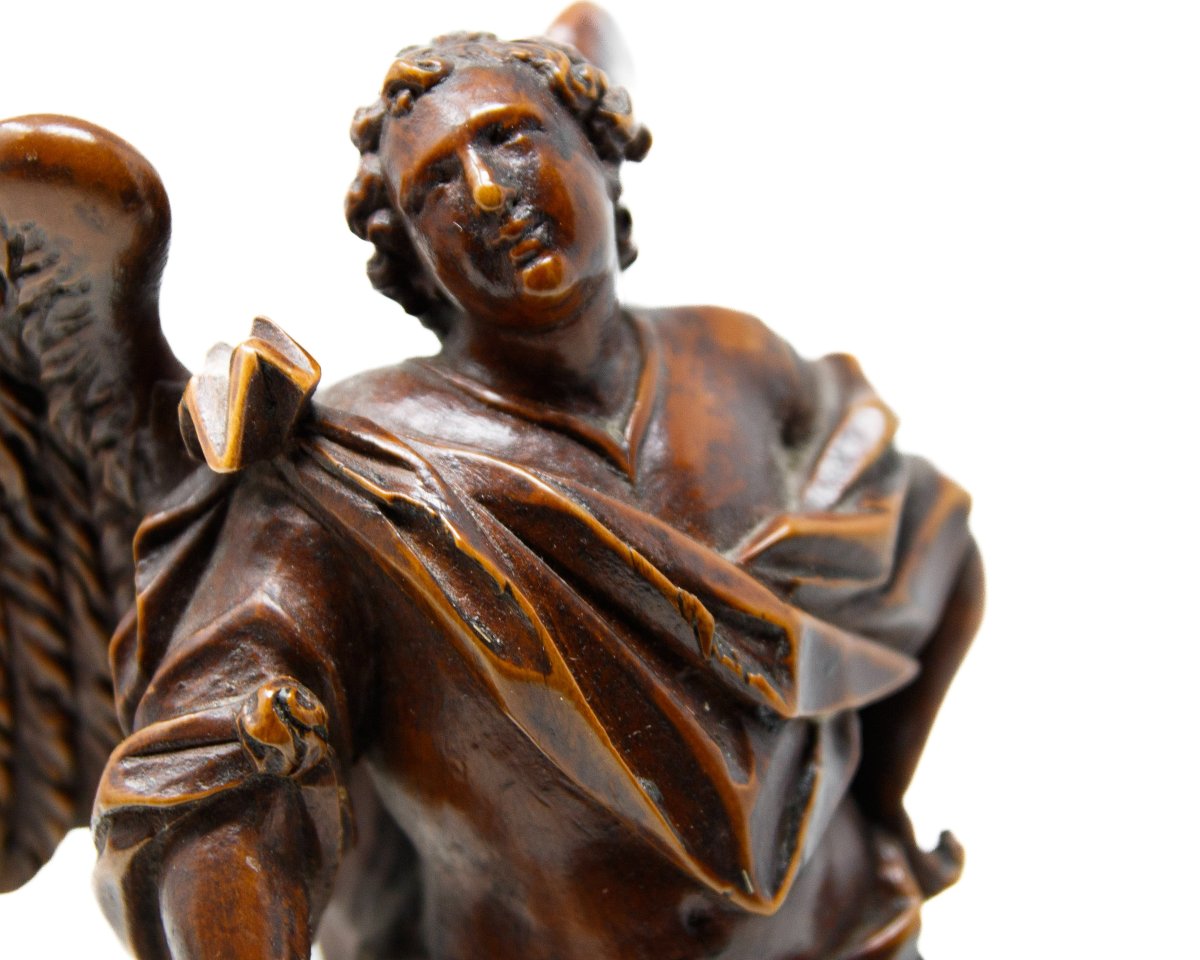
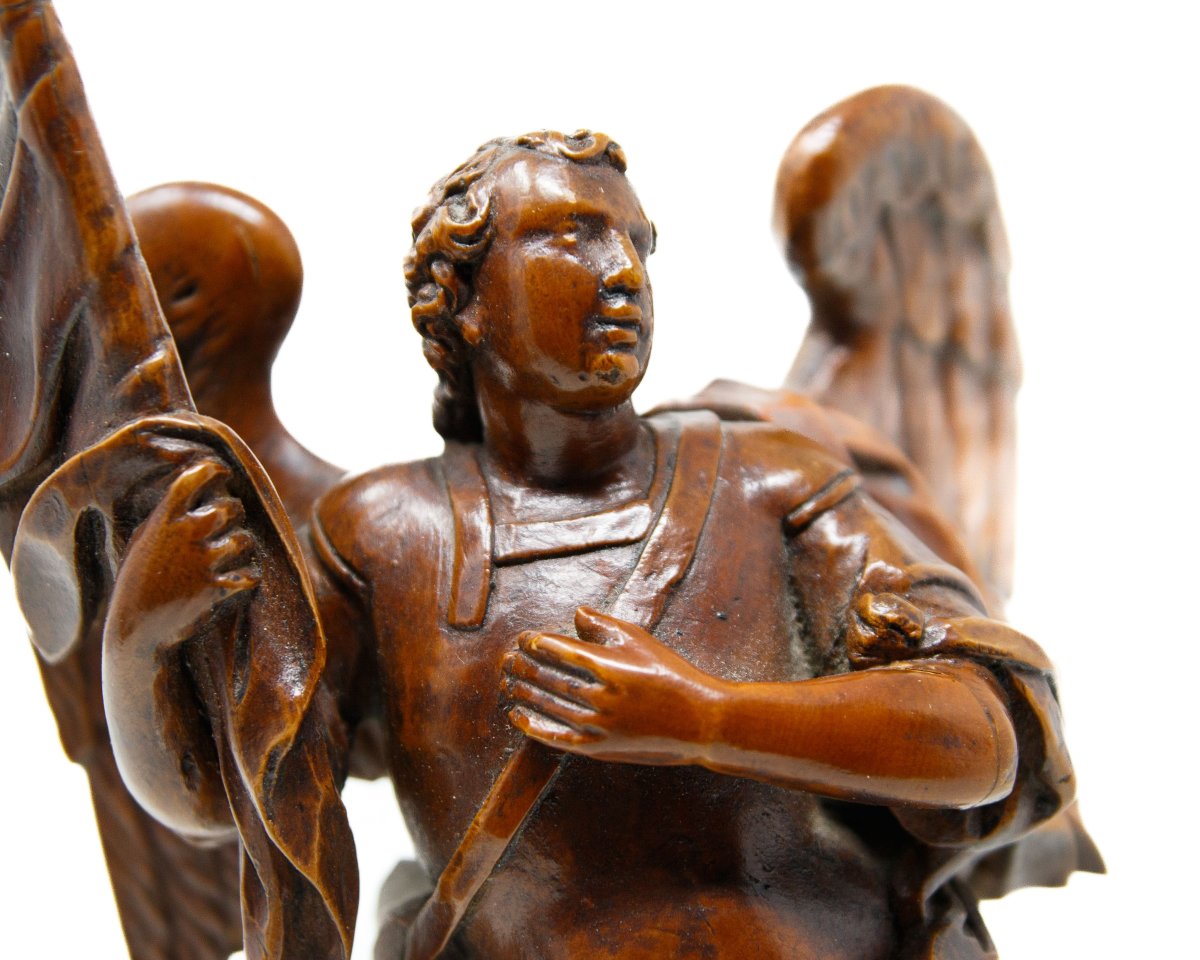
This pair of refined miniature sculptures, depicting the archangels Michael and Raphael, is a marvelous example of 17th-century German-made interior statuary. The two works are carved from boxwood, a precious wood renowned for its extraordinary density, nearly invisible grain, and structural density—qualities that historically enabled sculptors from beyond the Alps to achieve levels of virtuosity and microscopic detail otherwise unthinkable on such a small scale. Stylistically, the two figures fully embody the transition from the late Renaissance to the exuberant aesthetic of the Northern Baroque. The angels’ bodies are imbued with a restrained yet vibrant dynamism, evident in the contrasting interplay of their limbs and the complex twisting of their torsos. The archangel on the left, most likely identified as Raphael—depicted here in a solemn, guiding pose, with a flap of his cloak raised to mimic the movement—engages in a symmetrical dialogue with the figure on the right, the archangel Michael. The latter, solid in his warrior’s stance, rests his right hand with proud firmness on the pommel of a downward-pointing sword, a symbol of his victory over the forces of evil. The technical skill is displayed with dazzling virtuosity in the drapery of the garments. The “antique-style” tunics, inspired by Roman military attire, break into deep, angular, and asymmetrical folds typical of the Germanic sculptural tradition. These folds create a dense chiaroscuro that enhances the natural luster of the boxwood, accentuated by a warm, amber-colored patina. This calligraphic precision extends to the anatomical rendering of the footwear, the features of the faces—with their noble lines framed by neat curls—and, above all, to the plumage of the wings, carved feather by feather with a precision bordering on that of a goldsmith. Objects of this caliber were not intended for public veneration, but rather for cultured, private collecting. They originally found their ideal home in the famous Kunstkammer (“chambers of wonders”) of princely courts or the German upper middle class. In these spaces, the small boxwood sculptures were displayed alongside natural curiosities and exotic artifacts, admired up close not only as symbols of spiritual protection but above all as triumphs of human ingenuity capable of defying the limits of matter.
Period: 17th century
Style: Other Style
Condition: Good condition
Material: Solid wood
Width: 8
Height: 17,5
Depth: 6
Reference (ID): 1783141
Availability: In stock