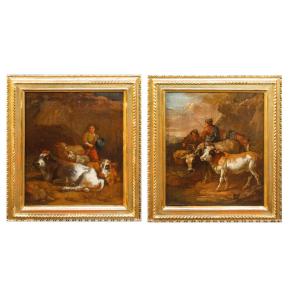


Francesco Londonio (milan, 1723 -1783), Landscapes With Shepherds And Herds
Francesco Londonio (Milan, 1723 -1783)
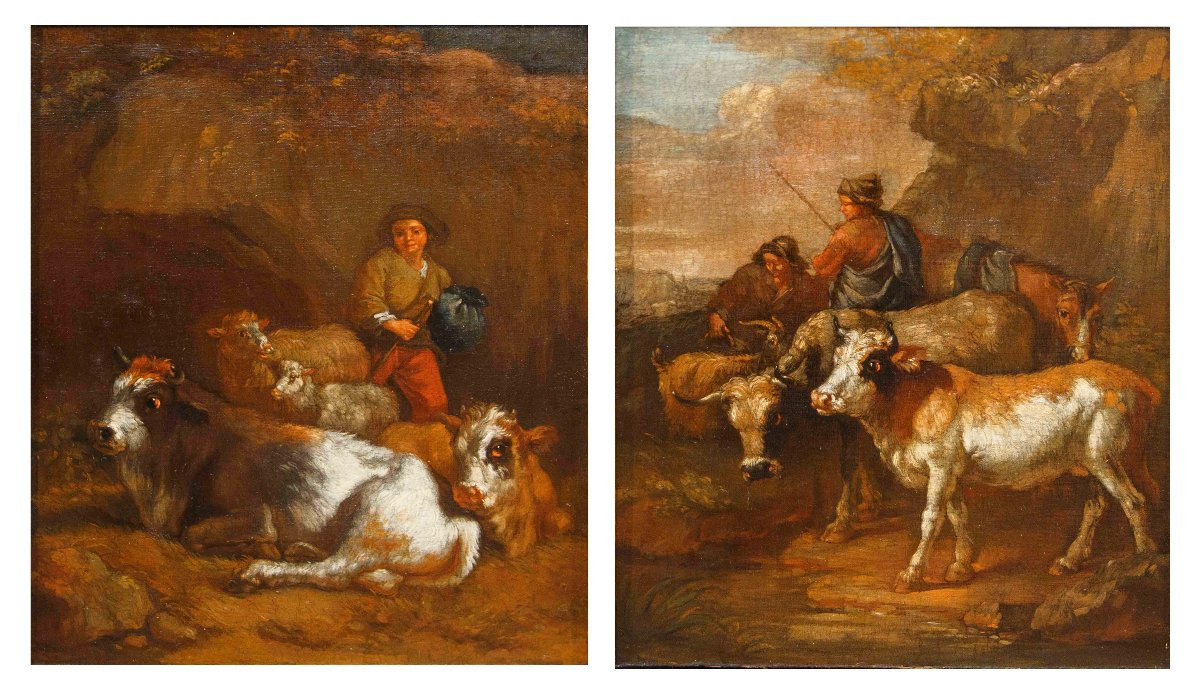
Landscapes with shepherds and herds
oil on canvas, 47 x 39 cm
Londonio began his artistic career as a pupil of Ferdinando Porta in Milan, initially training in the tradition of history painting. A youthful trip to Parma, likely undertaken to study the work of Antonio Allegri, known as Correggio, testifies to his early interest in the great Emilian tradition. However, his artistic career underwent a crucial and innovative turn, abandoning historical painting to devote himself to the animalist and pastoral genre. This conversion, presumably which took place in the fifth decade of the eighteenth century in Lombardy (between Milan and Cremona), was not only a change of subject, but a real reformulation of the genre, capable of intercepting the most advanced cultural demands of Milan in the second eighteenth century. The sources of this new vision were multiple and predominantly Nordic: figures such as Berchem, Adiaen van de Velde or Peter van Laer known as the Doll and Willem Romeyn, whose "bambocciate" rich in horses and herds were well represented in Milanese collections such as the Porta gallery (formerly Parravicini), providing a direct stimulus. Alongside these, Londonio integrated Italian influences: the rendering of the animals was indebted to Giovanni Battista Castiglione (the Grechetto), while the figures, while retaining the agile Baroque grace learned from Porta, show the strong influence of Giacomo Ceruti, evident above all in the pathetic intonation and close-up optics of the isolated figures present in his first etchings of 1758-59. His documented debut in the new genre is in the middle of the century, with the 1753 drawing, A Bull and a Cow at Rest, and the first signed painting of 1756, a Cattle Market, which openly confirmed his Dutch sources. Londonio thus managed to mediate Nordic influences with Lombard sensibilities, creating a pastoral art that defined his identity in the eighteenth-century artistic panorama. Londonio's youthful activity is documented by his etchings (1758-59), a technique he learned in Milan from Benigno Bossi. The 103 total engravings, divided into 10 series, reveal a strong stylistic influence of Giacomo Ceruti, evident in the close-up perspective and pathetic intonation of the pastoral subjects. The seventh decade of the eighteenth century is the most fruitful and documented period of Londonio's career. It was marked by a series of study trips fundamental to the settlement and enrichment of his pictorial language; he was in Rome (1763) and Naples (1763-64), with a probable stop in Genoa. The trips are interspersed with the creation of important pictorial cycles on canvas for the noble Milanese families Grianta and Alari. The first half of the 1960s was also a period of great productivity for preparatory studies, which form the backbone of his performance practice; these were numerous oil studies on paper, often signed, intended to be reused in larger compositions. They are characterized by a soft, vibrant brushstroke and a lively chiaroscuro that shapes the figures and patterns. The notable mastery achieved by Londonio in the pastoral genre found formal recognition in the 1770s. His fame is attested by the praise paid to him in 1772 by the dialect poet and academic Trasformato Domenico Balestrieri, who, like his colleague Carlo Antonio Tanzi, owned "some paintings" of the artist. During the 1970s his painting technique evolved, with the brushstroke becoming more cursive and nervous. An example of this approach can be found in the Old Peasant Spinner with Livestock of the Sforza Castle, dated 1775. At least in part, other important complexes of works commissioned by influential Lombard families date back to this chronological phase, including the Borromeo, Greppi and Mellerio families. An activity of great interest, which transcends canvas, is linked to the painted and cut paper nativity scene, a genre in vogue in Lombardy in the second half of the eighteenth century. Londonio played a primary role in the renewal of this technique. The key example of this production is the imposing nativity scene of the church of S. Marco in Milan. Even marginally compared to his favorite pastoral theme, Londonio also cultivated other genres. His forays extend to still life and portraiture, as demonstrated by the well-known Self-Portrait preserved at the Sforza Castle in Milan.
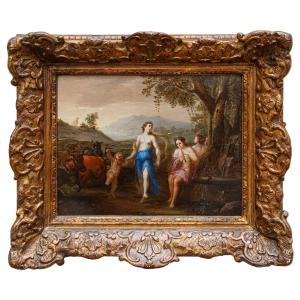
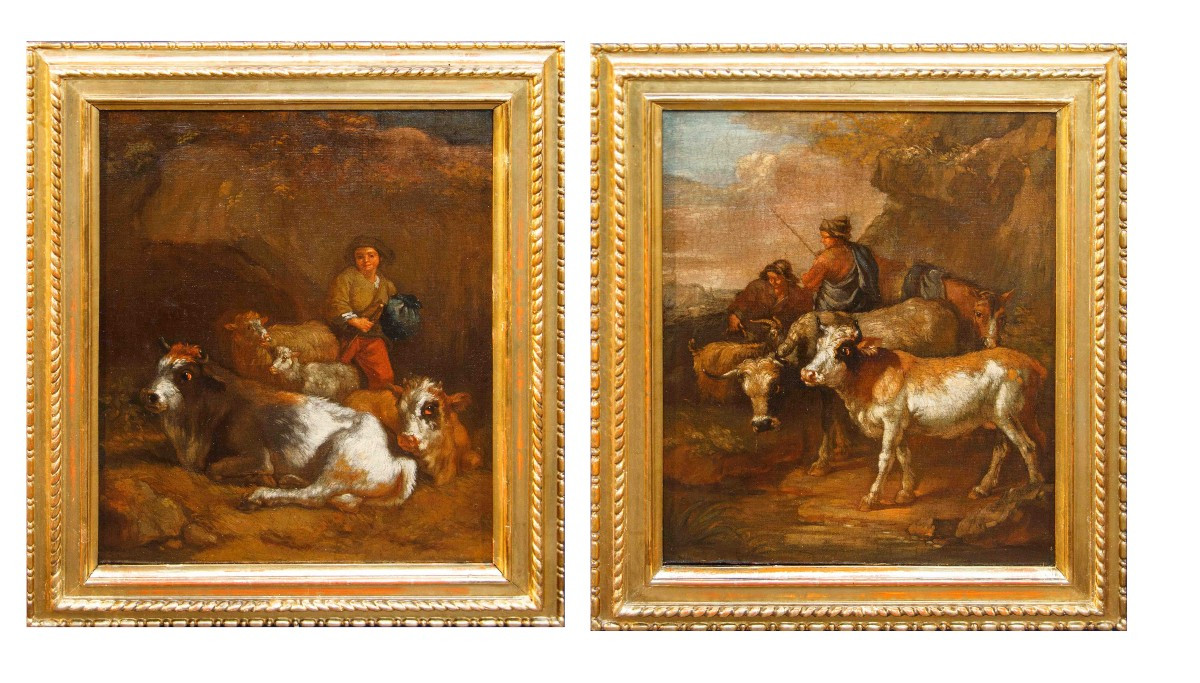
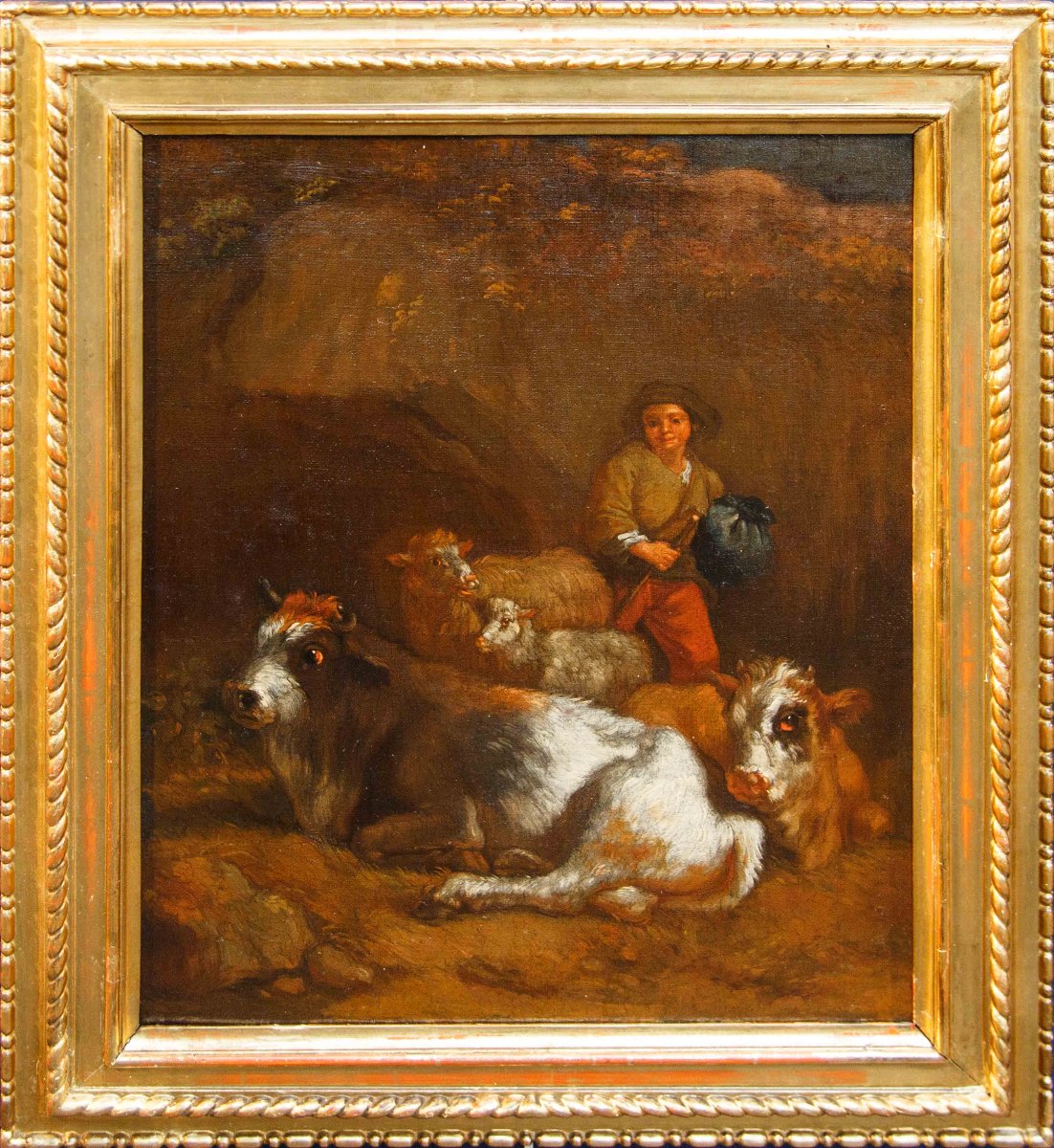
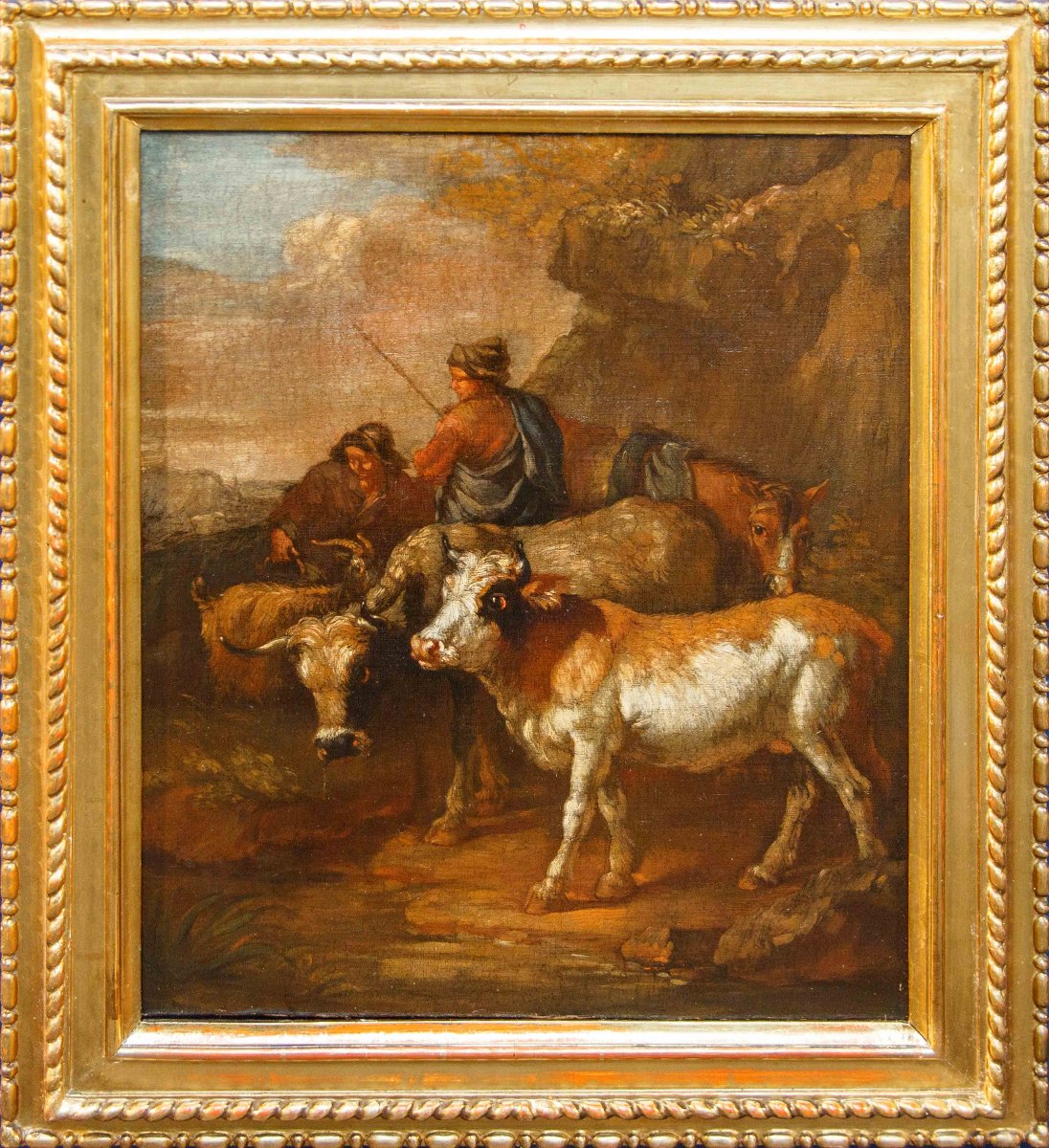
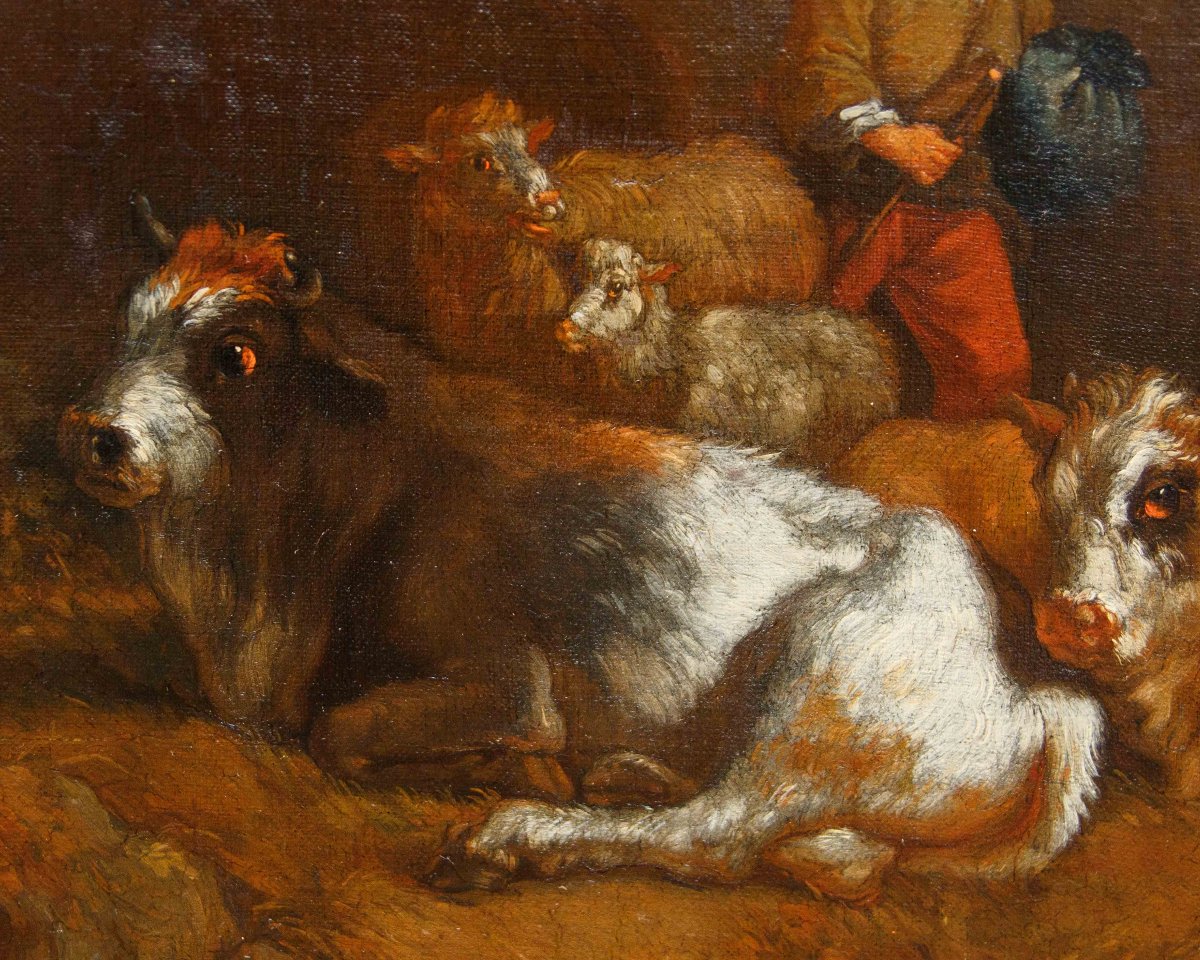
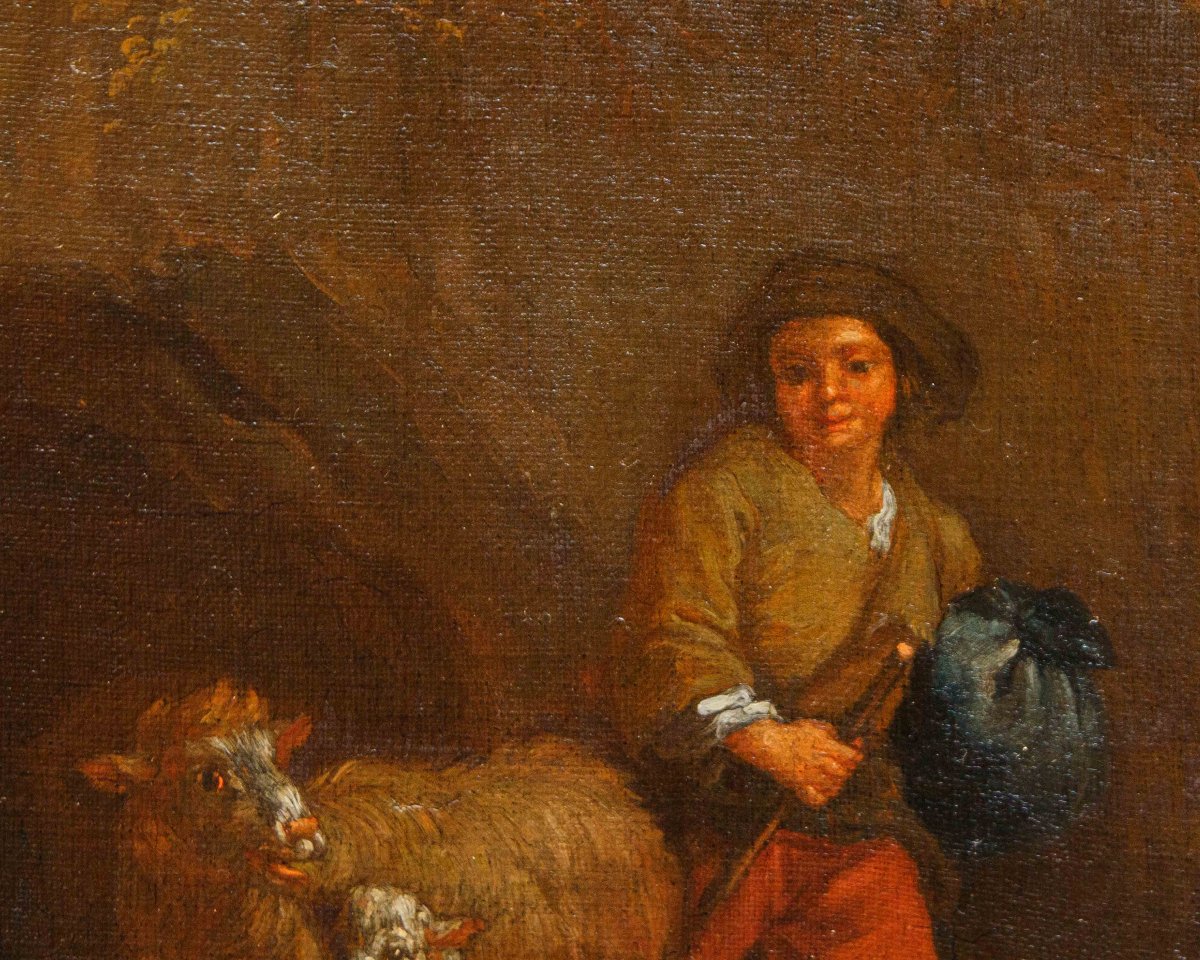
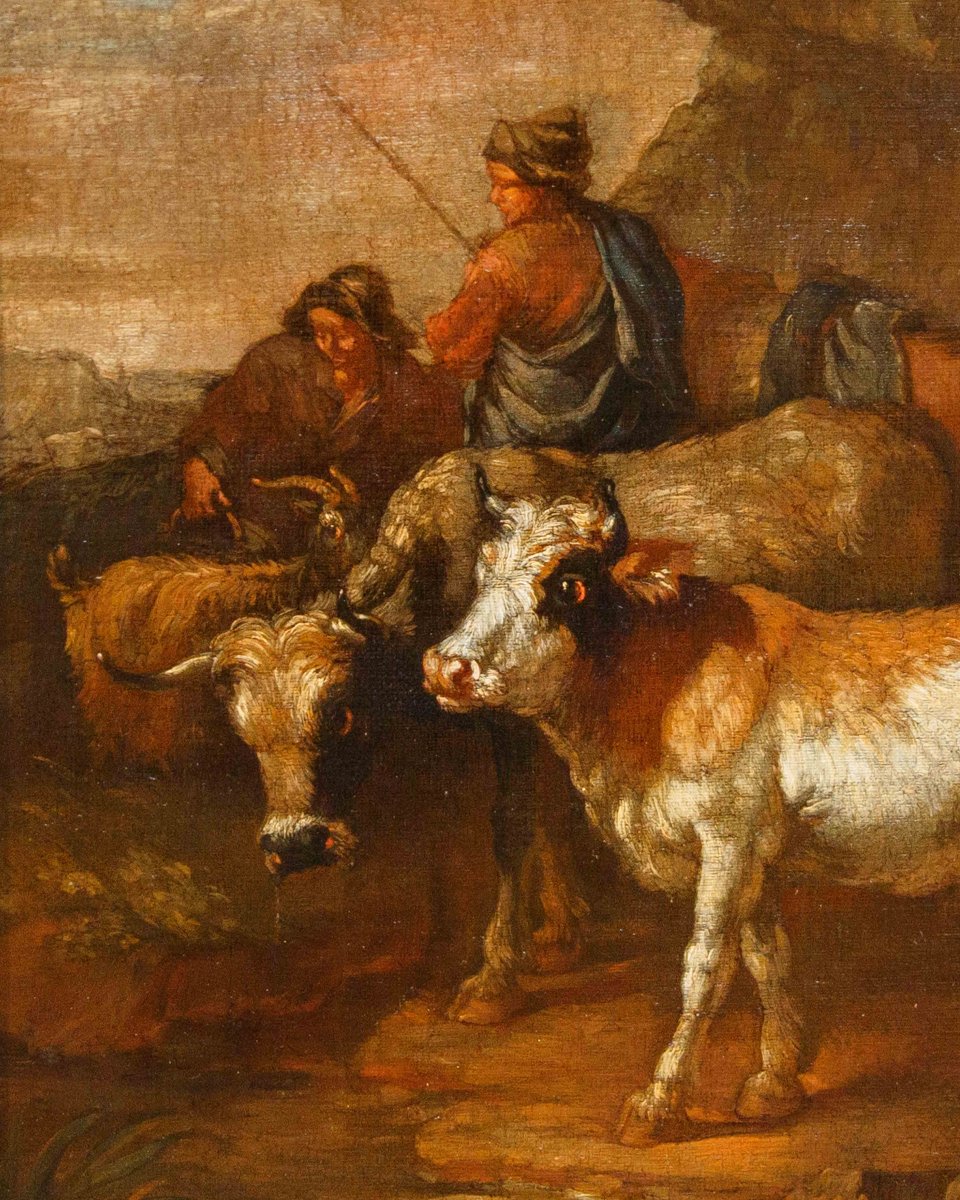
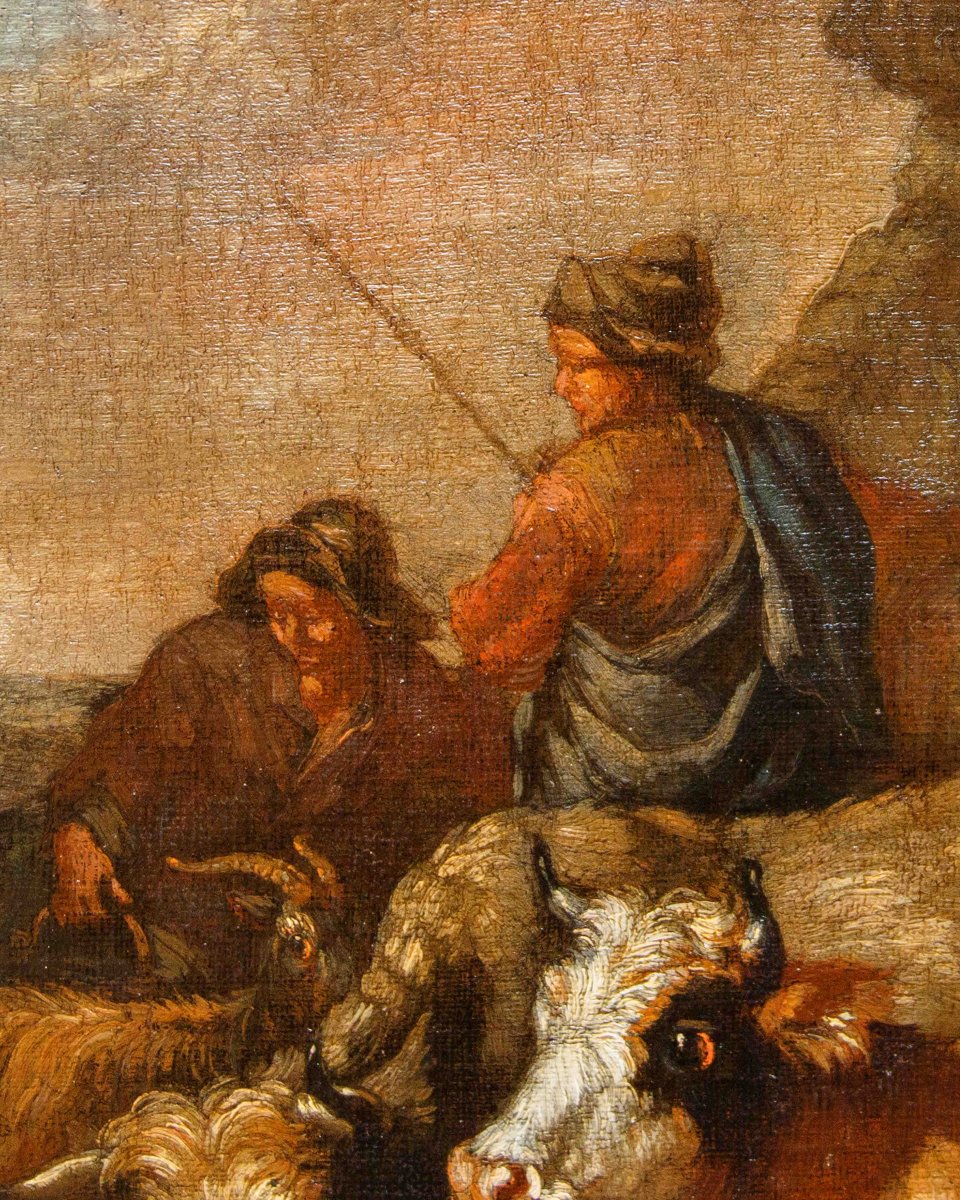
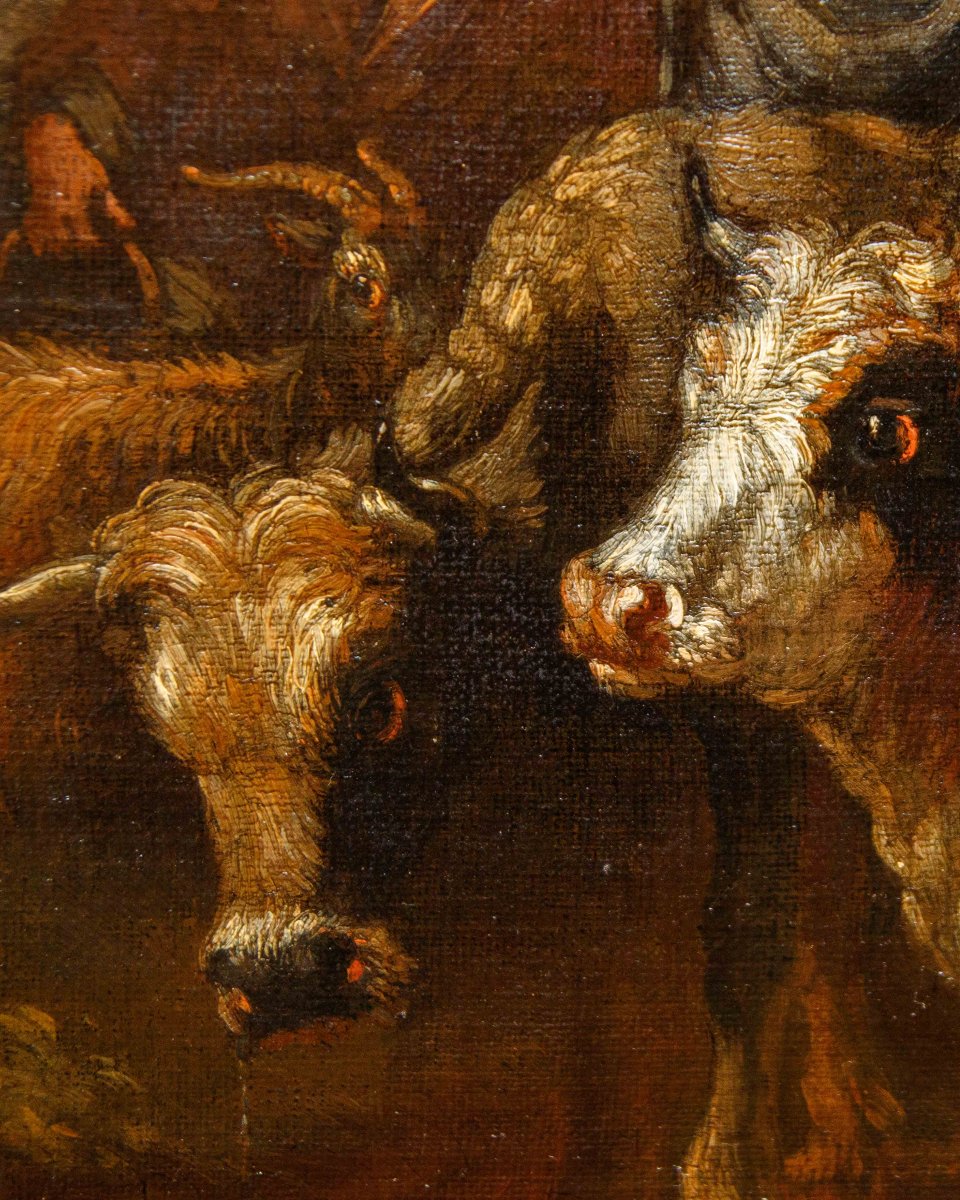
These two pastoral scenes, focusing on shepherds and herds in a shady landscape, fit perfectly into Francesco Londonio's pictorial corpus. The style is characterized by a cursive and vibrant brushstroke and a lively chiaroscuro that shapes the subjects. The animal figures, particularly the cows, reflect the scrupulous observation from life that Londonio developed in his preparatory studies in oil on paper, the largest corpus of which, containing numerous sketches of cattle, is preserved in the Pinacoteca di Brera. These works highlight the master's synthesis between the influence of Nordic genre painting and the Lombard sensibility of the eighteenth century.
Landscapes with shepherds and herds
oil on canvas, 47 x 39 cm
Londonio began his artistic career as a pupil of Ferdinando Porta in Milan, initially training in the tradition of history painting. A youthful trip to Parma, likely undertaken to study the work of Antonio Allegri, known as Correggio, testifies to his early interest in the great Emilian tradition. However, his artistic career underwent a crucial and innovative turn, abandoning historical painting to devote himself to the animalist and pastoral genre. This conversion, presumably which took place in the fifth decade of the eighteenth century in Lombardy (between Milan and Cremona), was not only a change of subject, but a real reformulation of the genre, capable of intercepting the most advanced cultural demands of Milan in the second eighteenth century. The sources of this new vision were multiple and predominantly Nordic: figures such as Berchem, Adiaen van de Velde or Peter van Laer known as the Doll and Willem Romeyn, whose "bambocciate" rich in horses and herds were well represented in Milanese collections such as the Porta gallery (formerly Parravicini), providing a direct stimulus. Alongside these, Londonio integrated Italian influences: the rendering of the animals was indebted to Giovanni Battista Castiglione (the Grechetto), while the figures, while retaining the agile Baroque grace learned from Porta, show the strong influence of Giacomo Ceruti, evident above all in the pathetic intonation and close-up optics of the isolated figures present in his first etchings of 1758-59. His documented debut in the new genre is in the middle of the century, with the 1753 drawing, A Bull and a Cow at Rest, and the first signed painting of 1756, a Cattle Market, which openly confirmed his Dutch sources. Londonio thus managed to mediate Nordic influences with Lombard sensibilities, creating a pastoral art that defined his identity in the eighteenth-century artistic panorama. Londonio's youthful activity is documented by his etchings (1758-59), a technique he learned in Milan from Benigno Bossi. The 103 total engravings, divided into 10 series, reveal a strong stylistic influence of Giacomo Ceruti, evident in the close-up perspective and pathetic intonation of the pastoral subjects. The seventh decade of the eighteenth century is the most fruitful and documented period of Londonio's career. It was marked by a series of study trips fundamental to the settlement and enrichment of his pictorial language; he was in Rome (1763) and Naples (1763-64), with a probable stop in Genoa. The trips are interspersed with the creation of important pictorial cycles on canvas for the noble Milanese families Grianta and Alari. The first half of the 1960s was also a period of great productivity for preparatory studies, which form the backbone of his performance practice; these were numerous oil studies on paper, often signed, intended to be reused in larger compositions. They are characterized by a soft, vibrant brushstroke and a lively chiaroscuro that shapes the figures and patterns. The notable mastery achieved by Londonio in the pastoral genre found formal recognition in the 1770s. His fame is attested by the praise paid to him in 1772 by the dialect poet and academic Trasformato Domenico Balestrieri, who, like his colleague Carlo Antonio Tanzi, owned "some paintings" of the artist. During the 1970s his painting technique evolved, with the brushstroke becoming more cursive and nervous. An example of this approach can be found in the Old Peasant Spinner with Livestock of the Sforza Castle, dated 1775. At least in part, other important complexes of works commissioned by influential Lombard families date back to this chronological phase, including the Borromeo, Greppi and Mellerio families. An activity of great interest, which transcends canvas, is linked to the painted and cut paper nativity scene, a genre in vogue in Lombardy in the second half of the eighteenth century. Londonio played a primary role in the renewal of this technique. The key example of this production is the imposing nativity scene of the church of S. Marco in Milan. Even marginally compared to his favorite pastoral theme, Londonio also cultivated other genres. His forays extend to still life and portraiture, as demonstrated by the well-known Self-Portrait preserved at the Sforza Castle in Milan.
These two pastoral scenes, focusing on shepherds and herds in a shady landscape, fit perfectly into Francesco Londonio's pictorial corpus. The style is characterized by a cursive and vibrant brushstroke and a lively chiaroscuro that shapes the subjects. The animal figures, particularly the cows, reflect the scrupulous observation from life that Londonio developed in his preparatory studies in oil on paper, the largest corpus of which, containing numerous sketches of cattle, is preserved in the Pinacoteca di Brera. These works highlight the master's synthesis between the influence of Nordic genre painting and the Lombard sensibility of the eighteenth century.
7 000 €
Period: 18th century
Style: Other Style
Condition: Good condition
Material: Oil painting
Width: 39
Height: 47
Reference (ID): 1691213
Availability: In stock
Print