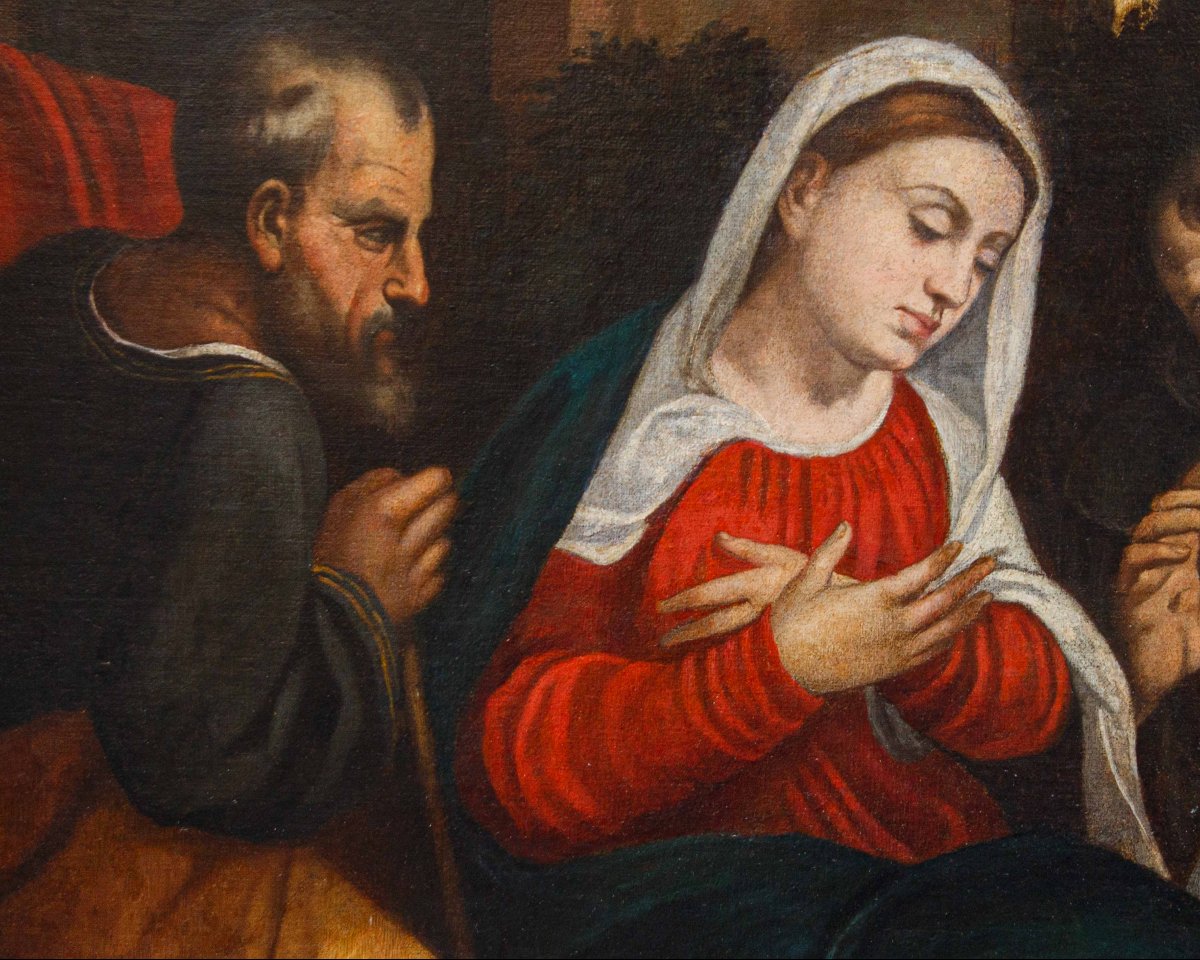
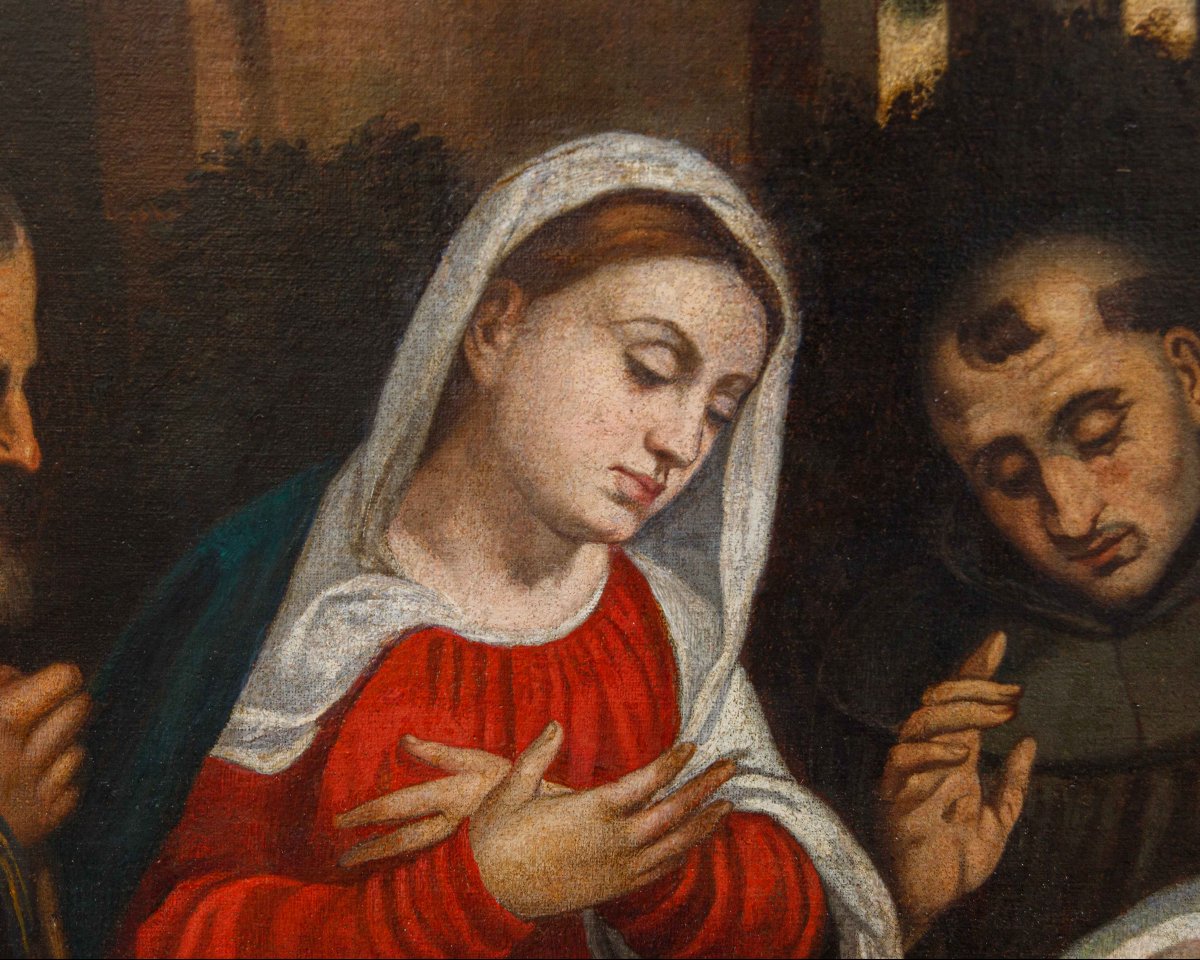
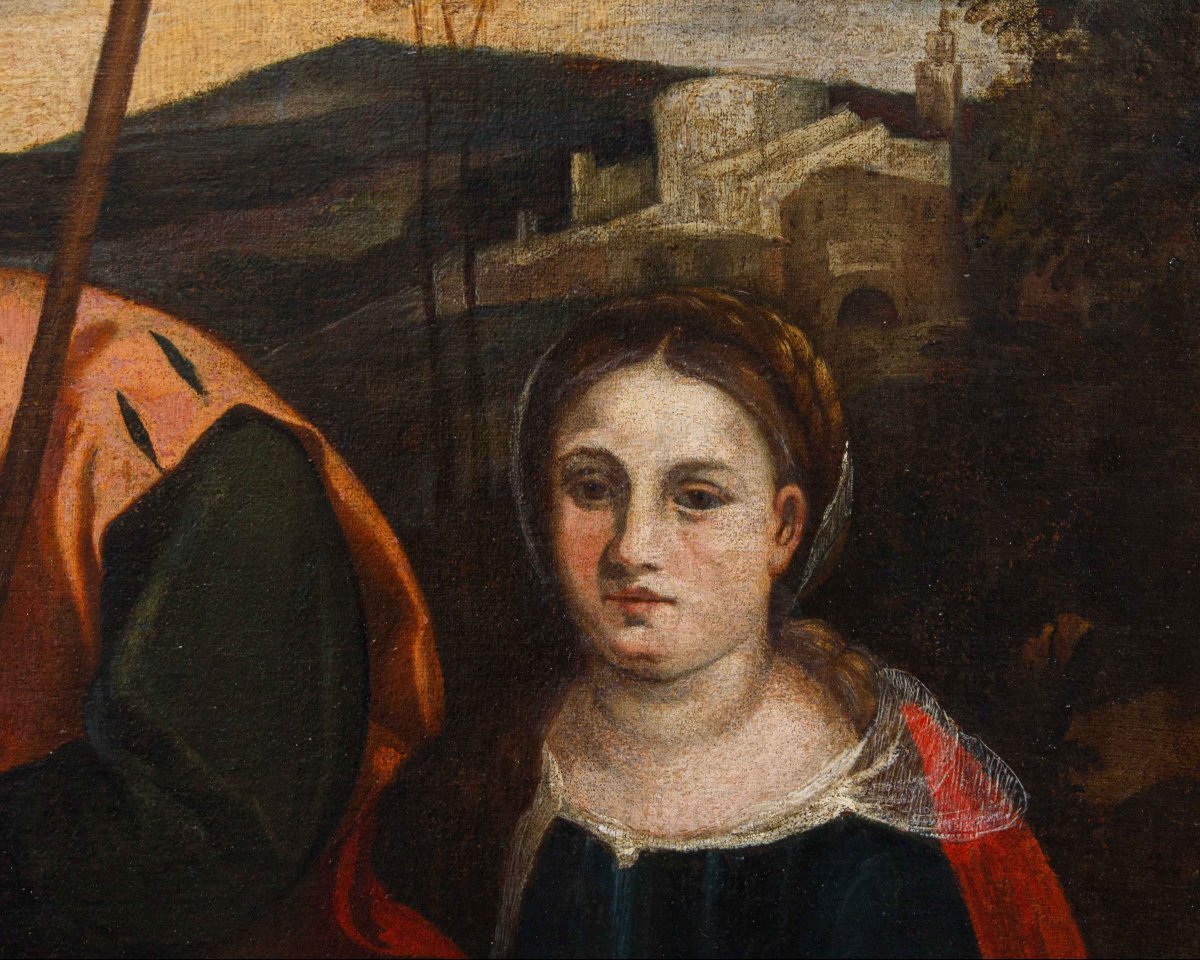
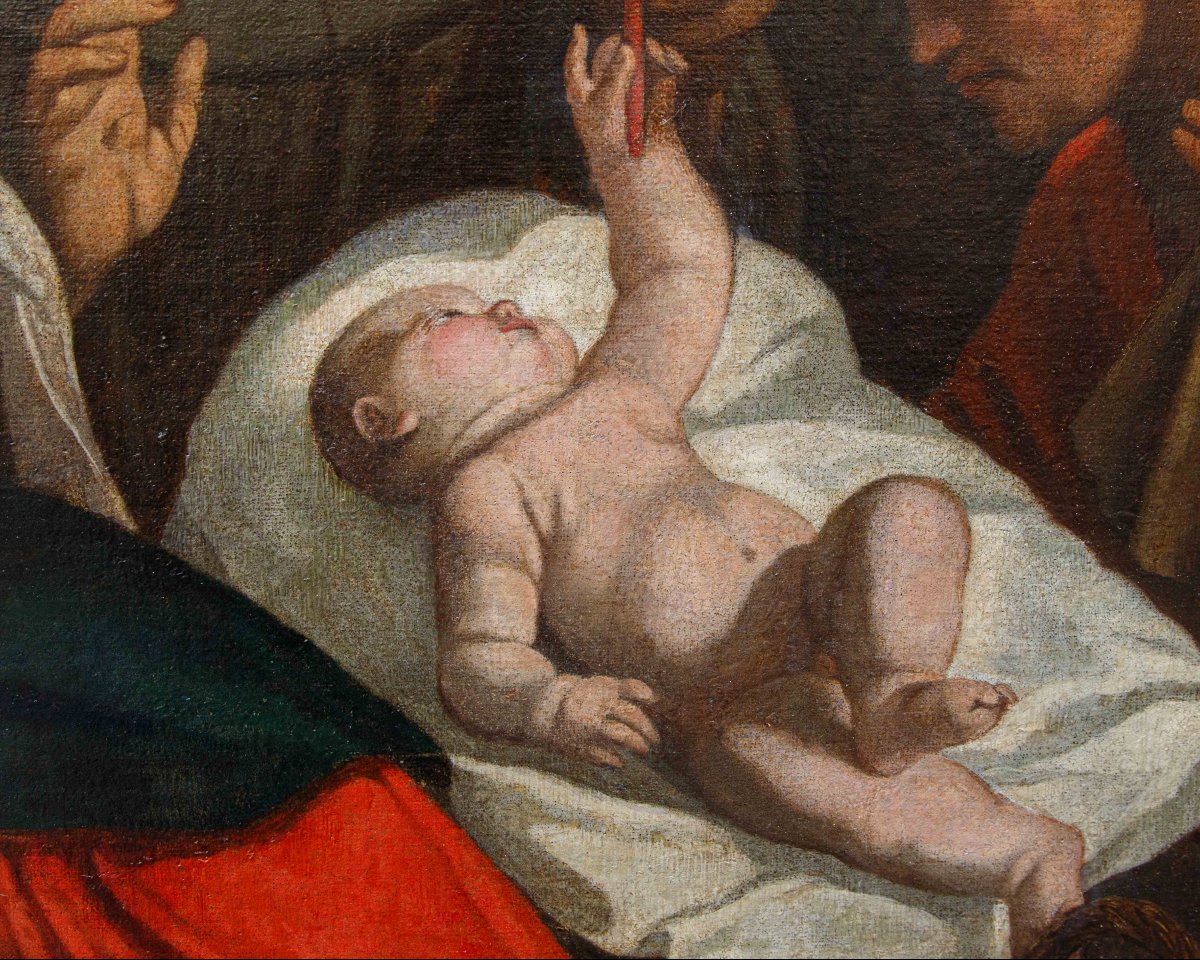



Workshop Of Bonifacio De’ Pitati, Adoration Of The Shepherds With Saints Francis And Catherine
Workshop of Bonifacio de’ Pitati (Verona, ca. 1487 – Venice, 1553)
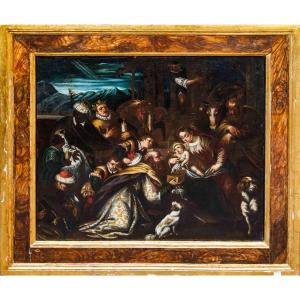
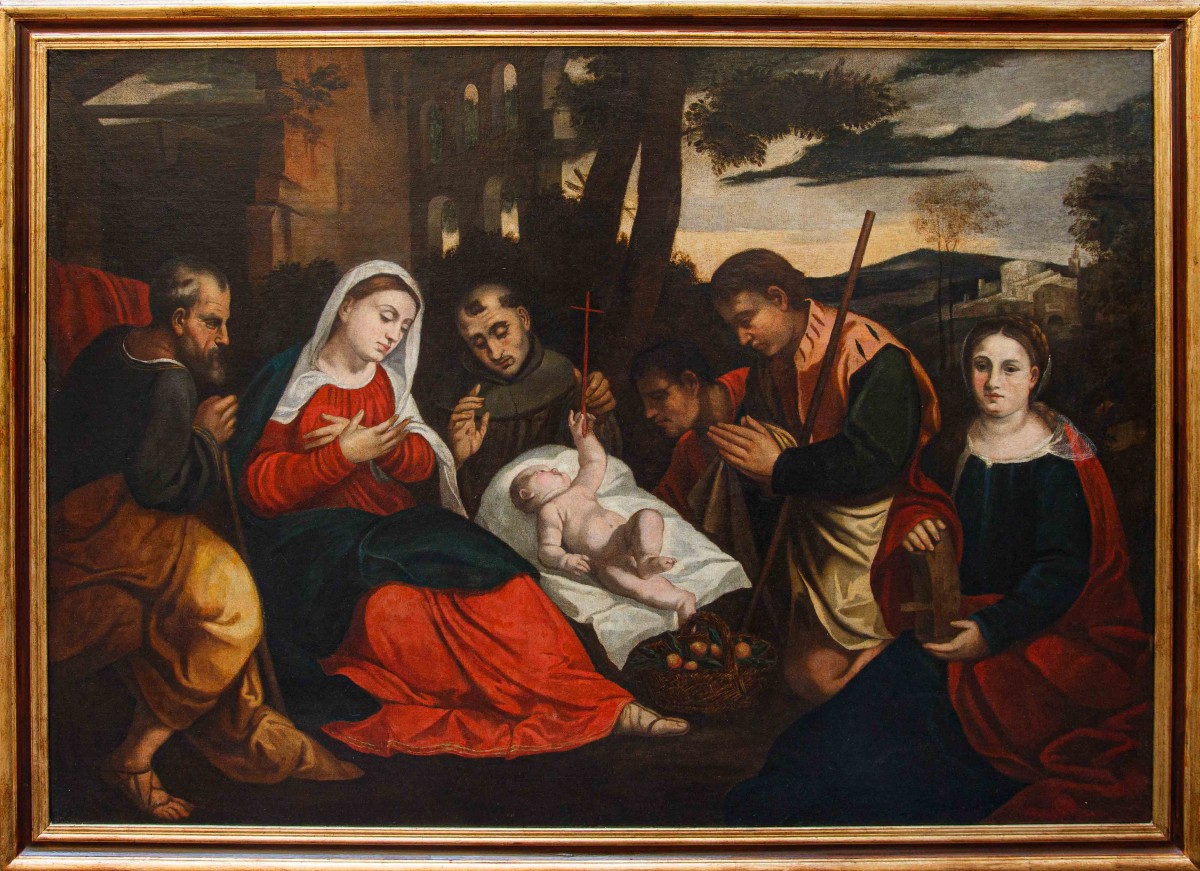
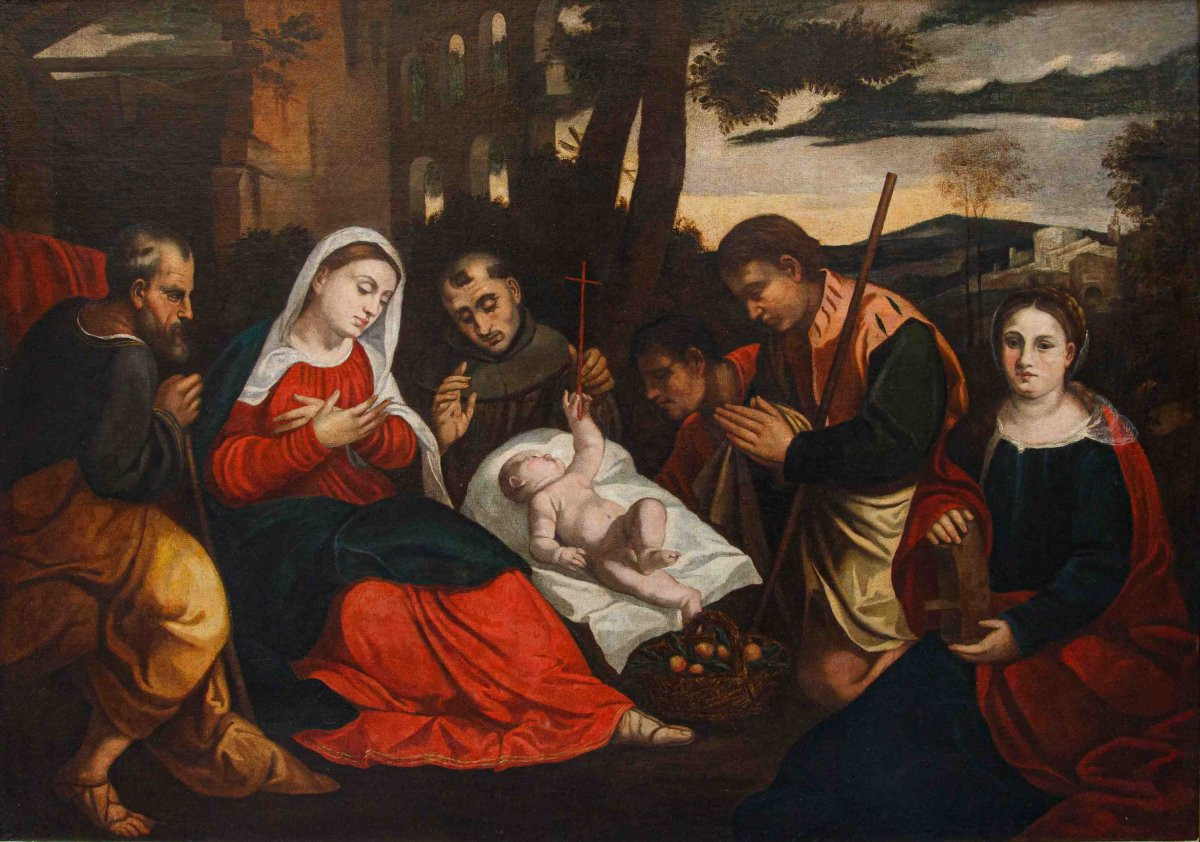
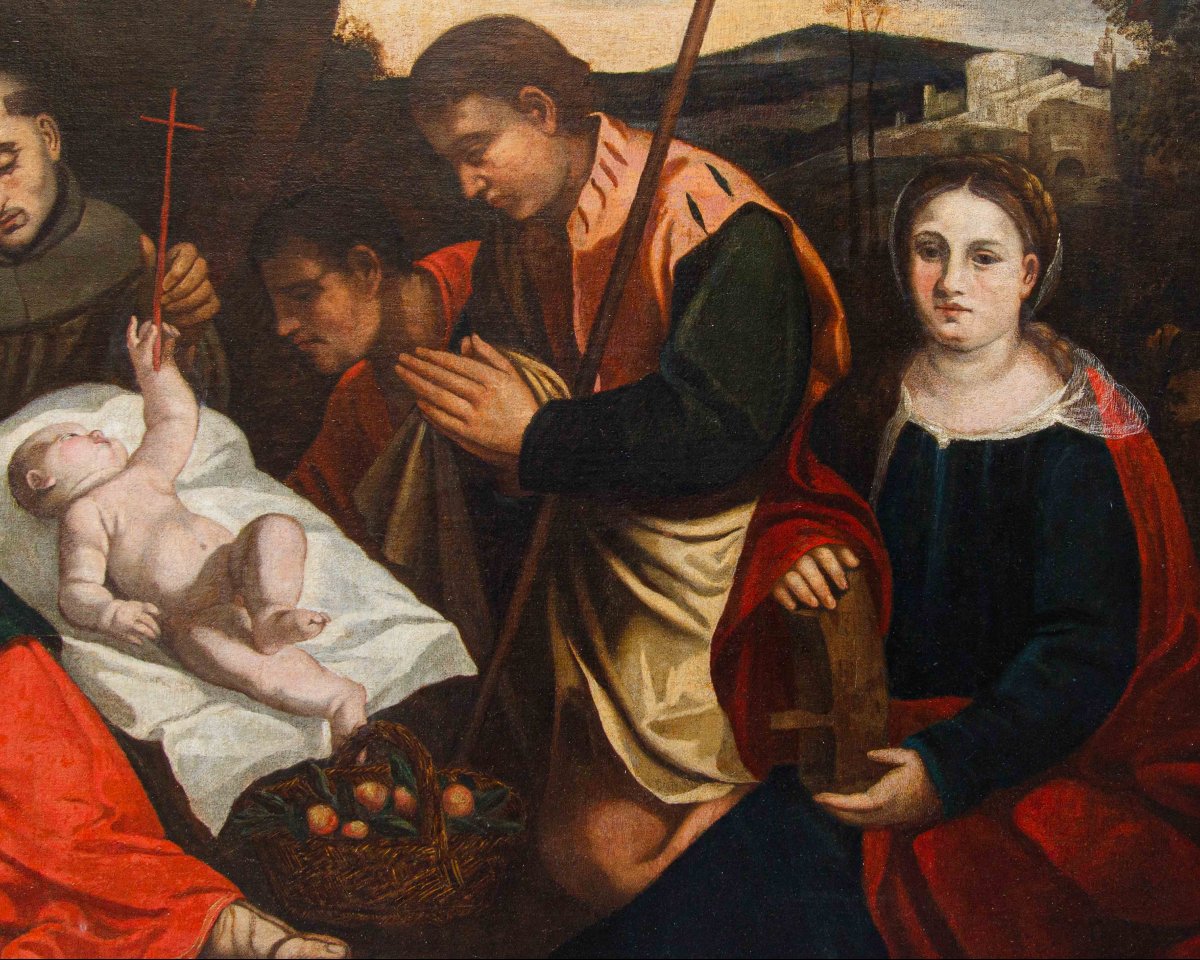
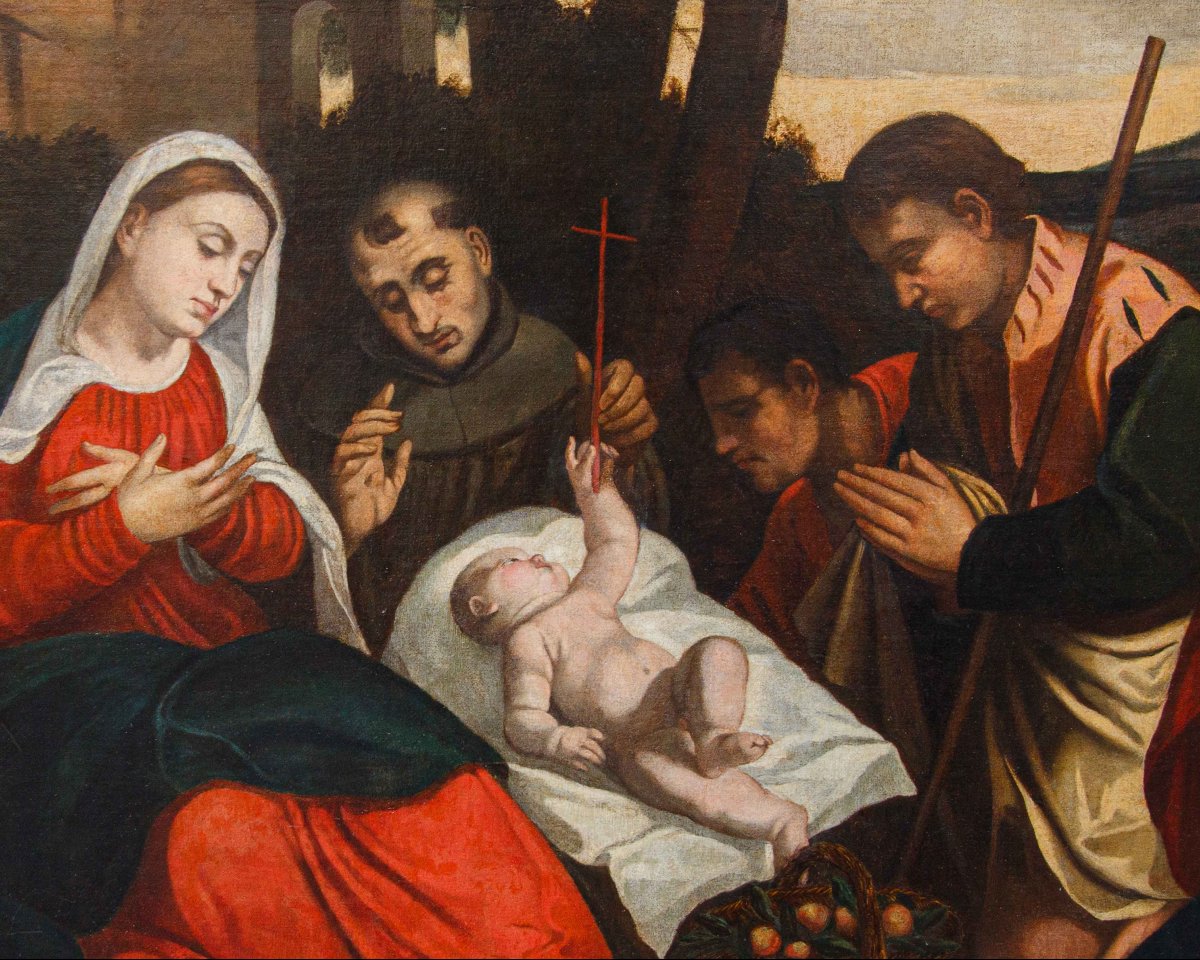
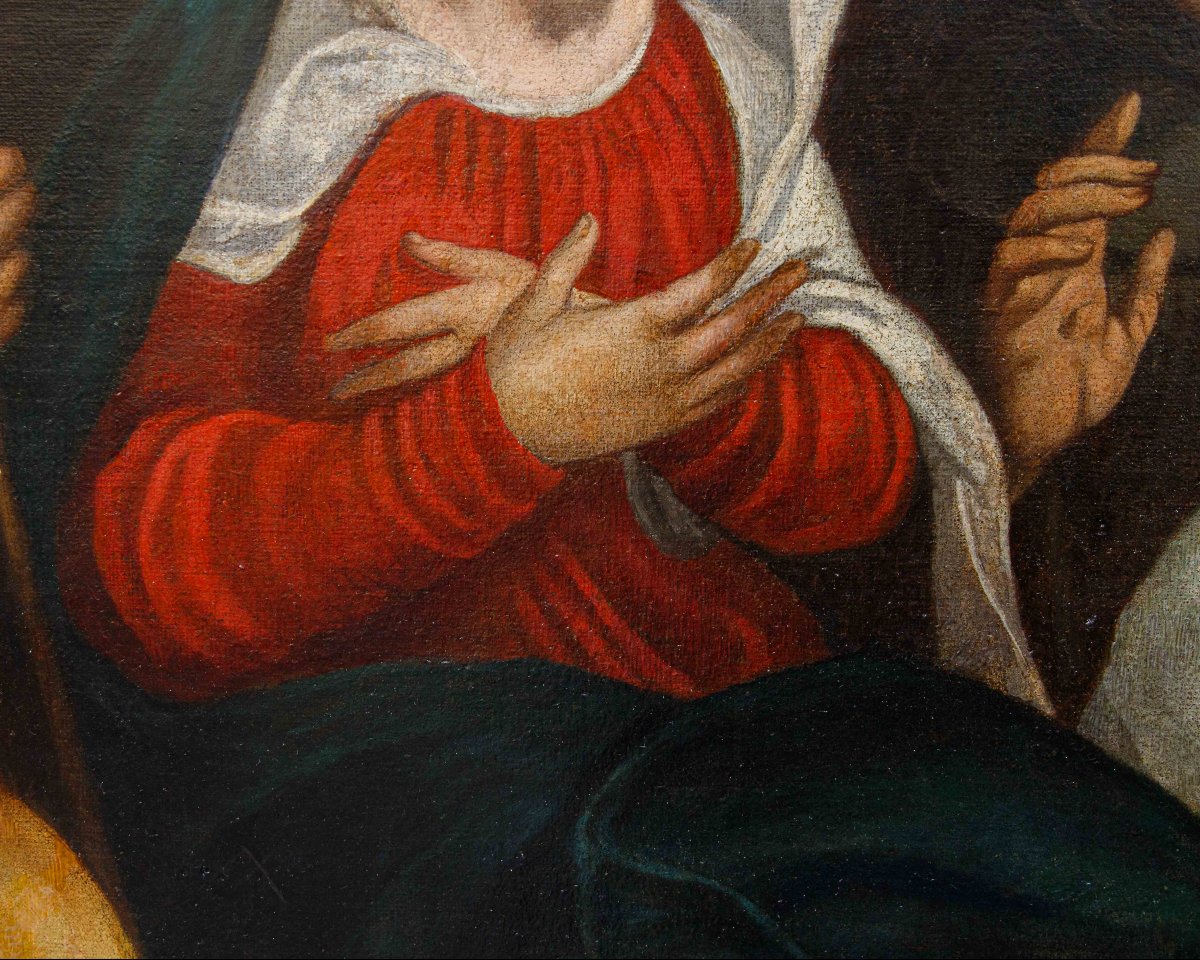
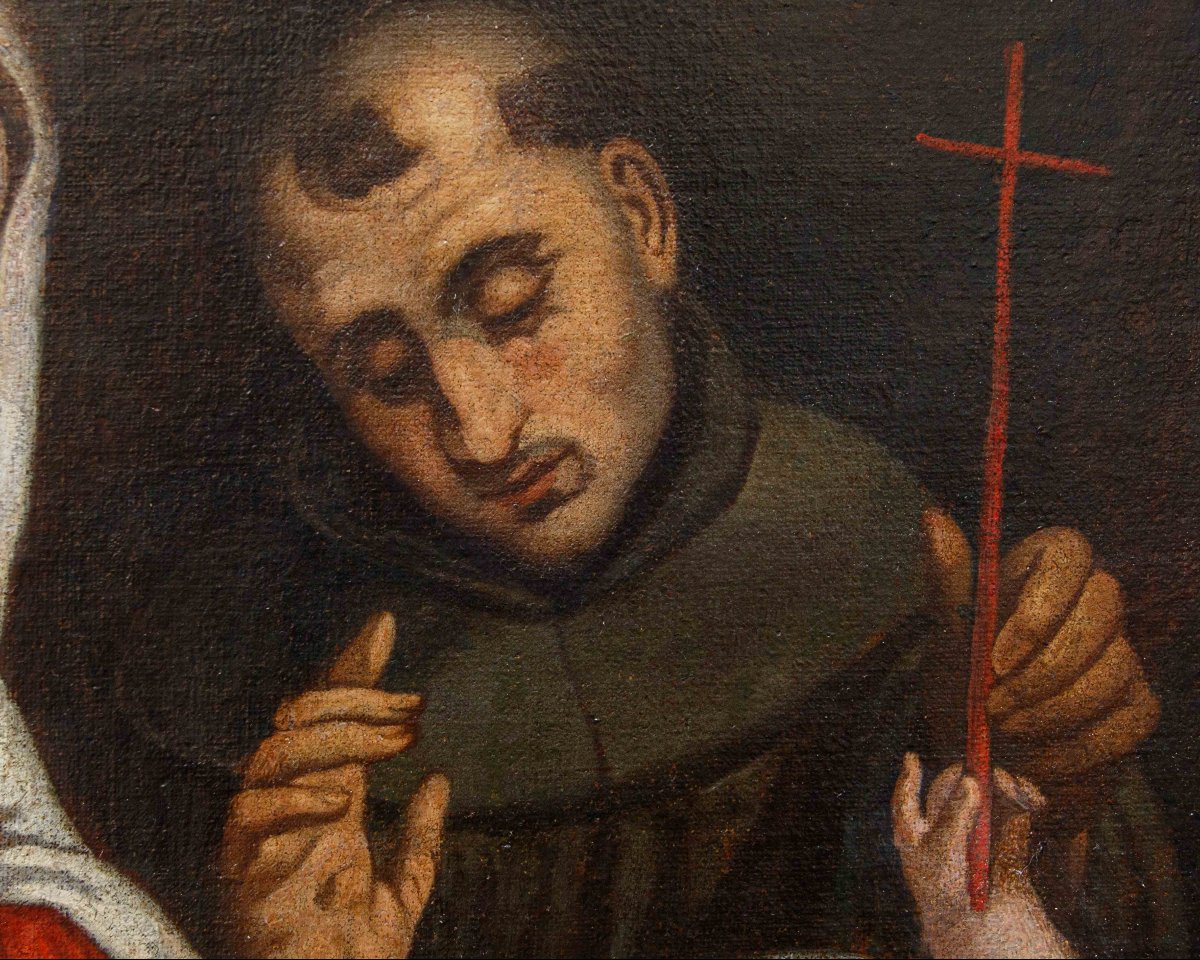
Adoration of the Shepherds with Saints Francis and Catherine
Oil on canvas, 125 x 168 cm
The work is configured as a derivation from the model by Bonifacio de’ Pitati preserved in the Church of the Eremitani in Padua and depicting the Adoration of the Shepherds with Saints Francis and Catherine, datable in stylistic level to the first half of the 16th century, although the documentary gap affecting the training of the Veronese artist has compromised the correct placement of the works dating back to his early production, in particular relating to the thirty-year period from 1501 to 1528. The formal and typological characteristics of the first production, however, place it already in Venice, probably by 1510-15. These elements give veracity to the news, reported by Carlo Ridolfi (1648, 1914, p. 284), that Pitati had spent a period of apprenticeship in the workshop of Jacopo Palma the Elder, a relationship which after an initial apprenticeship turned into a real collaboration.
Beginning in the 1920s, Bonifacio de’ Pitati began to create a circle of commissions, executing paintings for both private and public devotion, still demonstrating a close dependence on Palmesque motifs and at the same time a certain degree of autonomy. With the death of his master and colleague Palma il Vecchio on 30 July 1528, one of the most important Venetian workshops of the early sixteenth century disappeared, giving Bonifacio the opportunity to present himself as a protagonist on the Venetian artistic scene. The canvases of these years are in fact characterised by the Nordic inspiration of the landscapes, in contrast to the solemn lyricism of Palma, even if the spirituality given by the locus amoenus of the verdant landscape populated by divine presences always hovers there.
It is probable that from the beginning Bonifacio Pitati could count almost exclusively on the help of the young Antonio Palma (1515-1575, father of Jacopo Palma the Younger), who had to make his apprenticeship with him starting in 1528 (Ludwig, 1901, p. 74). In short, however, he was able to adapt the workshop to the peculiarity of the contract, which required ensuring a high level of quality with rapid execution times, especially for public clients who were changing rapidly. Taking advantage of the prestige acquired by his workshop, which attracted talented young men such as Jacopo Bassano and Jacopo Tintoretto (1518-1594), then Andrea Meldolla later known as Schiavone, Bonifacio adopted them first as apprentices (around 1530-35) and then as collaborators (at least until 1540).
In 1530 the artist was registered in the lists of masters of art. His Venetian school continuously drew the lifeblood of Giorgione's colourism and from Palmesque narratives, primarily respecting the figurative rhythms of the hinterland, unlike what Pordenone (1483-1539) and Sebastiano del Piombo (1485-1547) were doing, who instead drew demeaning Tuscan-Roman translations from their stay in Rome. Around the 1430s, De’ Pitati's painting showed an approach to the typical methods of Lorenzo Lotto (1480-1556/7), also a solitary peregrine artist, so much so that it is possible to presume that the two artists were involved in the same patronage circuits. At the same time as the artisan bourgeoisie market, Boniface managed to intercept some important ecclesiastical commissions, the most prestigious of which was the decoration of the altar of Relics in the church of S. Maria dei Servi, datable to 1533.
This work beautifully highlights the typically Venetian importance attributed to light and the use of color, which served as a springboard for the international recognition of the 16th-century Venetian school, which arose from the mosaics of St. Mark and was guided by Bellini on a path of eternal ascent.
Adoration of the Shepherds with Saints Francis and Catherine
Oil on canvas, 125 x 168 cm
The work is configured as a derivation from the model by Bonifacio de’ Pitati preserved in the Church of the Eremitani in Padua and depicting the Adoration of the Shepherds with Saints Francis and Catherine, datable in stylistic level to the first half of the 16th century, although the documentary gap affecting the training of the Veronese artist has compromised the correct placement of the works dating back to his early production, in particular relating to the thirty-year period from 1501 to 1528. The formal and typological characteristics of the first production, however, place it already in Venice, probably by 1510-15. These elements give veracity to the news, reported by Carlo Ridolfi (1648, 1914, p. 284), that Pitati had spent a period of apprenticeship in the workshop of Jacopo Palma the Elder, a relationship which after an initial apprenticeship turned into a real collaboration.
Beginning in the 1920s, Bonifacio de’ Pitati began to create a circle of commissions, executing paintings for both private and public devotion, still demonstrating a close dependence on Palmesque motifs and at the same time a certain degree of autonomy. With the death of his master and colleague Palma il Vecchio on 30 July 1528, one of the most important Venetian workshops of the early sixteenth century disappeared, giving Bonifacio the opportunity to present himself as a protagonist on the Venetian artistic scene. The canvases of these years are in fact characterised by the Nordic inspiration of the landscapes, in contrast to the solemn lyricism of Palma, even if the spirituality given by the locus amoenus of the verdant landscape populated by divine presences always hovers there.
It is probable that from the beginning Bonifacio Pitati could count almost exclusively on the help of the young Antonio Palma (1515-1575, father of Jacopo Palma the Younger), who had to make his apprenticeship with him starting in 1528 (Ludwig, 1901, p. 74). In short, however, he was able to adapt the workshop to the peculiarity of the contract, which required ensuring a high level of quality with rapid execution times, especially for public clients who were changing rapidly. Taking advantage of the prestige acquired by his workshop, which attracted talented young men such as Jacopo Bassano and Jacopo Tintoretto (1518-1594), then Andrea Meldolla later known as Schiavone, Bonifacio adopted them first as apprentices (around 1530-35) and then as collaborators (at least until 1540).
In 1530 the artist was registered in the lists of masters of art. His Venetian school continuously drew the lifeblood of Giorgione's colourism and from Palmesque narratives, primarily respecting the figurative rhythms of the hinterland, unlike what Pordenone (1483-1539) and Sebastiano del Piombo (1485-1547) were doing, who instead drew demeaning Tuscan-Roman translations from their stay in Rome. Around the 1430s, De’ Pitati's painting showed an approach to the typical methods of Lorenzo Lotto (1480-1556/7), also a solitary peregrine artist, so much so that it is possible to presume that the two artists were involved in the same patronage circuits. At the same time as the artisan bourgeoisie market, Boniface managed to intercept some important ecclesiastical commissions, the most prestigious of which was the decoration of the altar of Relics in the church of S. Maria dei Servi, datable to 1533.
This work beautifully highlights the typically Venetian importance attributed to light and the use of color, which served as a springboard for the international recognition of the 16th-century Venetian school, which arose from the mosaics of St. Mark and was guided by Bellini on a path of eternal ascent.
12 000 €
Period: 16th century
Style: Other Style
Condition: Good condition
Material: Oil painting
Width: 168
Height: 125
Reference (ID): 1718742
Availability: In stock
Print