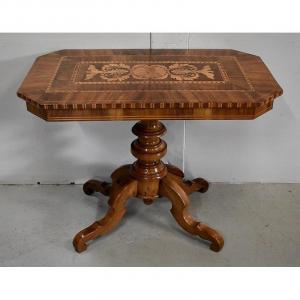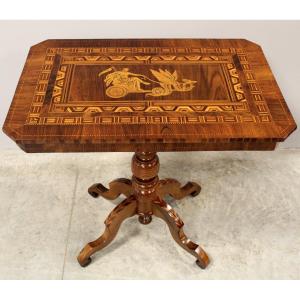



Grand Ducal Workshops, 19th Century, Small Table With A Marbled Top
Grand Ducal Workshops, 19th century
Side table with a marquetry top
Top, diam. 65x2 cm
Table, 82.5x72 cm
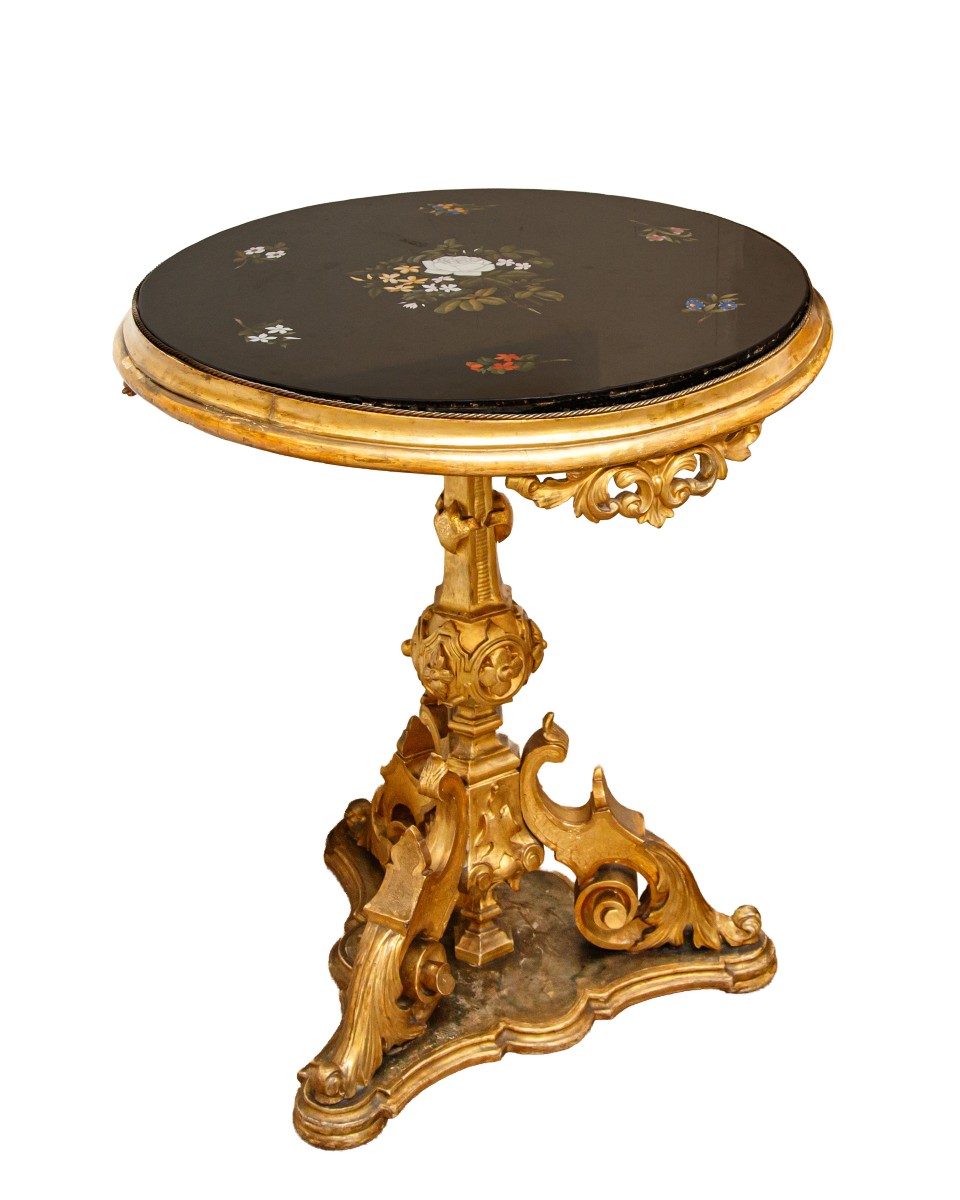
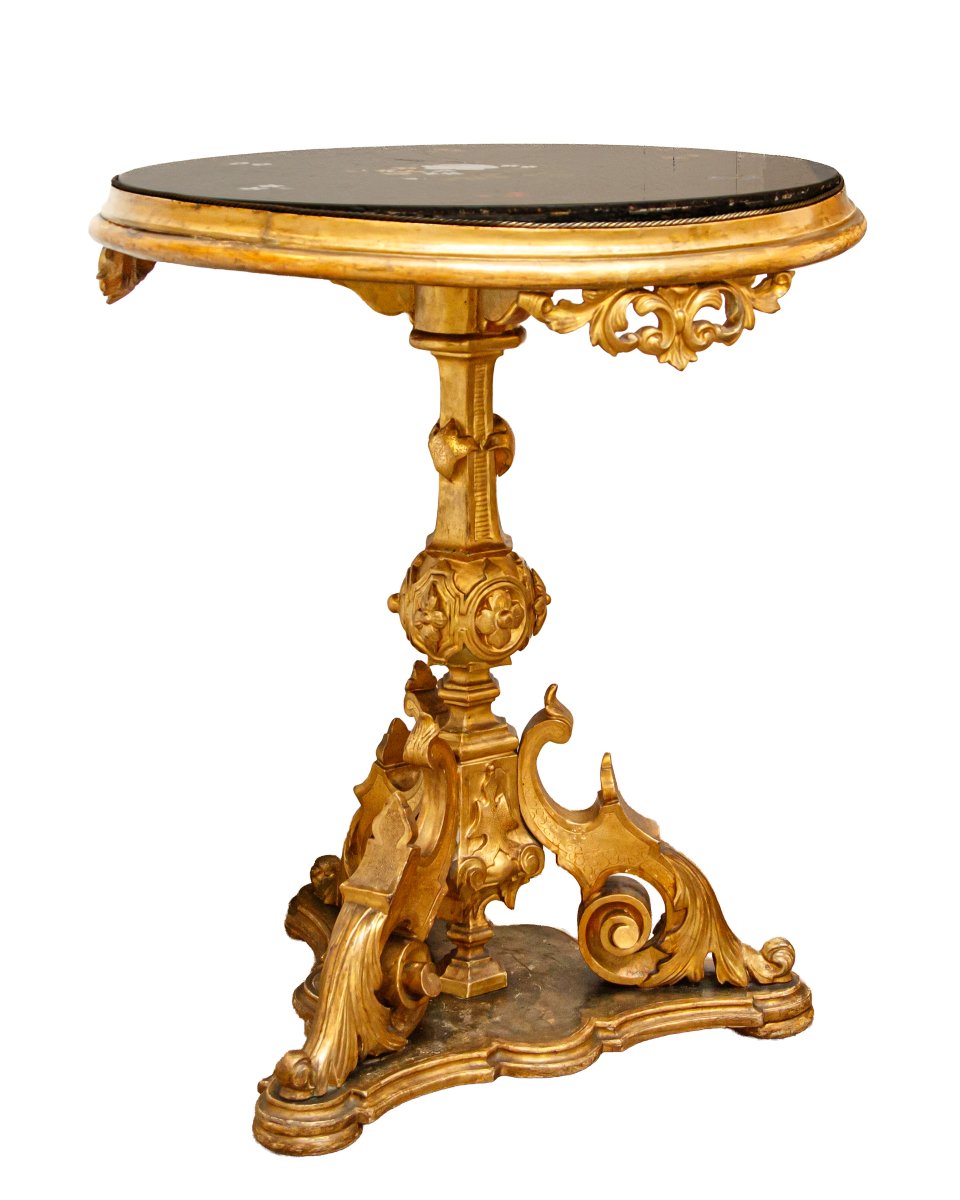
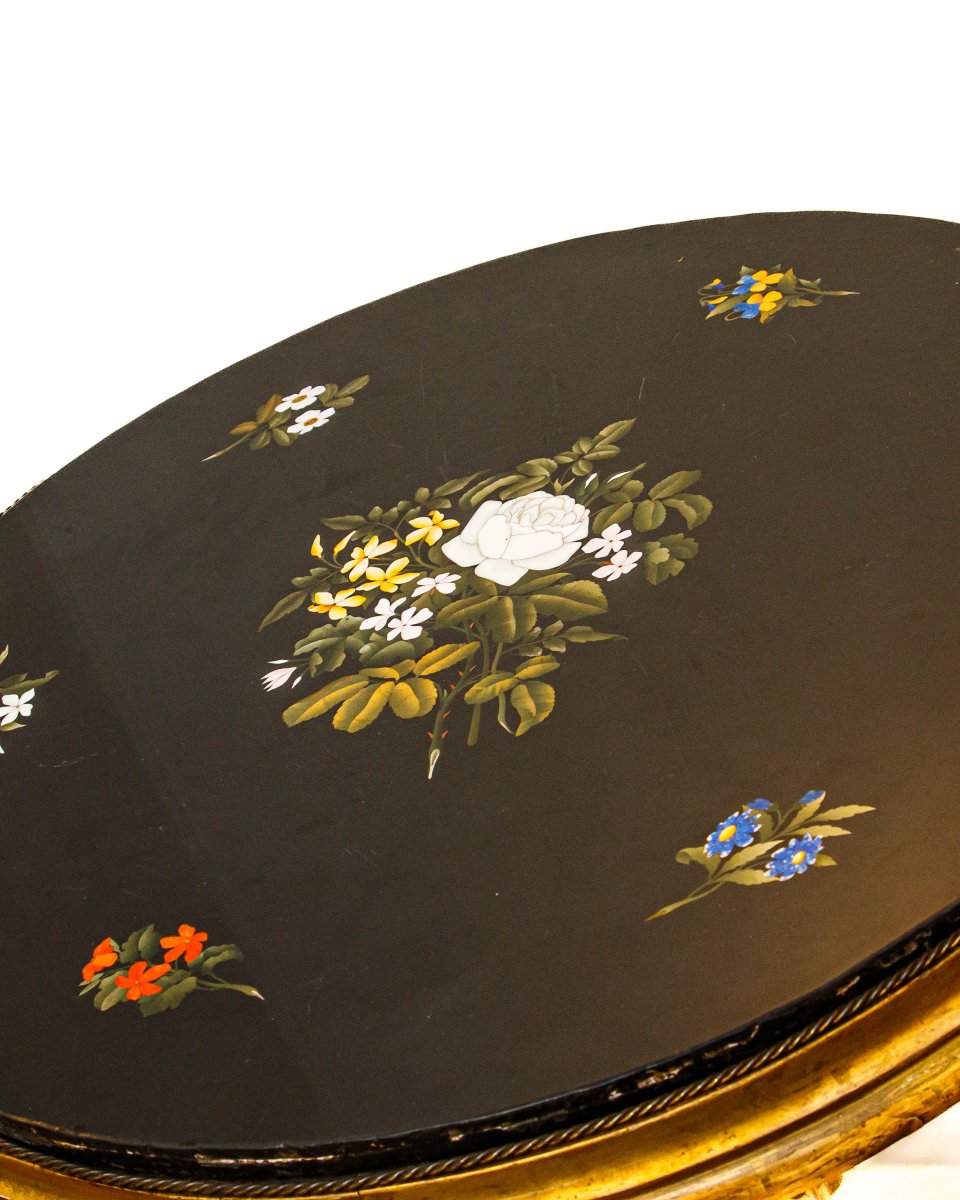
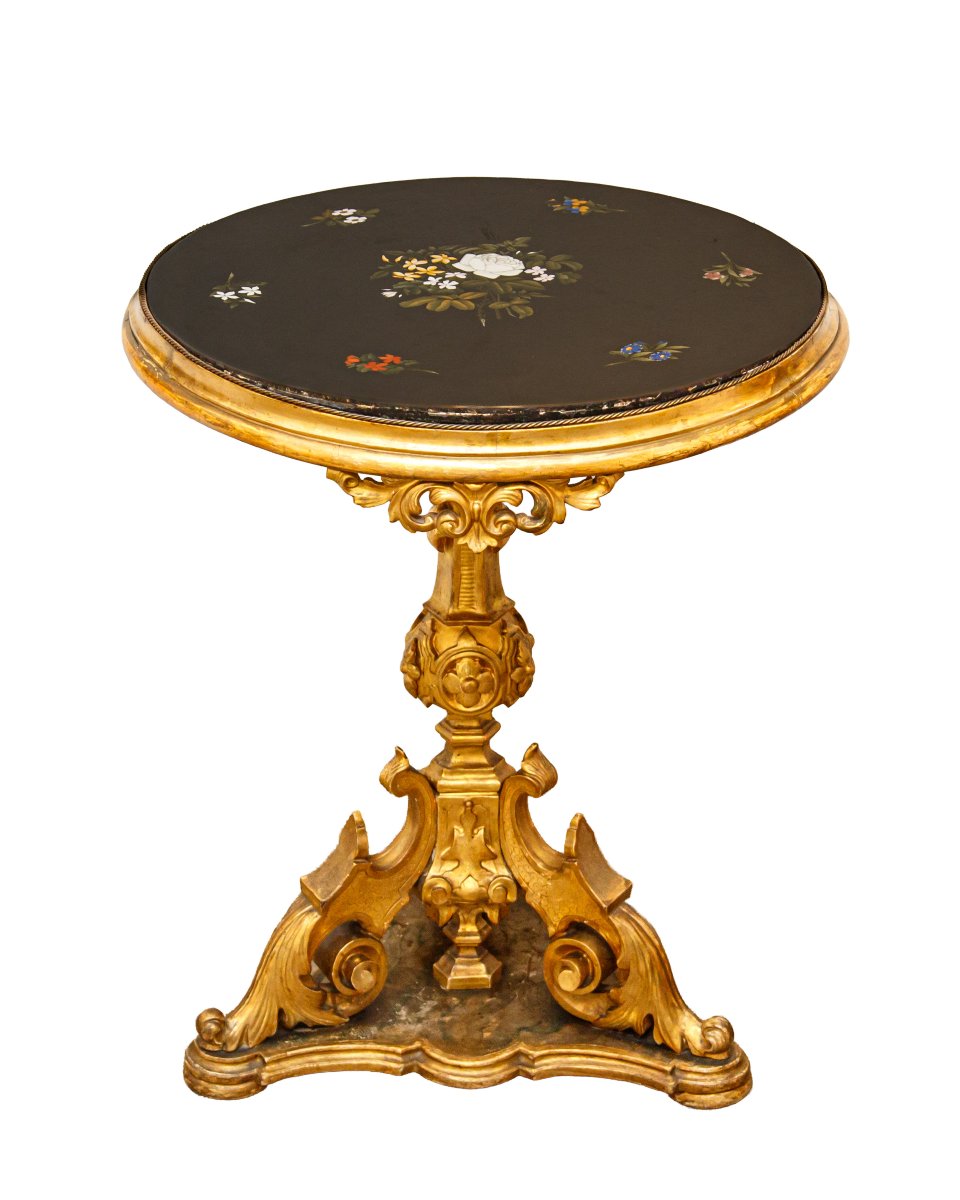
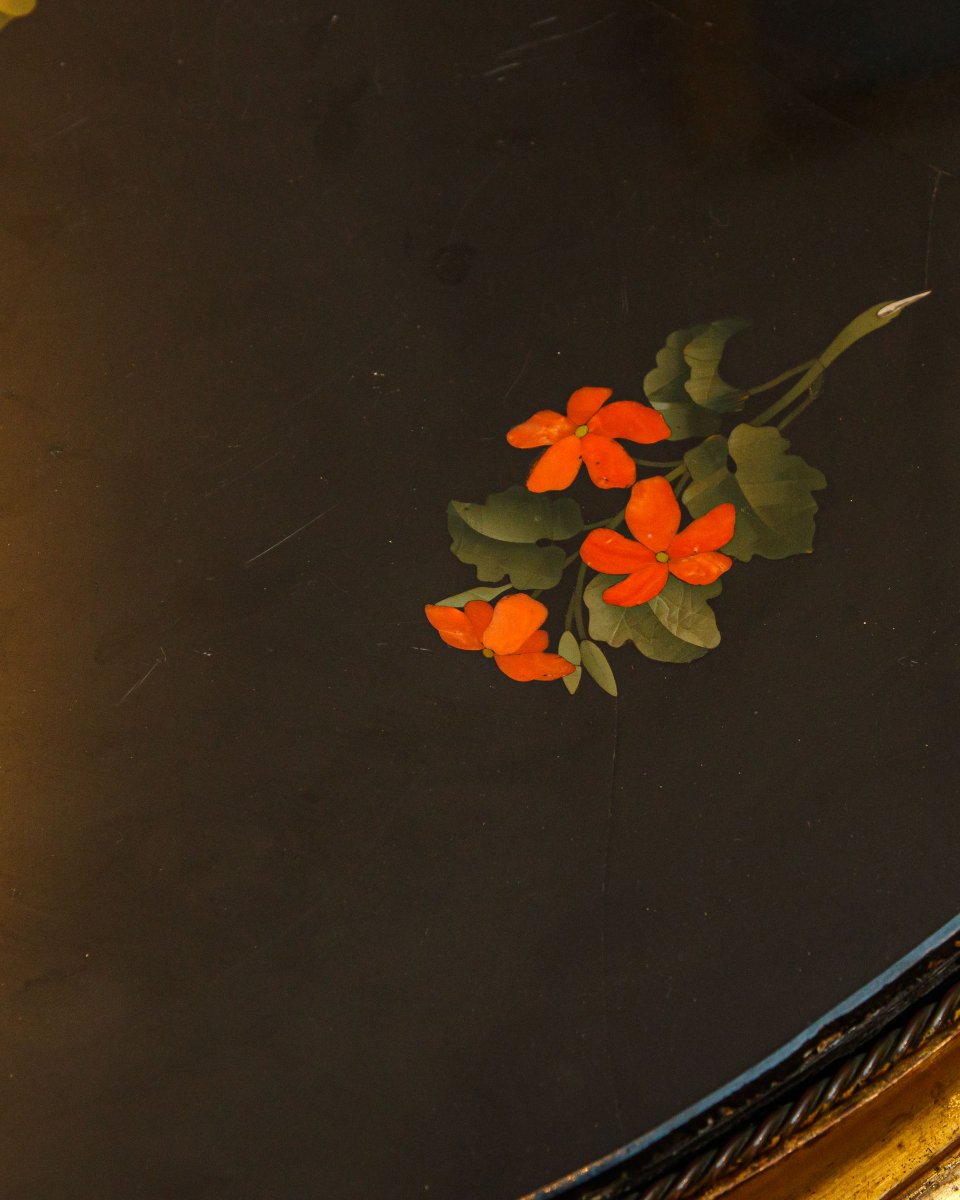
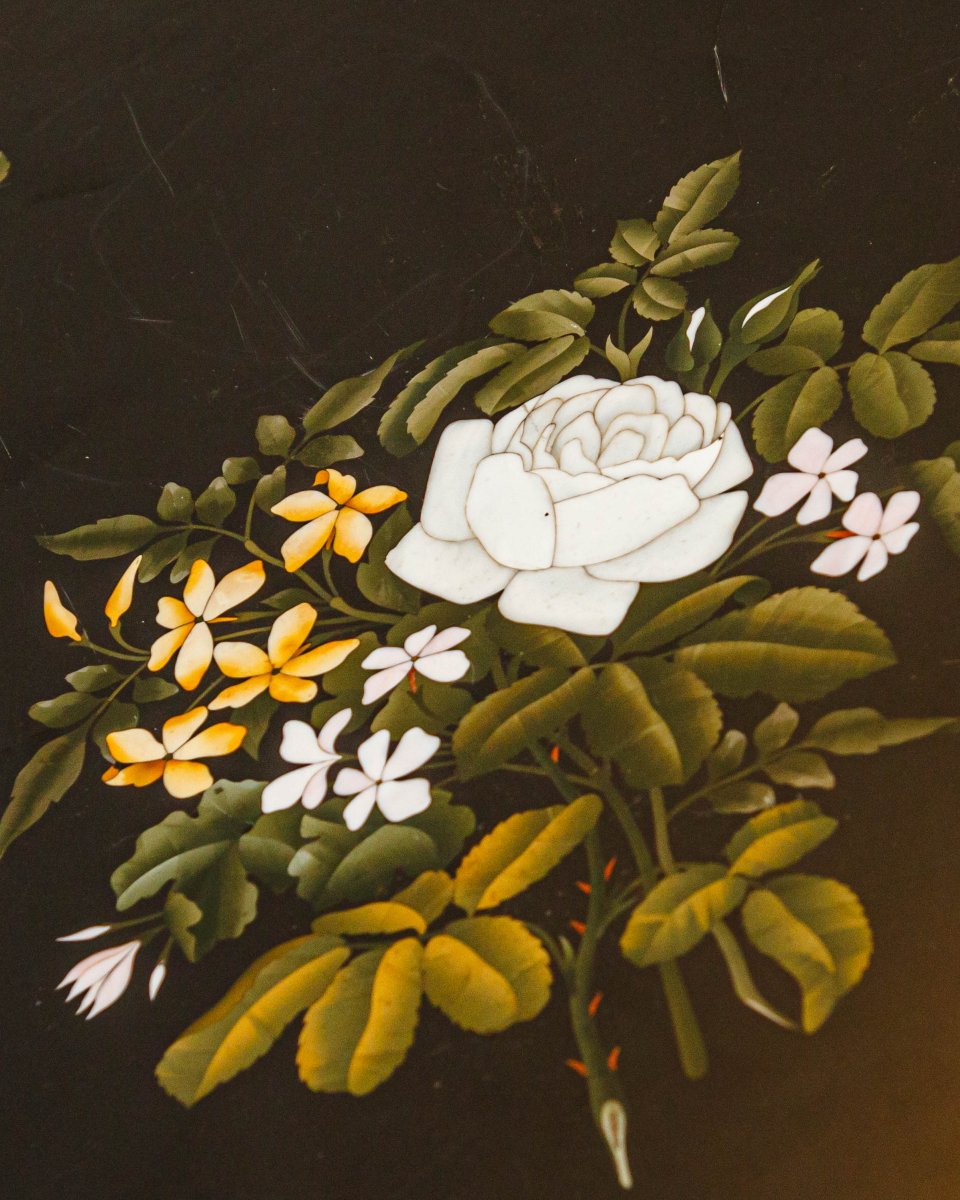
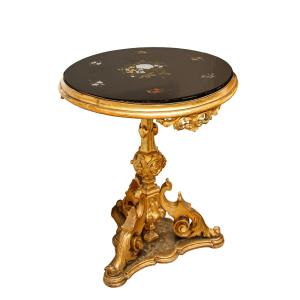
This refined circular side table, the result of the mastery of a 19th-century Florentine workshop, embodies the sublime synthesis of fine cabinetmaking and the millennia-old art of semi-precious stone inlay. The top is a chromatic and compositional masterpiece: an elaborate floral inlay blooms against a base of polished black marble. The central bouquet, dominated by a snow-white rose and surrounded by yellow and white jasmine, is flanked by six smaller bouquets—among which one can recognize delicate pink roses, deep blue forget-me-nots, white bellflowers, and vibrant orange blossoms. The technique of "Florentine inlay," or "stone painting," masterfully executed here, has its roots in Florence during the second half of the sixteenth century, evolving from Roman opus sectile thanks to the humanist passion for antiquity. It was the forward-thinking vision of the Medici family that recognized the artistic potential of this technique, transforming it from a mere architectural cladding—as was the case in Rome—into a refined art form applied to the most sumptuous furnishings. In 1588, Grand Duke Ferdinand I established the Opificio delle pietre dure, a state-run workshop that brought together mosaicists and carvers, granting the Medici dynasty exclusive rights to these extraordinary creations, celebrated for their pictorial effects and flawless execution. The term "commesso," derived from the Latin "committere" (to put together), perfectly describes the artisans’ skill in cutting and shaping colored marbles and semi-precious stones—such as jasper, agate, and lapis lazuli—following a preparatory watercolor design and assembling them with such precision that the joints become invisible, clearly distinguishing it from traditional mosaic. A slow and patient art, where only the master’s hand and eye could select the right stone hues—often using local stones such as “verde Arno”—and cut them with a rudimentary bow made of soft iron wire, a technique that has remained virtually unchanged over the centuries and resistant to any form of automation. While the sumptuous Chapel of the Princes in San Lorenzo represents the monumental culmination of this tradition, high-quality pieces such as this 19th-century table bear witness to the enduring Florentine taste and craftsmanship over time. The tabletop rests on a richly carved and gold-leafed wooden tripod base, which culminates in curling volutes and foliage decorations, typical of the eclectic taste of the 19th century, lending the piece solid stability and an aura of opulent preciousness. The central shaft, also gilded, features an original knob decorated with blue and green polychrome enamels, highlighting the refinement of the materials and the complexity of the craftsmanship.
Period: 19th century
Style: Other Style
Condition: Good condition
Material: Gilted wood
Width: 72
Height: 82,5
Reference (ID): 1744574
Availability: In stock