

Dresden Manufactory, 19th Century, Pair Of Domestic Scenes With Mirror And Canopy
Dresden Manufactory, 19th century
Pair of domestic scenes with mirror and canopy
(2) Painted and gilded porcelain, 33 x 23 cm
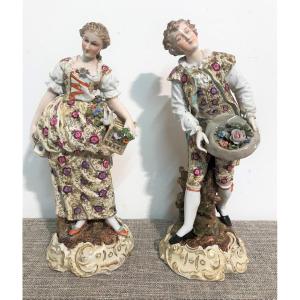
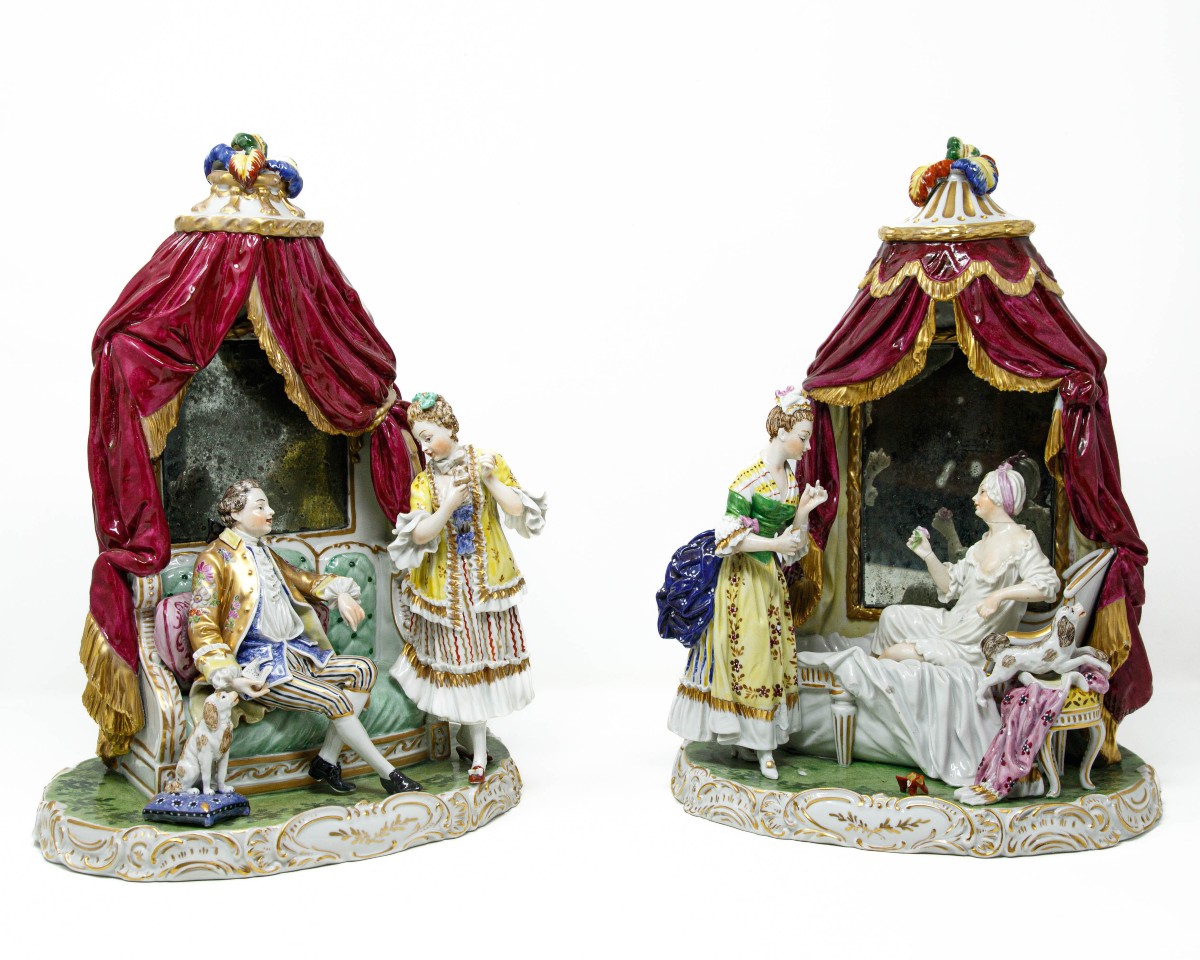
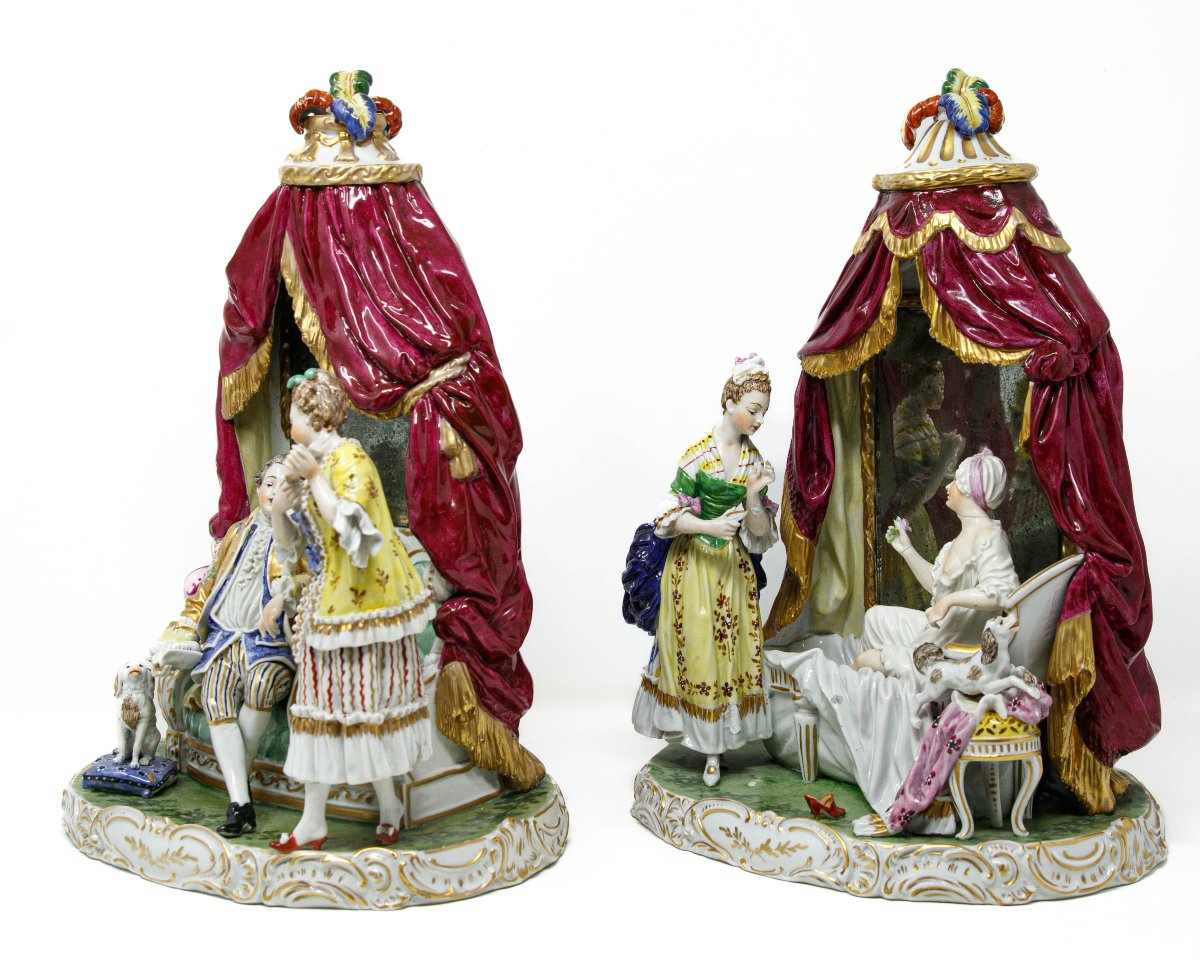
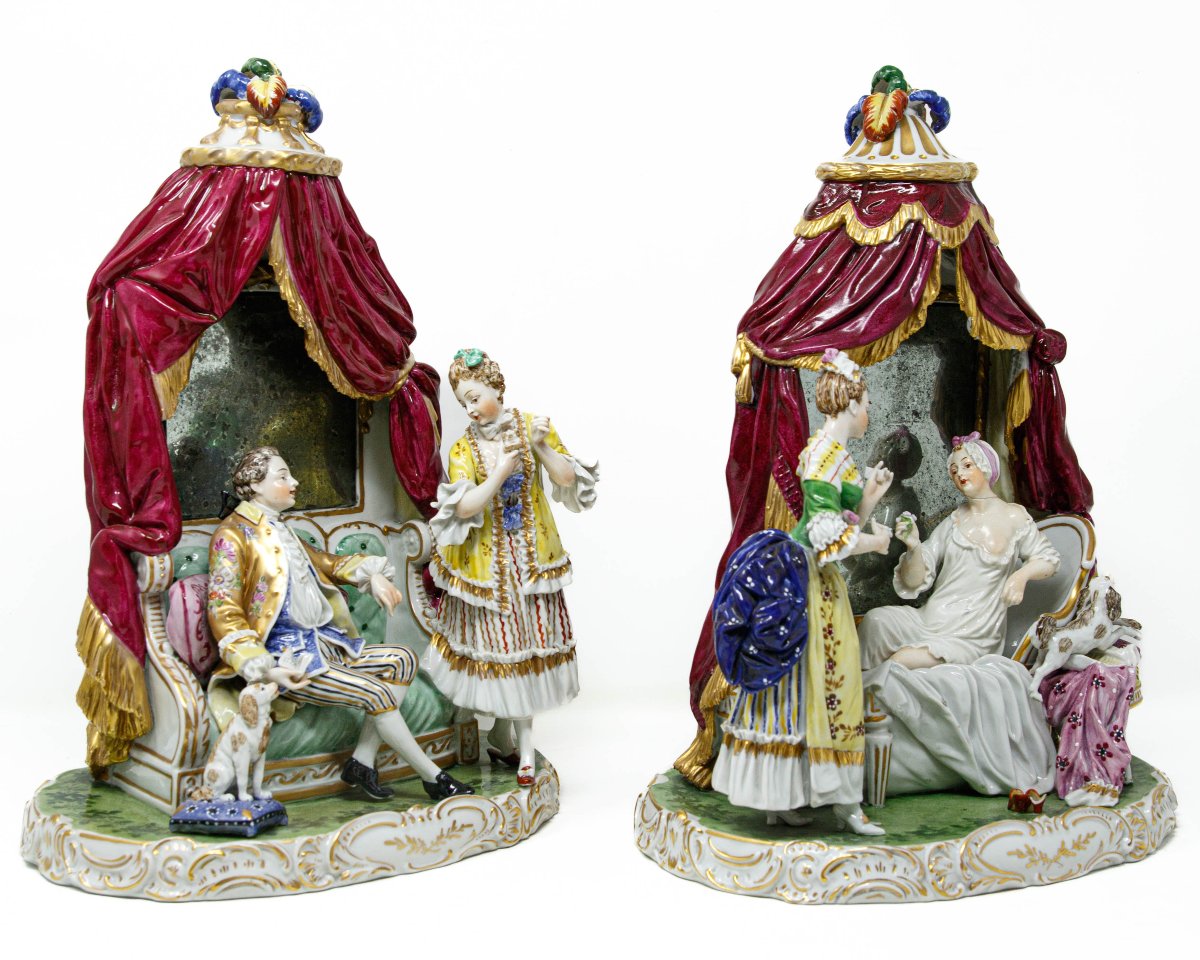
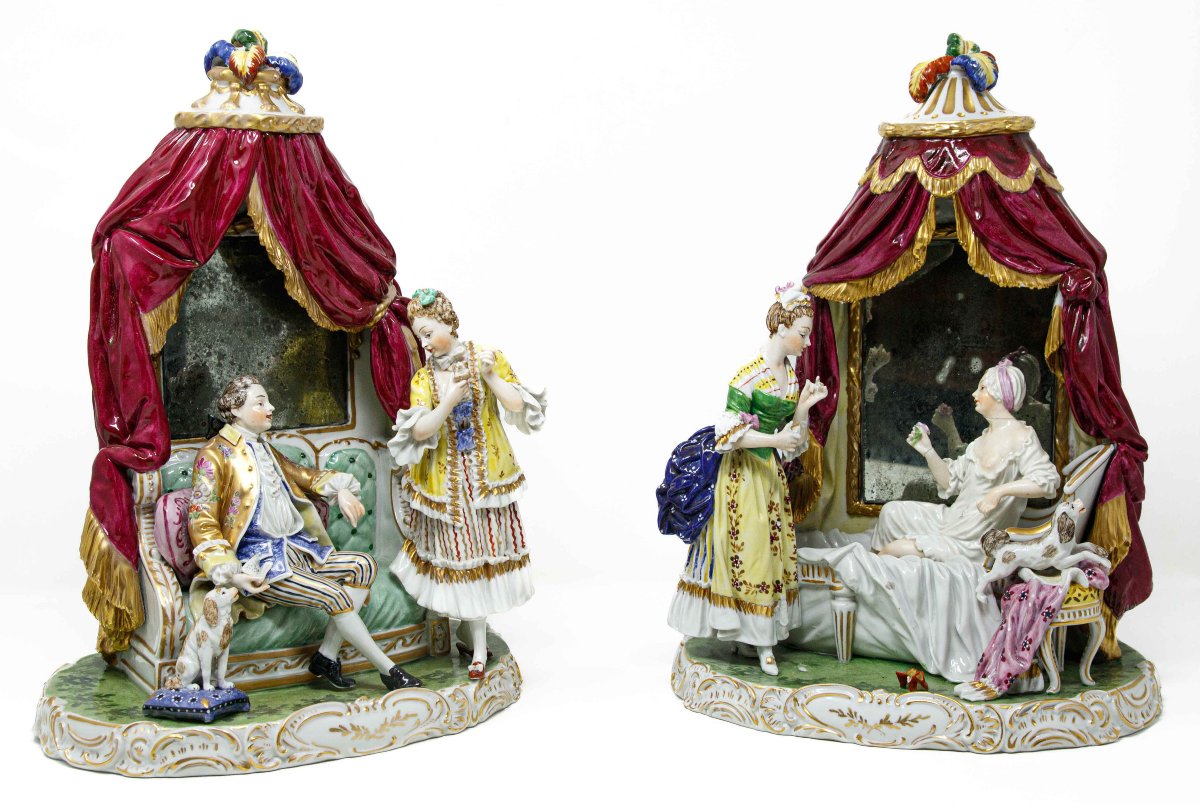
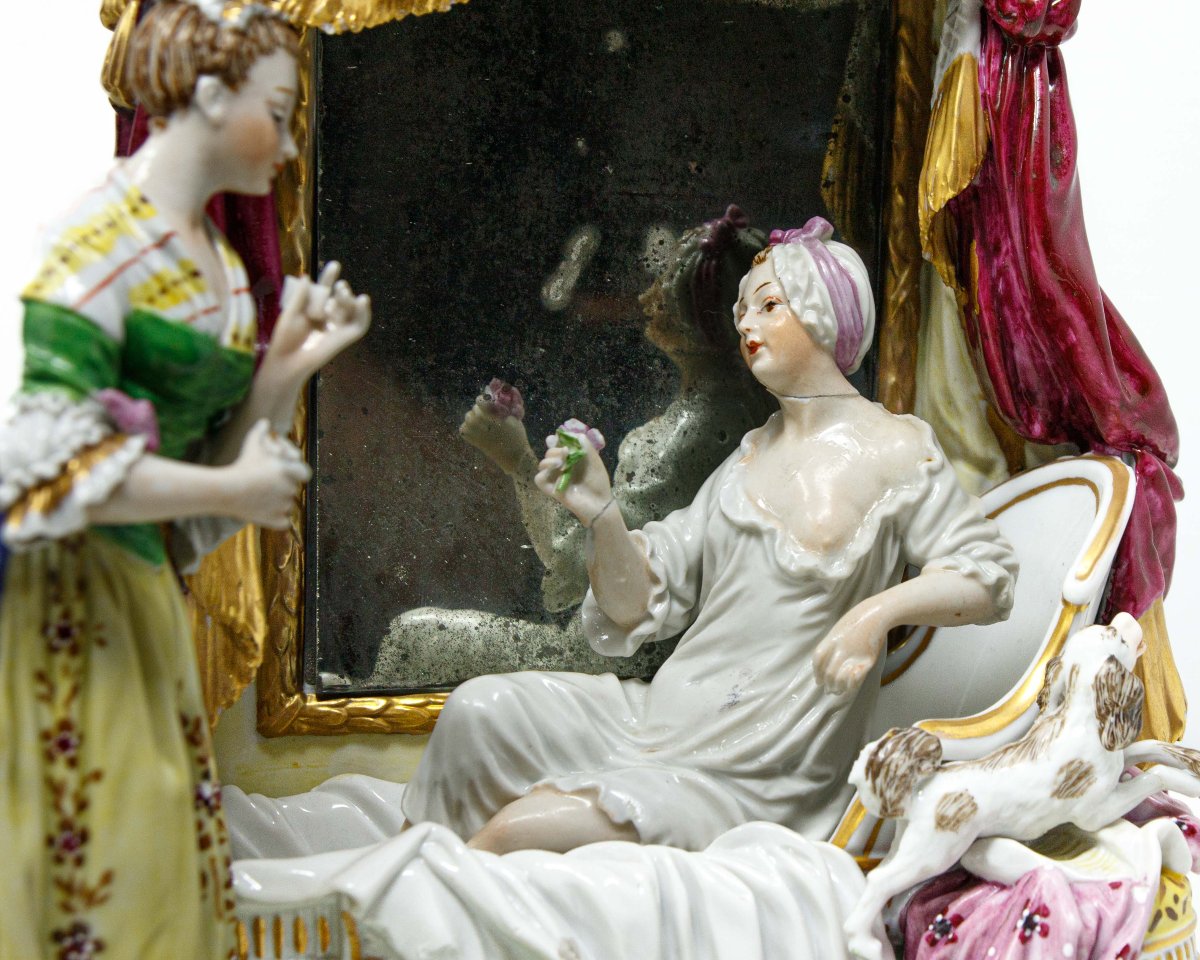
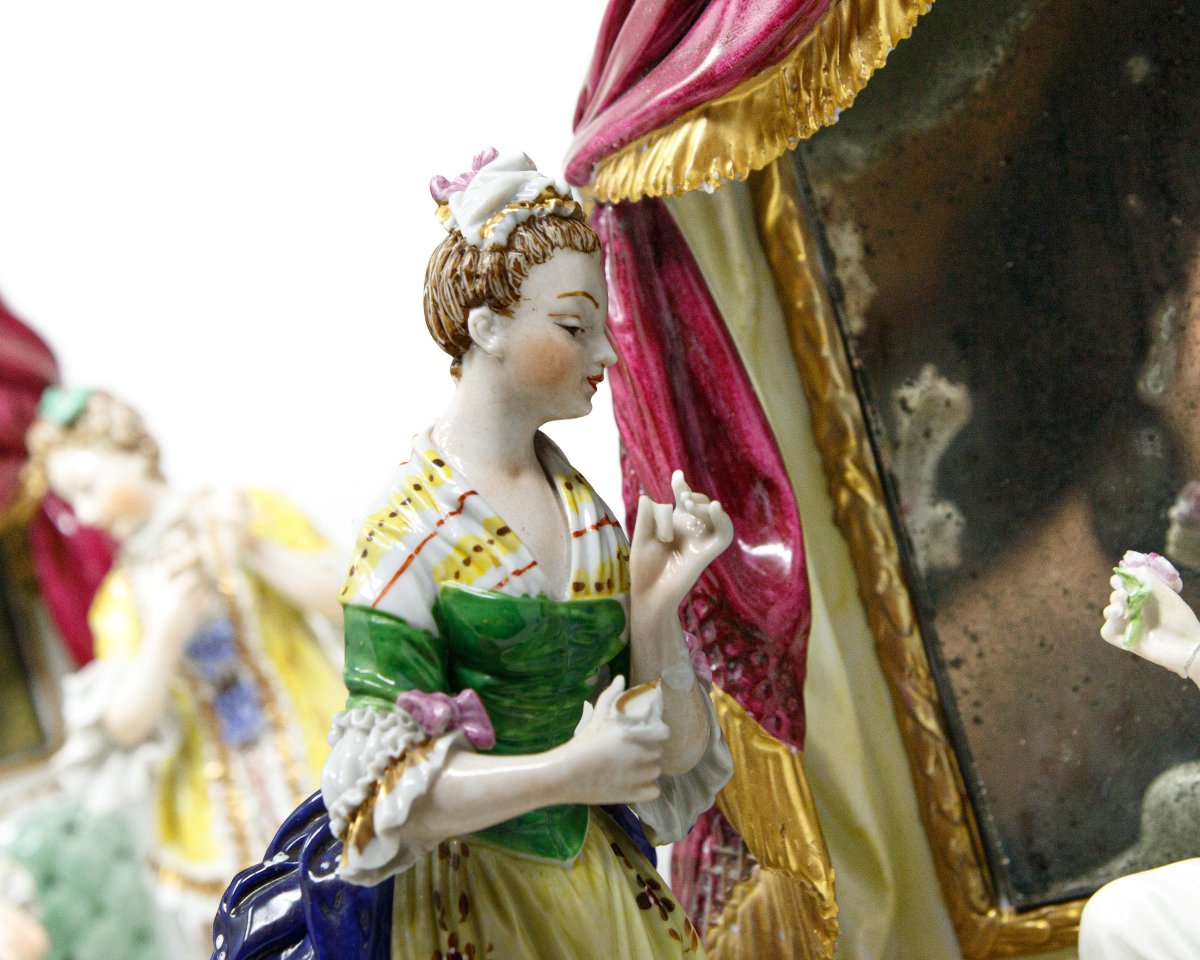
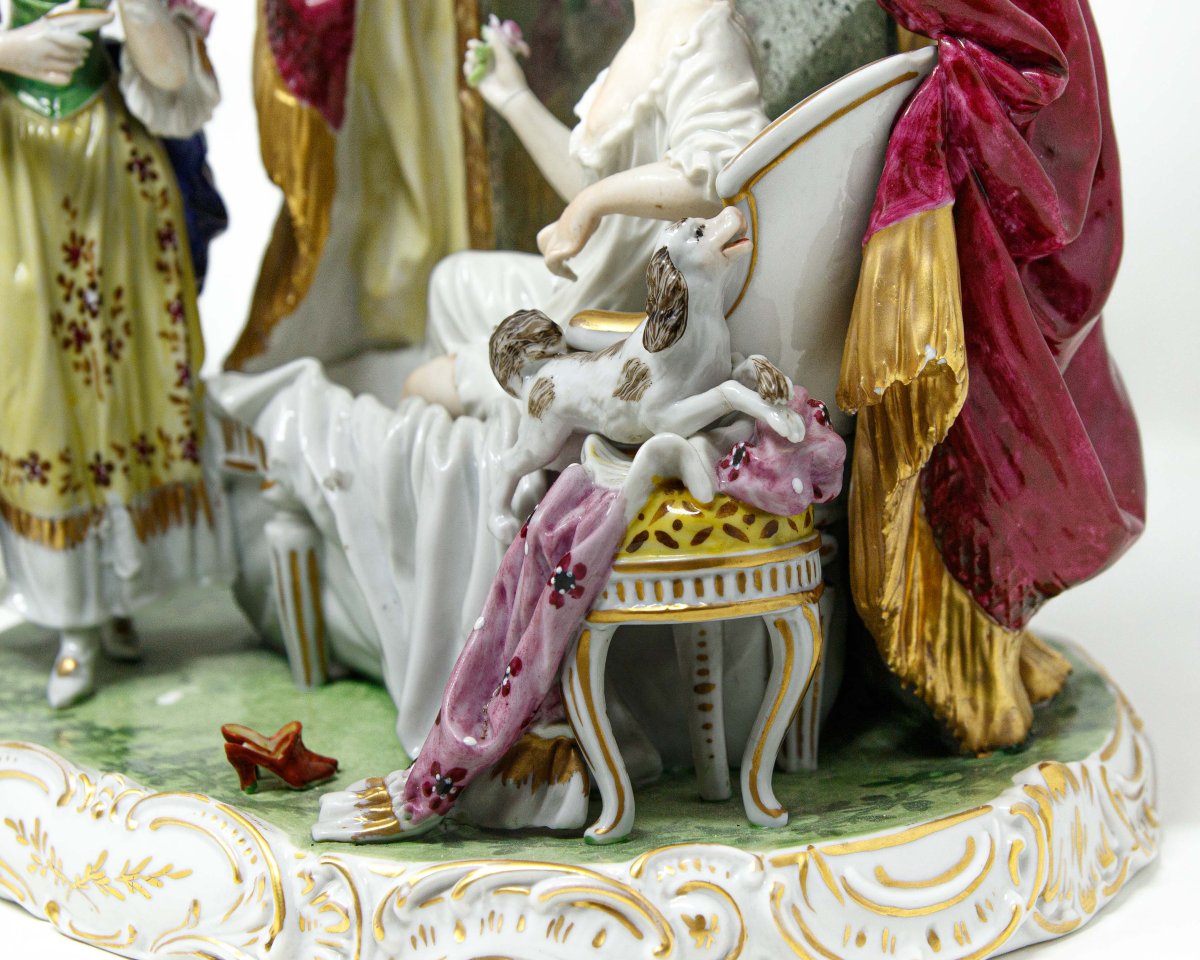
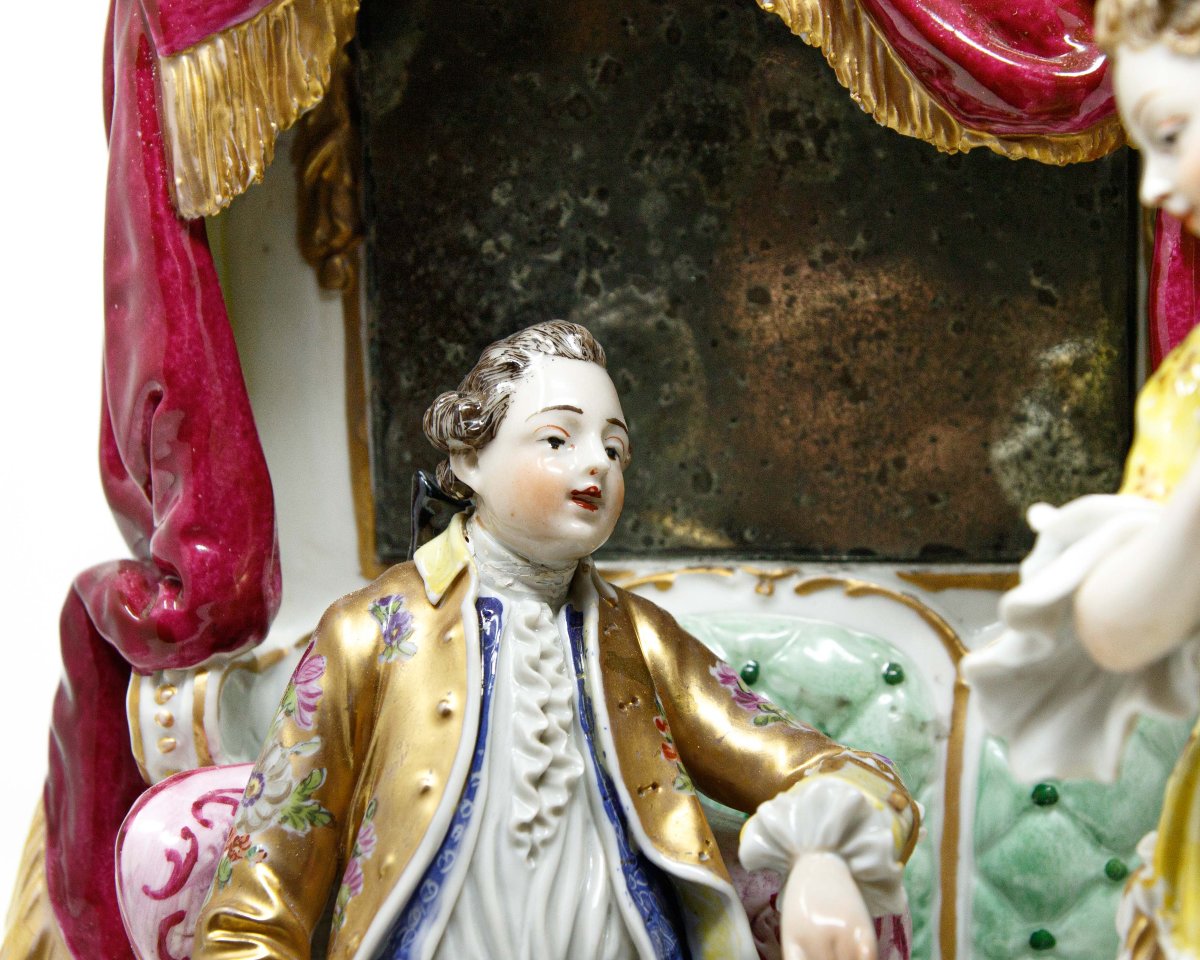
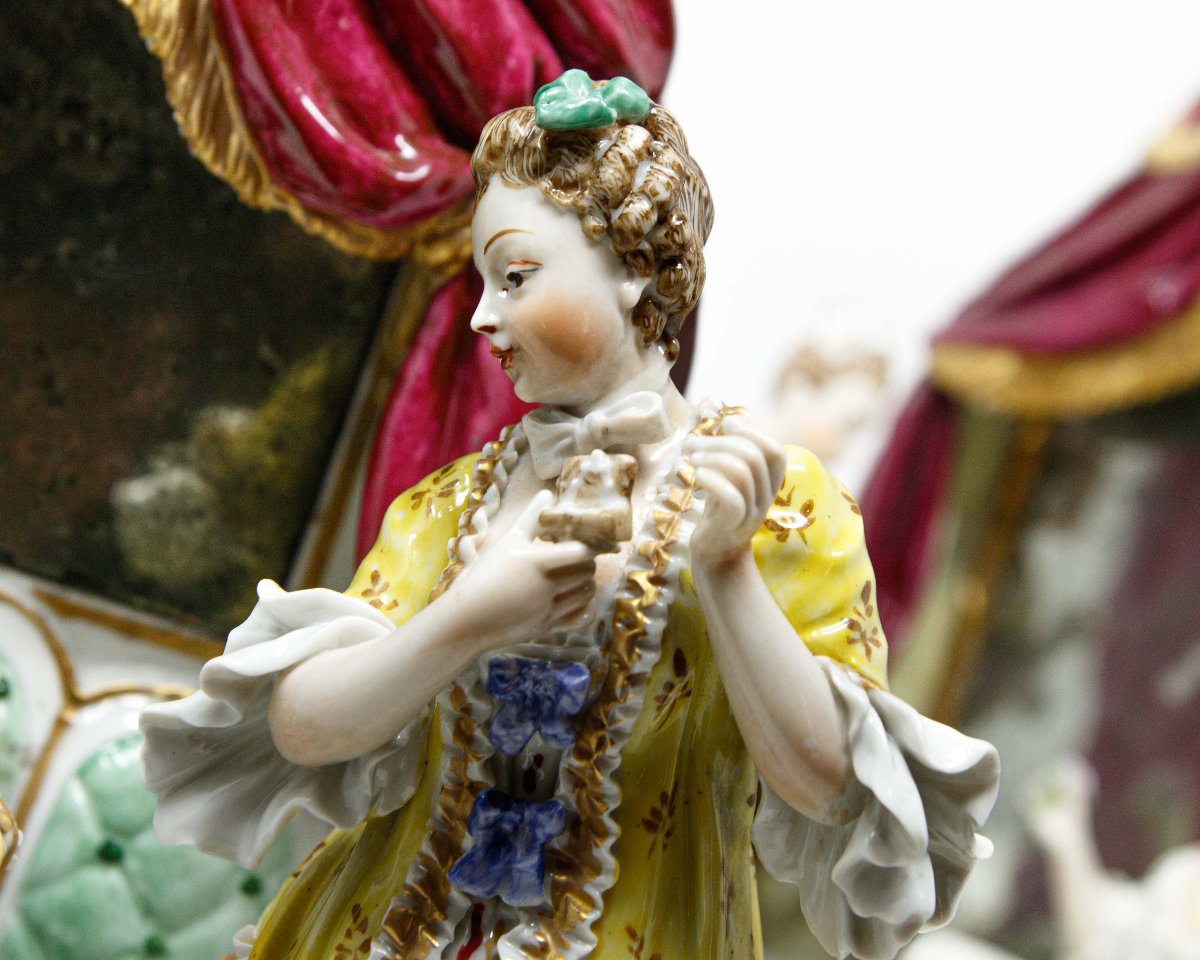
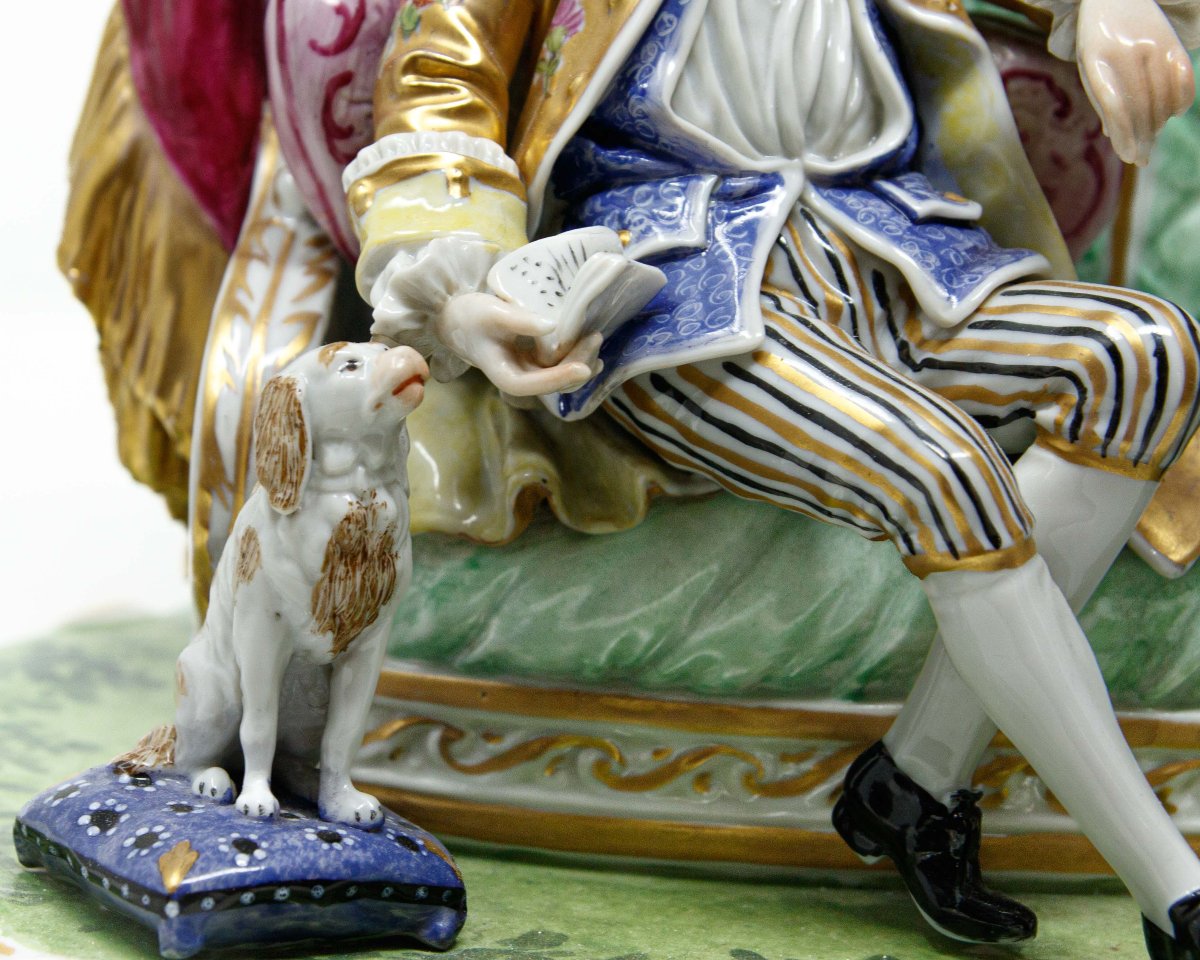
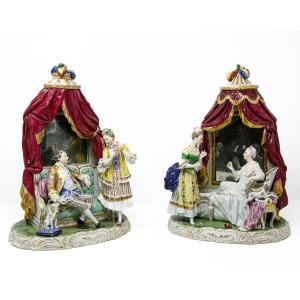
This pair of porcelain pieces represents one of the most fascinating and technically ambitious examples of European fine craftsmanship from the second half of the 19th century. Although the pieces bear the mark of the double “L” crossed with the letter “A”—a cultured homage to the Royal Sèvres Manufactory of 1753—their true essence lies in the extraordinary mastery of the Saxon workshops in the Dresden area, specialized in the use of so-called “hard” porcelain (discovered in Saxony at Meissen), which, unlike “soft” porcelain, allowed for the creation of sharp and durable details such as, for example, the hems of garments and canopies. In this era of great artistic ferment, porcelain was no longer merely a medium but a vehicle for celebrating the splendor of Rococo taste, reinterpreting it with a precision of material and a vibrancy of color that the techniques of the previous century could not have achieved. The scenographic composition immediately strikes the viewer with its structural audacity: the two groups, conceived to be admired as a pair of pendants, unfold around imposing textile canopies. The drapery of the curtains, rendered with a virtuosic realism that simulates their weight and softness, is dyed a deep crimson red, a saturated hue that creates a regal contrast with the pristine purity of the hard porcelain. The inclusion of original mercury mirrors, set at the heart of the sculptures, is not merely a decorative flourish but a theatrical device that multiplies the depth of the scene, inviting the viewer to share in the intimacy of the figures depicted. The courtly scenes immortalized in the two groups evoke the world of Watteau and Fragonard, where courtship and personal grooming become art forms. On one side, we witness a courteous conversation between a gentleman in formal attire and an elegantly dressed lady; on the other, a more private scene depicts a noblewoman at the mirror, captured in the delicacy of her negligee. The presence of small companion dogs, modeled with a natural vitality that seems almost to animate the porcelain, adds a touch of grace and domesticity to the rigor of the composition. The richness of this sculptural pair lies largely in the incredible attention to sartorial detail, which transforms the porcelain into a veritable showcase of historical fashion. The decoration of the garments is not limited to a simple application of color, but seeks to reproduce the texture of fine fabrics through miniature painting of the highest caliber. Delicate bouquets of flowers bloom on the protagonists’ garments, painted with such precision as to recall the silk embroidery of Lyonese workshops, while the gold stripes and geometric patterns on the trousers and vests evoke the complexity of 18th-century brocades. The use of pure gold on the edges of the jackets and cuffs is not merely decorative but serves to simulate the heavy metallic braids that, at the time, defined the social rank of those who wore them. Every detail, therefore, from the figures’ slender fingers to the golden scrolls on the agate-patterned burnished bases, attests to a level of craftsmanship that elevates these pieces far beyond their simple function as decorative objects, making them true milestones in 19th-century ceramic sculpture. The work reflects the historicist trend in European ceramic production of the second half of the 19th century, characterized by a revival of the formal stylistic elements of the Ancien Régime. The value of the set is determined primarily by the integrity of the pair and the structural complexity of the canopies with recessed mirrors. These technical and craftsmanship elements distinguish these pieces from common mass-produced statuary, classifying them as decorative art objects of high manufacturing quality.
Period: 19th century
Style: Other Style
Condition: Good condition
Material: Porcelain
Width: 23
Height: 33
Reference (ID): 1759931
Availability: In stock