


Pietro Longhi (venice, 1701 - 1785), The Confession
Pietro Longhi (Venice, 1701 - 1785)
The Confession
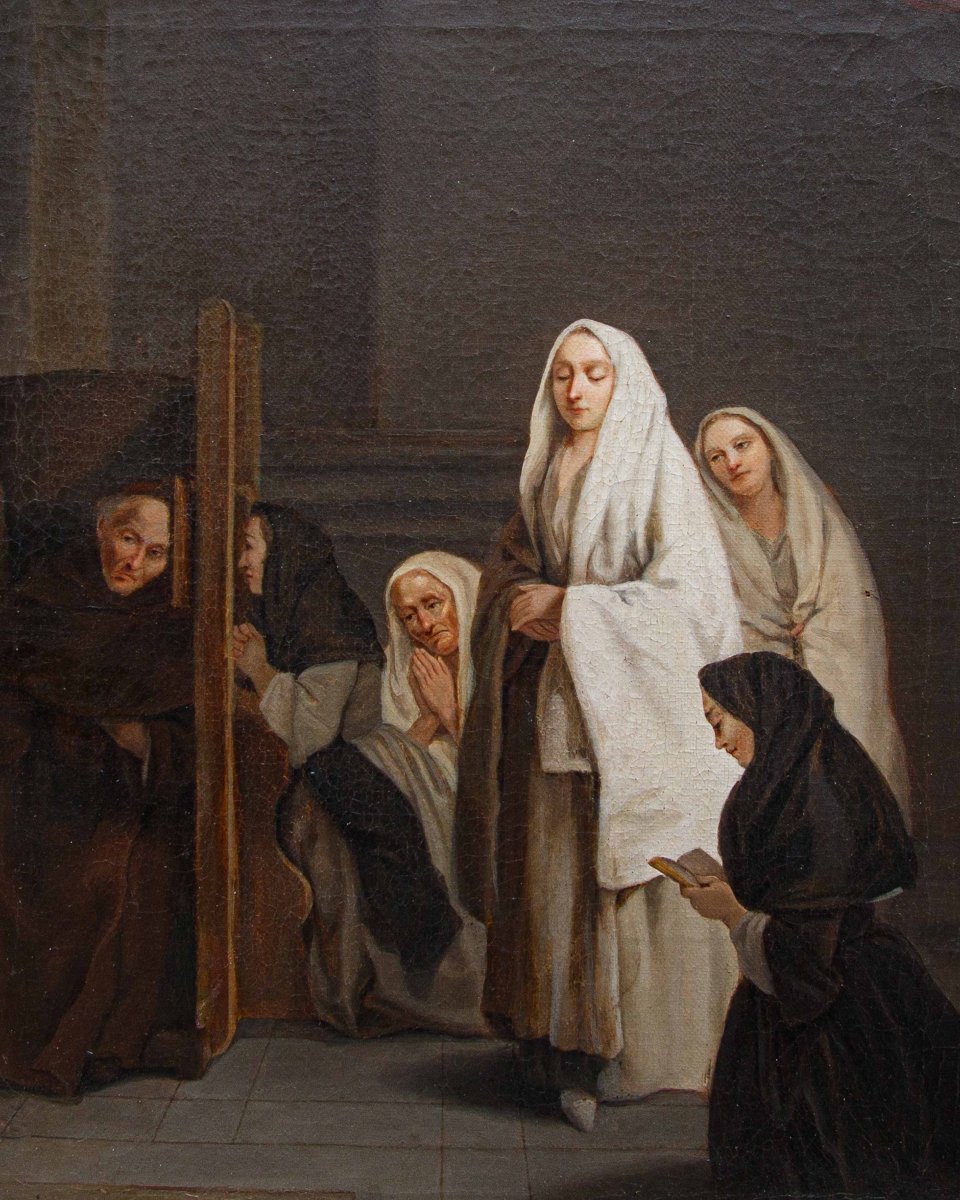
Oil on canvas, cm 54.5 x 44.5
with frame cm 67 x 59
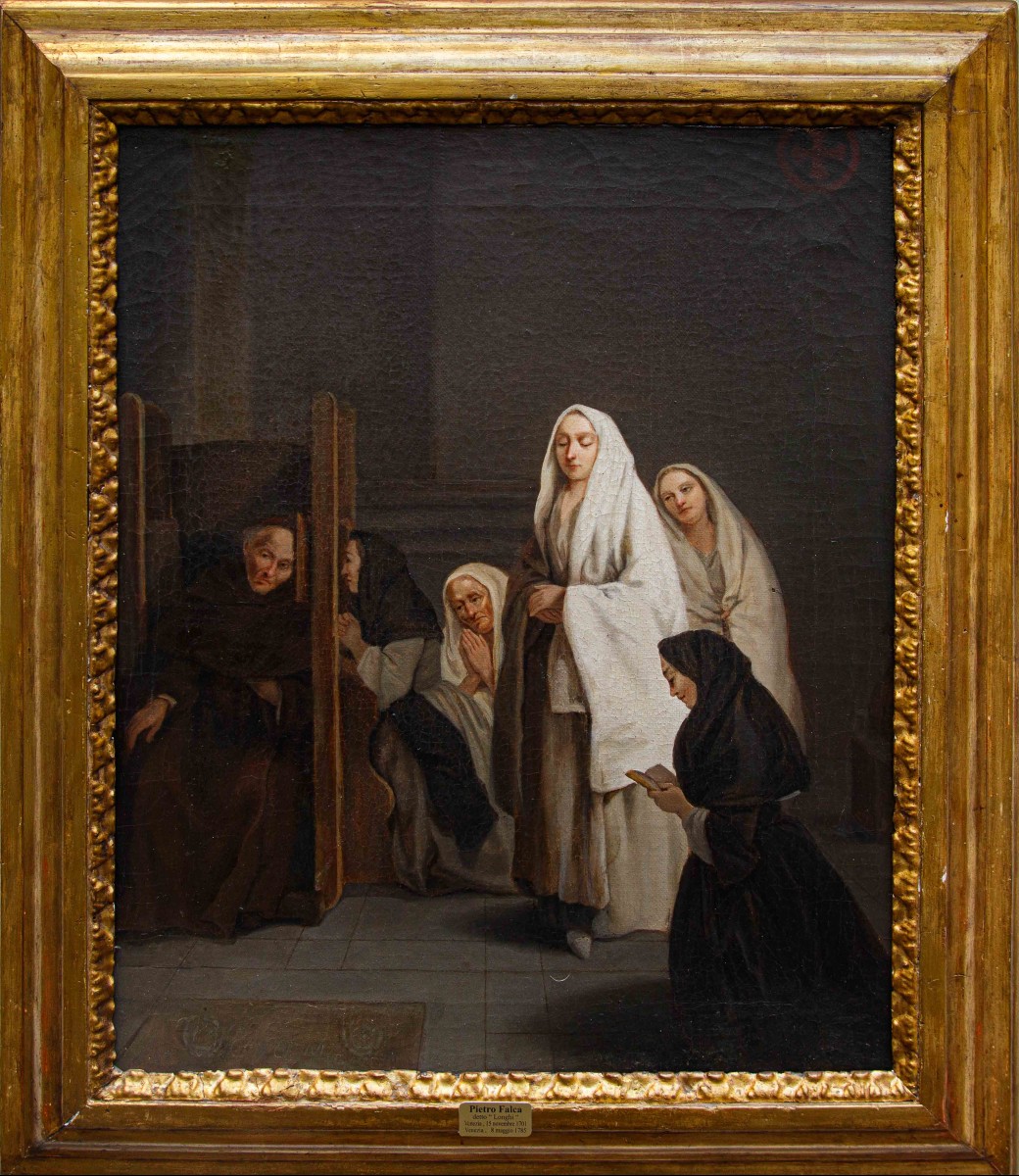
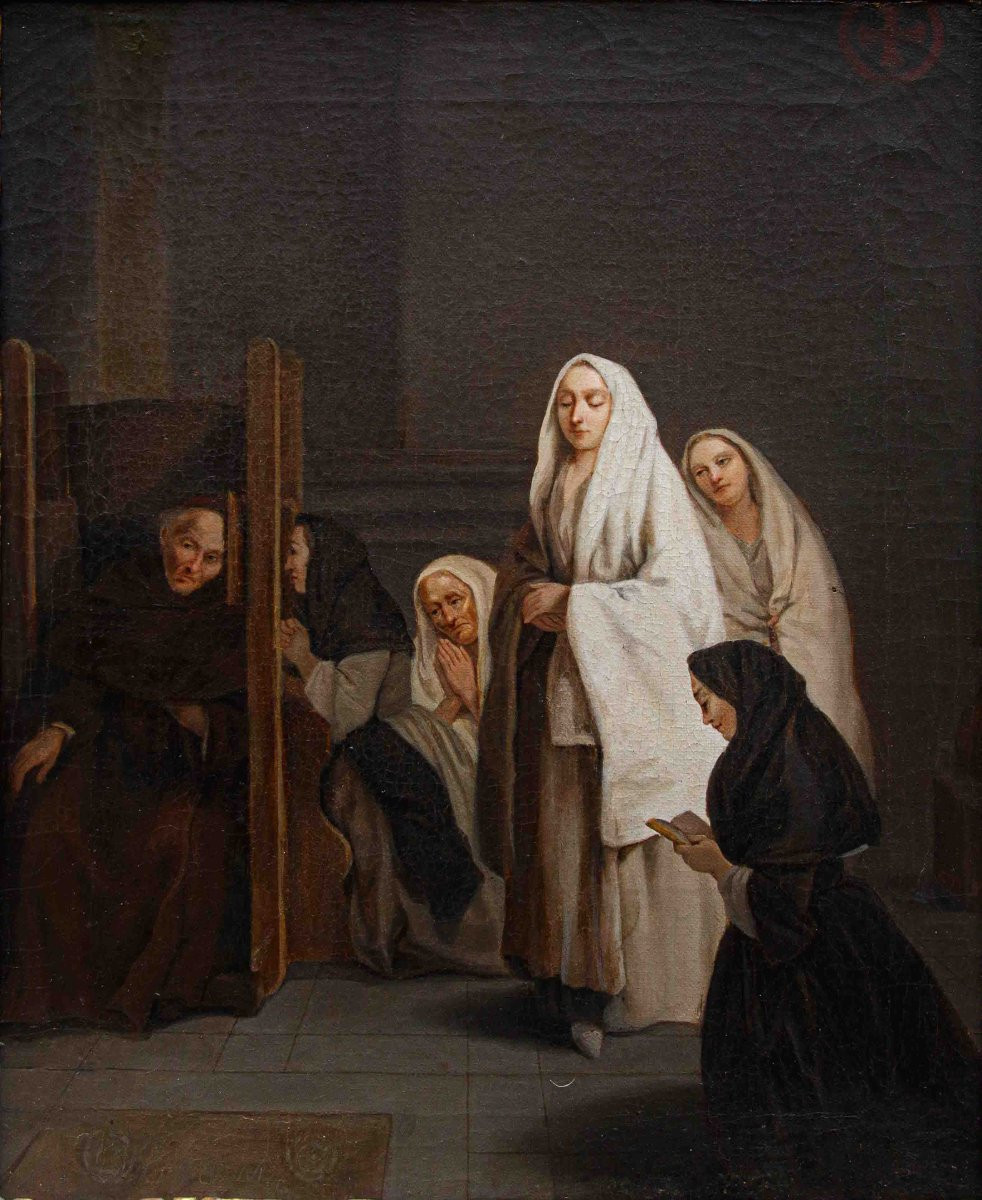
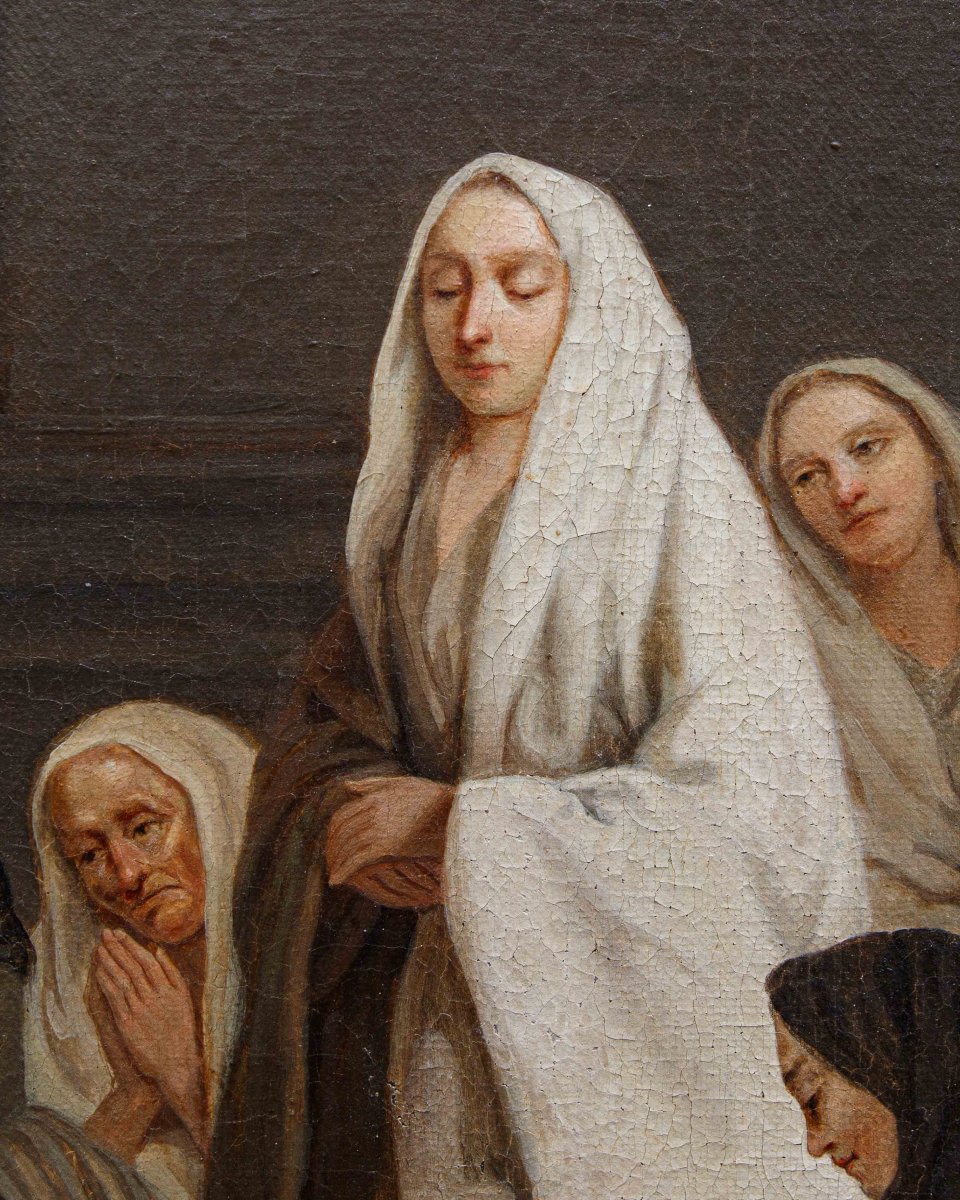
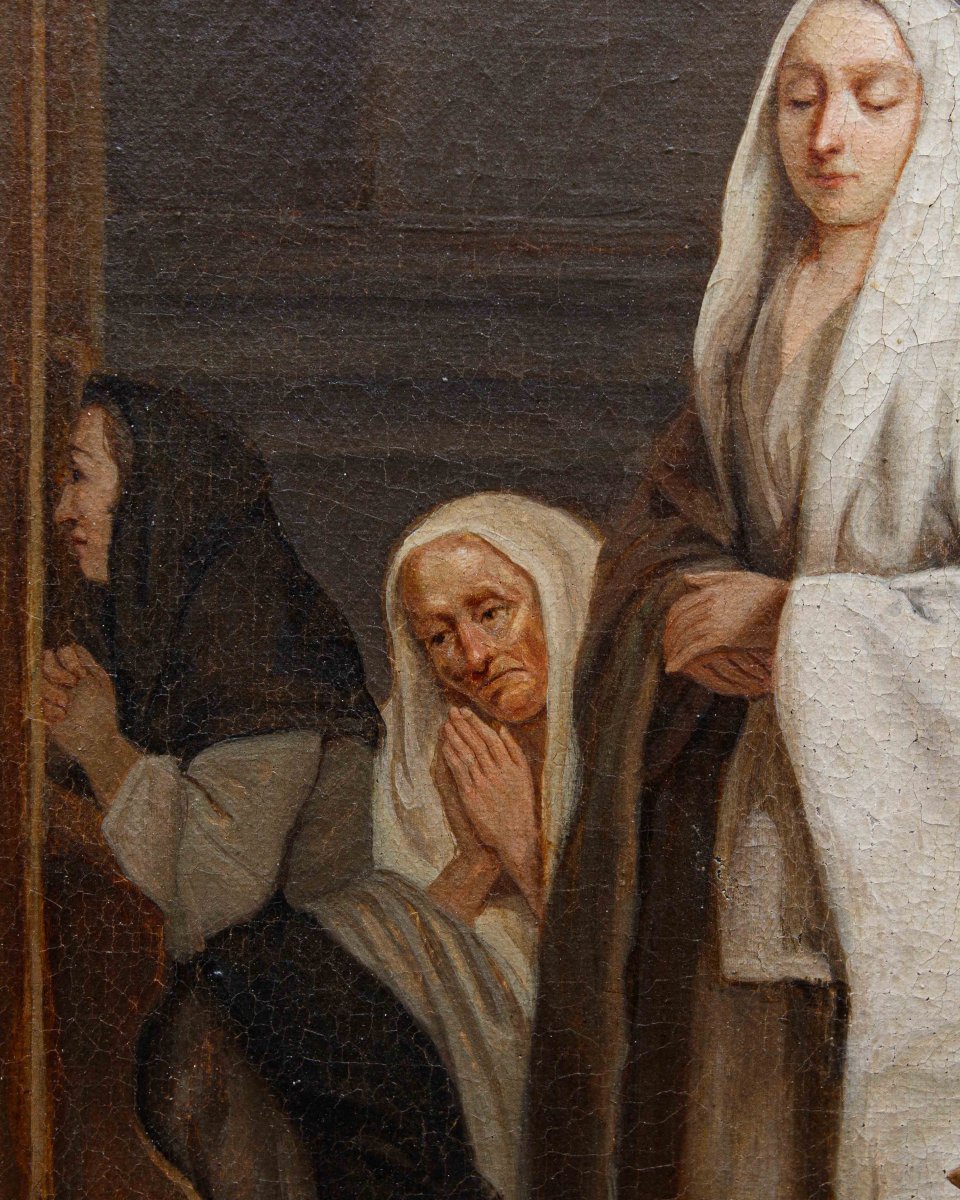
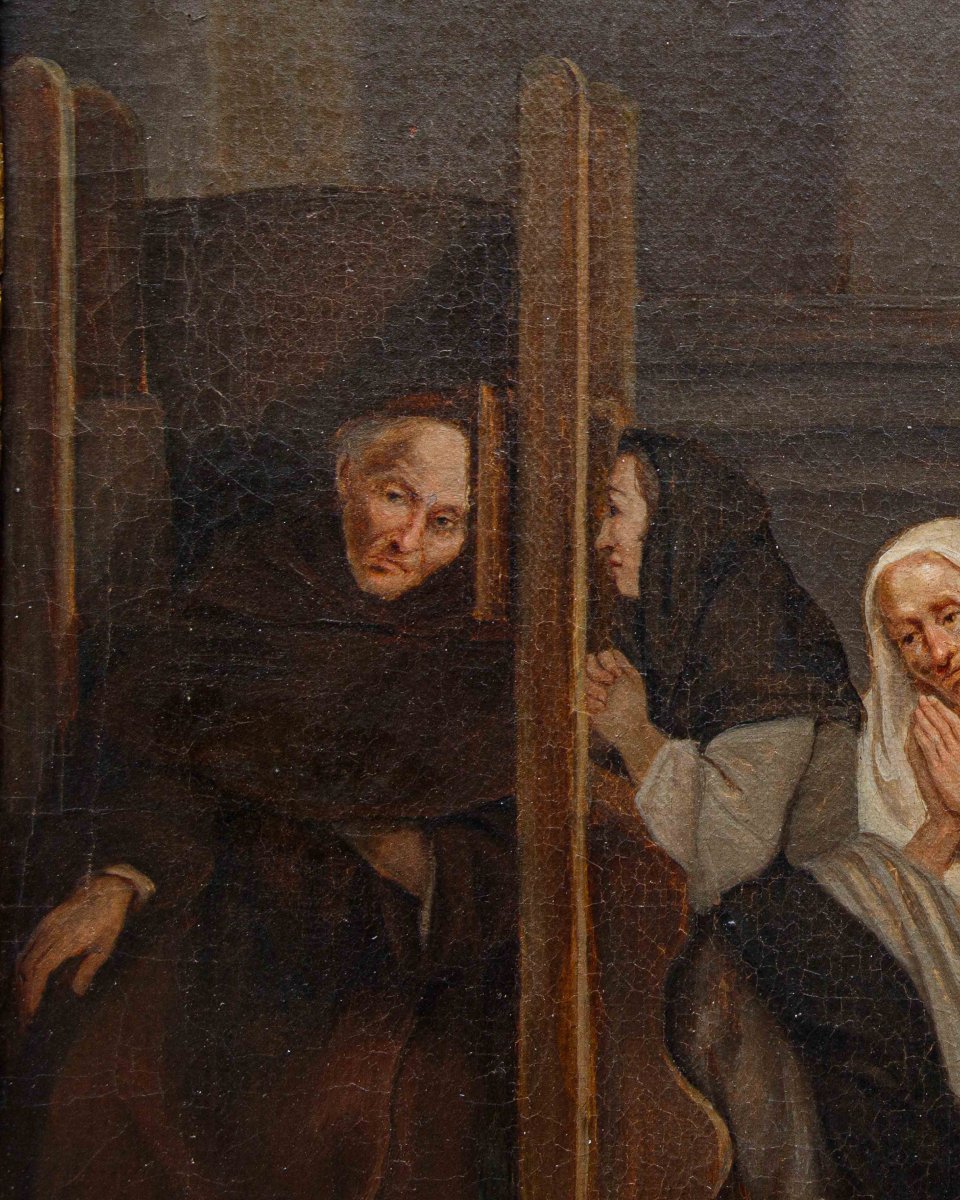
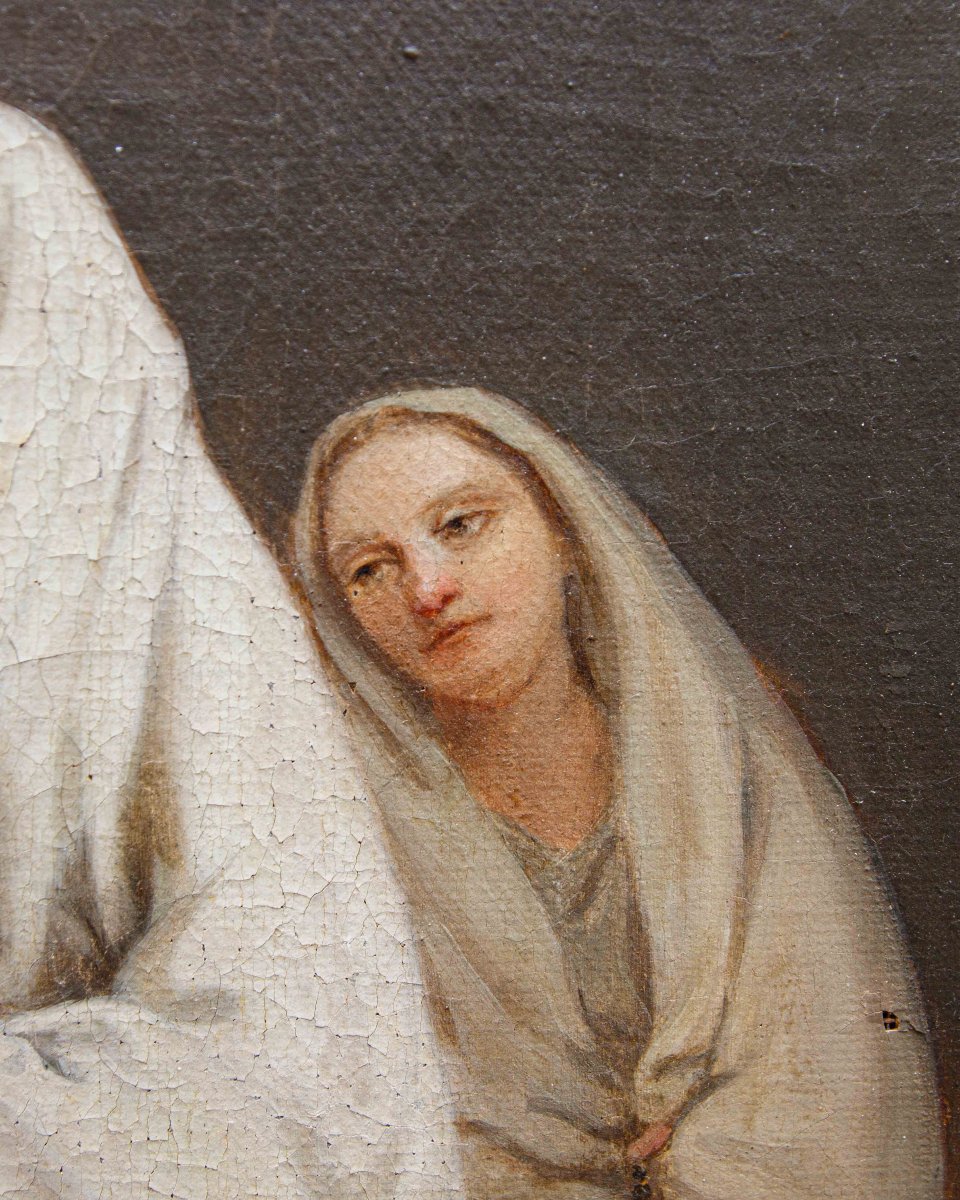
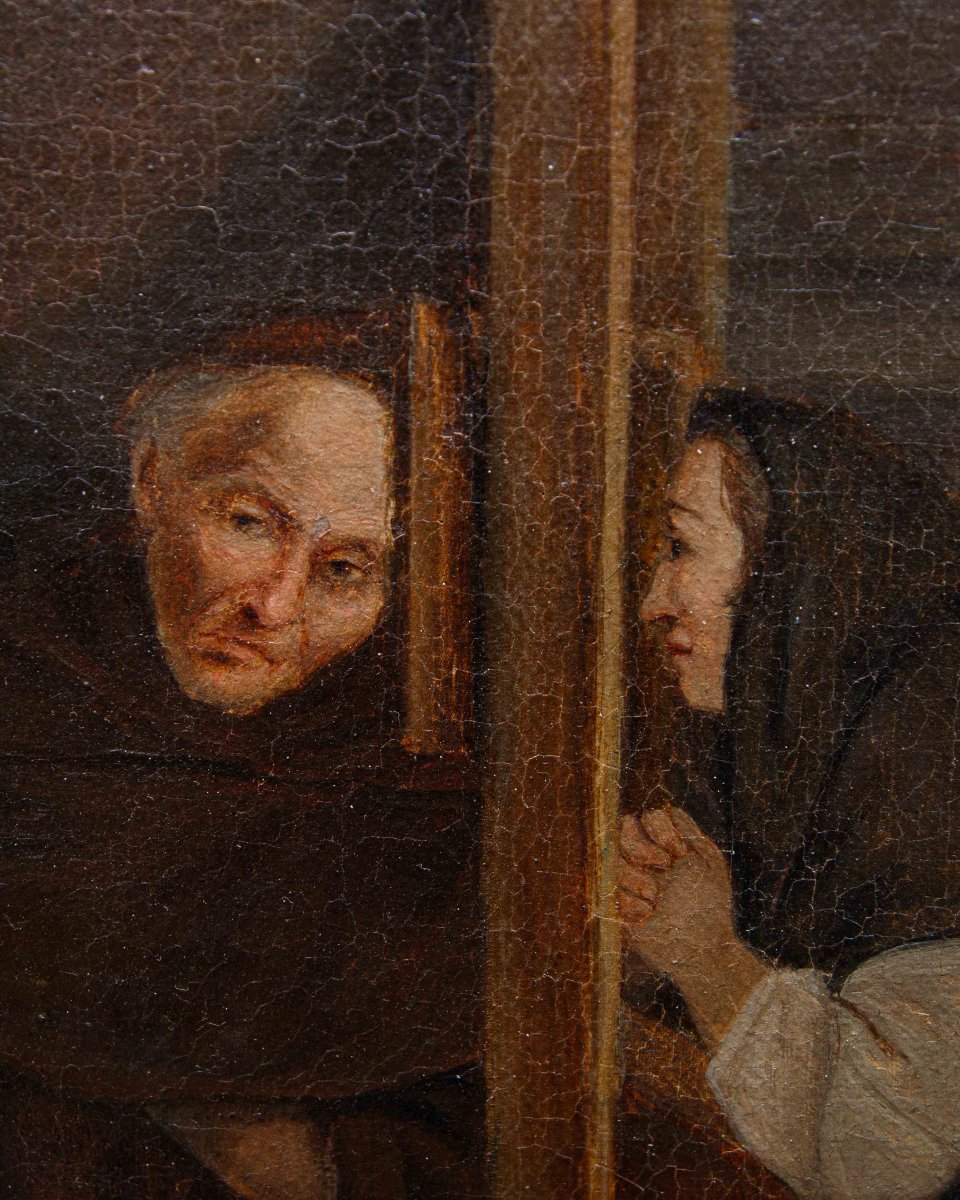
The canvas under examination depicts a subject, The Confession, taken up in several variations by Pietro Longhi. This model in particular refers to a work by Longhi preserved in the Galleria Querini Stampalia in Venice from which Marco Alvise made an engraving, preserved in the Luigi Bailo museum in Treviso by Marco Alvise. Upon careful observation, however, it can be noted that the engraving presents slight differences from the work at the Stampalia; differences that become analogies when compared to the work analyzed here. In this regard, in addition to the presence of the dog, note the closed, rather than open, eyes of the female figure in the center and the symbol in the upper right, rather than the clock.
Regarding the canvas under examination, Longhi devoted himself several times to the subject of the Sacraments and the Confession itself. Another similar work is exhibited at the Uffizi in Florence.
The Venetian painter Pietro Longhi, real name Pietro Antonio Falca, was born in Venice in 1701. His first training took place in the workshop of his father, a silversmith. From an early age, in fact, Pietro showed a great aptitude for art and his father encouraged him to use drawing techniques. He met the famous painter Antonio Balestra with whom he worked together learning the art of painting. From around 1734 Longhi's work abandoned religious painting for a certain period to devote itself to genre painting. Longhi also moved to Bologna where he became acquainted with the painting of Gambarini, a refined painter of genre scenes. On his return to Venice, he devoted himself to painting scenes of everyday life of the Venetian bourgeoisie, following the style of Nicolas Lancret although in a more ironic way. His paintings can provide detailed documentation of Venetian life, demonstrating the artist's interest in the social life of the time. In the first half of the 1950s he devoted himself to the representation of careers, that is, scenes of real and common popular and bourgeois activities. Around the 1960s his shades became brownish with poorly crafted perspective lines, very close to Rembrandt's style.
In 1763 Pietro Longhi was director of the Pisani Academy of Drawing and Carving and devoted himself to portraits with the help of his son Alessandro.
The great Venetian playwright Carlo Goldoni (1707-1793) praises Longhi's dedication to representing the manias of contemporary society. In fact, Longhi's work, full of humor and irony, is a bit like Goldoni's comedies. The artist is also mentioned in Carlo Goldoni's works "Le commedie". Their activity moves in parallel on two different artistic fronts: that of theatre and that of art.
The Confession
Oil on canvas, cm 54.5 x 44.5
with frame cm 67 x 59
The canvas under examination depicts a subject, The Confession, taken up in several variations by Pietro Longhi. This model in particular refers to a work by Longhi preserved in the Galleria Querini Stampalia in Venice from which Marco Alvise made an engraving, preserved in the Luigi Bailo museum in Treviso by Marco Alvise. Upon careful observation, however, it can be noted that the engraving presents slight differences from the work at the Stampalia; differences that become analogies when compared to the work analyzed here. In this regard, in addition to the presence of the dog, note the closed, rather than open, eyes of the female figure in the center and the symbol in the upper right, rather than the clock.
Regarding the canvas under examination, Longhi devoted himself several times to the subject of the Sacraments and the Confession itself. Another similar work is exhibited at the Uffizi in Florence.
The Venetian painter Pietro Longhi, real name Pietro Antonio Falca, was born in Venice in 1701. His first training took place in the workshop of his father, a silversmith. From an early age, in fact, Pietro showed a great aptitude for art and his father encouraged him to use drawing techniques. He met the famous painter Antonio Balestra with whom he worked together learning the art of painting. From around 1734 Longhi's work abandoned religious painting for a certain period to devote itself to genre painting. Longhi also moved to Bologna where he became acquainted with the painting of Gambarini, a refined painter of genre scenes. On his return to Venice, he devoted himself to painting scenes of everyday life of the Venetian bourgeoisie, following the style of Nicolas Lancret although in a more ironic way. His paintings can provide detailed documentation of Venetian life, demonstrating the artist's interest in the social life of the time. In the first half of the 1950s he devoted himself to the representation of careers, that is, scenes of real and common popular and bourgeois activities. Around the 1960s his shades became brownish with poorly crafted perspective lines, very close to Rembrandt's style.
In 1763 Pietro Longhi was director of the Pisani Academy of Drawing and Carving and devoted himself to portraits with the help of his son Alessandro.
The great Venetian playwright Carlo Goldoni (1707-1793) praises Longhi's dedication to representing the manias of contemporary society. In fact, Longhi's work, full of humor and irony, is a bit like Goldoni's comedies. The artist is also mentioned in Carlo Goldoni's works "Le commedie". Their activity moves in parallel on two different artistic fronts: that of theatre and that of art.
8 000 €
Period: 18th century
Style: Other Style
Condition: Good condition
Material: Oil painting
Width: 44,5
Height: 54,5
Reference (ID): 1718753
Availability: In stock
Print