

A Follower Of Melchior De Hondecoeter (1636–1695), 18th Century, A Rooster Defends A Hen
A follower of Melchior de Hondecoeter (Utrecht, 1636 – Amsterdam, April 3, 1695), 18th century
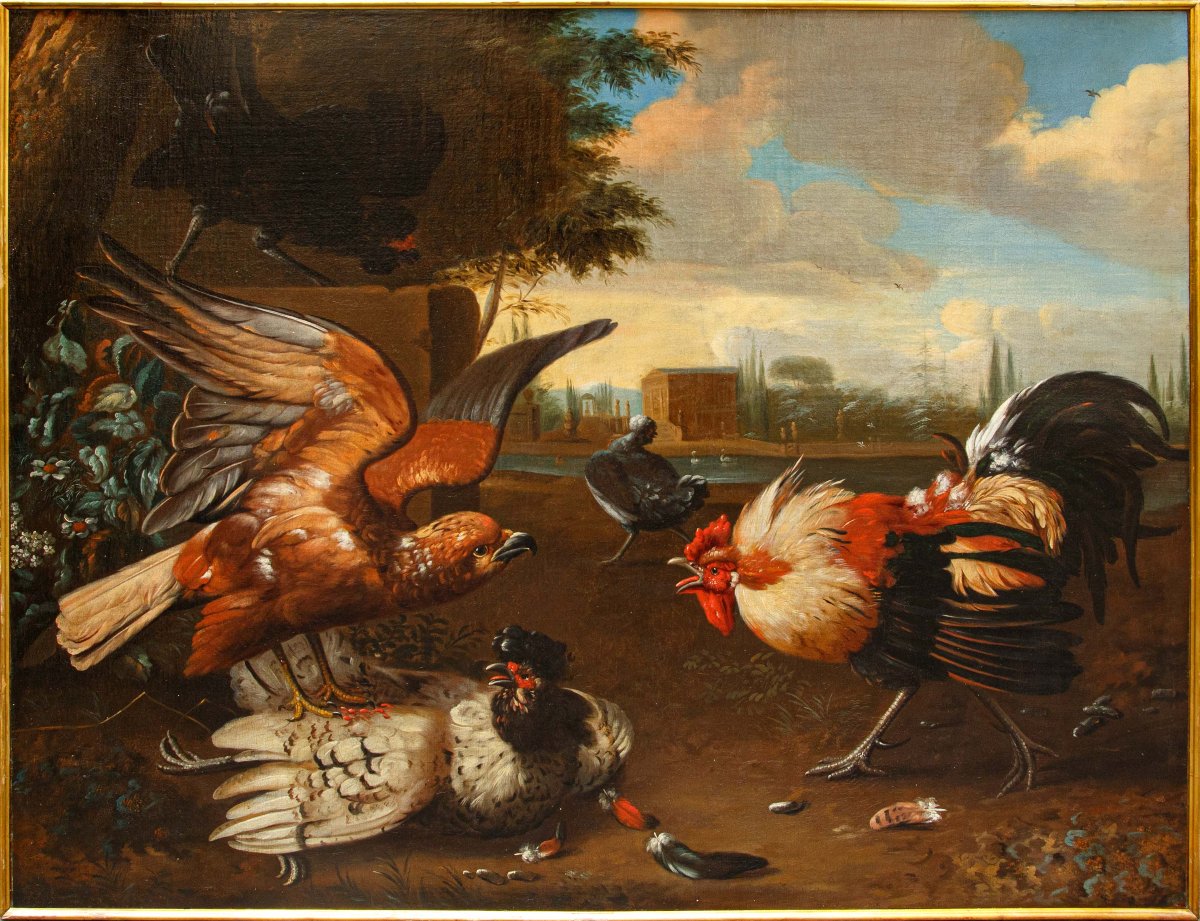
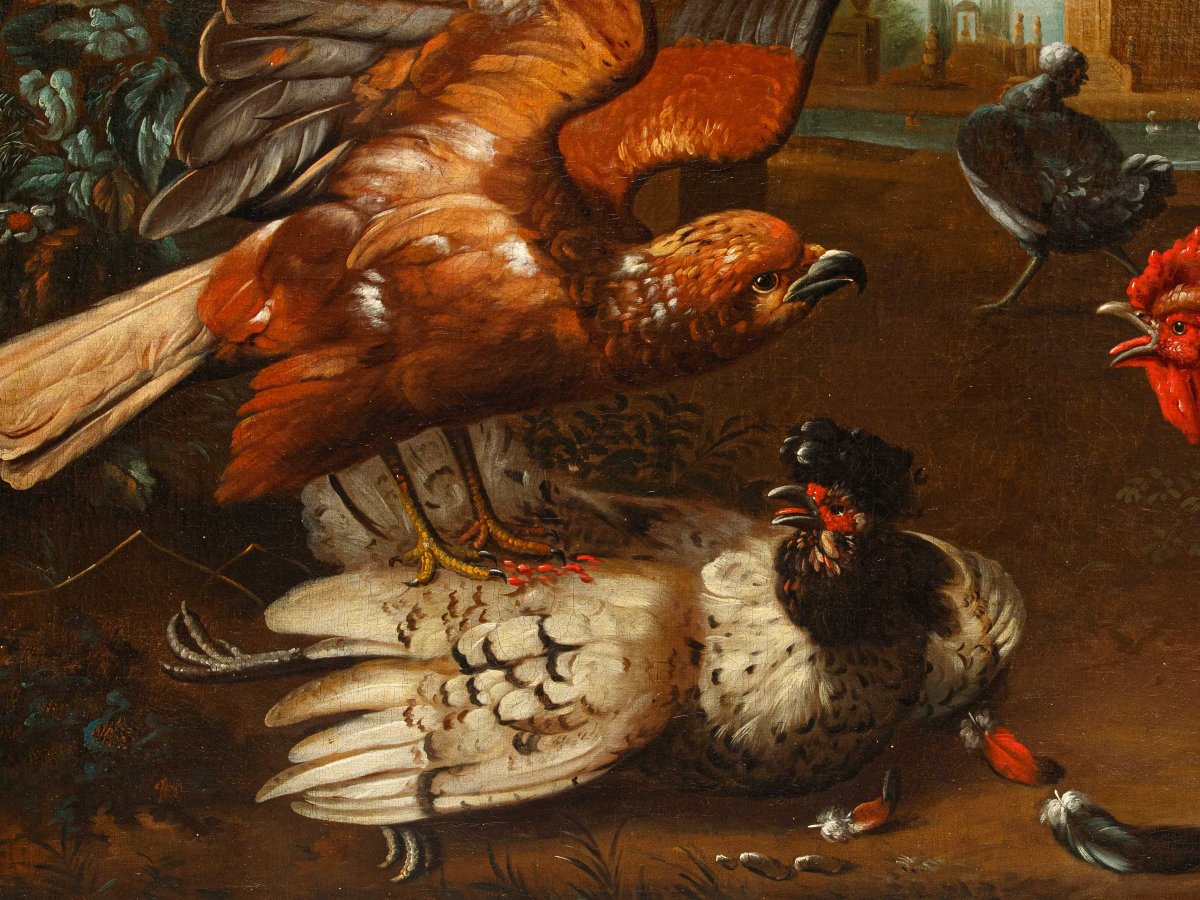
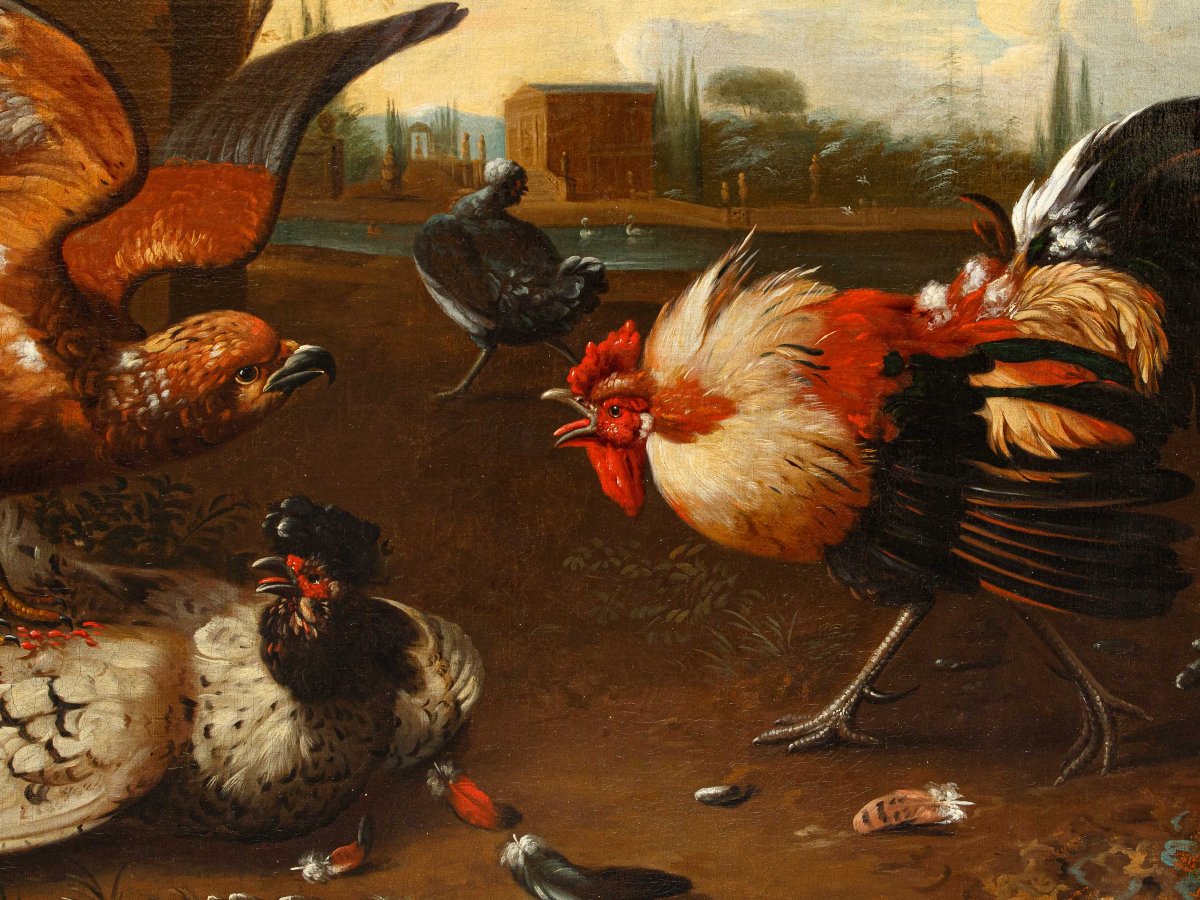
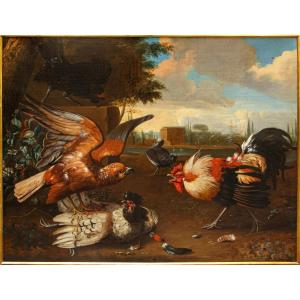
A rooster defends a hen from an attack by a bird of prey
Oil on canvas, 100 x 127 cm
In 17th-century Holland, Melchior de Hondecoeter was the most celebrated exponent of genre painting devoted to farmyard scenes. The work examined here, created by a refined 18th-century follower, eloquently attests to the enduring critical and stylistic success of the models created by the Utrecht master. Hondecoeter, a member of a dynasty of artists originally from Antwerp who had moved to the Netherlands for religious reasons, learned the art from his father, Gijsbert, and continued his studies with his uncle, Jan Baptist Weenix. From the latter, he inherited a taste for hunting scenes and Italianate landscapes, achieving a vivid and dynamic rendering of animals that earned him the nickname “Raphaël des oiseaux.” This splendid 18th-century canvas masterfully recreates one of the scenes animated by the strong theatrical dynamism that made the master famous, standing as a successful continuation of a tradition that foreshadowed the opulent decorative styles of the Rococo.
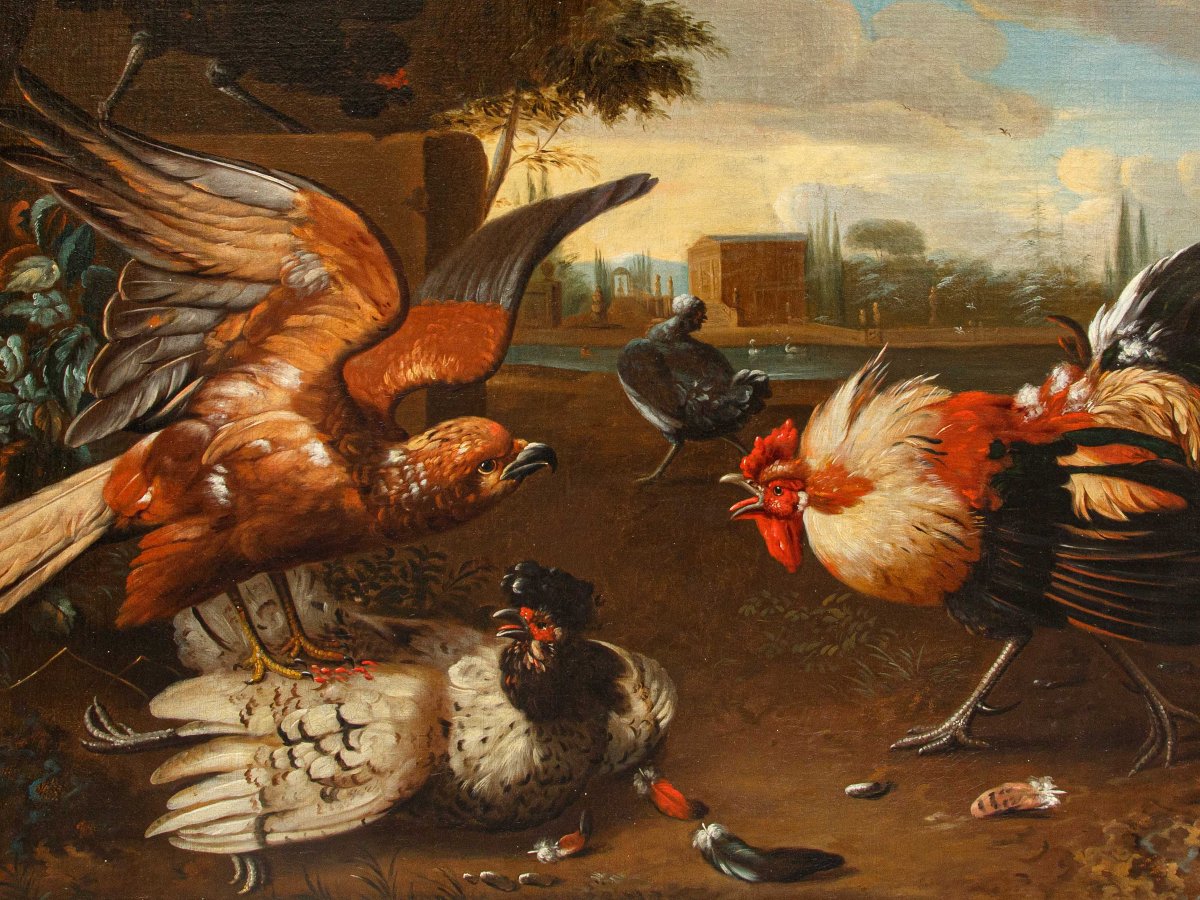
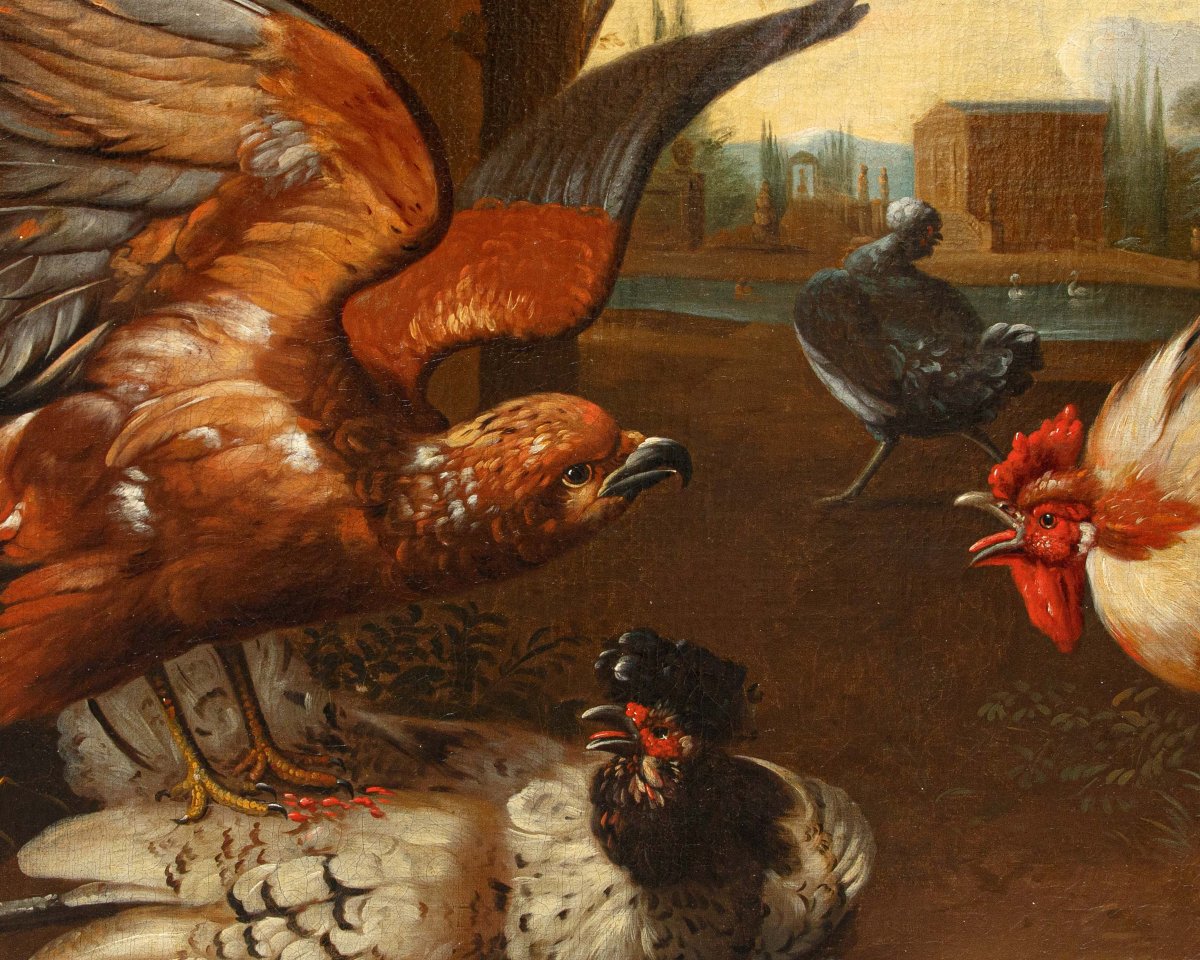
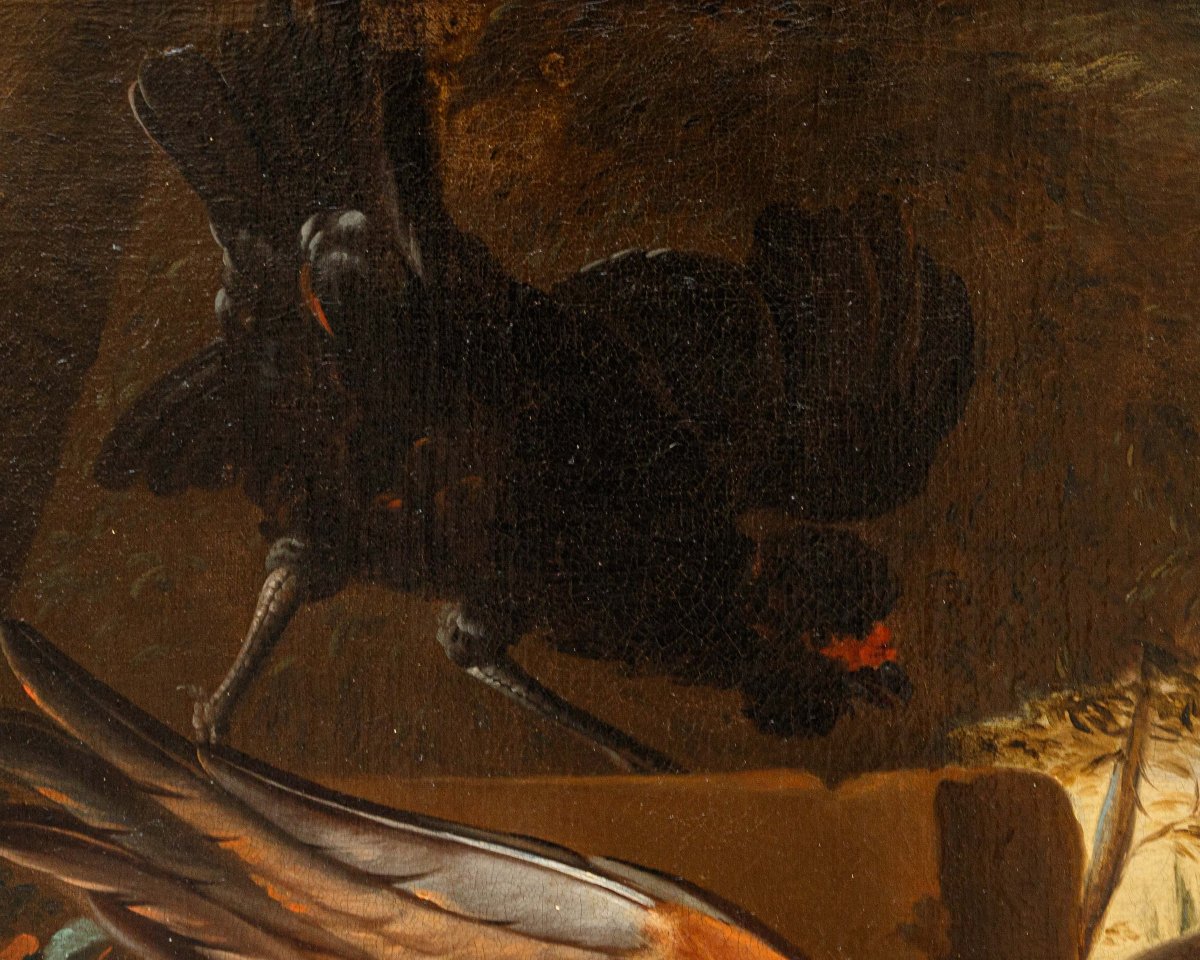
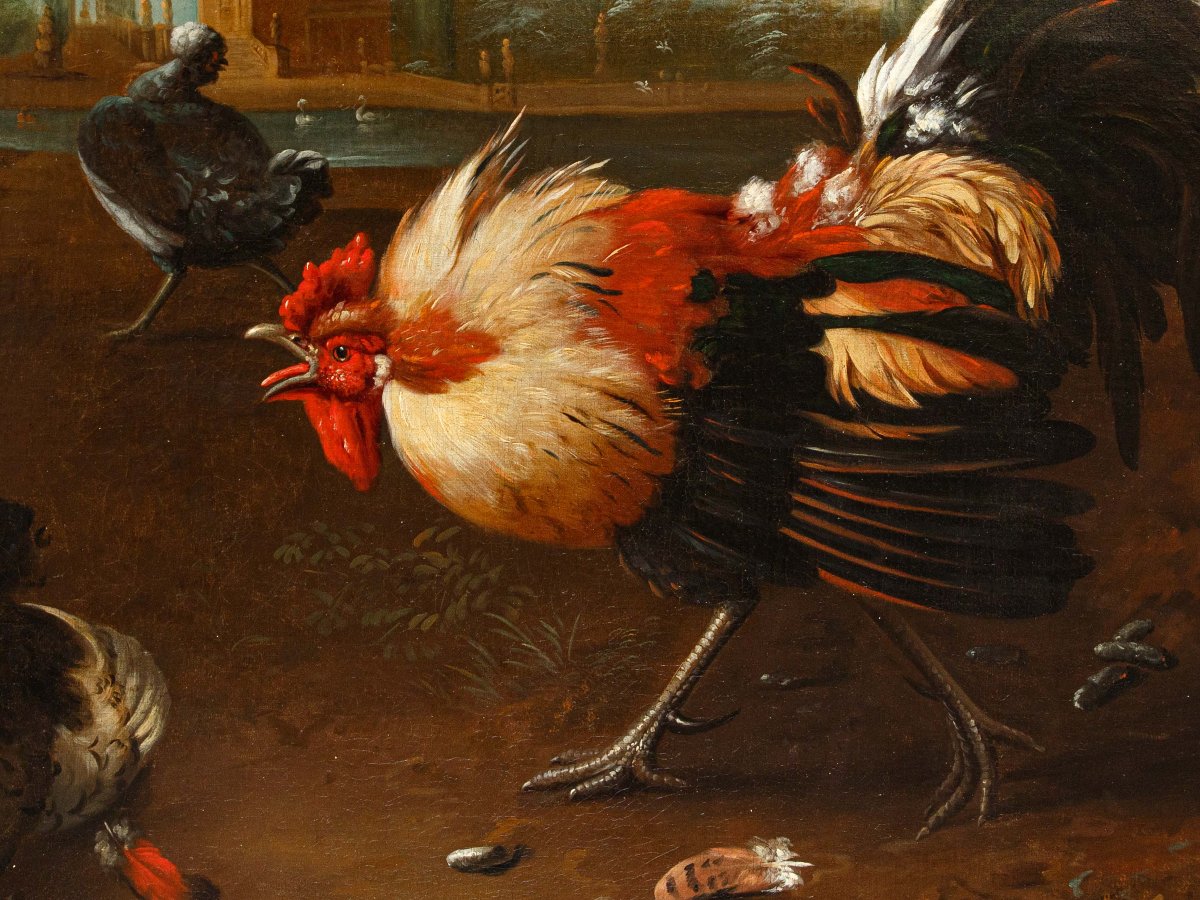
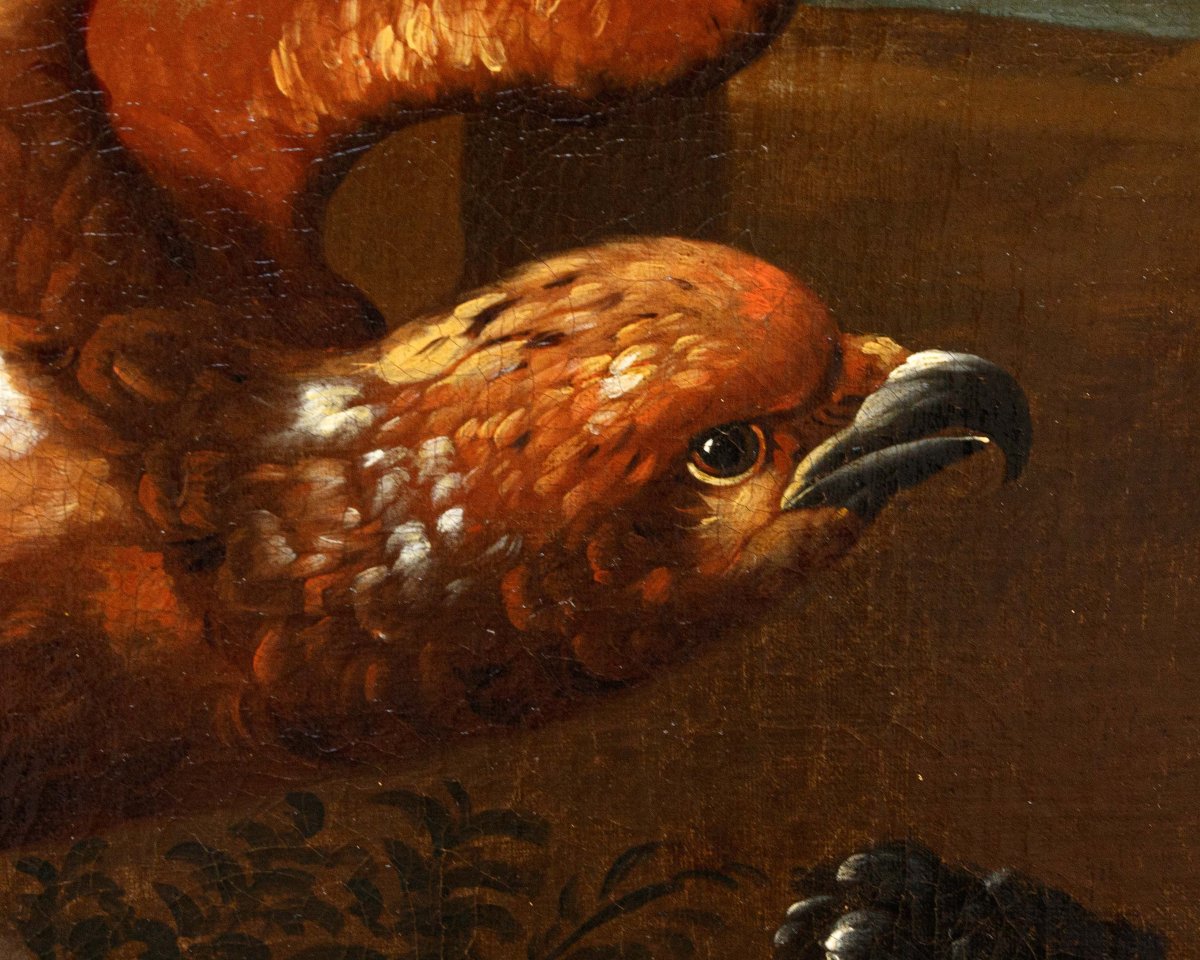
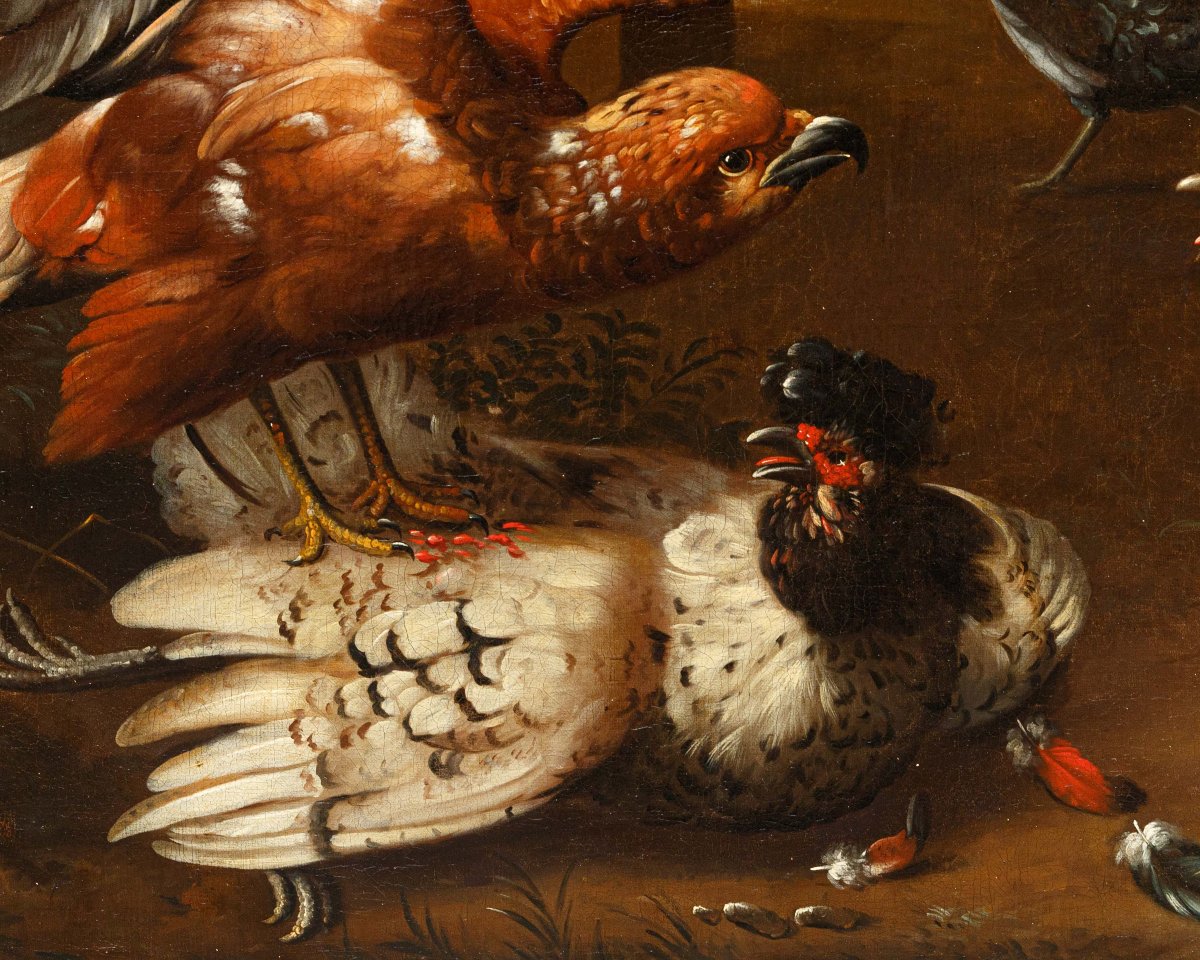
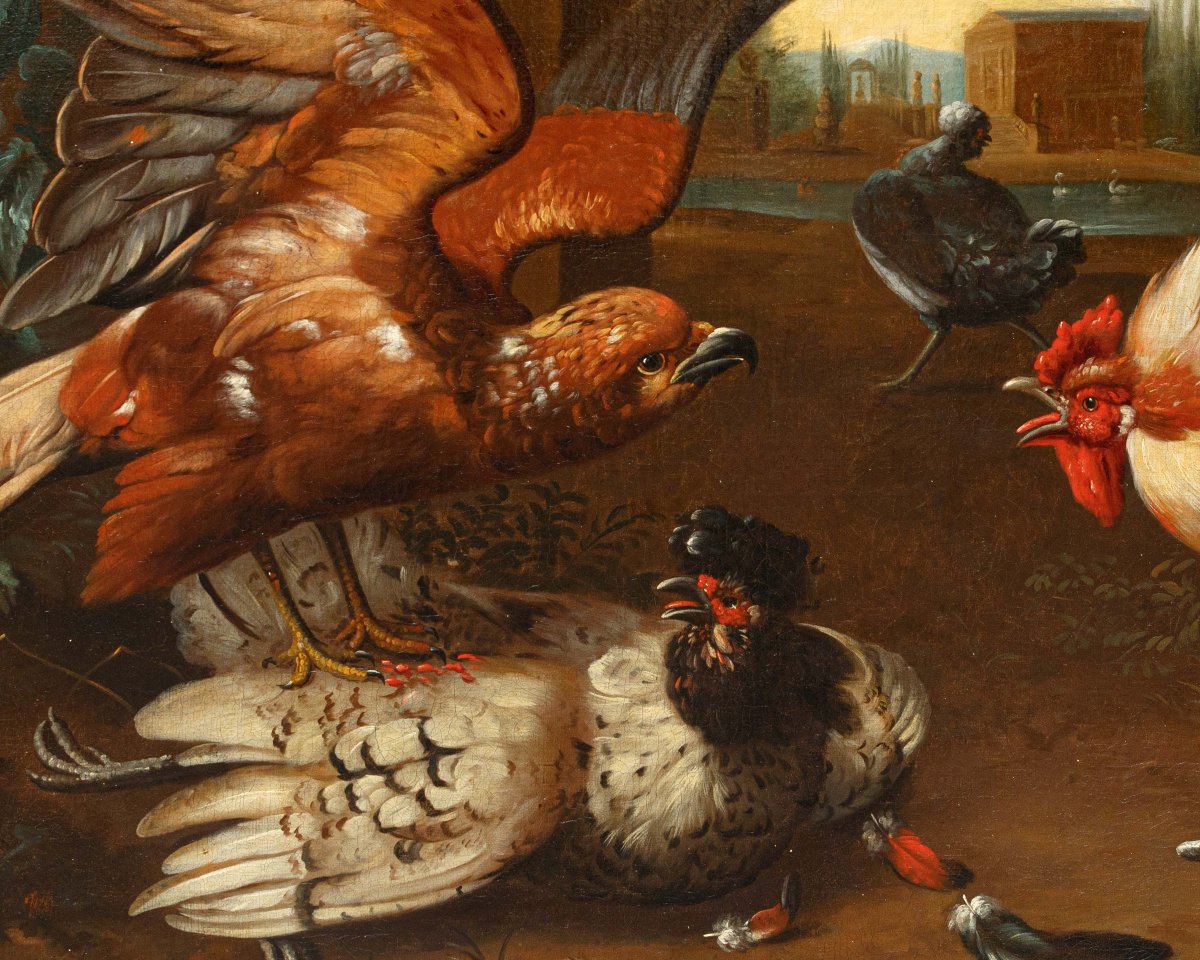
At the center of the composition, a lively animal dynamic unfolds, centered on the clash between an imposing rooster with multicolored plumage and a brown-feathered bird of prey, captured in the act of snatching a black-and-white speckled hen, now subdued on the ground. The dramatic tension is amplified by the outstretched wings and wide-open beaks of the protagonists, which evoke an almost theatrical narrative intent, typical of Hondecoeter’s compositions. On the right, the magnificent rooster advances vigorously, his glossy black tail feathers standing out against the cloudy sky, while a black bird observes the scene from the shadows on the left. This orchestration of forms, combined with a meticulous rendering of the plumage, invites an immediate comparison with the Dutch master’s own masterpieces. In fact, strong affinities can be seen with the work “Roosters and Hens in a Landscape” at the Mauritshuis in The Hague, where the vibrant anatomical depiction and the rooster’s proud demeanor define the compositional space. Similarly, the painting “Two Hens and a Goose” at the Bowes Museum in Durham offers a compelling parallel in terms of the birds’ expressiveness and the softness of the paint application used to render the feathered details, confirming that the follower had fully assimilated the master’s technique and repertoire.
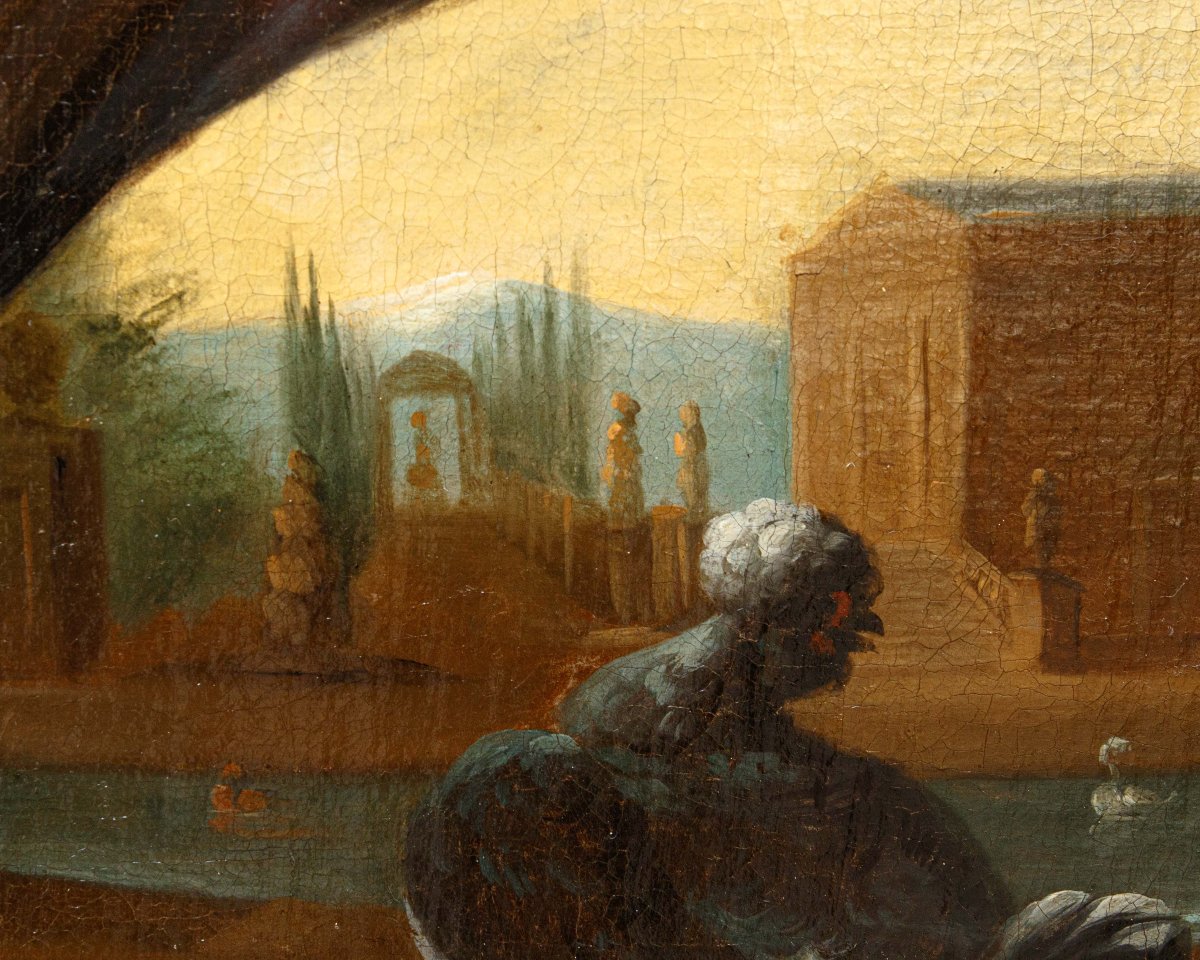
The background reveals the clear influence of the Dutch Italianates, which profoundly shaped Hondecoeter’s work after his move to Amsterdam in 1664. The landscape in the background, with classical-style architectural structures lapped by water and bathed in warm twilight, tempers the excitement of the foreground, placing the animals in an idyllic and monumental setting. The excellent fusion of Dutch analytical realism and Mediterranean atmospheric sensibility lends the painting an extraordinary decorative elegance, which explains the enormous popularity of this genre in 18th-century collections. The work thus stands as a valuable testament to the reception of Dutch Baroque naturalism.
Period: 18th century
Style: Other Style
Condition: Good condition
Material: Oil painting
Width: 127
Height: 100
Reference (ID): 1797344
Availability: In stock