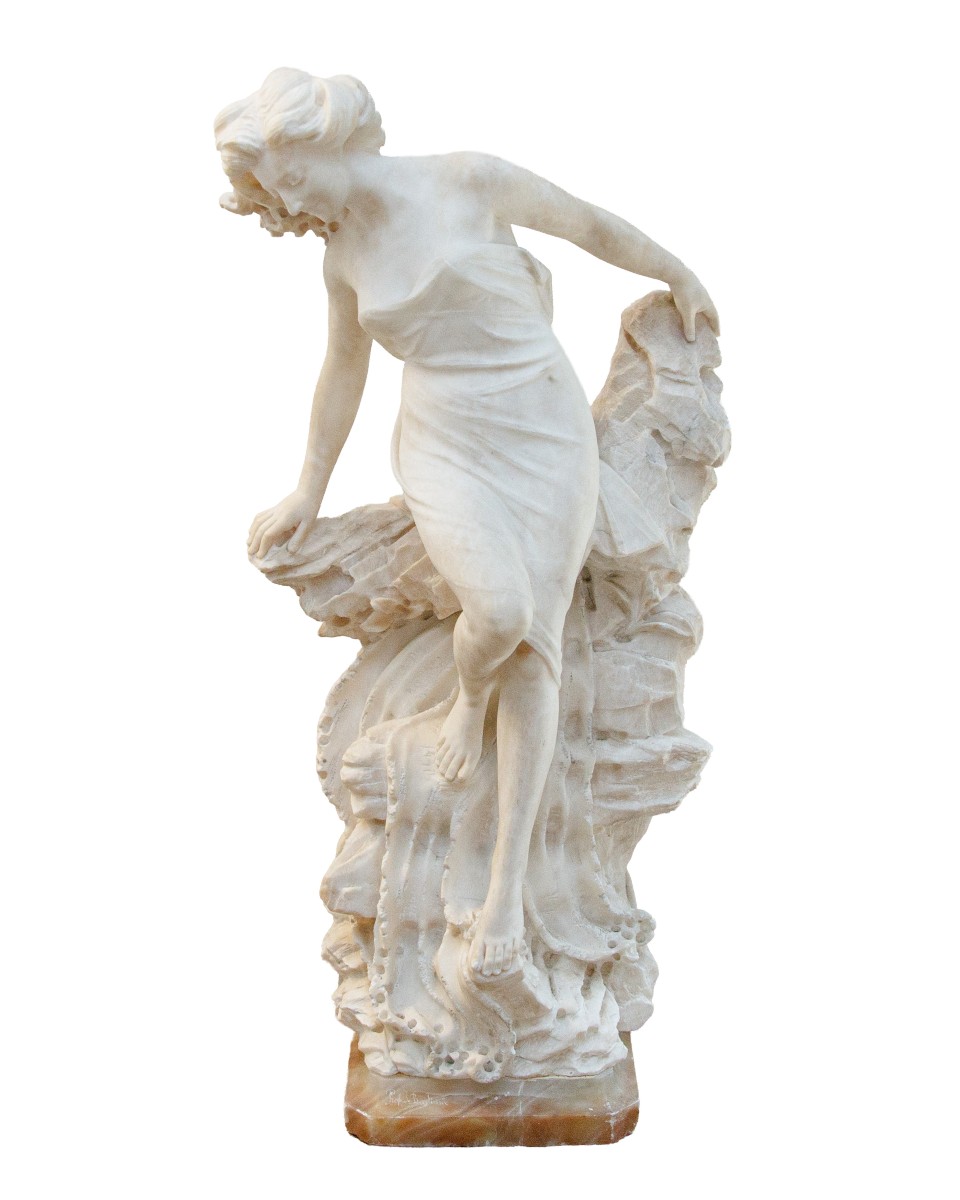
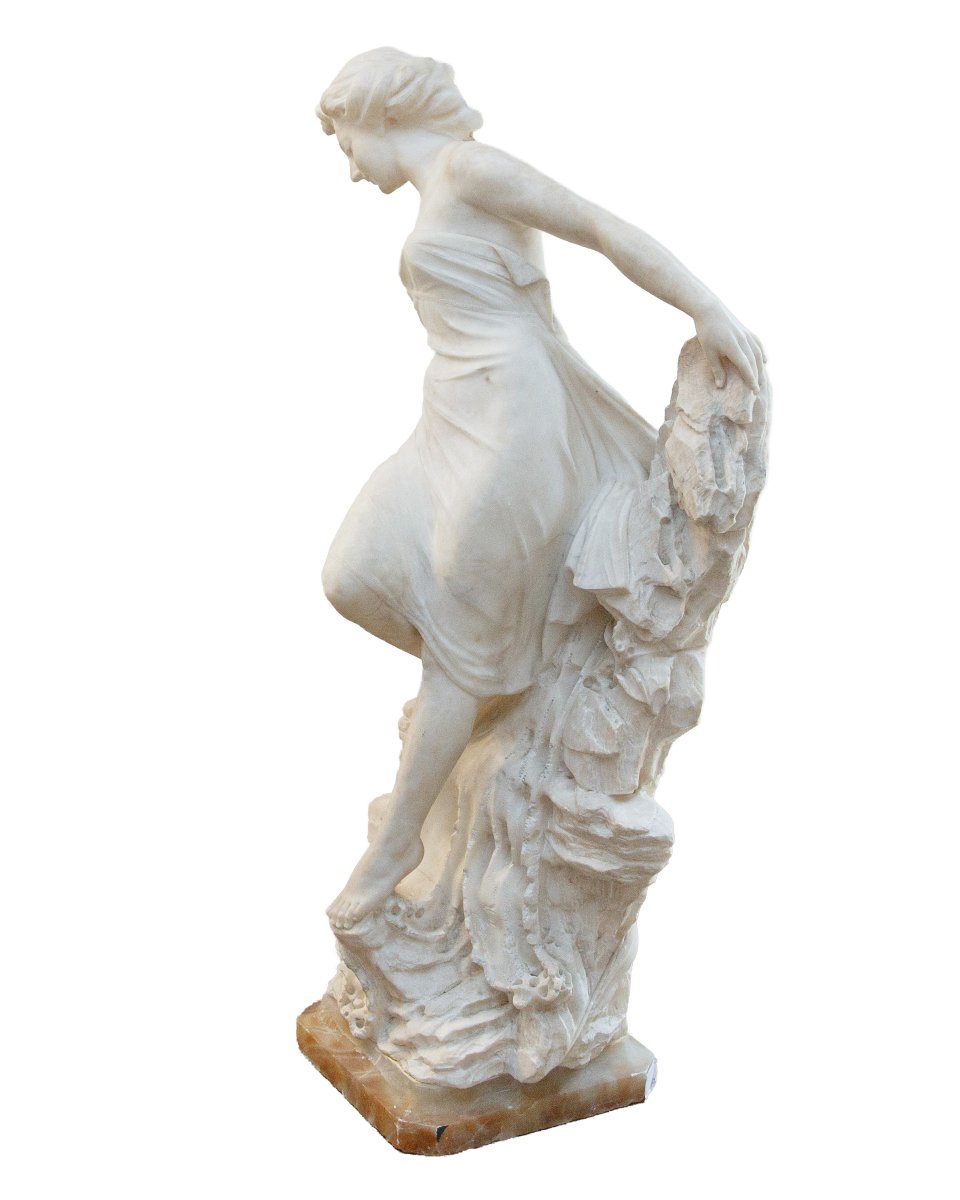
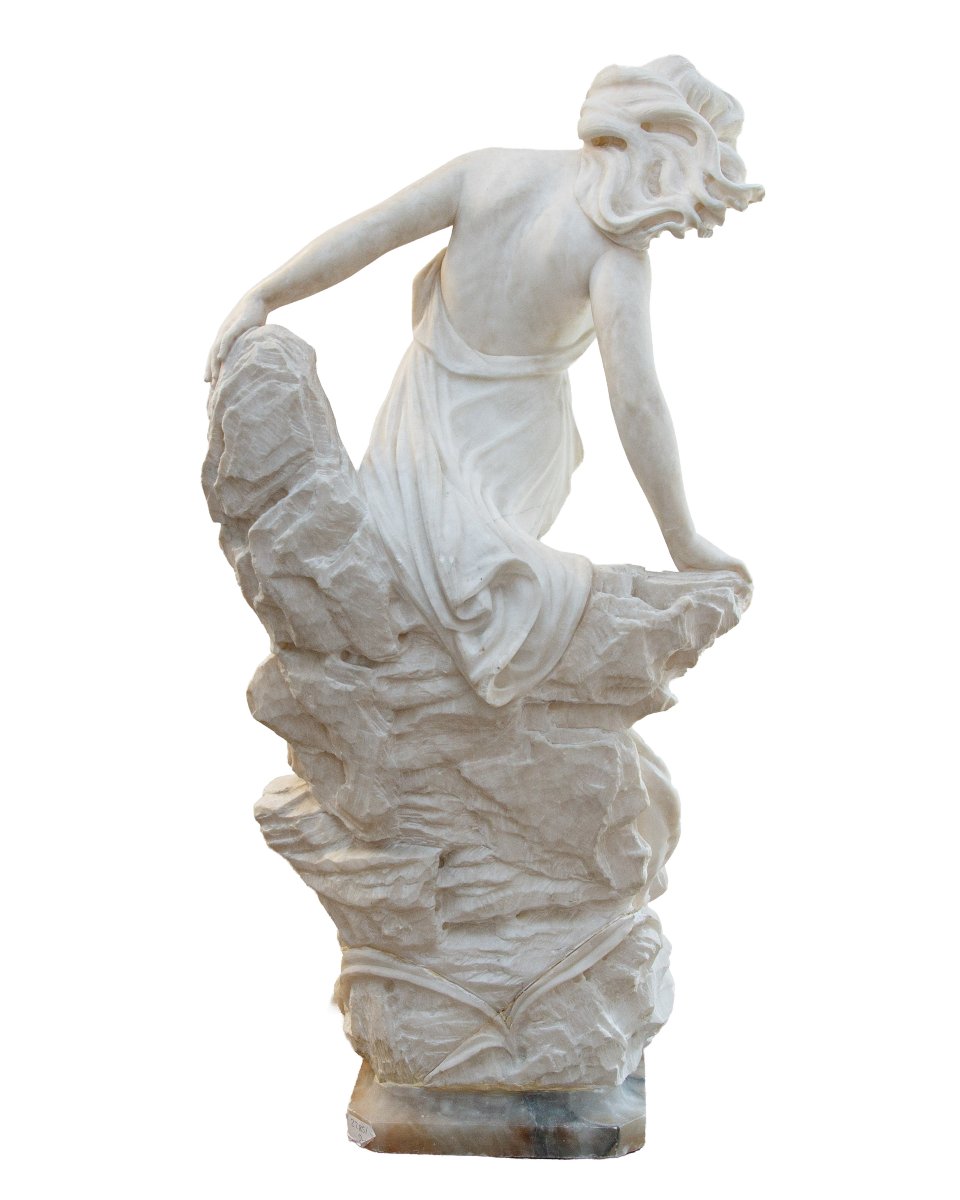
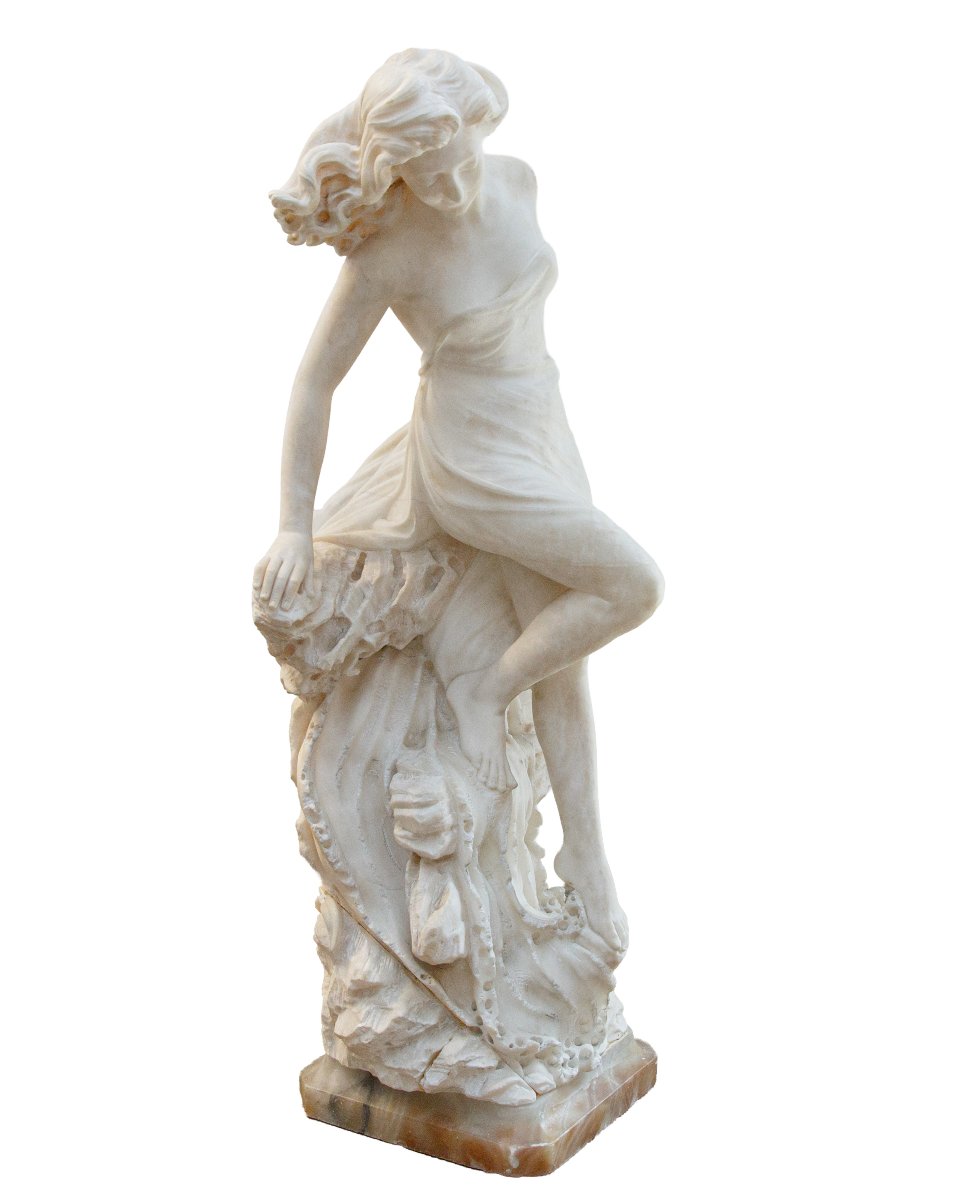
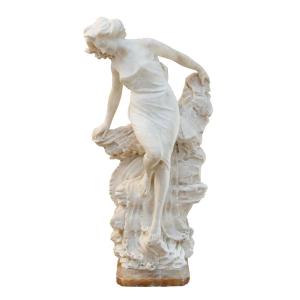


Ildebrando Bastiani (chiusdino, 1867 – Florence, 1936), Nymph
Ildebrando Bastiani (Chiusdino, 1867 – Florence, 1936)
Nymph
White marble, 82 x 44 x 28 cm
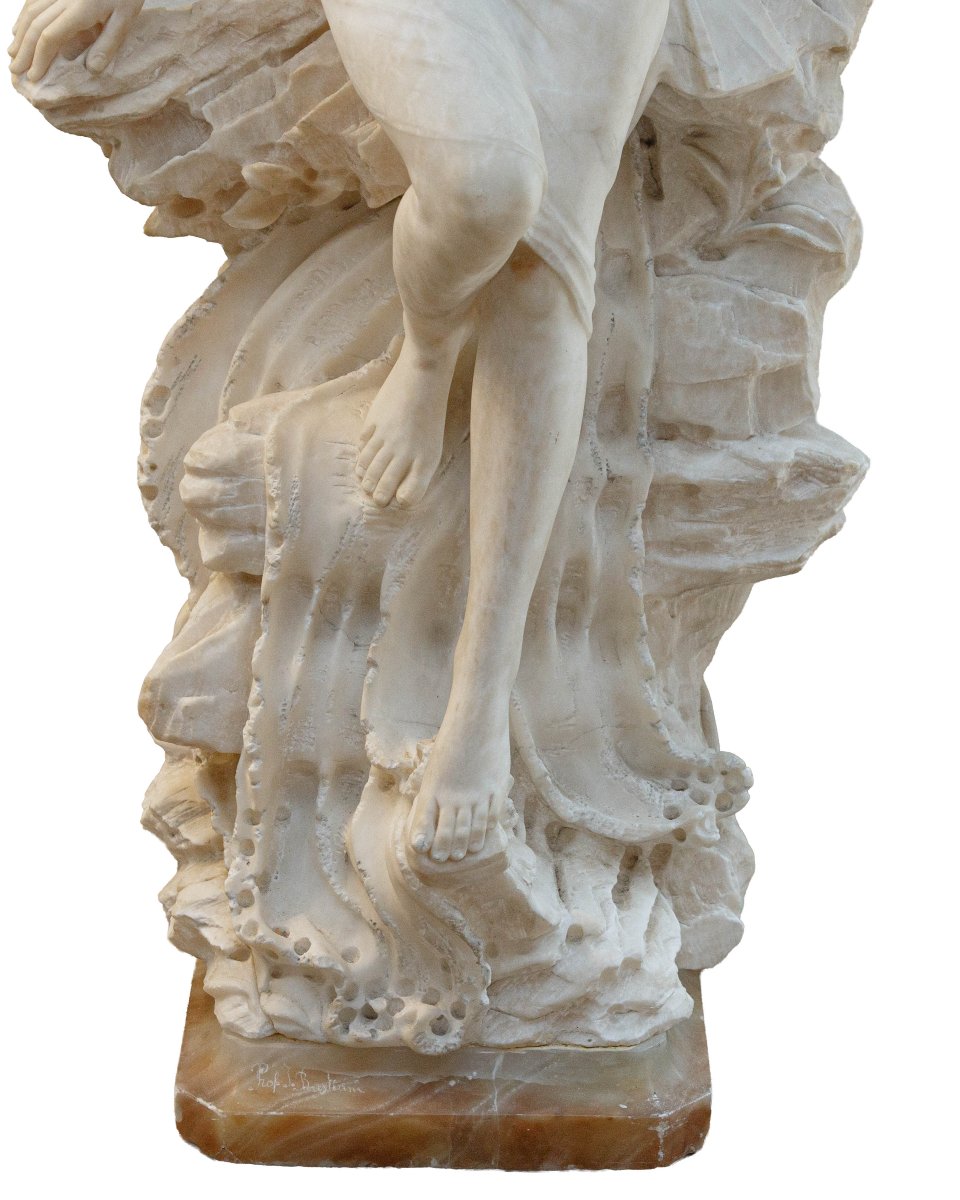
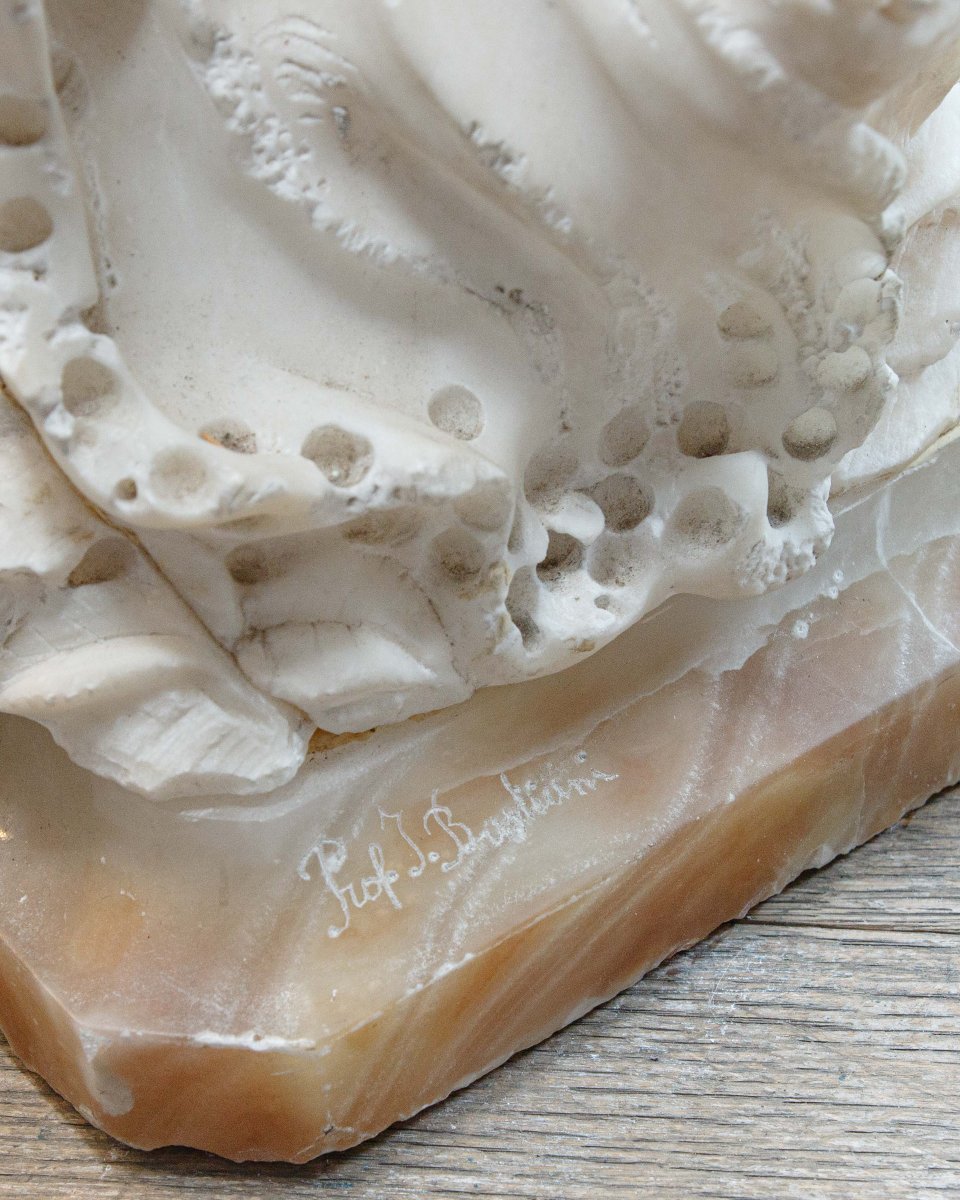
Signed on the base
Aldobrando Bastiani is one of the most fascinating figures in the Italian sculptural scene between the late nineteenth and early twentieth centuries. His artistic career unfolded during that delicate transitional period when academic rigor began to give way to the pressures of social realism and the first stirrings of Symbolism. Born in Chiusdino in 1867, Bastiani took his first formative steps at the Art Institute of Siena, an environment still deeply steeped in purism and an almost artisanal devotion to the material. Under the guidance of masters such as Tito Sarrocchi, the young Aldobrando learned not only the techniques of modeling and carving but also that respect for formal harmony typical of the Tuscan tradition. His move to Rome, however, marked a decisive turning point. In the capital, Bastiani came into contact with the vibrant international art scene and the monumental influences of the era, winning the prestigious National Artistic Scholarship. This recognition allowed him to refine a hand capable of ranging from the delicacy of marble to the expressive power of bronze. Bastiani’s stylistic signature is distinguished by a very high level of technical skill that never descends into empty virtuosity. In his works, the human body is not merely an anatomical exercise but a vehicle for moods. The artist was highly active in public and commemorative commissions: his ability to handle large-scale works is evidenced by his contribution to the Vittoriano in Rome, where he created the sculptural group depicting Economy, a work that encapsulates his skill in blending classical allegory with a solid, modern plasticity. It is perhaps, however, in the context of monumental cemeteries (such as Verano in Rome or the Camposanto in Siena) that the sculptor reached heights of poignant lyricism. His funerary monuments are characterized by figures draped in flowing drapery, where the boundary between flesh and stone seems to grow thin, evoking a sense of mystery and spiritual ascent typical of fin-de-siècle taste.
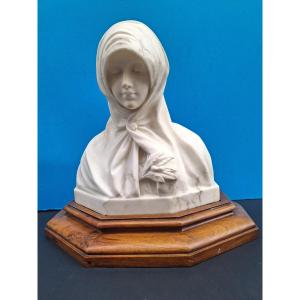
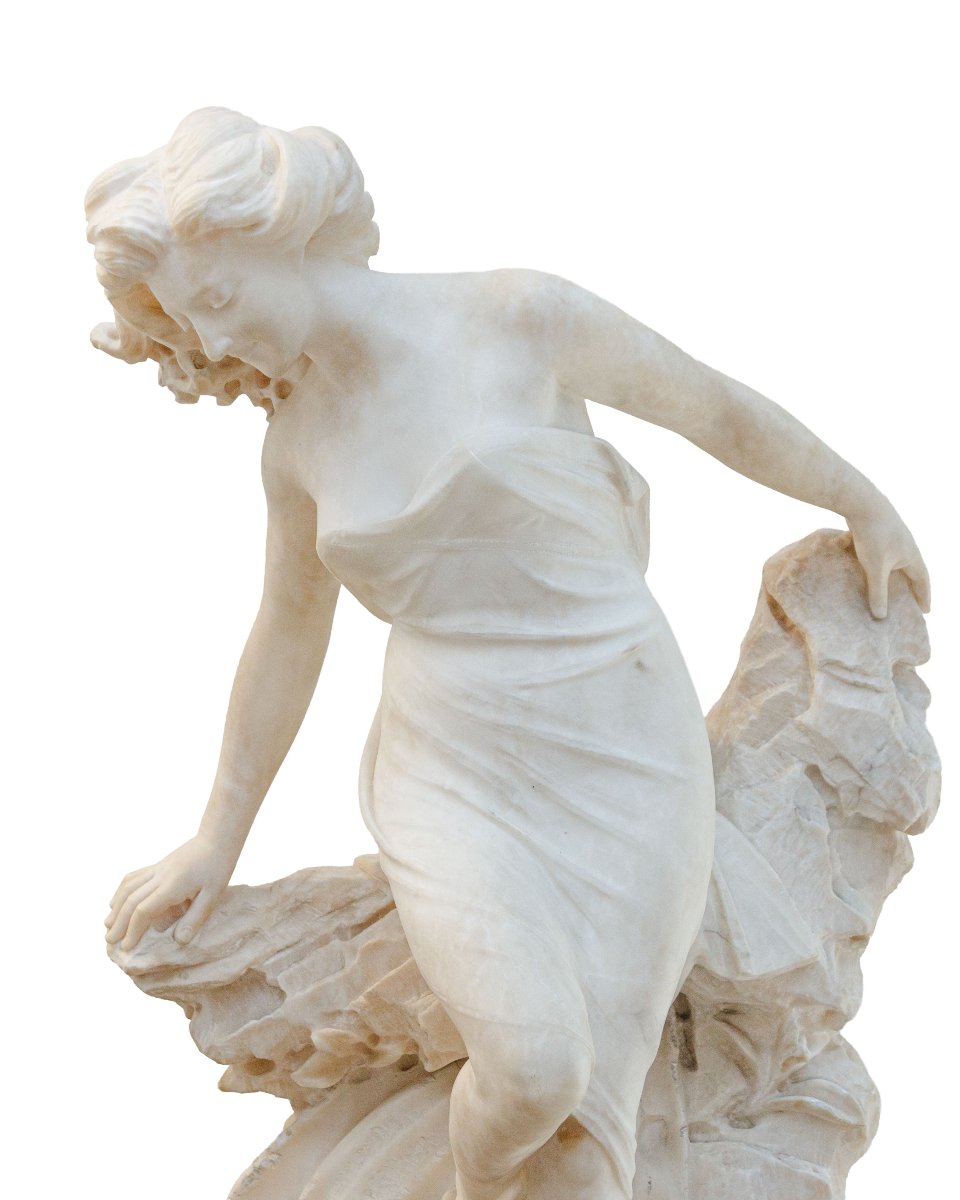
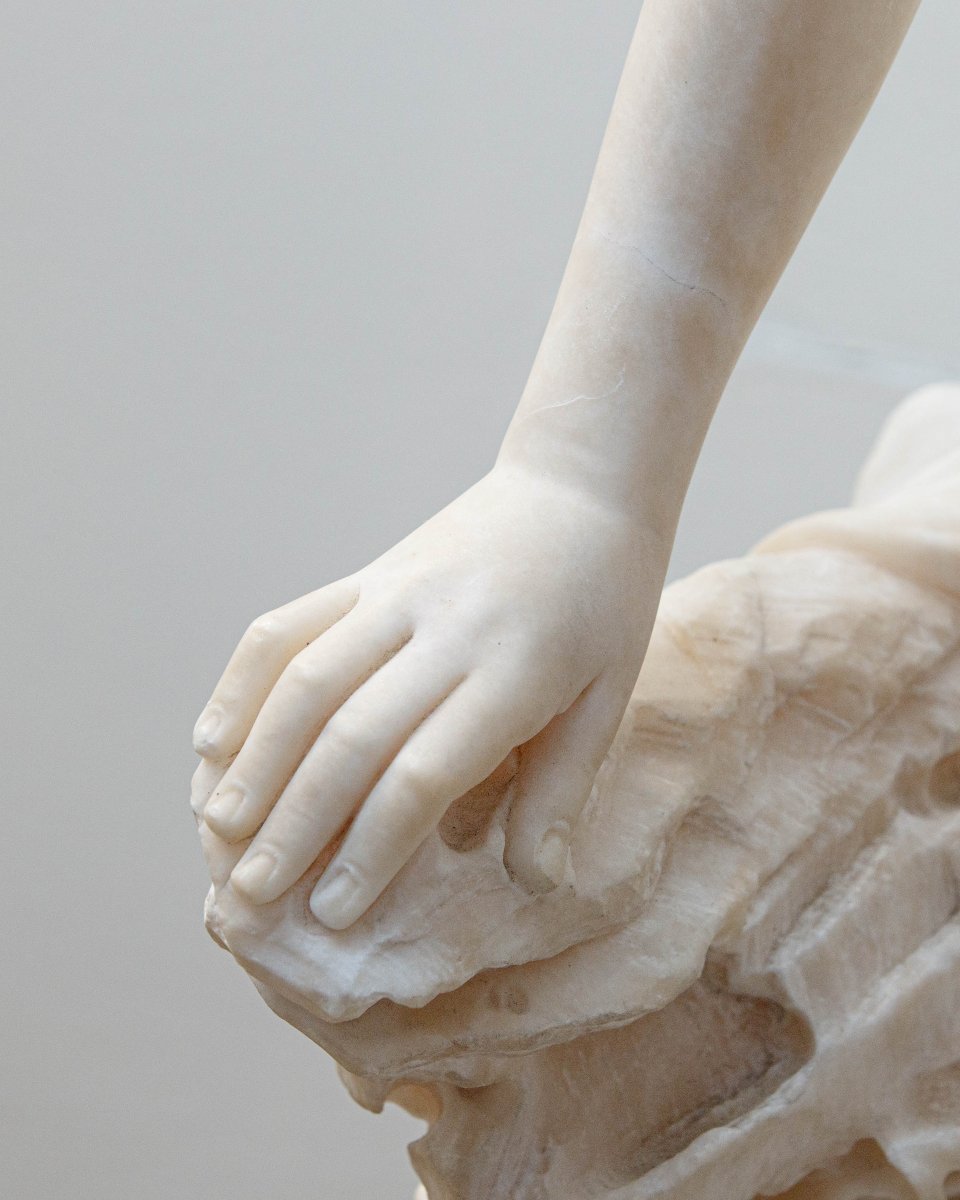
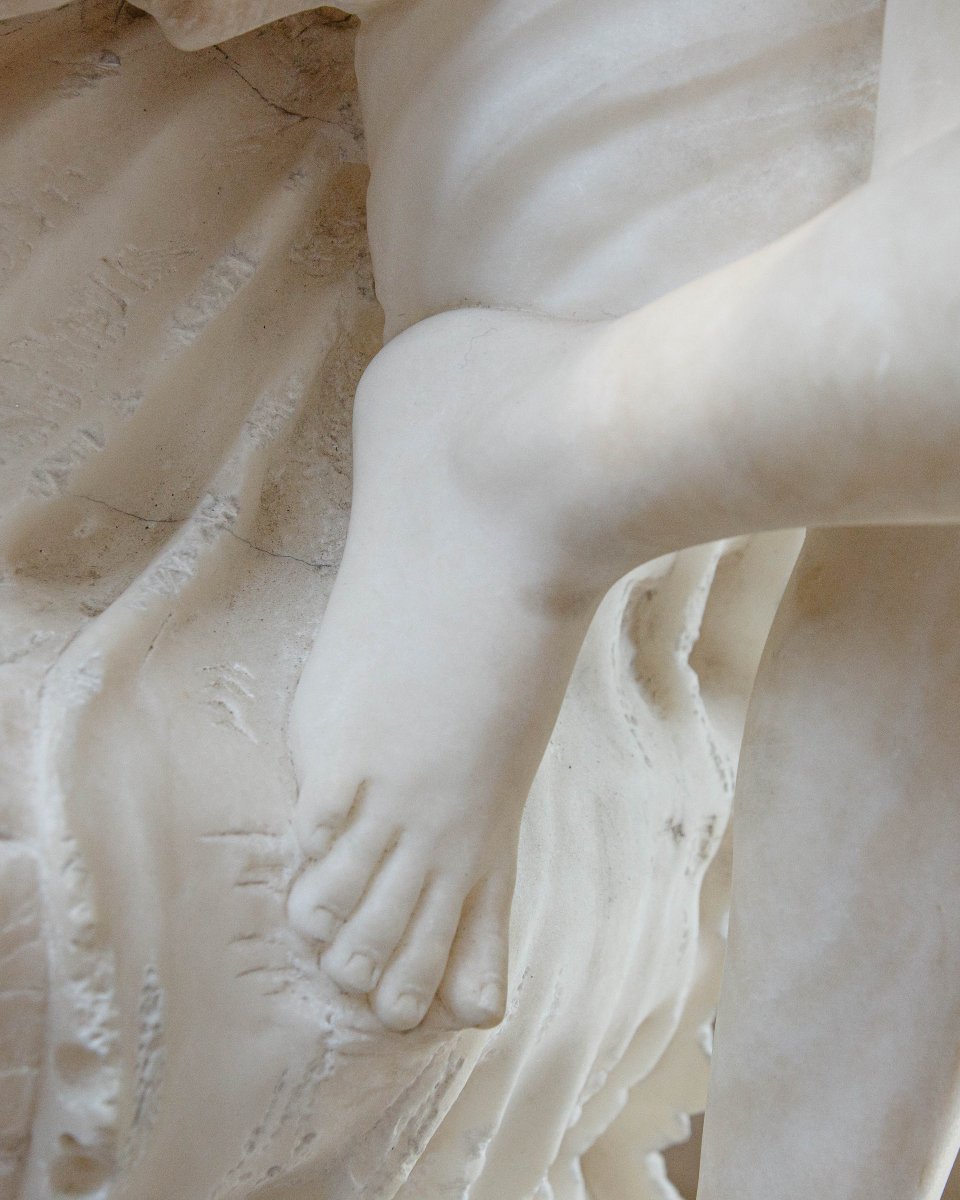
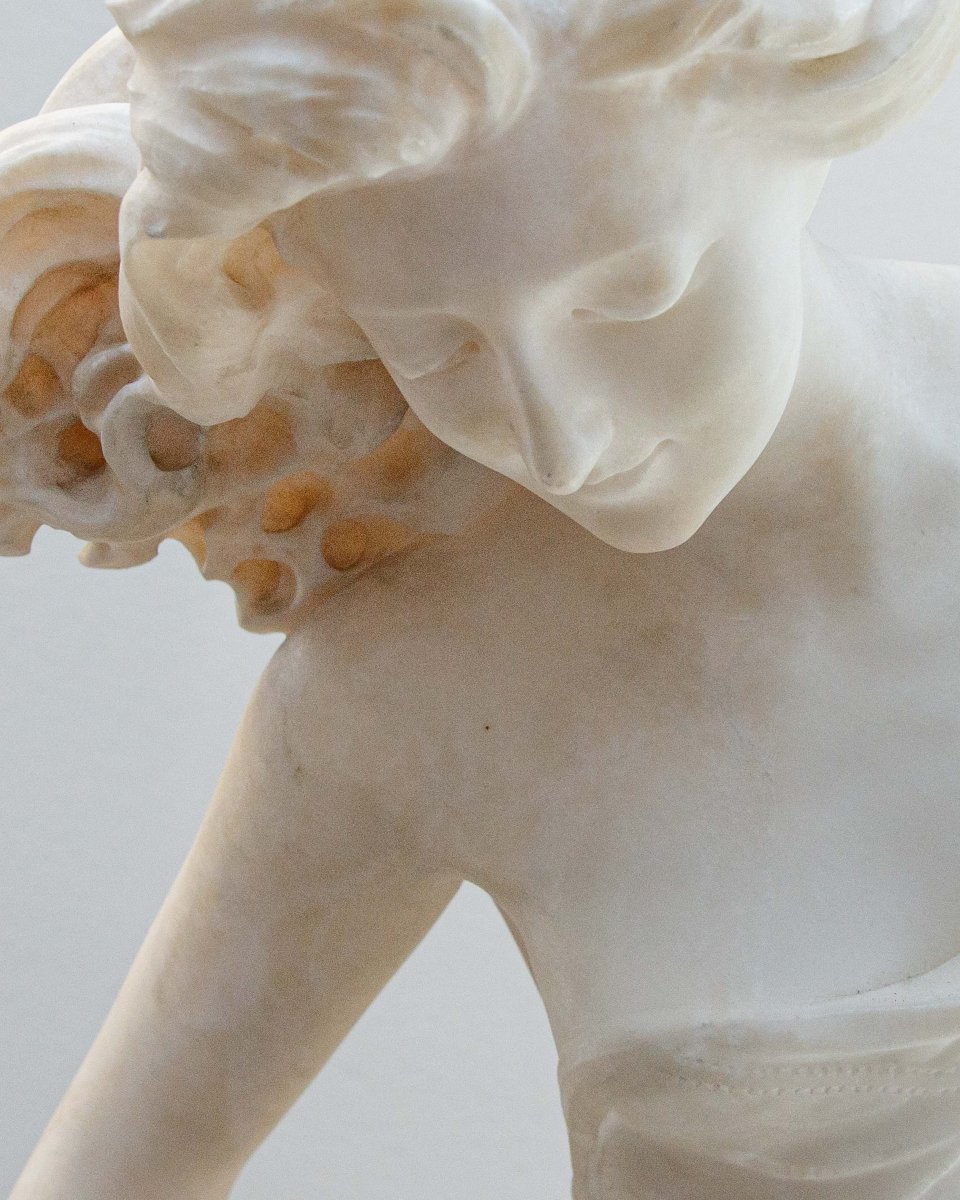
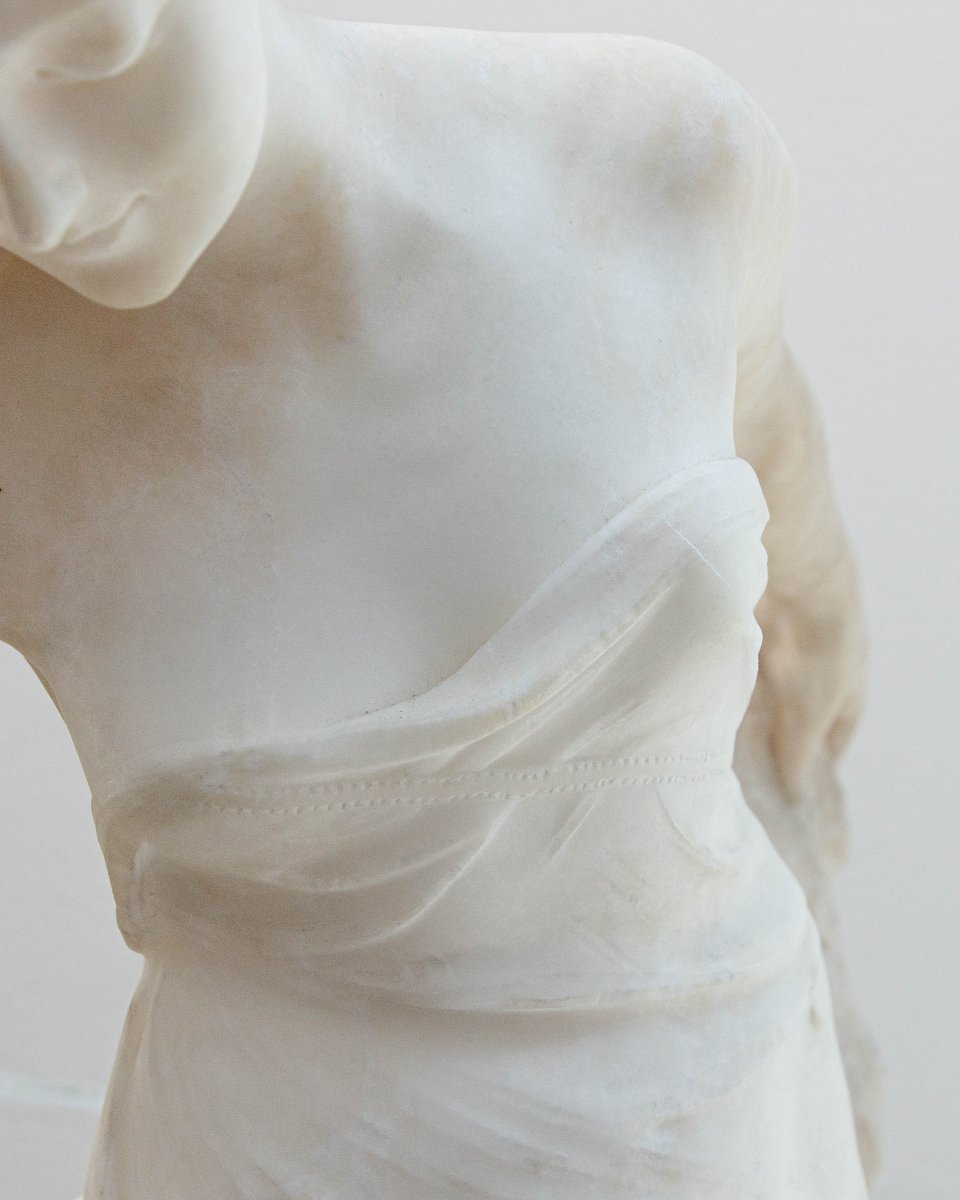
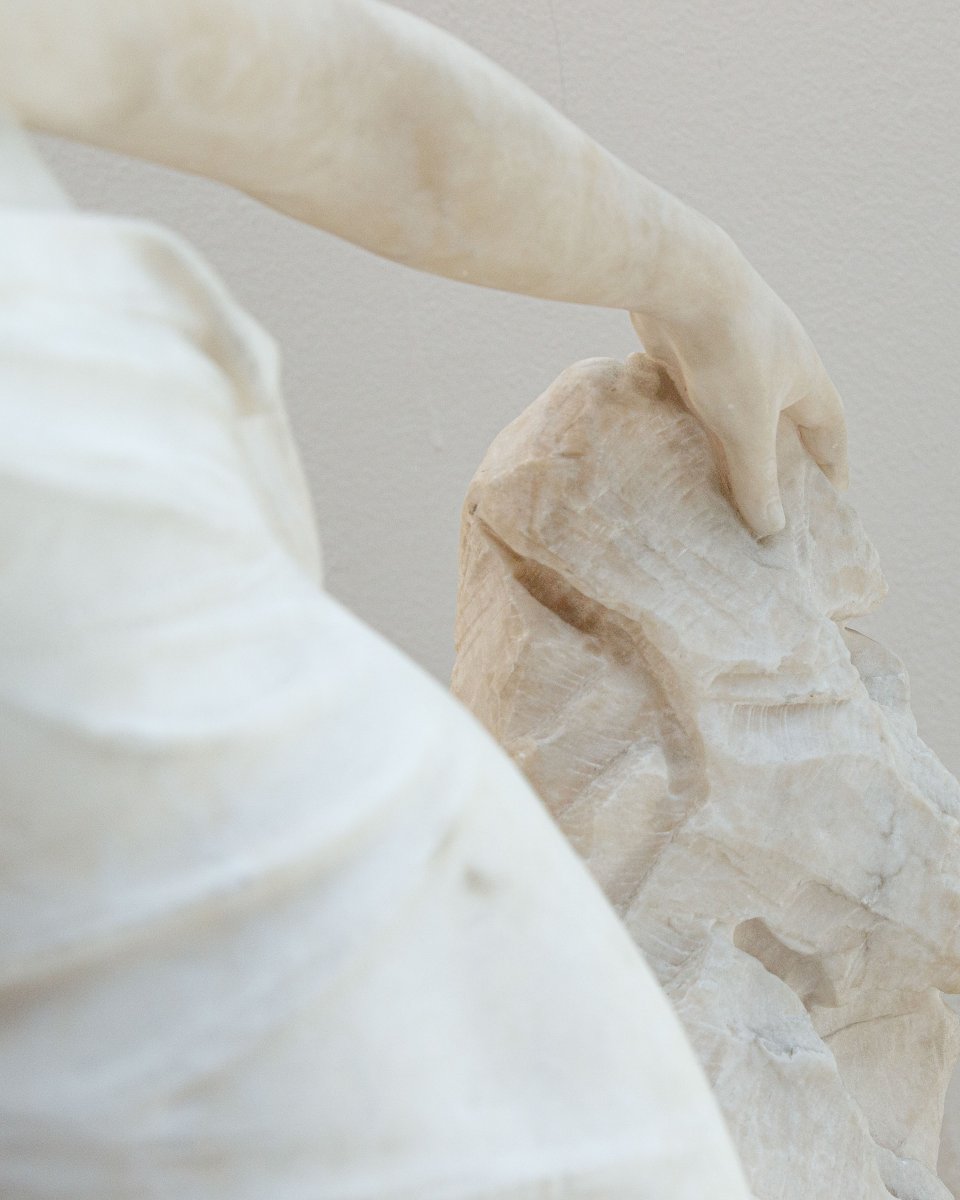
Bastiani’s technique is characterized by extreme formal purity: he favored, in fact, polished surfaces capable of capturing light in a soft, diffused manner, alternating with areas of more vibrant, almost impressionistic modeling. The sculpture in question, depicting a Nymph and signed on the base, is a masterful example of Bastiani’s technical skill, as he managed to infuse white marble with an extraordinary luminous vitality. In this work, the artist moves away from the solemnity of his public monuments to embrace a more intimate and sensual Art Nouveau style. The artist skillfully plays with material contrasts: the almost diaphanous smoothness of the female flesh emerges from the rock left deliberately rough, a clear reference to Michelangelo’s “unfinished” style reinterpreted in a bourgeois key. The drapery, which appears wet and clings to the forms with extreme naturalness, testifies to his ability to transform stone into a fluid and light substance, capturing a moment of suspension and absolute grace.
Period: 19th century
Style: Other Style
Condition: Good condition
Material: Marble
Width: 44
Height: 82
Depth: 28
Reference (ID): 1763794
Availability: In stock