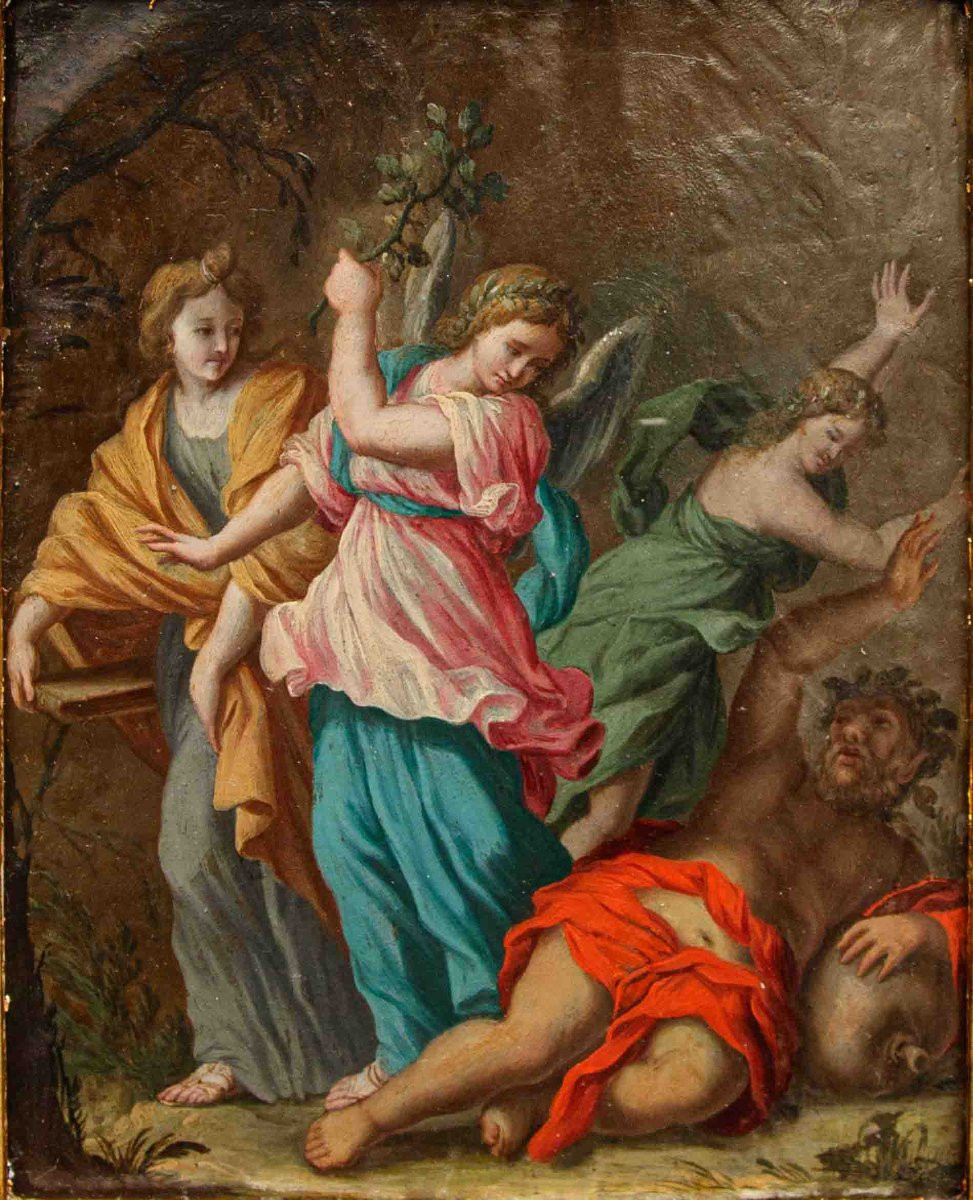


Venetian School, 18th Century, Bacchanalia Or The Triumph Of Virtue
Venetian School, 18th century
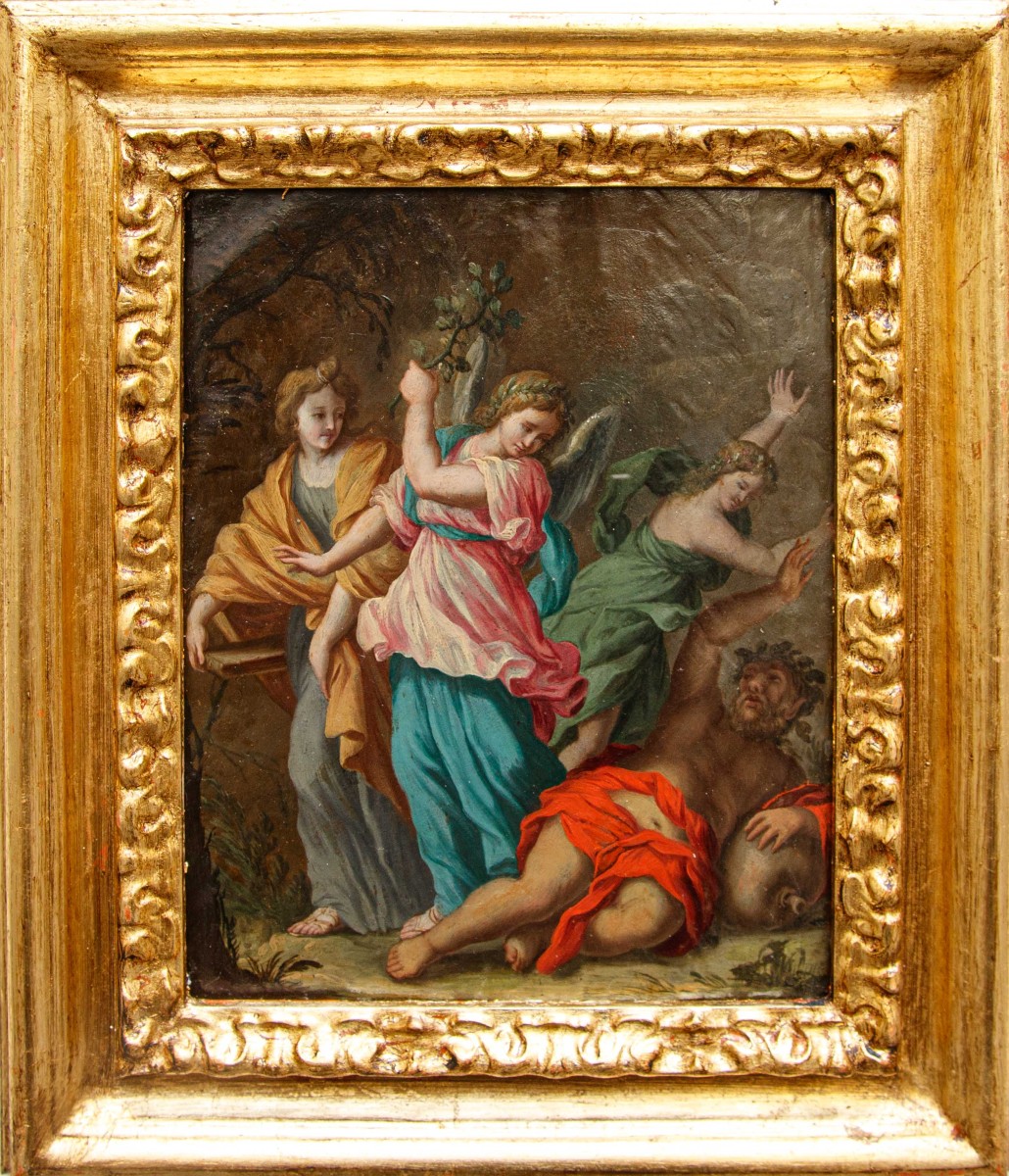
Bacchanalia or Triumph of Virtue
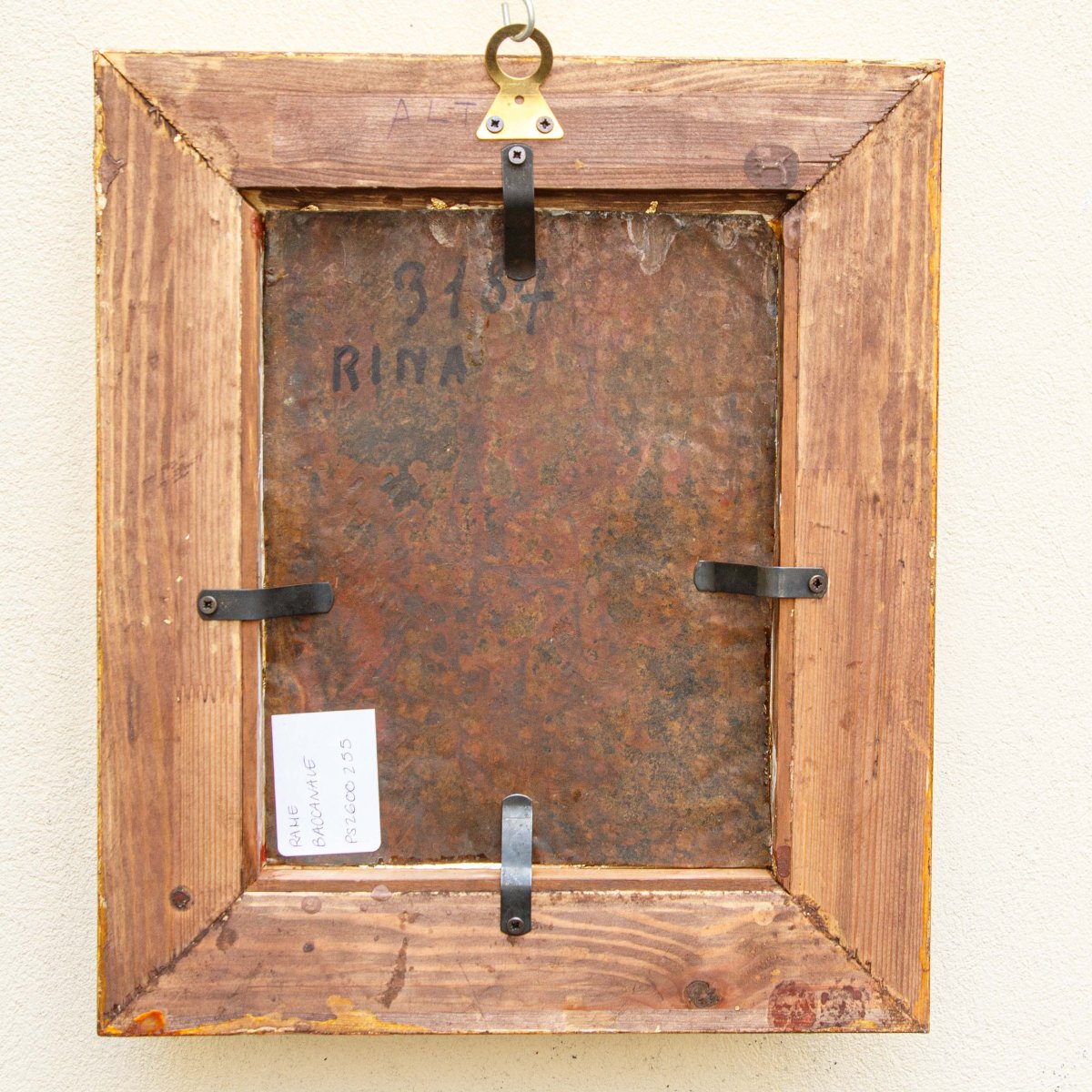
Oil on copper, 22 x 17 cm
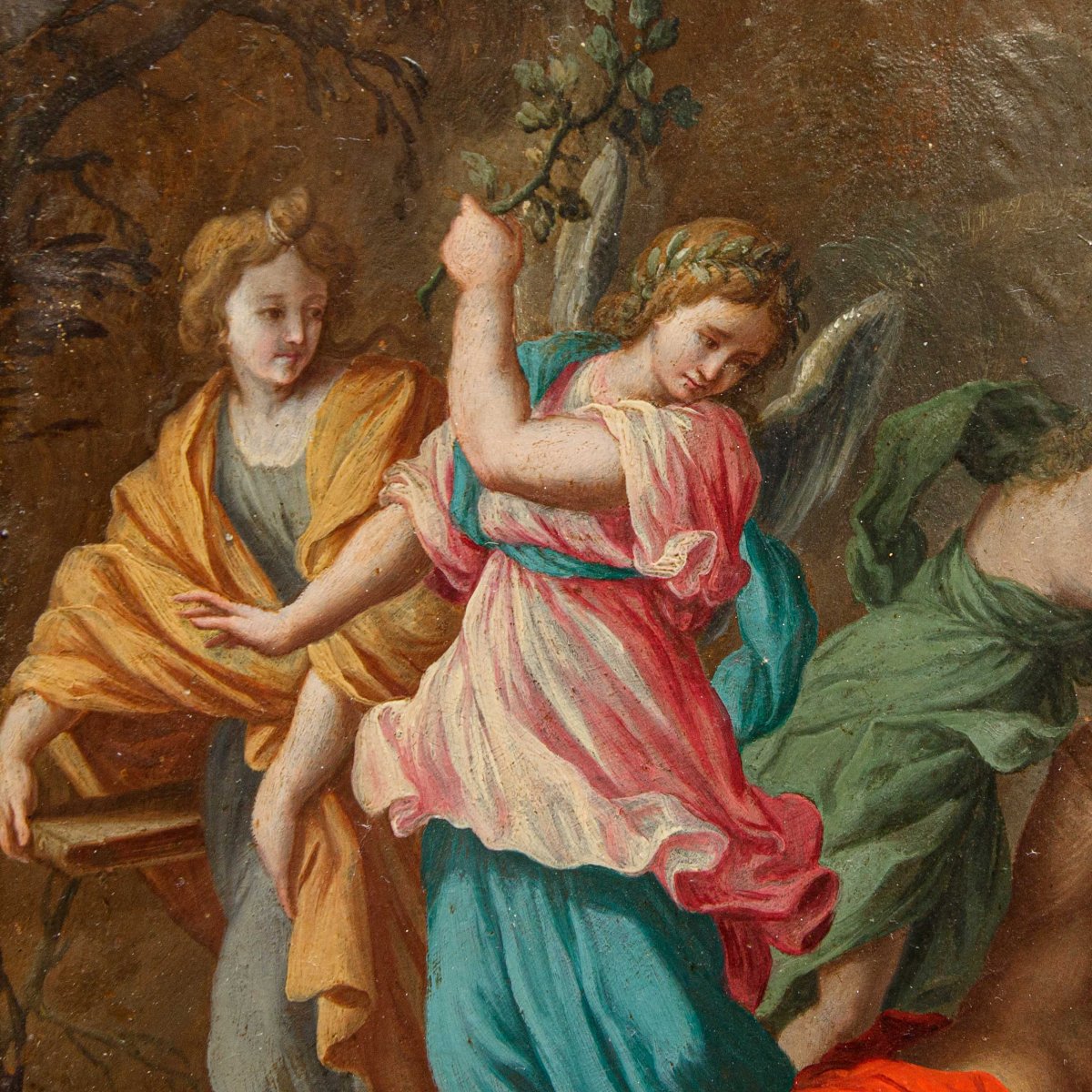
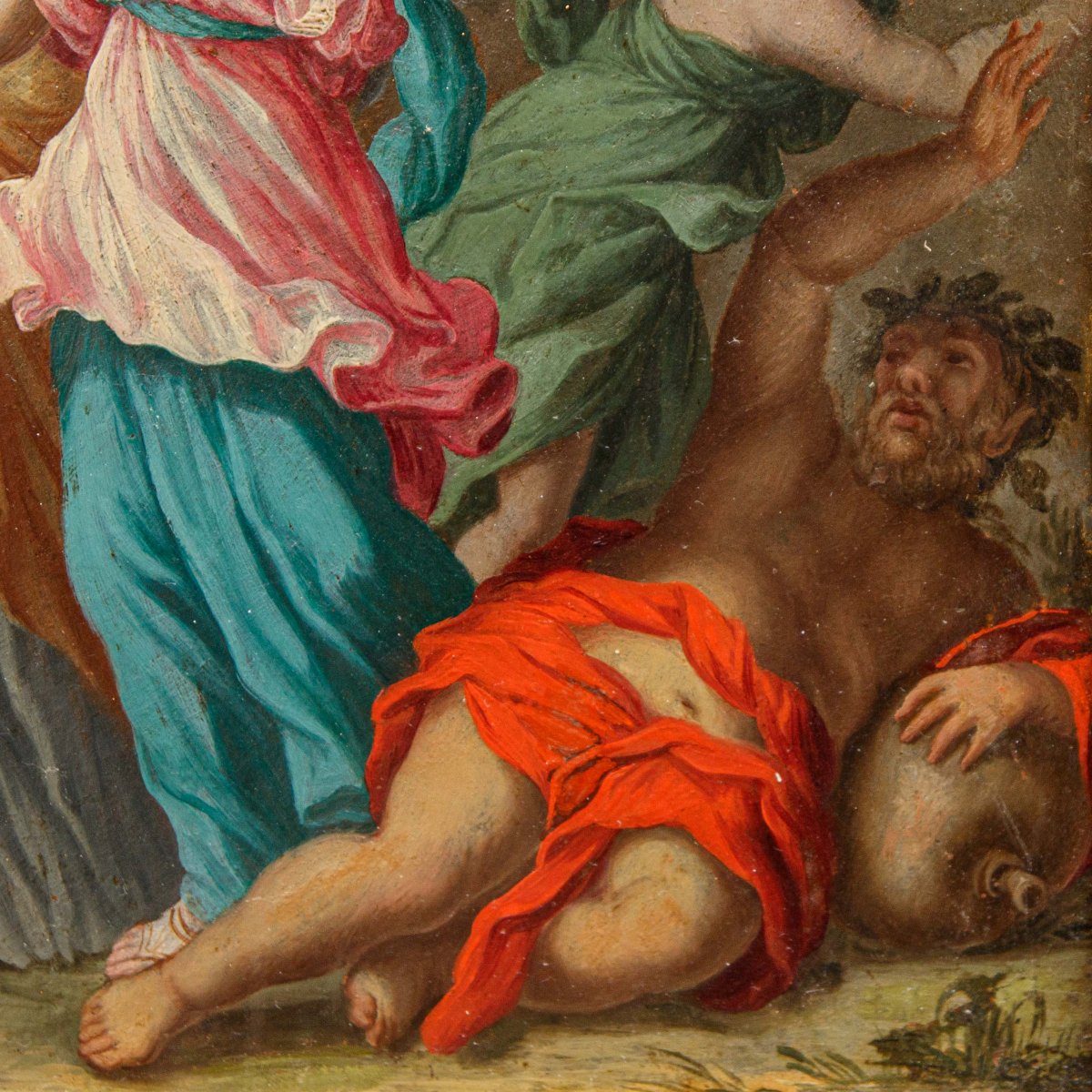
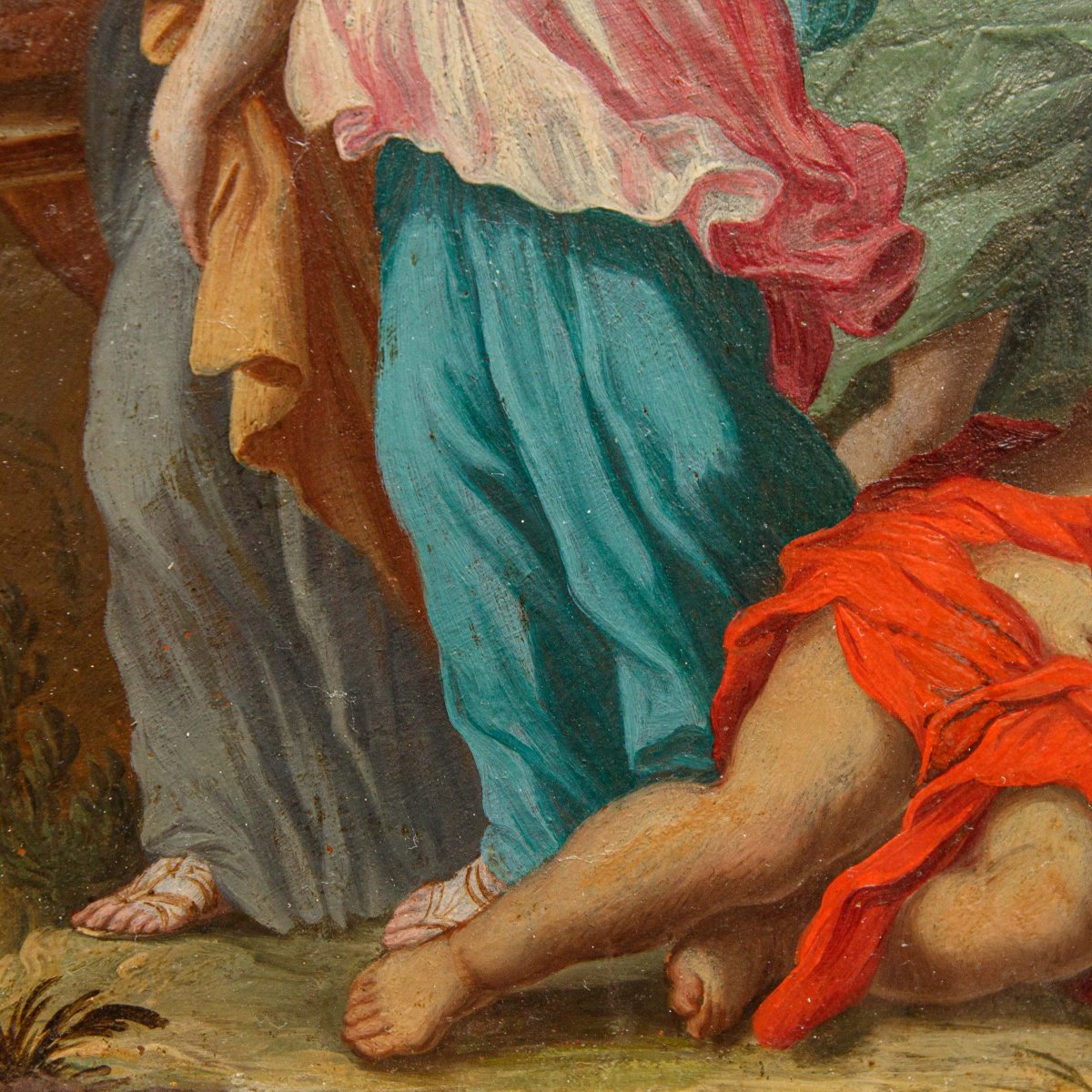
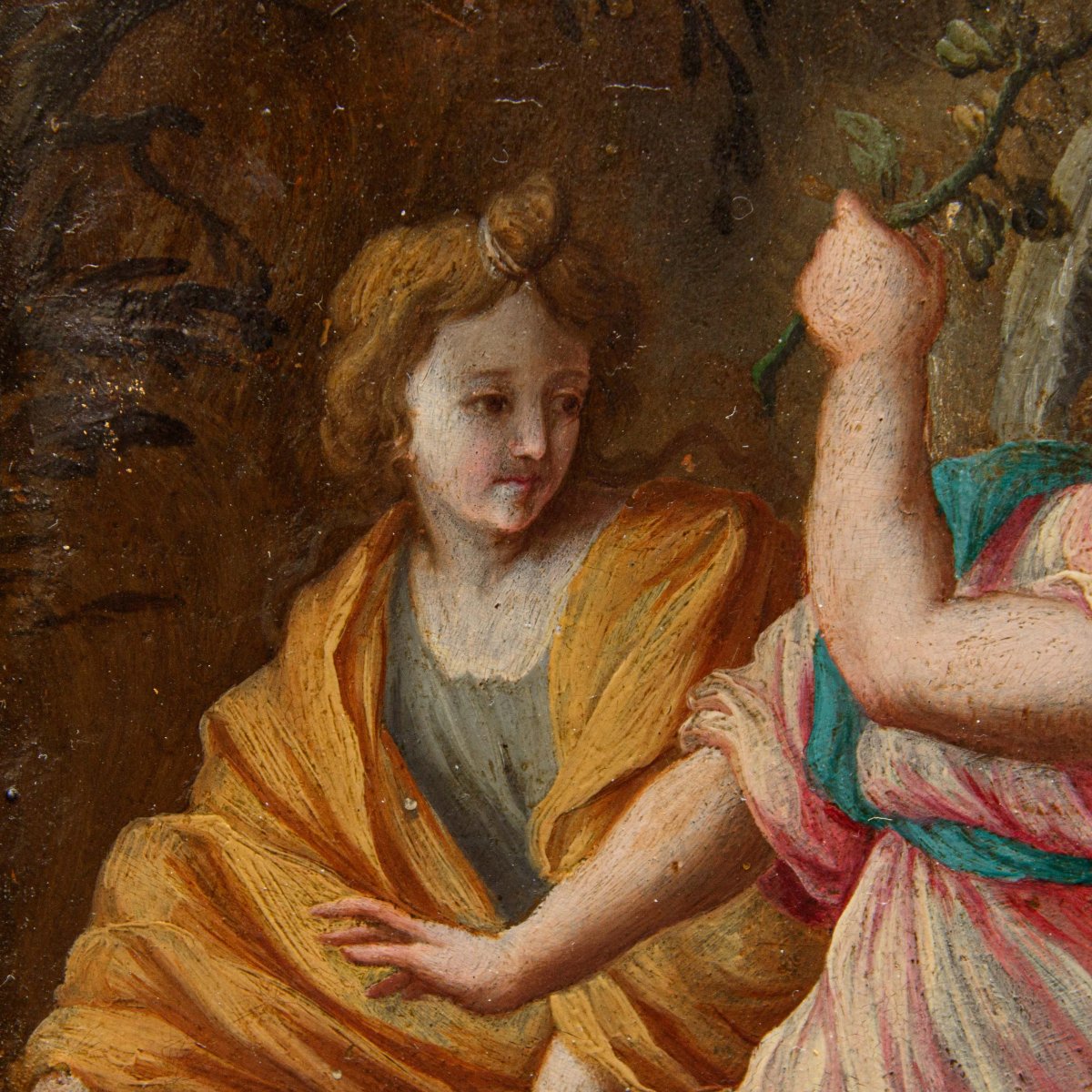
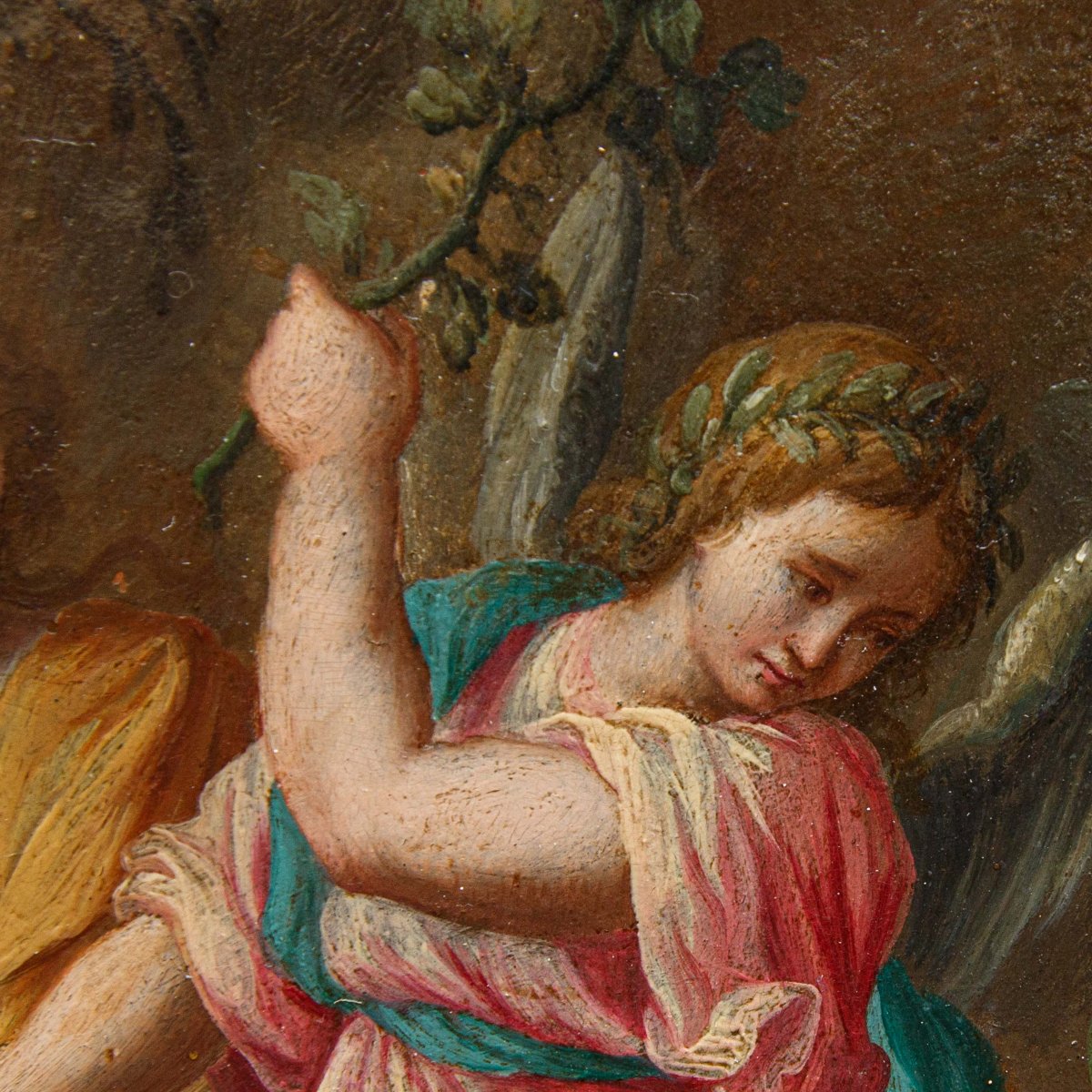
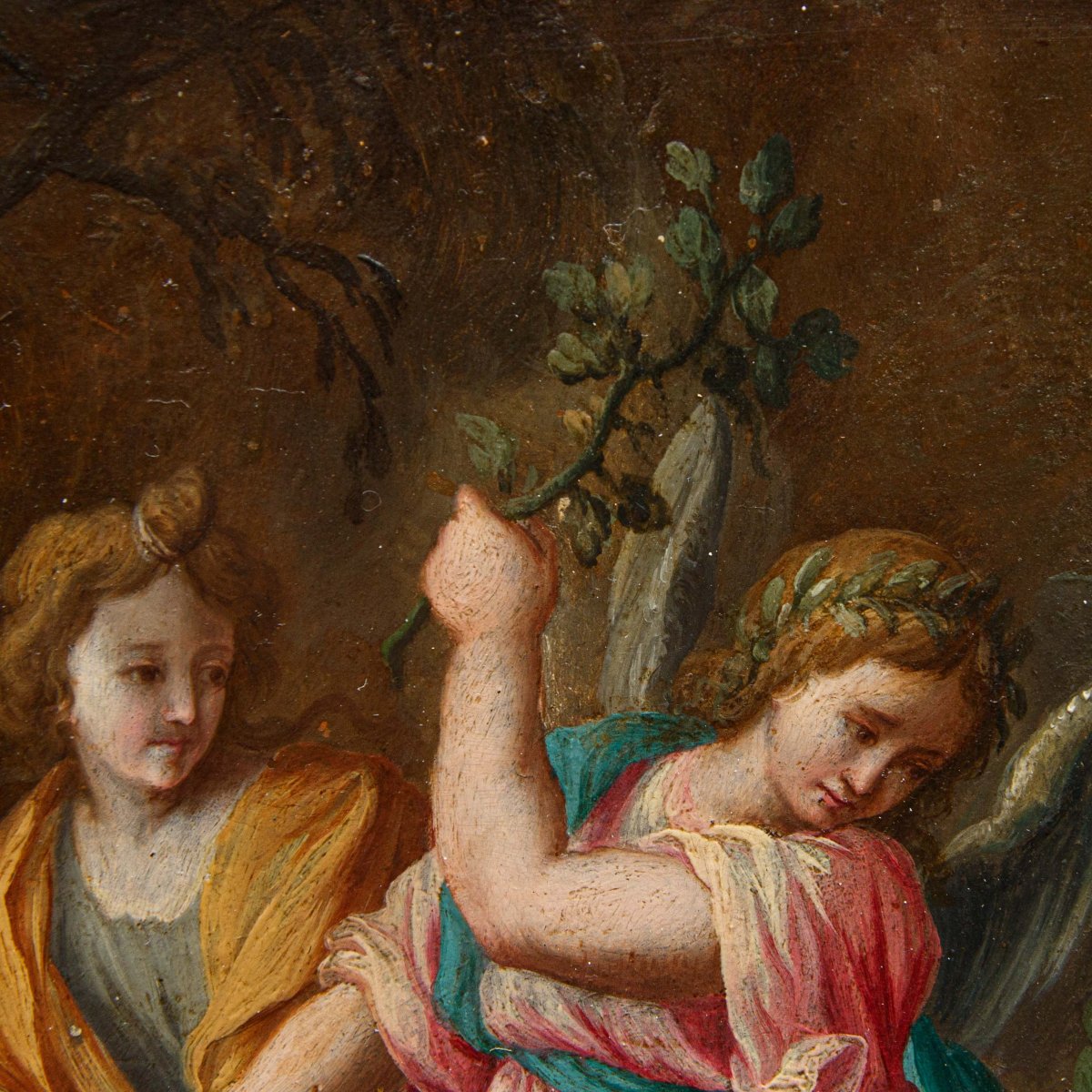
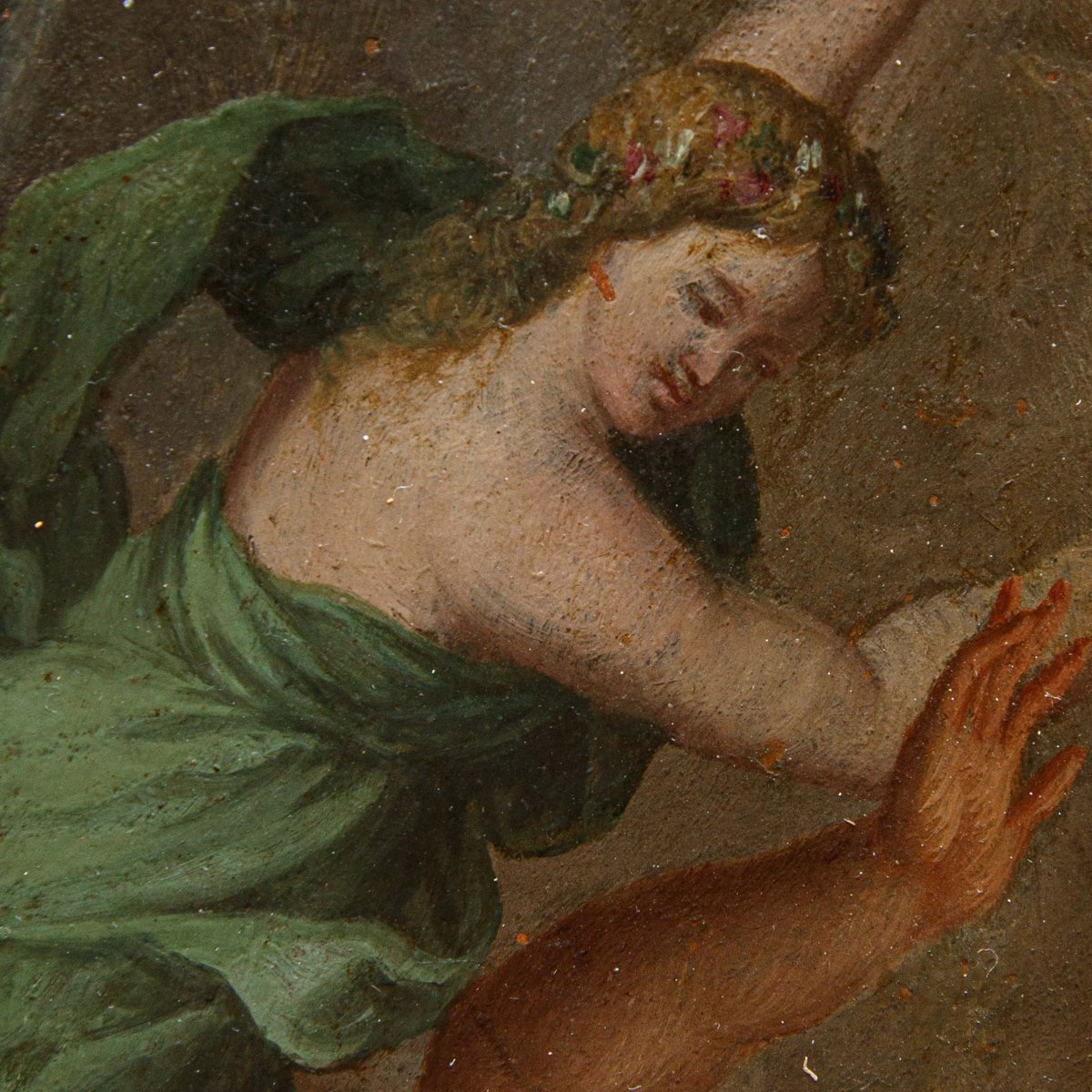
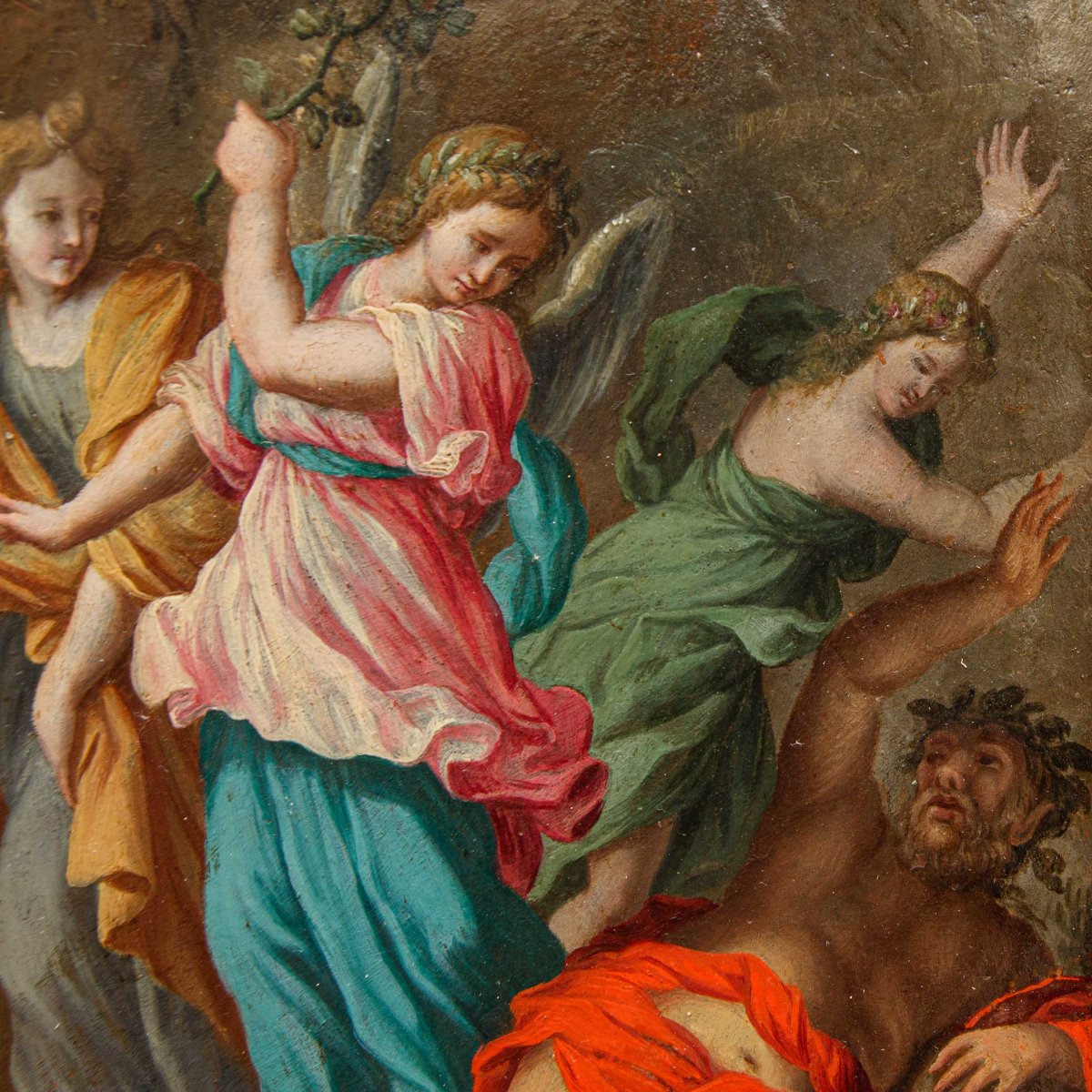
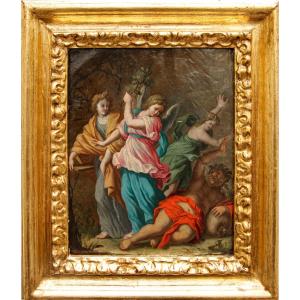
This refined painting on copper is a typical example of the decorative grace of the 18th-century Venetian school, a work that exudes the luminous and theatrical atmosphere of the High Rococo period. Although at first glance the presence of a satyr might suggest a bacchanal, the composition actually suggests a more structured moral or mythological allegory, such as the triumph of virtue or a nymph punishing unbridled desire. The style immediately recalls the works of Jacopo Amigoni or related artists such as Antonio Balestra, where the features of the female figures are gentle, almost diaphanous, and their movements possess a choreographic elegance underscored by drapery that seems billowed by the wind. The use of copper as a support enhances the brilliance of the pigments typical of the Venetian palette, with that cherry pink and intense blue that stand out in the chromatic contrast between the nymphs’ fair skin and the dark, earthy complexion of the defeated satyr in the foreground. Every element, from the gesture of the central figure brandishing a twig as a sign of supremacy to the overturned wineskin beside the mythological creature, contributes to narrating the control of reason over primordial instincts, all enclosed within a pictorial dimension of extraordinary softness and luminosity that transforms a moment of conflict into a scene of exquisite aesthetic harmony. The extraordinary success of the Venetian mythological and allegorical tradition in the 18th century is due to the ability of the great Venetian masters to transform painting into a cosmopolitan and seductive language capable of winning over the courts of all Europe, from London to Madrid to St. Petersburg. This body of work did not aim for a dramatic or realistic representation of myth, but rather sought a realm of pure aesthetic escape where deities and legendary figures became pretexts for staging a choreography of graceful bodies and luminous colors.
Period: 18th century
Style: Other Style
Condition: Good condition
Material: Oil painting on copper
Width: 17
Height: 22
Reference (ID): 1763931
Availability: In stock