

A Painter In The Style Of Leonardo, Mid-16th Century, Jesus And The Young Saint John Kissing
Painter in the style of Leonardo, mid-16th century
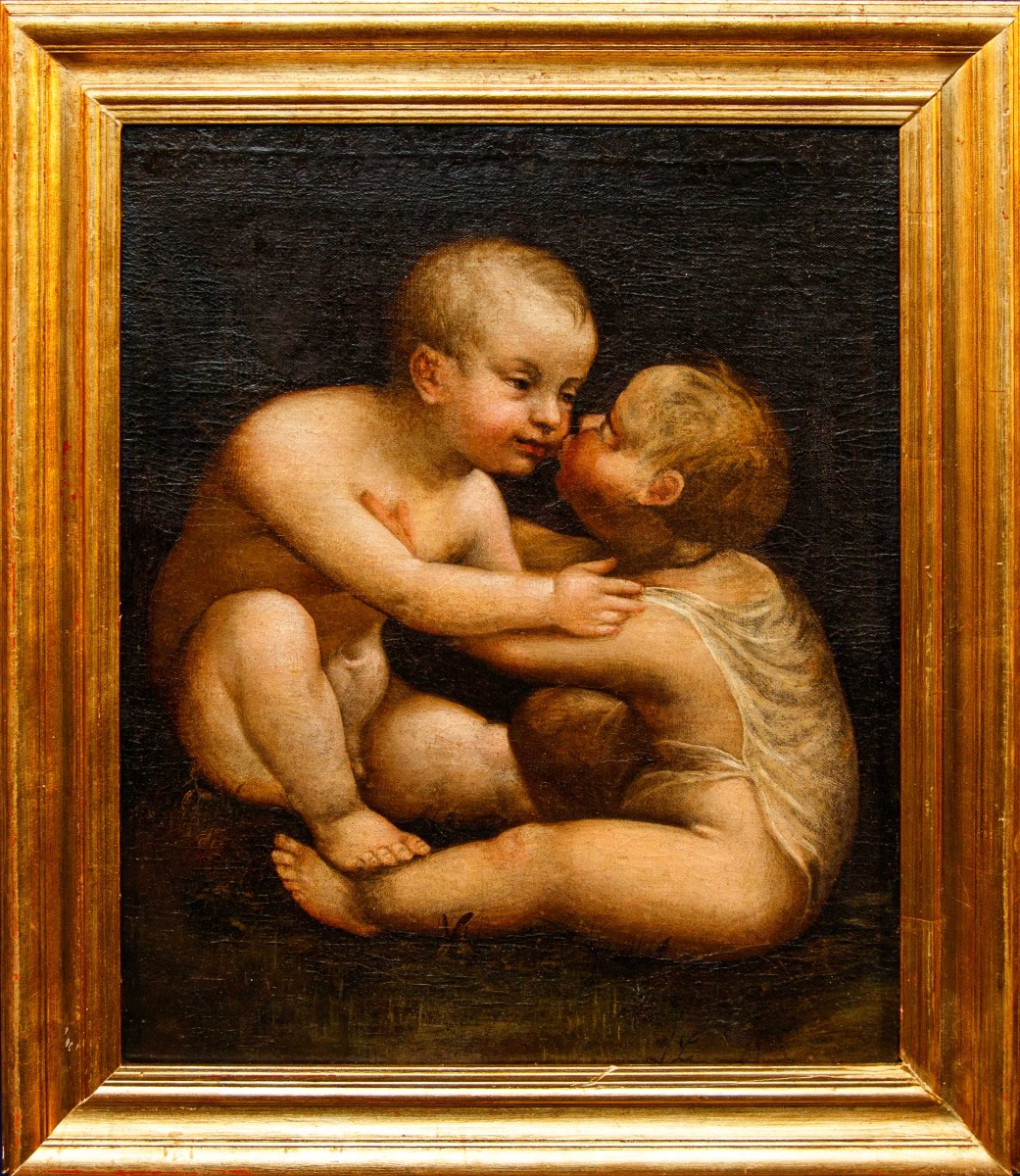
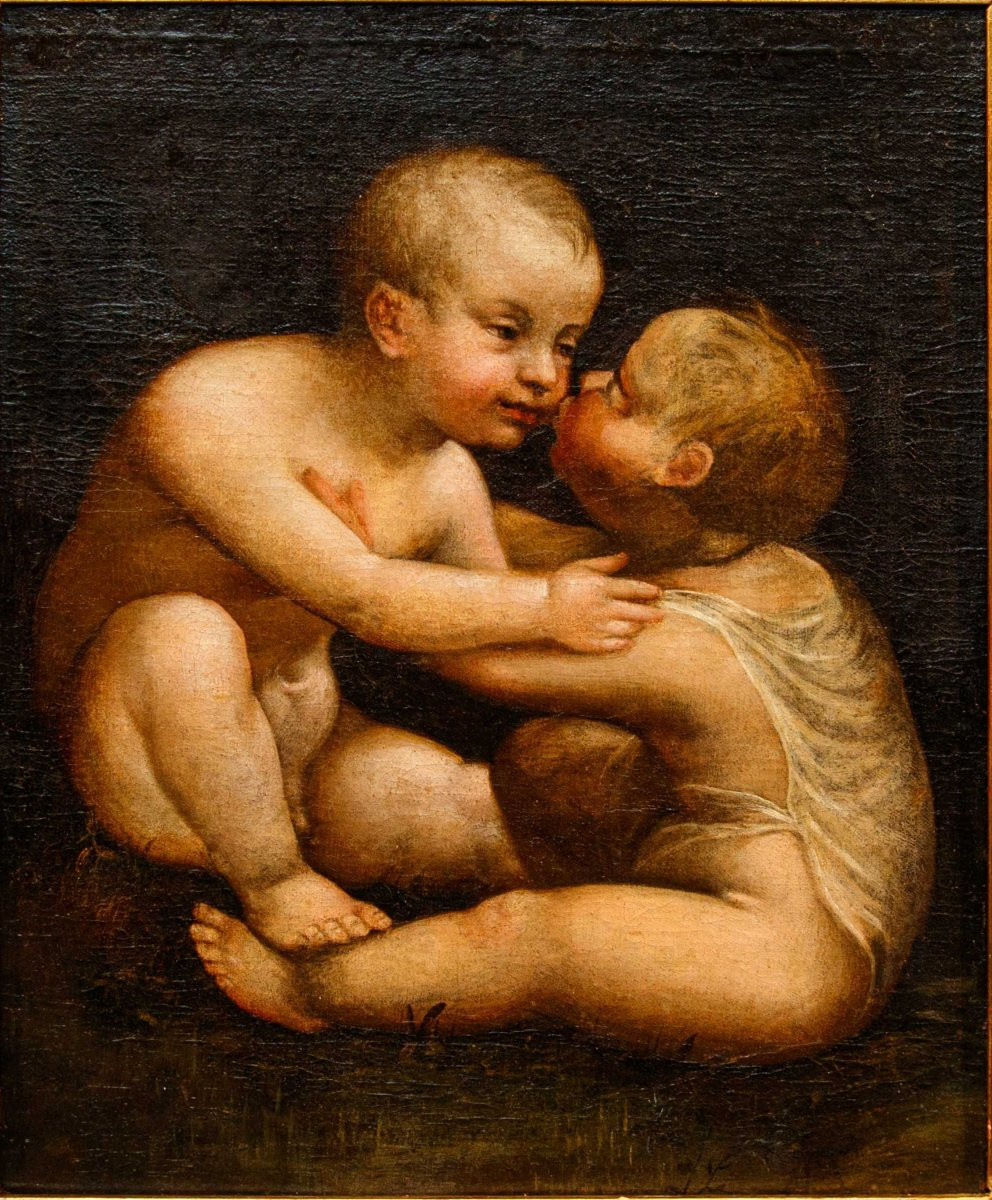
Jesus and the Infant Saint John Kissing
Oil on canvas, 62.5 x 50 cm
with frame, 77 x 66 cm
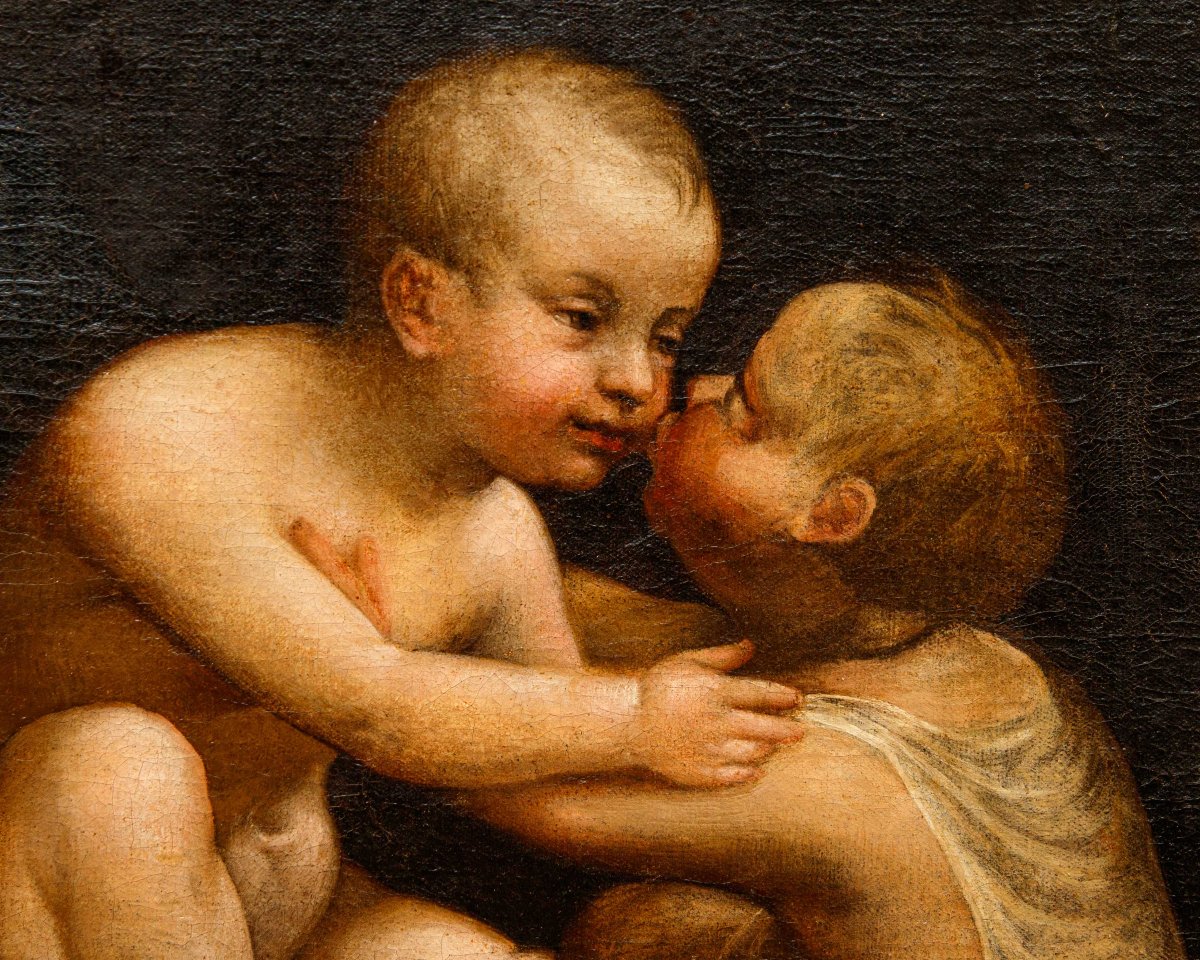
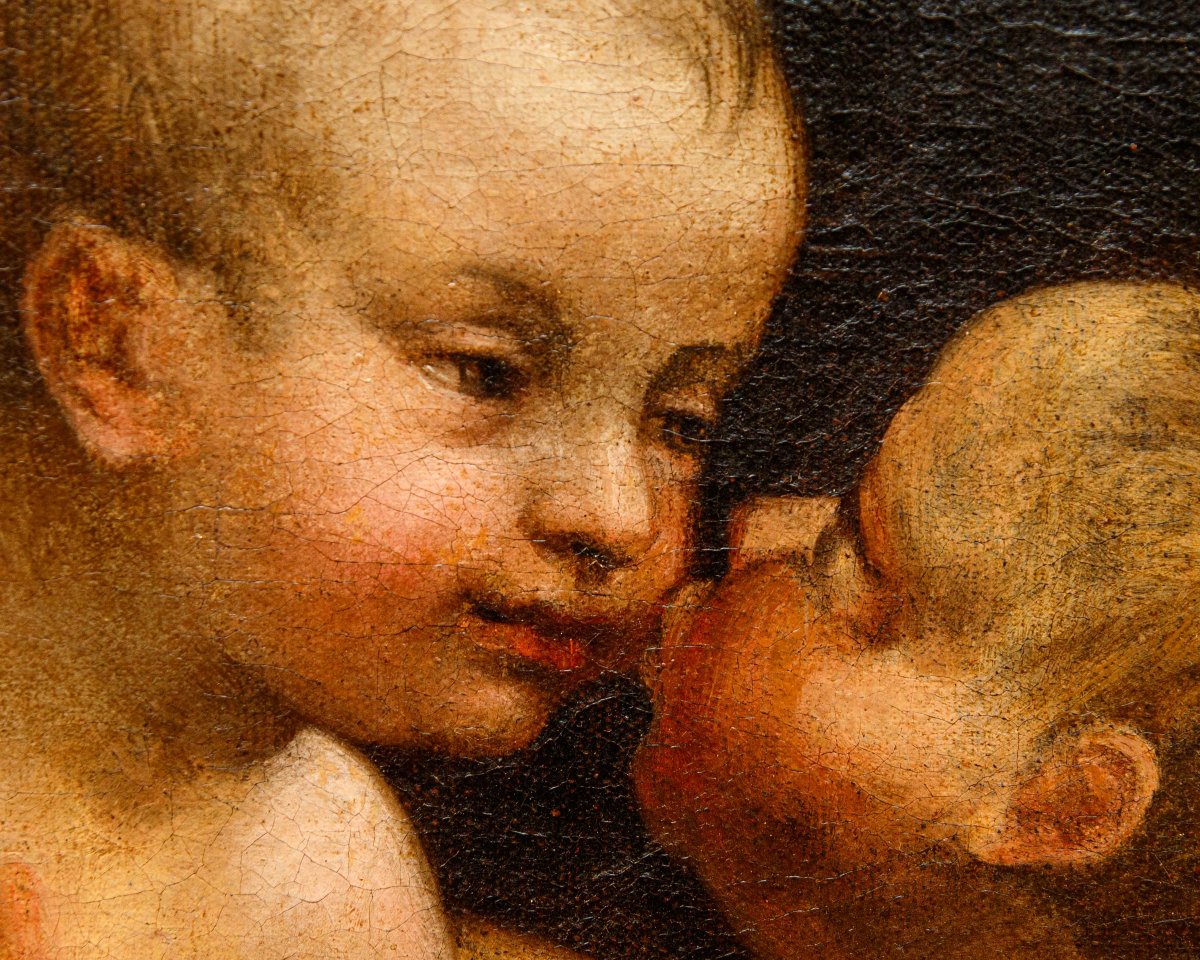
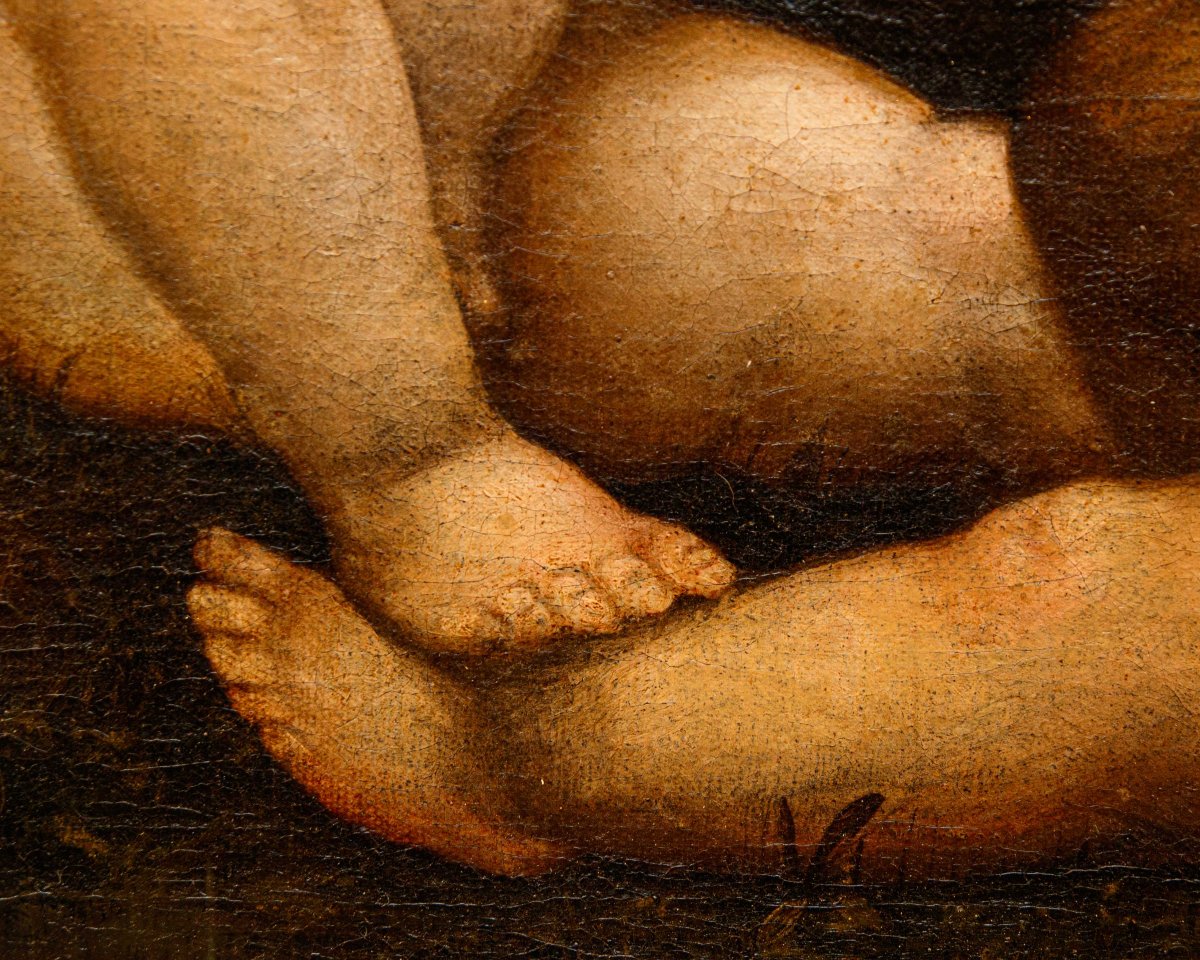
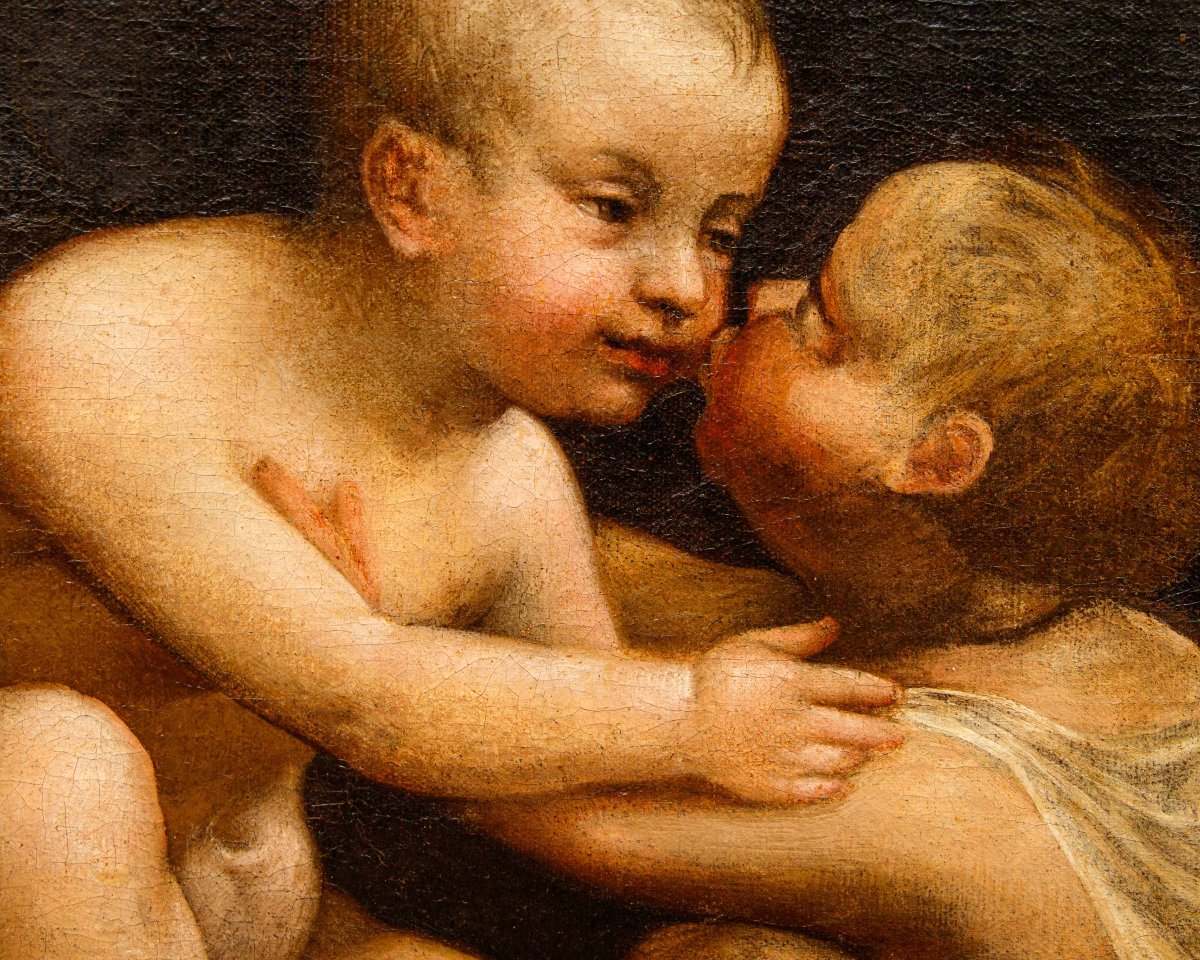
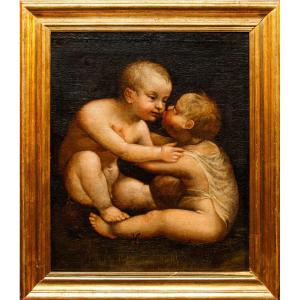
The work in question, an oil on canvas created by a painter associated with Leonardo in the mid-16th century, depicts the encounter between the Infant Jesus and Saint John the Younger, captured in a moment of tender affection as they exchange a kiss. This subject, imbued with profound symbolic and devotional significance, bears witness to the extraordinary influence that Leonardo da Vinci’s artistic legacy exerted on Lombard and European painting of the sixteenth century. The intensity of the gestural dialogue and the softness of the modeling suggest a direct derivation from a Leonardo prototype, now lost, whose existence is nevertheless postulated by critics precisely because of the impressive number of variants and copies produced in Lombardy and the Low Countries. The composition focuses entirely on the two child figures, immersed in a background darkness that enhances the plasticity of their bodies and the luminosity of their complexions, in accordance with a chiaroscuro sensibility that closely recalls the sfumato of the master from Vinci.
A close stylistic comparison allows this work to be placed within a dense network of iconographic references. The anatomy of the children and the soft rendering of the skin show significant similarities to Bernardino Luini’s Infant Jesus in the Bavarian State Painting Collection, where the pursuit of skin-like realism and the gentleness of the facial features follow the same aesthetic canons. The popularity of this compositional scheme is attested by the work of Bernardino Luini and his workshop: in particular, in the Madonna and Child with Saint John the Baptist from a private collection, the intertwining of the bodies and the embrace between the two children are almost identical to the work analyzed here, demonstrating how Luini was one of the principal custodians and disseminators of Leonardo’s artistic language. The version from Luini’s workshop at the Prado Museum also confirms how widespread the theme of the kiss between the Redeemer and John the Baptist was and how much it was in demand by patrons of the time.
Even more revealing is the parallel with Marco d’Oggiono’s Jesus and the Young St. John, now part of the Royal Collection in London. In this painting, the muscular tension and the twisting of the bodies seem to draw with philological fidelity on an original painting or drawing by Leonardo, serving as a visual bridge to understanding the genesis of the painting in question. This model did not remain confined within Lombardy’s borders but crossed the Alps, influencing Flemish masters of the caliber of Joos van Cleve and Quentin Massys. Van Cleve, in particular, reinterpreted the same subject in numerous variations, as evidenced by the canvases preserved at the Capodimonte Museum in Naples, where the solidity of the bodies in the Leonardo tradition blends with the descriptive precision of Northern Europe.
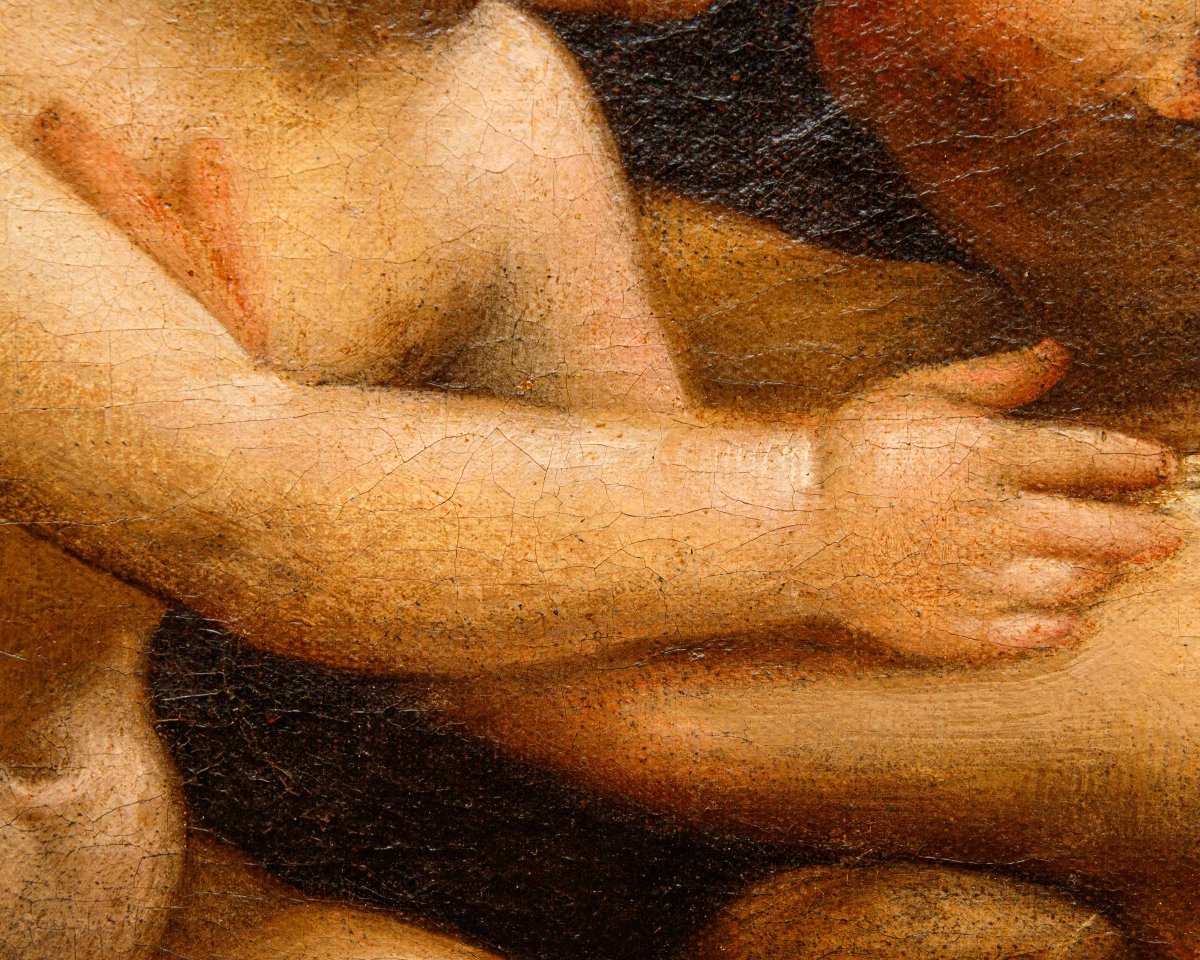
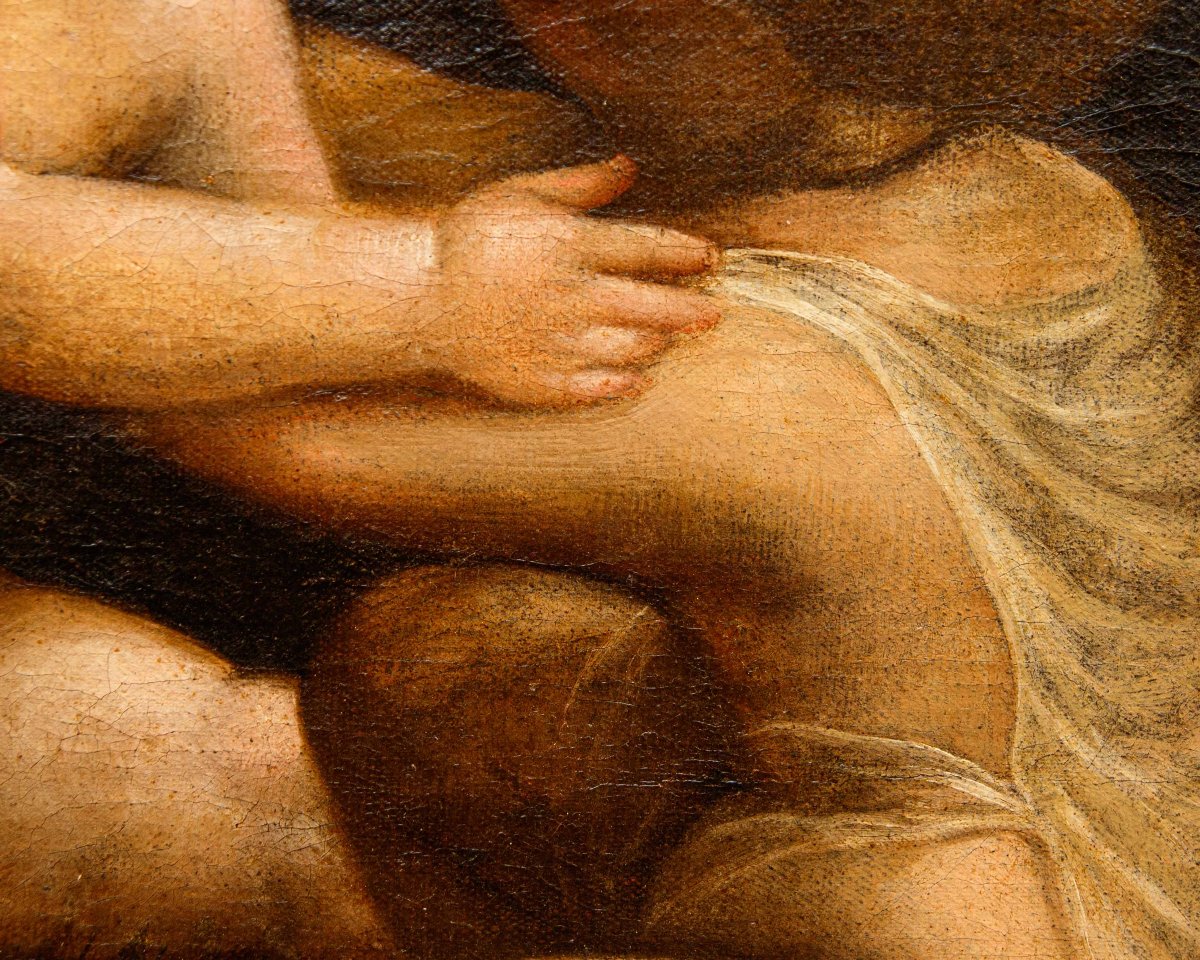
The painting in question stands out for its execution, which successfully blends the sacredness of the encounter with an everyday naturalness, devoid of stiffness. Although Bernardino de Conti, in his Madonna at Brera, incorporates the detail of the impending kiss into a larger composition, our canvas chooses the path of thematic concentration, focusing exclusively on the physical and emotional contact between the two divine cousins. The delicacy with which one hand rests on the other’s shoulder and the gentle brush of their lips imbue the image with a premonition of future sacrifice, making the work not only a testament to Lombard painterly skill but a fundamental piece in reconstructing that “Leonardism” which profoundly marked the figurative culture of the High Renaissance.
Period: 16th century
Style: Other Style
Condition: Good condition
Material: Oil painting
Width: 50
Height: 62,5
Reference (ID): 1751314
Availability: In stock