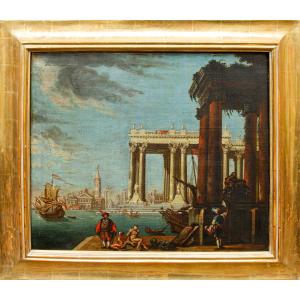


17th-century Venetian Painter, Architectural Capriccio
17th-century Venetian painter
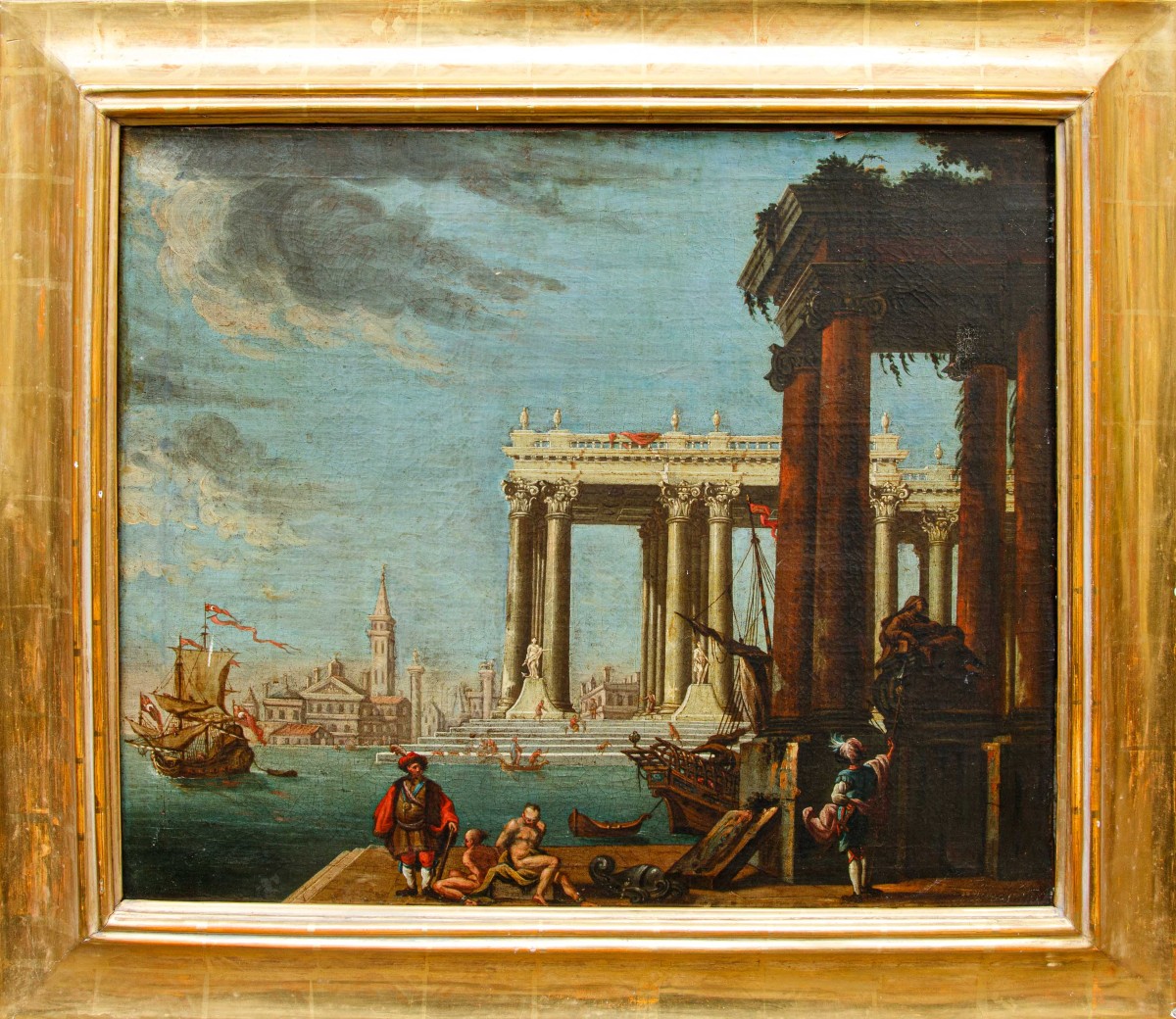
Architectural capriccio
Oil on canvas, 61 x 71 cm – with frame, 79 x 90 cm
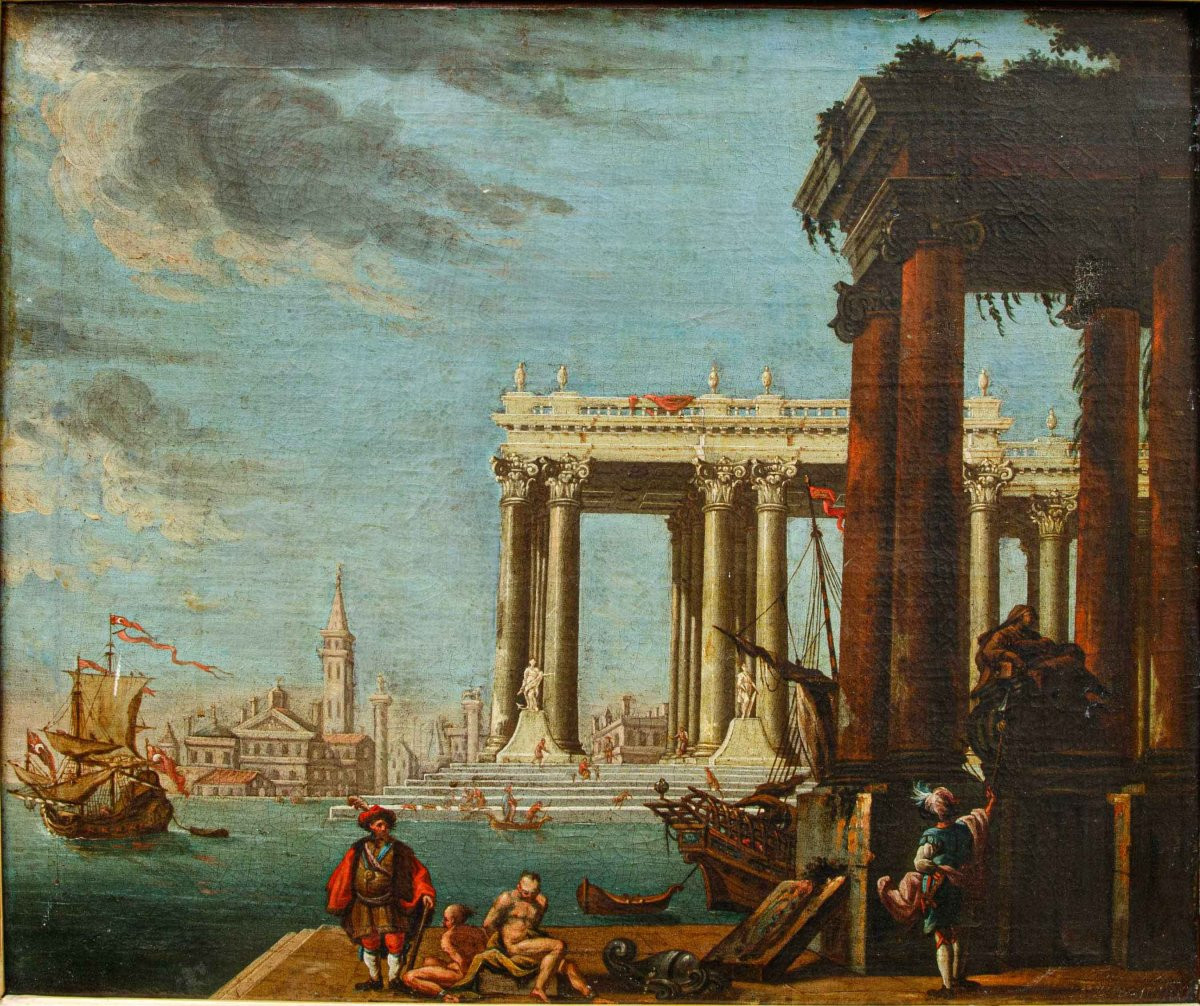
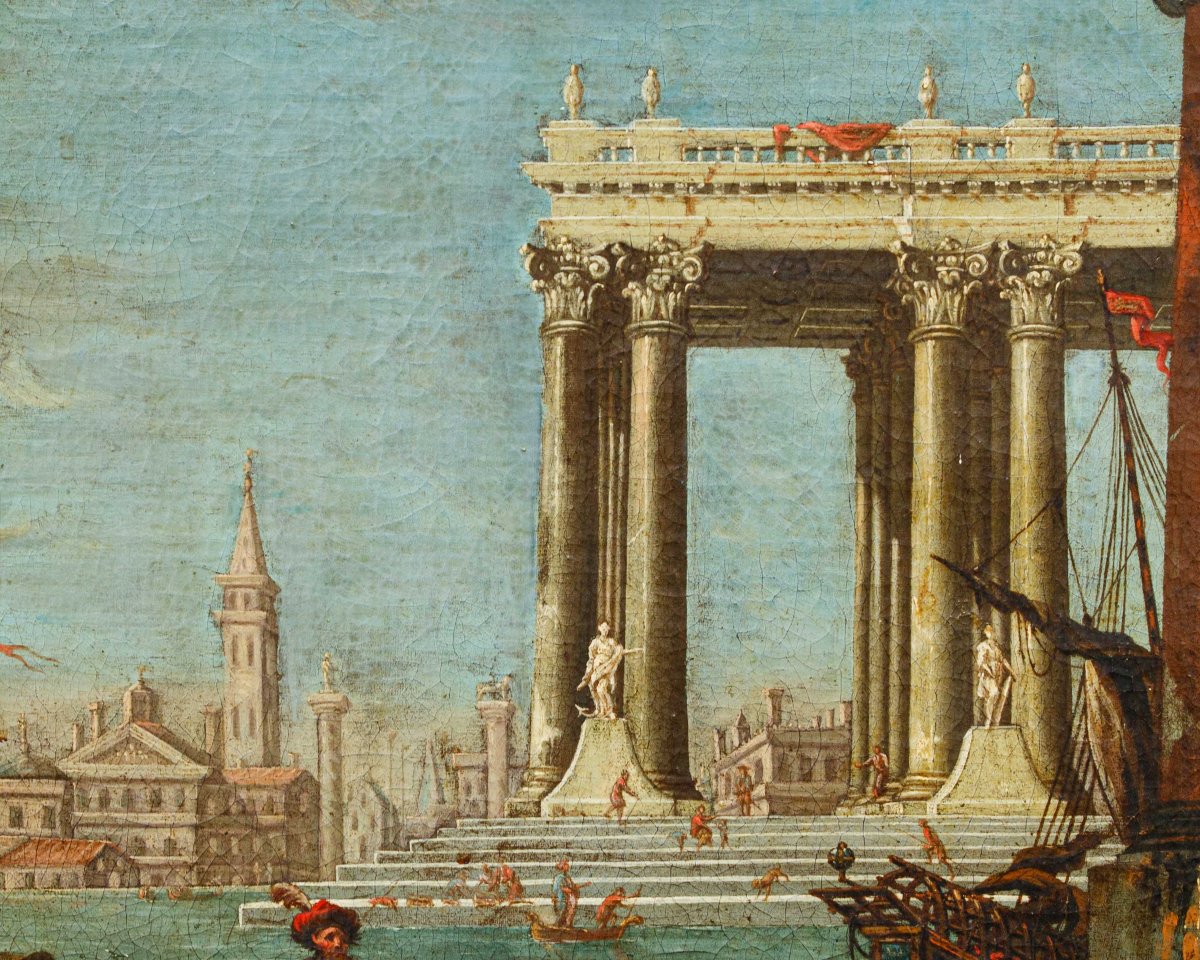
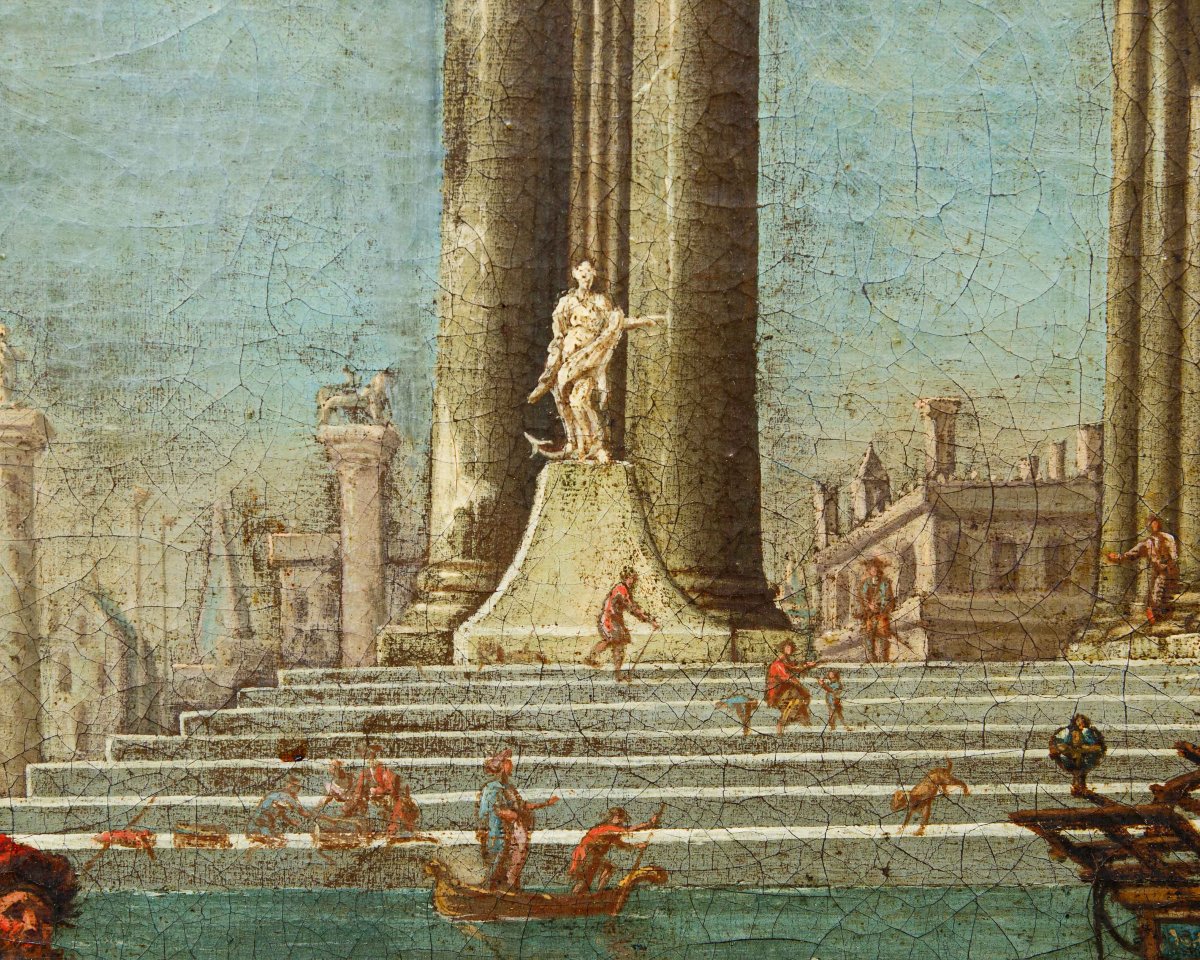
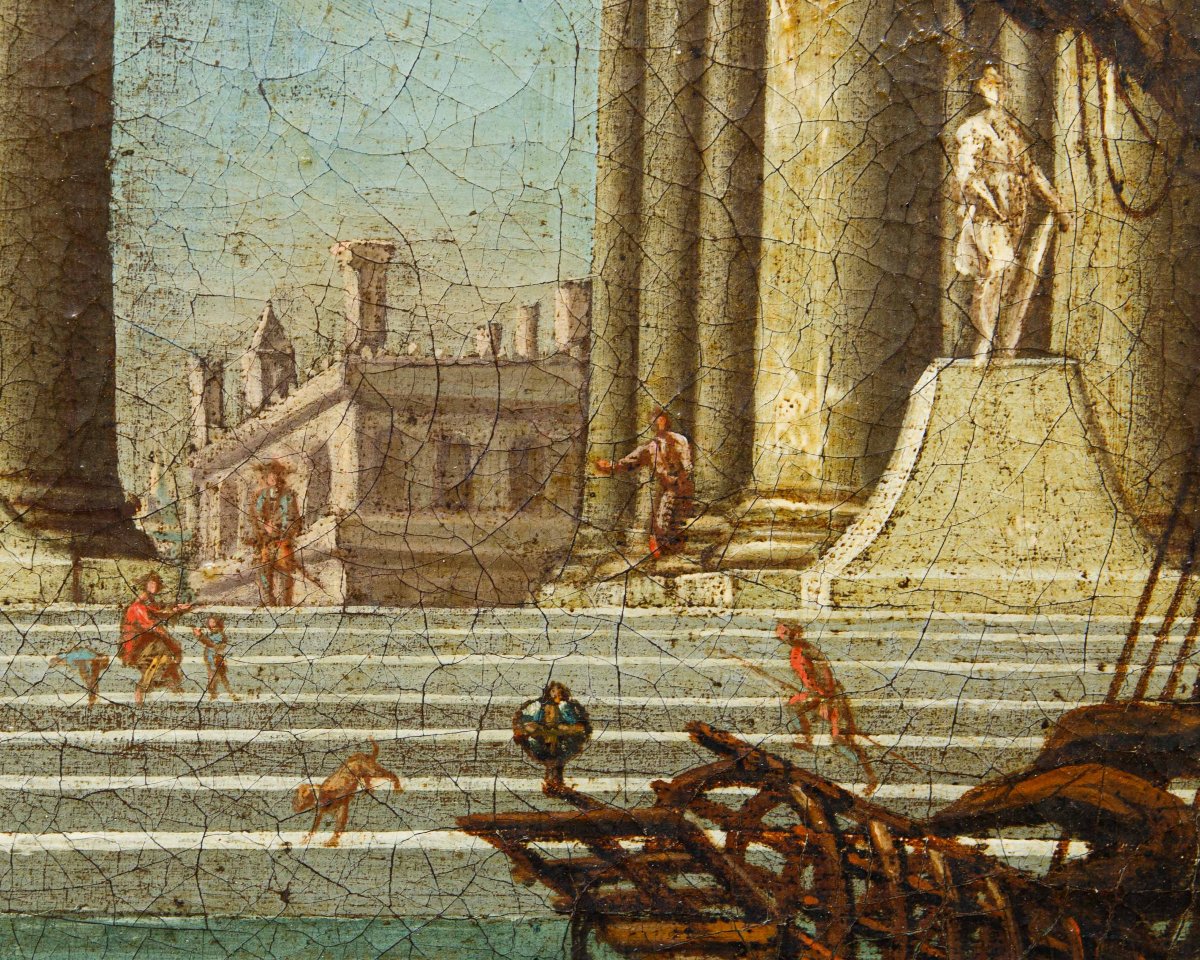
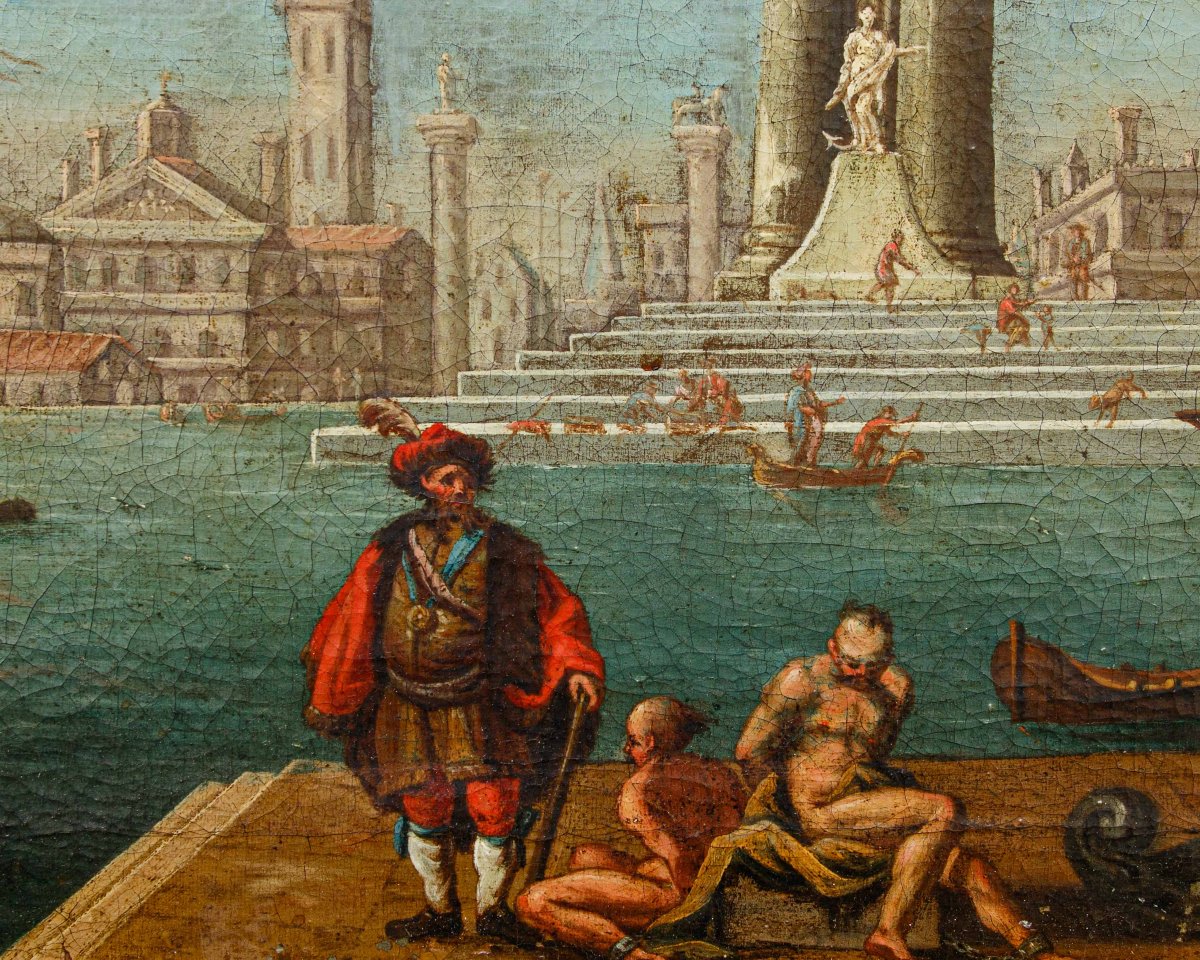
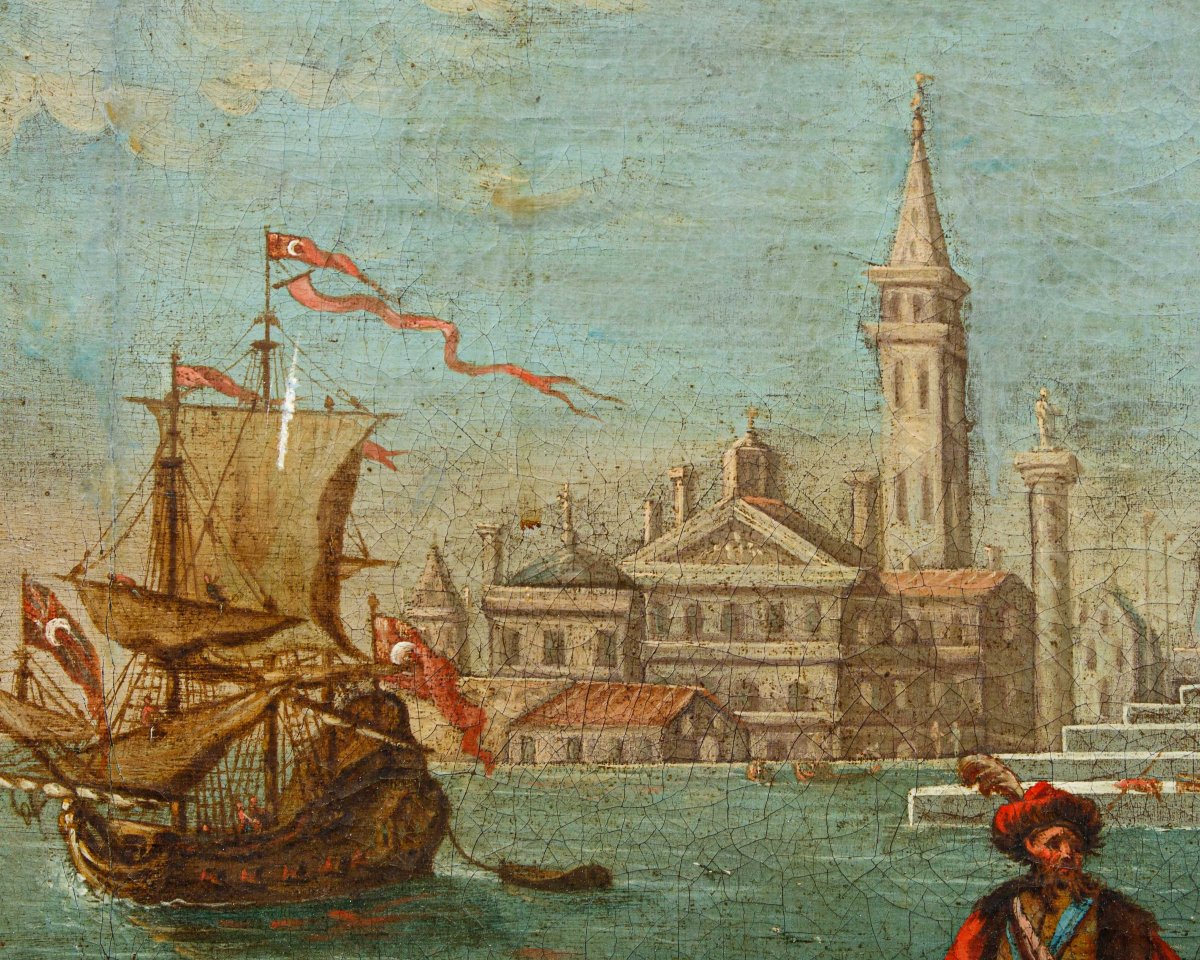
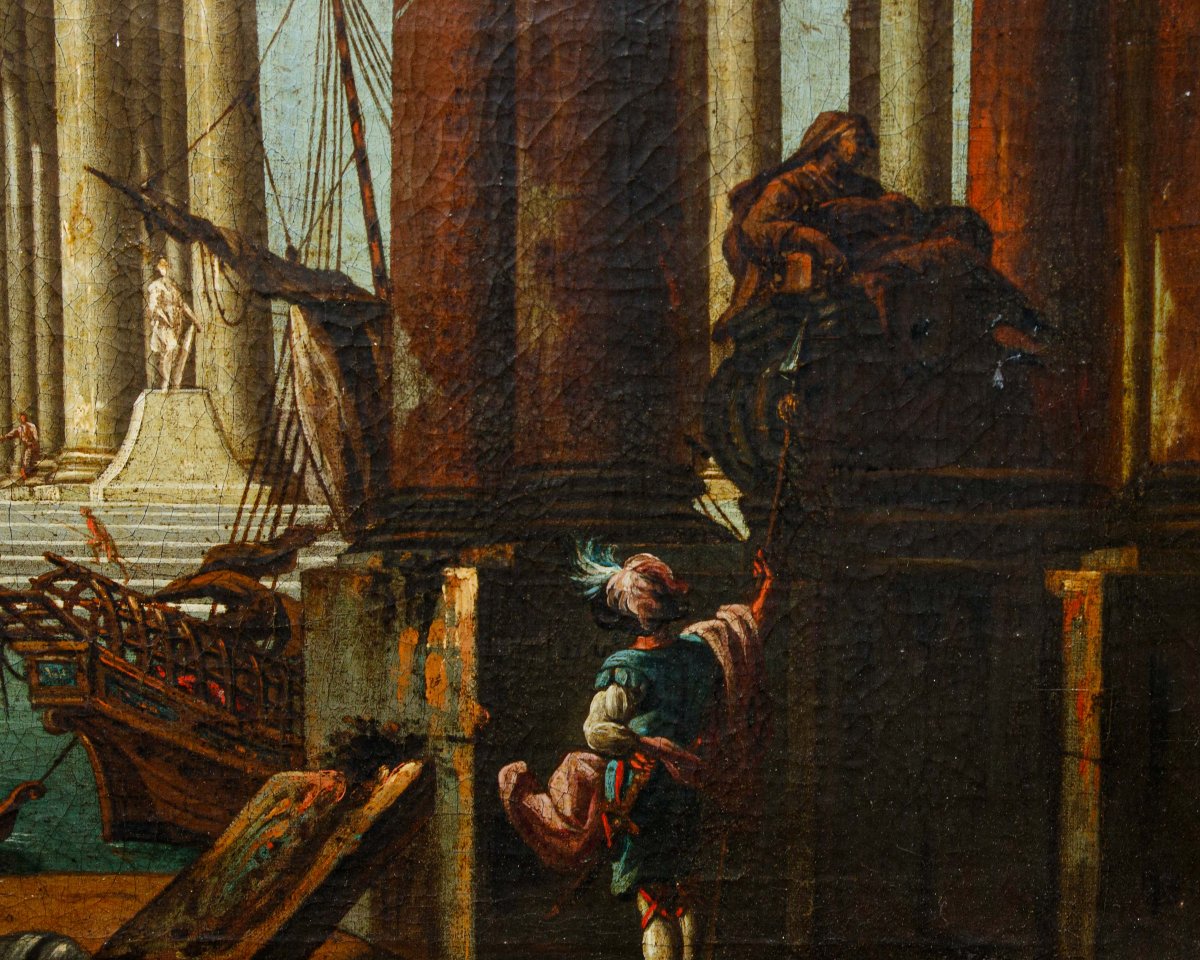
The painting depicts a fantastical harbor scene, set in a lagoon that clearly evokes the Venetian atmosphere of the 18th century. In the foreground, on a quay bustling with figures in period costumes—distinctly 15th-century in style, an element that reinforces the hypothesis of a specific historical interpretation—one can glimpse characters of various social statuses: a man in a red cloak, several figures of slaves or prisoners lying half-reclined, and, on the right, an elegant figure. The two nude figures in the foreground may allude to a historical episode from 1451: the Venetians, suspicious of the construction of a war fleet by Mehmed II, who aimed to attack Constantinople, had sent a spy (called a bailo in Venetian) to verify this rumor. Mehmed II’s court tracked down the agent and returned him to Venice: the two nude figures may be a symbolic representation of this episode. To reassure the Doge that he was not assembling an attack fleet, Mehmed II sent a ship—clearly visible on the left side of the painting—carrying the Grand Vizier. The Venetians, however, did not allow the vessel to dock, forcing it to drop anchor in the lagoon; after a long wait, the ship returned to the East. In the background lies a stretch of water crisscrossed by sailing vessels, with towers and palaces emerging from the lagoon in a bluish, hazy light. The composition is dominated by imposing Corinthian colonnades, partly intact and partly in ruins, which frame the space toward the basin, blending echoes of ancient classicism with the typical lagoon scenery. Just two years after that diplomatic episode, in 1453, Constantinople was indeed attacked and conquered by the army of Mehmed II. The defeated Venetians took refuge with their ships on the island of Crete. The capriccio thus seems to evoke that memory, concealing beneath the guise of an idyllic lagoon view the recollection of one of the most dramatic chapters in the history of the Serenissima.
At the base of the architecture, in the lower right corner, the letters D.U. are visible, likely the artist’s initials. The attribution remains uncertain, but these initials could point to Domenico Uberti, a little-known Venetian painter today, father of the more famous Pietro Uberti, a portraitist active between Venice and the European courts in the first half of the 18th century. If confirmed, this ciphered signature would provide a valuable clue for reconstructing Domenico’s catalog, which remains largely unknown. The work fits squarely within the tradition of 18th-century Venetian vedutism, a genre that flourished extraordinarily due to demand from Grand Tour travelers eager to take home a visual memento of the Venetian Republic. The architectural capriccio, which blends ancient ruins and fantastical architecture with recognizable lagoon vistas, was one of the favored genres alongside the topographically accurate veduta.
Period: 17th century
Style: Other Style
Condition: Good condition
Material: Oil painting
Width: 71
Height: 61
Reference (ID): 1759814
Availability: In stock