





19th Century, Two Sea Views With The Aragonese Castle Of Baia And The Gulf Of Naples
19th century
Two sea views with the Aragonese castle of Baia and the Gulf of Naples
Oil on canvas, 55.5x77 cm
The two paintings under examination are classified as sea views created during the 19th century. This chronology places them at the height of the Grand Tour era and within European Romanticism, with specific resonances in southern Italian landscape painting.
The iconographic location (Vesuvius and the Campanian coast) suggests a strong affiliation with Neapolitan Vedutismo. In particular, the attention to the atmospheric effect and the immediacy of light, in contrast to the rigidity of eighteenth-century Vanvitellian Vedutismo, directly harks back to the influence of the Posillipo School (active since the 1920s). Artists such as Anton Sminck van Pitloo and Giacinto Gigante pioneered the advancement of academic design in favor of spot, favoring plein air study and variable light capture.
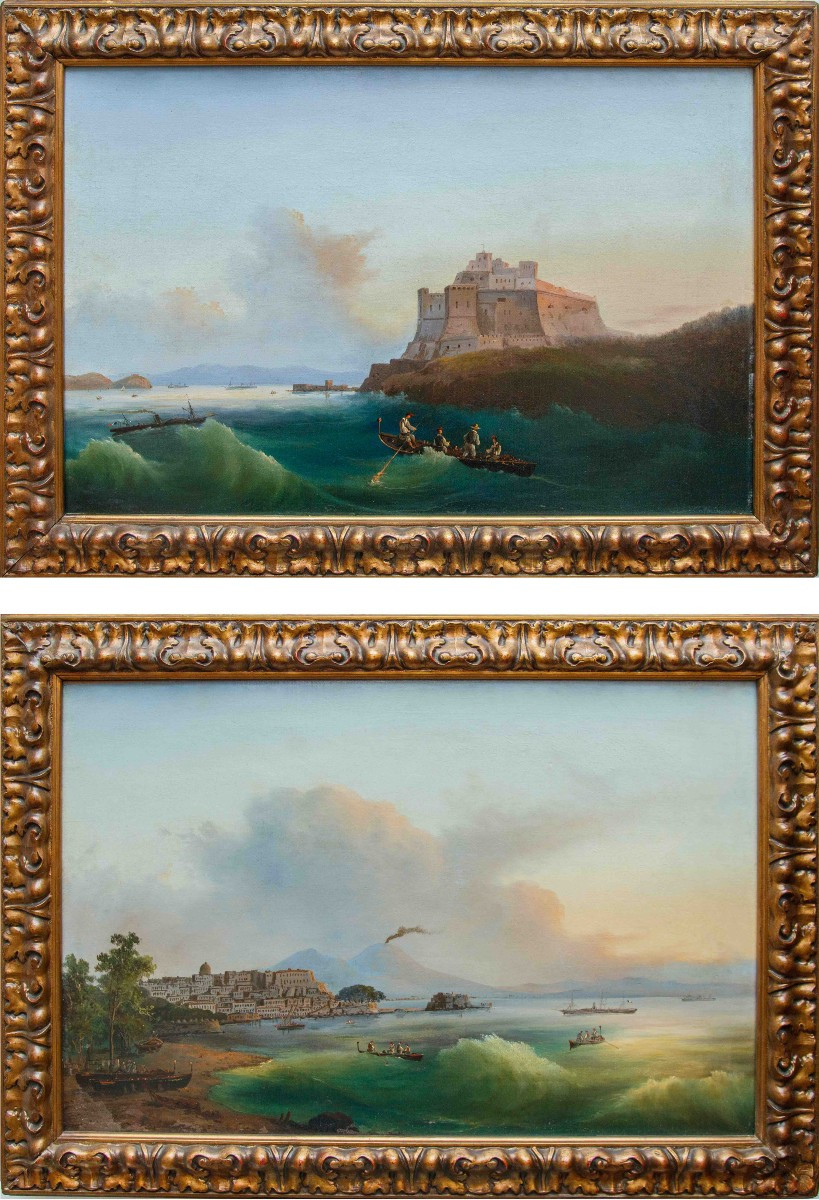
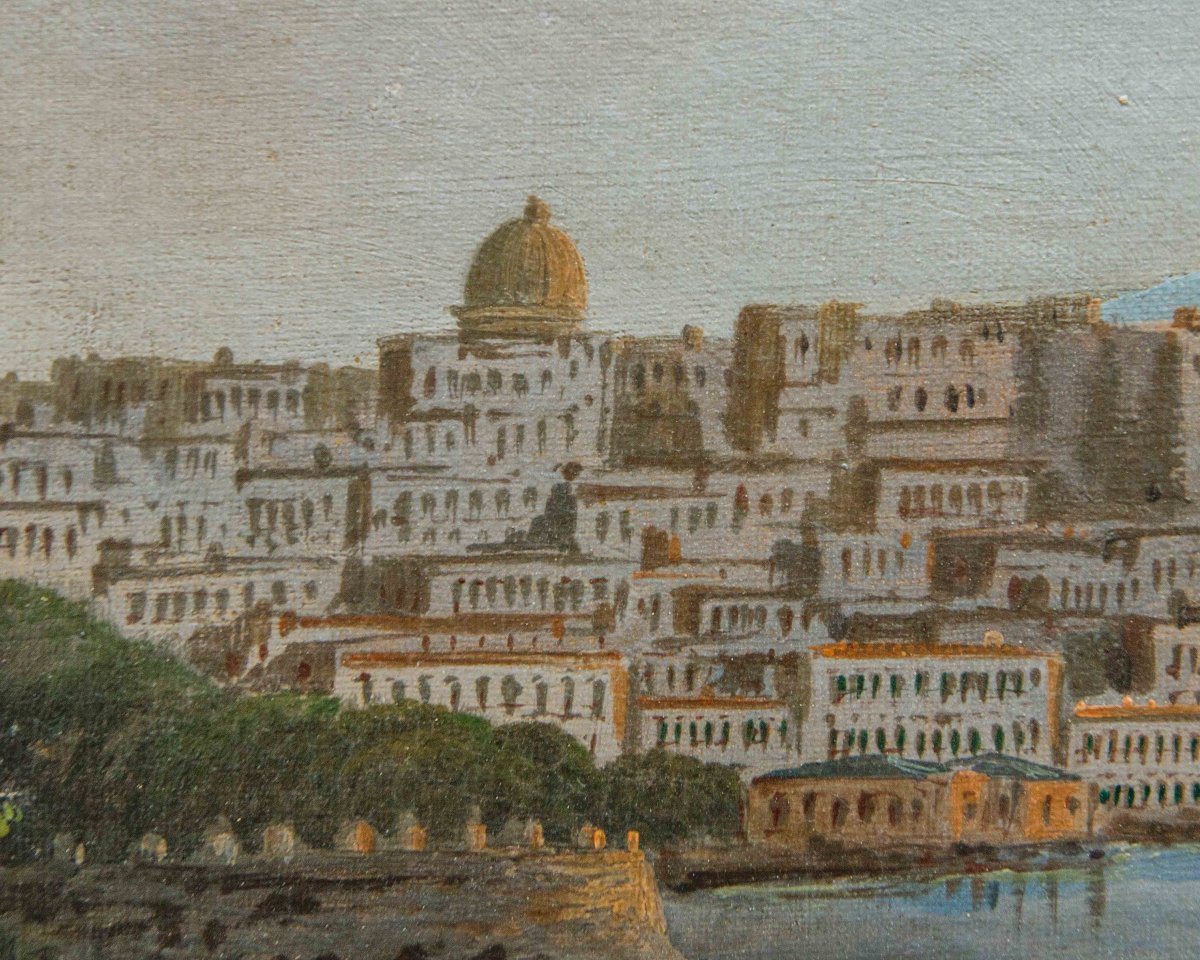
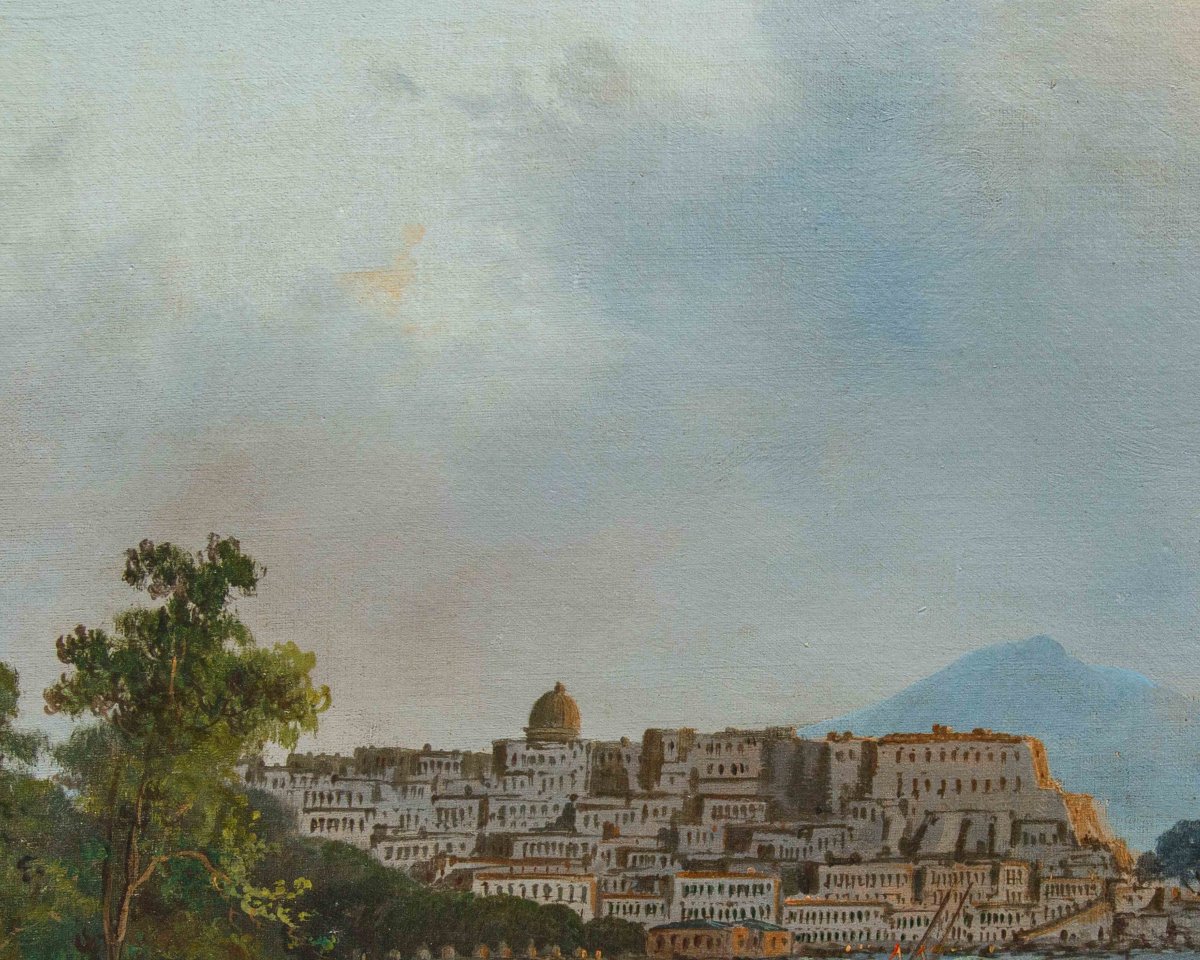
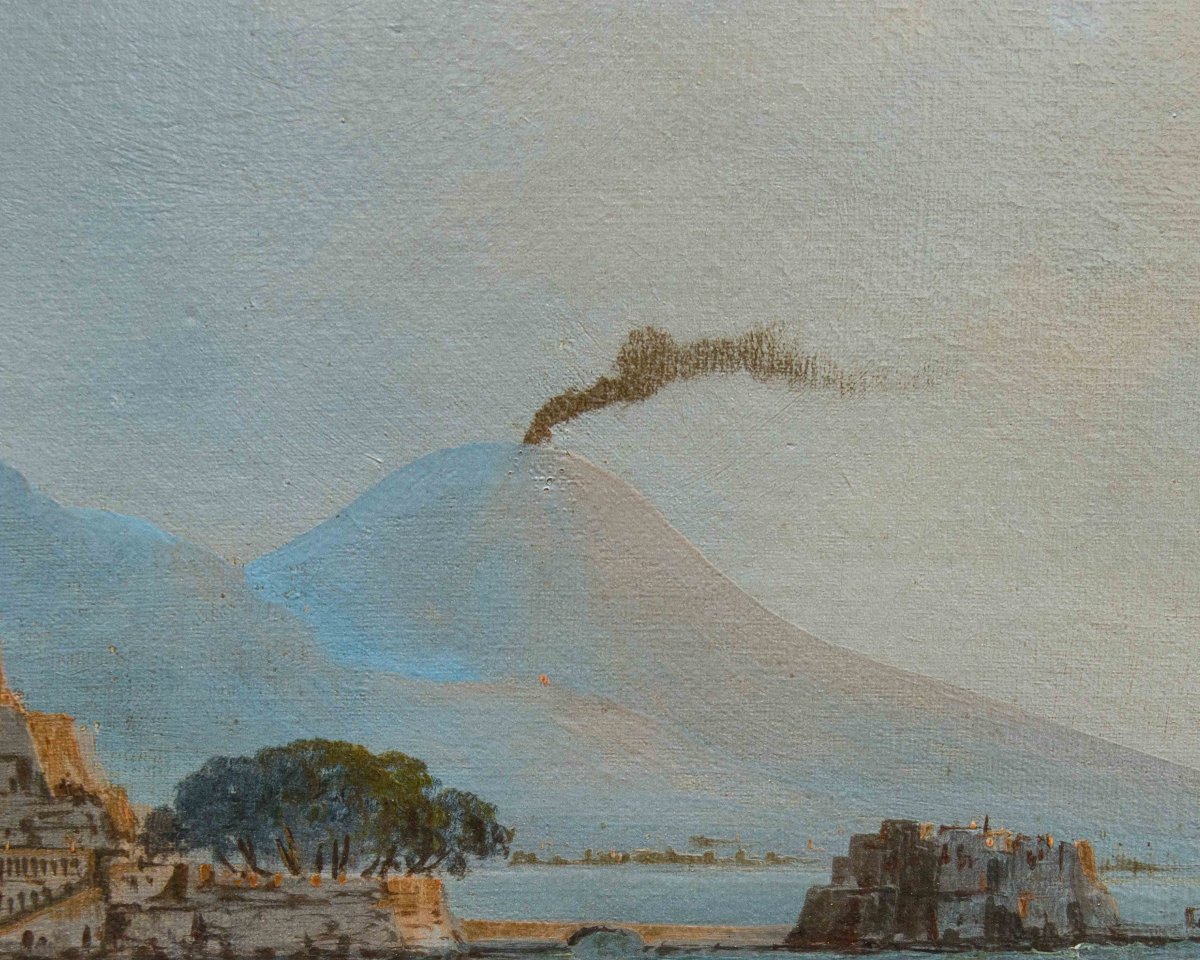
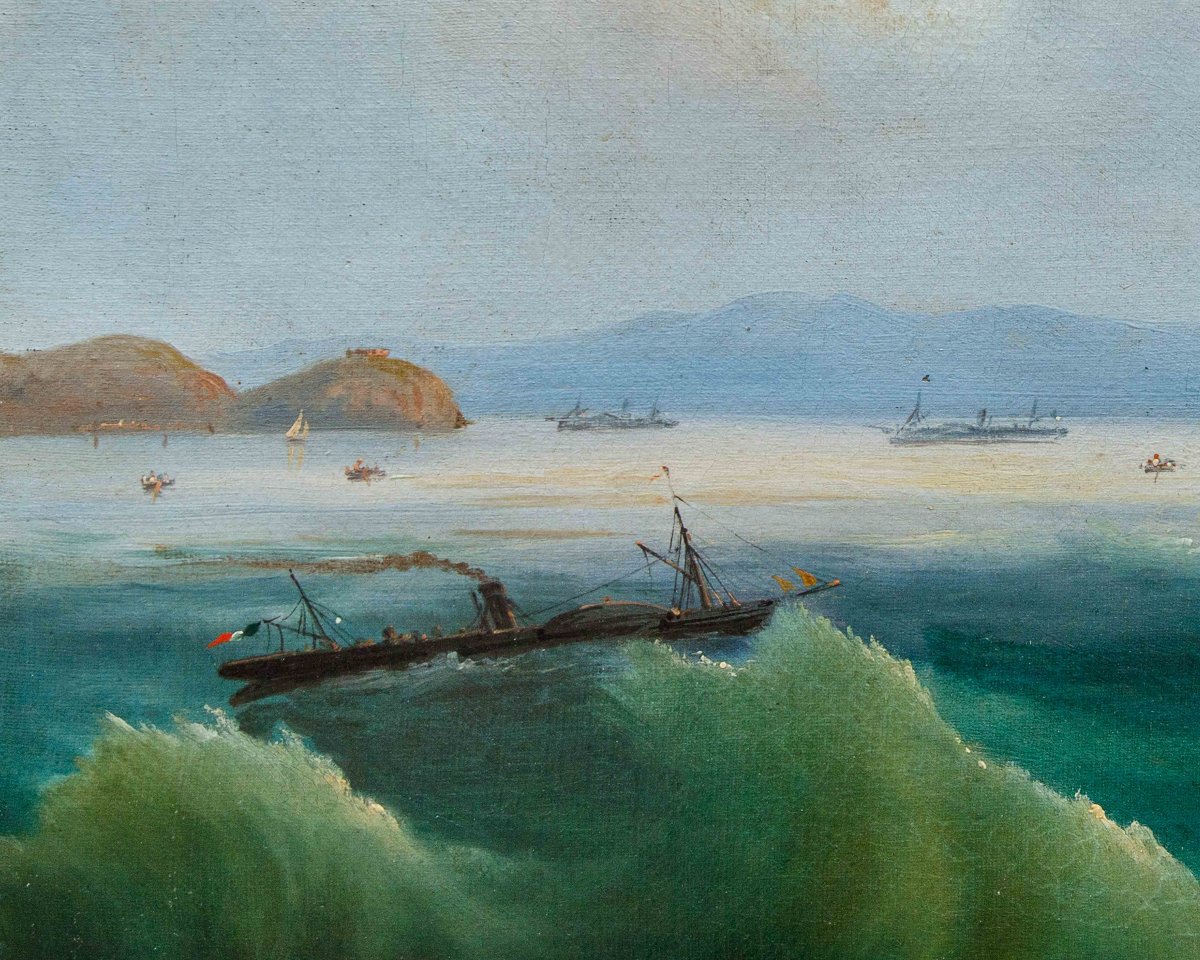
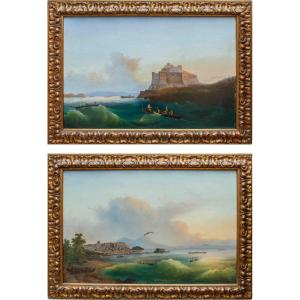
The first, larger canvas embraces the entire Gulf of Naples with smoking Vesuvius in the background. Here, the sublime takes over: the city stretches out in a harmony of architecture, but attention is captivated by the latent threat of the volcano. The artist plays with a golden, atmospheric light, typical of sunrise or sunset, blending the dynamism of the boats in the foreground with the monumental stasis of the mountain.
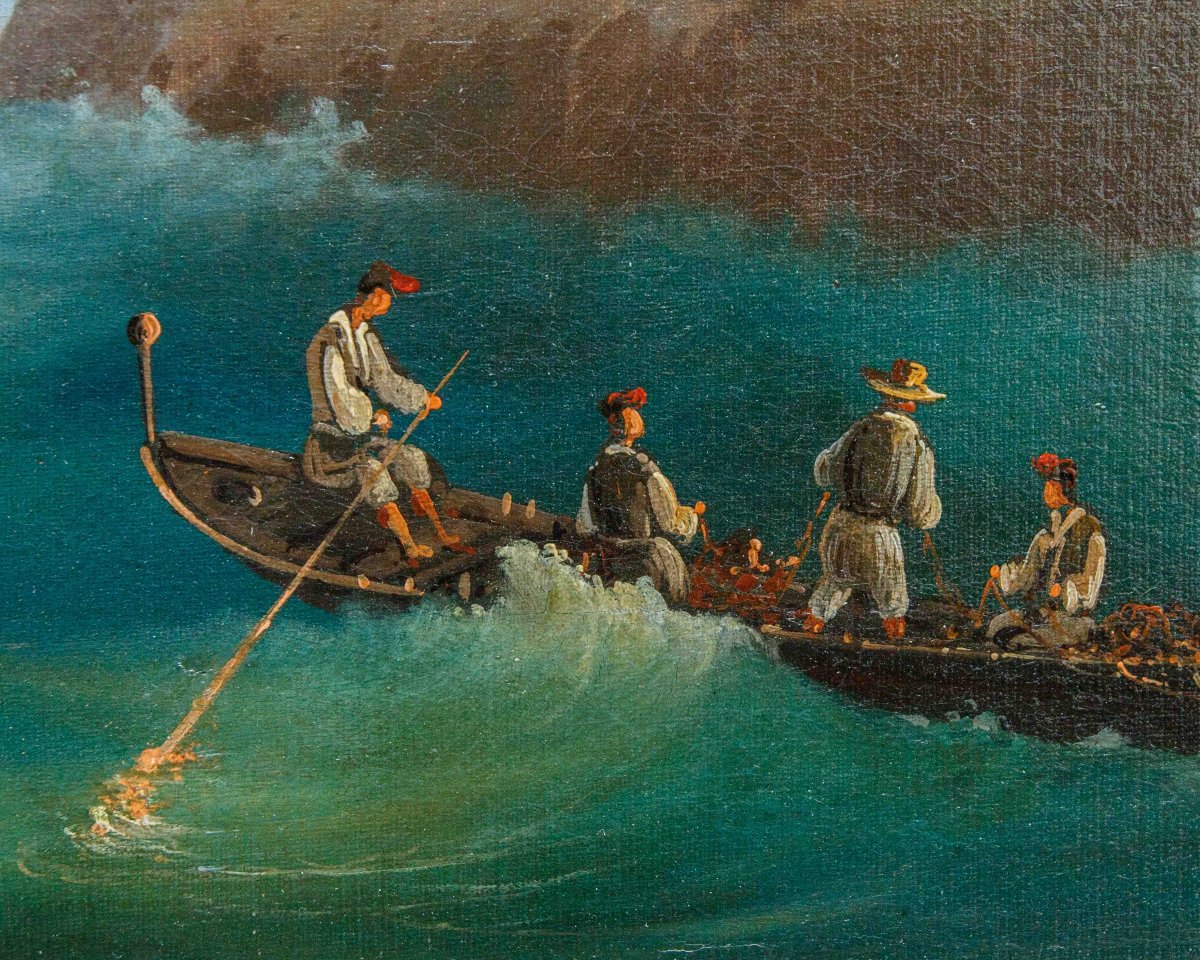
In the second we see depicted the unmistakable mass of the Aragonese castle of Baia with its imposing Spanish walls that stand out against the rough sea, a true maritime bastion. This fortress, commissioned by Alfonso II of Aragon in 1495 and then strengthened by Don Pedro de Toledo, however stands on the ruins of a much older and more luxurious Roman residence, perhaps that of Julius Caesar. Today, after centuries of military history and diverse uses, the castle has become the Archaeological Museum of the Phlegraean Fields, silent custodian of the treasures of an area rich in history spanning Roman antiquity and the Renaissance.
Two sea views with the Aragonese castle of Baia and the Gulf of Naples
Oil on canvas, 55.5x77 cm
The two paintings under examination are classified as sea views created during the 19th century. This chronology places them at the height of the Grand Tour era and within European Romanticism, with specific resonances in southern Italian landscape painting.
The iconographic location (Vesuvius and the Campanian coast) suggests a strong affiliation with Neapolitan Vedutismo. In particular, the attention to the atmospheric effect and the immediacy of light, in contrast to the rigidity of eighteenth-century Vanvitellian Vedutismo, directly harks back to the influence of the Posillipo School (active since the 1920s). Artists such as Anton Sminck van Pitloo and Giacinto Gigante pioneered the advancement of academic design in favor of spot, favoring plein air study and variable light capture.
The first, larger canvas embraces the entire Gulf of Naples with smoking Vesuvius in the background. Here, the sublime takes over: the city stretches out in a harmony of architecture, but attention is captivated by the latent threat of the volcano. The artist plays with a golden, atmospheric light, typical of sunrise or sunset, blending the dynamism of the boats in the foreground with the monumental stasis of the mountain.
In the second we see depicted the unmistakable mass of the Aragonese castle of Baia with its imposing Spanish walls that stand out against the rough sea, a true maritime bastion. This fortress, commissioned by Alfonso II of Aragon in 1495 and then strengthened by Don Pedro de Toledo, however stands on the ruins of a much older and more luxurious Roman residence, perhaps that of Julius Caesar. Today, after centuries of military history and diverse uses, the castle has become the Archaeological Museum of the Phlegraean Fields, silent custodian of the treasures of an area rich in history spanning Roman antiquity and the Renaissance.
2 800 €
Period: 19th century
Style: Other Style
Condition: Good condition
Material: Oil painting
Width: 77
Height: 55
Reference (ID): 1691149
Availability: In stock
Print