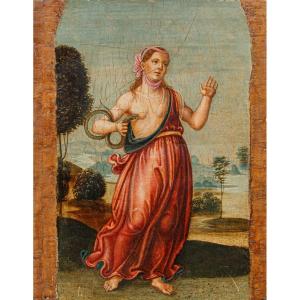


Tuscan School, Late 15th–early 16th Century, Cleopatra And The Aspis
Tuscan School, late 15th century – early 16th century
Cleopatra and the Aspis
Oil on panel, 32 x 24.5 cm
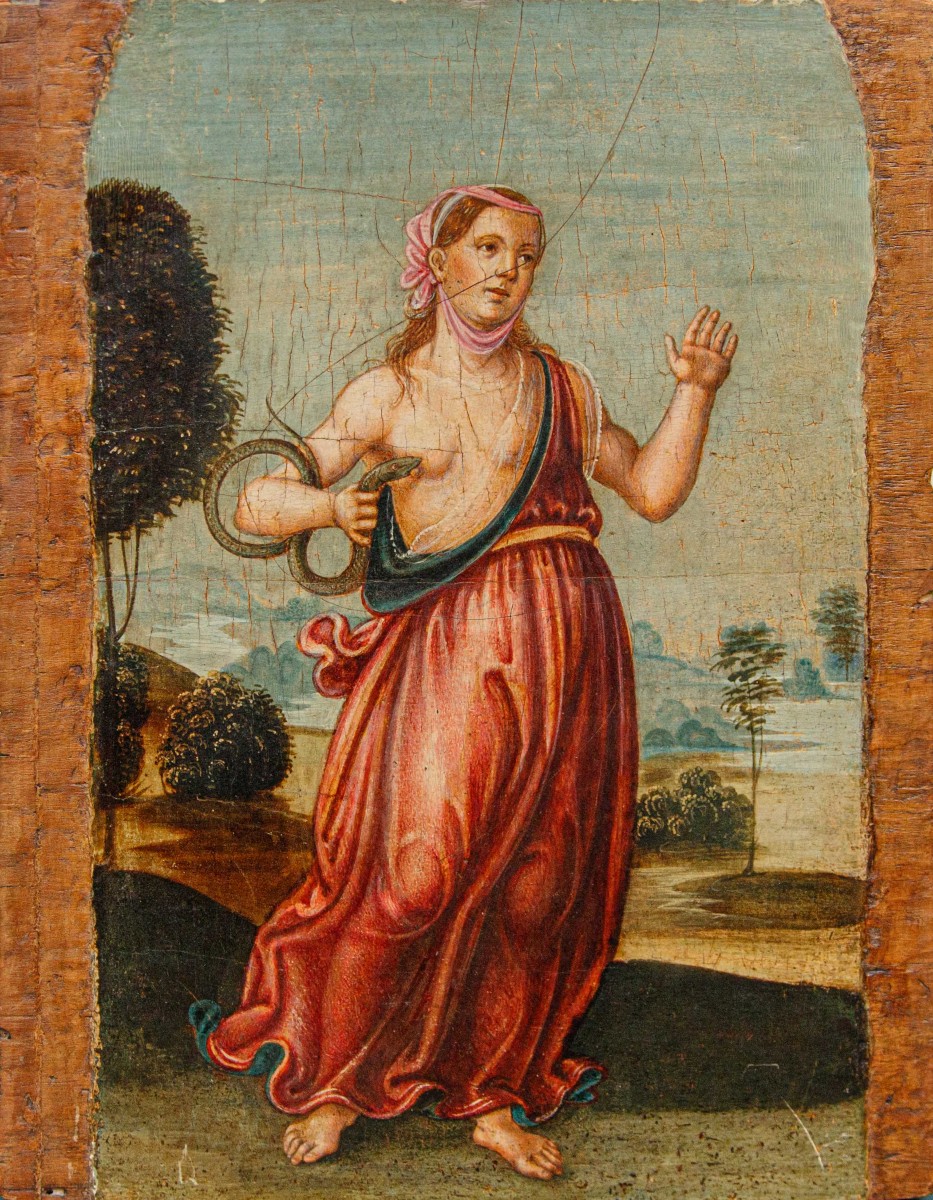
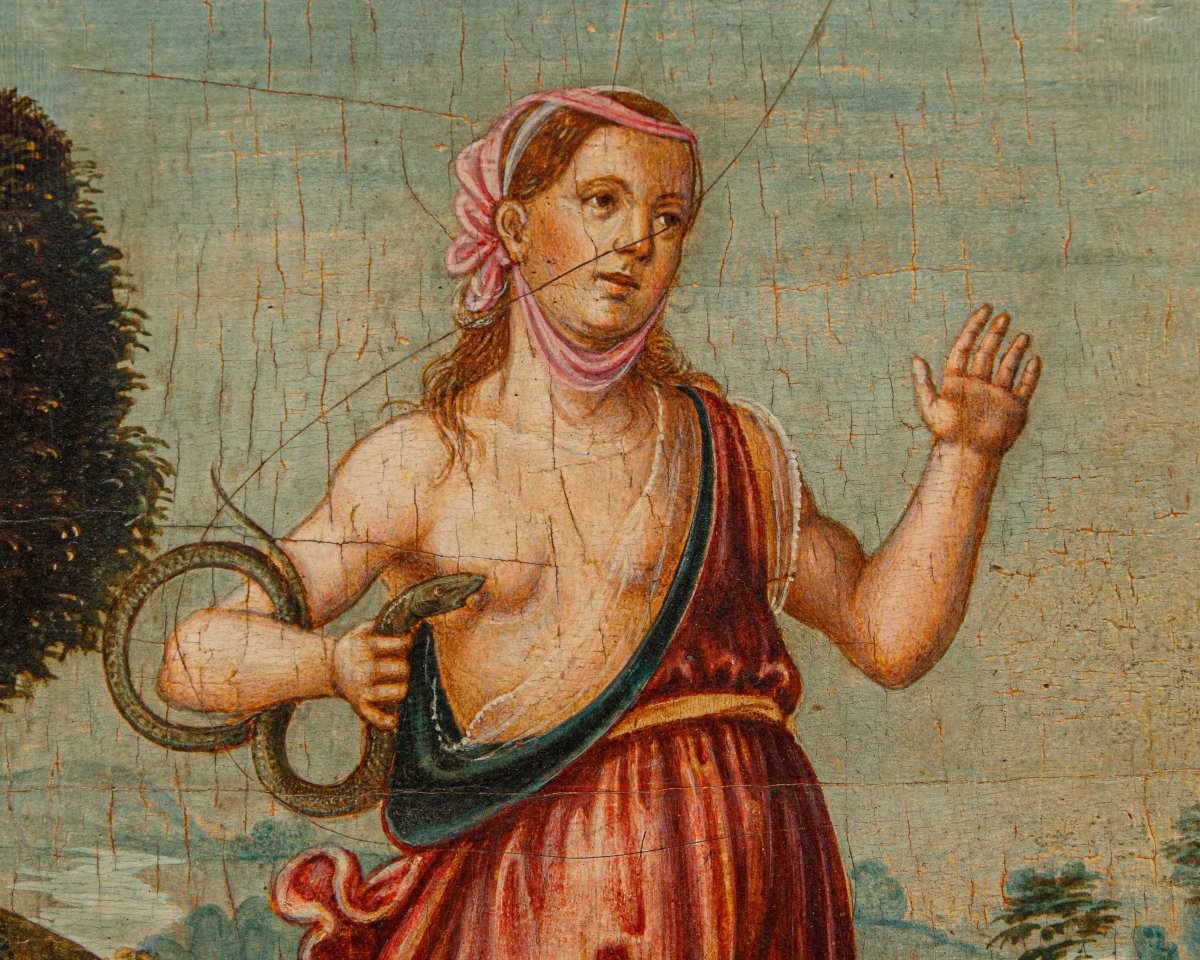
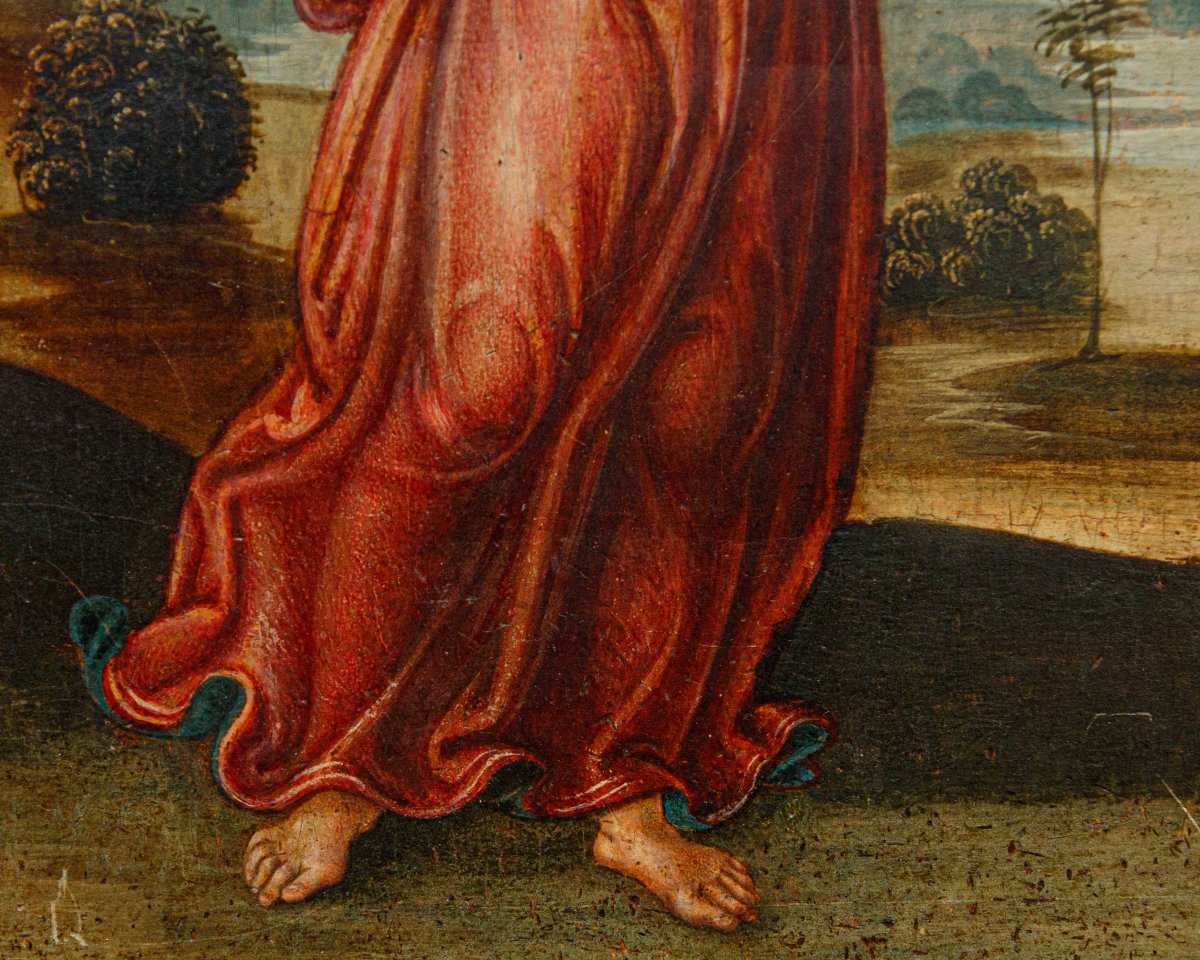
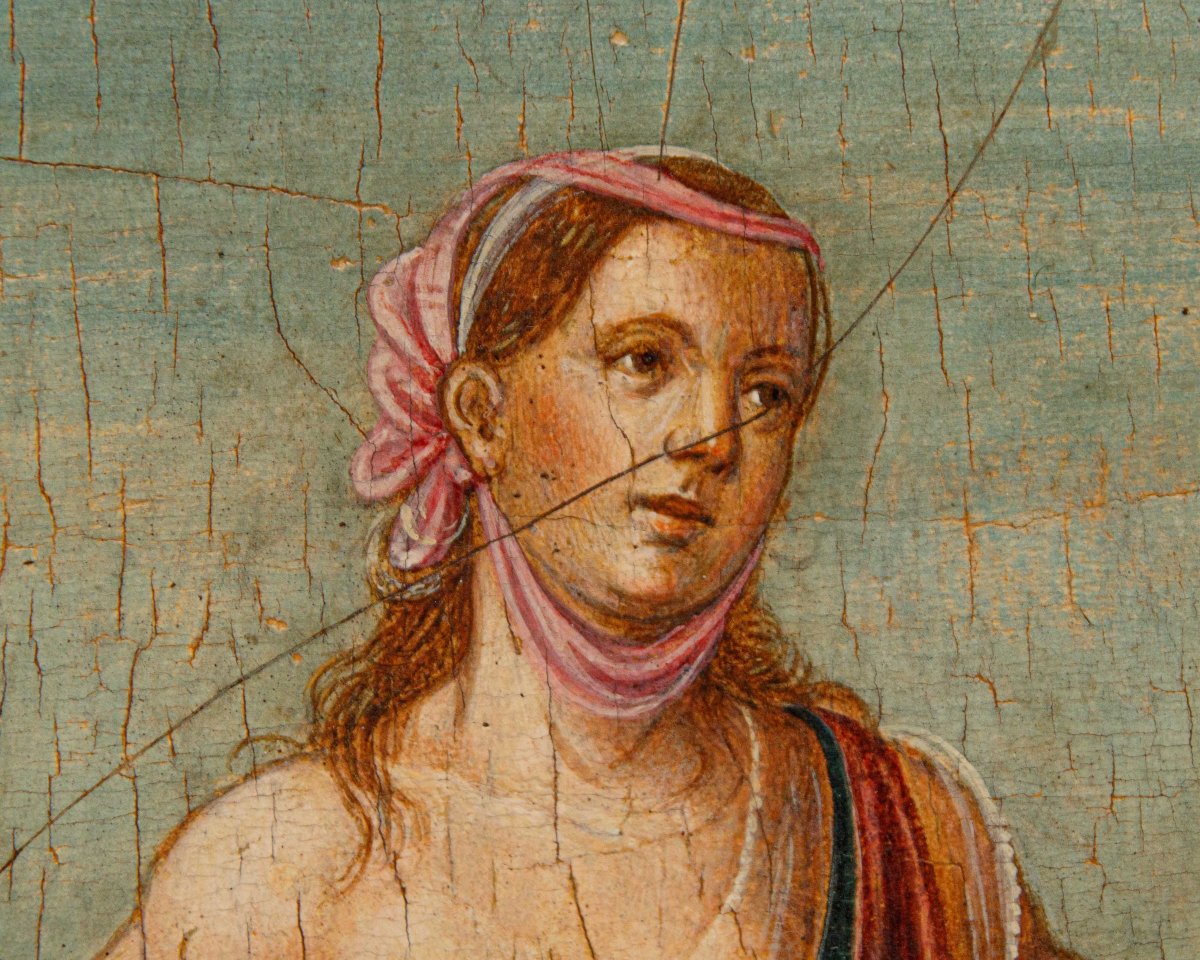
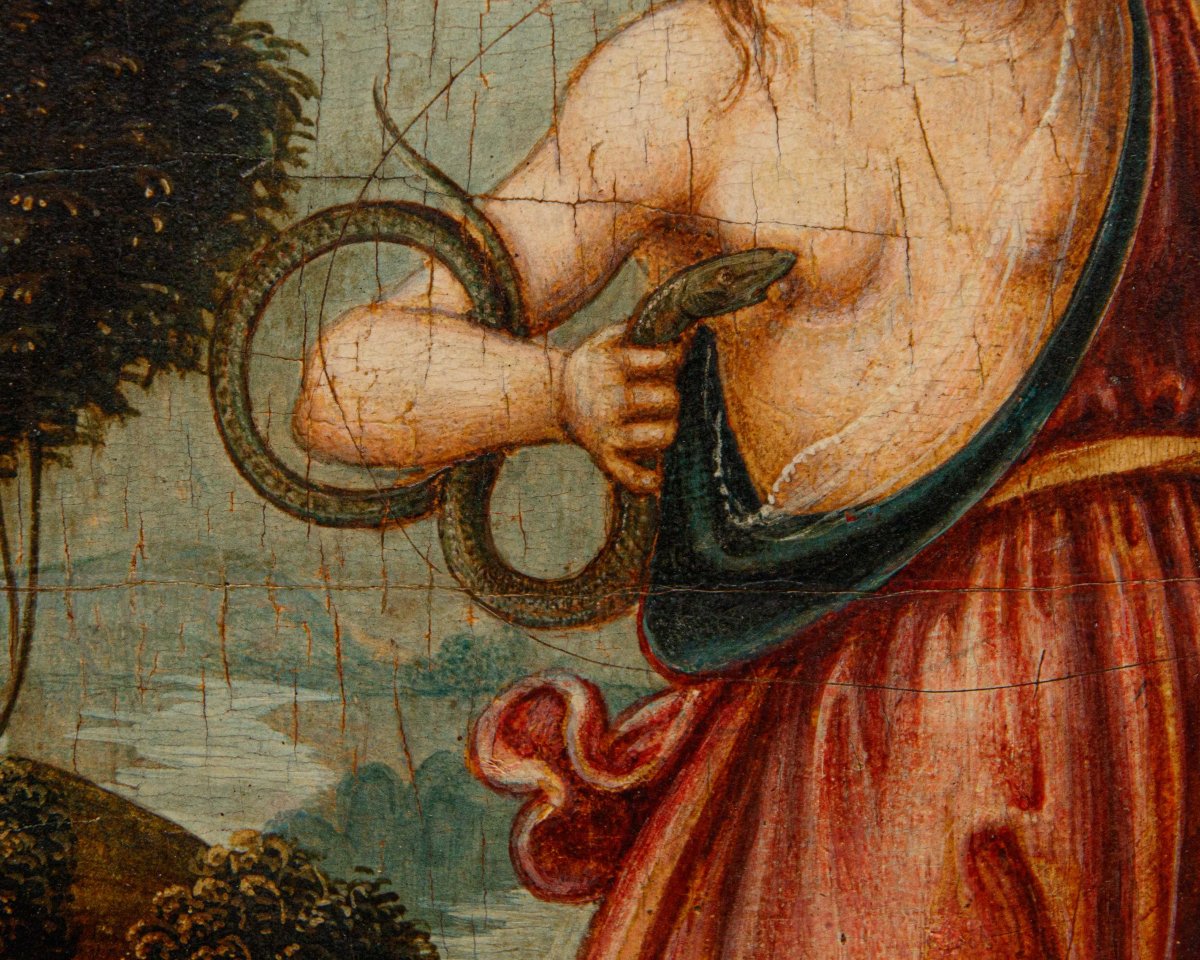
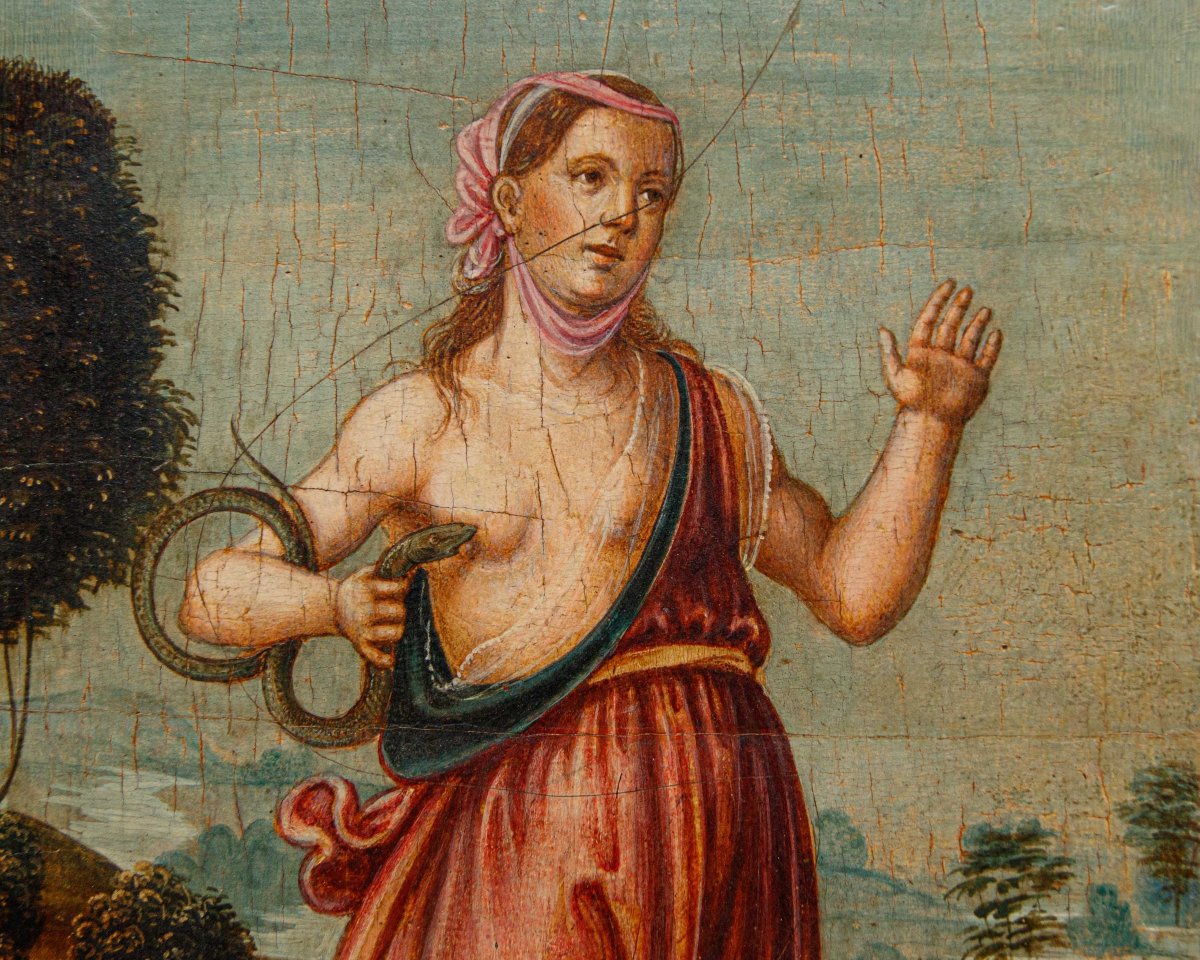
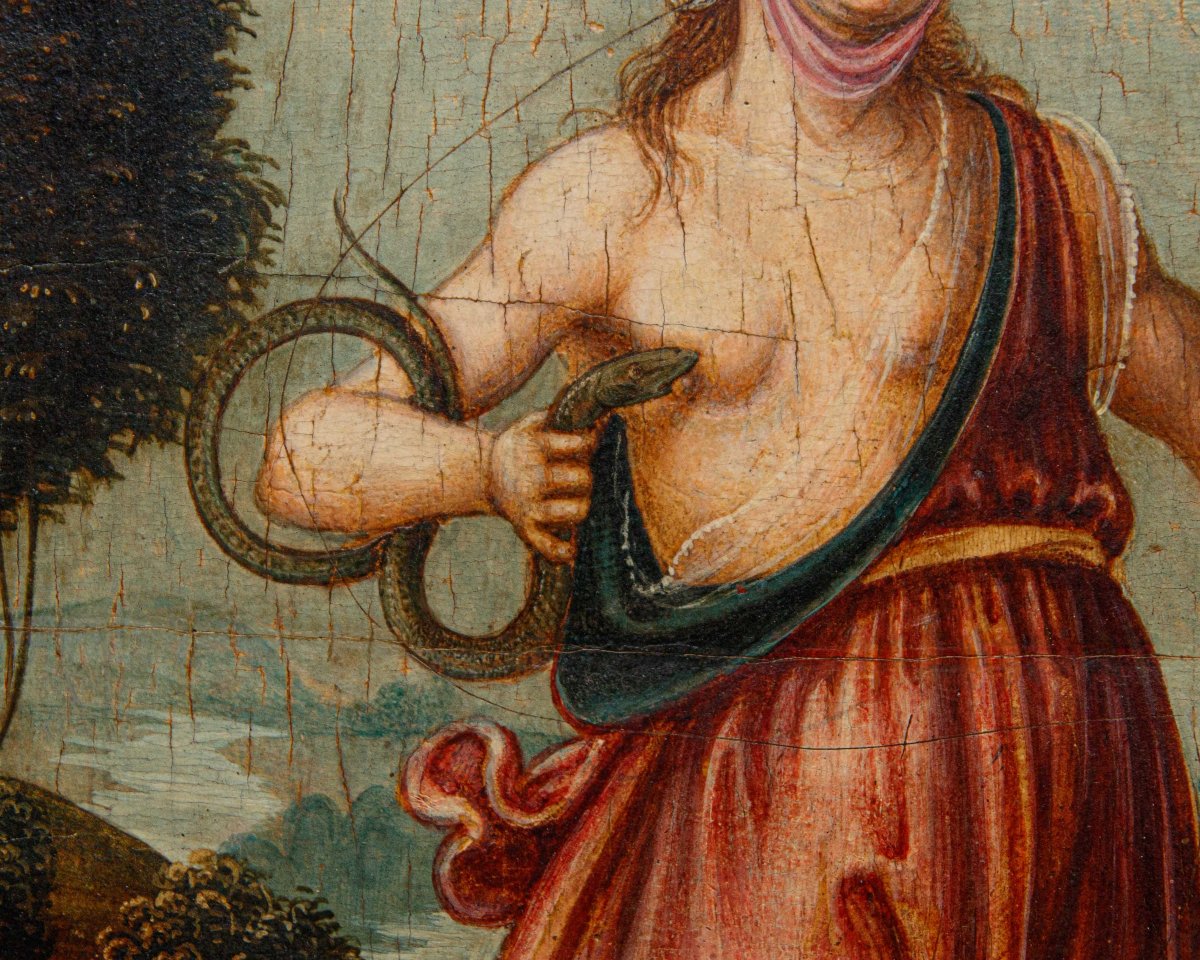
Depicting the Queen of Egypt in the fateful moments preceding her suicide, this panel painting stands out as a powerful example of the prolific tradition of Tuscan painting between the twilight of the 15th century and the dawn of the 16th. The figure of Cleopatra emerges at the center of the composition with an almost statuesque solemnity, dressed in a tunic cinched at the waist, which leaves one breast exposed to allow the asp, wrapped around her right arm, to carry out its fatal act. The queen’s face, framed by a pink veil that descends from her head to wrap softly around her neck, is turned upward in an expression of resigned melancholy, while her raised left hand seems to accompany her final breath with a theatrical gesture. In the background, a stylized hilly landscape stretches toward the horizon with a few trees and a body of water reflecting the clear light of a cloudless sky, typical of central Italian settings of the period. The iconography of Cleopatra enjoyed considerable popularity in the Sienese and Florentine areas between the late 15th and early 16th centuries, often being interpreted as an example of heroic virtue and political pride against the Roman oppressor. This popularity is evidenced by famous versions created by other masters active during the same period, such as the one by Domenico Beccafumi preserved in the Chigi Saracini Collection or the version by Girolamo da Benvenuto, now in a private collection. It is precisely with the works of Girolamo da Benvenuto and his father, Benvenuto di Giovanni, that the panel under consideration reveals the closest affinities, demonstrating a stylistic adherence to the manner of late-century Sienese painting. The rendering of the drapery is in fact characterized by a clean, graphic line, where the fabric is jagged into rigid folds, defined by bold shading that gives the forms a plastic and incisive texture. These stylistic features find a direct counterpart in key works such as Benvenuto di Giovanni’s Nativity, housed in the Pinacoteca Crociani in Montepulciano, where the stiffness of the garments and the definition of the contours follow a similar formal grammar. Similarly, the panel depicting Hercules at the Crossroads by Girolamo di Benvenuto, currently at the Museum of Fine Arts in Boston, offers a fitting comparison in terms of the facial features and the distinctive construction of the landscape, confirming that the painting belongs to a cultural milieu that blends the rigor of the late fifteenth century with the new narrative demands of the emerging century.
Period: 16th century
Style: Other Style
Condition: Good condition
Material: Oil painting on wood
Width: 24,5
Height: 32
Reference (ID): 1752965
Availability: In stock