


Circle Of Francesco Albani (bologna, 1578–1660), Sleeping Cupids Disarmed By Nymphs
Circle of Francesco Albani (Bologna, 1578–1660)
Sleeping Cupids Disarmed by Nymphs
Oil on canvas, 72 x 93 cm, 5
With frame, 96 x 117.5 cm
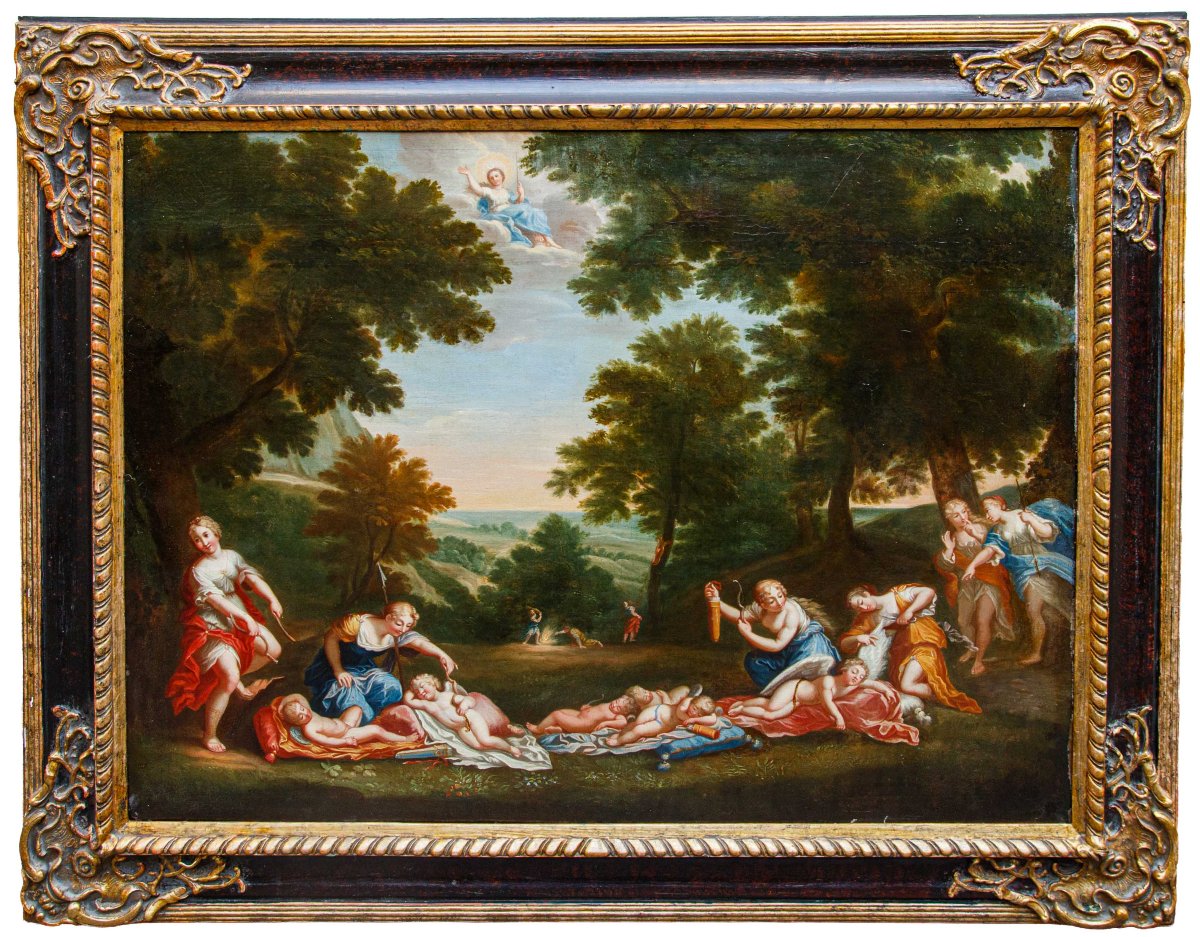
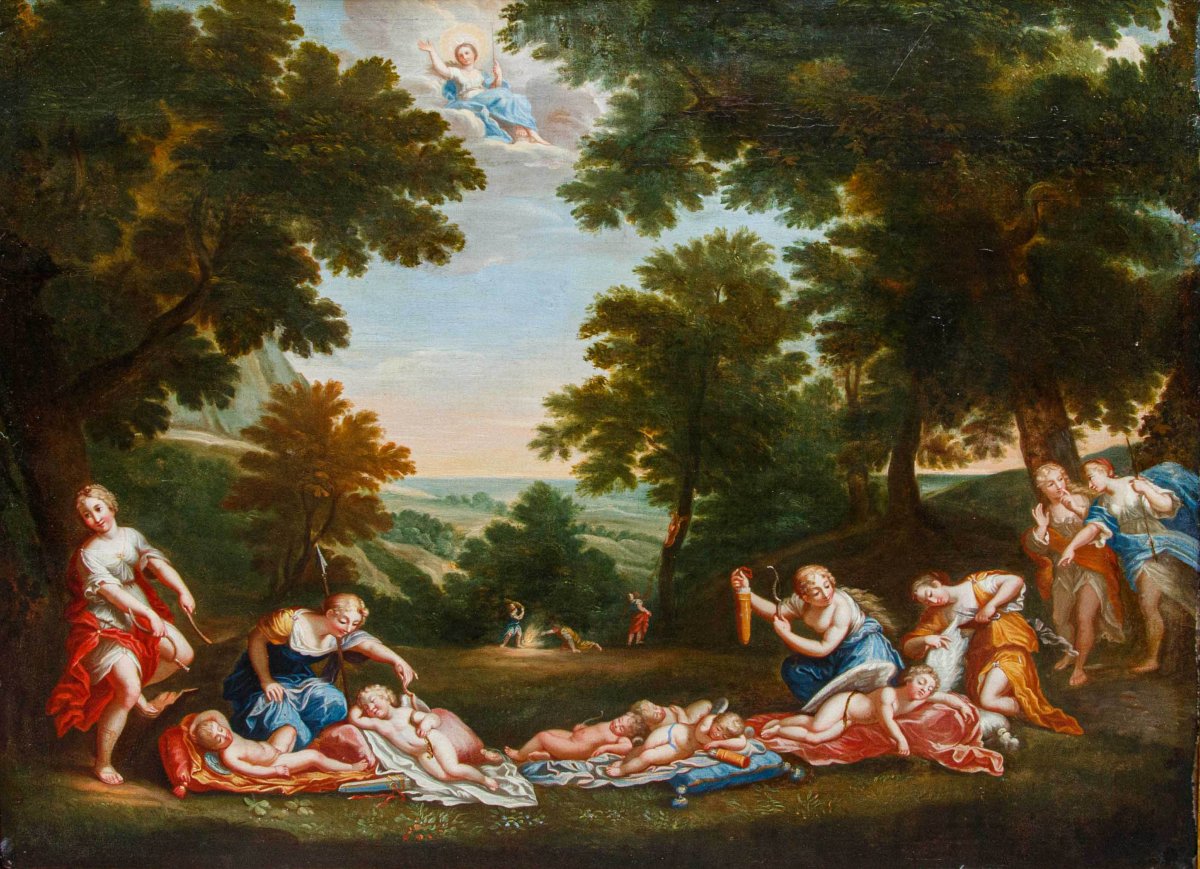
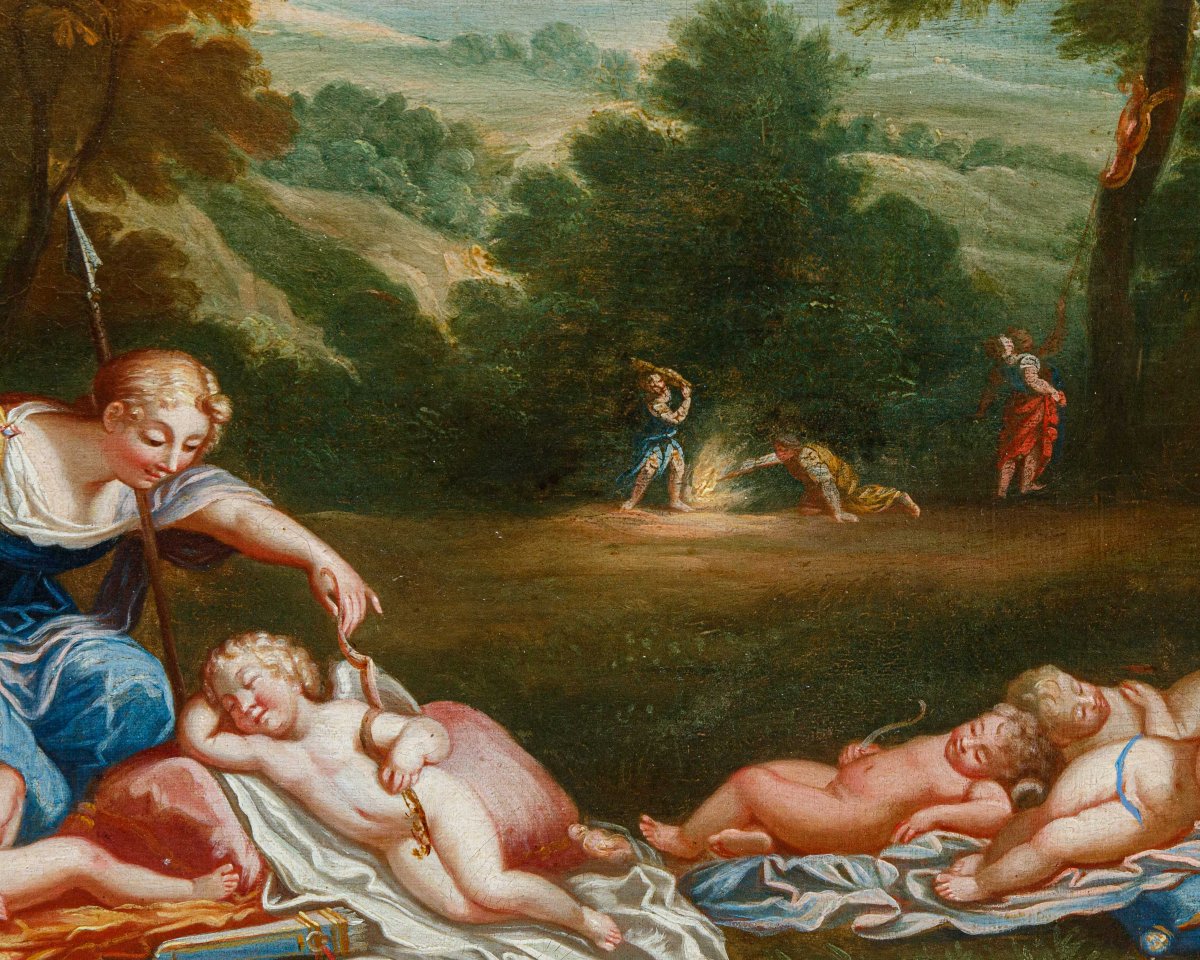
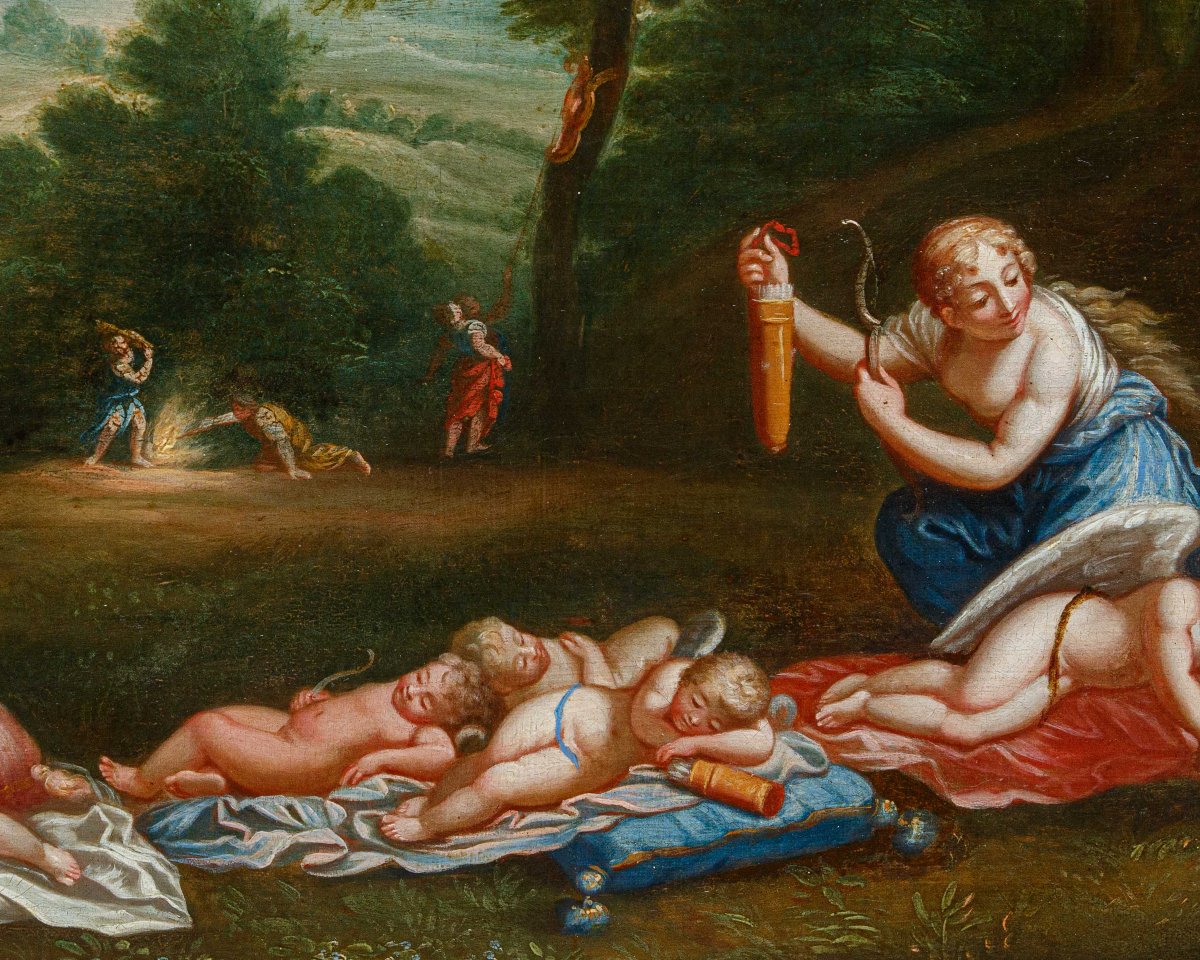
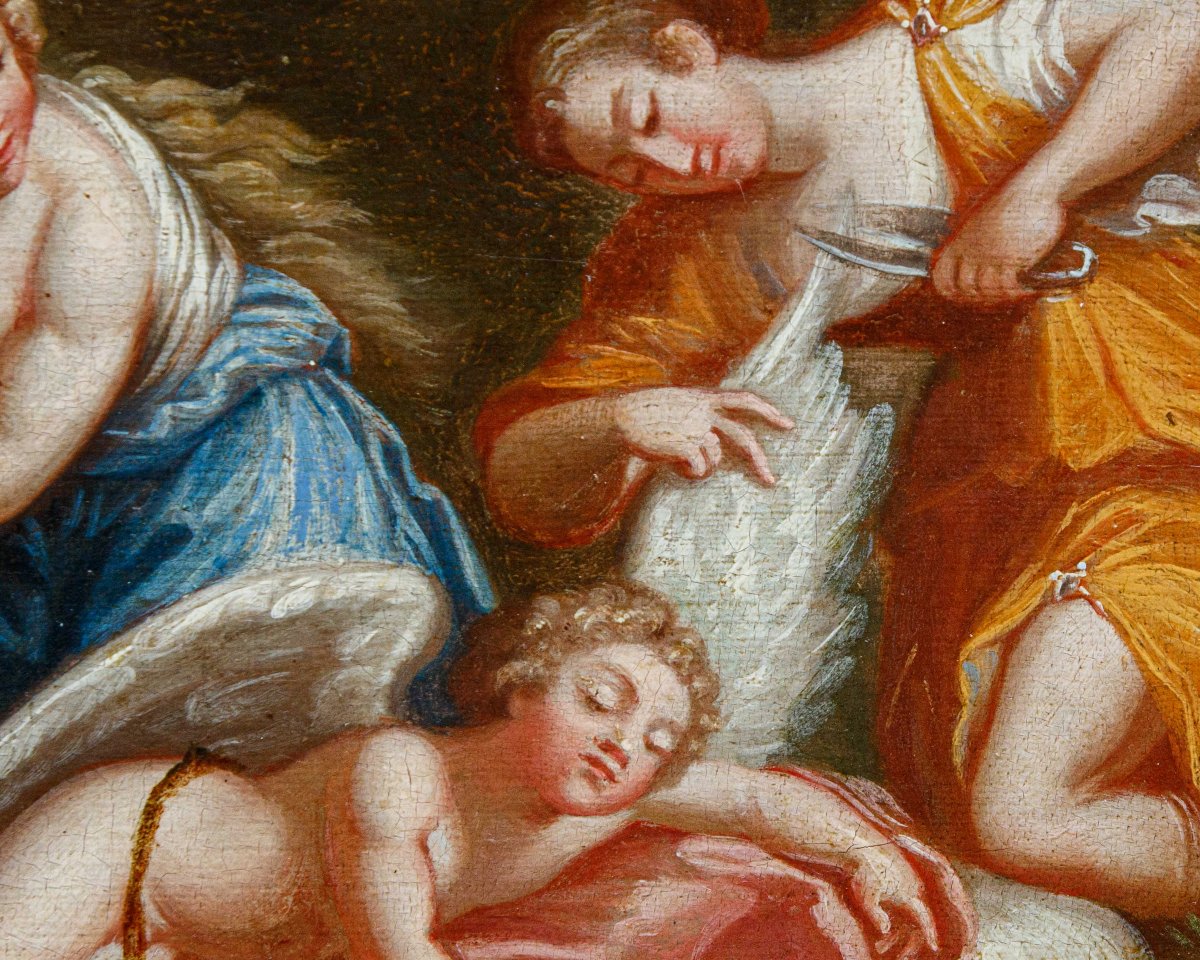
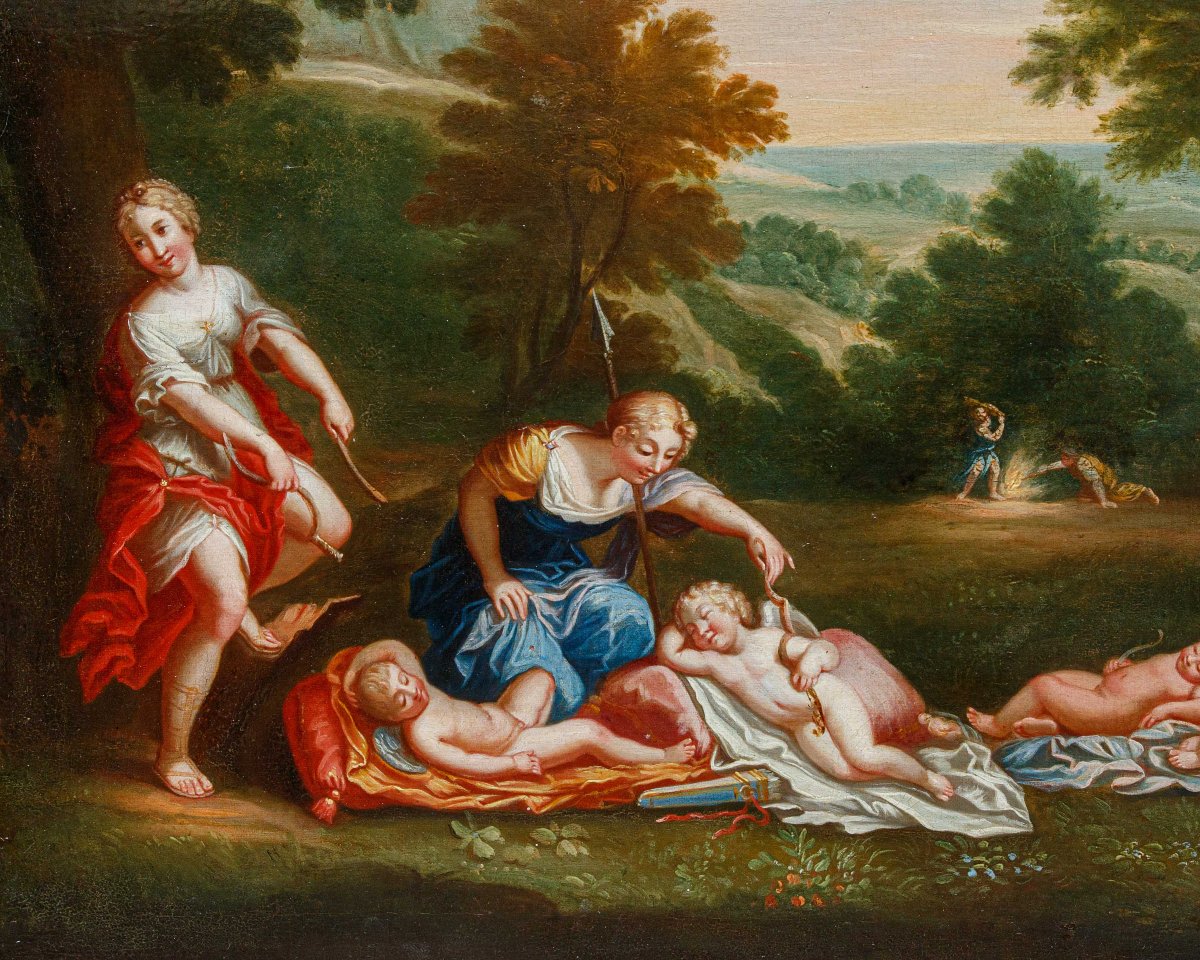
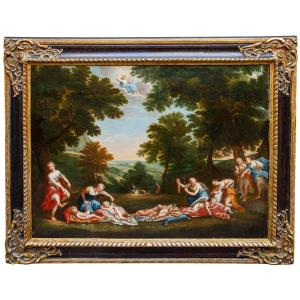
The work in question is an elegant and refined testament to the visual appeal and enormous popularity among collectors of the models conceived by Francesco Albani (Bologna, 1578 – 1660), one of the greatest and most acclaimed exponents of 17th-century Emilian classicism. The composition depicts the allegorical episode of *The Cupids Disarmed by Diana’s Nymphs* (also known as *The Triumph of Chastity* or *Winter*), a subject that draws its literary inspiration from Philostratus of Lemnos’s *Eikones*—a text of extraordinary popularity between the 16th and 17th centuries that describes the games and allegories of the cupids associated with the four seasons—and from the classical theme of the contrast between Love and continence.
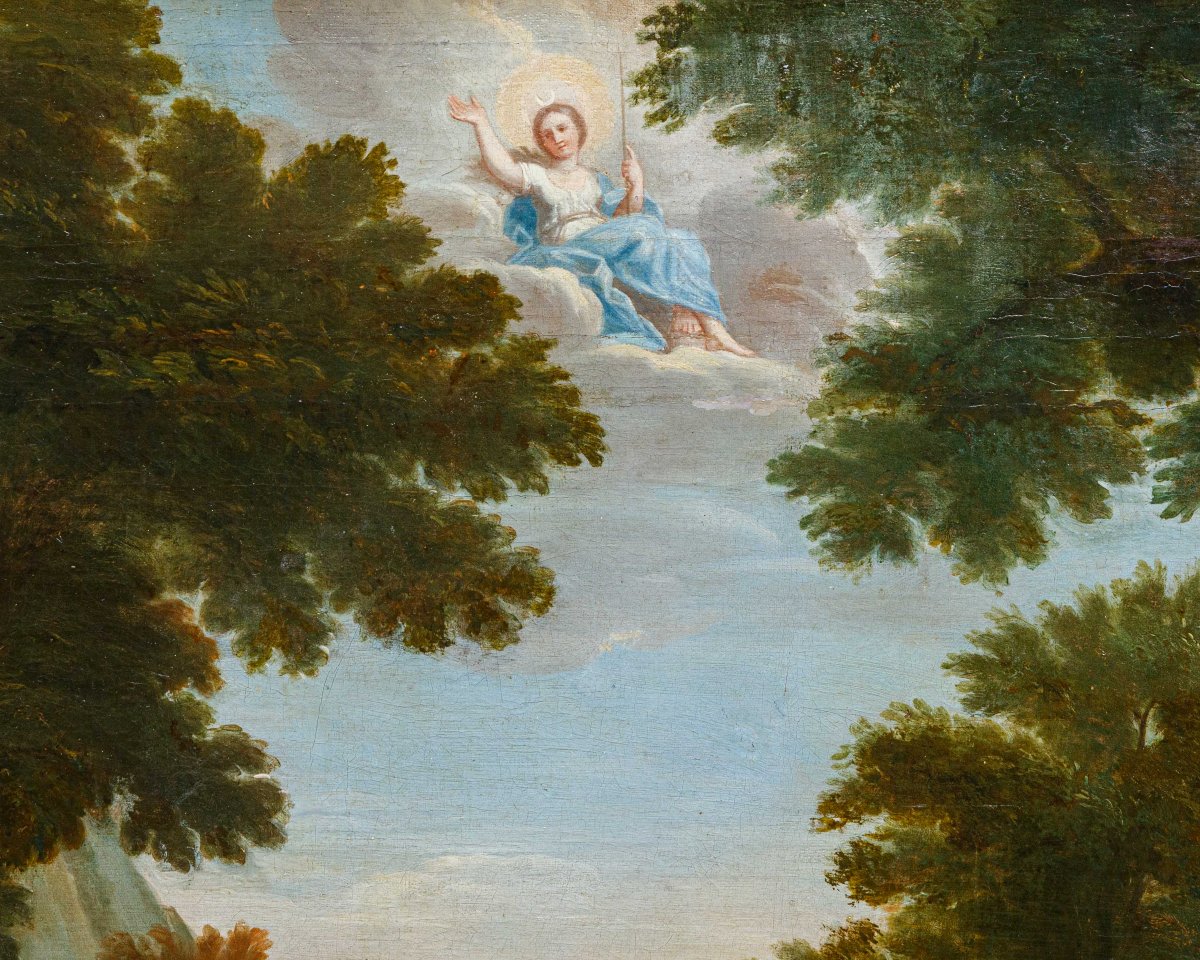
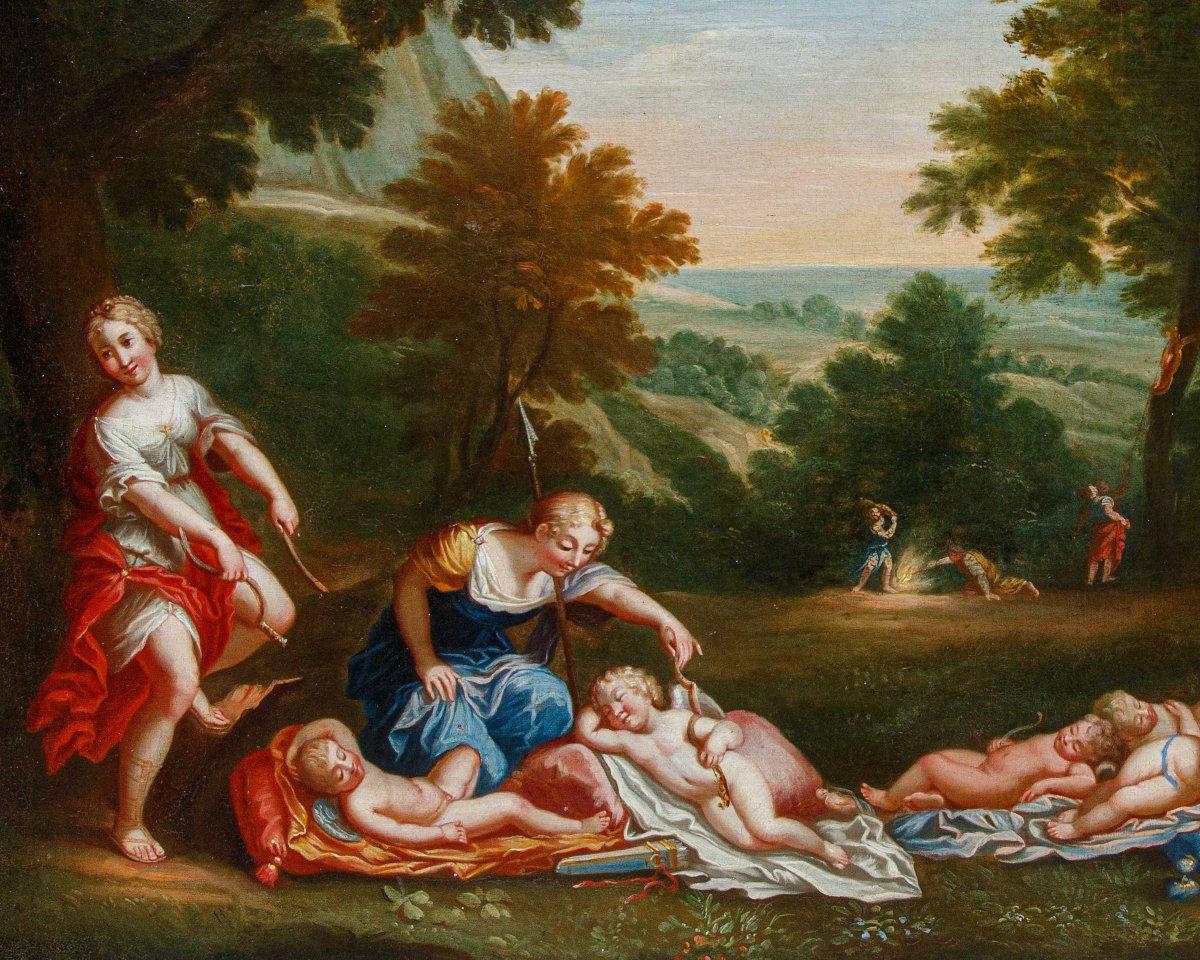
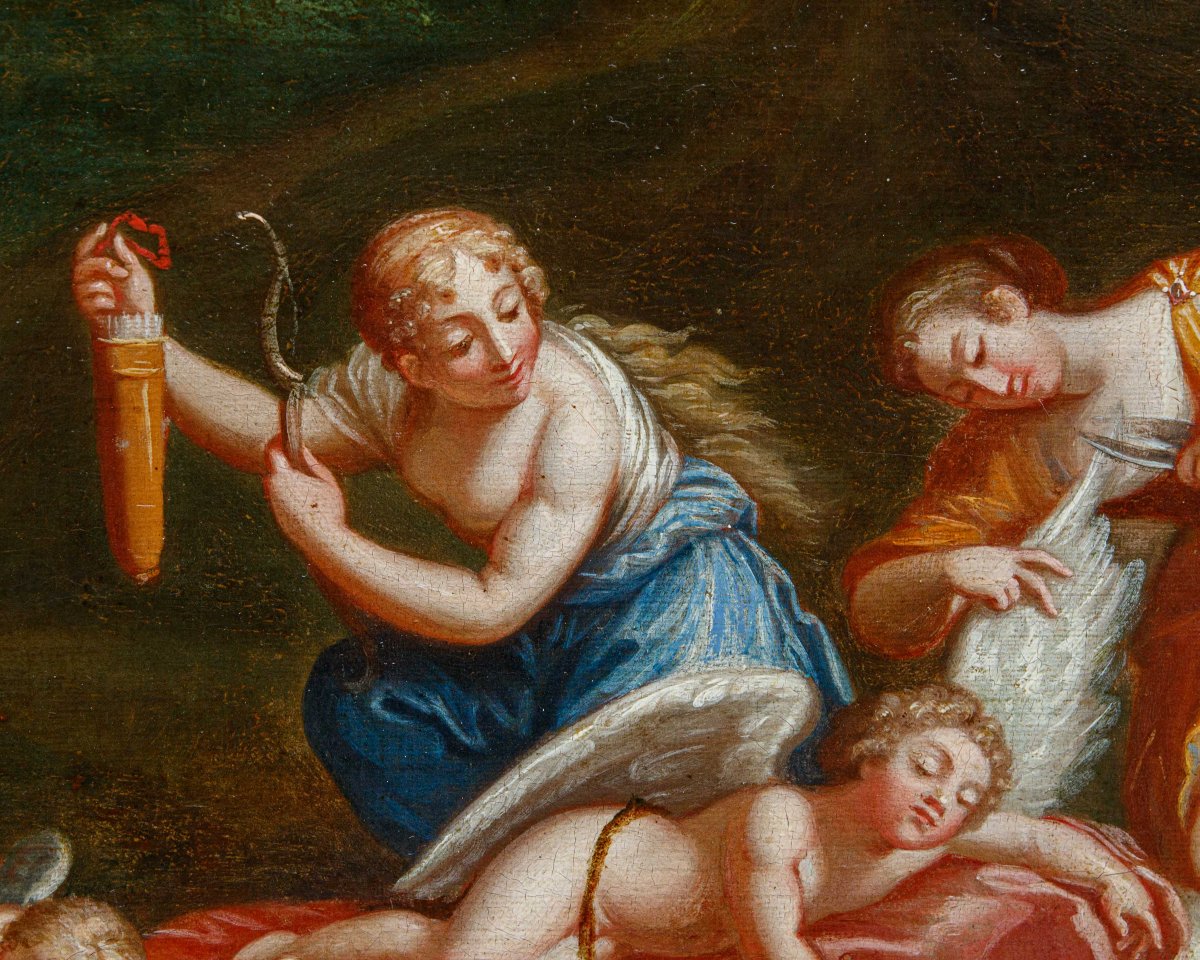
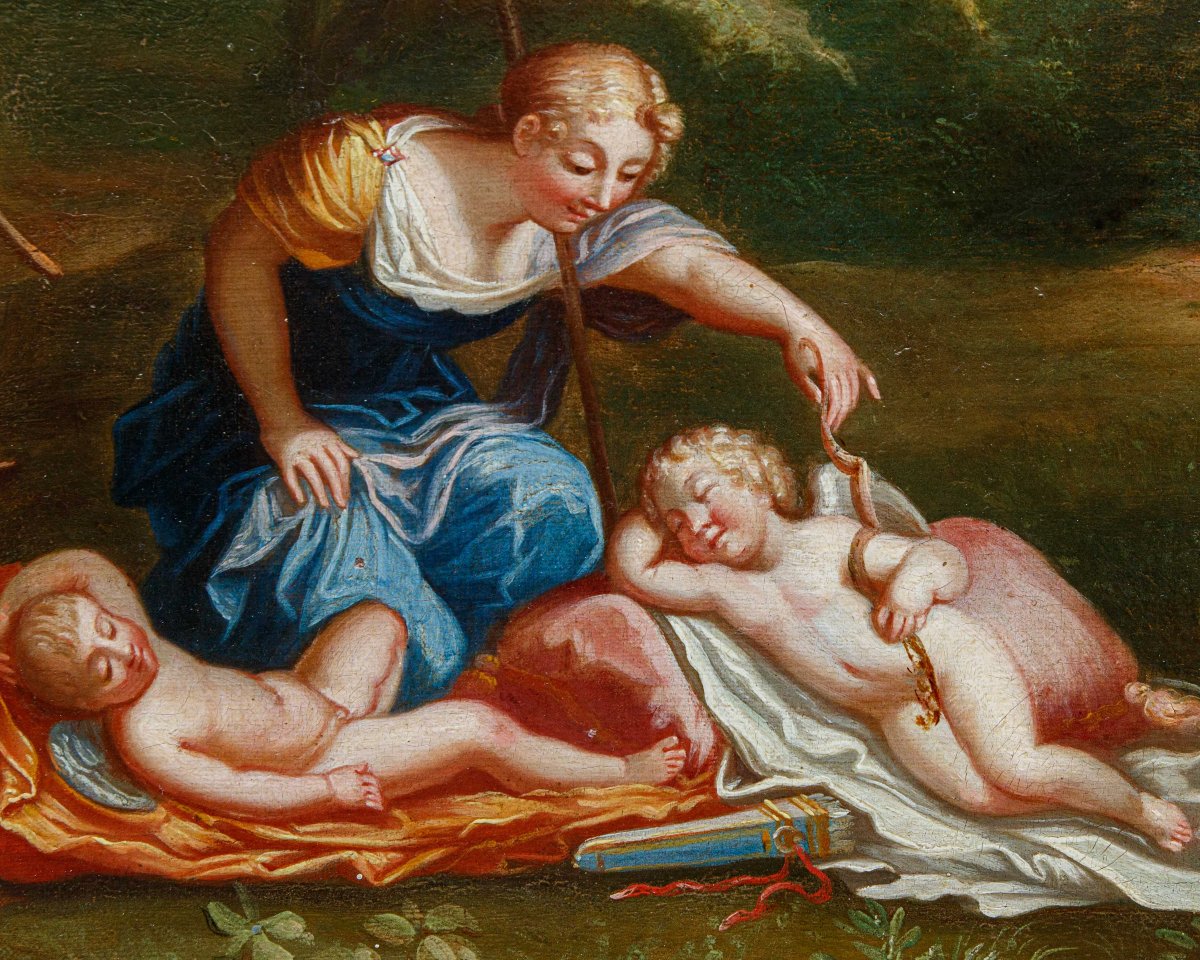
The scene is set in an idyllic, expansive wooded landscape that opens onto a luminous horizon at sunset. In the foreground, amid soft drapery and a careful rendering of chiaroscuro, a group of cupids lies asleep; taking advantage of their vulnerability, Diana’s nymphs—followers of the goddess of the hunt and guardians of purity—stealthily steal their bows and quivers full of arrows. In the background, other nymphs burn the weapons of love on a purifying bonfire, while in the upper section of the canvas, seated on a radiant cloud and accompanied by the crescendo of the iconographic crescent moon, the goddess Diana herself appears, benevolently presiding over the definitive triumph of Chastity over the snares and futile beauty embodied by Venus and Cupid.
From a compositional standpoint, the design draws on the famous cycles dedicated to the Stories of Venus and Diana conceived by Albani between the second and third decades of the seventeenth century. The prototype for this canvas finds its first fundamental precedent in the famous tondo *The Triumph of Diana* (or *Winter*), painted for Cardinal Scipione Borghese (Rome, Galleria Borghese)—a work that concluded the celebrated Borghese cycle by introducing the moral epilogue of Chastity’s victory. Subsequently, in 1621, Albani reworked the series for Duke Ferdinando Gonzaga of Mantua, giving rise to the four rectangular canvases now preserved at the Musée du Louvre in Paris, among which *Les Amours désarmés* stands out.
Compared to the Louvre version, this canvas presents a strictly mirror-image arrangement of the scene (flipped from right to left). This iconographic inversion is the key to correctly contextualizing the work: it confirms with certainty the use of a translation print as a workshop model. Contemporary engravings, by imprinting the matrix in a manner that was a mirror image of the original painting, produced an inverted image on the printed sheet, which was then readily adopted by students, followers, and copyists of the time — a field in which entire workshops distinguished themselves between the 17th and 18th centuries.
The widespread circulation of these engravings met the immense market demand of the time. As evidenced both by the autograph reproductions published by Albani (including the variants preserved in Bordeaux, Kassel, and Potsdam) and by the high-quality contemporary copies commissioned by the collectors themselves (such as those executed for the Borghese family and now housed at the Colegio de Santamarca in Madrid), the “Anacreontic” style of the Bolognese master—capable of transforming ancient myth into a serene and harmonious interplay between figure and nature—ensured that these images enjoyed a very long and successful legacy, of which the present canvas represents a fine period reworking.
In addition to the work analyzed here, see in particular the studies of goats executed in oil on paper and in watercolor, preserved at the Accademia Carrara, as well as the watercolor studies of the painting with the same subject, preserved at the Museo di Casa Martelli in Florence.
Period: 17th century
Style: Other Style
Condition: Good condition
Material: Oil painting
Width: 93,5
Height: 72
Reference (ID): 1802003
Availability: In stock