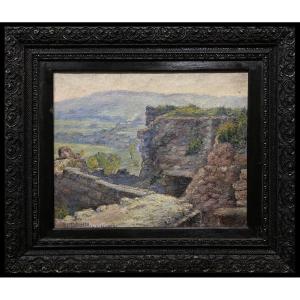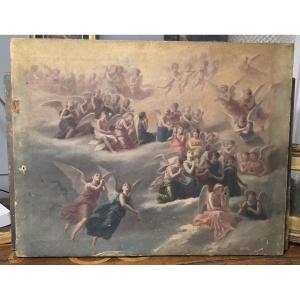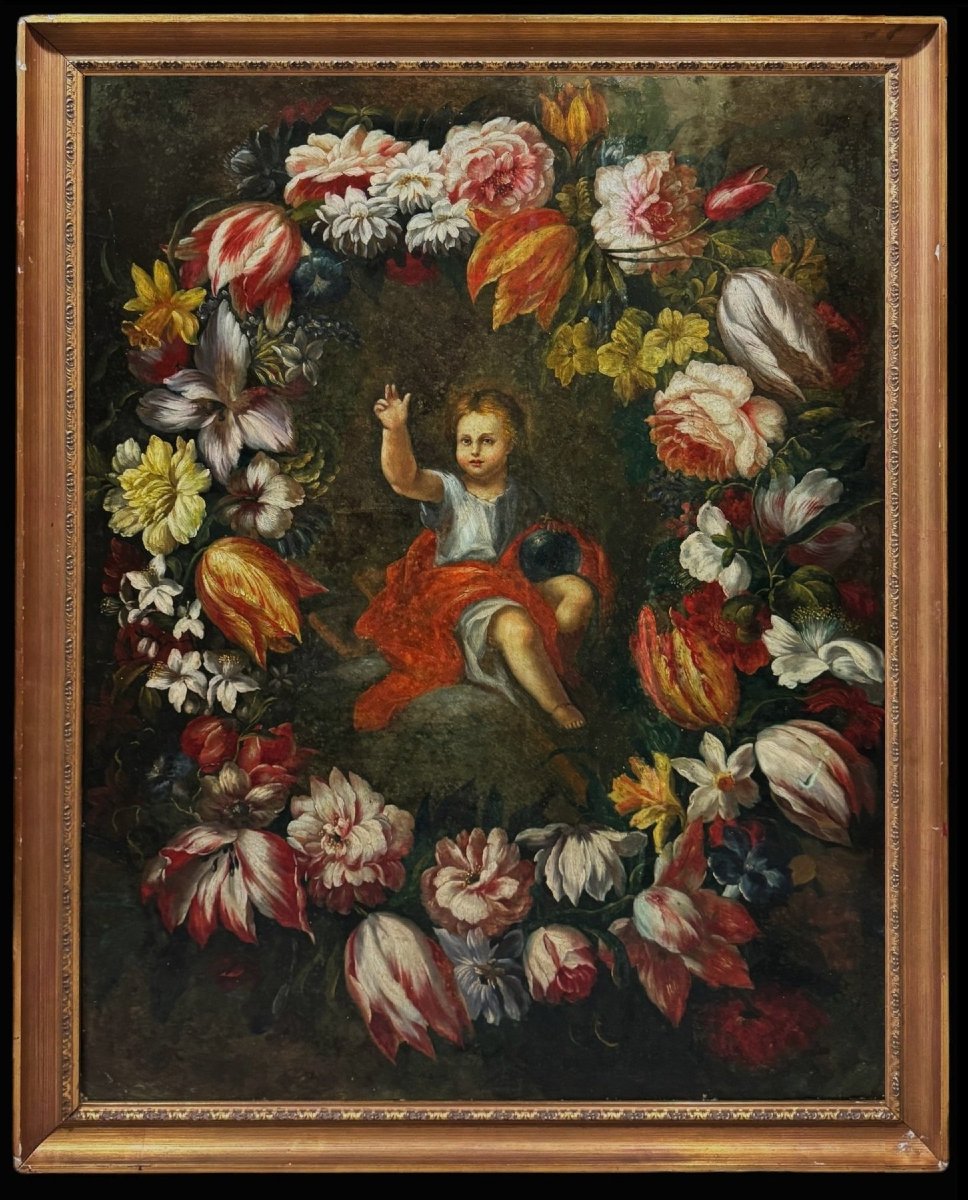
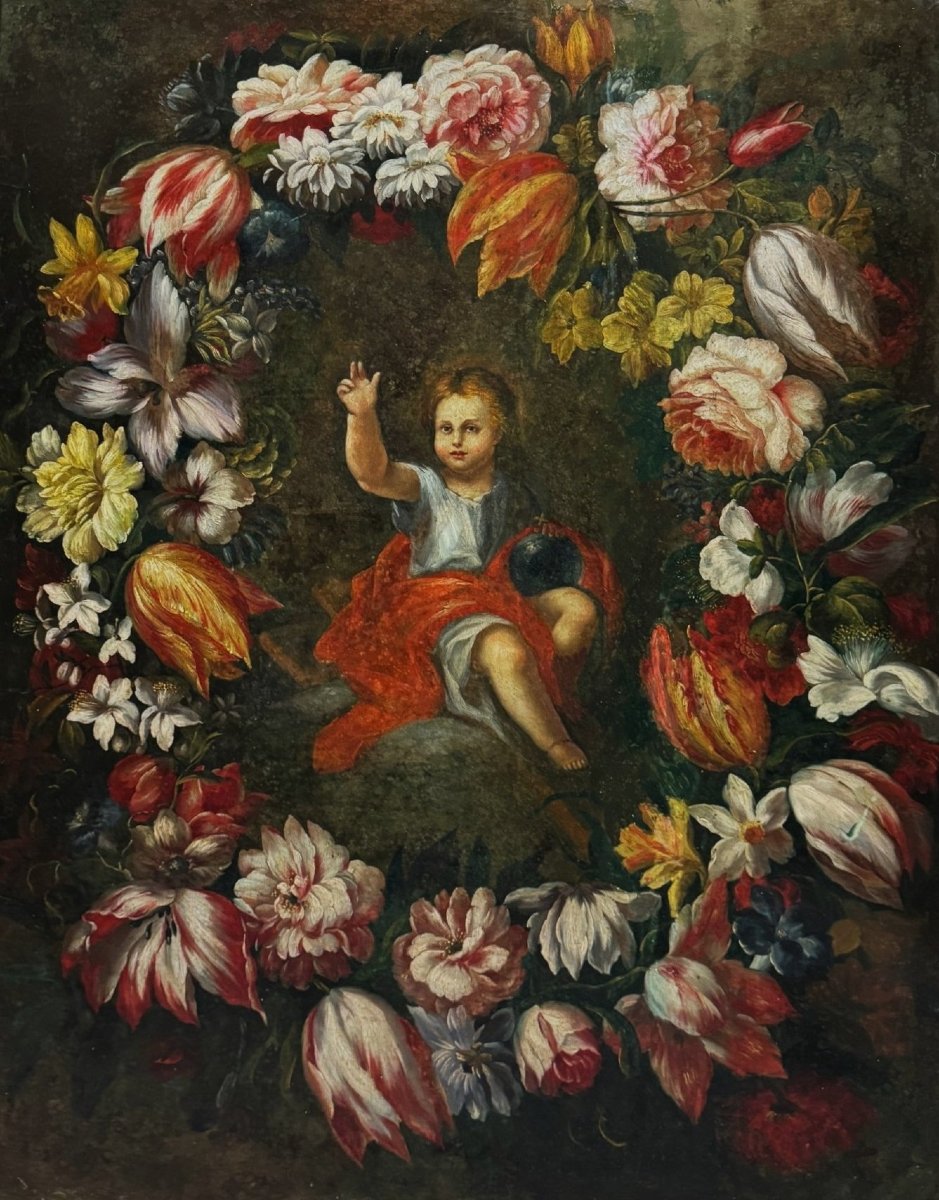
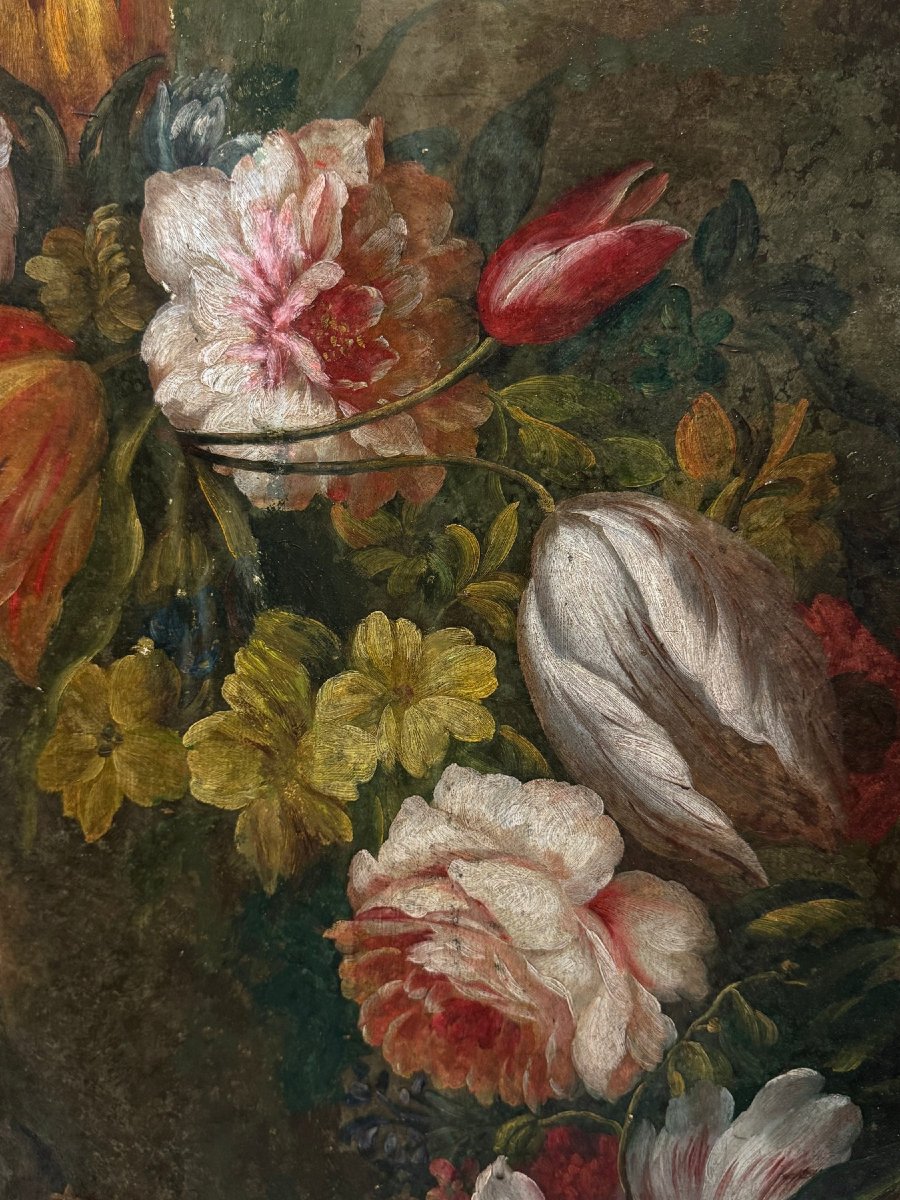



European School (19th Century) - Glory Of The Child Jesus In A Garland
Oil on canvas. Re-stretched canvas. Restorations.
Amid the artistic effervescence of the Antwerp Baroque, collaboration among the guilds reached a level of calculated virtuosity, transforming the division of labor into one of the aesthetic pinnacles of 17th-century Europe. Under the enlightened leadership of Peter Paul Rubens, Flemish painting perfected the fascinating genre of the “devotional garland,” an exercise in exquisite cooperation where specialization borders on the miraculous: while Rubens or his most gifted pupils sketched the central figure—a Virgin and Child, a risen Christ, or a saint in ecstasy—with a clear and sensuous stroke, master botanists such as Jan Brueghel the Elder would dot it with a hyperrealistic swarm of tulips, hundred-petaled roses, lilies, and tiny insects that seemed to exude dew onto the wood. These works were not mere commercial products, but a refined theological and aesthetic strategy of the Counter-Reformation. A perfect marriage of sacred fervor and hedonistic collecting, where the dramatic solidity of the human figure was framed and exalted by the sensory triumph of the still life, demonstrating that in Antwerp, within the guilds, individual genius reached its most sublime form when united with the mastery of others.
- Dimensions of the unframed image: 75 x 101 cm / 85 x 110.5 cm with an exclusive custom frame.
Amid the artistic effervescence of the Antwerp Baroque, collaboration among the guilds reached a level of calculated virtuosity, transforming the division of labor into one of the aesthetic pinnacles of 17th-century Europe. Under the enlightened leadership of Peter Paul Rubens, Flemish painting perfected the fascinating genre of the “devotional garland,” an exercise in exquisite cooperation where specialization borders on the miraculous: while Rubens or his most gifted pupils sketched the central figure—a Virgin and Child, a risen Christ, or a saint in ecstasy—with a clear and sensuous stroke, master botanists such as Jan Brueghel the Elder would dot it with a hyperrealistic swarm of tulips, hundred-petaled roses, lilies, and tiny insects that seemed to exude dew onto the wood. These works were not mere commercial products, but a refined theological and aesthetic strategy of the Counter-Reformation. A perfect marriage of sacred fervor and hedonistic collecting, where the dramatic solidity of the human figure was framed and exalted by the sensory triumph of the still life, demonstrating that in Antwerp, within the guilds, individual genius reached its most sublime form when united with the mastery of others.
- Dimensions of the unframed image: 75 x 101 cm / 85 x 110.5 cm with an exclusive custom frame.
750 €
Period: 19th century
Style: Other Style
Condition: Good condition
Material: Oil painting
Reference (ID): 1823334
Availability: In stock
Print