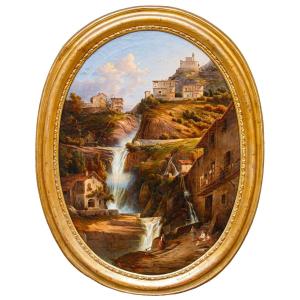


19th Century, The Waterfalls Of Tivoli
19th century
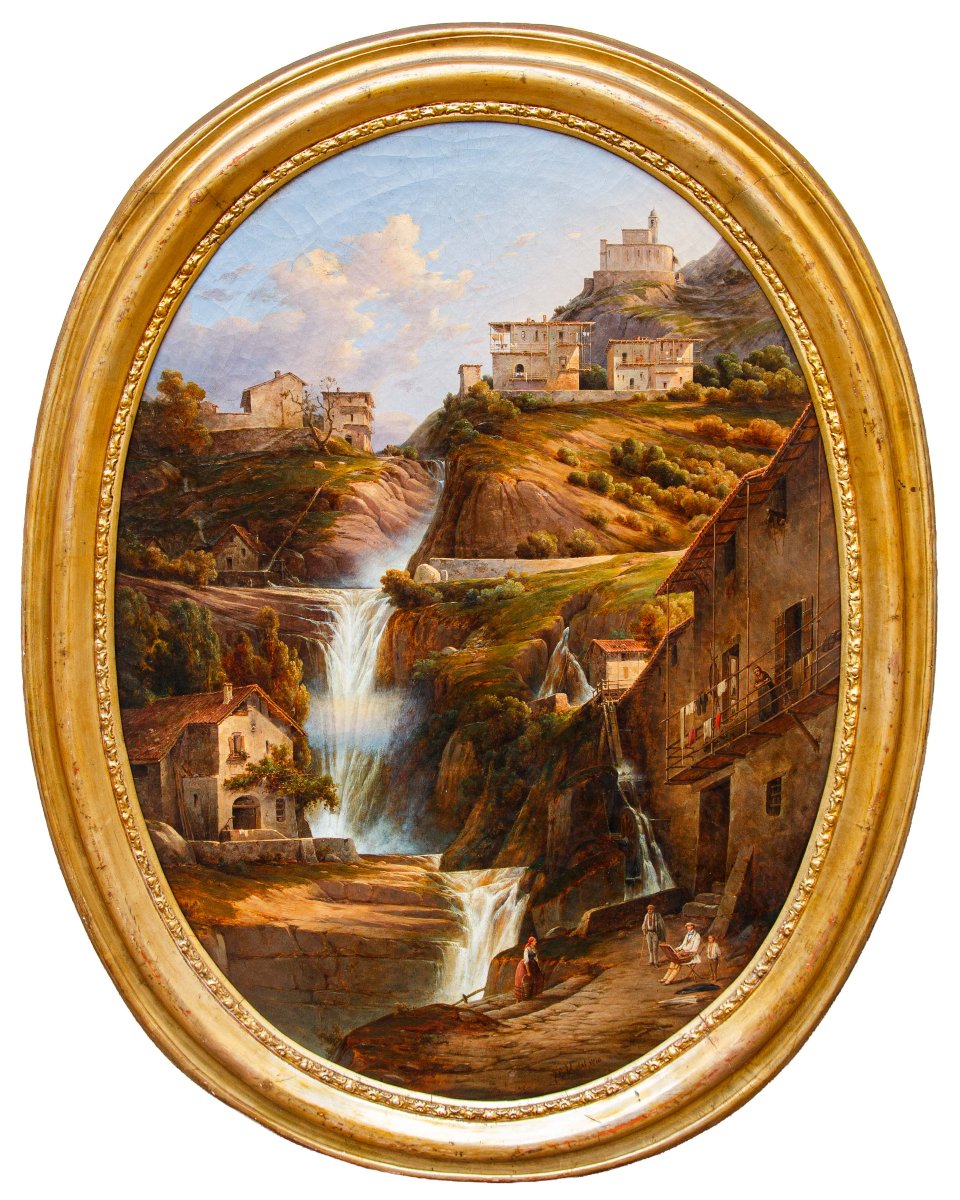
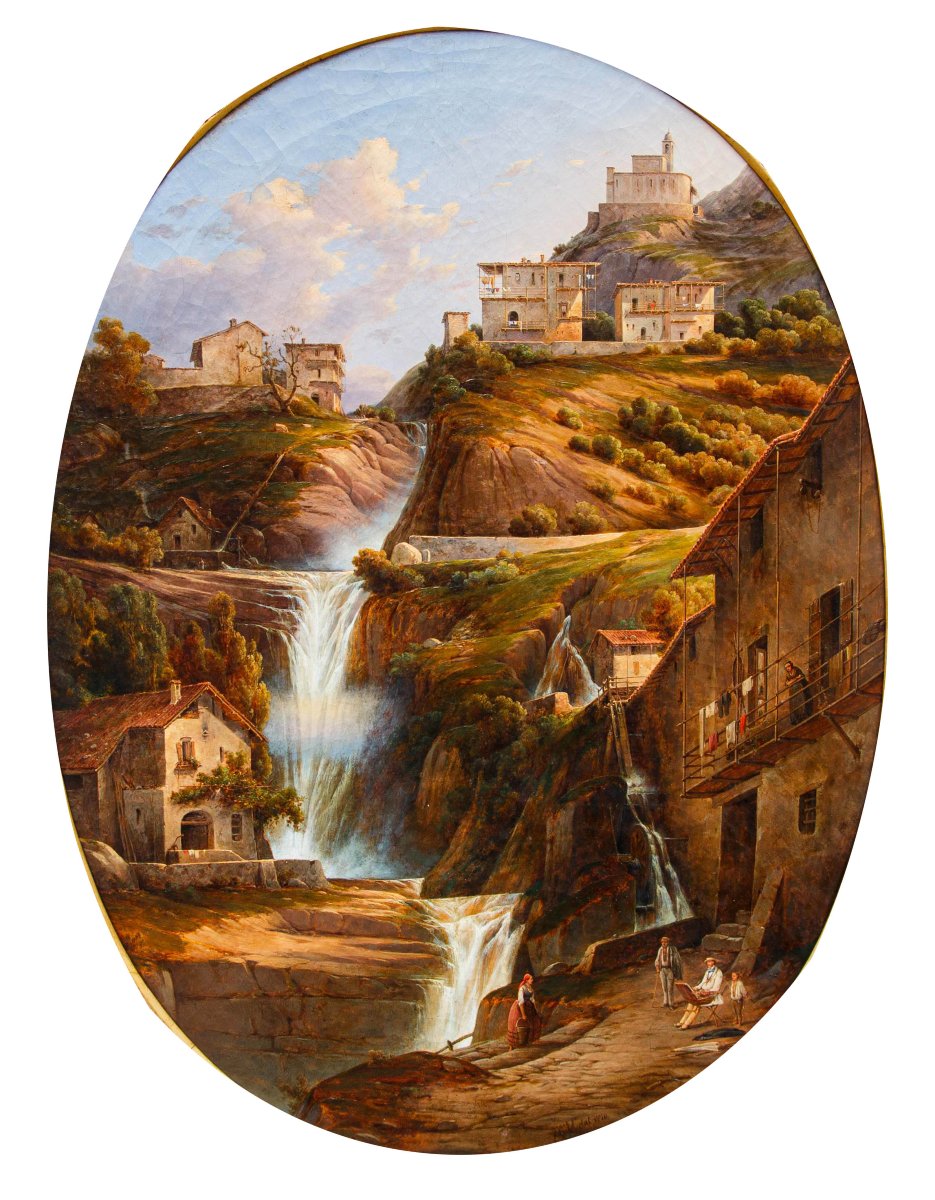
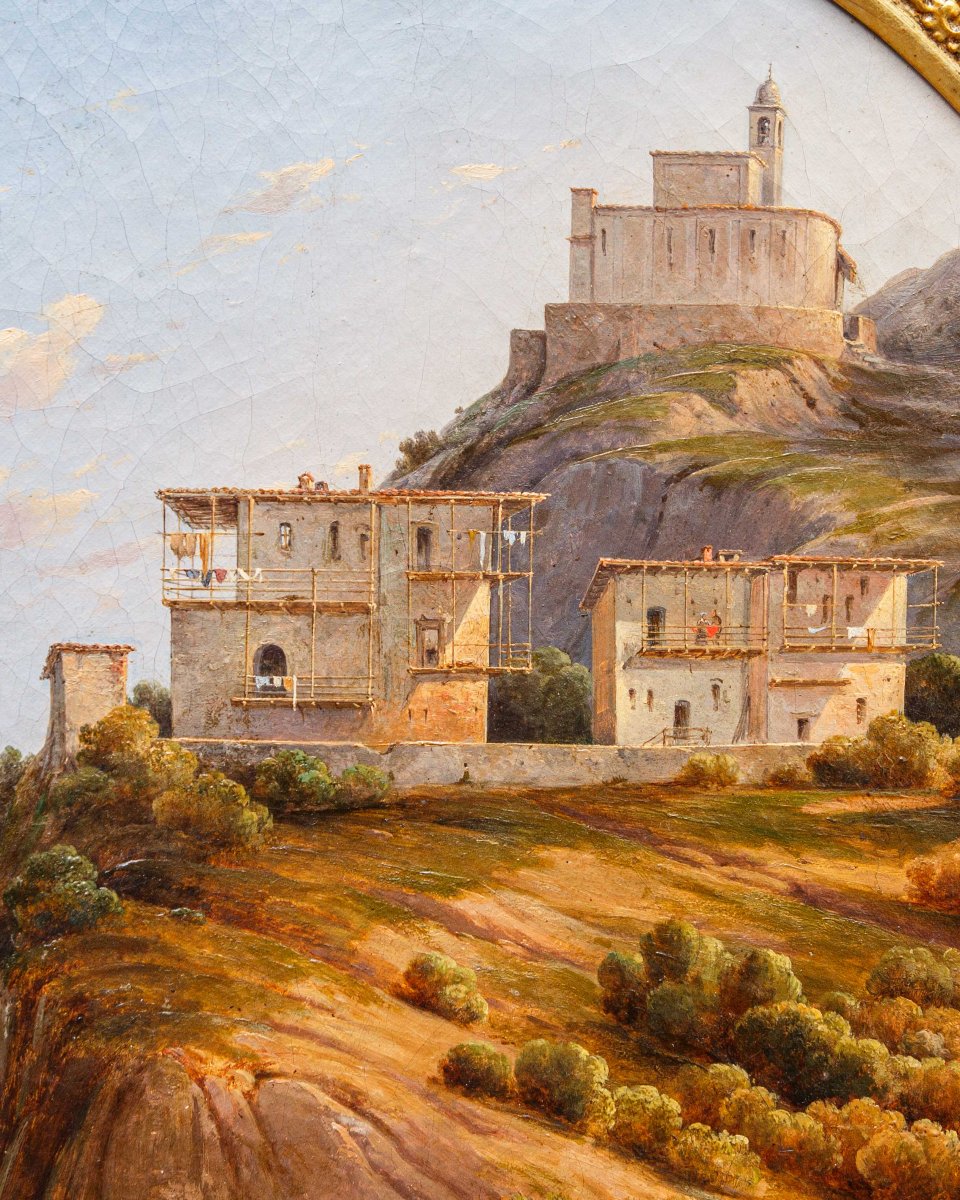
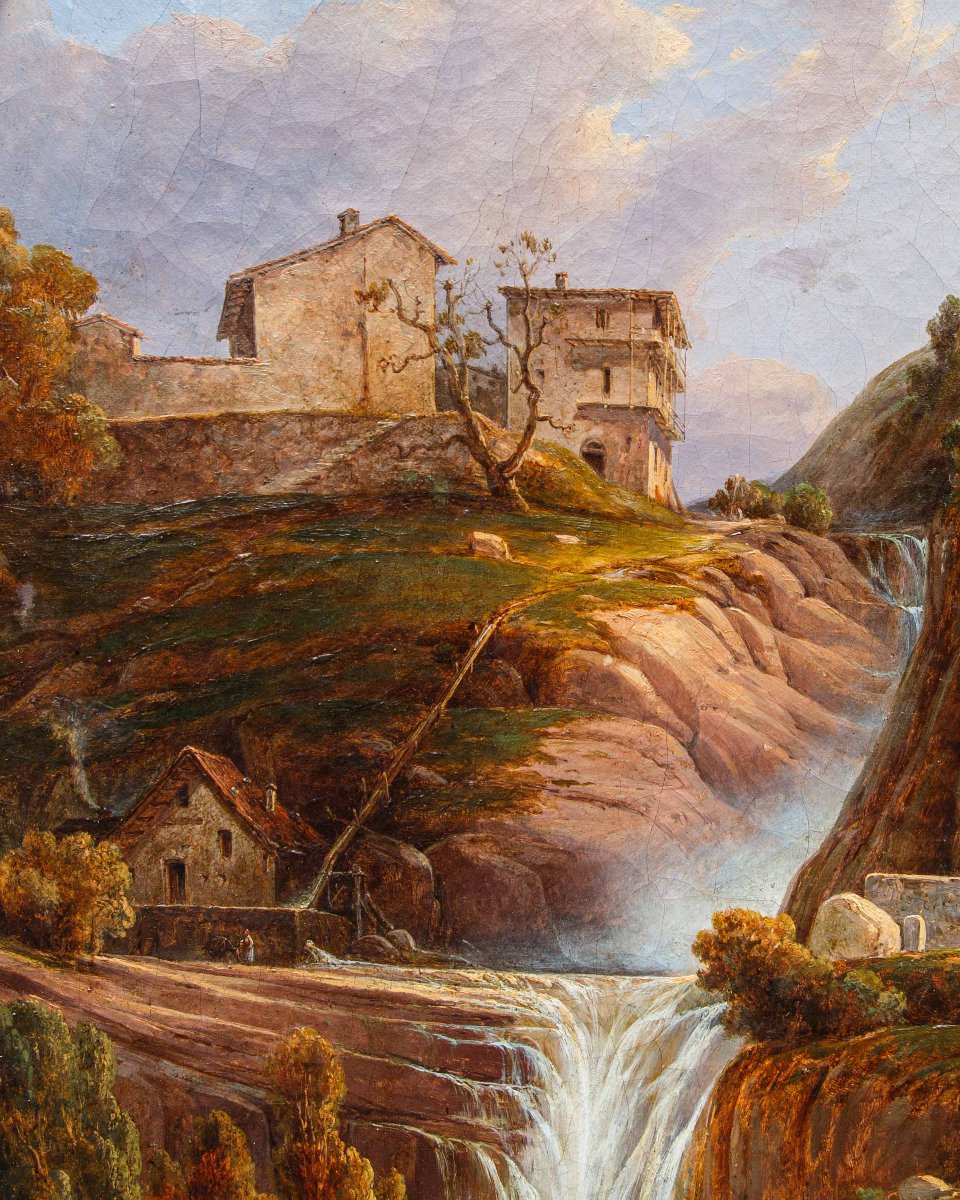
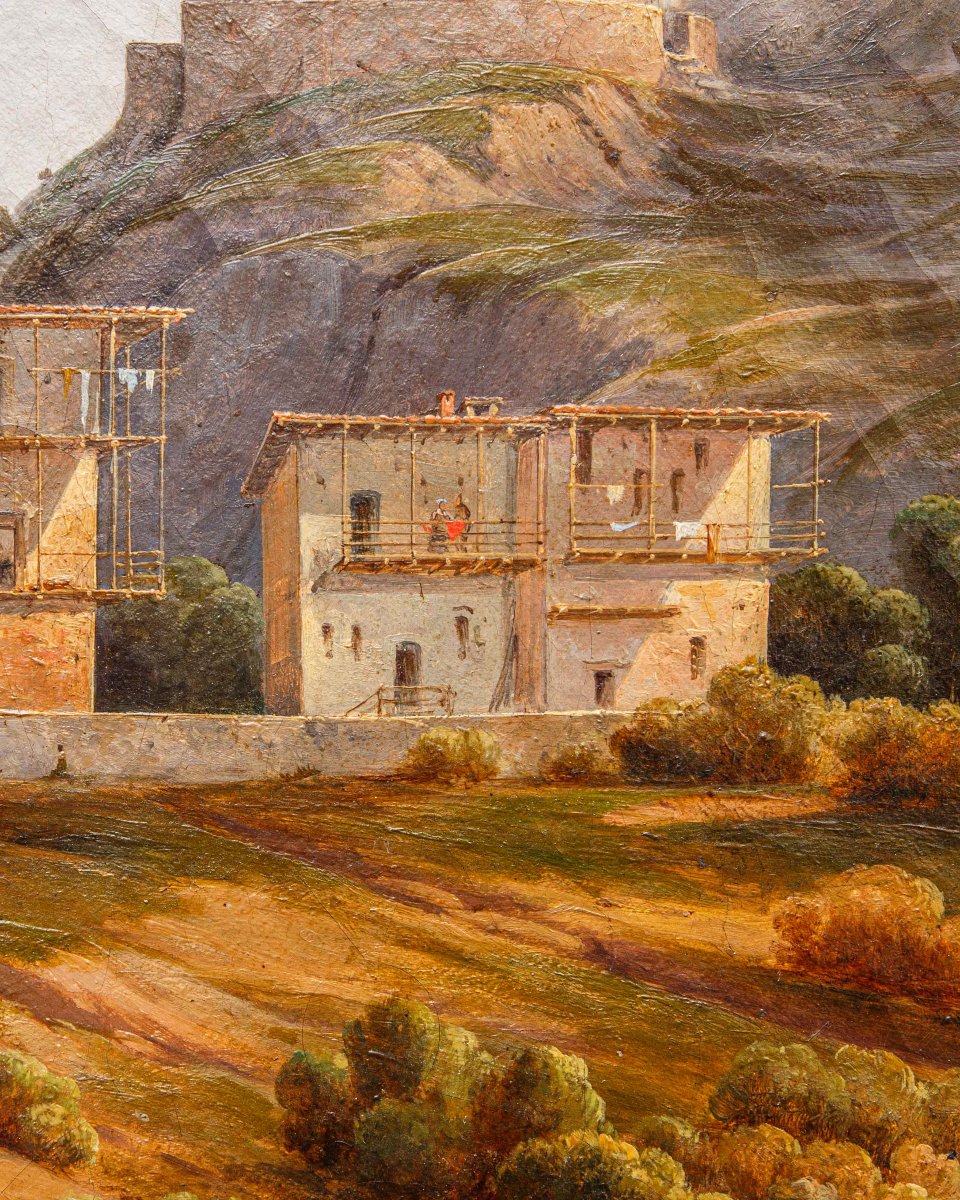
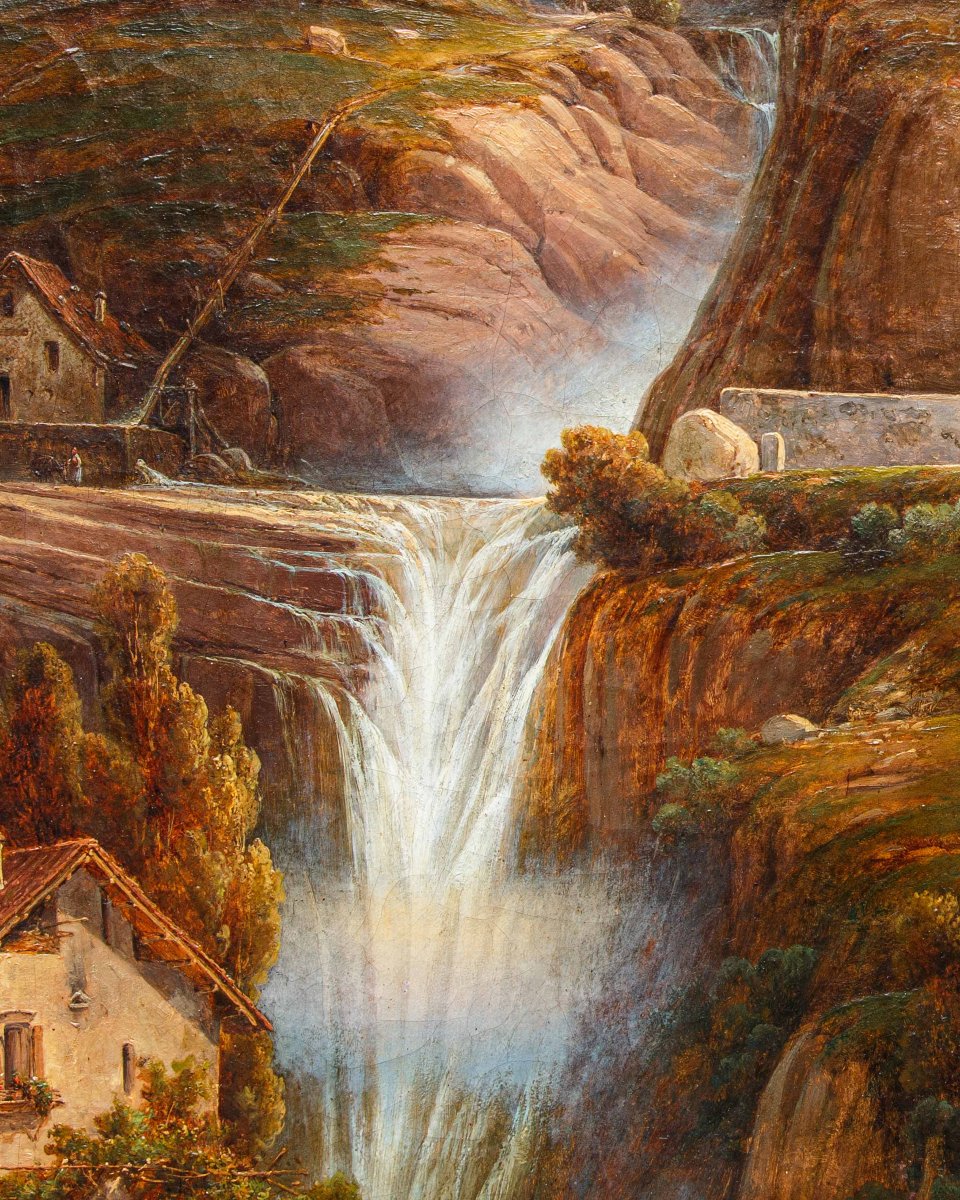
The Waterfalls of Tivoli
Oil on oval canvas, 96 x 72.5 cm
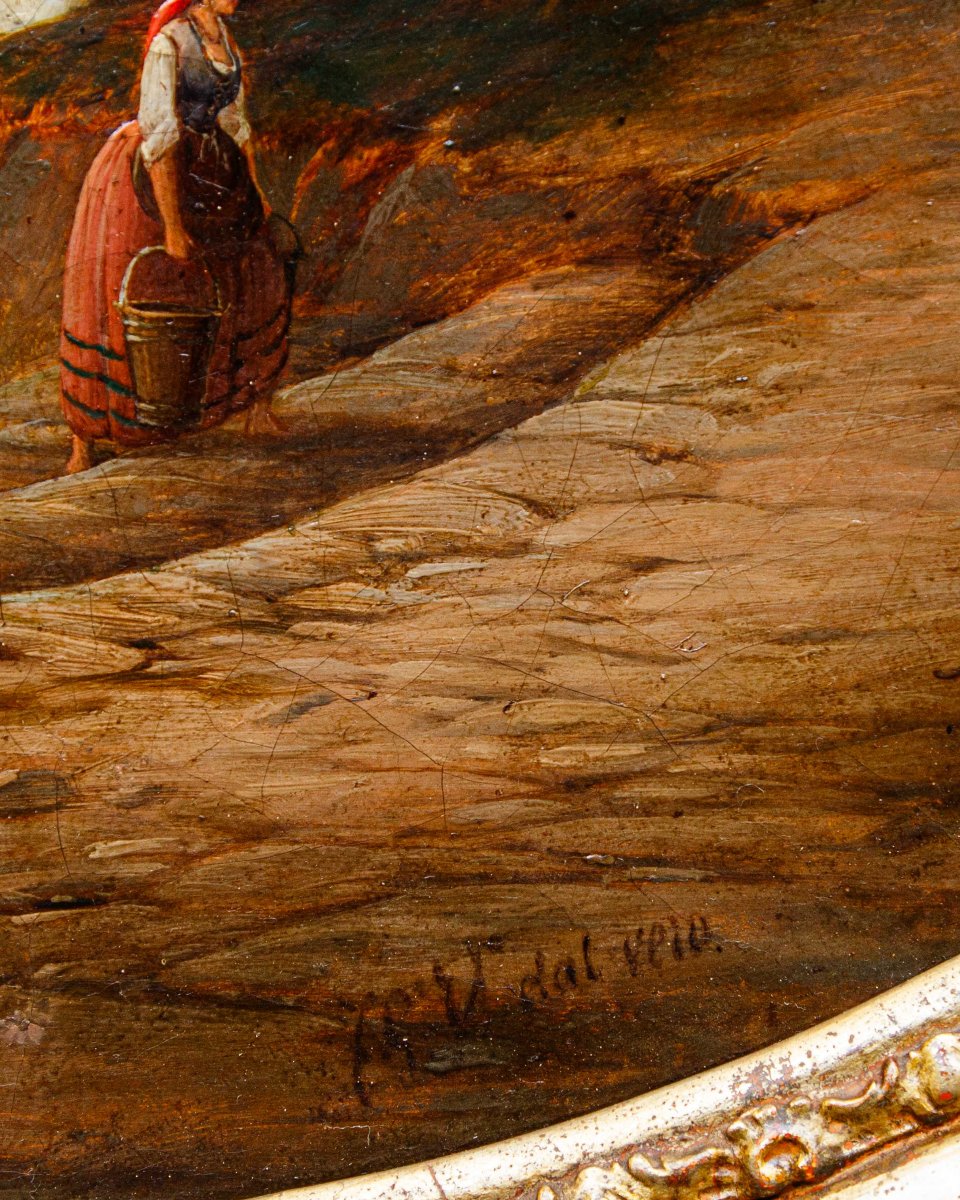
Signed lower right “F.G.H. dal vivo”
The 19th century marked a golden age for landscape painting in Italy, closely linked to the cultural phenomenon of the Grand Tour. This educational journey, undertaken primarily by the aristocracy and bourgeoisie of Northern Europe, was aimed at acquiring knowledge in the fields of art, history, and literature. Italy, with its classical ruins, cities of art, and picturesque landscapes, became the destination par excellence. Foreign artists, in particular, were drawn to the unique light and evocative vistas of the Roman countryside, the Castelli Romani region, and southern Italy. This led to a prolific output of works documenting the places visited, serving as souvenirs for travelers and as a visual record of natural and historical beauty. Among the most beloved and recurring subjects in 19th-century Italian landscape art were the waterfalls of Tivoli. The city, located a few kilometers from Rome, offered a natural and historical spectacle of rare beauty: the ruins of the Villa of Maecenas and the Temple of the Sibyl overlooked the rushing waterfalls of the Aniene River. The first waterfall in Tivoli, known as the Grande Cascata, was a popular subject for 17th- and 18th-century artists, but its depiction reached its peak in the 19th century. The power of the water and its dizzying plunge perfectly embodied the Romantic ideal of the sublime: a mixed emotion of awe and wonder in the face of nature’s grandeur.
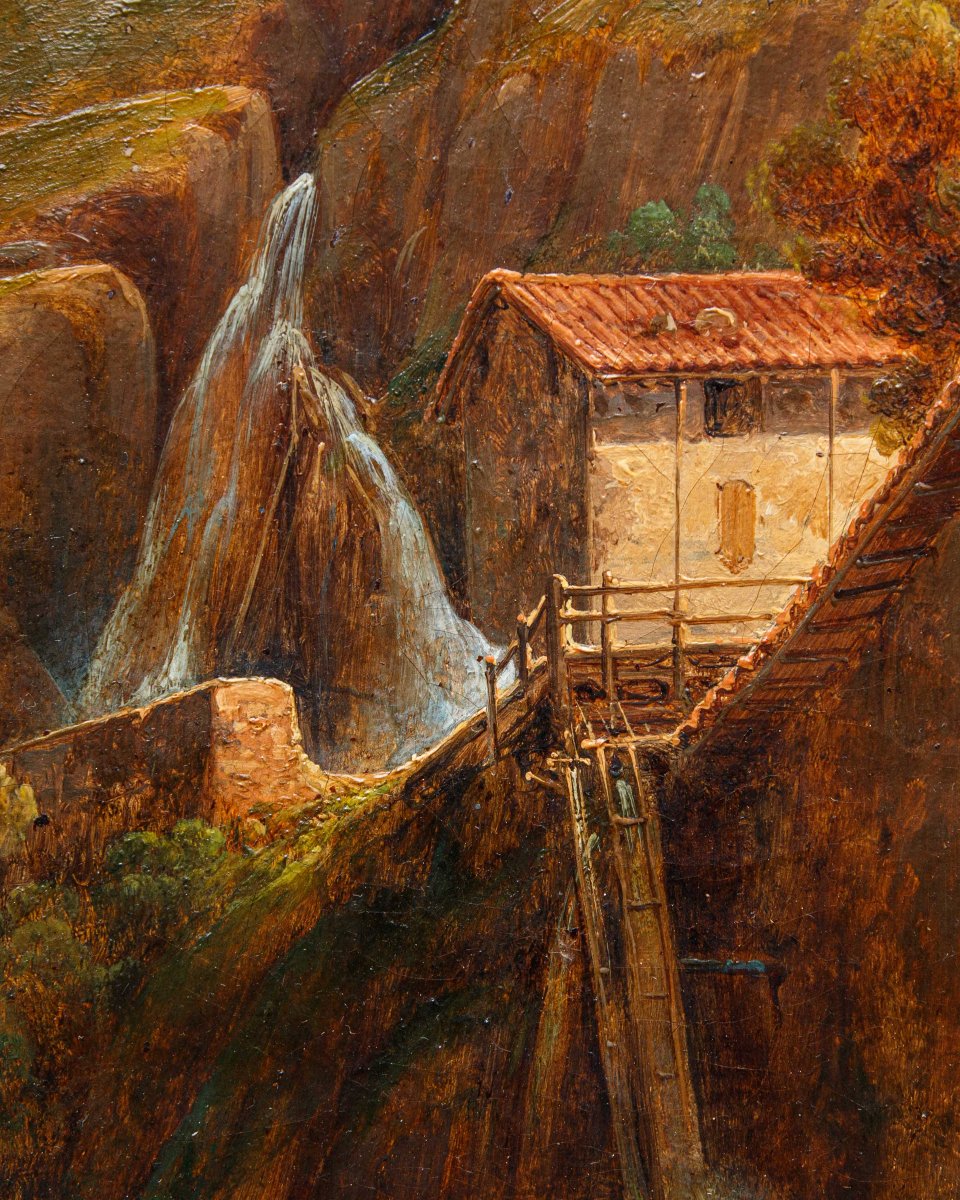
The appearance of the waterfalls changed radically in 1835. Frequent flooding of the Aniene River, which threatened the city, led to the construction of a new and imposing tunnel, the Monte Catillo Tunnel, which diverted the river’s course. The result was the creation of the Tivoli Waterfalls, now known as the Gregorian Park Waterfalls. This new configuration, featuring an artificially created waterfall, became an even more popular tourist attraction and artistic subject.
It is noteworthy how the painter emphasizes that the work was painted from life, a fact further highlighted by the presence of his initials. Looking at the lower right corner of the painting, one notices the figure of an artist—likely a self-portrait—equipped with all the tools necessary to capture the splendid landscape of the waterfalls.
Period: 19th century
Style: Other Style
Condition: Good condition
Material: Oil painting
Width: 72,5
Height: 96
Reference (ID): 1817225
Availability: In stock