

18th-century Sculptor From Trapani, *crucifixion*
18th-century sculptor from Trapani
Crucifixion
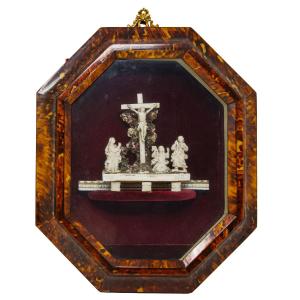
Ivory, tortoiseshell frame, 14 x 12 cm – with frame, 43 x 32 cm
Work accompanied by a CITES certificate
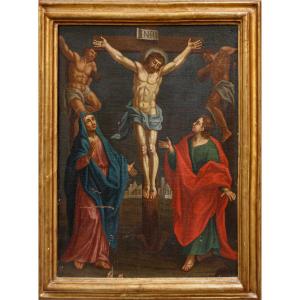
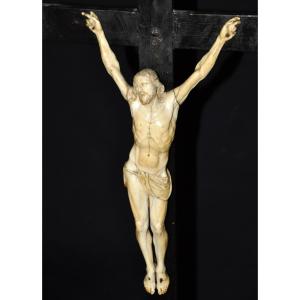
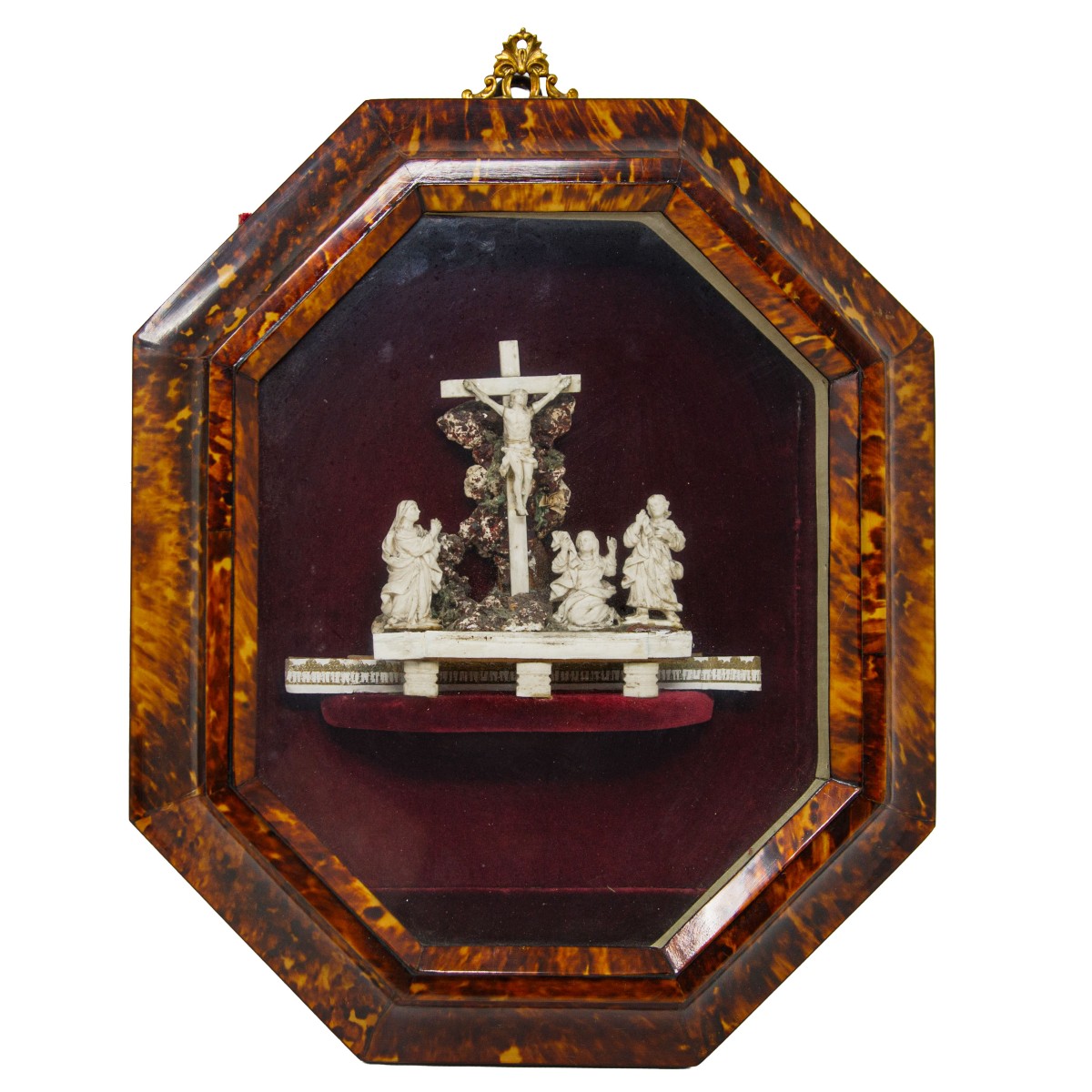
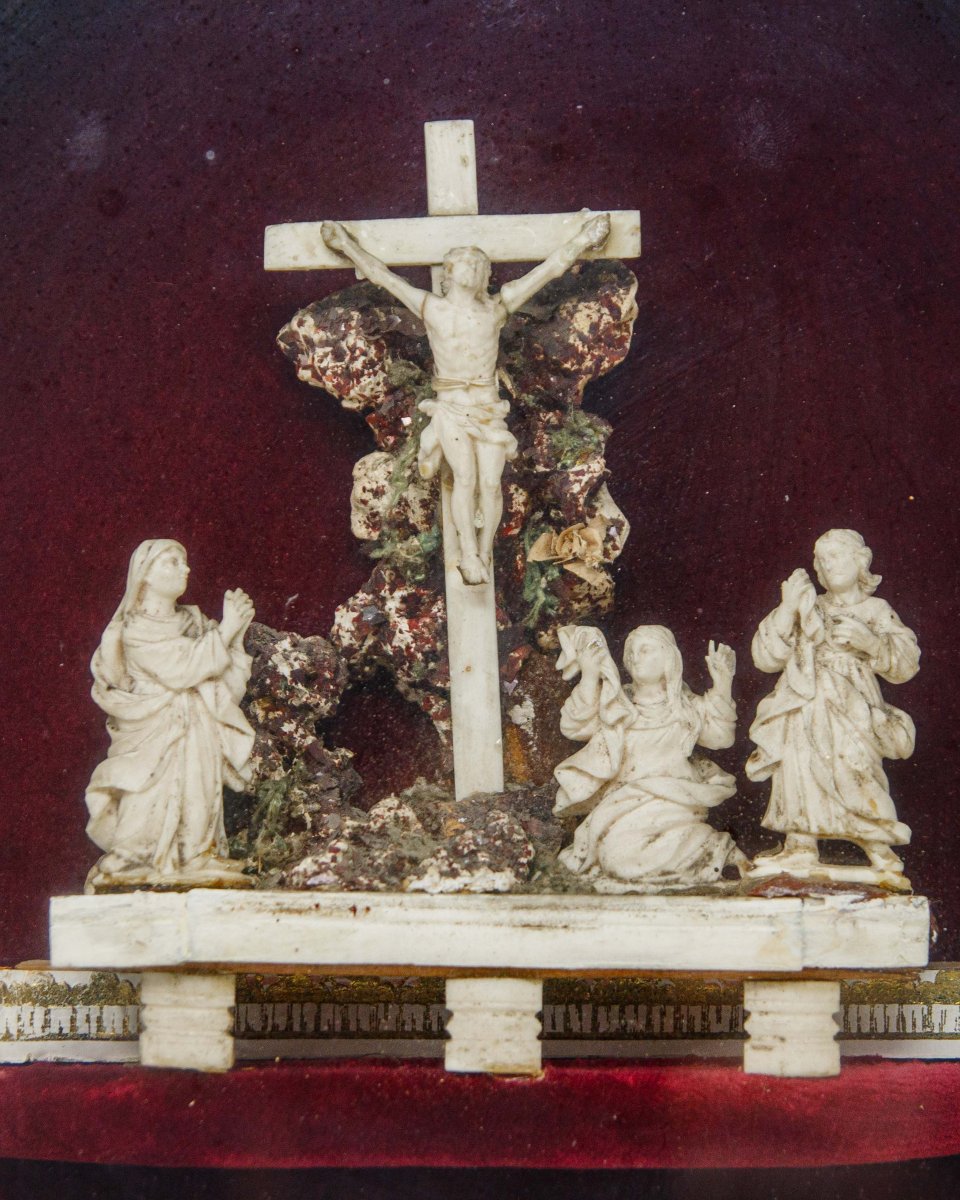
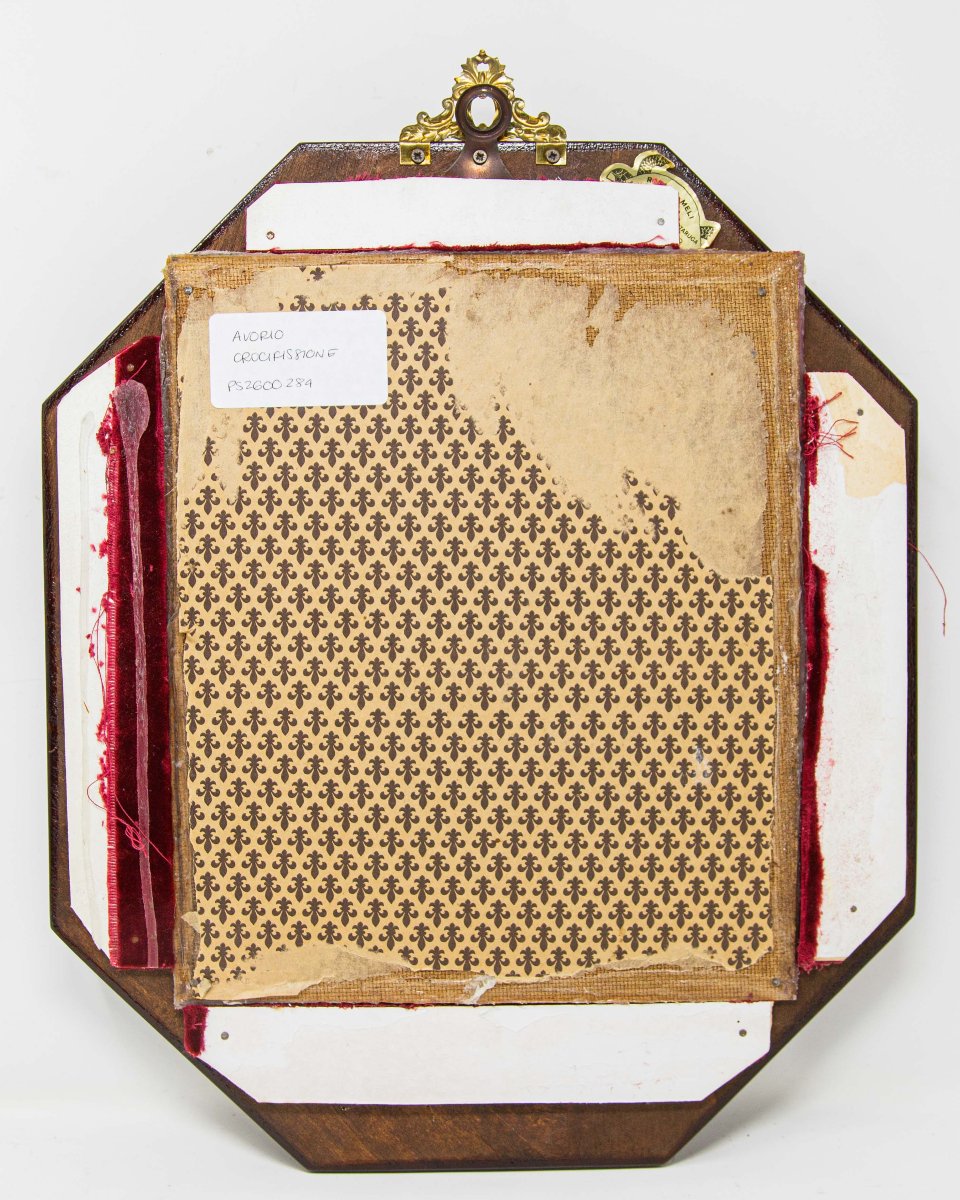
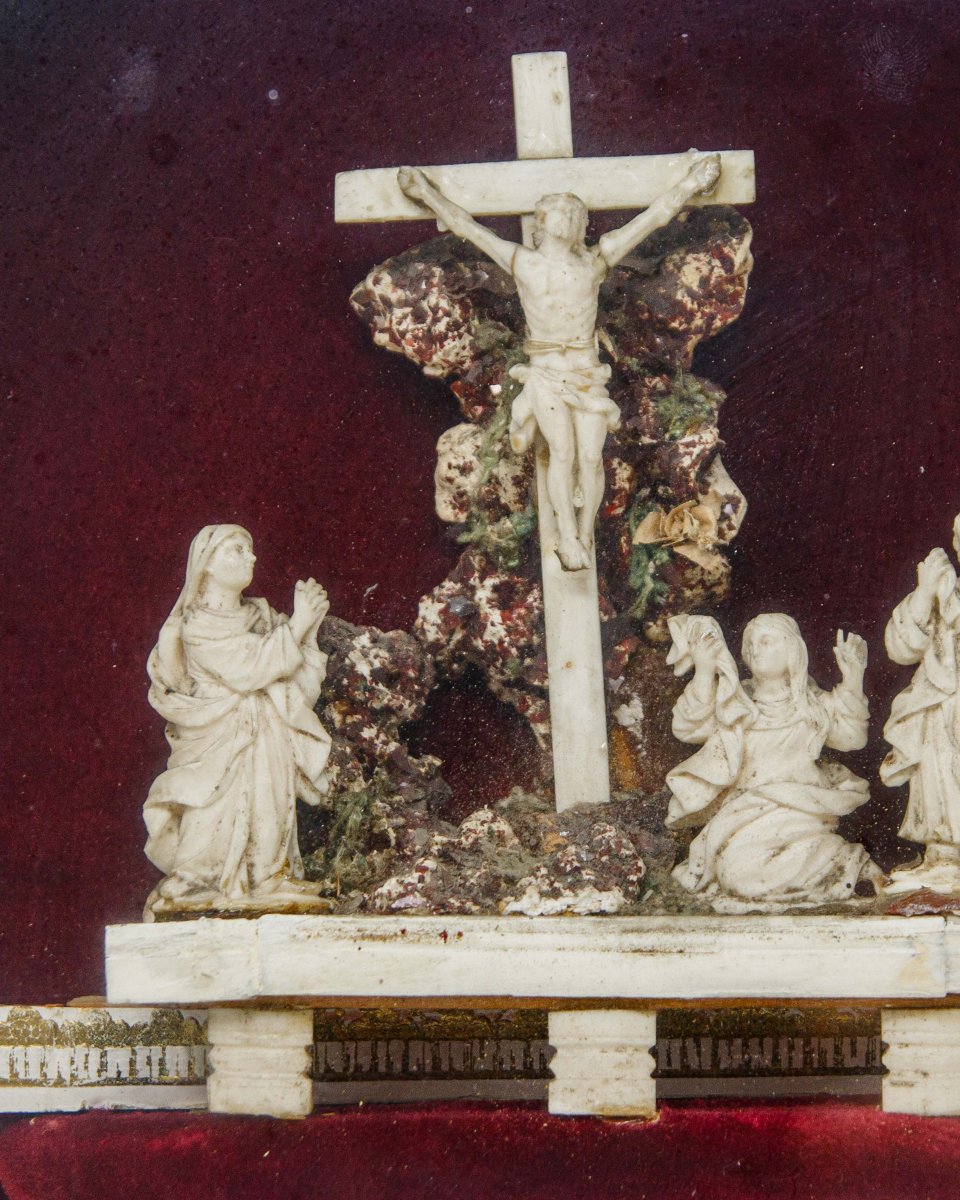
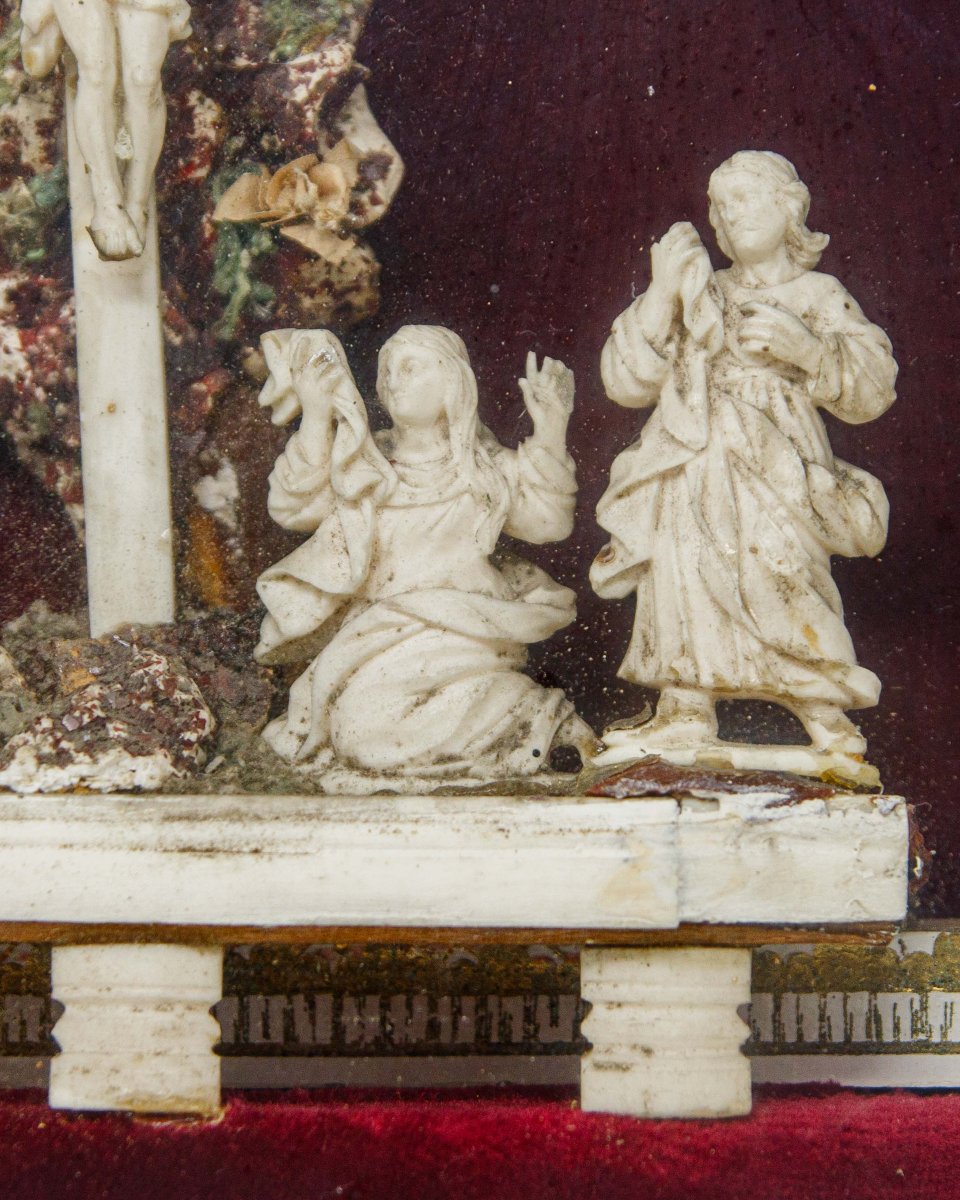
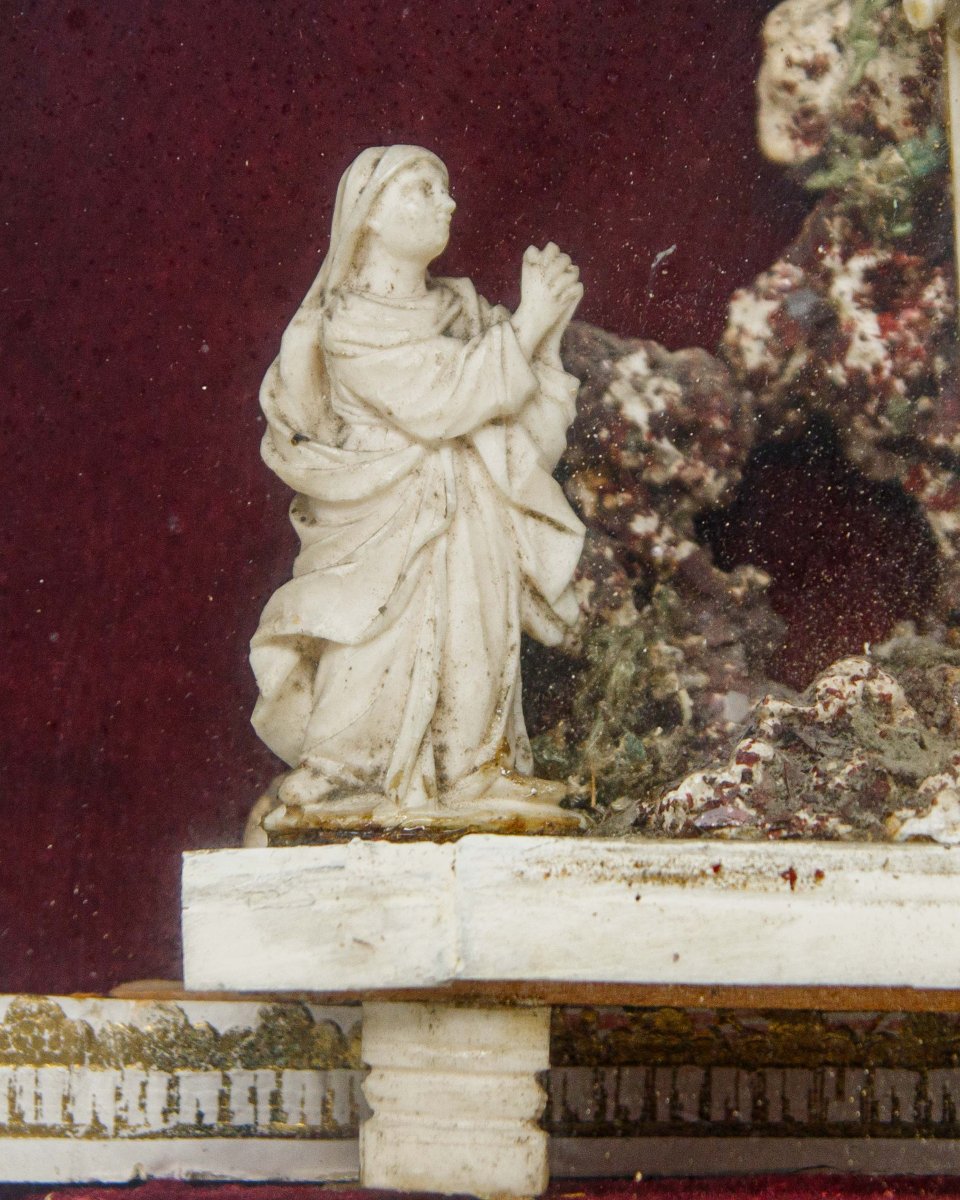
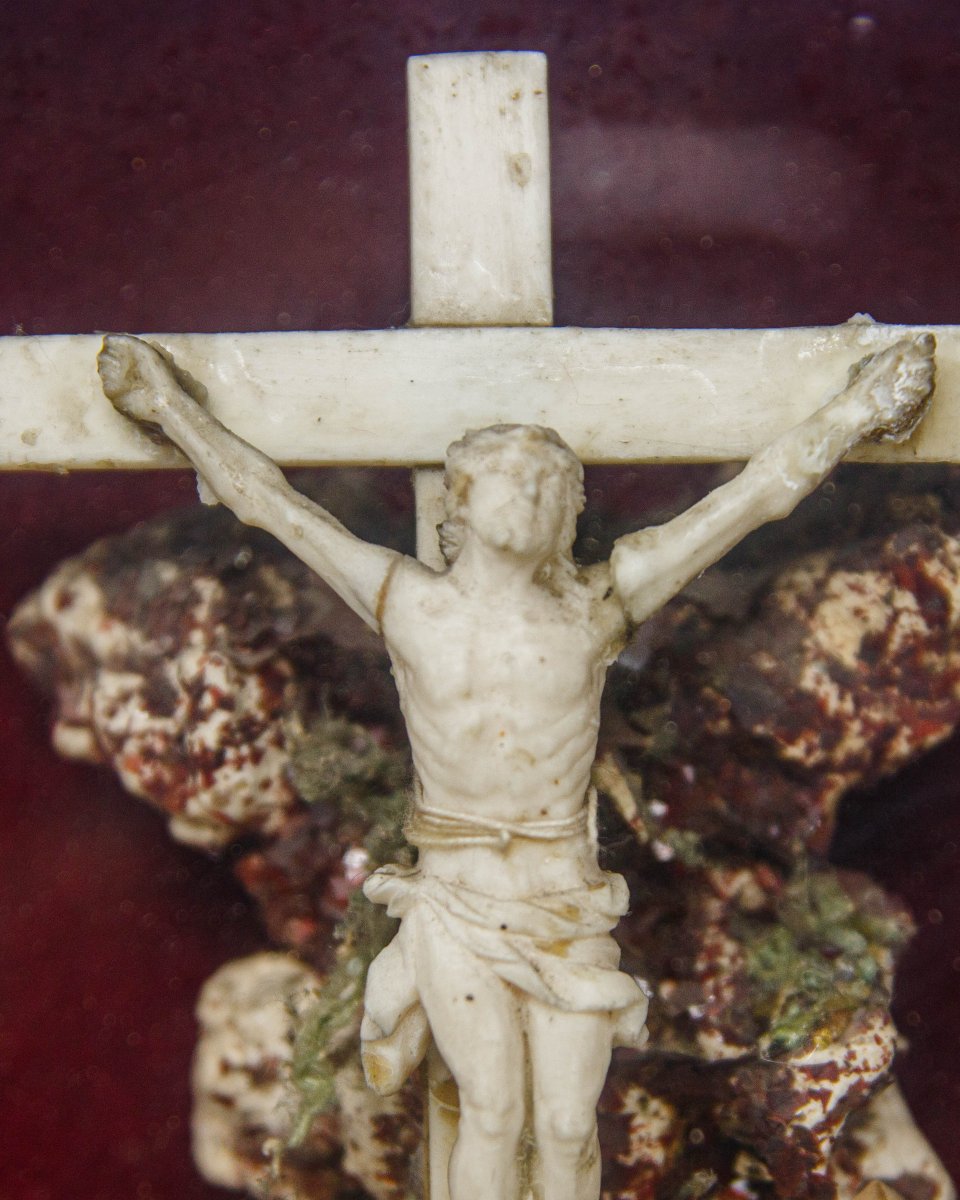
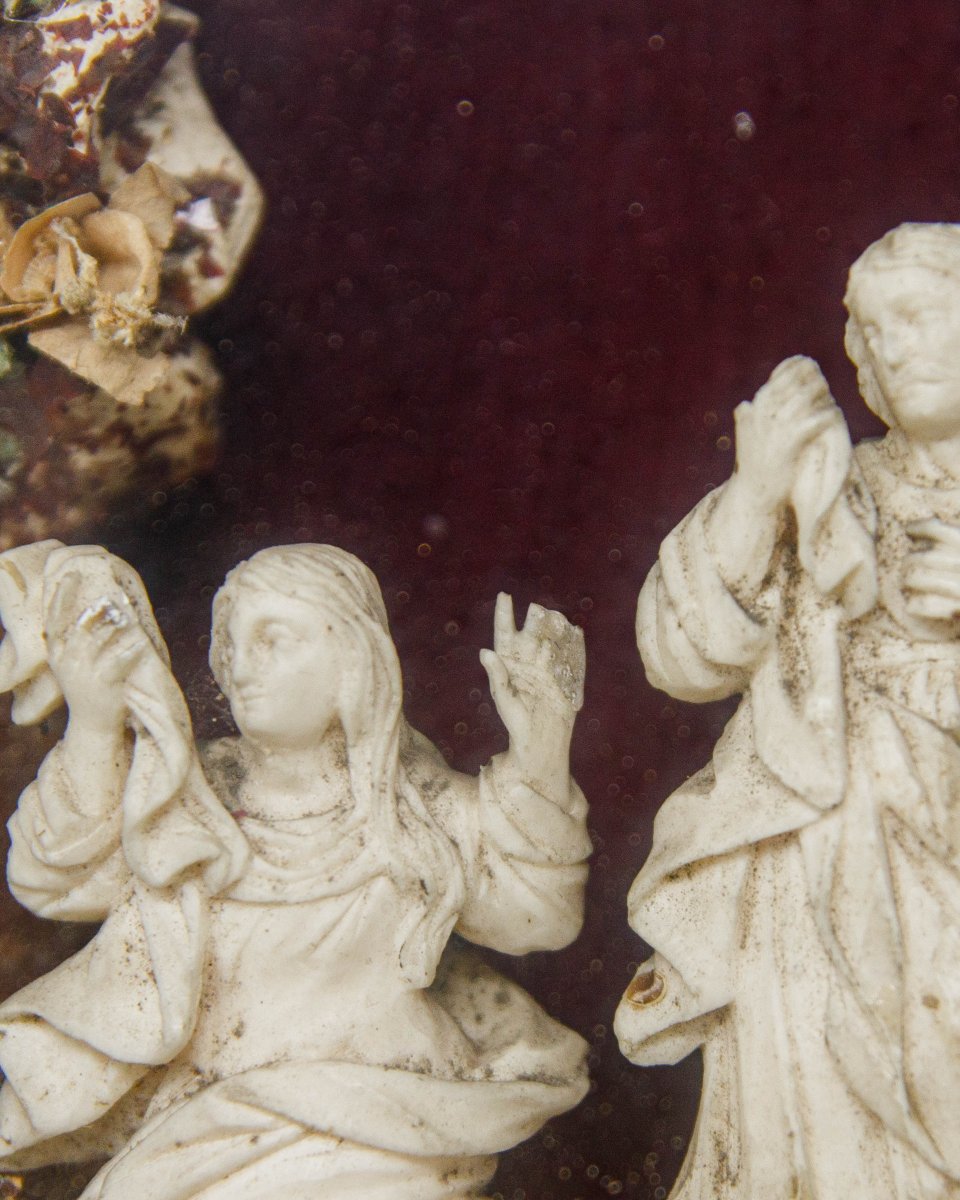
This precious micro-sculpture stands as a refined testament to 18th-century Trapani sculpture, a period in which Sicilian artistic craftsmanship reached unparalleled heights of technical virtuosity and expressive intensity. The work, designed for domestic devotion, is housed within a solid octagonal frame covered in brown tortoiseshell, whose mottled and lustrous surface frames the sacred scene. The center of the altarpiece features a dramatic depiction of the Crucifixion, achieved through a masterful assembly of carved ivory set against a purple velvet background, which evokes the blood of the sacrifice and lends a solemn depth to the entire composition. At the center dominates the figure of Christ on the cross, rendered with surprising anatomical precision despite its small size; behind him, a rocky formation simulates Calvary, lending a sense of naturalistic harshness to the scene. At the foot of the cross are the canonical figures of Christian mourning: the Virgin Mary, depicted in a composed yet sorrowful prayerful pose; Mary Magdalene, kneeling in a gesture of desperate devotion; and Saint John the Apostle, whose billowing drapery reflects the inner turmoil of the moment. The group rests on a horizontal wooden balustrade, which serves as a stage for this miniature sacred theater. The upper part of the frame is surmounted by a gilded bronze pediment with floral motifs, which also served as a suspension element. The flourishing of such artifacts in Trapani during the 18th century is closely linked to the city’s economic and social history, as its port made it a crossroads for trade and exotic materials. The availability of ivory, sourced from African routes, and tortoiseshell, combined with the centuries-old mastery of local coral carvers, allowed for the emergence of specialized workshops capable of working with extreme precision on hard and fragile materials. These sculptors, accustomed to the meticulous detail required for coral, applied their skills to ivory micro-sculpture to meet the demand of an aristocratic clientele who desired precious, portable objects for their private oratories. In an era dominated by Baroque fervor, the bedside altar was not merely a support for prayer but a symbol of social status and cultural refinement: the combination of rare materials and masterful carving served to inspire wonder in the faithful, elevating the spirit through sensory beauty. The Crucifixion depicted here perfectly embodies this dual function, uniting the iconographic rigor of the Counter-Reformation with the visual allure typical of Sicilian Rococo taste, making every detail—from Christ’s loincloth to the Virgin’s clasped hands—a vehicle of intense spirituality and admirable artistic craftsmanship.
Period: 18th century
Style: Other Style
Condition: Good condition
Material: Ivory
Width: 12
Height: 14
Reference (ID): 1751371
Availability: In stock