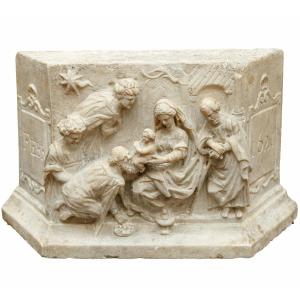


Germany, 17th Century, Adoration Of The Magi
Germany, 17th century
Adoration of the Magi
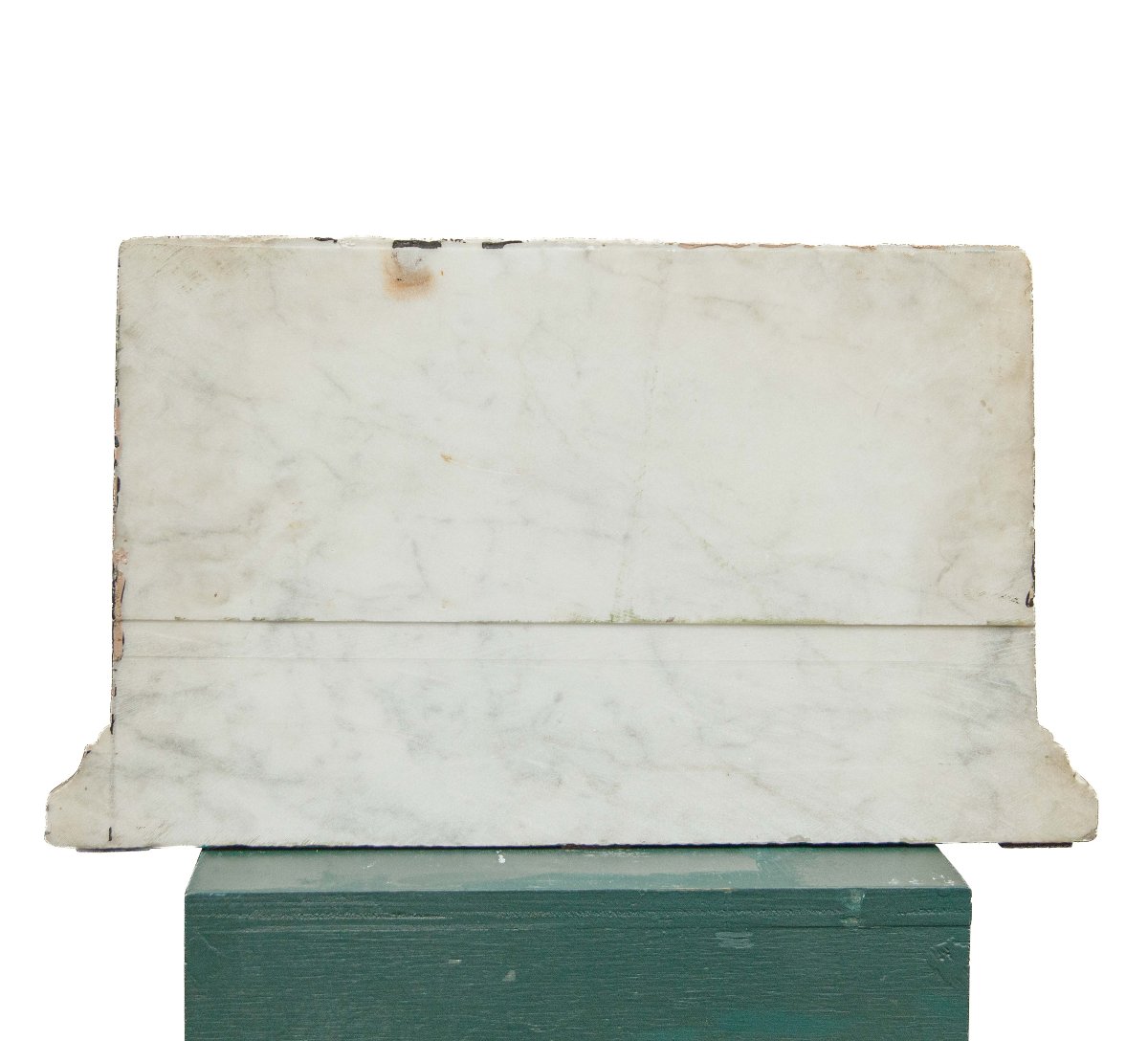
White marble, 29 x 50 x 16 cm
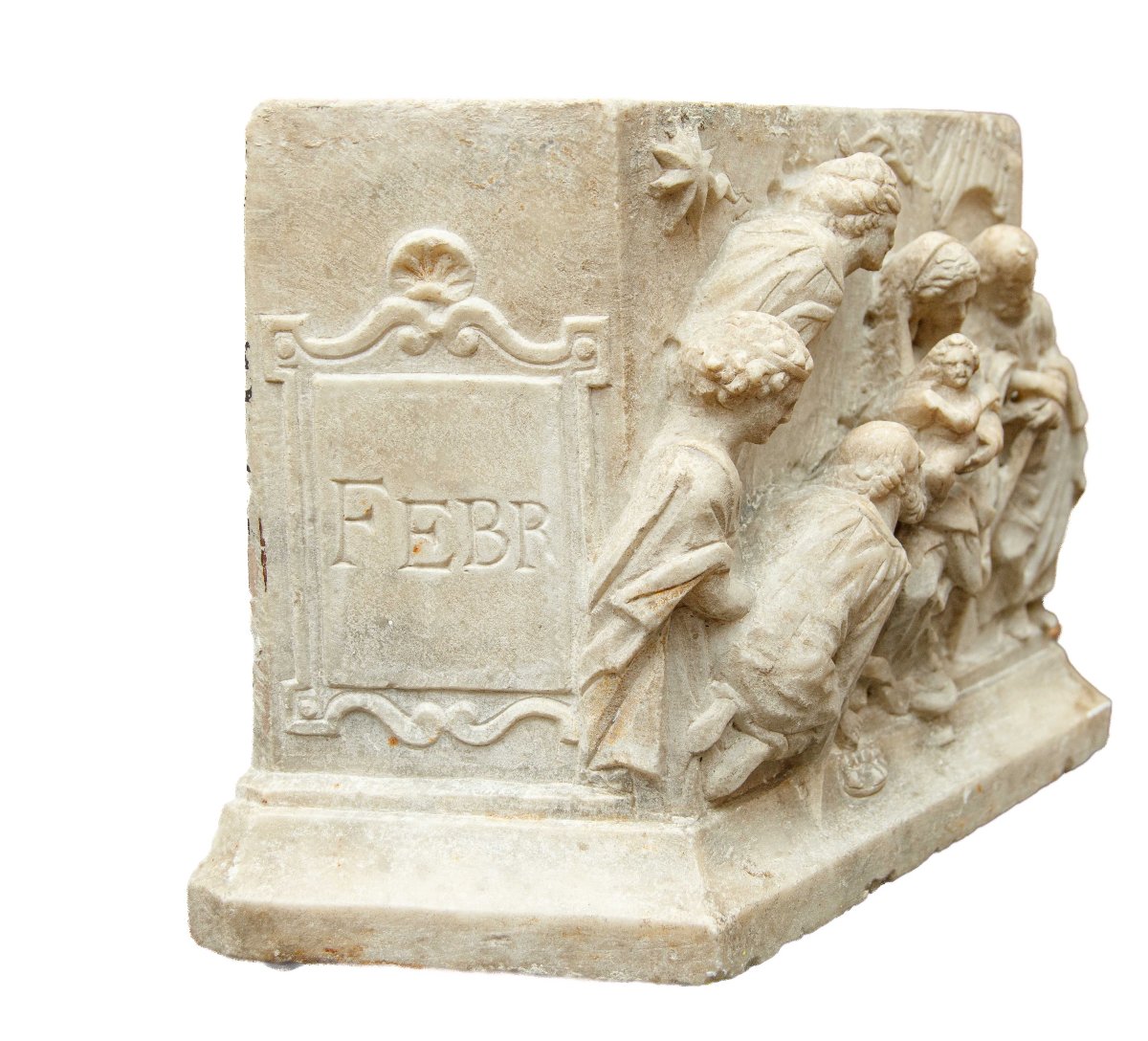
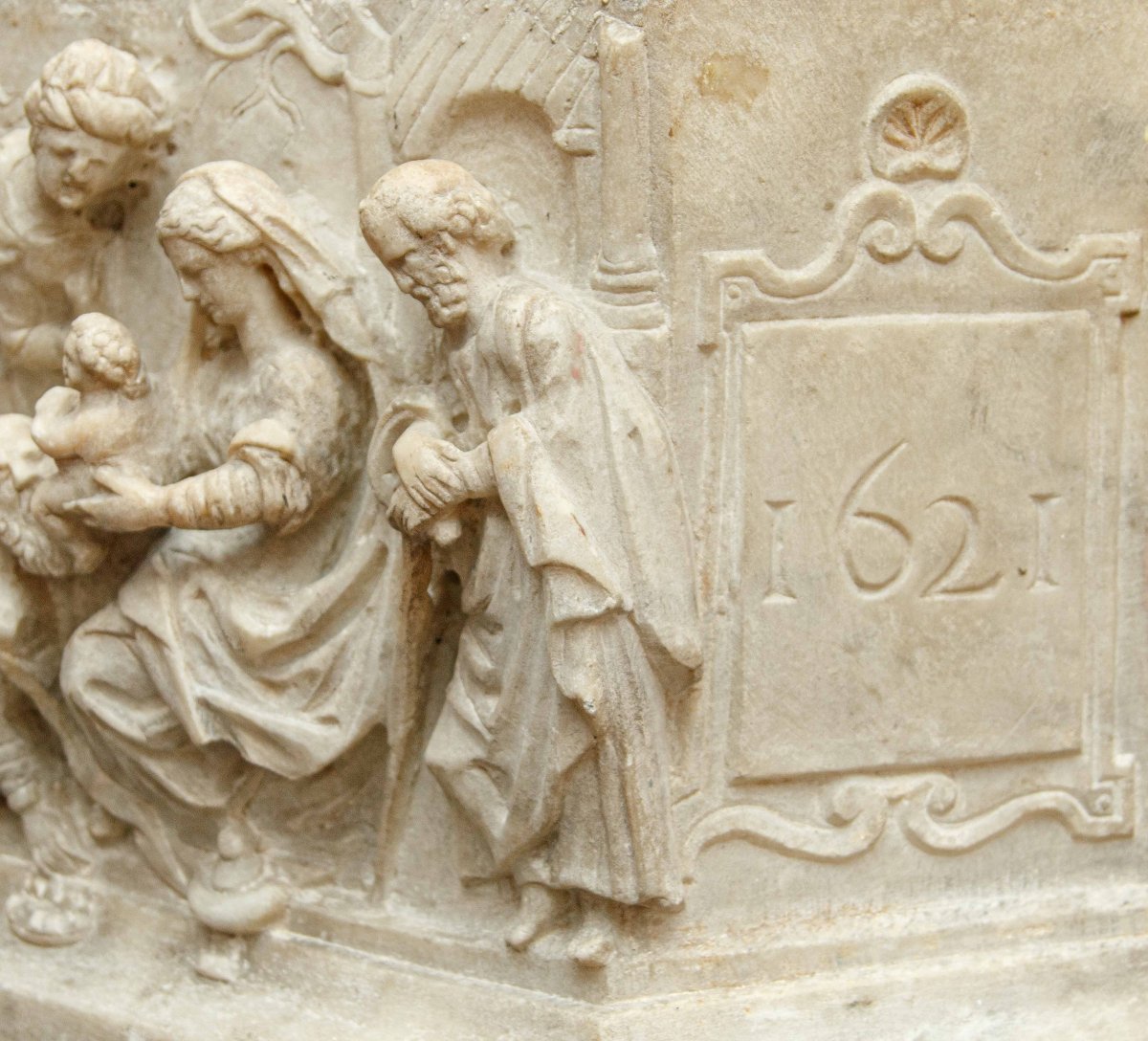
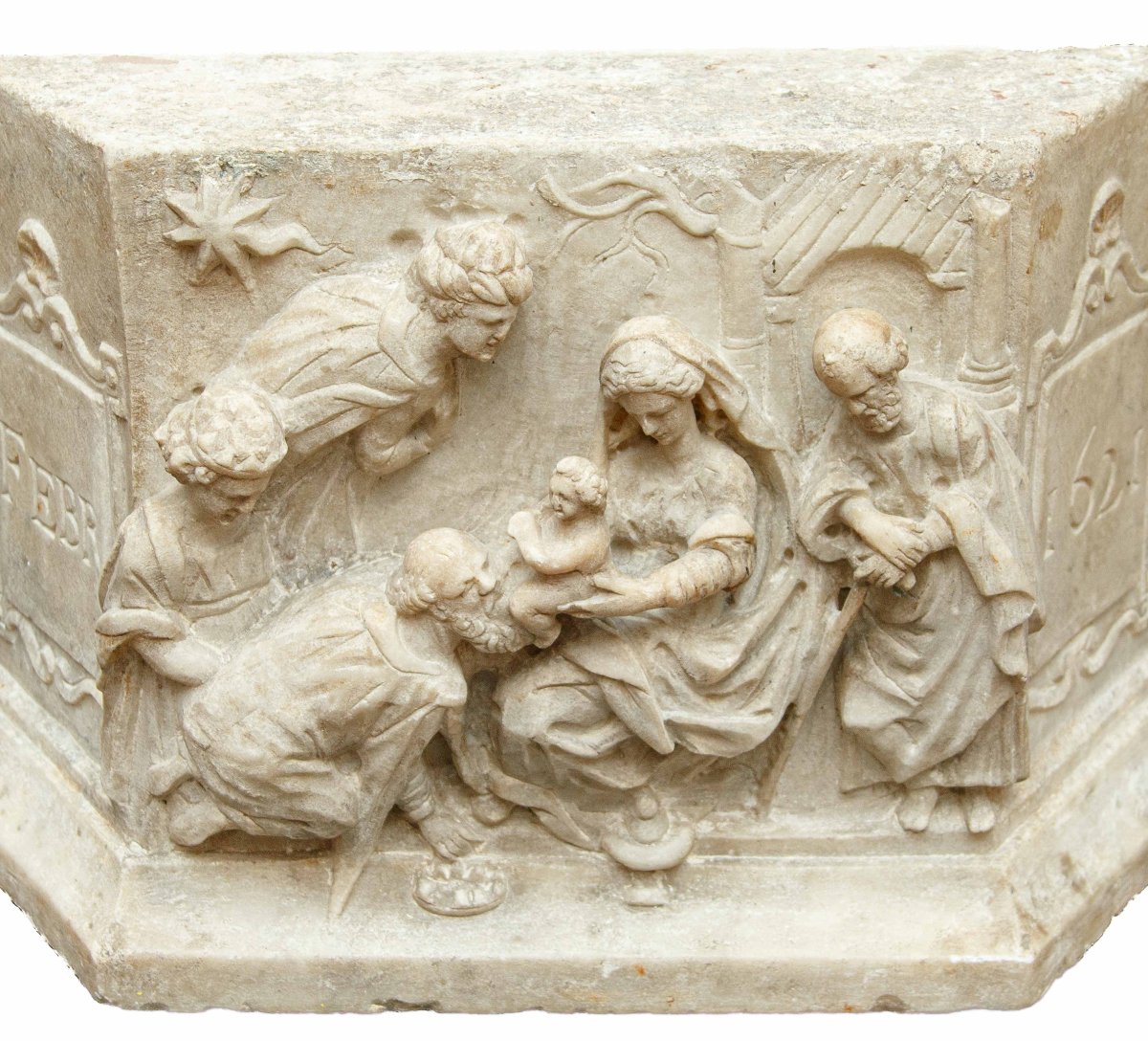
Dated on the sides: Febr. 1621
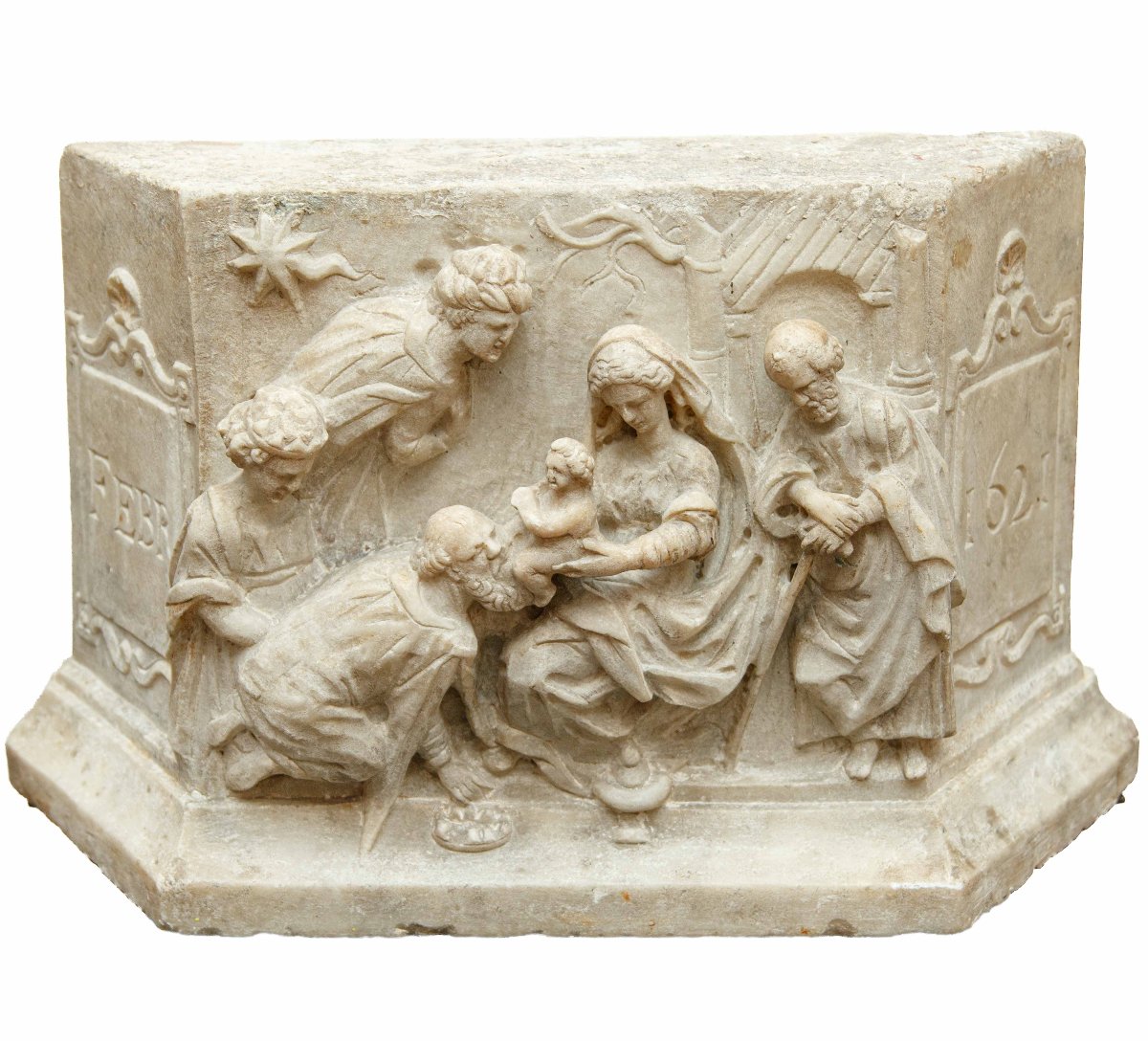
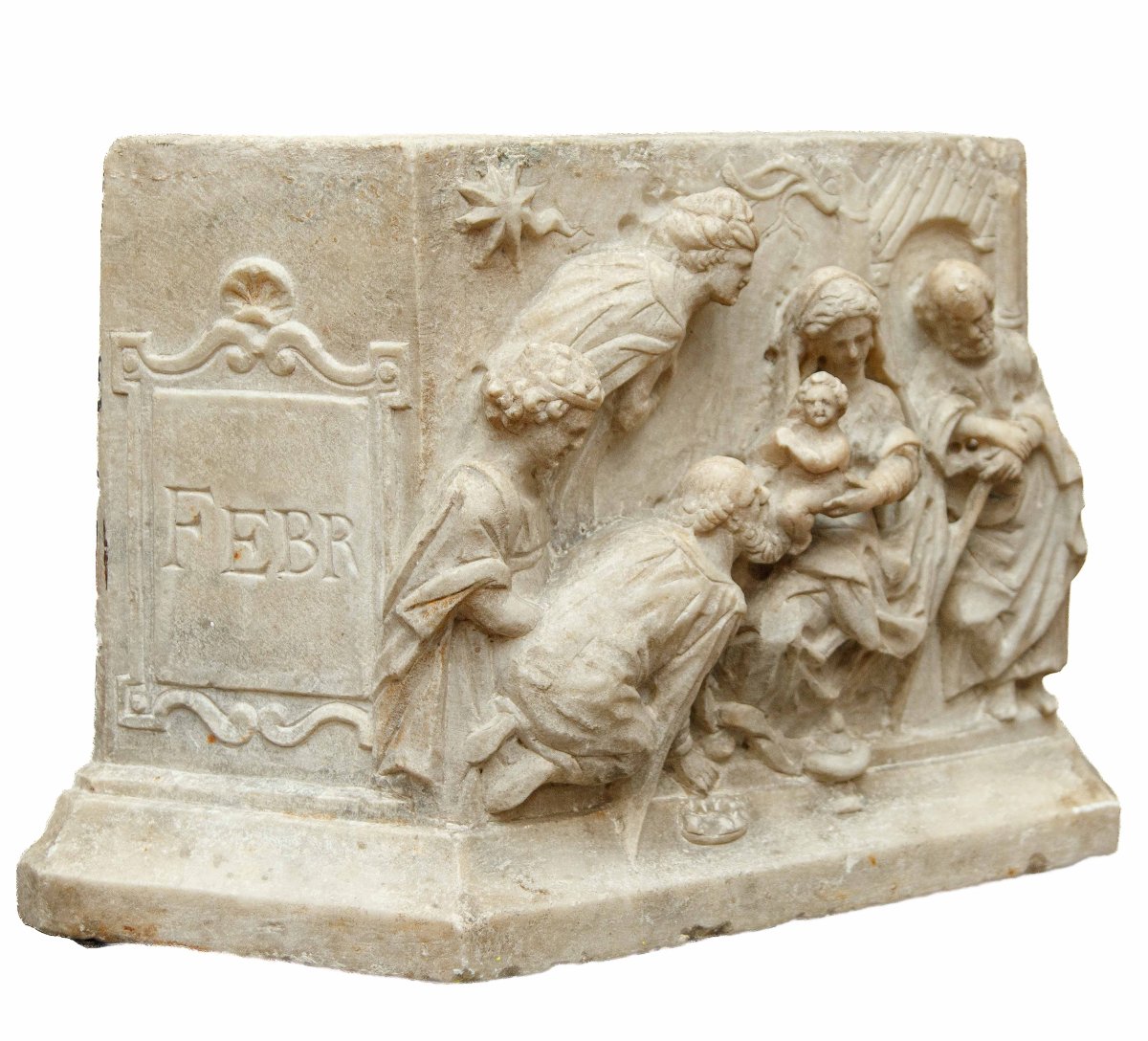
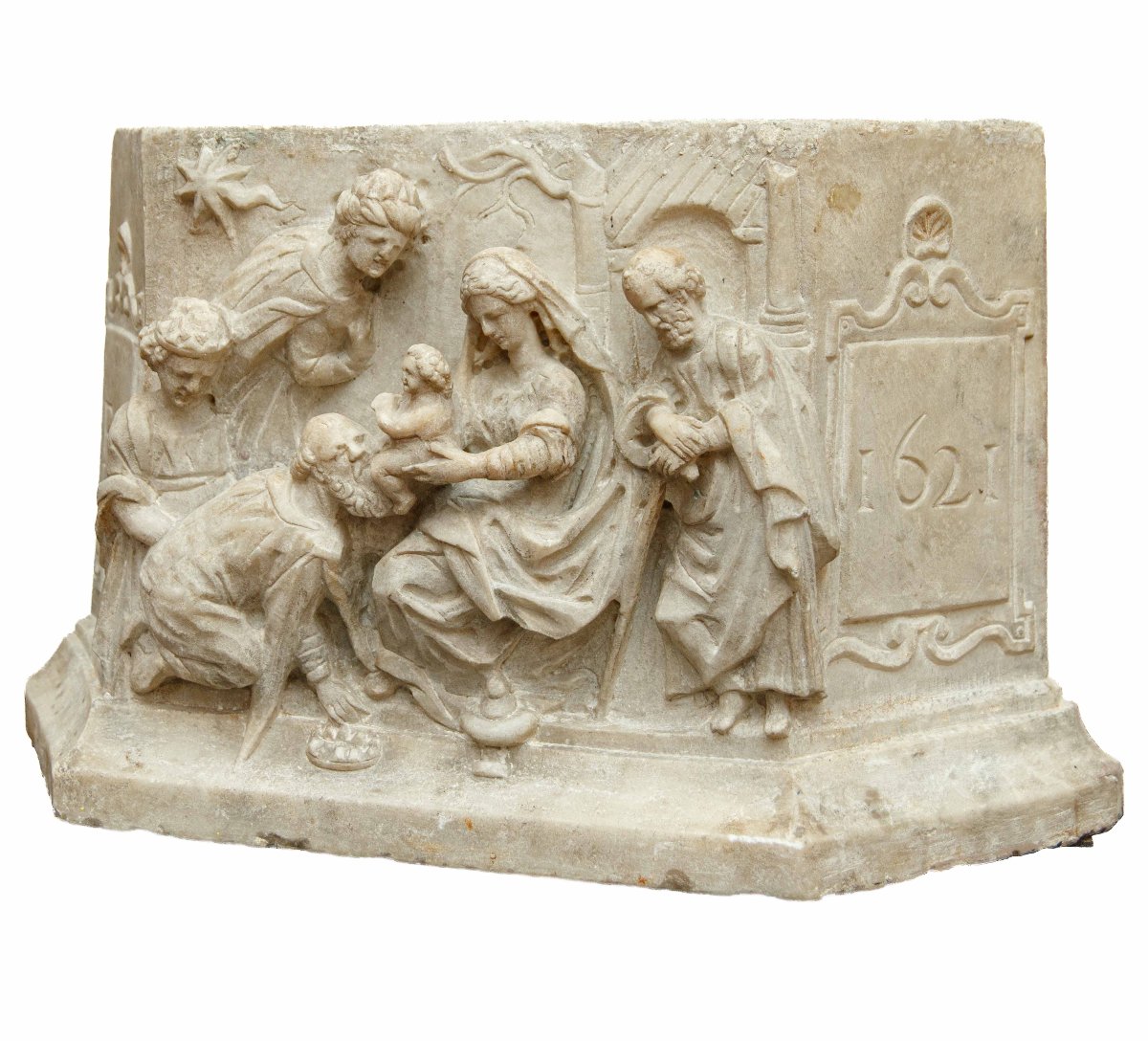
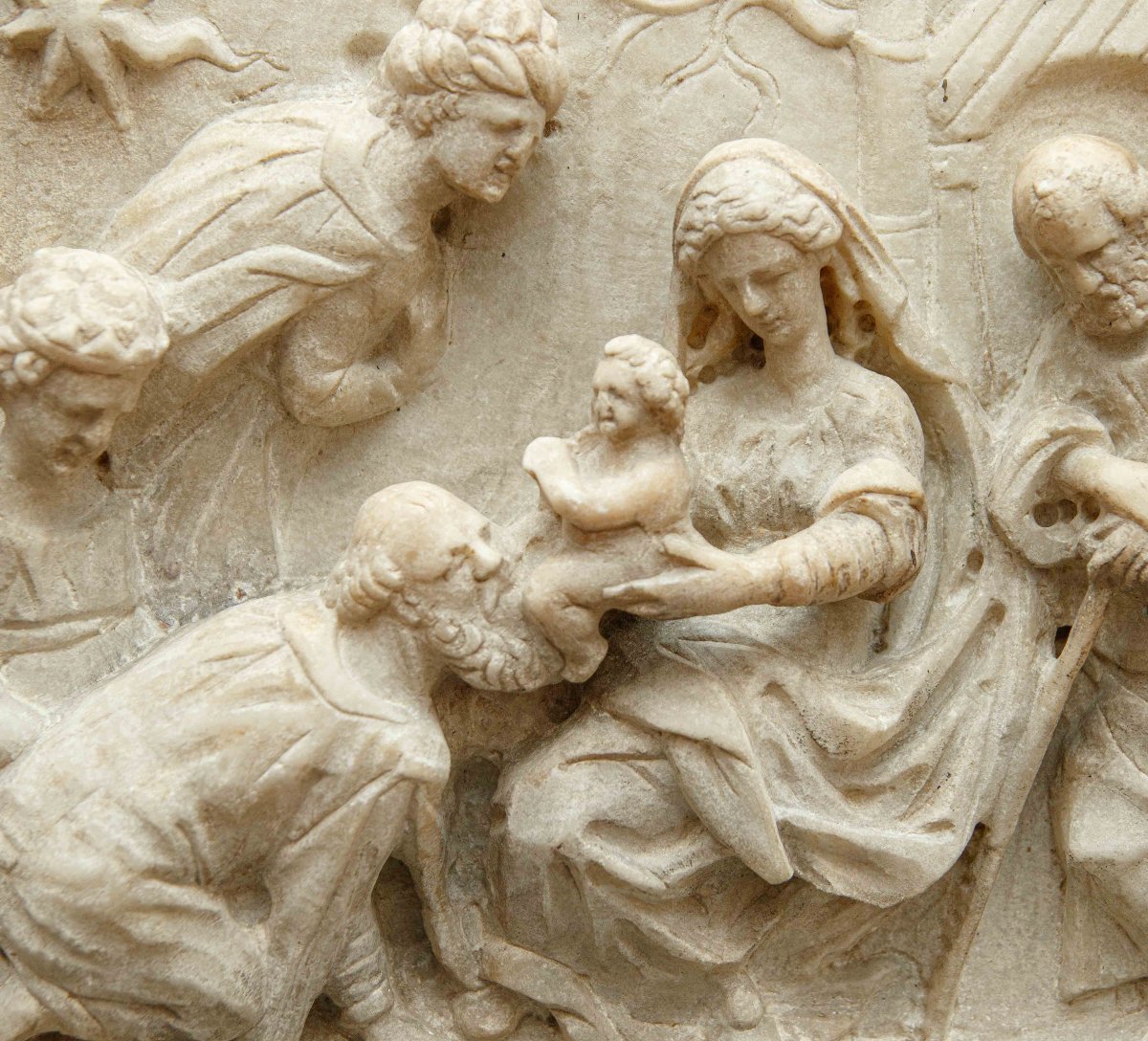
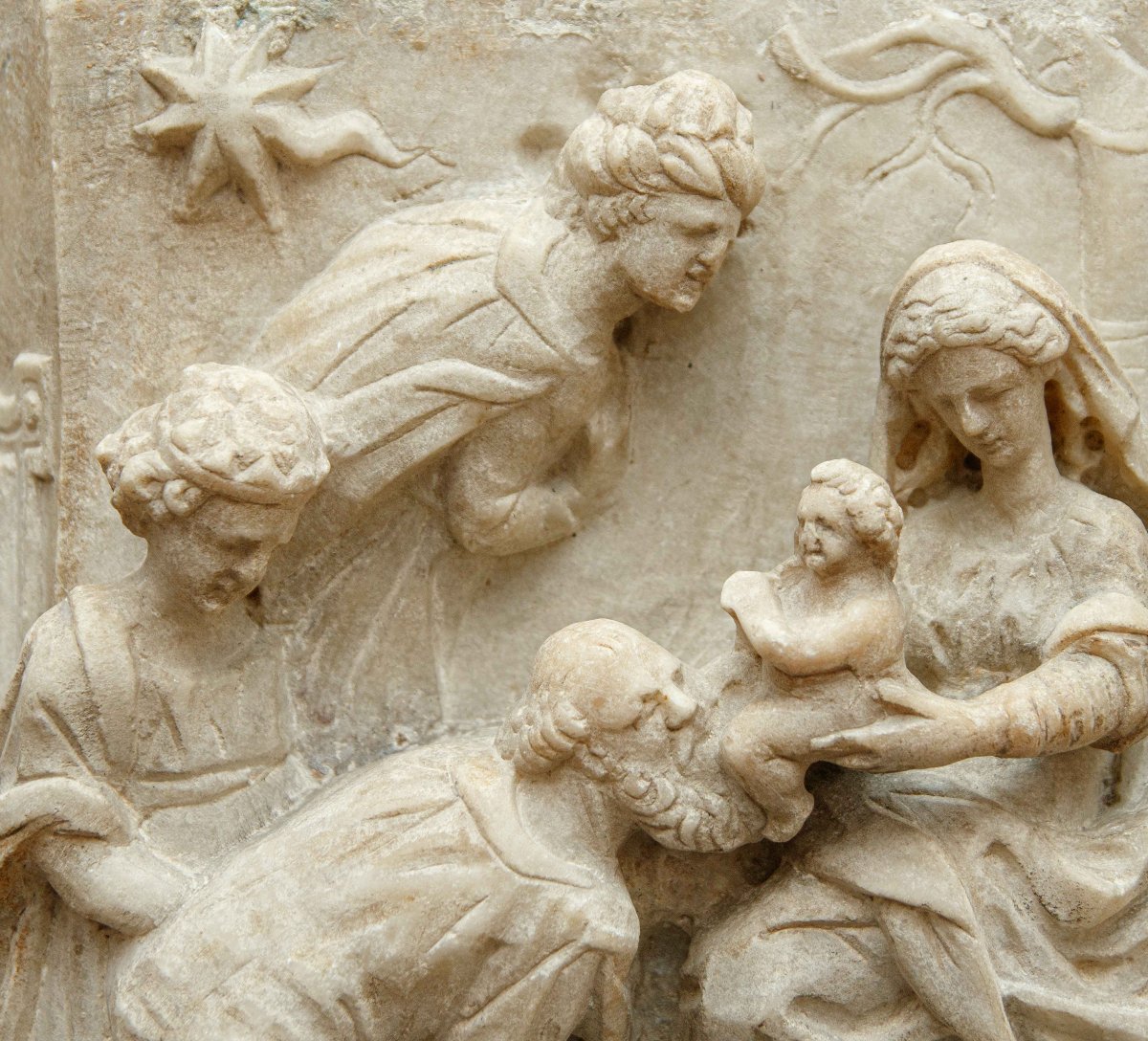
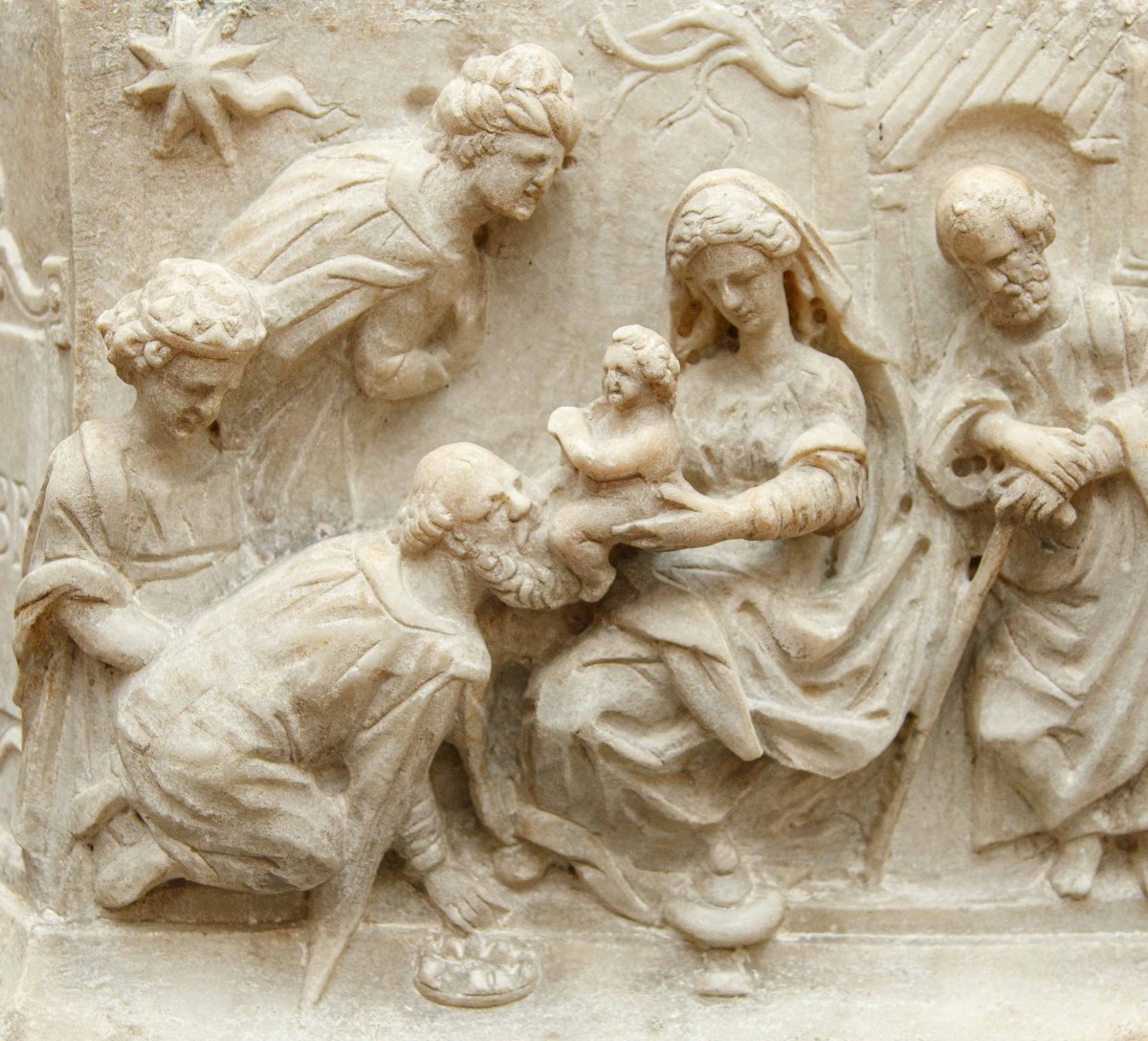
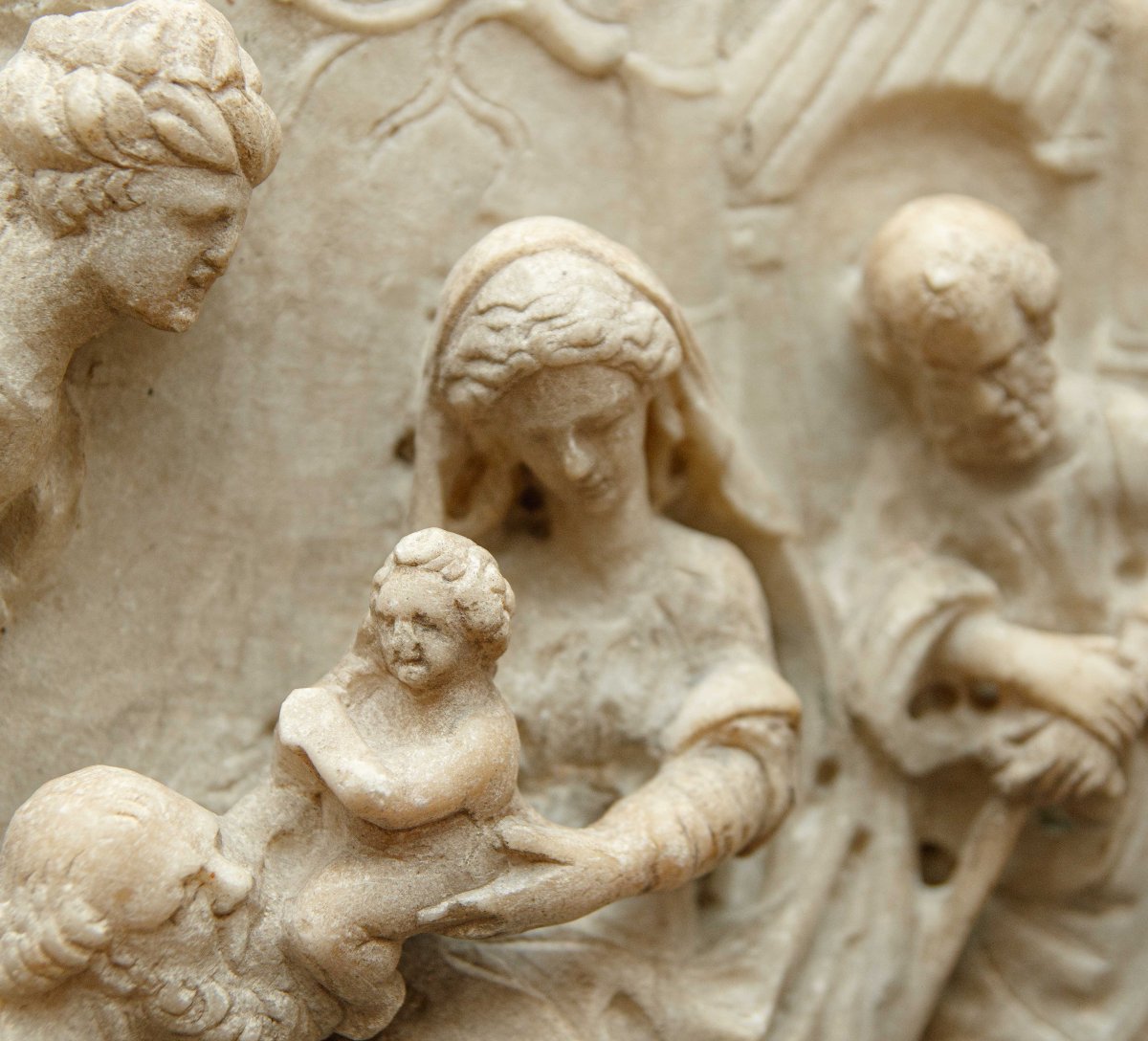
The 17th century represented a period of profound and dramatic transition for the German-speaking territories, indelibly marked by the tragedy of the Thirty Years’ War (1618–1648). Nevertheless, artistic and sculptural production did not come to a halt; on the contrary, it flourished, fueled by commissions from imperial courts, prince-bishops, the ecclesiastical institutions of the Counter-Reformation, and a cultured and devotional private collecting tradition. Against this complex backdrop, 17th-century German sculpture developed along two distinct paths: on the one hand, it inherited the extraordinary late Gothic and Northern Renaissance tradition, renowned for its virtuosity in carving wood, ivory, and stone; on the other, it gradually assimilated the formal innovations of the Italian and Flemish Baroque. The resulting sculptural language is distinguished by a profound pathos, a marked physiognomic realism, a meticulous rendering of naturalistic details, and a compositional dynamism that is understated yet imbued with great emotional intensity. This marble relief depicting the Adoration of the Magi fits into this fertile cultural context; it is precisely dated to 1621 thanks to the inscription engraved on the right-hand side pillar, mirroring the inscription “FEBR” located on the left side. The narrative composition is structured with extraordinary clarity, where the late-Mannerist style blends with a new and deeply felt human warmth. At the center of the scene stands the solemn and composed figure of the Virgin Mary, depicted in the act of holding and presenting the Infant Jesus, who reaches out in blessing toward the first of the Magi. The latter, an elderly sovereign with a long, flowing beard, has knelt in a gesture of profound devotion and humility, reverently touching the Savior’s little foot and leaving his crown laid on the ground at His feet. Behind them, the sacred composition is enriched by the presence of the other Magi, depicted in three-quarter profile and standing, richly attired and lost in contemplation, while on the right, the group is framed by the contemplative figure of Saint Joseph, who stands leaning on his staff. In the upper left, the comet radiates its geometric beams of light, standing out against the architectural elements of the stable. From a technical standpoint, the work reveals masterful carving: the drapery does not stiffen into geometric schematics but flows with soft, jagged folds that enhance the play of light on the marble’s surface. The distinctive facial features and the expressiveness of the gestures confirm the hand of a master craftsman, capable of combining the monumentality of a classically inspired relief with the reserved intimacy of religious sentiment typical of 17th-century Germany.
Period: 17th century
Style: Other Style
Condition: Good condition
Material: Stone
Width: 50
Height: 29
Depth: 16
Reference (ID): 1837308
Availability: In stock