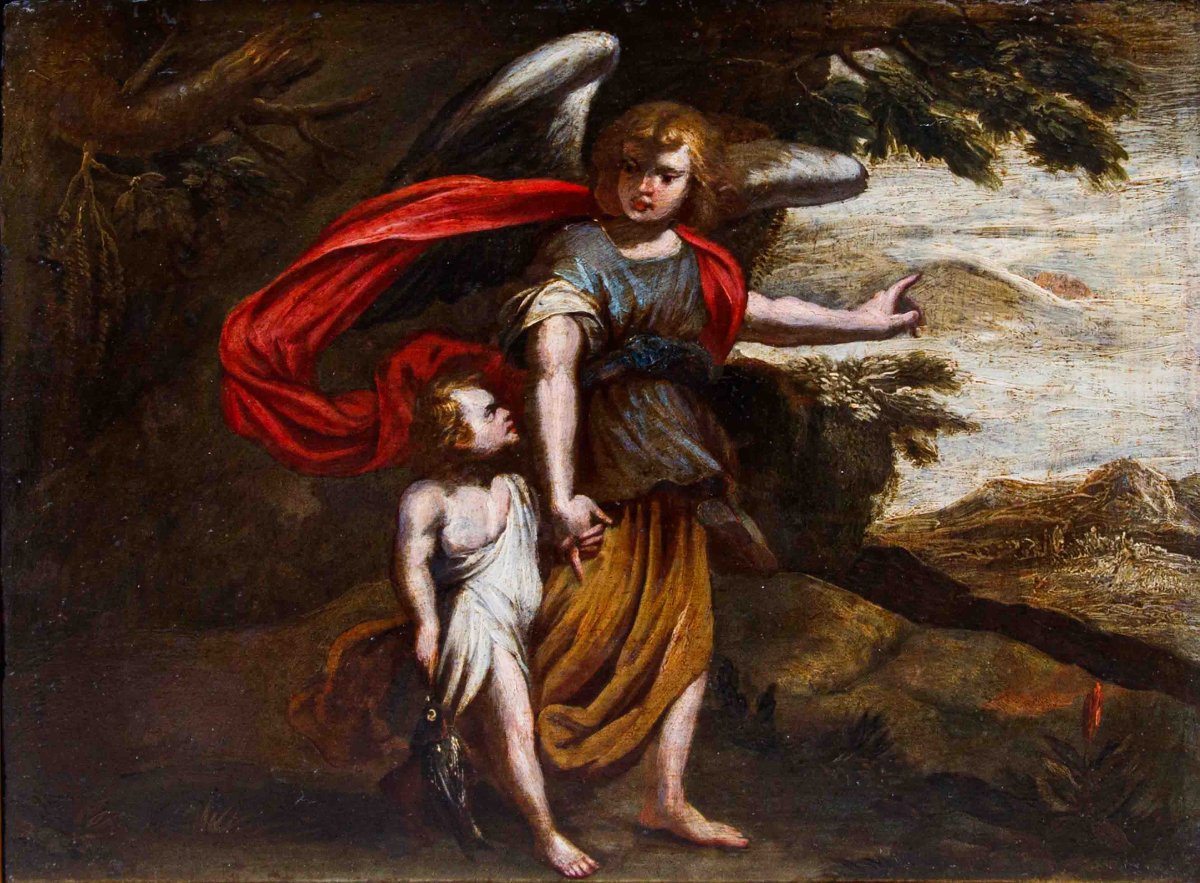
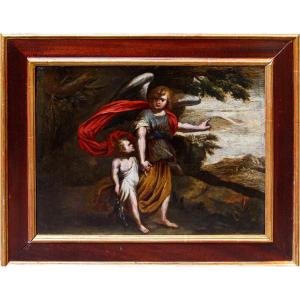


Veronese School, 17th Century, Tobiolo And The Angel
Veronese School, 17th century
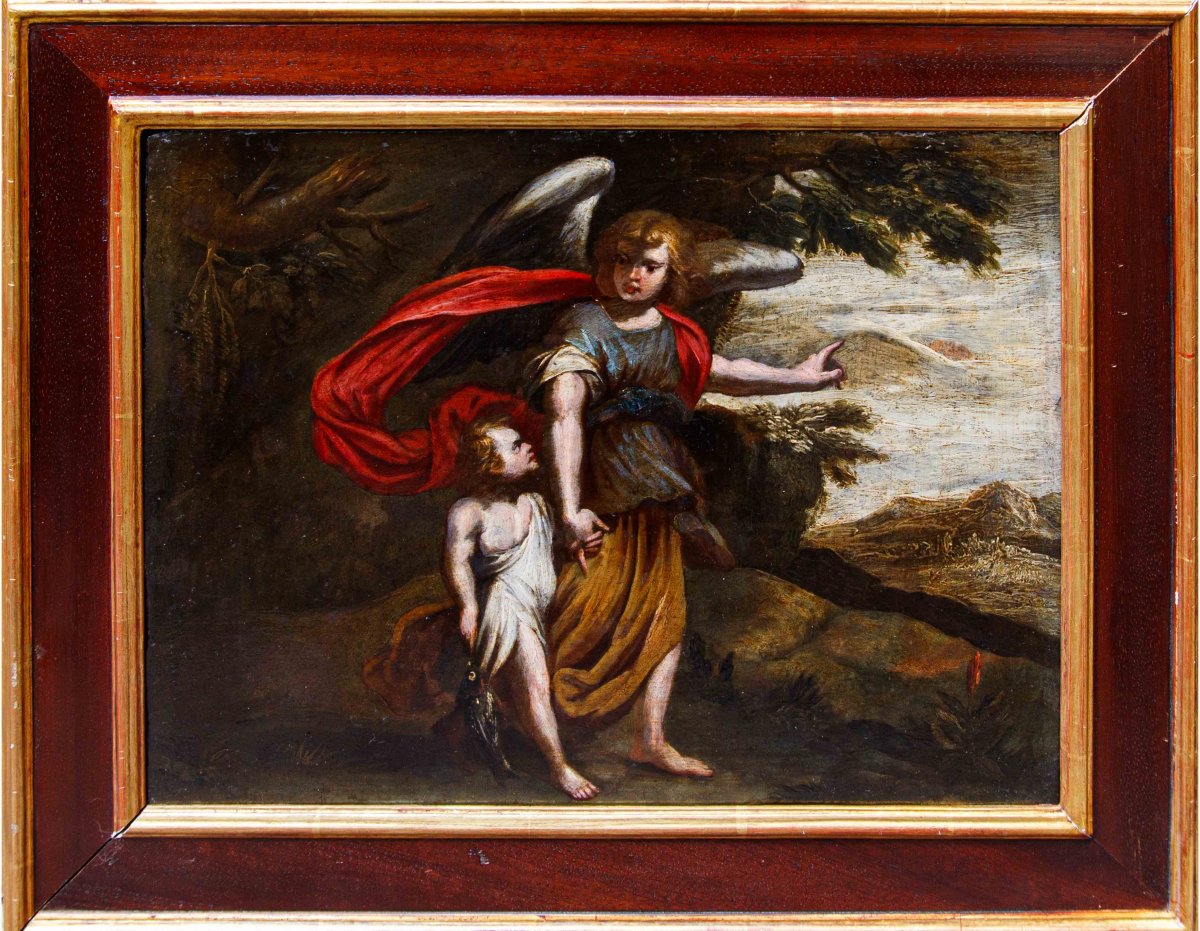
Tobiolo and the Angel
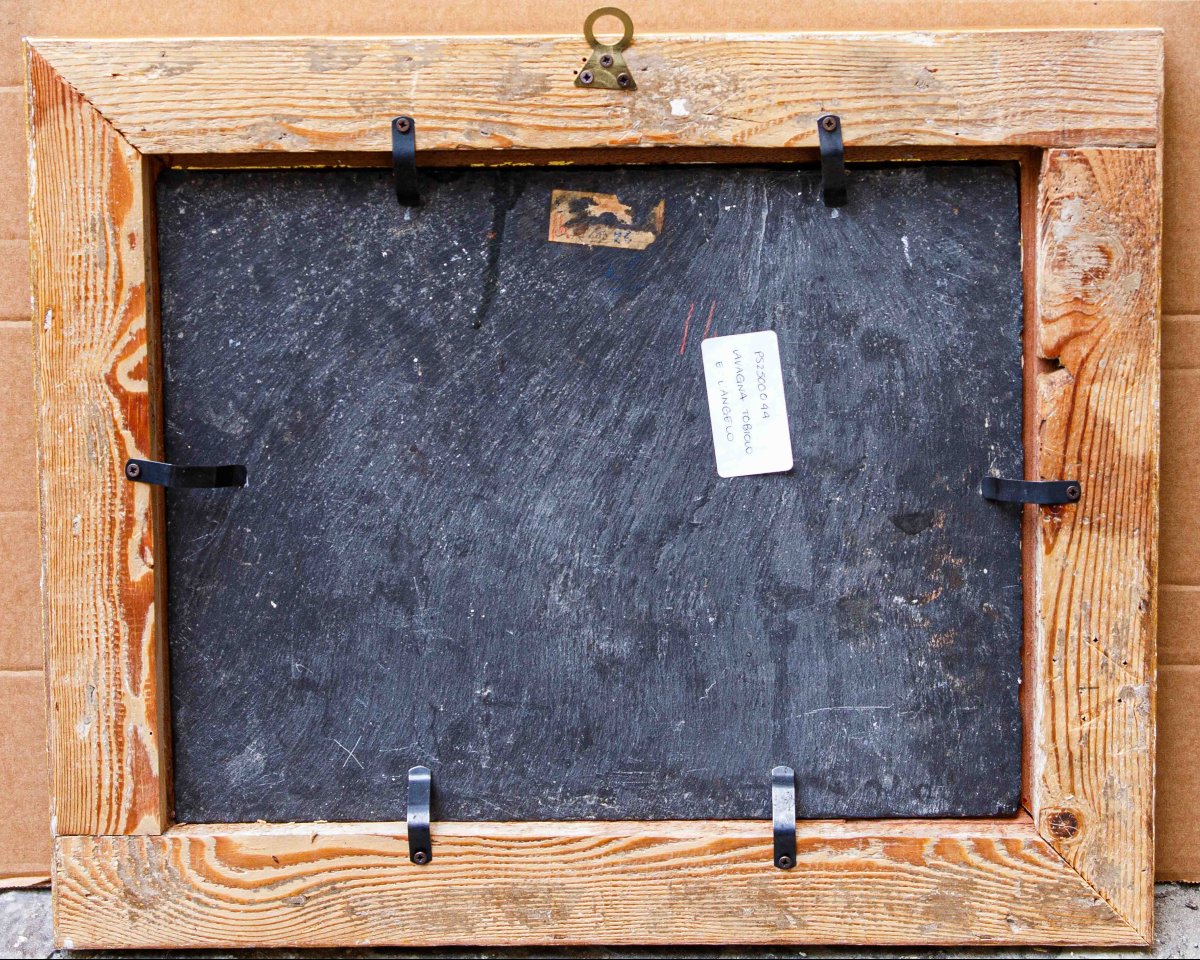
Oil on slate, 26 x 37 cm
With frame, 29.5 x 39.5 cm
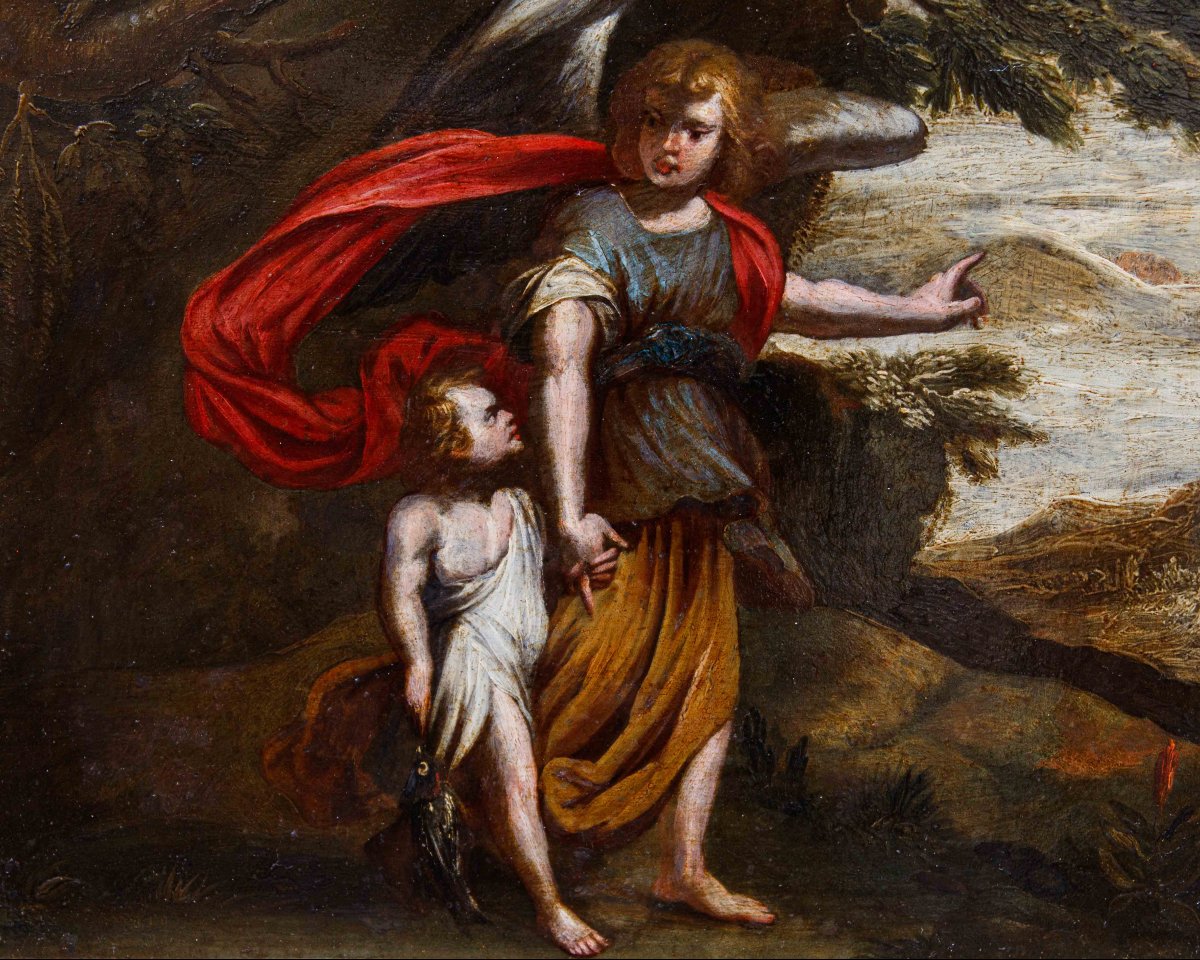
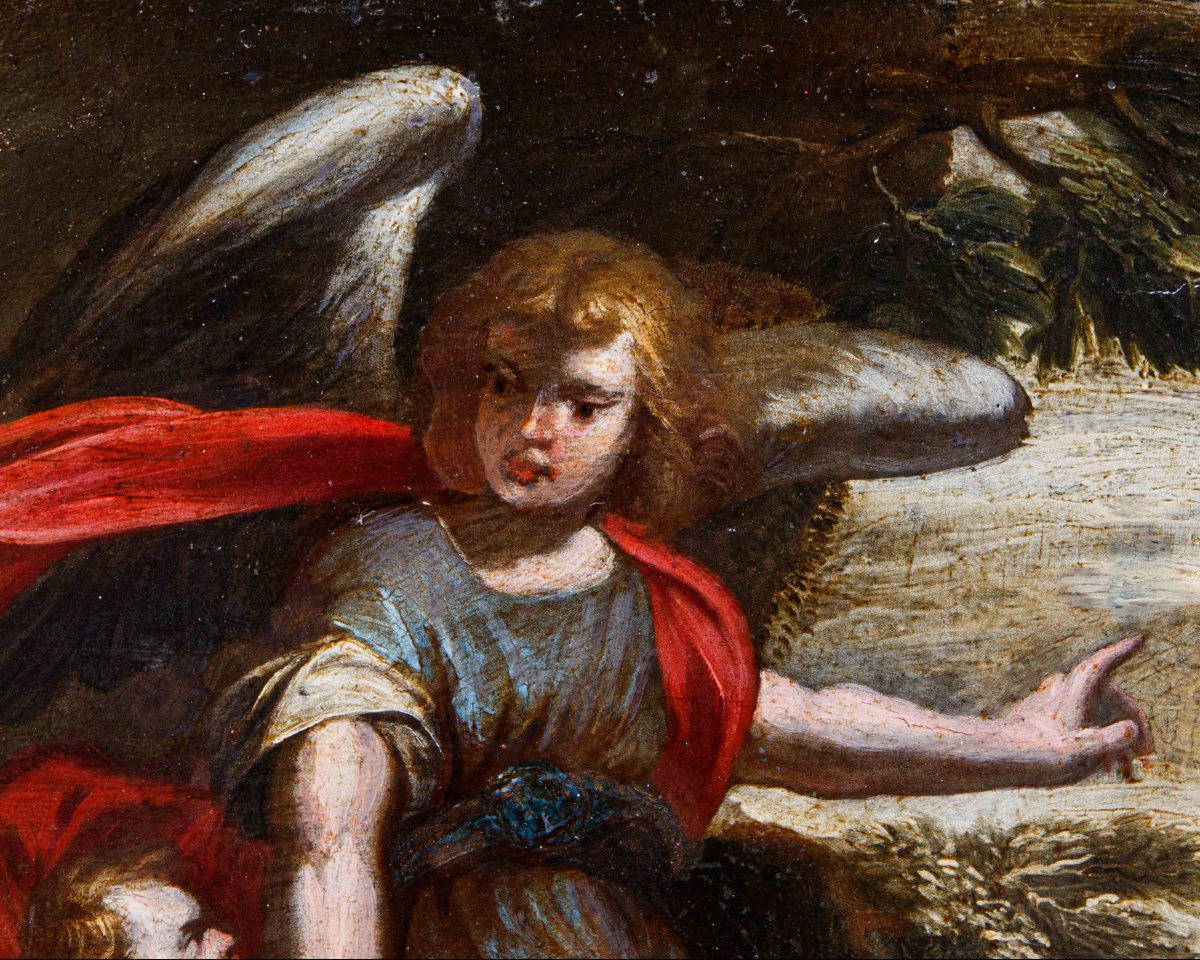
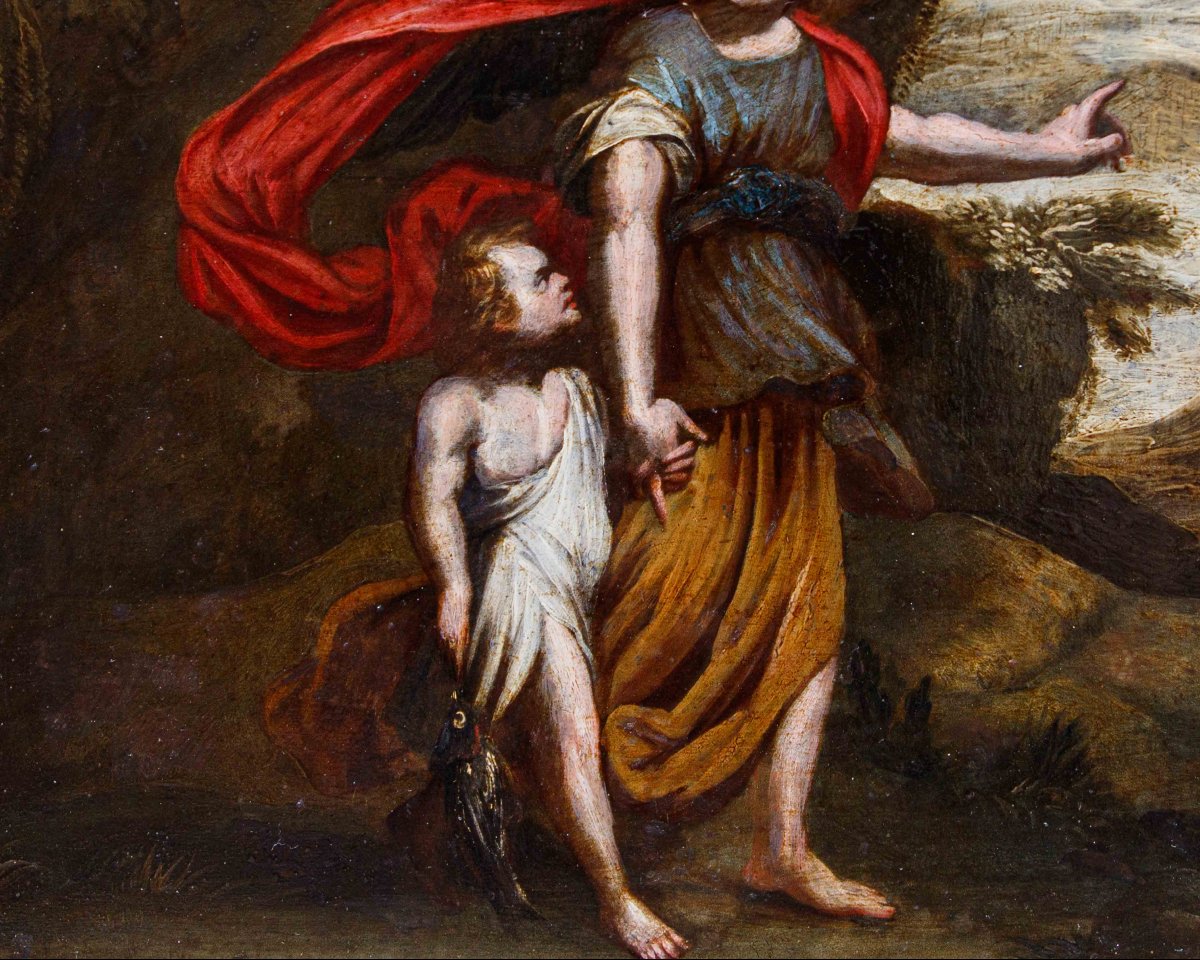
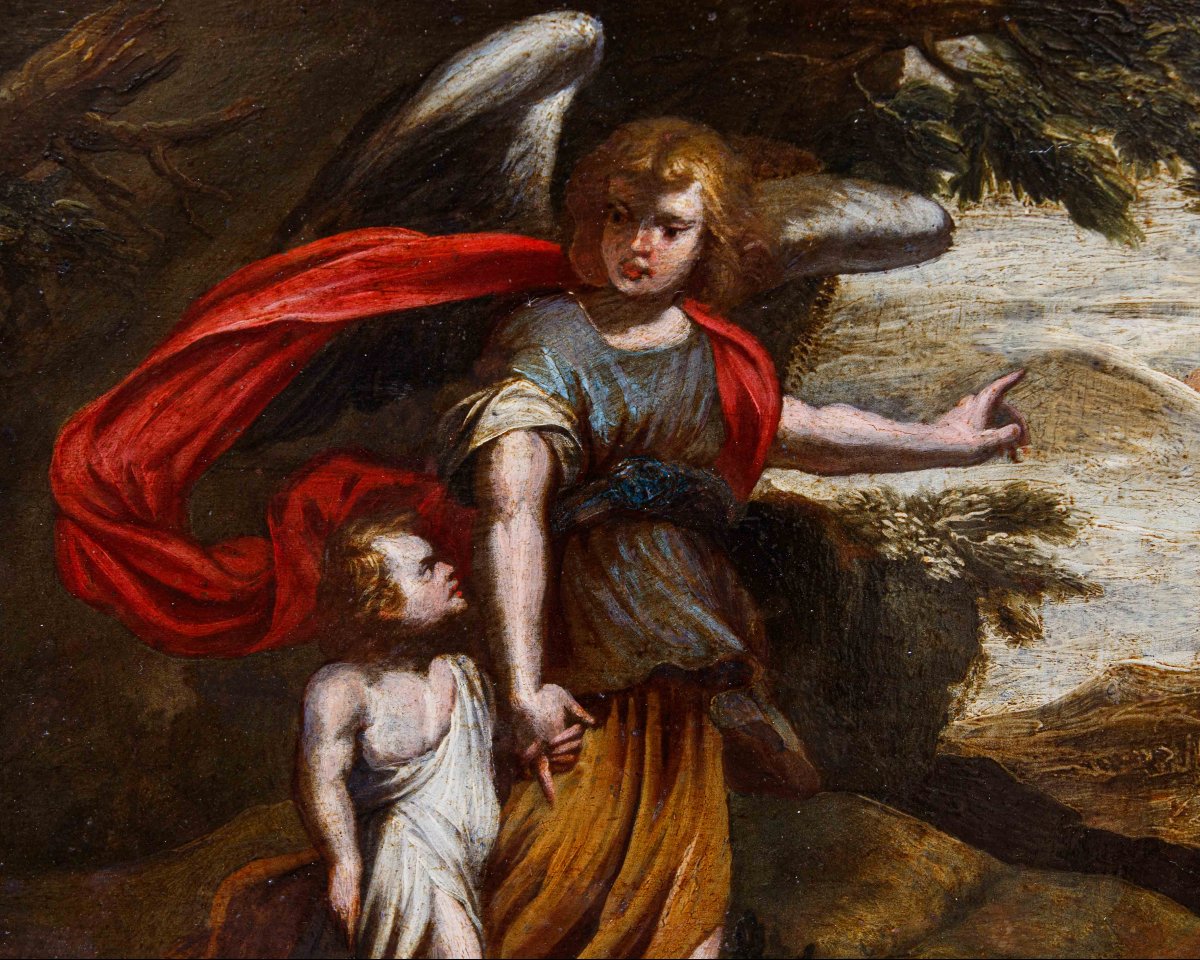
The biblical story of Tobias and the angel has inspired countless painters over the centuries: young Tobias encountered Raphael, who did not, however, appear as an angel, and set out on a journey with him and his little dog. When they reached the Tigris River, Tobit wanted to take a bath; however, a fish darted out of the water and tried to devour his foot. Encouraged by Raphael, Tobit managed to grab the fish, threw it onto the bank, and removed its heart, liver, and gallbladder—which, according to the angel, were remedies against demons and eye diseases. And indeed, once he returned home, Tobiolo anointed his father’s eyes with the fish’s gall, and his father miraculously regained his sight. In this version as well, the young man is depicted holding a fish as he walks, guided by the archangel, through a wild landscape devoid of any other human presence. Among the most characteristic elements of the subjects in works from the Veronese school are carpets in velvety colors, drapery bathed in intense light, refined embroidery along the hems, and the exquisite weaves of the fabrics. Among the natural elements, we find the typical backgrounds featuring natural landscapes rich in chromatic nuances, such as hills covered in lush vegetation, plant life, and more barren hills in the distance. The bright, luminous colors also align with the teachings of the Veronese school—and thus the Venetian school as well—although the chiaroscuro contrasts are more pronounced here in backlit areas. The painting’s extremely vibrant and reflective effect is undoubtedly enhanced by the medium: slate. Painting on marble or slate is quite rare, but produces exceptionally striking effects. The rarity of large-scale figurative works painted on stone stems primarily from the weight of the stone material, which is far greater than that of a wooden panel or canvas. The use of this support also became established in Veneto during the 16th century, to the extent that even great artists of the caliber of Titian and Sebastiano del Piombo tried their hand at creating works on this type of support. An example from the Veronese school is Giovanni Battista Amigazzi’s *The Judgment of Solomon*, by a painter of the Veronese school active between the 16th and 17th centuries; but the tradition of painting on slate can also be found in the collections of Palazzo Maffei and the Castelvecchio Museum, which contain numerous examples of paintings on slate by Veronese artists.
Period: 17th century
Style: Other Style
Condition: Good condition
Material: Oil painting on copper
Width: 37
Height: 26
Reference (ID): 1830105
Availability: In stock