

Biscuit Porcelain Busts Of Alexandre Brongniart - Jean-antoine Houdon - 20th
Artist: Jean-antoine Houdon
Antiques - Decorative Arts - 20th century
Dimensions: 23 x 15 cm, height: 42 cm
Materials: Porcelain biscuit - Alabaster
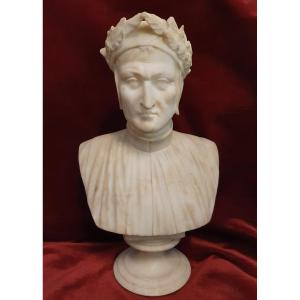
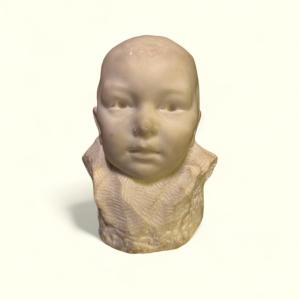
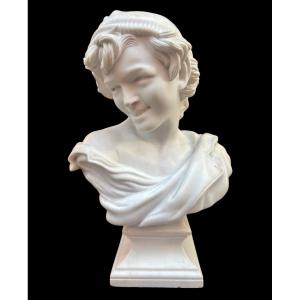
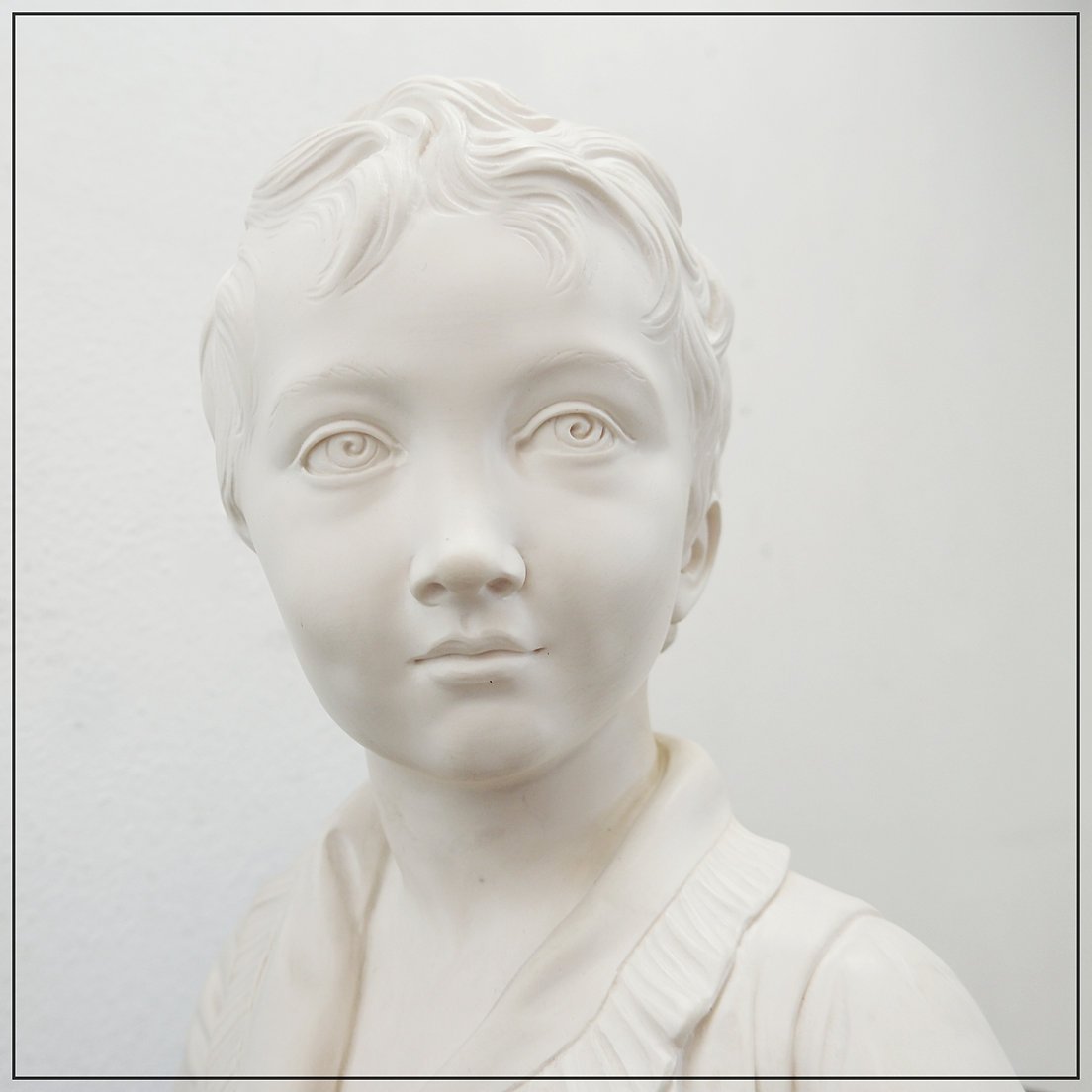
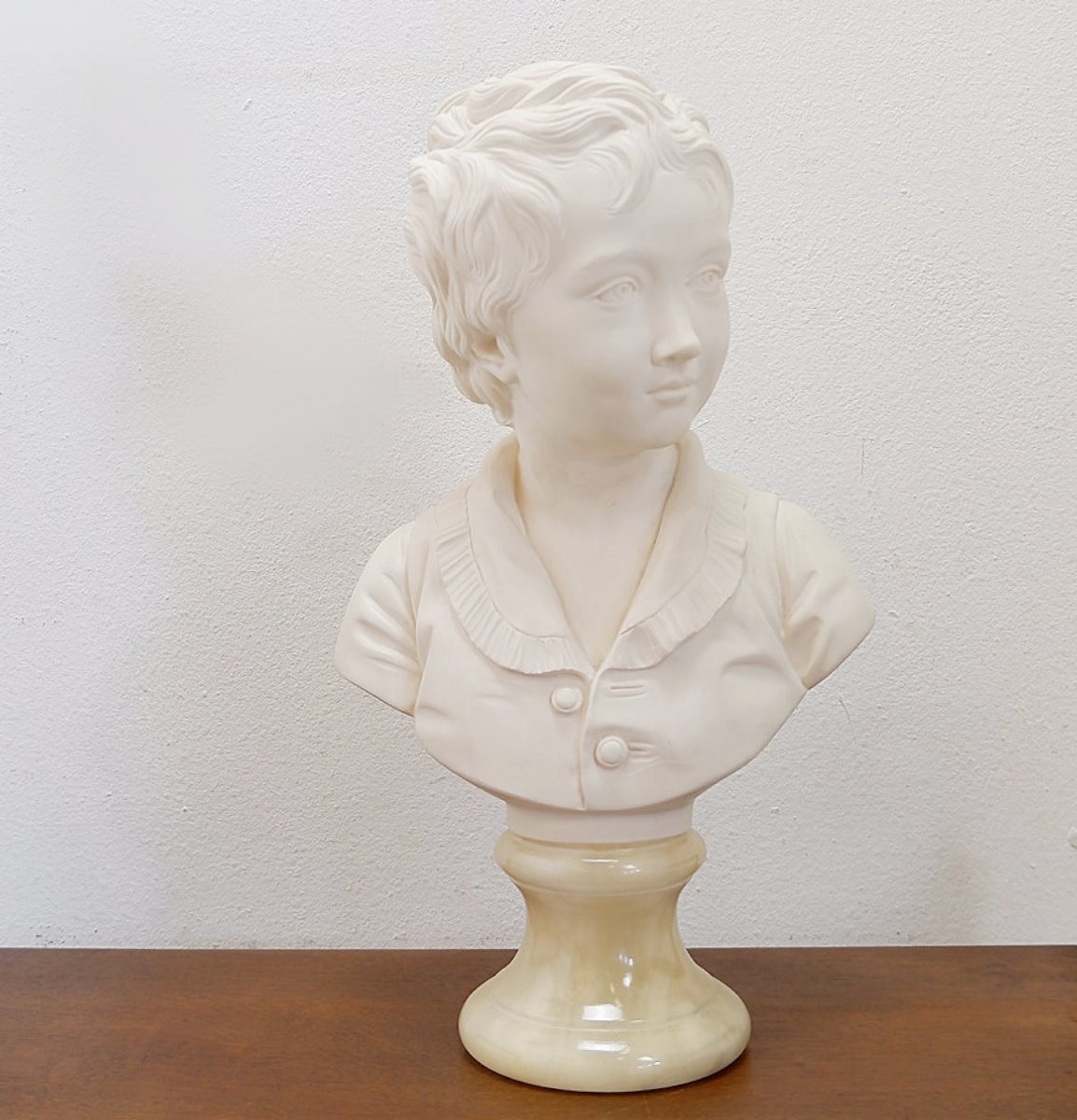
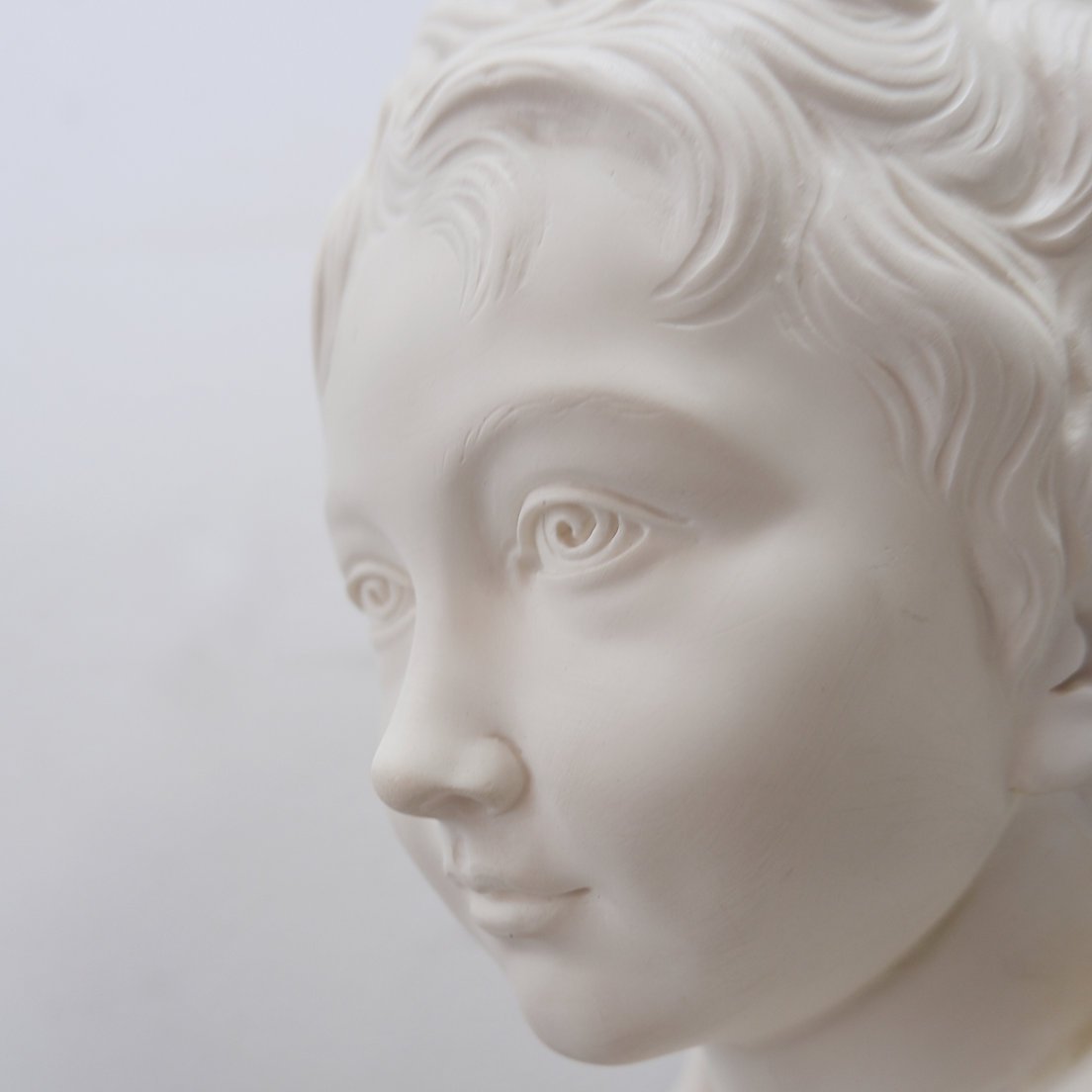
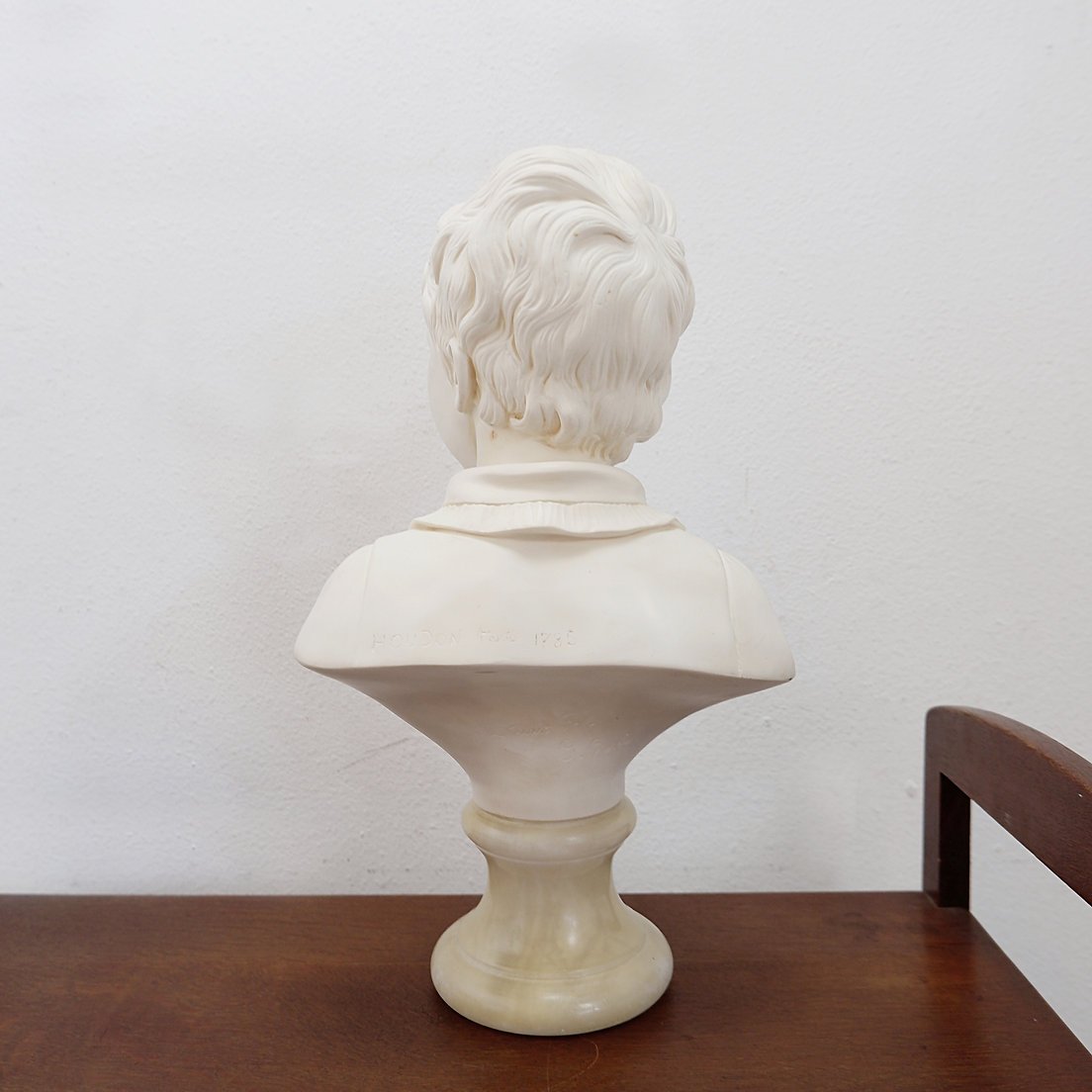
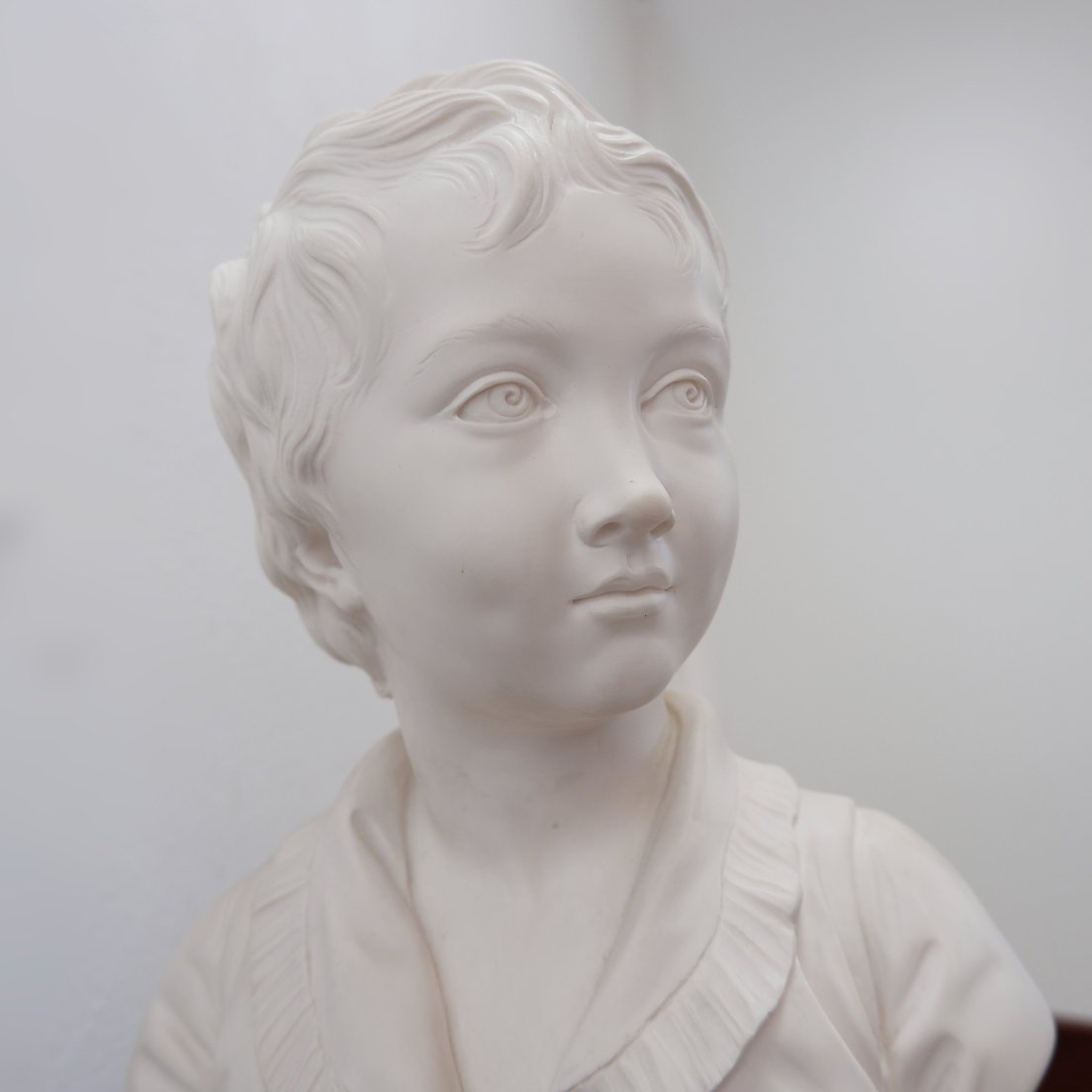
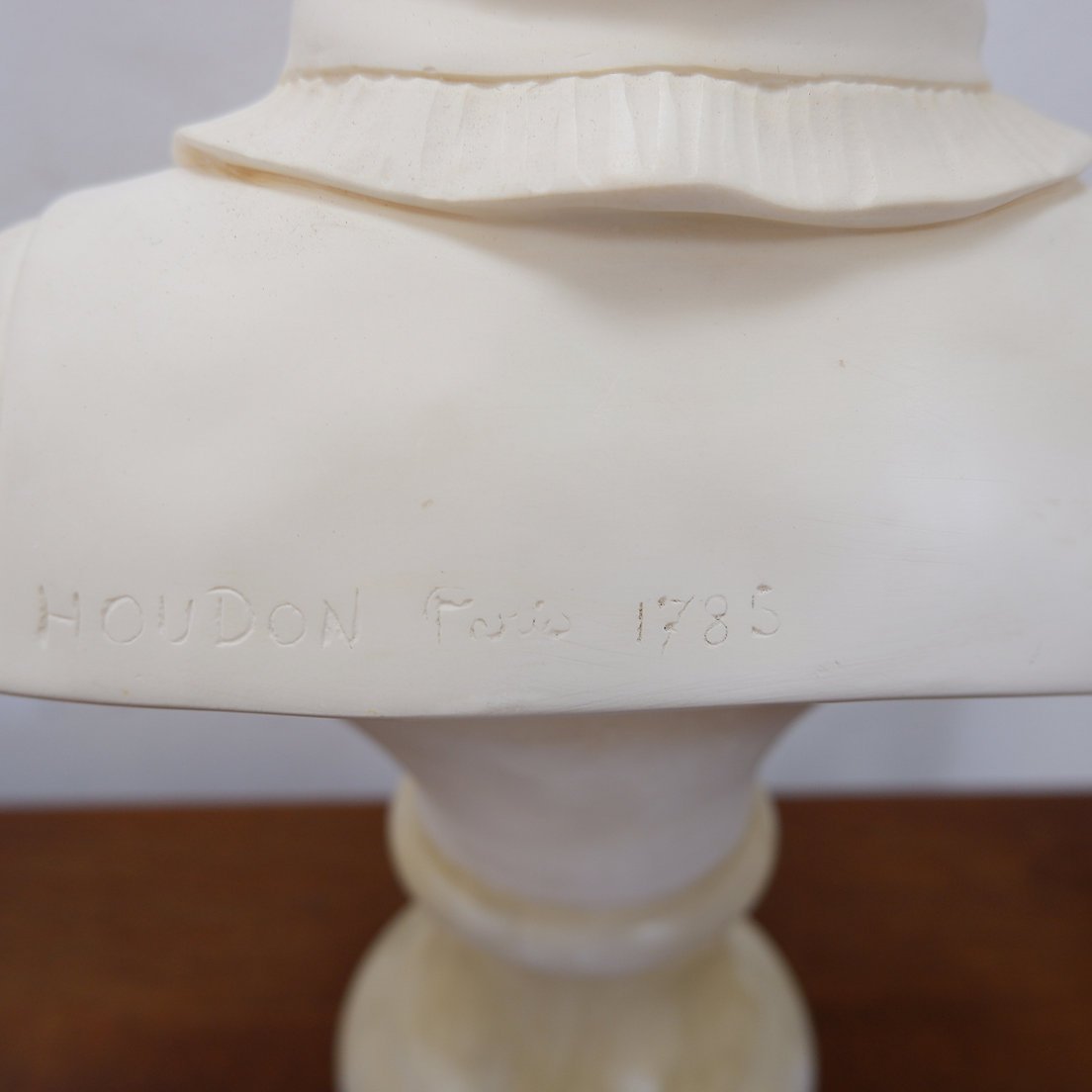
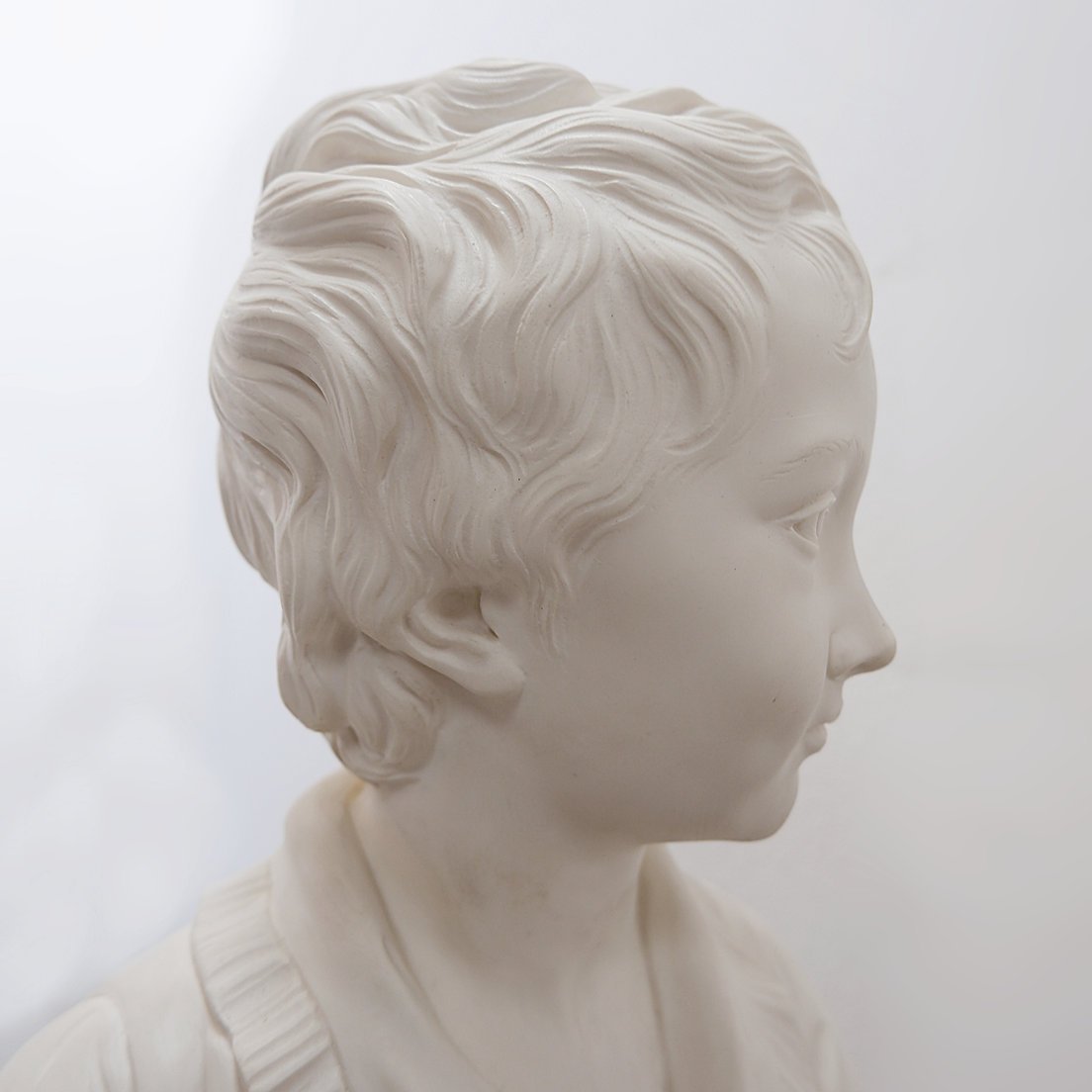
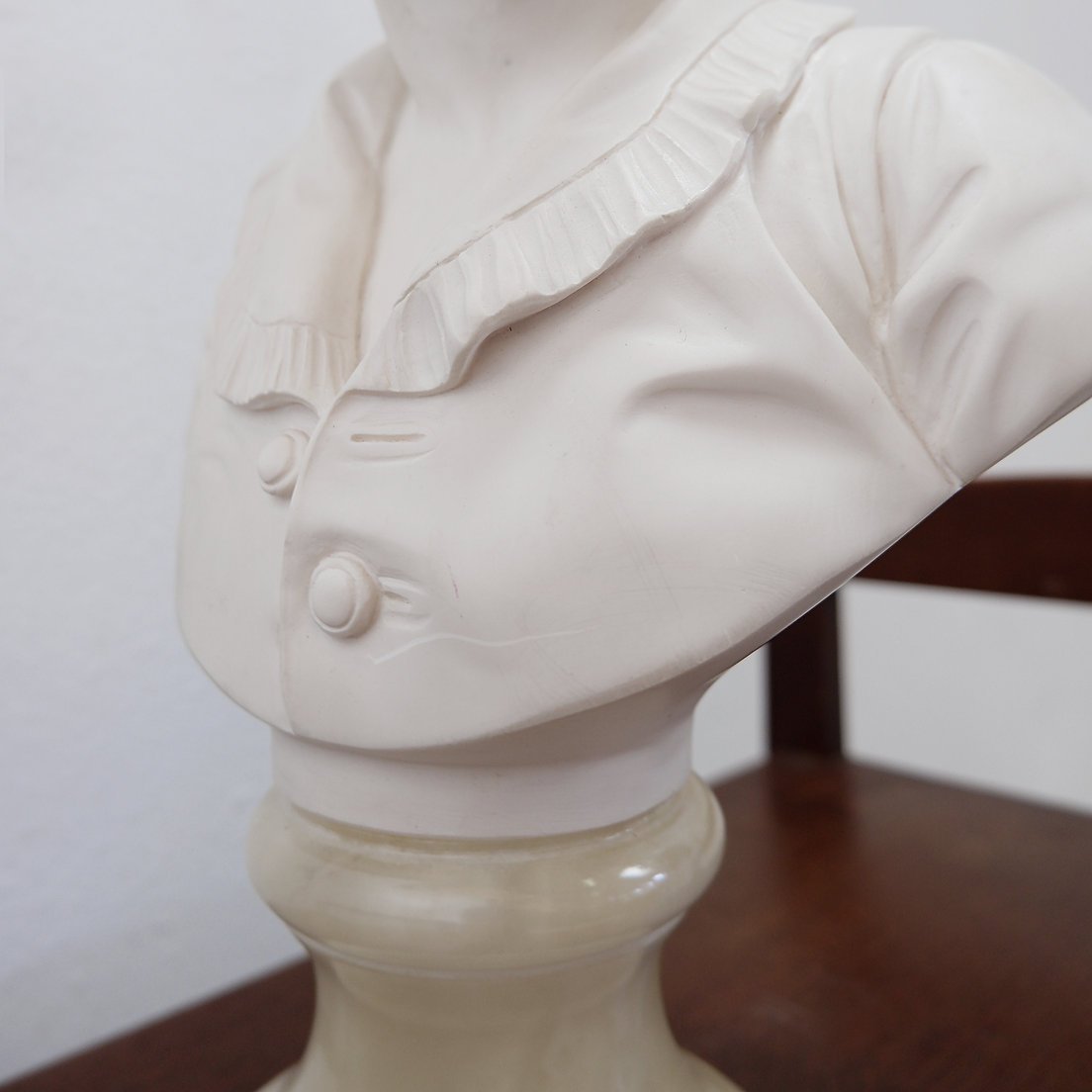
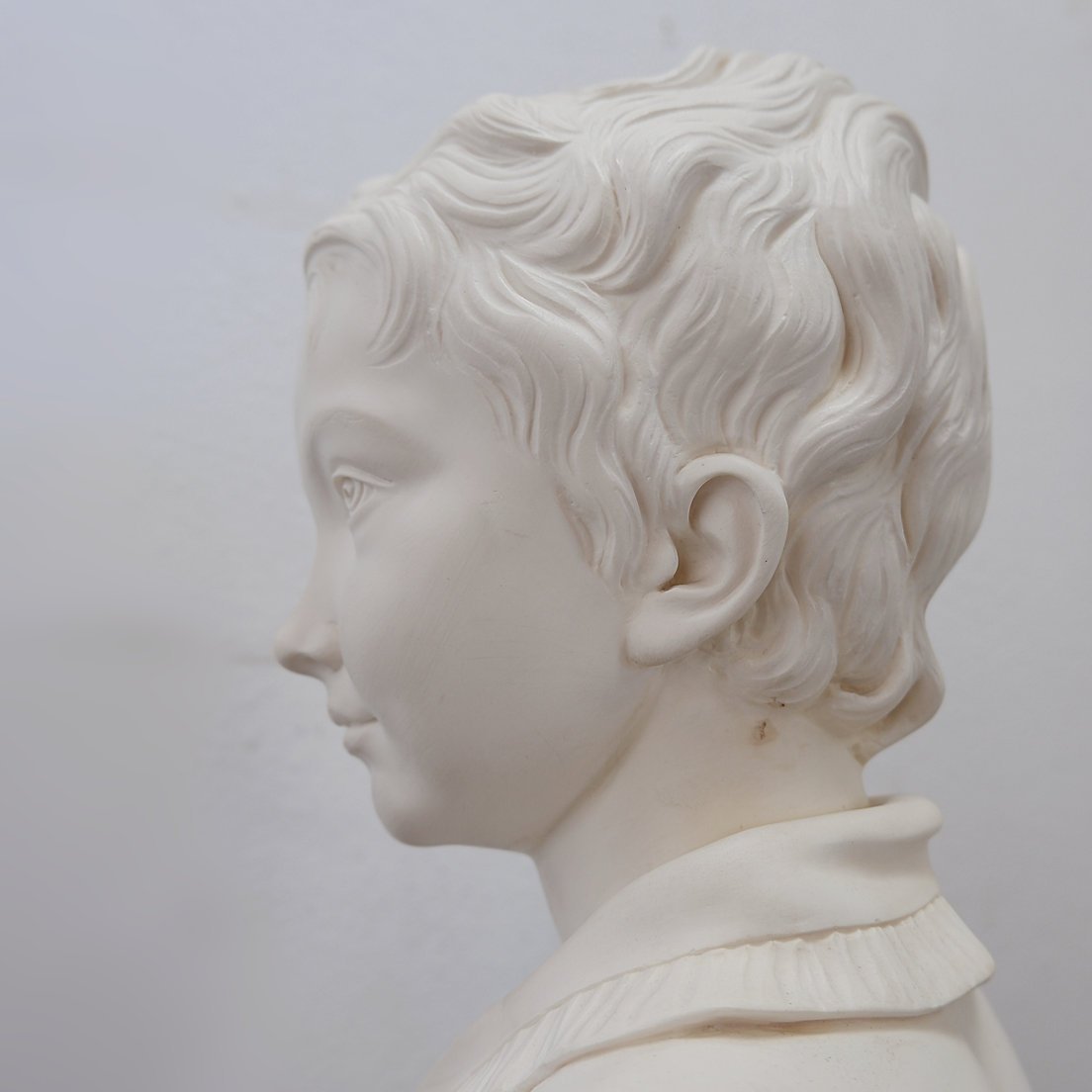
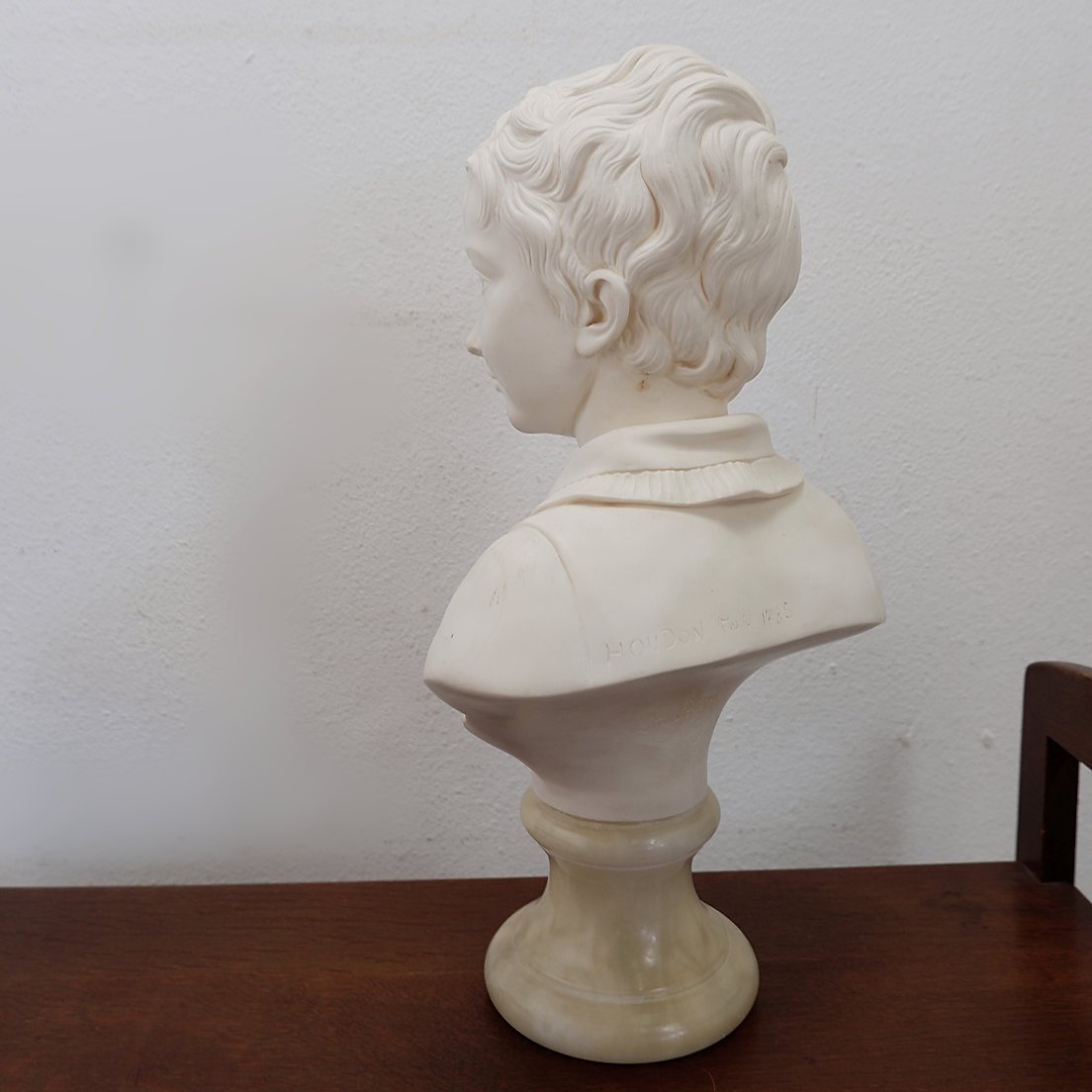
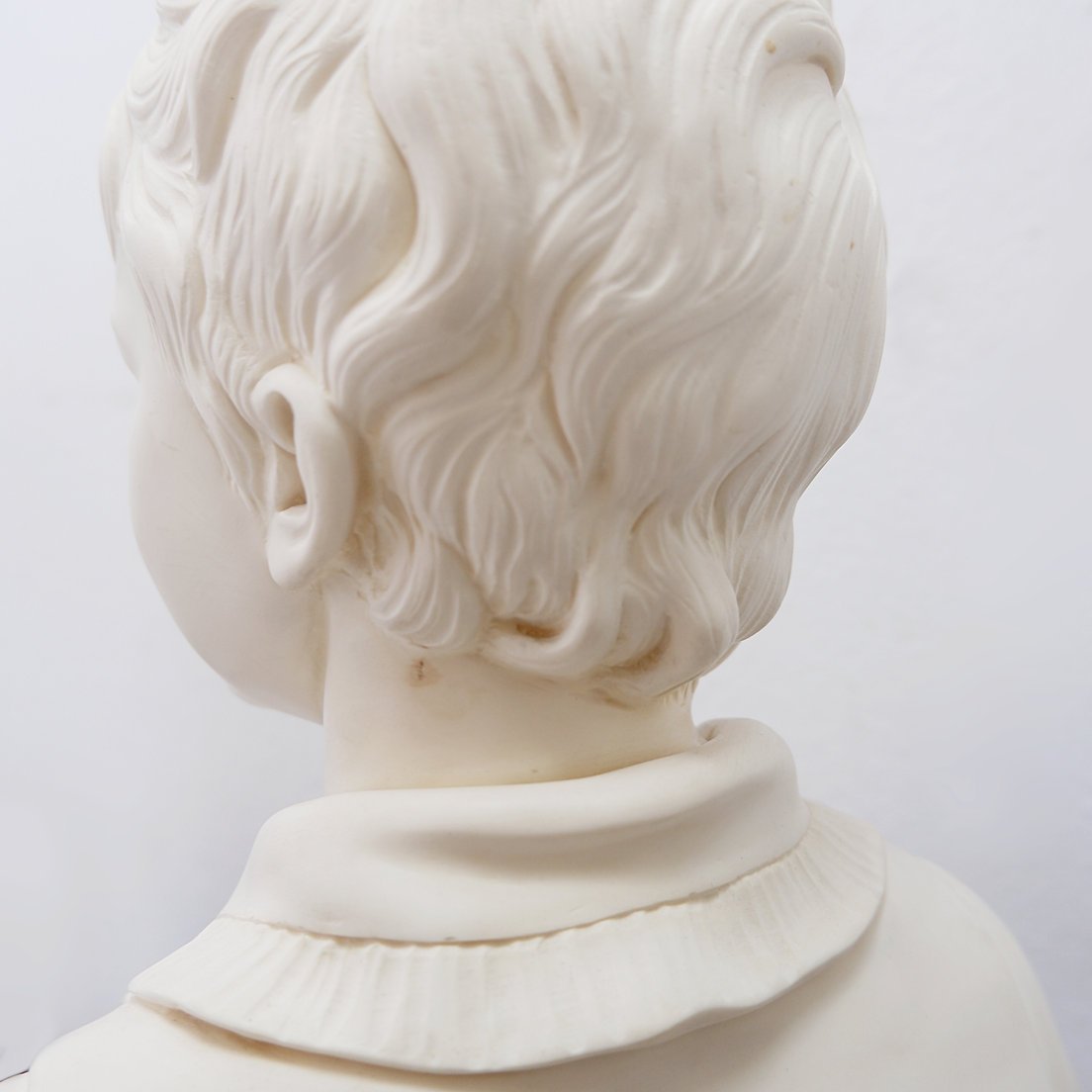
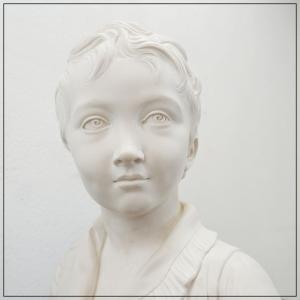
Biscuit porcelain busts resting on an alabaster pedestal, depicting Alexandre Brongniart after the famous sculptor Jean-Antoine Houdon.
Here, Jean-Antoine Houdon demonstrates his remarkable ability to capture the innocence of childhood with great finesse.
The artistic depiction of childhood began to develop in the 1750s and 1760s.
This phenomenon reflects a shift in thinking about childhood, illustrated in particular by the publication of Jean-Jacques Rousseau’s *Émile* in 1762. A student at the Royal Academy, a boarder at the École des élèves protégés (1761–1764), and later at the French Academy in Rome (1764–1768), Jean-Antoine Houdon was admitted to the Royal Academy in 1769 and became a full member in 1777, after presenting his famous *Morpheus*, now housed in the Louvre Museum. He enjoyed immense success during his lifetime, and his works continued to be reproduced throughout the 20th century.
This bust was created around 1970.
It rests on an alabaster pedestal.
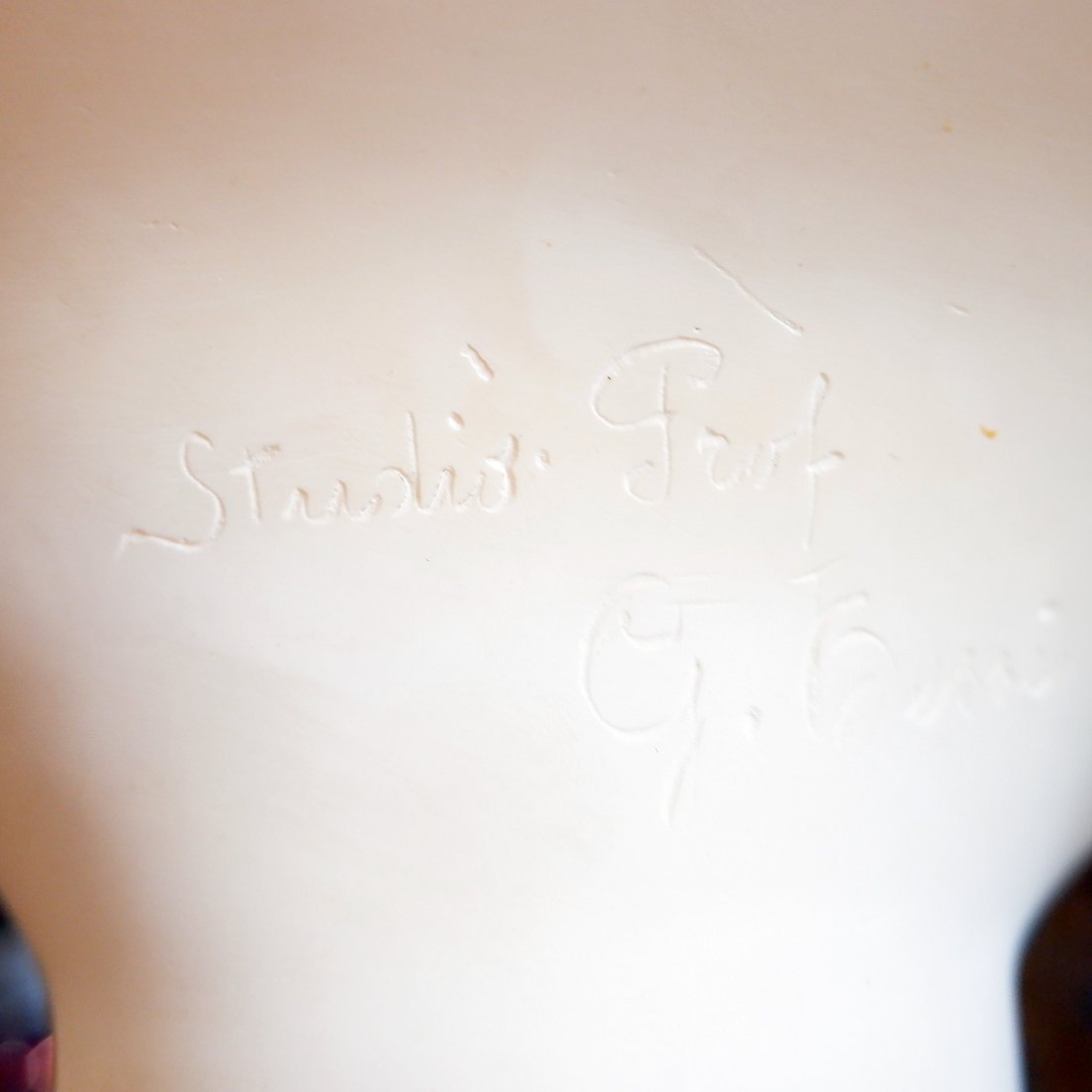
The reproduction workshop: Professor Giuseppe Bessi (1857–1922) was a renowned Italian sculptor based in Volterra, a region famous for its alabaster. The “Studio” signature: Given the great success of his sculptures, his studio produced numerous high-quality replicas signed “Studio Prof. G. Bessi” throughout the 20th century.
Dimensions: 23 x 15 cm, height: 42 cm
Materials: Porcelain biscuit - Alabaster
Biscuit porcelain busts resting on an alabaster pedestal, depicting Alexandre Brongniart after the famous sculptor Jean-Antoine Houdon.
Here, Jean-Antoine Houdon demonstrates his remarkable ability to capture the innocence of childhood with great finesse.
The artistic depiction of childhood began to develop in the 1750s and 1760s.
This phenomenon reflects a shift in thinking about childhood, illustrated in particular by the publication of Jean-Jacques Rousseau’s *Émile* in 1762. A student at the Royal Academy, a boarder at the École des élèves protégés (1761–1764), and later at the French Academy in Rome (1764–1768), Jean-Antoine Houdon was admitted to the Royal Academy in 1769 and became a full member in 1777, after presenting his famous *Morpheus*, now housed in the Louvre Museum. He enjoyed immense success during his lifetime, and his works continued to be reproduced throughout the 20th century.
This bust was created around 1970.
It rests on an alabaster pedestal.
The reproduction workshop: Professor Giuseppe Bessi (1857–1922) was a renowned Italian sculptor based in Volterra, a region famous for its alabaster. The “Studio” signature: Given the great success of his sculptures, his studio produced numerous high-quality replicas signed “Studio Prof. G. Bessi” throughout the 20th century.
525 €
Period: 20th century
Style: Other Style
Condition: Good condition
Material: Porcelain
Width: 23
Height: 42
Depth: 15
Reference (ID): 1808893
Availability: In stock
Print