

France, Second Half Of The 18th Century, Trompe-l'œil Of A Marble Bas-relief Featuring Cherubs
France, second half of the 18th century
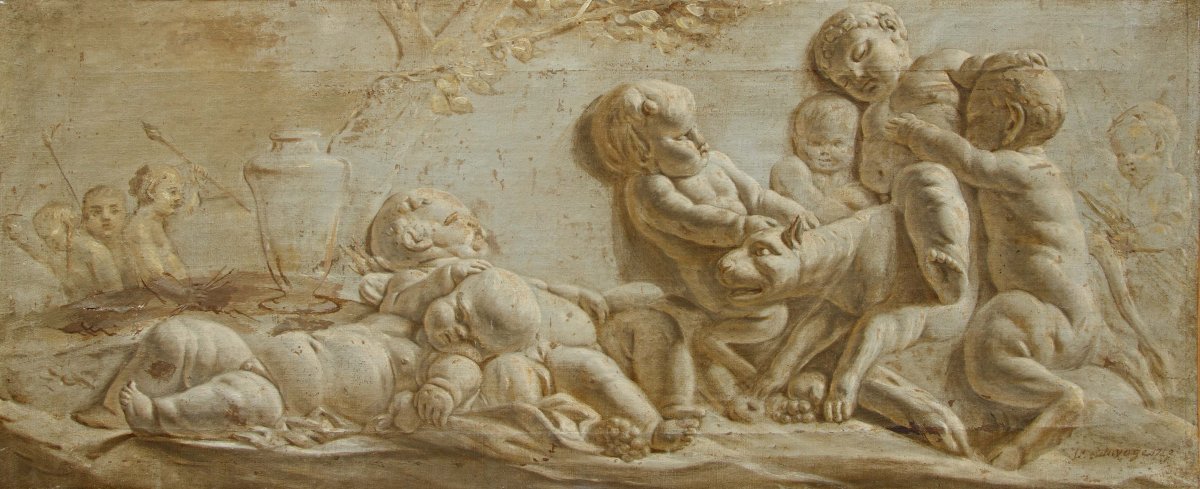
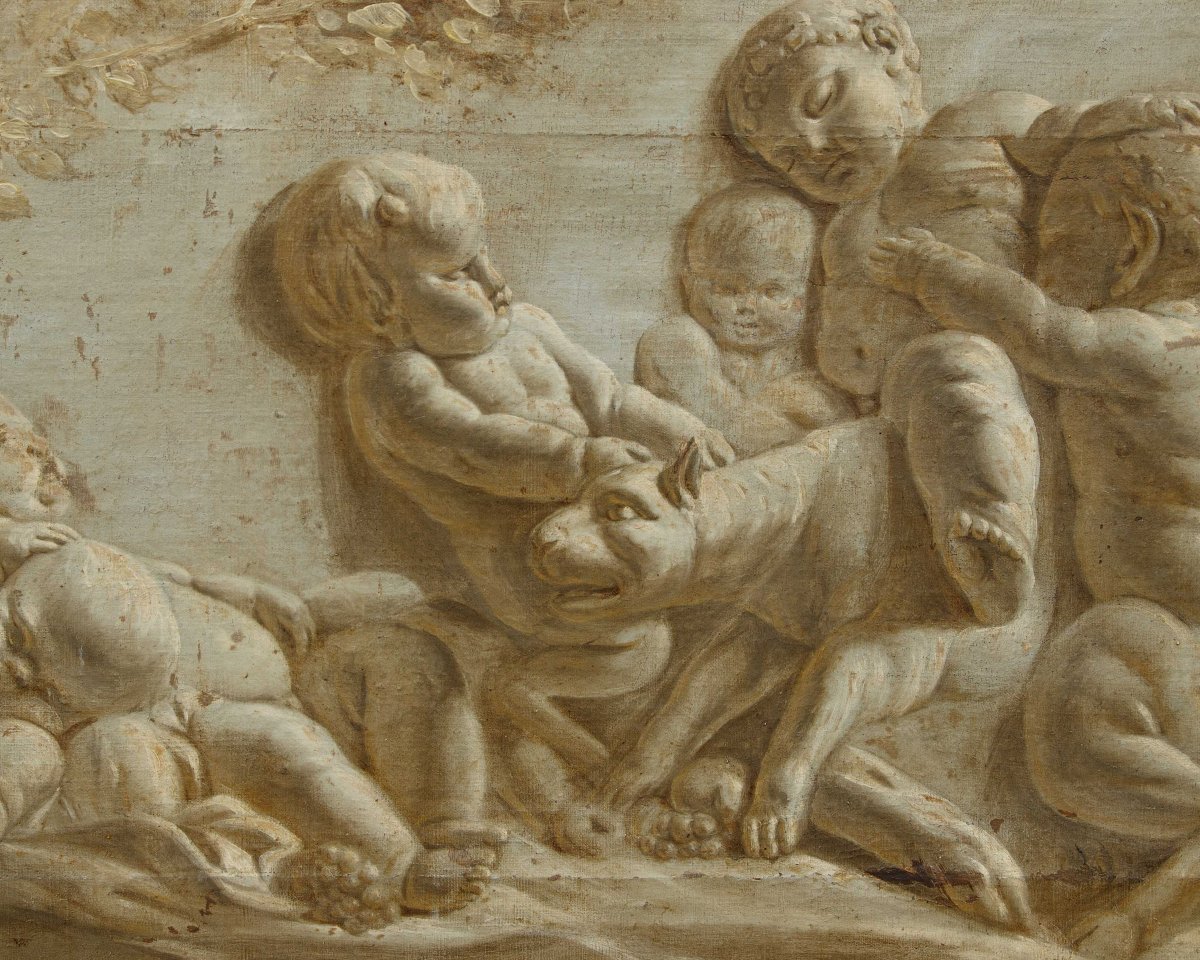
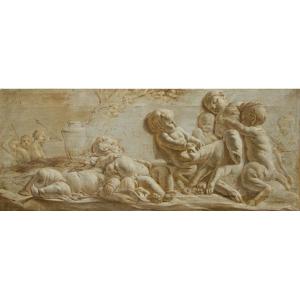
Trompe-l’oeil of a marble bas-relief with cherubs
Oil on canvas, 51 x 116 cm
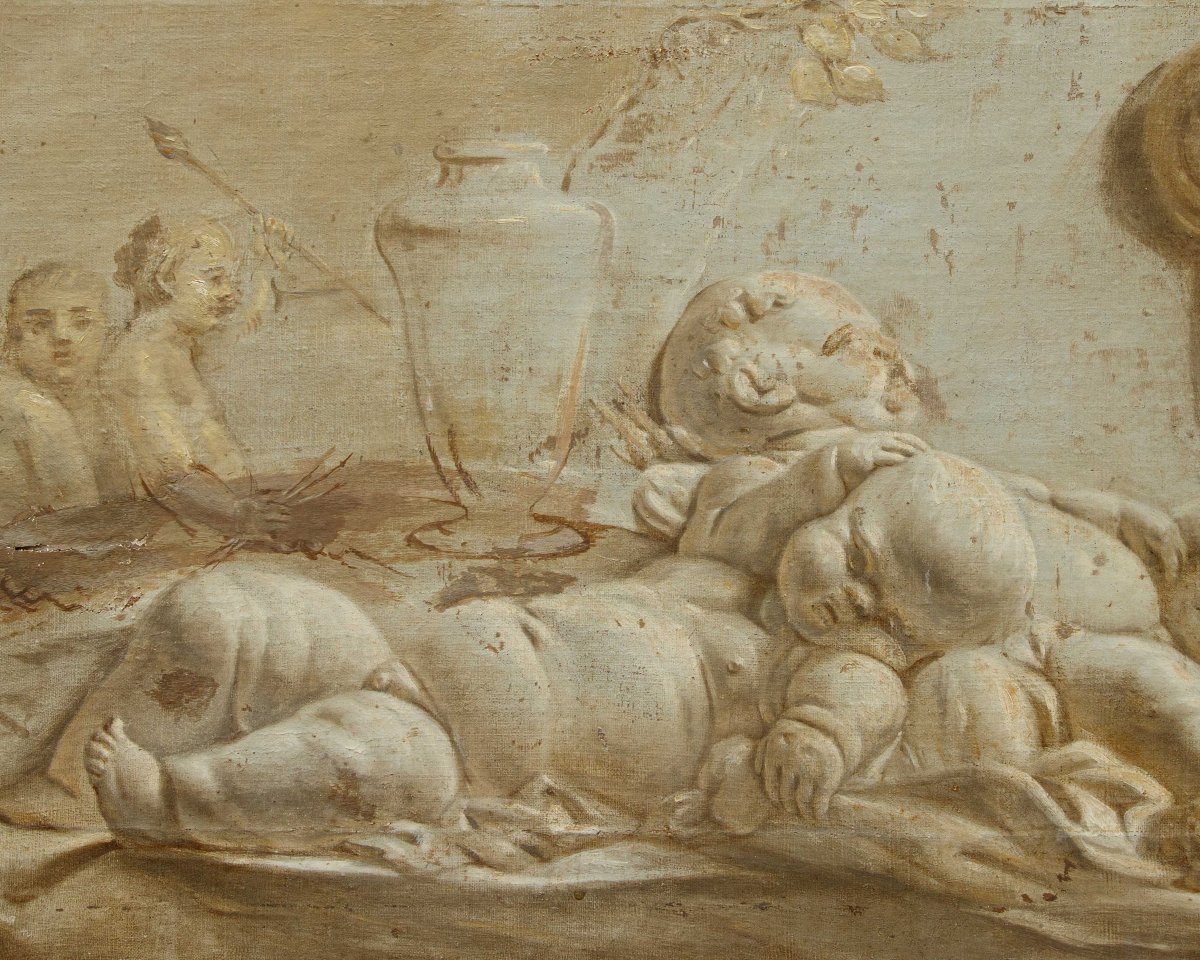
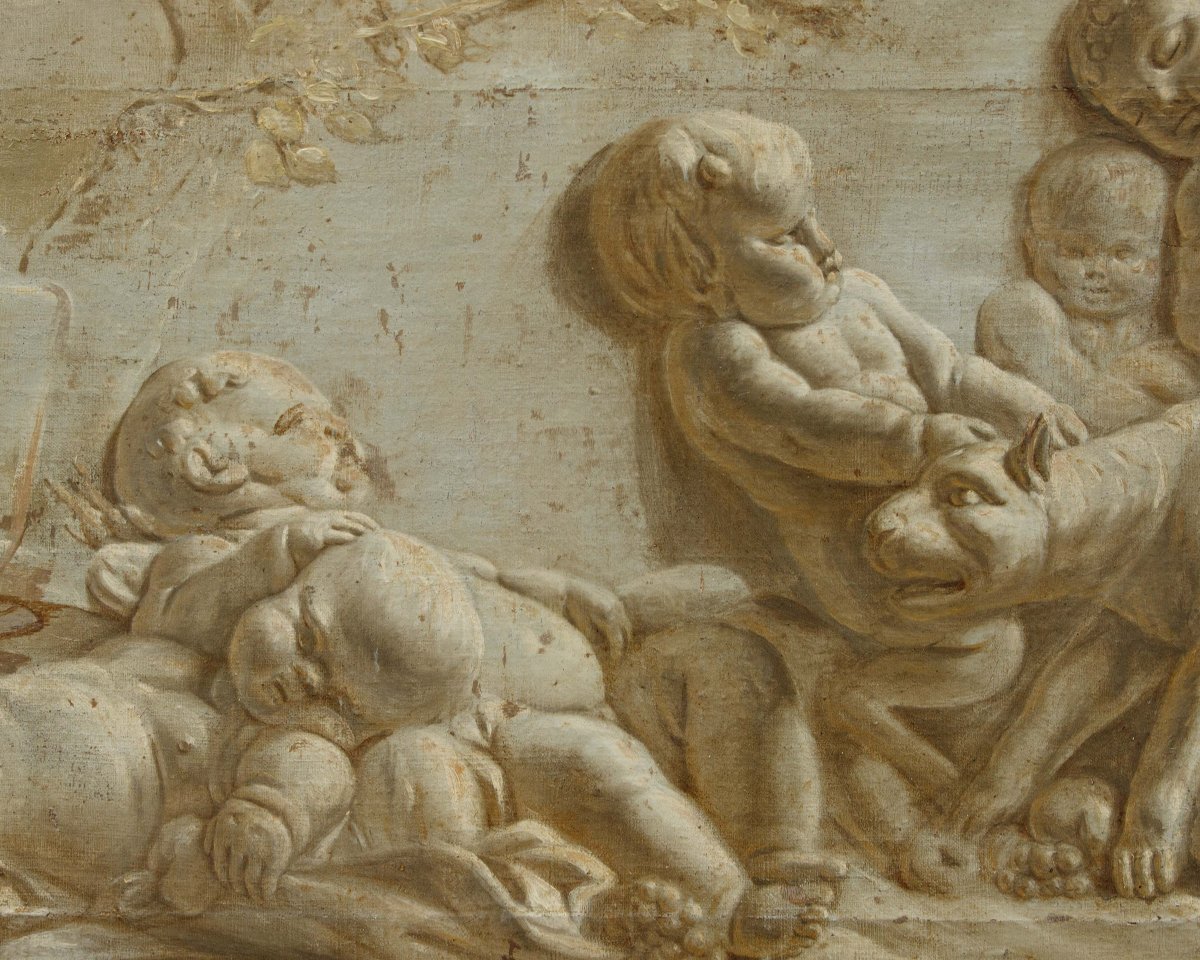
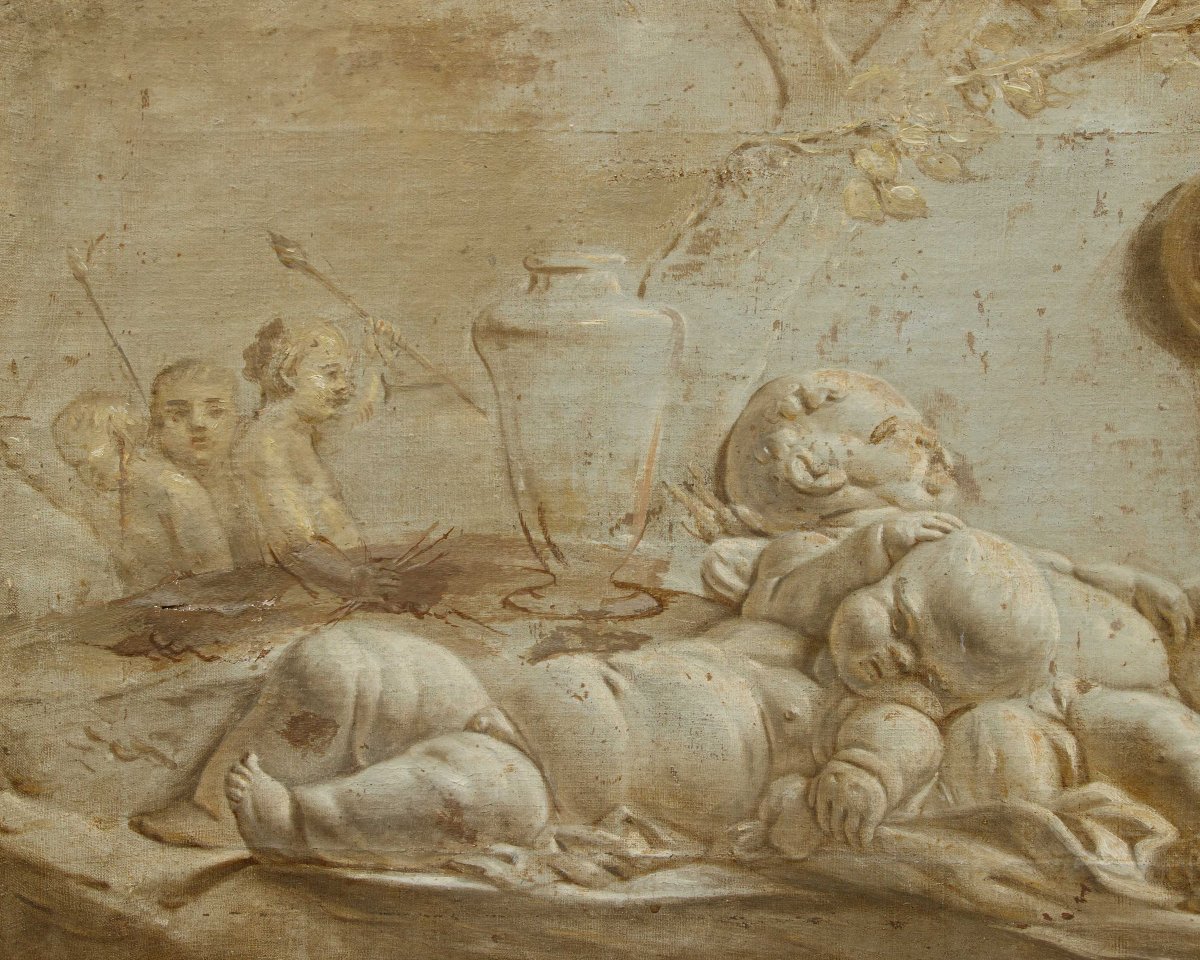
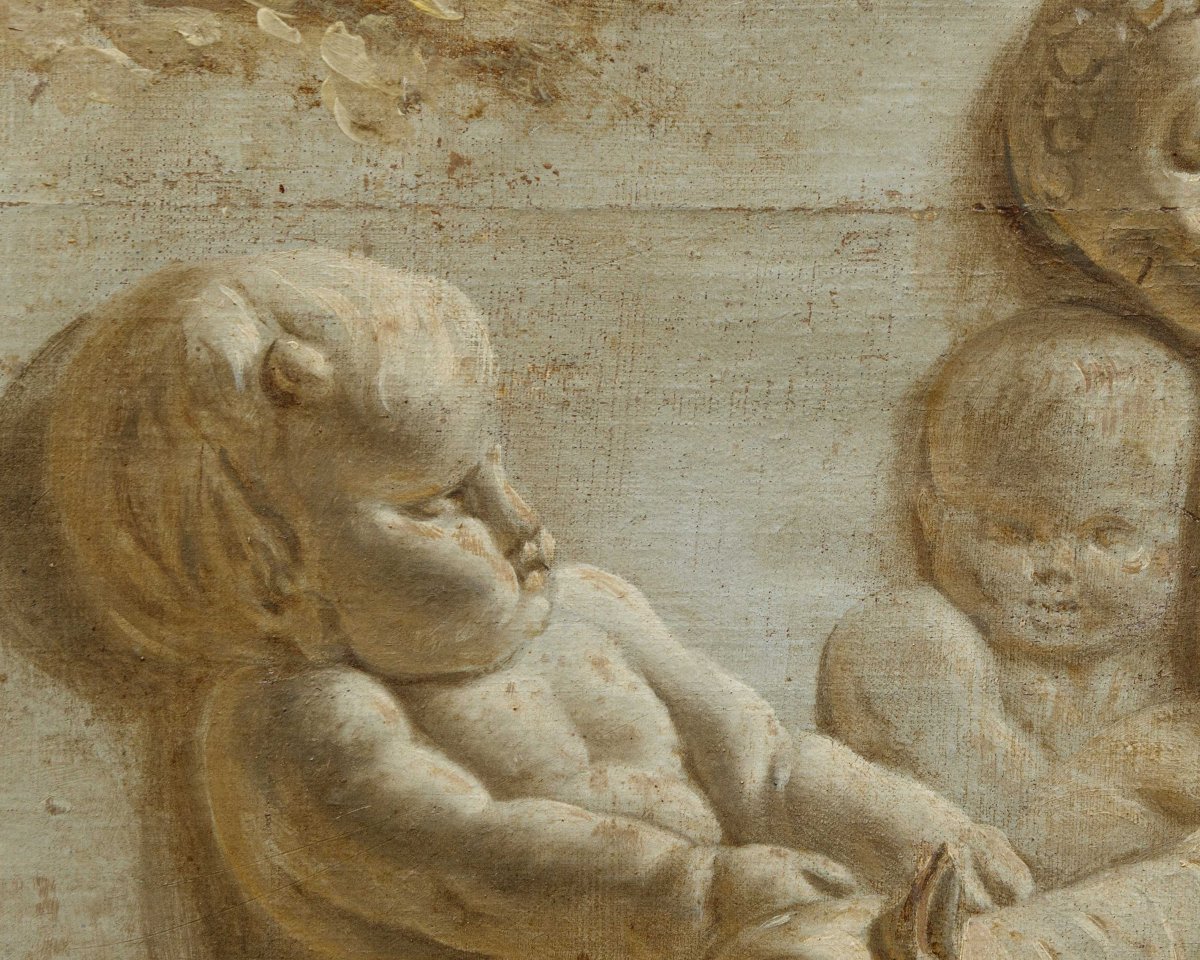
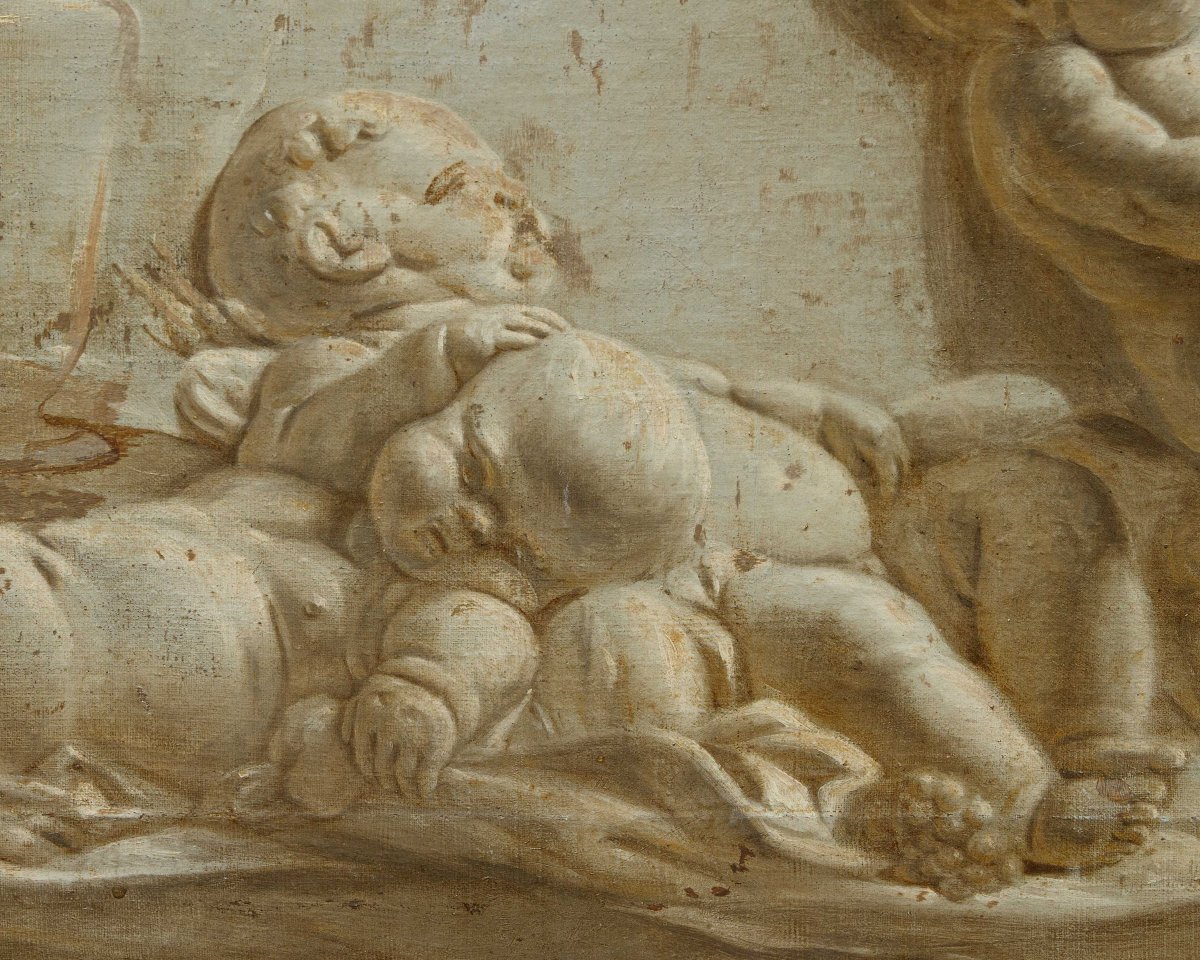
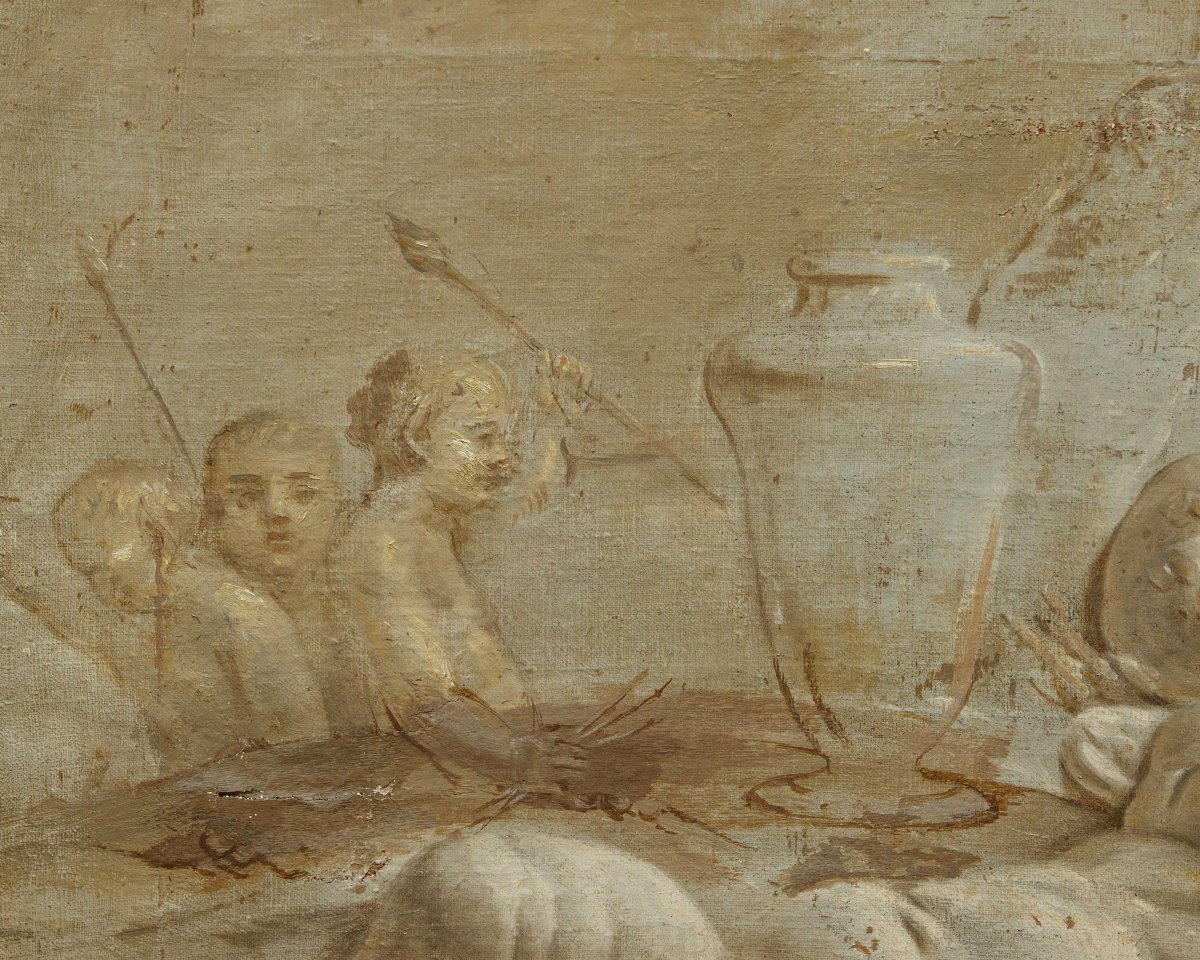
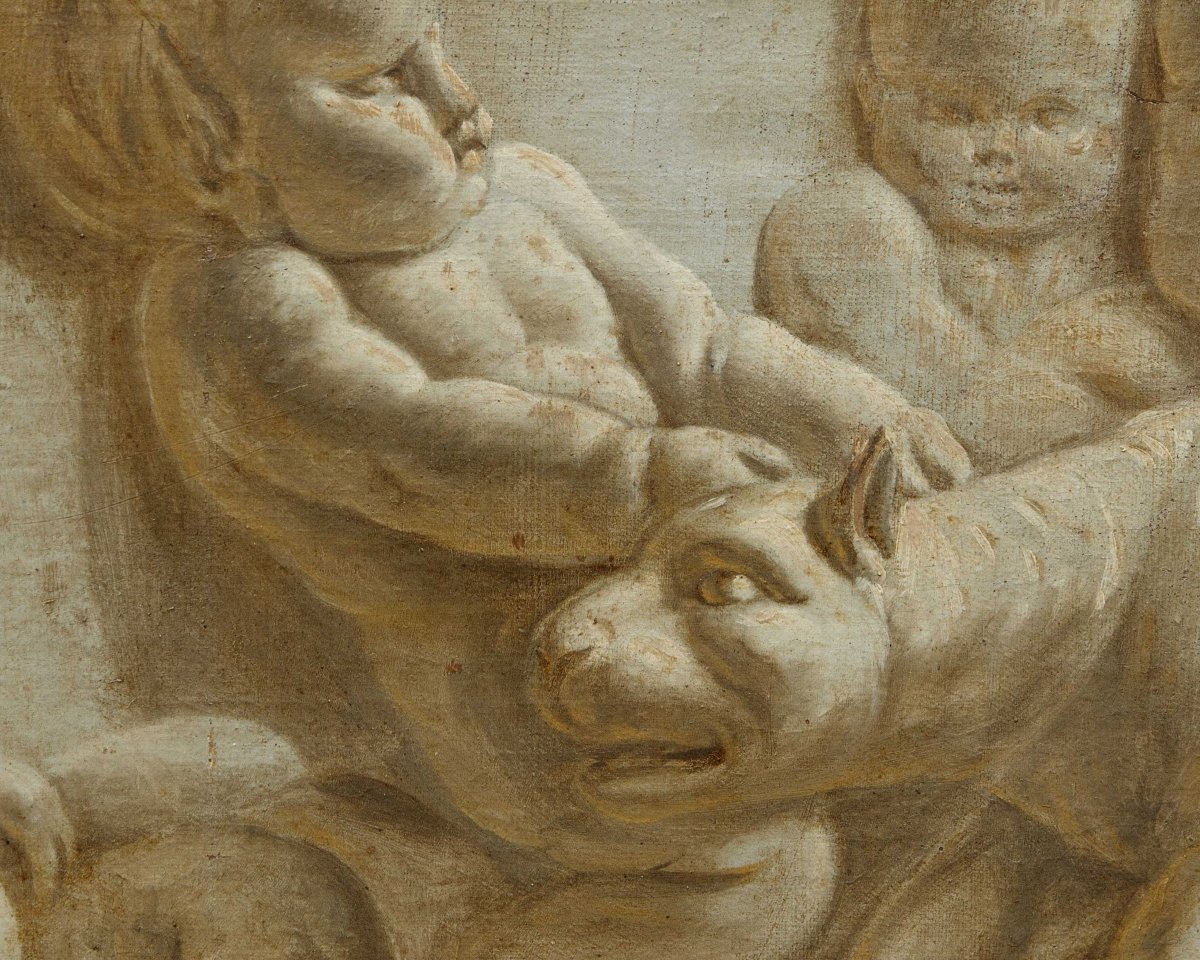
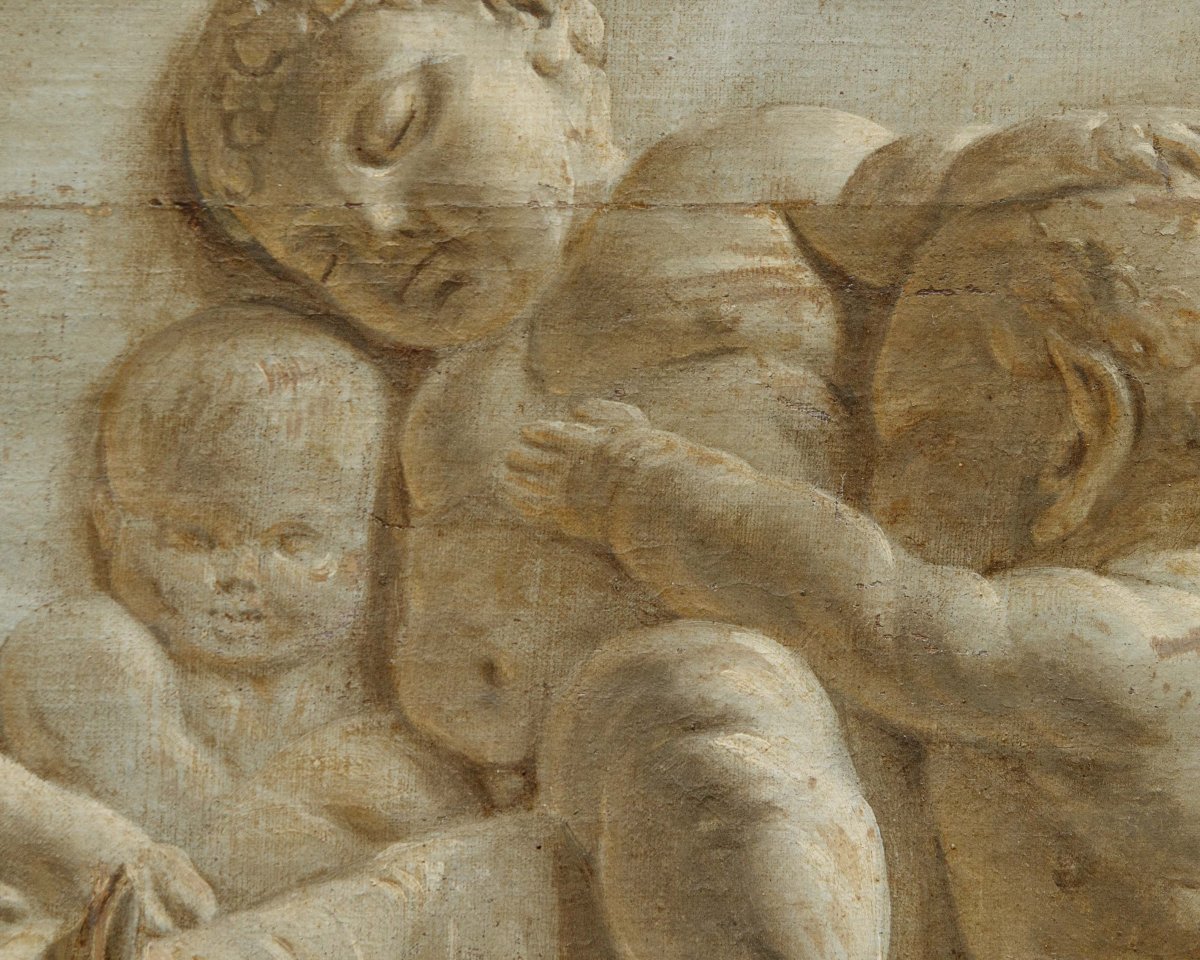
A group of cherubs and small fauns, rendered in grisaille on a horizontal canvas, fills the scene with the natural ease of an ancient frieze. The composition is divided into three distinct groups. In the foreground, on the left, a pair of cherubs sleeps sprawled on the ground: their plump bodies are entwined in a disheveled embrace, amid clusters of grapes that allude to Bacchic processions. In the center and on the right, a livelier group shows several children—one of whom bears the features of a small faun—engaged in play with an animal resembling a dog or a lion cub, which they pull and ride with tender exuberance. In the background, next to a tree with slender branches and a vase, another group of cupids brandishes arrows and darts. Here the technique becomes even more interesting: the more distant figures are rendered using stiacciato, the sculptural technique of Donatello’s school that progressively reduces the thickness of the relief to suggest depth. The painter applies this principle to the painted surface, softening the contours and attenuating the chiaroscuro, so that space is constructed through the gradation of the simulated reliefs.
The genre to which this work belongs enjoyed great popularity in France between the late 18th century and the early 19th century. Grisaille paintings featuring cherubs and classical scenes, designed to imitate marble or stucco bas-reliefs, were intended to decorate door lintels, panels, and wainscoting, in perfect harmony with the Neoclassical taste for antiquity and the pleasure of visual illusion—the trompe-l’oeil—which made the painting indistinguishable from sculpture.
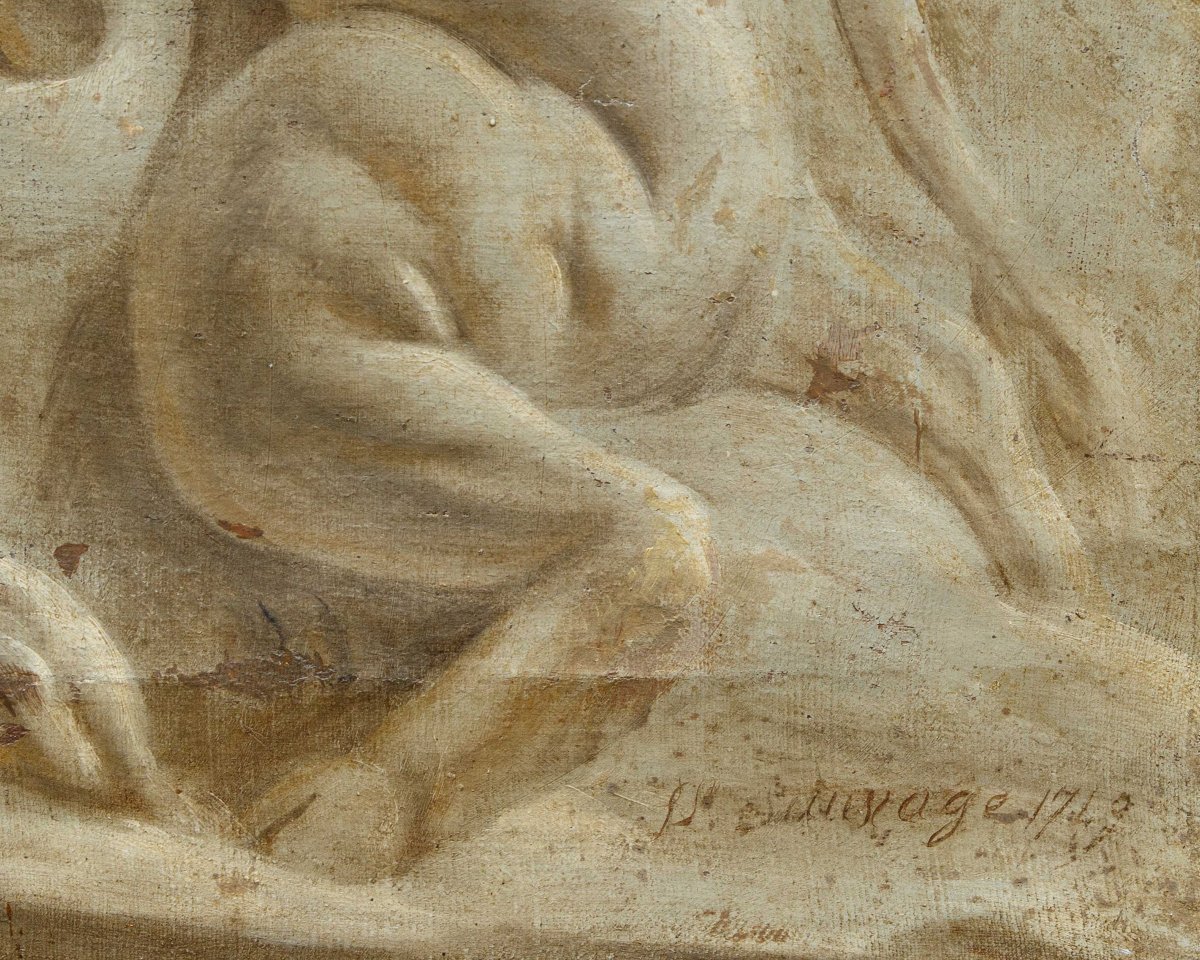
The undisputed master of this genre was Piat Joseph Sauvage, a painter from Tournai who specialized precisely in interior decorations, grisaille paintings, and illusionistic miniatures, as well as small-scale carved portraits. He served as court painter to the governor of the Southern Netherlands, the Prince of Condé, and Louis XVI, and was a member of the Académie royale de peinture et de sculpture. In 1808, he returned to Tournai to direct the Academy of Drawing, where Antoine Payen was among his students: it is plausible that it was precisely in that environment that the artist of our painting became acquainted with his work and reworked its stylistic elements.
The comparisons speak for themselves. The *Playing Cupids* at the Metropolitan Museum of Art in New York share with this painting the lightheartedness of the childlike theme and the almost sculptural rendering of the figures. The *Childhood Bacchanal* in the British National Trust offers a direct precedent for the Dionysian atmosphere, with cherubs and animals in a playful procession. Finally, the *Playing Cherubs* at the Victoria and Albert Museum suggest the same treatment of relief, gradually fading until it is almost entirely lost in the distant planes.
Period: 18th century
Style: Other Style
Condition: Good condition
Material: Oil painting
Width: 116
Height: 51
Reference (ID): 1834388
Availability: In stock