

Pietro Paolini (lucca, 1603–1681) Young Female Figure Depicted As Flora
PIETRO PAOLINI
(Lucca, 1603–1681)
Young female figure as Flora Canvas
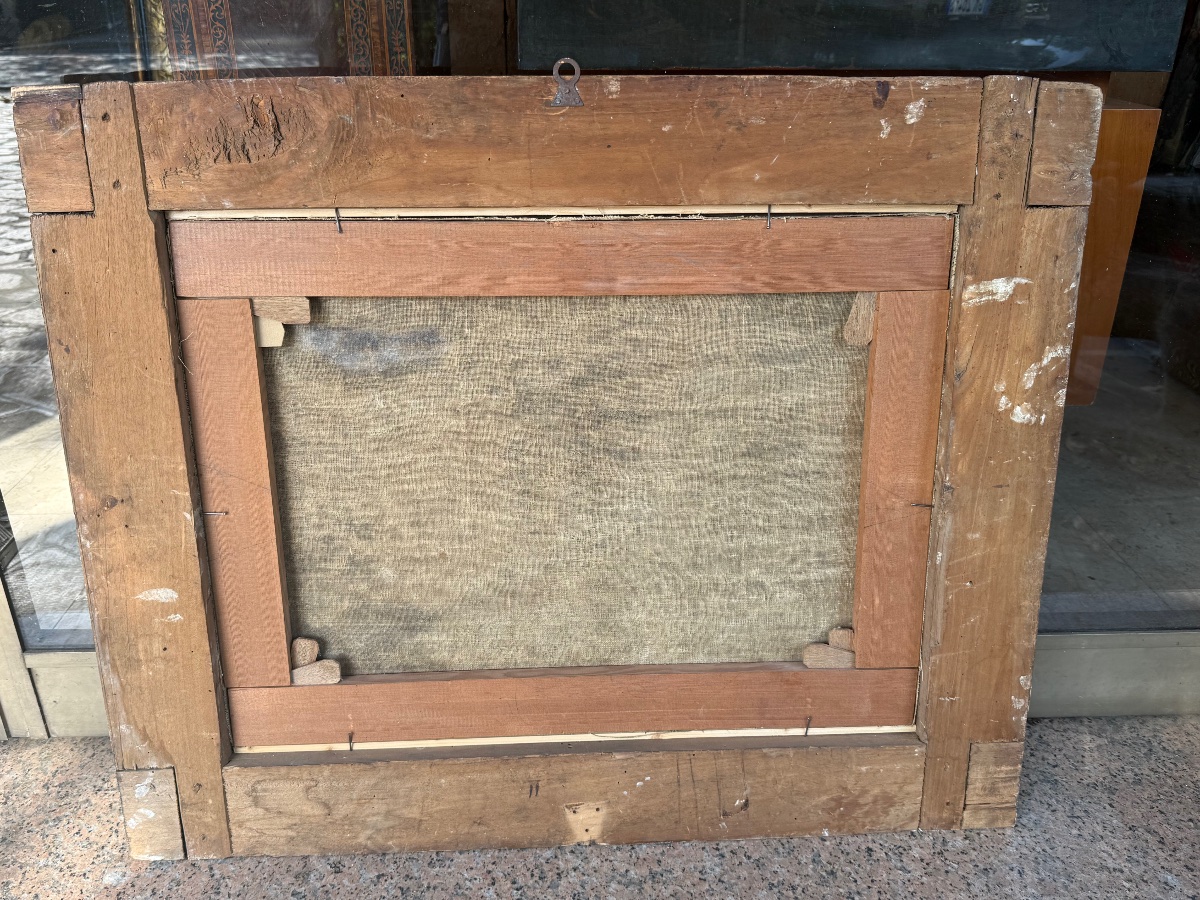
50 x 68 cm
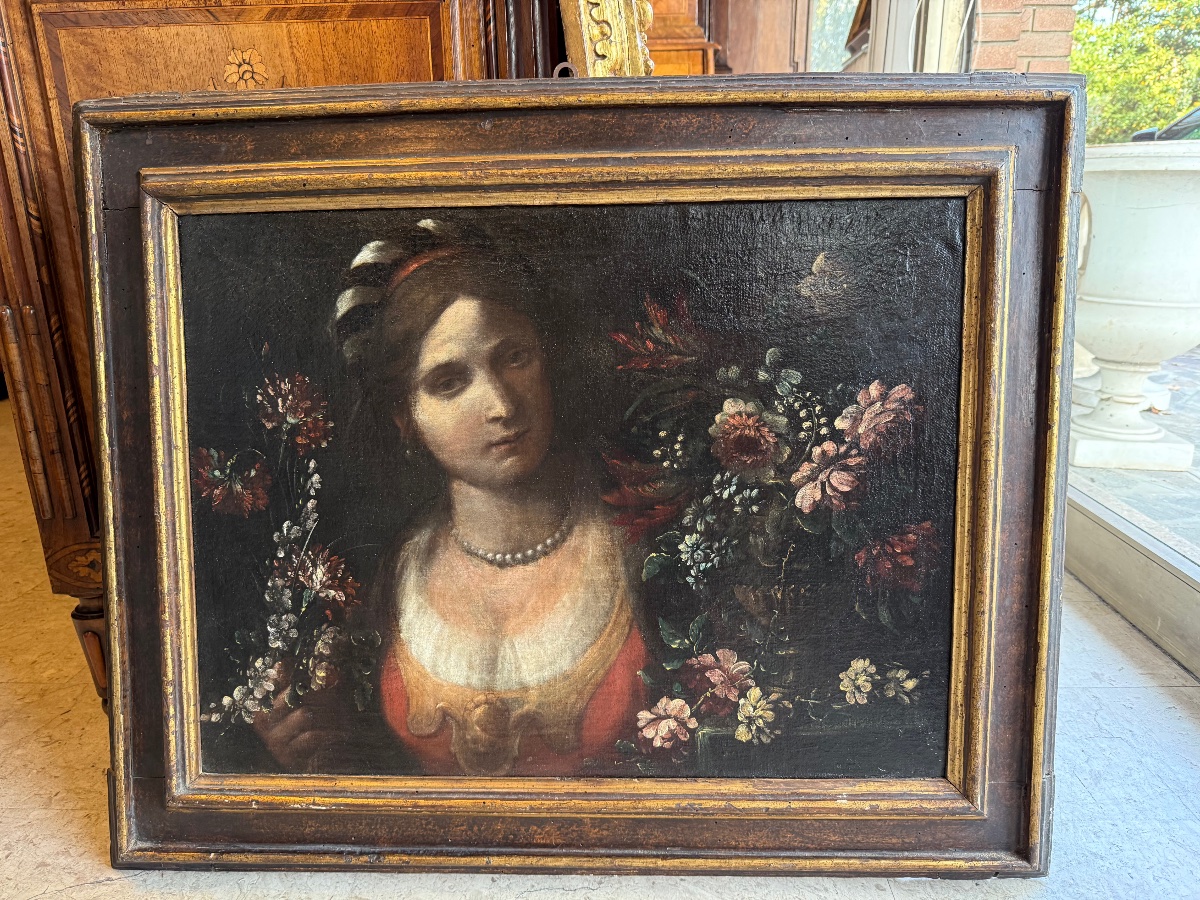
In a period frame
Expertise by Prof. Sandro Bellesi
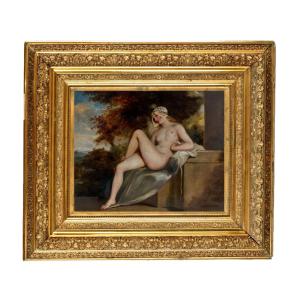
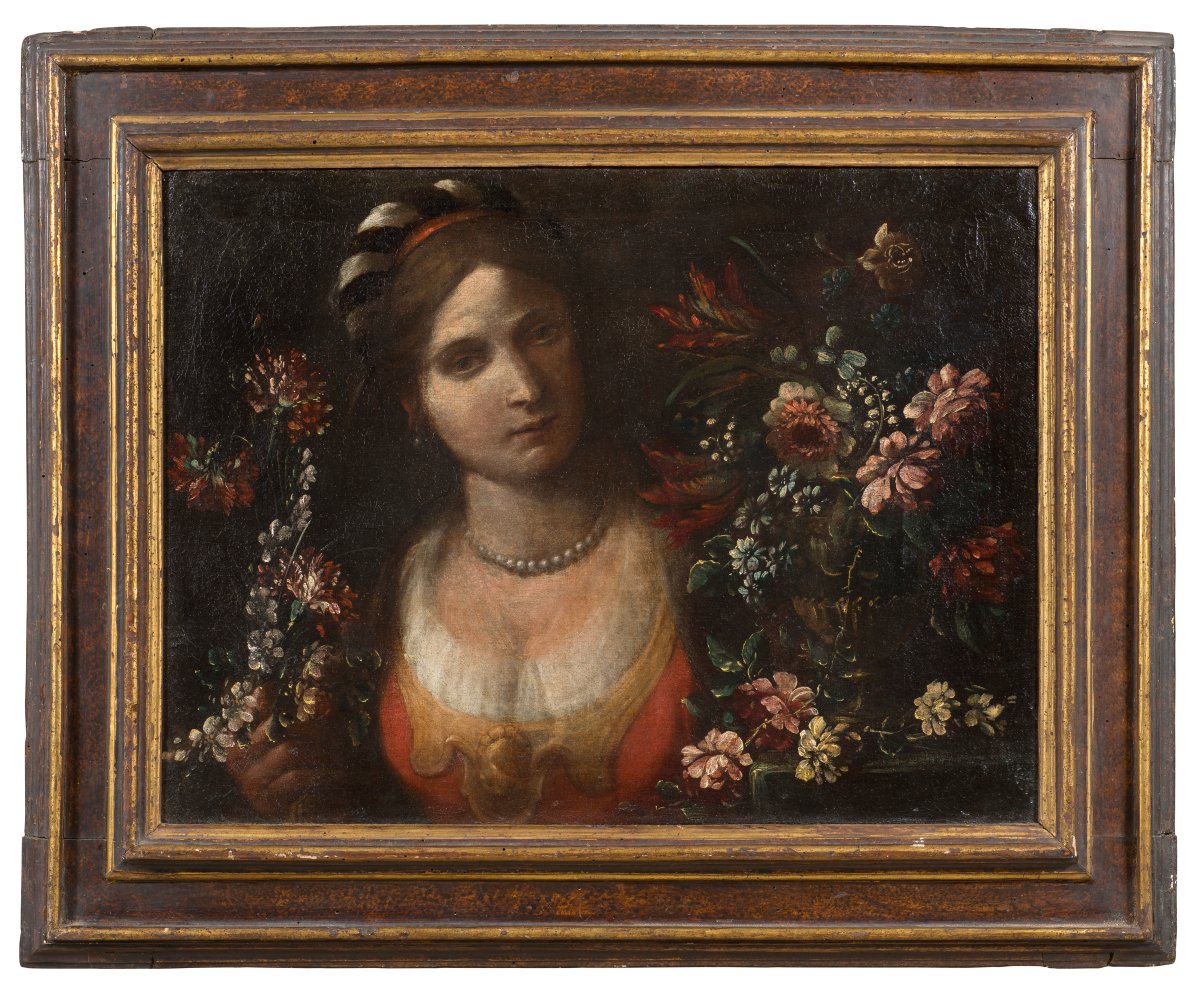
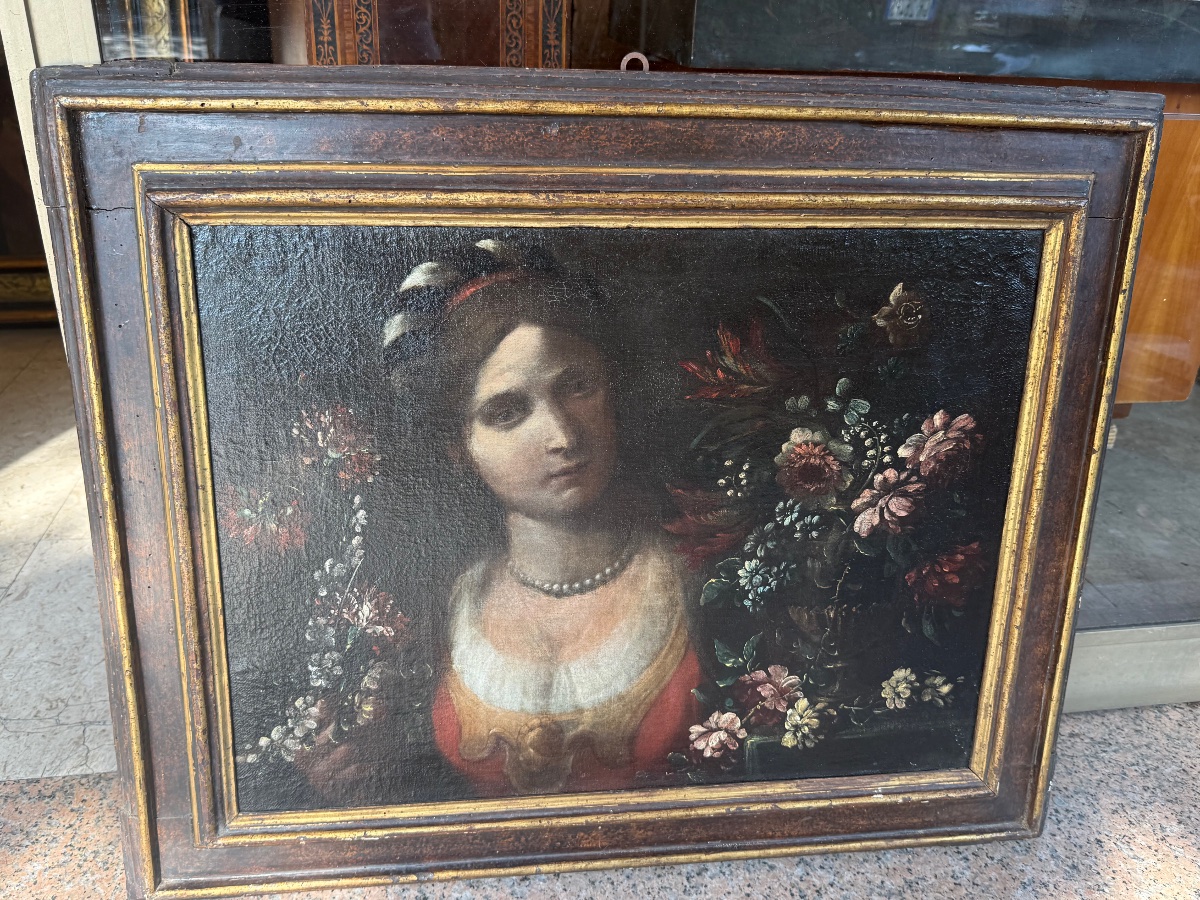
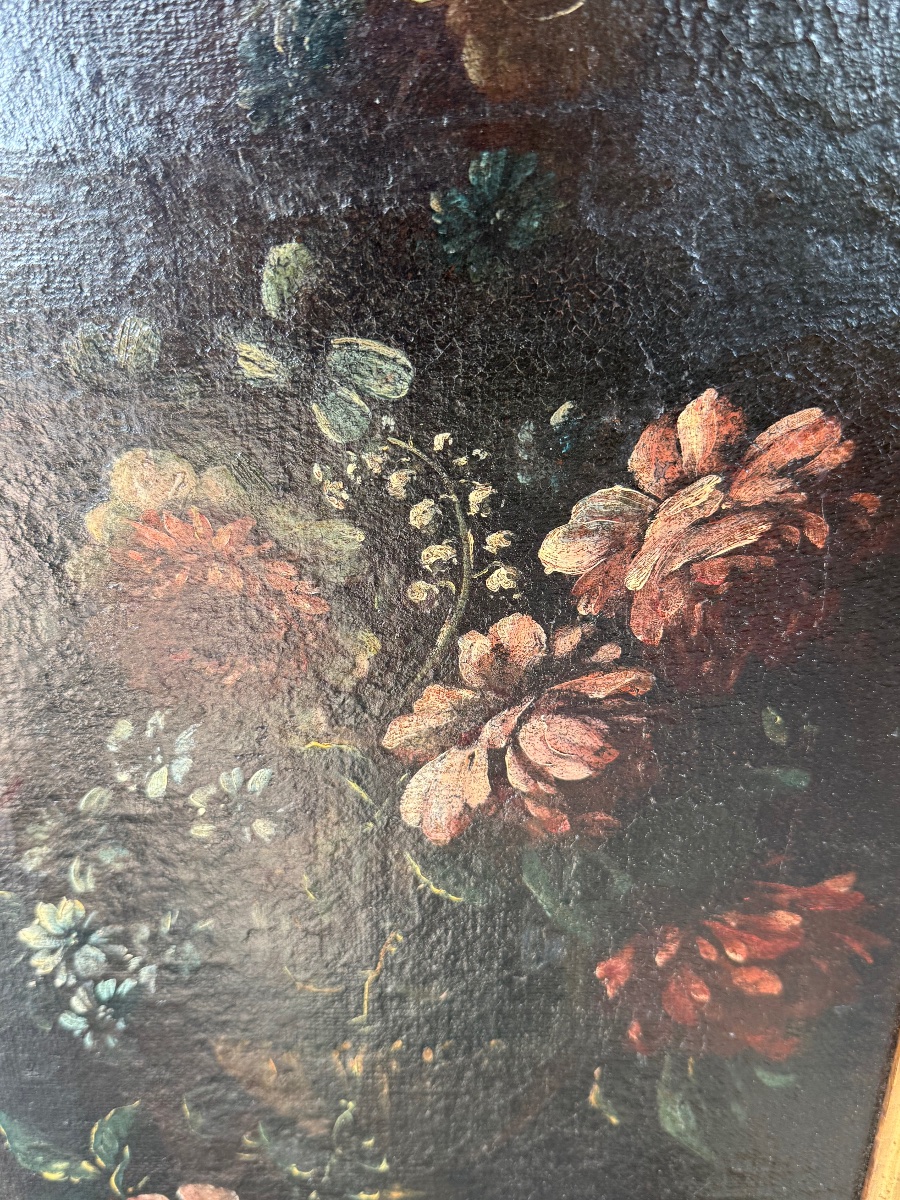
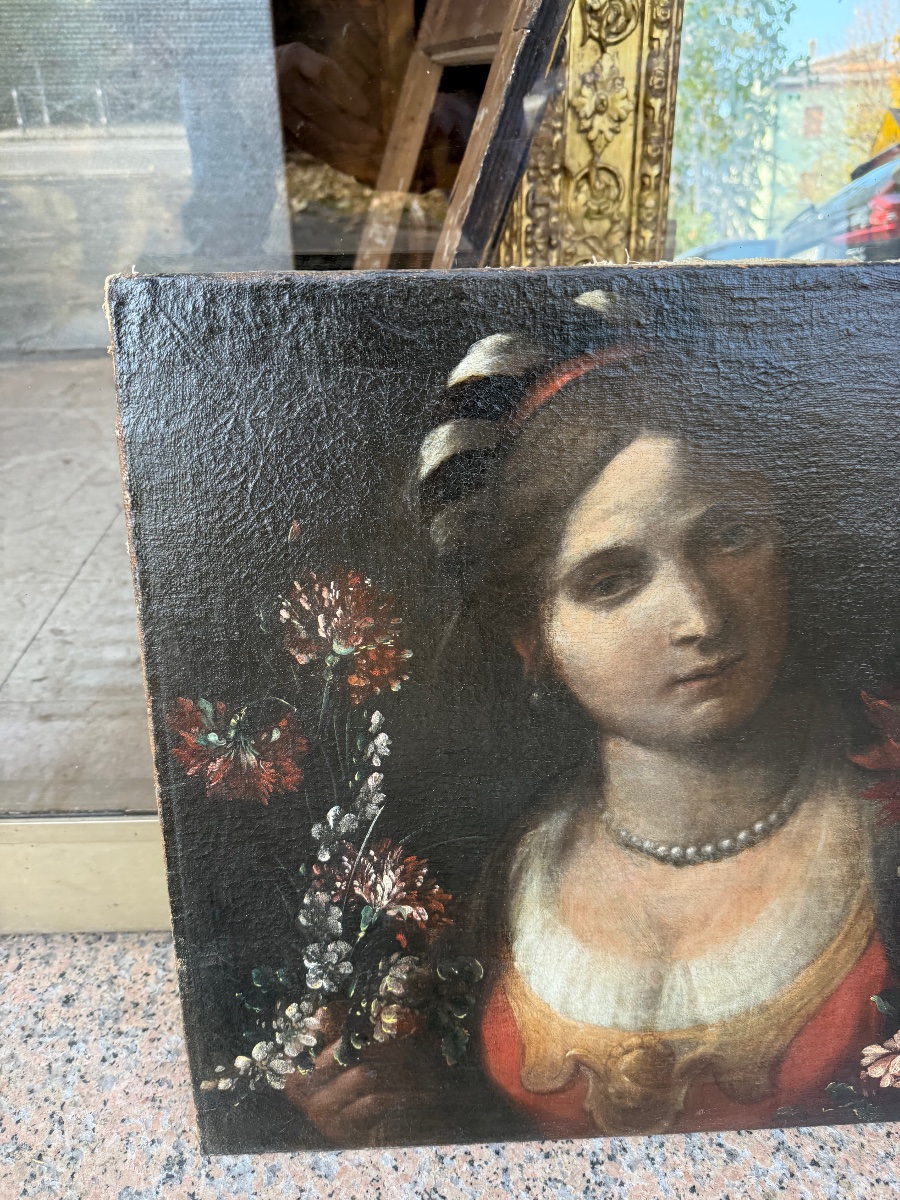
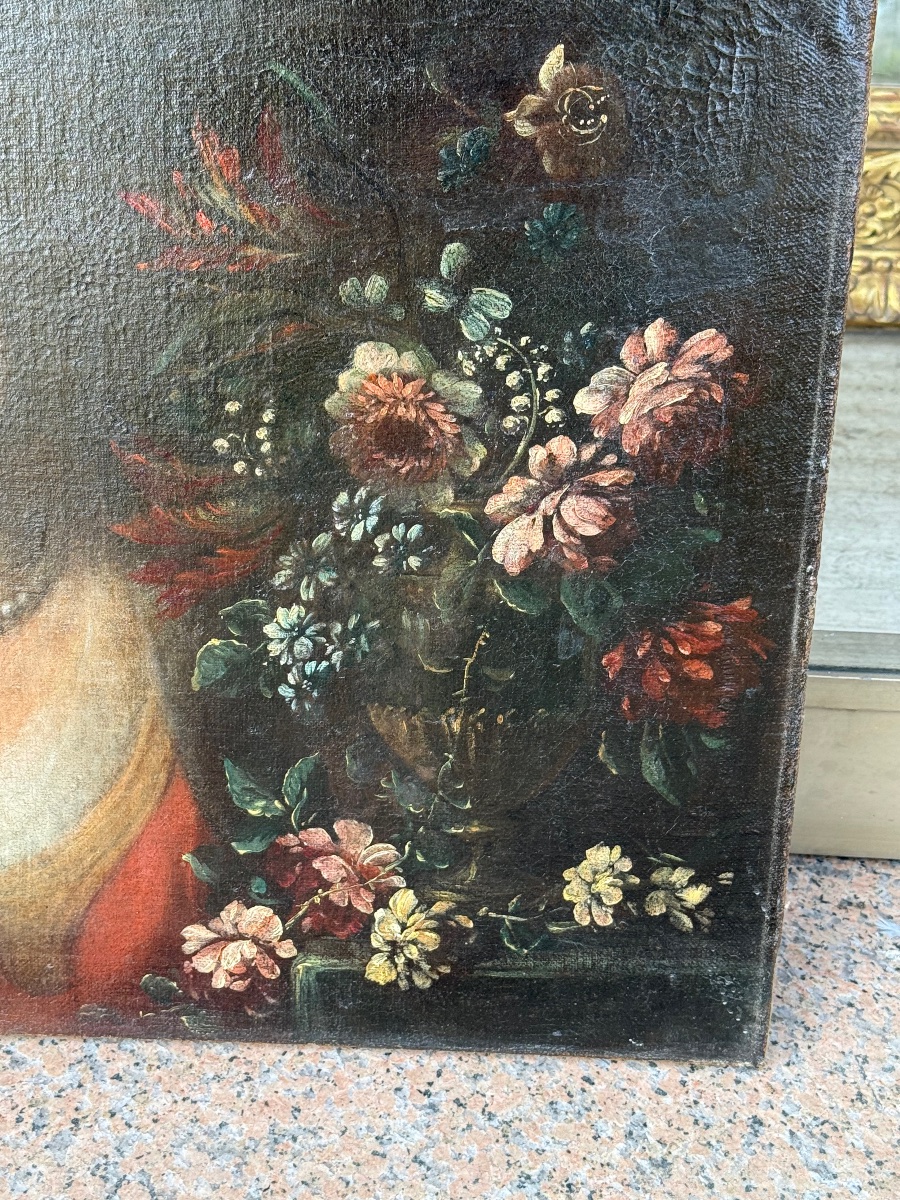
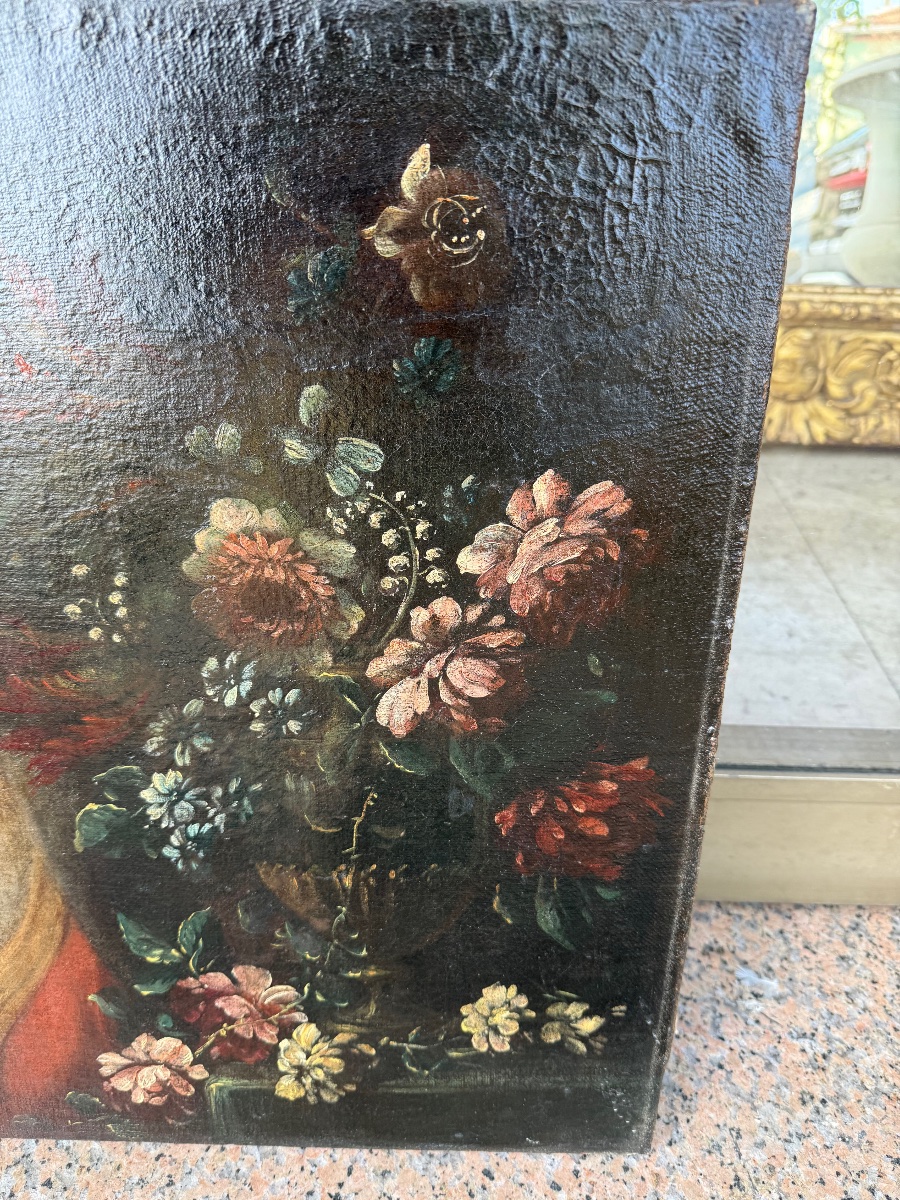
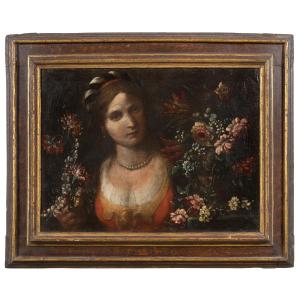
The work, in a fair state of preservation, depicts an attractive young woman set against a very dark, seemingly impenetrable, undefined background. Shown in a view extending just below the waist, she holds flowers in her right hand near a small stone ledge; resting carefully upon this ledge is a metal vase overflowing with various blooms—notably roses, double anemones, fringed tulips, and lilies of the valley. Almost certainly based on a portrait from life that was only partially idealized, the painting portrays the woman as Flora—indicated by the abundance of flowers, symbols of fertility fitting for a future mother. She is shown on the verge of marriage, a status suggested by the string of pearls—an ornament traditionally associated with young brides-to-be as a symbol of virginity. Likening young women about to marry to Flora—the classical deity associated with spring and the earth's renewal—was a common practice in European painting, particularly during the seventeenth and eighteenth centuries, especially in works created in anticipation of a wedding. Based on the figure's descriptive features and stylistic characteristics, the canvas can be attributed to Pietro Paolini, a seventeenth-century painter of undoubted historical and artistic significance who produced numerous works, often with the assistance of his most talented collaborators.
One of the most acclaimed leading figures of 17th-century Tuscan painting, Paolini was born in Lucca in 1603 and moved to Rome at a young age; there, according to early sources, he was trained in the figurative arts at the school of Angelo Caroselli. Under this master's tutelage, the young artist was steered toward a style associated with the *Manfrediana methodus*—a tradition rooted in the teachings of Caravaggio and his most faithful followers—which encouraged him to delve deeply into chiaroscuro effects and a highly realistic interpretation of his subjects. Upon returning to Lucca around 1629, Paolini soon embarked on a prolific independent career, establishing himself as a prominent figure among the local painters of his time. An esteemed creator of ecclesiastical works and canvases for private collections, he frequently relied on his closest assistants to fulfill his numerous commissions; some of these collaborators—though largely forgotten today—carried on his stylistic legacy through the end of the century. After a successful career attested to by contemporary critical acclaim and numerous commissions, Pietro Paolini died in his native city in 1681 at an advanced age (for further reading on the artist, see especially P. Giusti Maccari, *Pietro Paolini pittore lucchese*, Lucca, 1987).
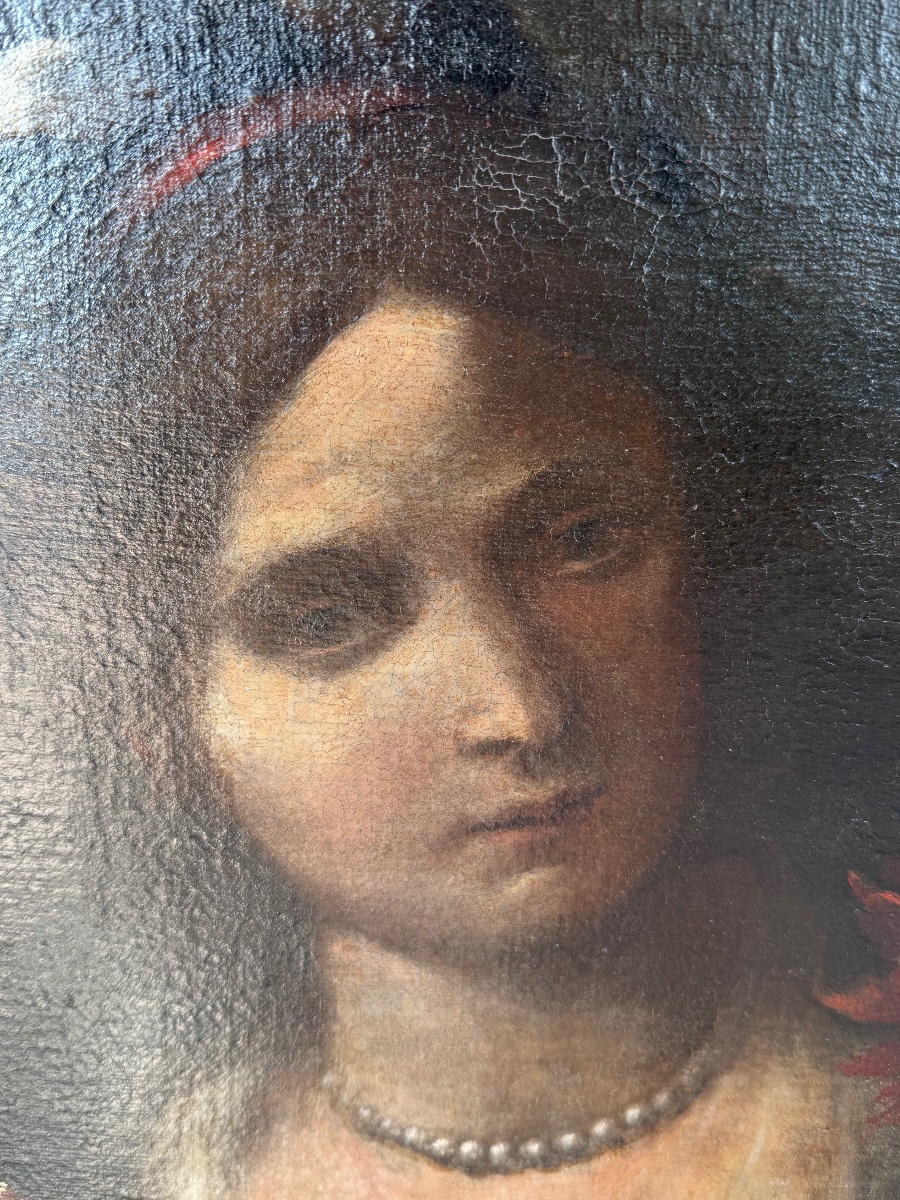
As is the case with many of Paolini’s known works—ranging from paintings of varying degrees of technical complexity—it is difficult to pinpoint the exact date of execution for the canvas in question, given the current state of historical and documentary knowledge. The near-total absence of stylistic or formal evolution over his fifty-year career makes it impossible to state with absolute certainty whether the work belongs to the artist’s early, mature, or late period; nevertheless, the descriptive details of the woman’s attire and hairstyle appear to point to the early decades of the seventeenth century—specifically the 1620s or 1630s. Reflecting a post-Caravaggesque style grounded primarily in the interplay of light and shadow—featuring the enveloping chiaroscuro typical of "night scenes" (*lume di notte*)—the figure in the painting finds apt parallels in several of Pietro Paolini’s works. Particularly noteworthy for their close physiognomic and stylistic affinities are *Two Musicians* (formerly with Weinmüller in Munich; see A. Ottani, "Per un caravaggesco toscano: Pietro Paolini (1603-1681)," in *Arte Antica e Moderna*, 21, 1963, p. 35), *Young Page* (current location unknown; see P. Giusti Maccari, *op. cit.*, pp. 130–131, no. 47), and the *Madonna with the Christ Child and Saint Rosalia* in the parish church of Tereglio (see P. Giusti Maccari, *op. cit.*, pp. 142–144, no. 64). The painting finds fitting parallels in the principal figures of these works—particularly the Tereglio altarpiece, datable to 1632—especially regarding the definition of the face (characterized by elongated, perfectly regular features), the smoothness of the skin (caressed by soft, enveloping light), and the meticulous styling of the hair, parted in the center and adorned with a circular headdress.
Young female figure as Flora Canvas
50 x 68 cm
In a period frame
Expertise by Prof. Sandro Bellesi
The work, in a fair state of preservation, depicts an attractive young woman set against a very dark, seemingly impenetrable, undefined background. Shown in a view extending just below the waist, she holds flowers in her right hand near a small stone ledge; resting carefully upon this ledge is a metal vase overflowing with various blooms—notably roses, double anemones, fringed tulips, and lilies of the valley. Almost certainly based on a portrait from life that was only partially idealized, the painting portrays the woman as Flora—indicated by the abundance of flowers, symbols of fertility fitting for a future mother. She is shown on the verge of marriage, a status suggested by the string of pearls—an ornament traditionally associated with young brides-to-be as a symbol of virginity. Likening young women about to marry to Flora—the classical deity associated with spring and the earth's renewal—was a common practice in European painting, particularly during the seventeenth and eighteenth centuries, especially in works created in anticipation of a wedding. Based on the figure's descriptive features and stylistic characteristics, the canvas can be attributed to Pietro Paolini, a seventeenth-century painter of undoubted historical and artistic significance who produced numerous works, often with the assistance of his most talented collaborators.
One of the most acclaimed leading figures of 17th-century Tuscan painting, Paolini was born in Lucca in 1603 and moved to Rome at a young age; there, according to early sources, he was trained in the figurative arts at the school of Angelo Caroselli. Under this master's tutelage, the young artist was steered toward a style associated with the *Manfrediana methodus*—a tradition rooted in the teachings of Caravaggio and his most faithful followers—which encouraged him to delve deeply into chiaroscuro effects and a highly realistic interpretation of his subjects. Upon returning to Lucca around 1629, Paolini soon embarked on a prolific independent career, establishing himself as a prominent figure among the local painters of his time. An esteemed creator of ecclesiastical works and canvases for private collections, he frequently relied on his closest assistants to fulfill his numerous commissions; some of these collaborators—though largely forgotten today—carried on his stylistic legacy through the end of the century. After a successful career attested to by contemporary critical acclaim and numerous commissions, Pietro Paolini died in his native city in 1681 at an advanced age (for further reading on the artist, see especially P. Giusti Maccari, *Pietro Paolini pittore lucchese*, Lucca, 1987).
As is the case with many of Paolini’s known works—ranging from paintings of varying degrees of technical complexity—it is difficult to pinpoint the exact date of execution for the canvas in question, given the current state of historical and documentary knowledge. The near-total absence of stylistic or formal evolution over his fifty-year career makes it impossible to state with absolute certainty whether the work belongs to the artist’s early, mature, or late period; nevertheless, the descriptive details of the woman’s attire and hairstyle appear to point to the early decades of the seventeenth century—specifically the 1620s or 1630s. Reflecting a post-Caravaggesque style grounded primarily in the interplay of light and shadow—featuring the enveloping chiaroscuro typical of "night scenes" (*lume di notte*)—the figure in the painting finds apt parallels in several of Pietro Paolini’s works. Particularly noteworthy for their close physiognomic and stylistic affinities are *Two Musicians* (formerly with Weinmüller in Munich; see A. Ottani, "Per un caravaggesco toscano: Pietro Paolini (1603-1681)," in *Arte Antica e Moderna*, 21, 1963, p. 35), *Young Page* (current location unknown; see P. Giusti Maccari, *op. cit.*, pp. 130–131, no. 47), and the *Madonna with the Christ Child and Saint Rosalia* in the parish church of Tereglio (see P. Giusti Maccari, *op. cit.*, pp. 142–144, no. 64). The painting finds fitting parallels in the principal figures of these works—particularly the Tereglio altarpiece, datable to 1632—especially regarding the definition of the face (characterized by elongated, perfectly regular features), the smoothness of the skin (caressed by soft, enveloping light), and the meticulous styling of the hair, parted in the center and adorned with a circular headdress.
16 000 €
Period: 17th century
Style: Other Style
Condition: Good condition
Material: Oil painting
Width: 68
Height: 50
Reference (ID): 1802781
Availability: In stock
Print