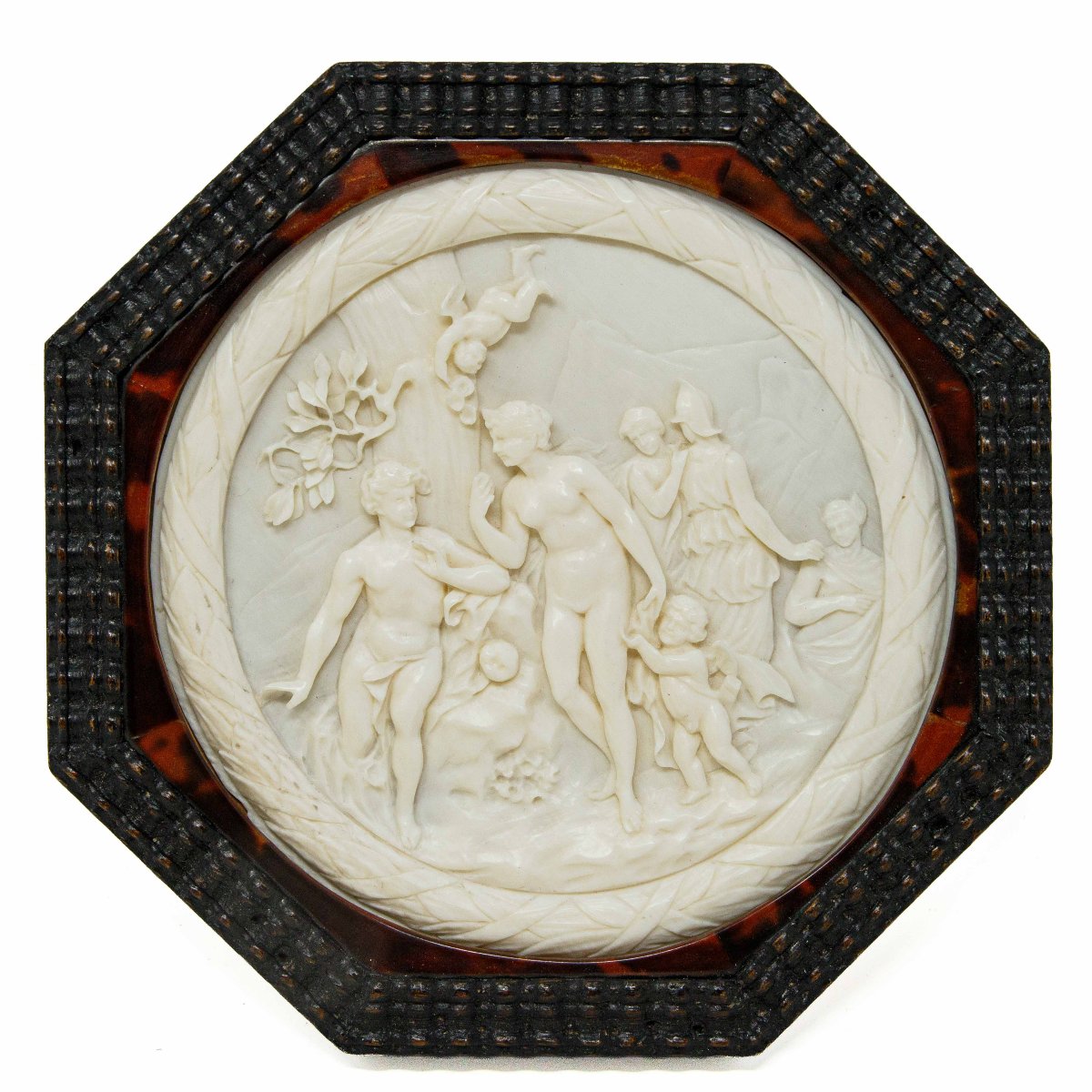


19th Century: "the Judgment Of Paris" In Ivory
19th century
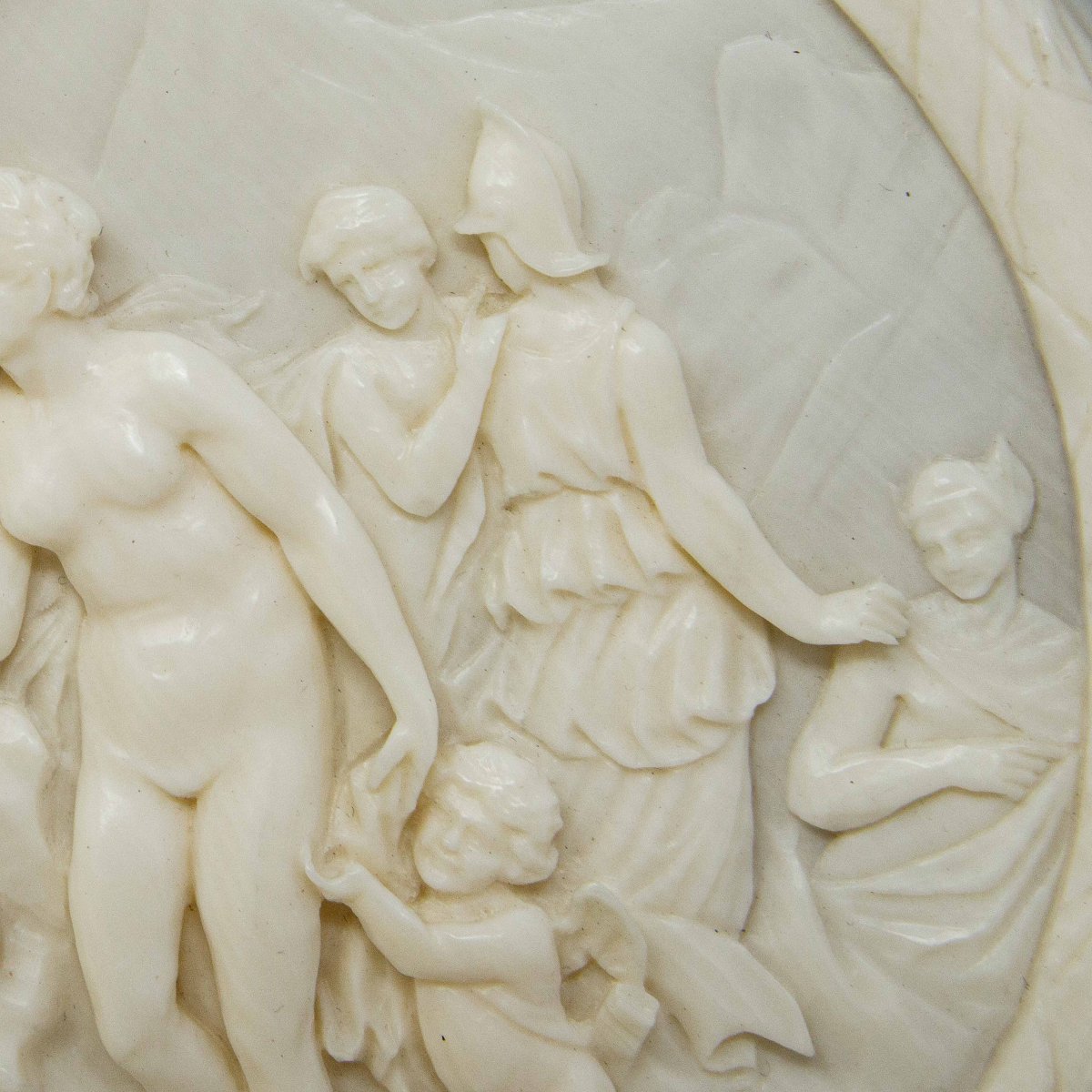
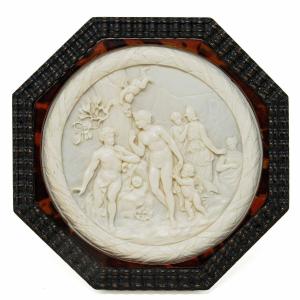
The Judgment of Paris
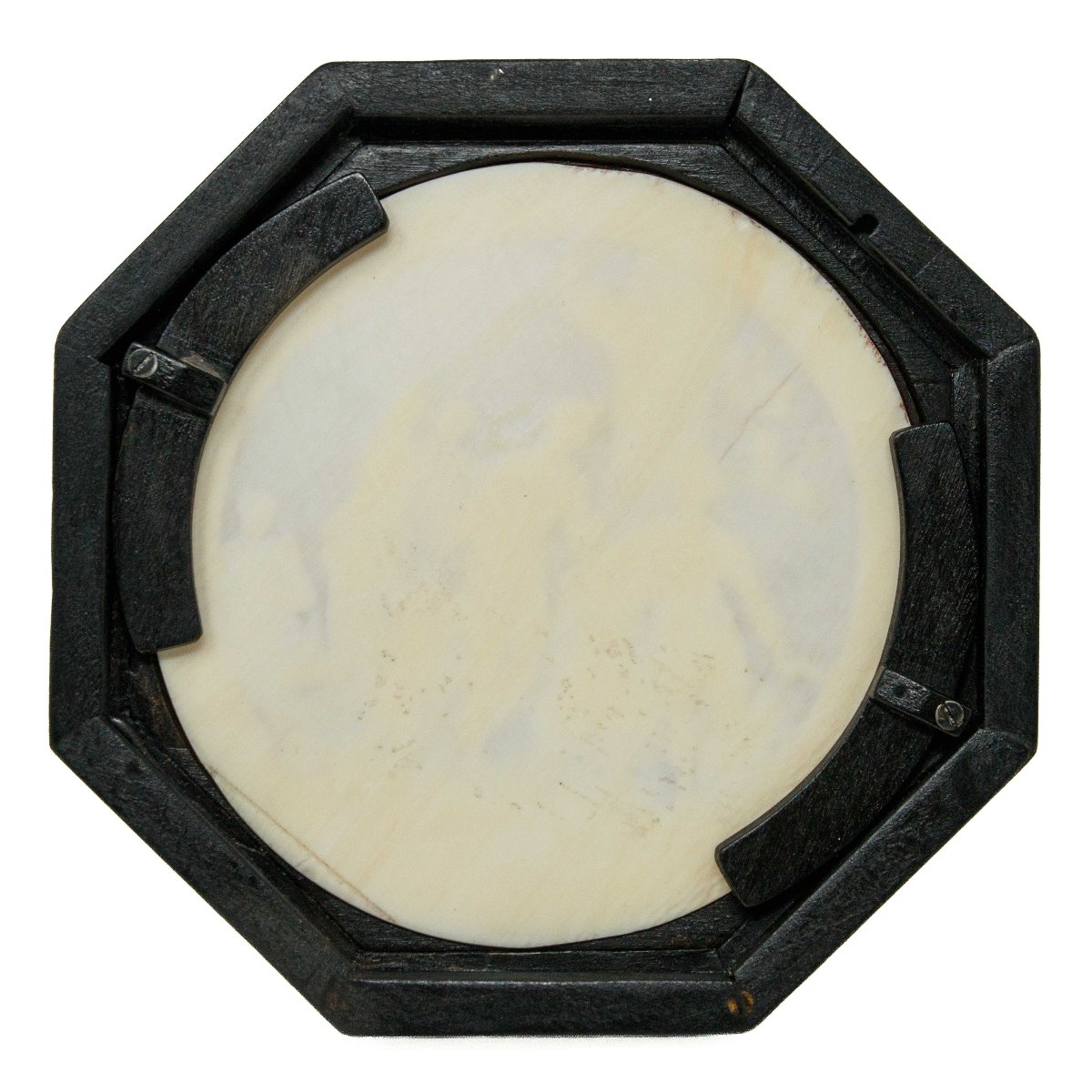
Ivory, diameter (with frame) 12.7 cm
Accompanied by a CITES certificate
Juno stepped forward first with a calm and regal gait [...] and through her gestures made it clear to the shepherd that, if he awarded her the prize for beauty, she would grant him dominion over all of Asia.
Minerva then, quickening her pace [...] assured the shepherd that, if she were to emerge victorious from the contest of beauty, he would become strong and famous for his triumphs in war.
But Venus, advancing with a smile to the center of the stage amid the theater’s applause, stopped gently before Paris. With a gesture of her hands, she hinted at the promise that, if she were chosen over the other two goddesses, she would give him in marriage a woman of extraordinary beauty, entirely like herself.
Then the young Phrygian willingly handed the golden apple he was holding to the maiden as a sign of victory (Apuleius, *The Golden Ass*: In Book X—Chapters 31–32).
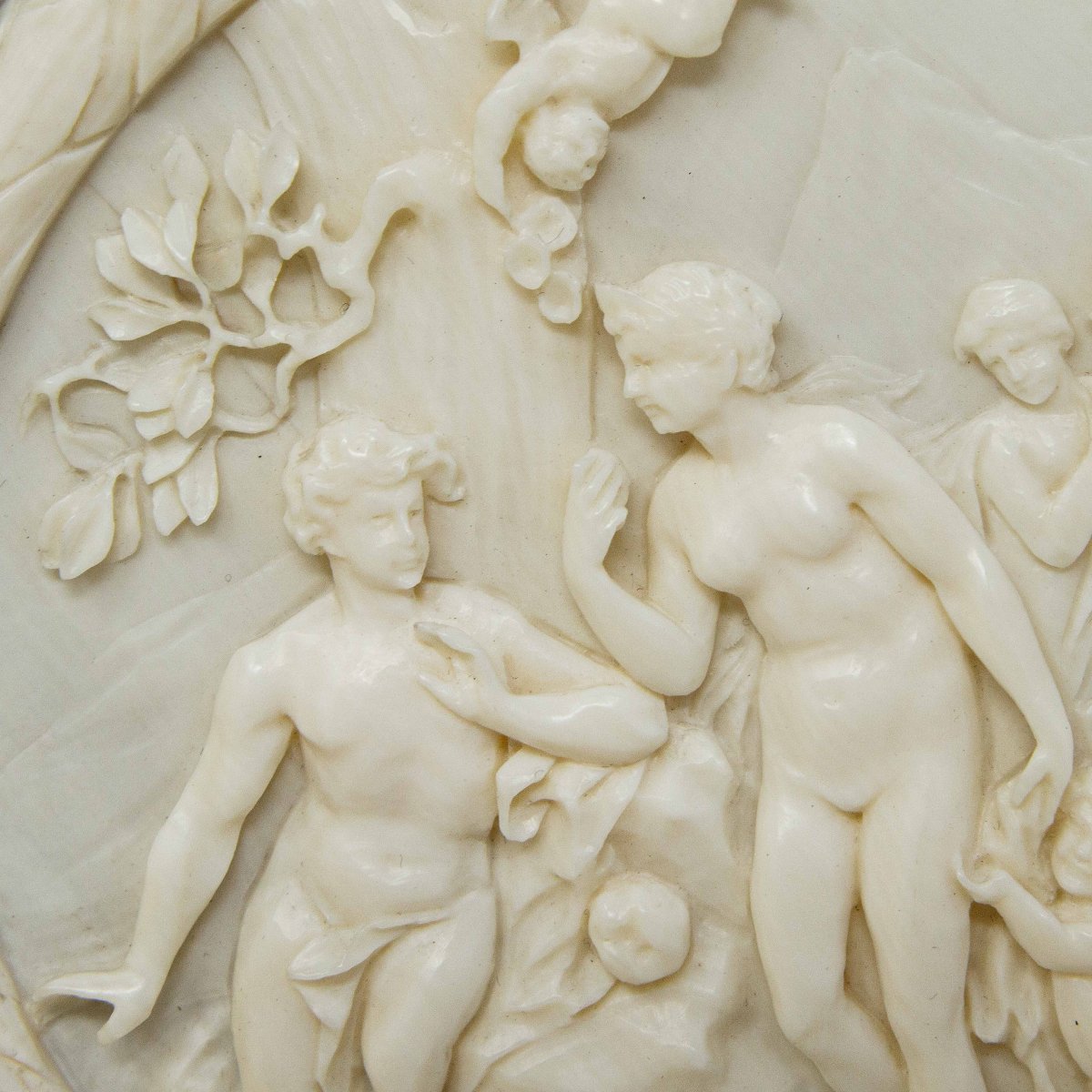
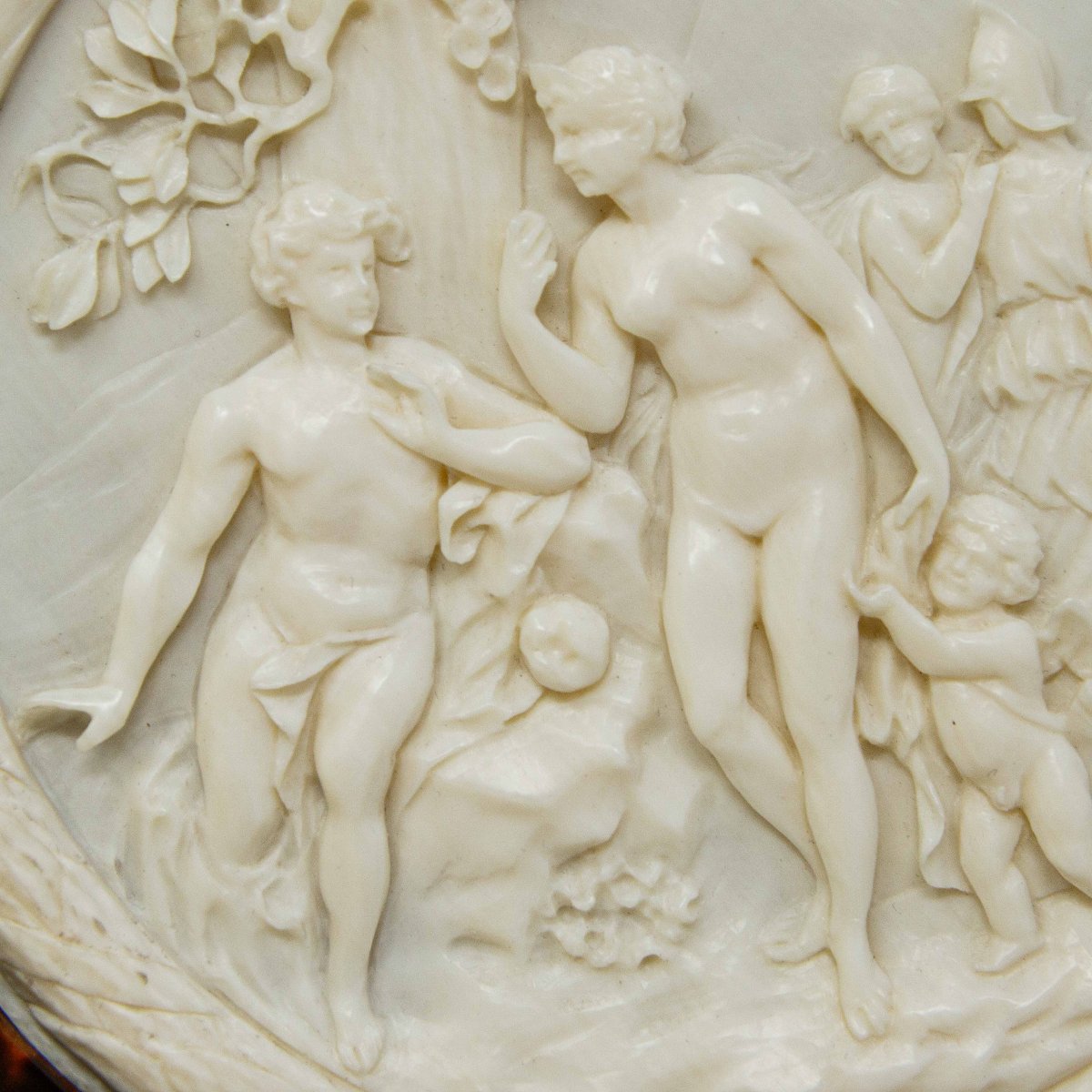
The composition depicts the climactic moment of the Judgment of Paris, the mythological event that would lead to the abduction of Helen and the dramatic outbreak of the Trojan War. The engraver arranges the scene by depicting the young Trojan prince, dressed in pastoral garb, in the act of making his fateful choice, holding the golden apple thrown by the goddess Eris bearing the inscription “To the Fairest.” Facing him are the three goddesses of Olympus, distinguished by their respective attributes and the differing anatomical and sculptural rendering of their drapery: Hera (Juno), the embodiment of sovereignty and political power; Athena (Minerva), the embodiment of wisdom and martial virtue; and Aphrodite (Venus), depicted in her ideal beauty and flanked by Cupid. Led to Mount Ida by Hermes (Mercury), the deities submit themselves to the mortal’s judgment in a balanced interplay of gazes and contrasting sculptural poses that heighten the dramatic tension of the narrative.
The narrative effectiveness of the work is rooted in a centuries-old literary tradition stretching from Archaic Greece to late Roman antiquity. Although Homer’s *Iliad* merely alludes to the judgment (Book XXIV), the episode finds its first extensive formulation in the *Cypria* (*Canti Ciprii*), a lost poem of the Trojan Cycle summarized in Proclus’s *Crestomachia*. Over the centuries, the story was reworked in Greek tragedy—particularly by Euripides in *The Trojan Women* and *Helen*—and later found a celebrated dramatic and visual interpretation in Lucian of Samosata’s *Dialogues of the Gods*. It is, however, through Latin texts that the myth was transmitted to Western art: Ovid, in the *Heroides* (Epistle XVI) and in the *Metamorphoses*, recounts its psychological details and the promises made by the goddesses, while Apuleius, in Book X of *The Golden Ass*, describes an extensive theatrical pantomime that would become the definitive scenographic model for artists from the Renaissance onward.
For Italy only: with Ars Antiqua, you can pay in installments for all amounts up to a maximum of €7,500 at ZERO INTEREST, for a total of 15 INSTALLMENTS
Ex. Total €4,500 = Monthly installment of €300 for 15 months.
Example: Total €3,600 = Monthly installment of €720 for 5 months.
For amounts exceeding €7,500 or for a longer payment plan (more than 15 installments), we can offer a customized payment plan.
Contact us directly for the best quote.
LIVE TV
– SUNDAY 5:00 PM – 9:00 PM Digital Terrestrial Channel 126 - Sky Channel 824
– Streamed on our website www.arsantiquasrl.com and on our social media channels on Facebook and YouTube
All works offered by Ars Antiqua are sold with a certificate of authenticity in accordance with the law and a detailed description.
You can view the works in person at our gallery showroom in Milan, located at Via Pisacane 55 and 57.
We personally arrange transportation and delivery of the works, both within Italy and internationally.
Period: 19th century
Style: Other Style
Condition: Good condition
Material: Ivory
Diameter: 12
Reference (ID): 1804730
Availability: In stock