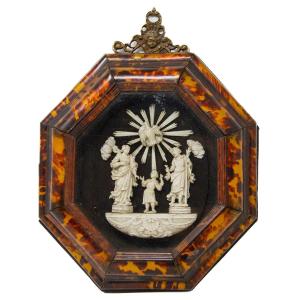


An 18th-century Sculptor From Trapani, *the Holy Family*
18th-century sculptor from Trapani
Holy Family
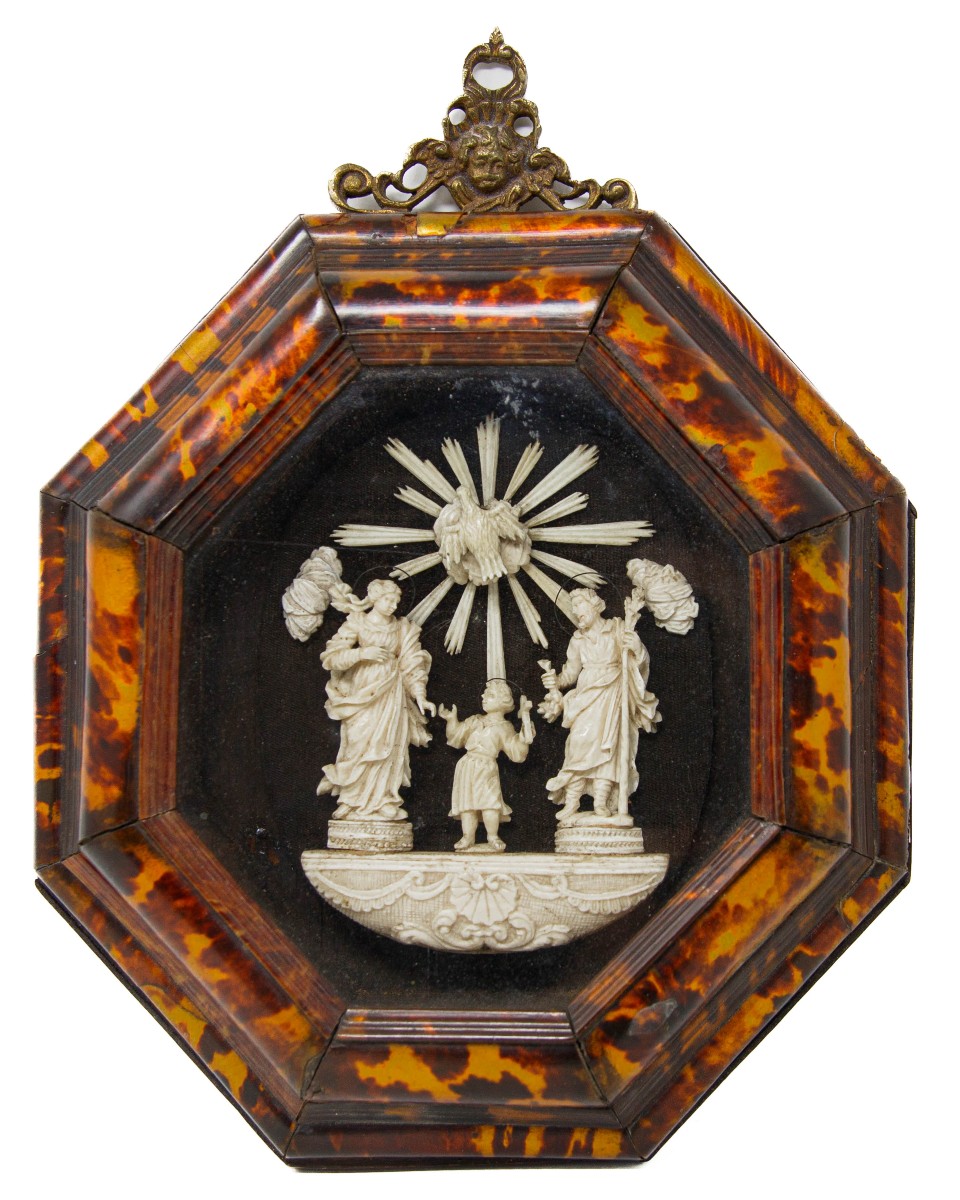
Ivory, tortoiseshell frame, 13 x 9 cm – with frame, 24 x 22 cm
The work is accompanied by its CITES certificate
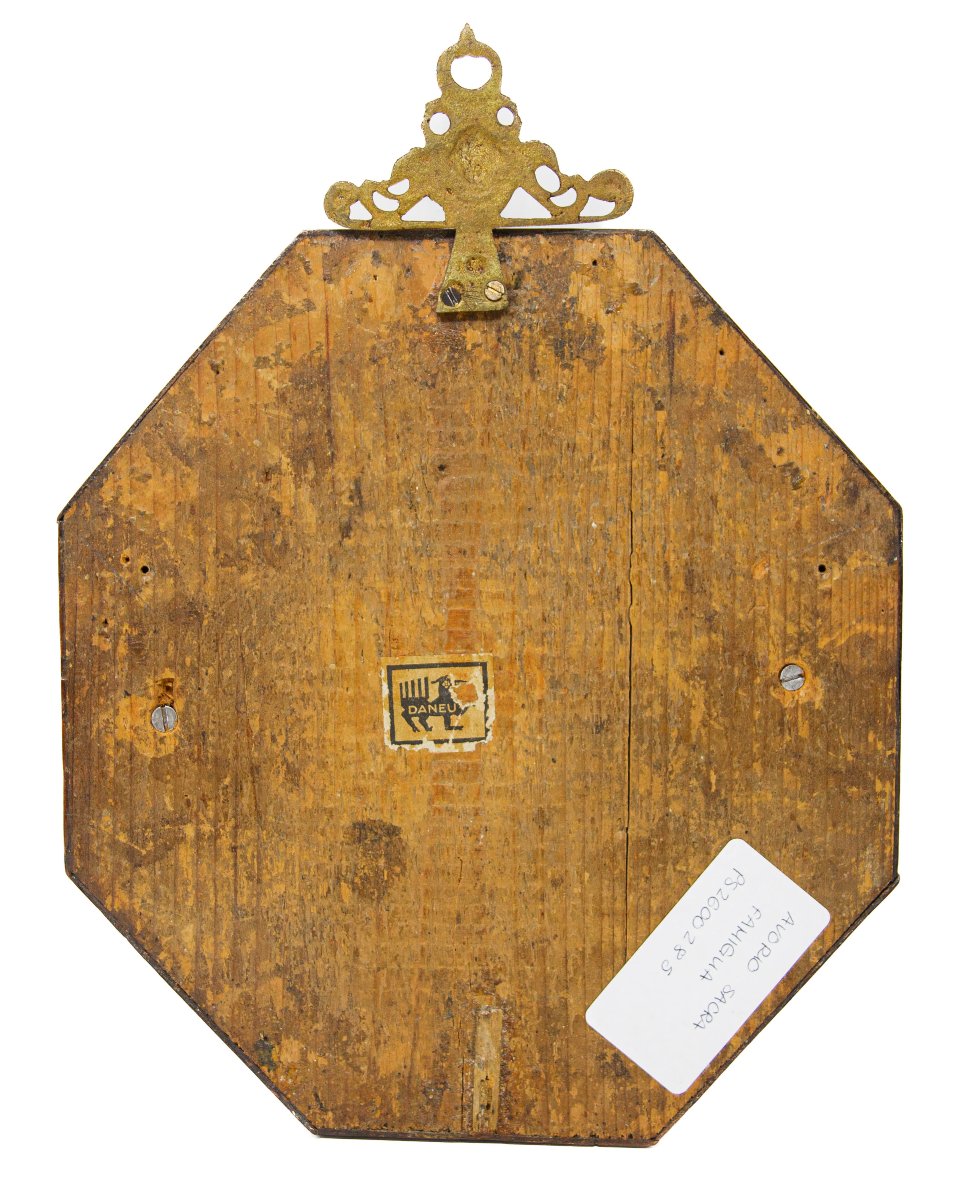
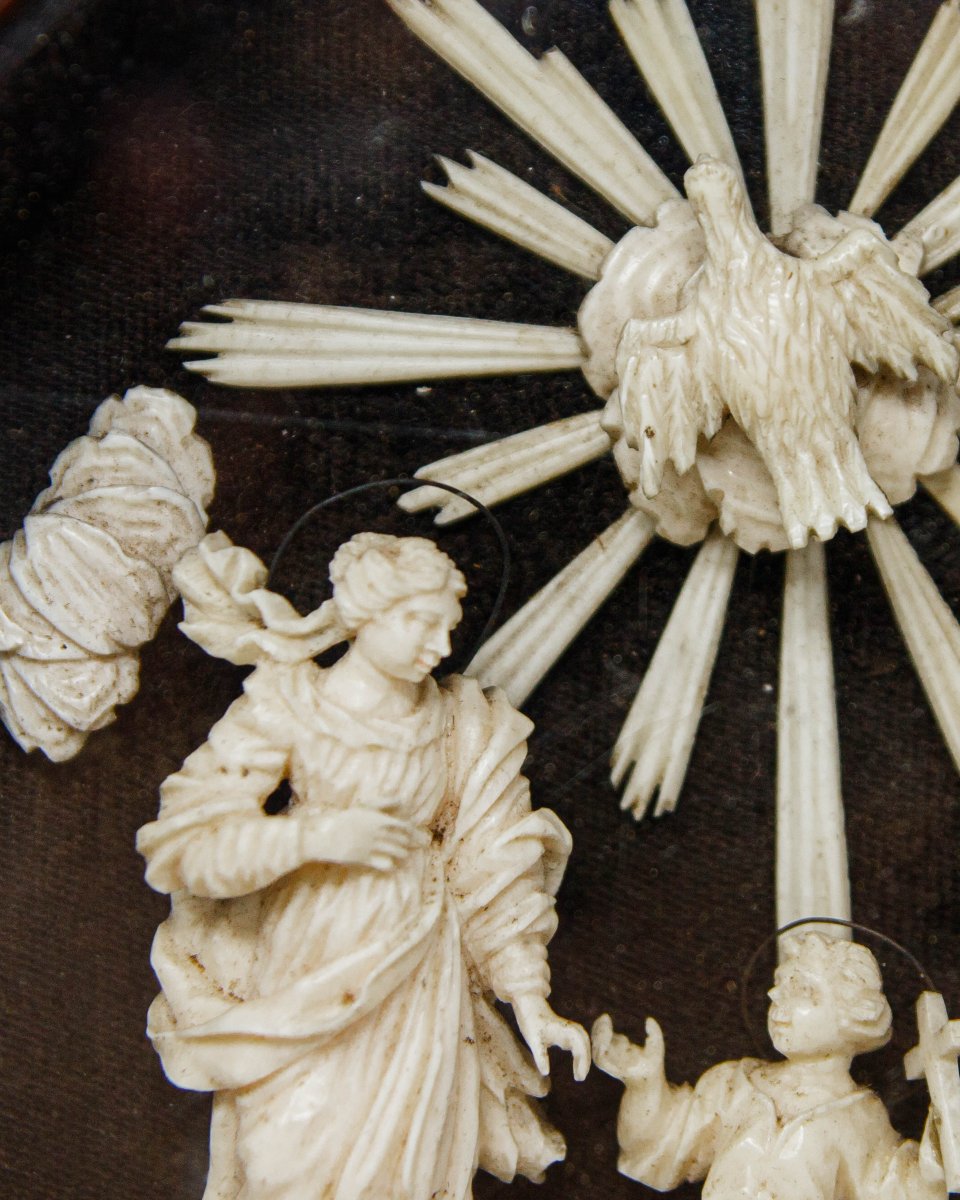
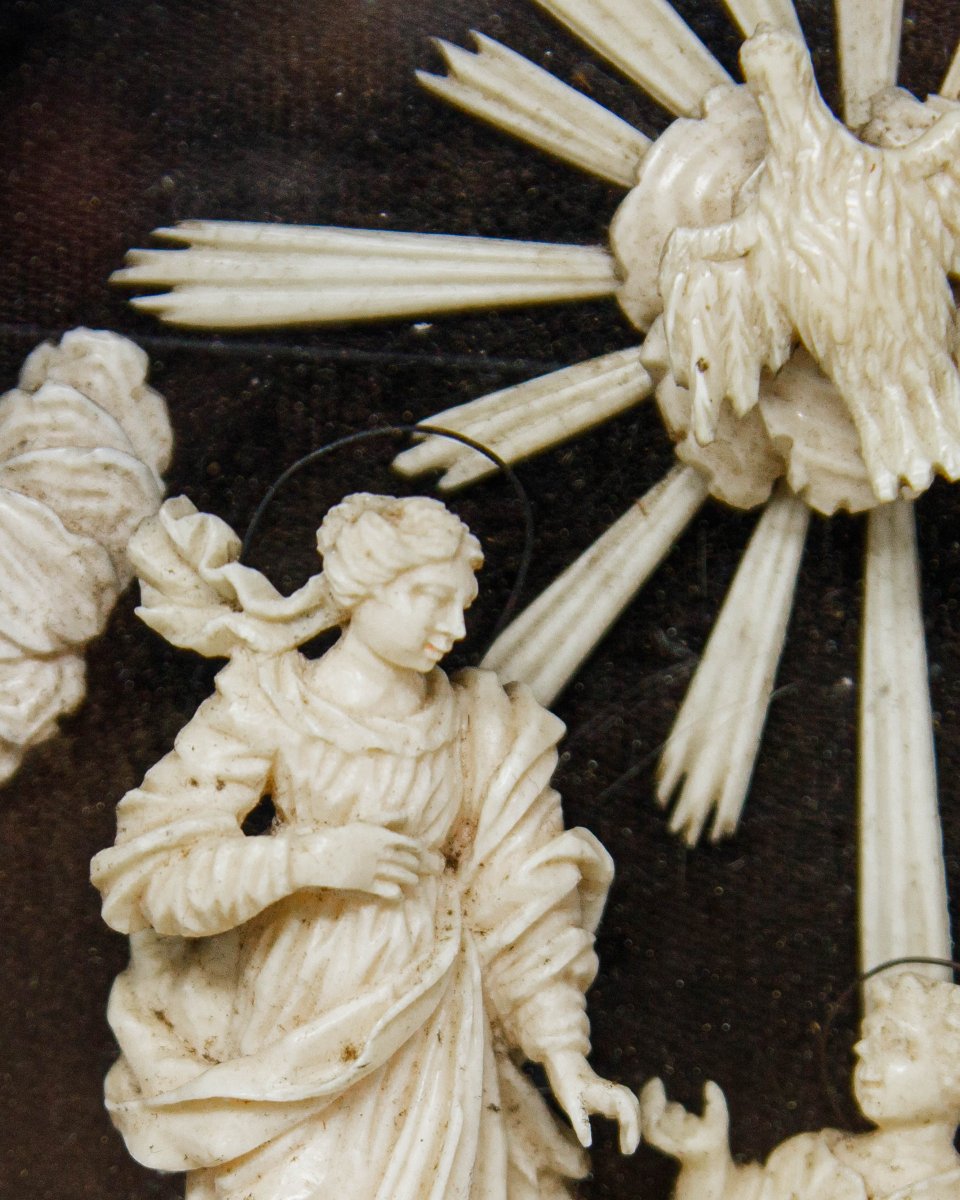
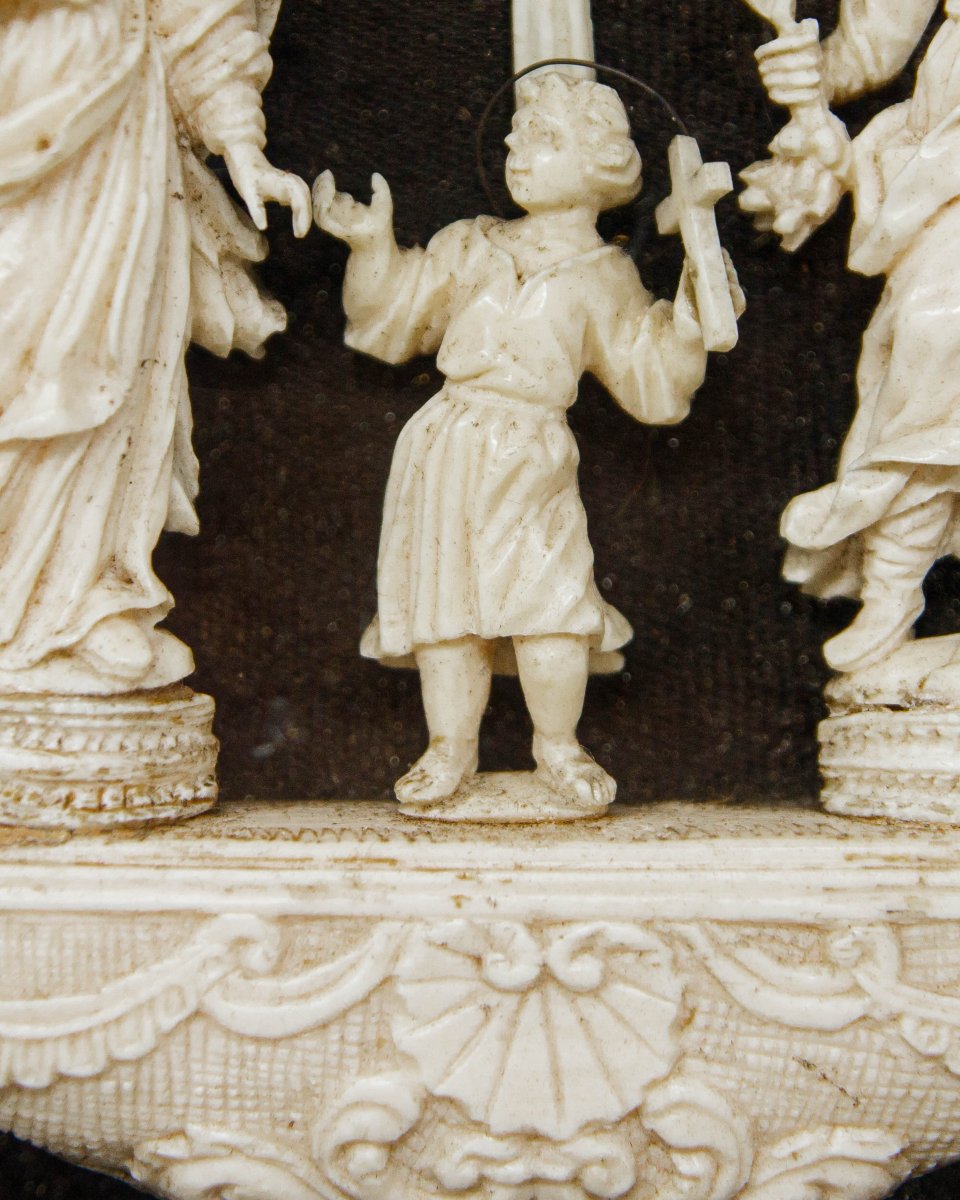
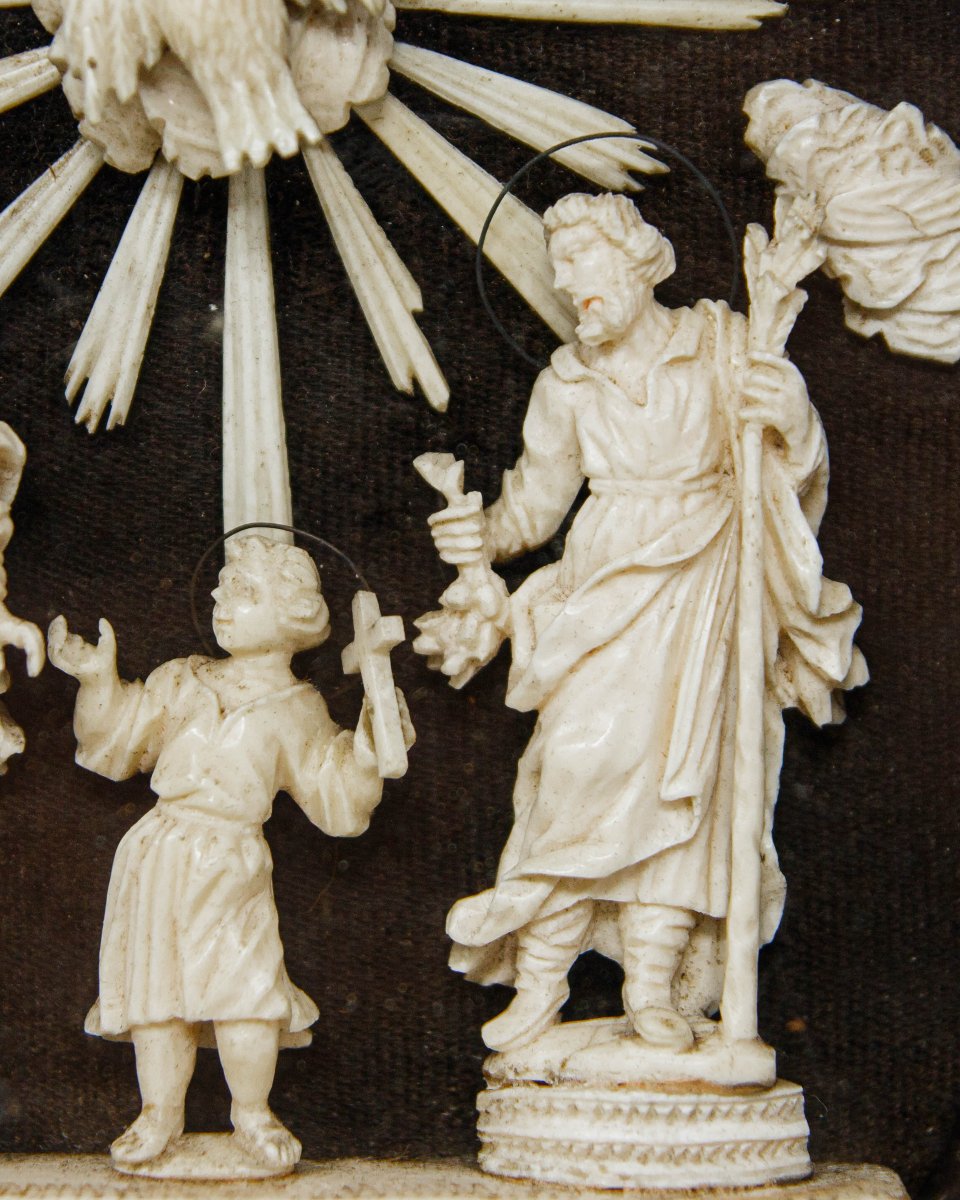
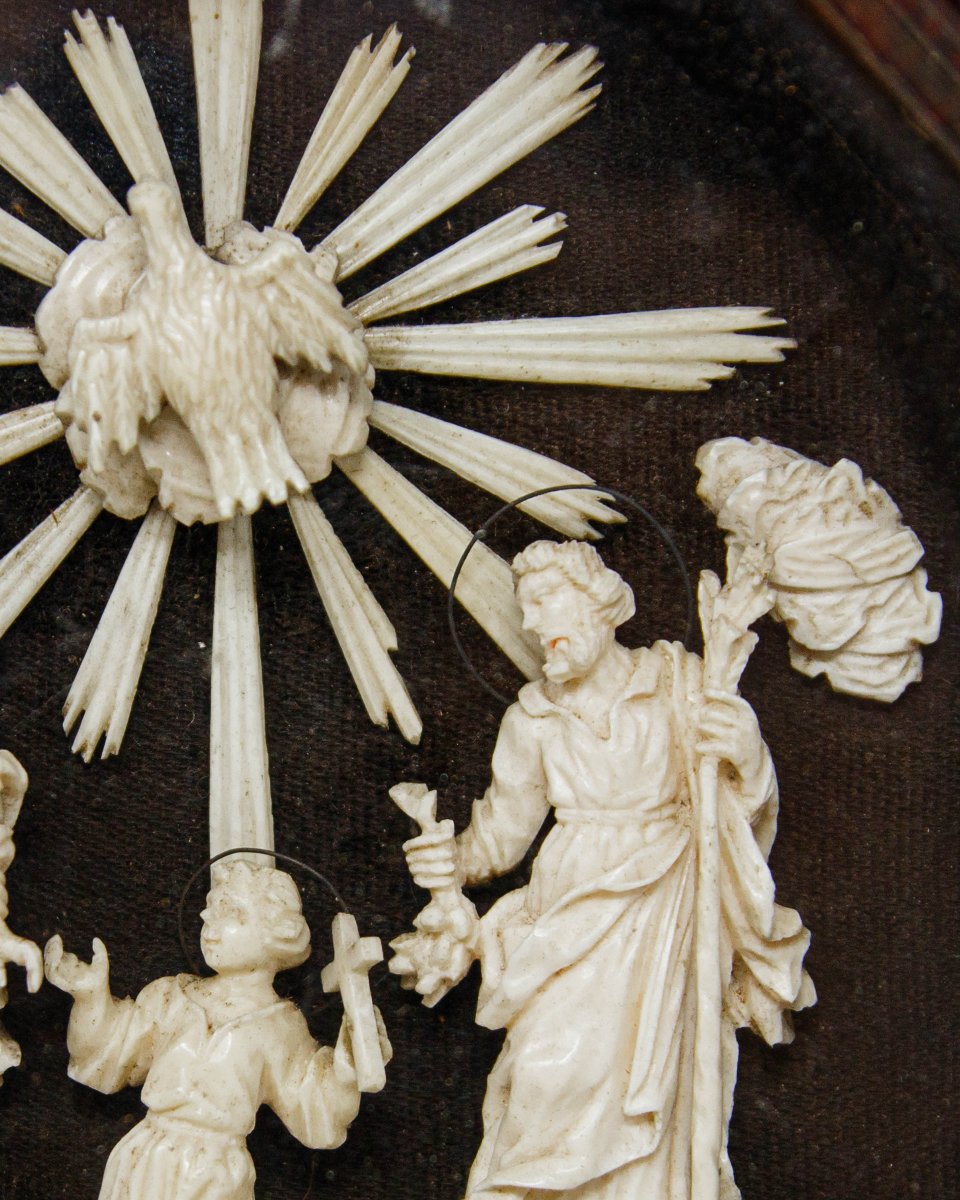
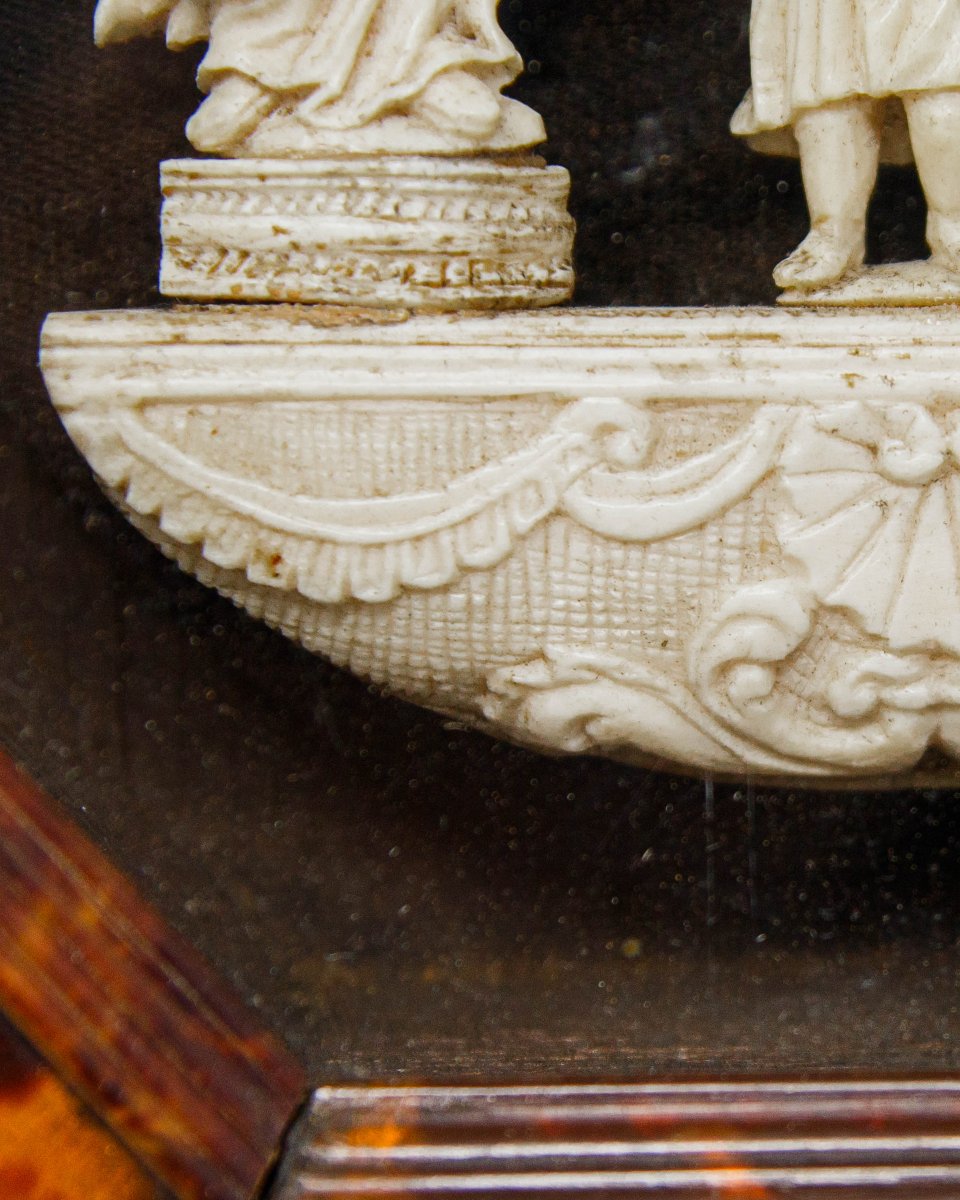
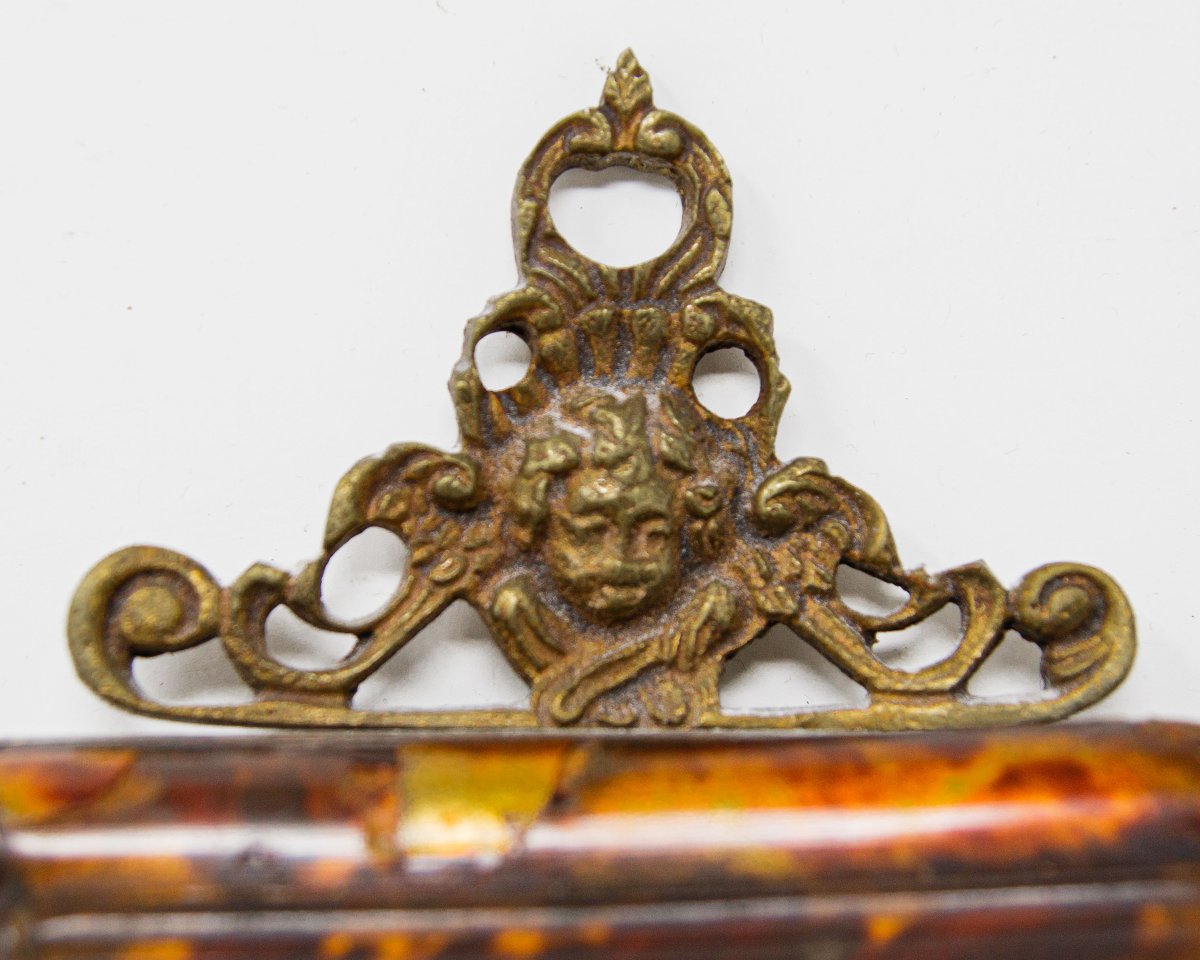
This admirable artifact stands out authoritatively among 18th-century Sicilian sacred art, presenting itself as a superb example of Trapani micro-sculpture intended for domestic devotion. The work, enclosed within a solid octagonal frame of brown tortoiseshell—whose warm, mottled texture creates a chromatic counterpoint of extreme elegance—reveals within a complex and refined scene of the Holy Family. Against a dark velvet background, which by contrast emphasizes the luster and whiteness of the carved ivory, the figures of Mary and Joseph stand out, captured in a moment of tender protection toward the Infant Jesus. At the center, the figure of the Christ Child serves as a visual and spiritual focal point, while above him unfolds the radiant glory of the Holy Spirit, represented in the form of a dove surrounded by a halo of slender ivory blades simulating divine light. On either side of the main figures, delicate cloud formations—also carved from ivory—emerge, lending the scene a supernatural aura, while the group rests on a monumental pedestal richly decorated with shell motifs and festoons, typical of the late Baroque repertoire. The structure is crowned by a gilded bronze crest, finely chiseled with an angelic face amidst scrollwork, which seals the object’s sacred significance. In the 18th century, Trapani established itself as one of the most flourishing centers in the Mediterranean for the working of exotic materials, thanks to its strategic location and long tradition linked to fishing and coral craftsmanship. Trapani sculptors developed a specialized technique for combining ivory, tortoiseshell, and gilded metals to meet the growing demand for objects of private devotion from the aristocracy and the upper middle class. These bedside tables were not mere furnishings, but spiritual microcosms intended for bedrooms, where the preciousness of the materials underscored the importance of domestic worship. The ability to carve ivory with millimeter precision made it possible to translate the grand models of Baroque statuary into pocket-sized versions, turning these artifacts into masterpieces of artistic craftsmanship sought after throughout Europe and now preserved as rarities in museum collections.
Period: 18th century
Style: Other Style
Condition: Good condition
Material: Ivory
Width: 9
Height: 13
Reference (ID): 1751376
Availability: In stock