


Neapolitan School, 17th Century, Charon Ferries Souls
Neapolitan School, 17th century
Charon ferries souls
Oil on canvas, 66 x 87 cm
With frame: cm 83 x 106
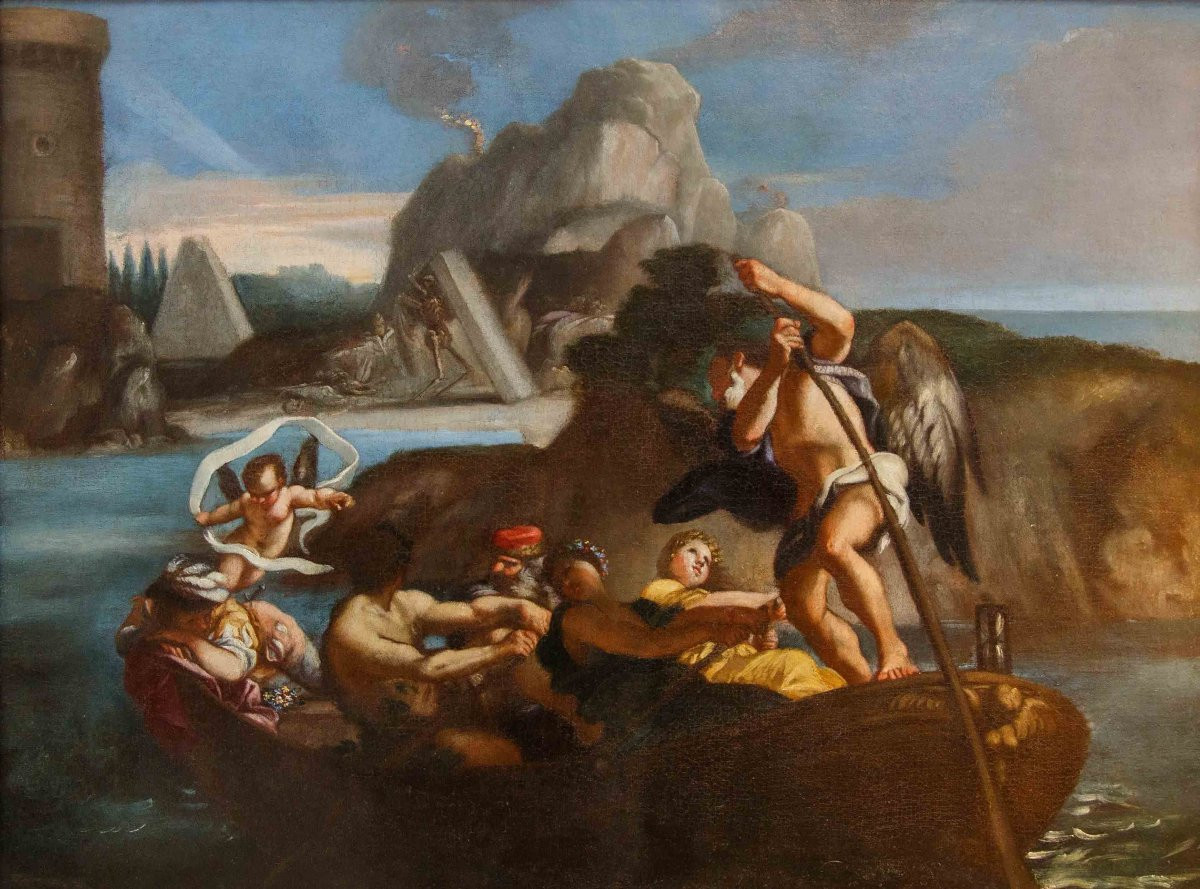
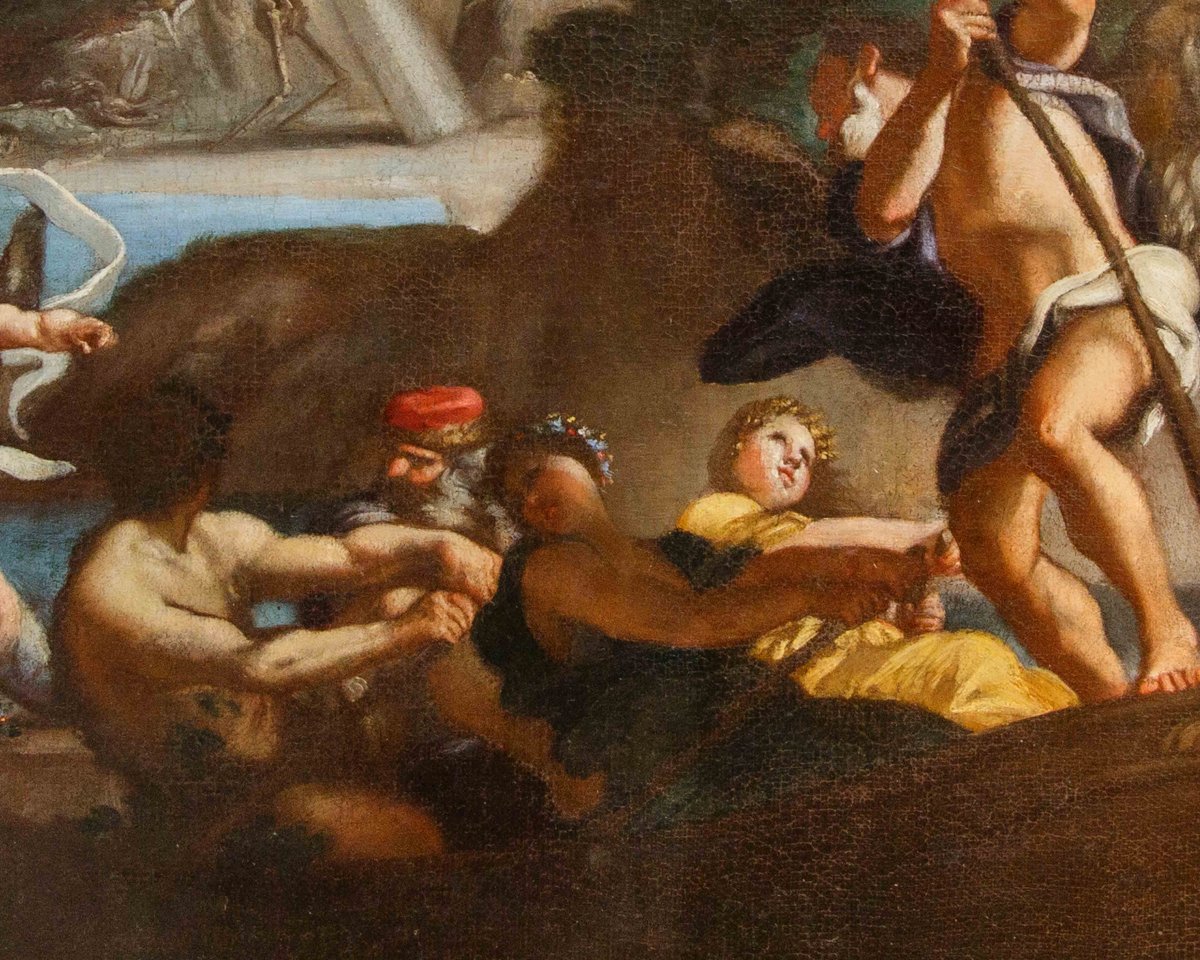
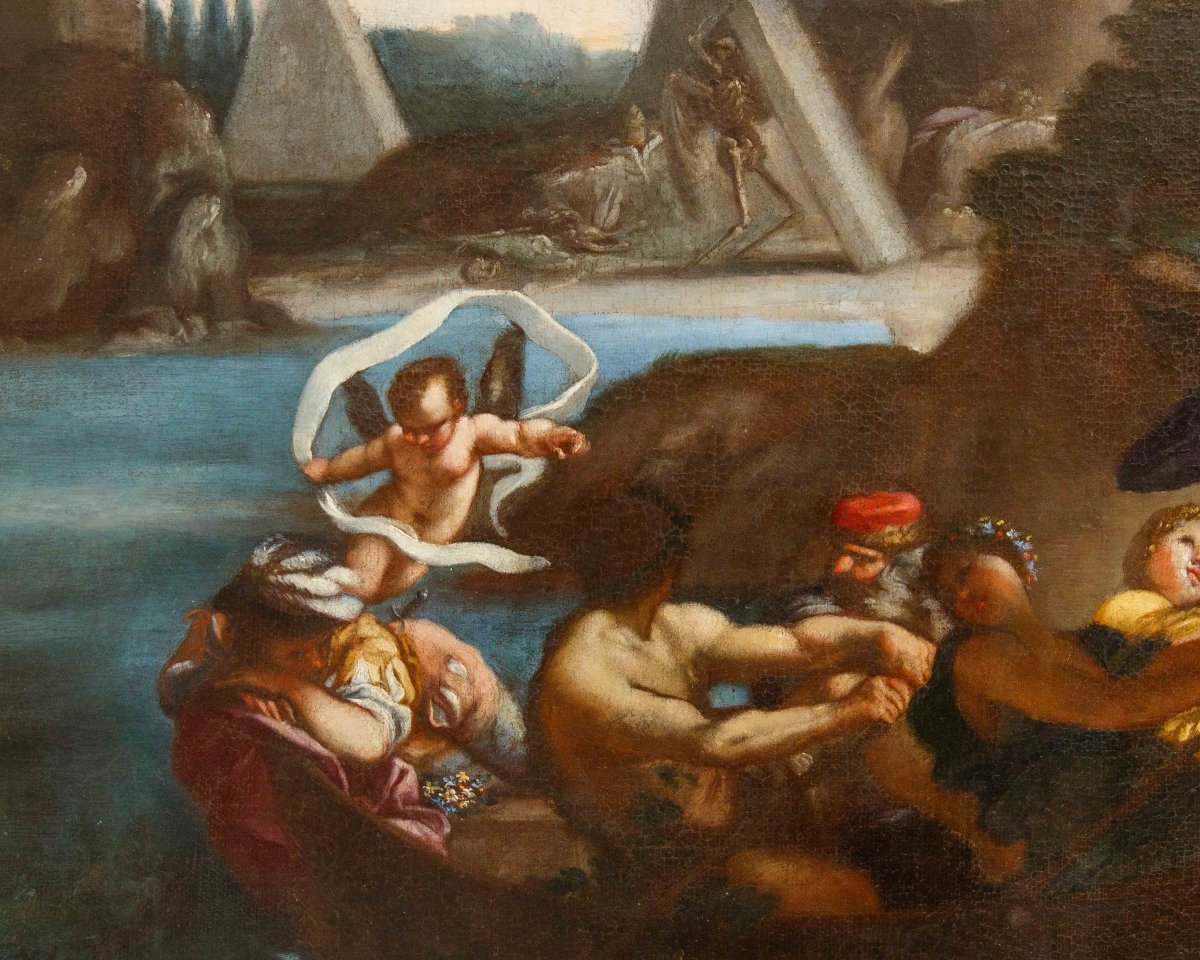
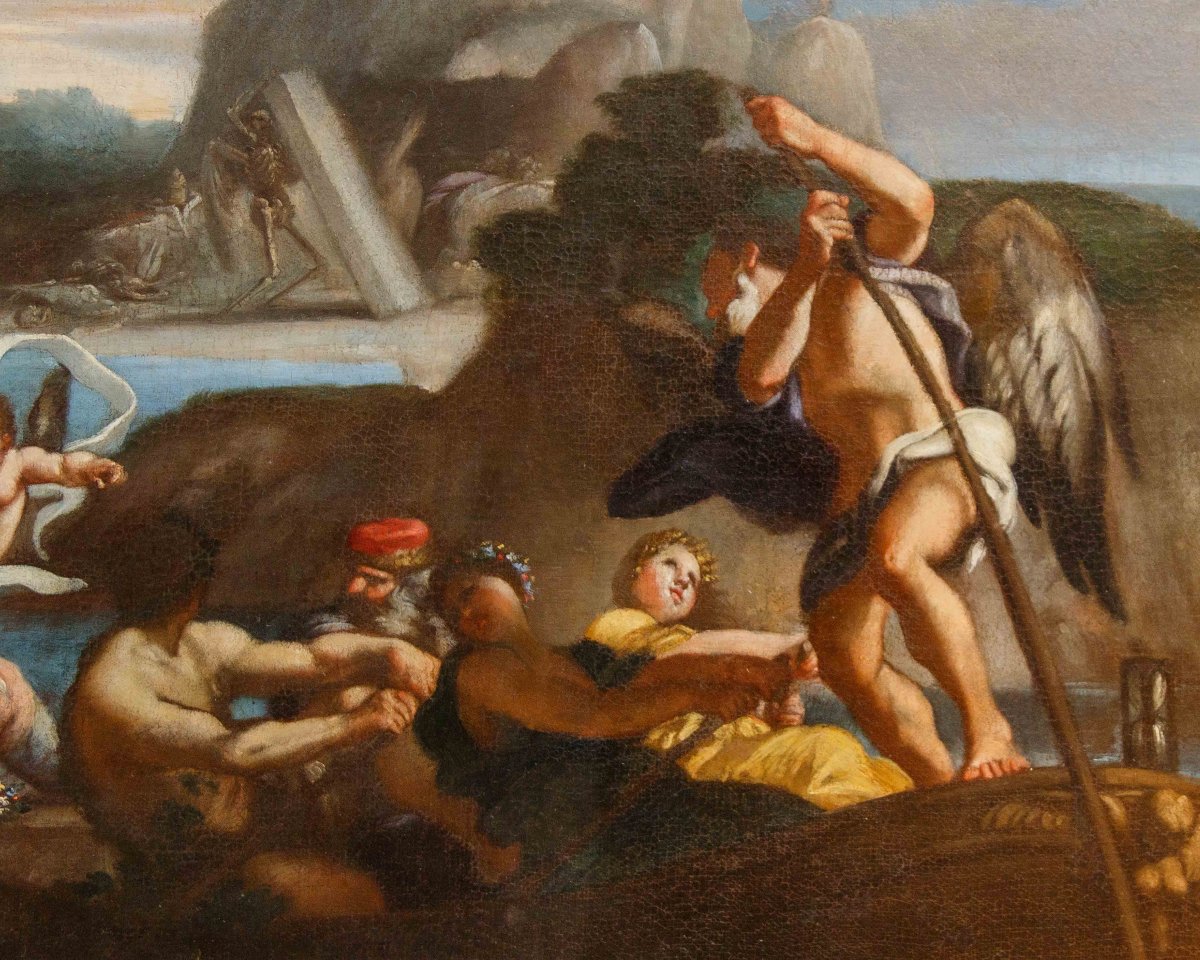
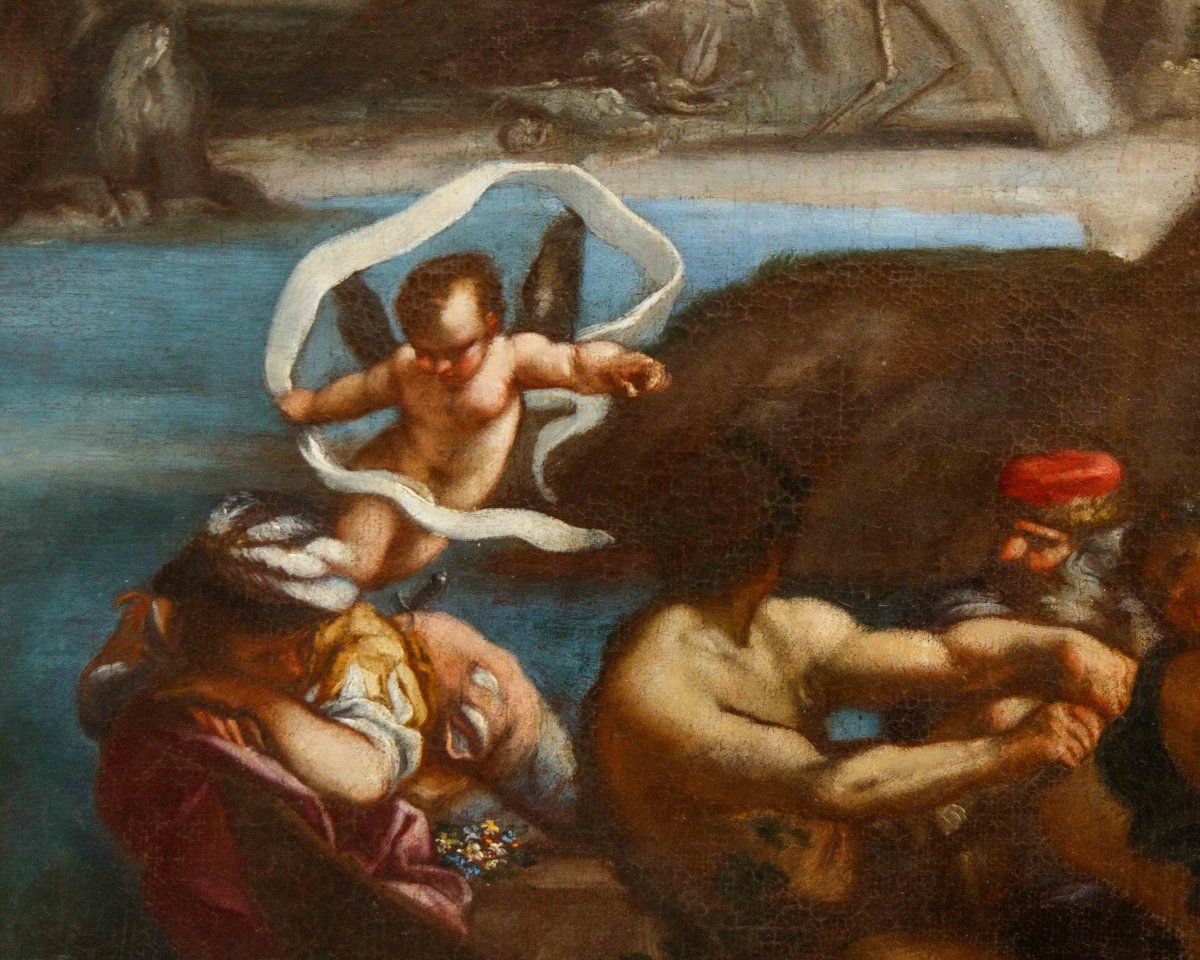
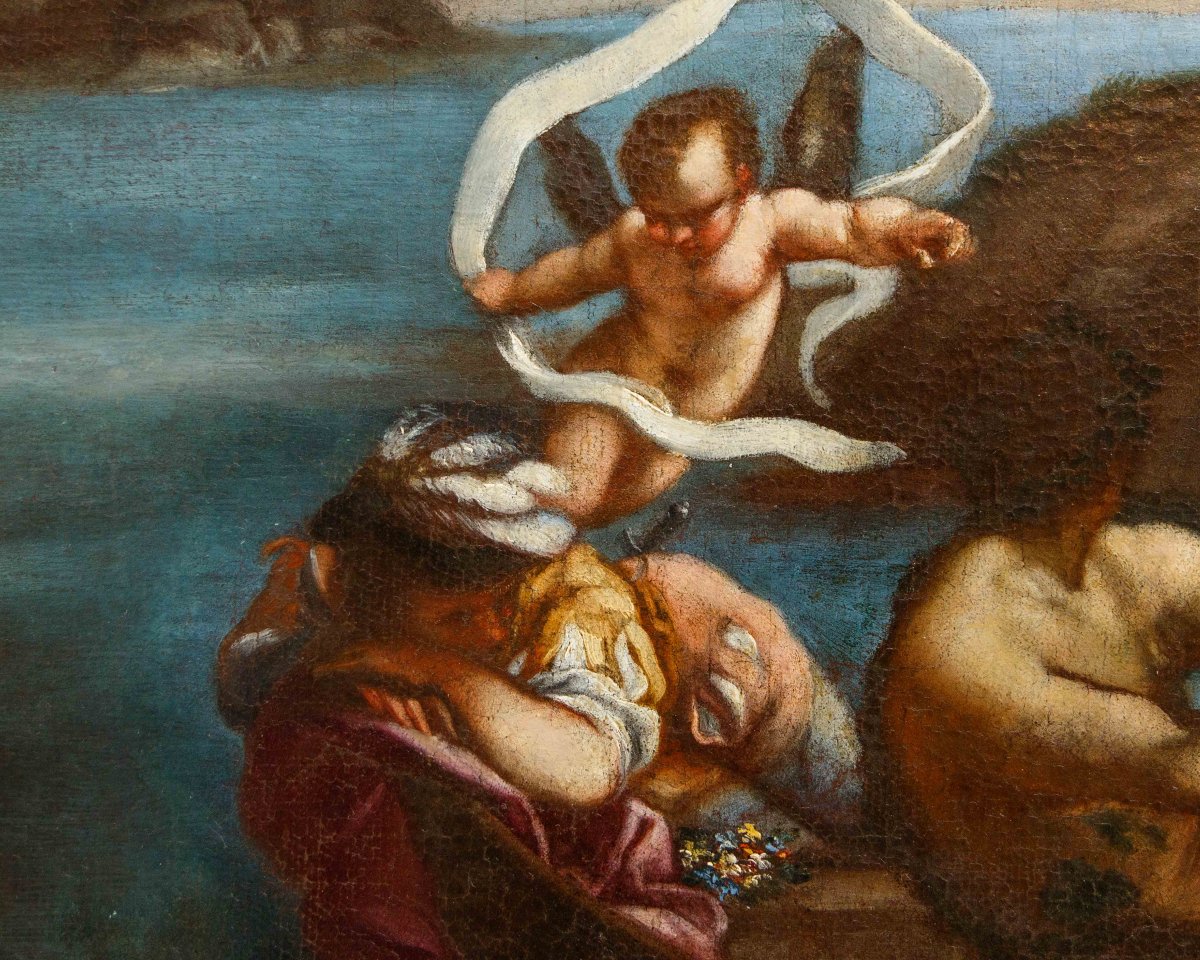
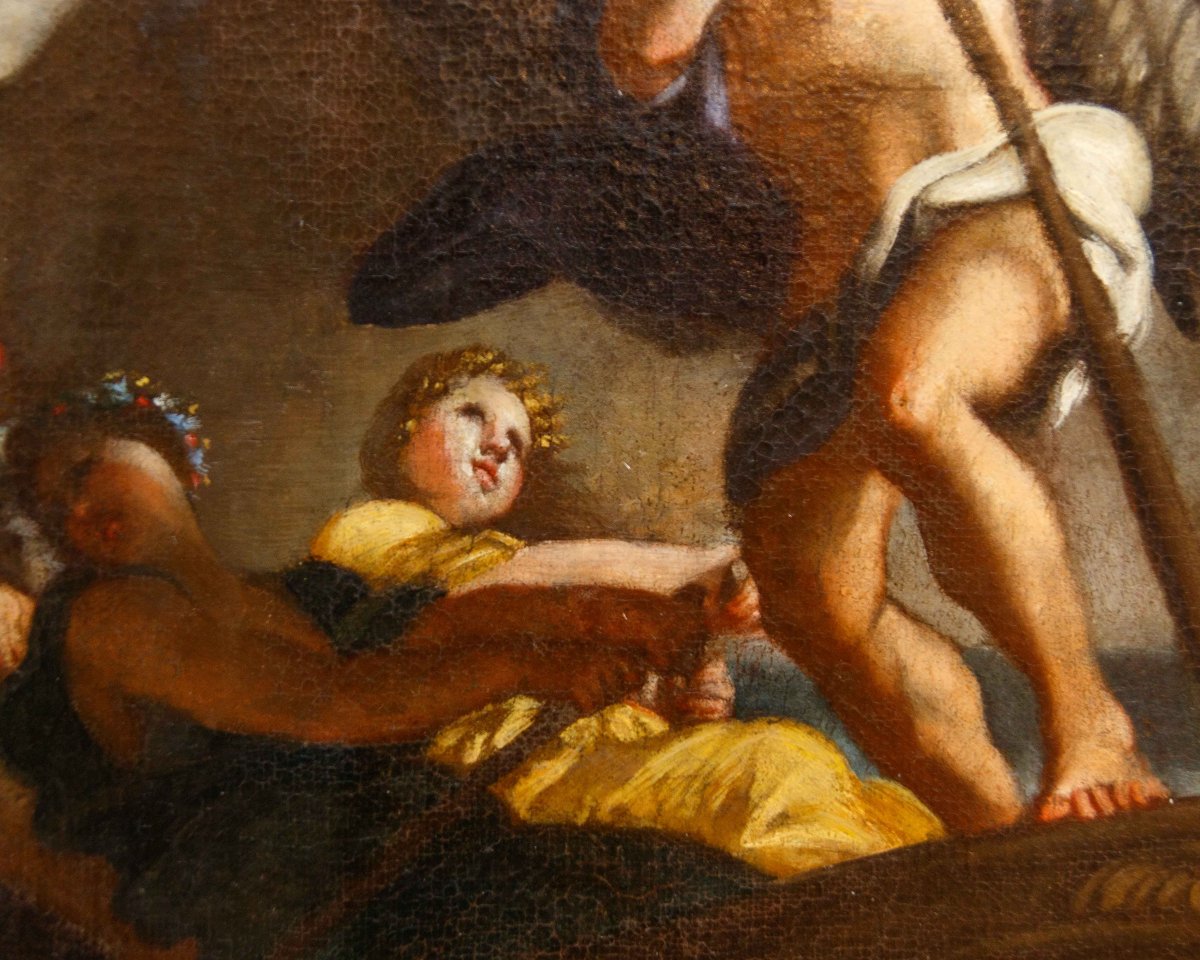
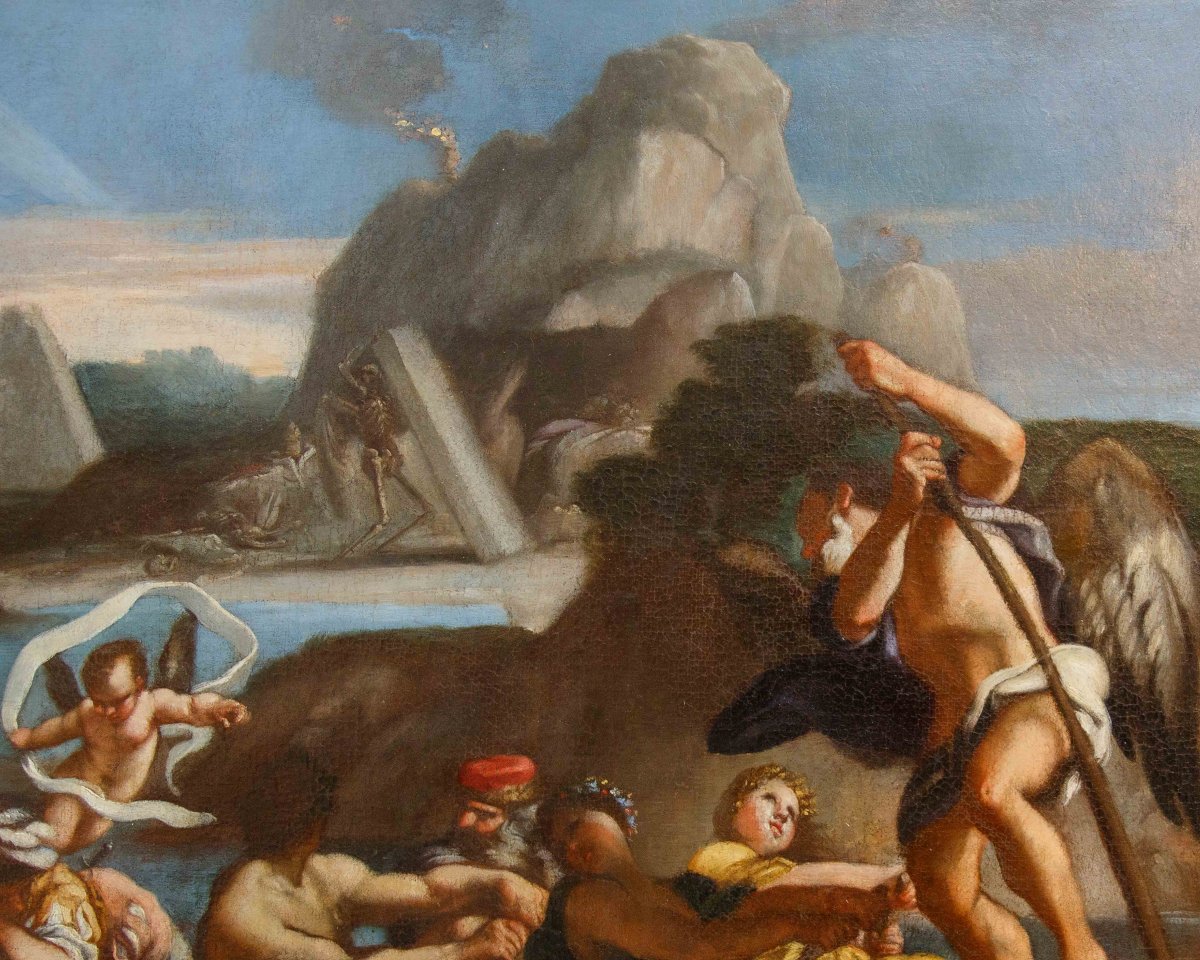
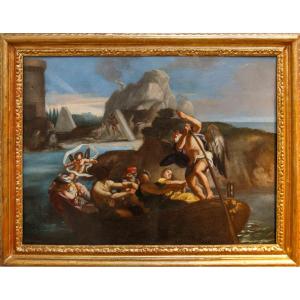
The attached work, an oil on canvas from the Neapolitan school attributable to the period between the seventeenth and eighteenth centuries, addresses the mythological theme of Charon ferrying souls across the Acheron, the infernal river well described by Dante in the Divine Comedy. The painting is distinguished by a dynamic and intense interpretation of the subject. In the foreground on the right stands Charon, whose figure is rendered with a powerful Michelangelo-like musculature, typical of the physical rendering of the Neapolitan Baroque. He is not here a bearded old man, but a vigorous and winged ferryman, with broad dark wings that accentuate his otherworldly nature, as he pushes the vessel with the help of the long oar. The souls, crowded together on the vessel, row in turn to distance themselves from the infernal vision unfolding behind them, made even more harsh by the typically rocky and bare landscape: skeletal figures seem to turn their own gravestones, making the tension experienced by the protagonists even more palpable. A man in a red headdress looks back in anguish, while a woman in a turban leaves herself exhausted on the edge of the boat. A peculiar detail is the presence of a winged putto floating above the vessel, one with a fluttering white band. This inclusion is unusual in a representation of Hell, suggesting a possible allegorical interpretation. The attribution to the Neapolitan school between the seventeenth and eighteenth centuries is strongly supported by the lesson of Luca Giordano (1634 – 1705), whose dynamic and luminous style dominated the Neapolitan scene and beyond. The work reflects the mature phase of Jordanian Baroque, which abandons Ribera's darker shadows in favor of a brilliant palette and swirling composition, which infuses life and movement into the scene. Quick brushstrokes and light management on muscular and tense bodies are stylistic figures of Giordano and his students, such as Francesco Solimena or Paolo De Matteis. Giordano himself painted a specific work on this subject, The Boat of Charon and the Rape of Proserpina, preserved in London (Mahon Collection, post 1685) and then also frescoed in Florence in the Palazzo Medici Riccardi. Although Giordano's work combines the ferryman with Pluto's abduction of Proserpina, addressing this subject confirms how popular it was in his atelier or environment, offering a model for later artists. The winged Charon, more like a genius or daimon than Dante's elderly ferryman, fits well with Giordano's visual sensitivity, who often reinterpreted classical characters with physical vigor and dramatic theatricality. Even the co-presence of anguished figures and allegorical cherubs refers to the complex staging and richness of invention of the Neapolitan master, who mixed the sacred, the historical and the mythological with great ease.
Charon ferries souls
Oil on canvas, 66 x 87 cm
With frame: cm 83 x 106
The attached work, an oil on canvas from the Neapolitan school attributable to the period between the seventeenth and eighteenth centuries, addresses the mythological theme of Charon ferrying souls across the Acheron, the infernal river well described by Dante in the Divine Comedy. The painting is distinguished by a dynamic and intense interpretation of the subject. In the foreground on the right stands Charon, whose figure is rendered with a powerful Michelangelo-like musculature, typical of the physical rendering of the Neapolitan Baroque. He is not here a bearded old man, but a vigorous and winged ferryman, with broad dark wings that accentuate his otherworldly nature, as he pushes the vessel with the help of the long oar. The souls, crowded together on the vessel, row in turn to distance themselves from the infernal vision unfolding behind them, made even more harsh by the typically rocky and bare landscape: skeletal figures seem to turn their own gravestones, making the tension experienced by the protagonists even more palpable. A man in a red headdress looks back in anguish, while a woman in a turban leaves herself exhausted on the edge of the boat. A peculiar detail is the presence of a winged putto floating above the vessel, one with a fluttering white band. This inclusion is unusual in a representation of Hell, suggesting a possible allegorical interpretation. The attribution to the Neapolitan school between the seventeenth and eighteenth centuries is strongly supported by the lesson of Luca Giordano (1634 – 1705), whose dynamic and luminous style dominated the Neapolitan scene and beyond. The work reflects the mature phase of Jordanian Baroque, which abandons Ribera's darker shadows in favor of a brilliant palette and swirling composition, which infuses life and movement into the scene. Quick brushstrokes and light management on muscular and tense bodies are stylistic figures of Giordano and his students, such as Francesco Solimena or Paolo De Matteis. Giordano himself painted a specific work on this subject, The Boat of Charon and the Rape of Proserpina, preserved in London (Mahon Collection, post 1685) and then also frescoed in Florence in the Palazzo Medici Riccardi. Although Giordano's work combines the ferryman with Pluto's abduction of Proserpina, addressing this subject confirms how popular it was in his atelier or environment, offering a model for later artists. The winged Charon, more like a genius or daimon than Dante's elderly ferryman, fits well with Giordano's visual sensitivity, who often reinterpreted classical characters with physical vigor and dramatic theatricality. Even the co-presence of anguished figures and allegorical cherubs refers to the complex staging and richness of invention of the Neapolitan master, who mixed the sacred, the historical and the mythological with great ease.
4 400 €
Period: 17th century
Style: Other Style
Condition: Good condition
Material: Oil painting
Width: 87
Height: 66
Reference (ID): 1691201
Availability: In stock
Print