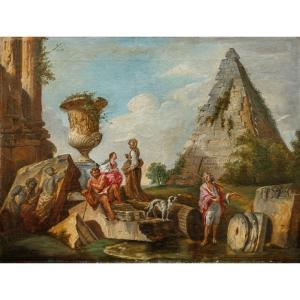


Late 18th Century, By Giovanni Paolo Panini, *capriccio Of Ruins With The Pyramid Of Cestius*
Late 18th century, after Giovanni Paolo Panini (Piacenza, 1691 – Rome, 1765)
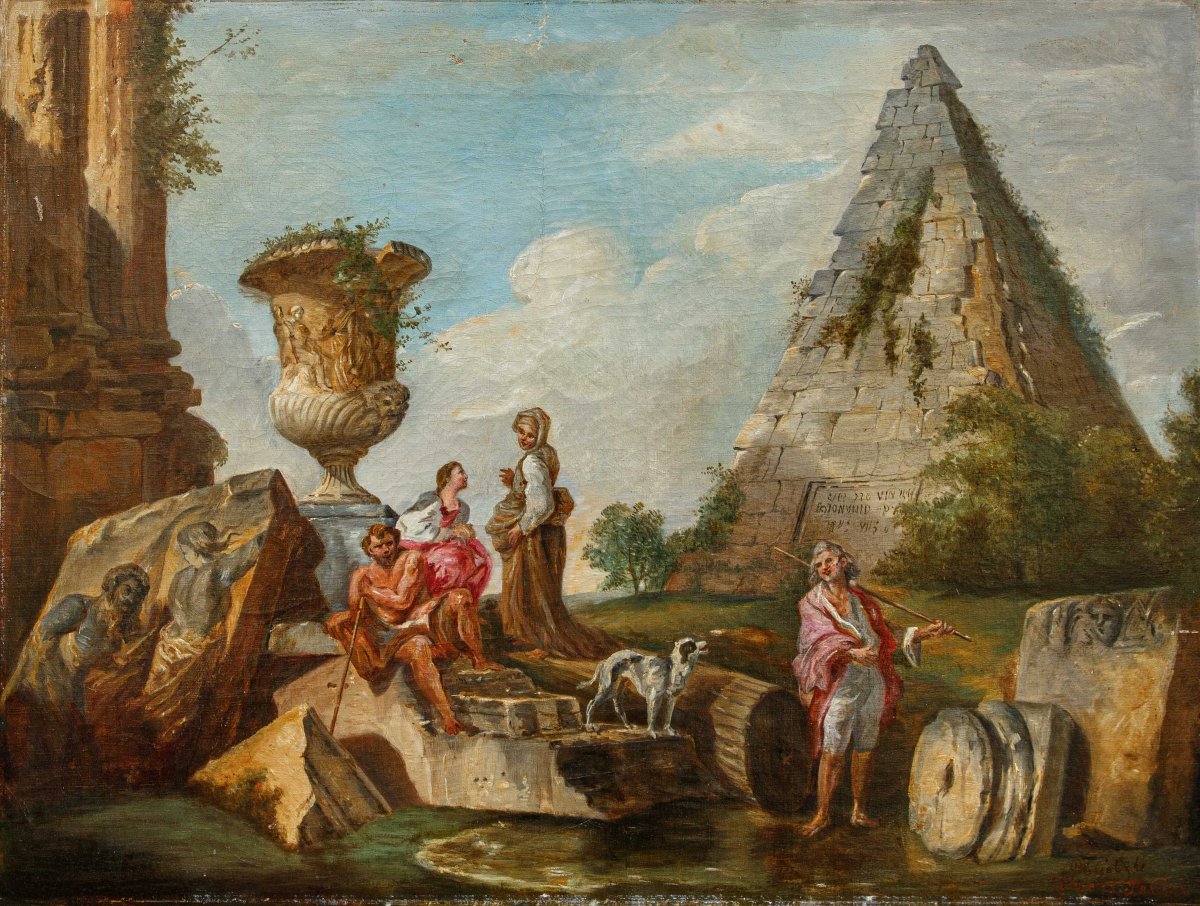
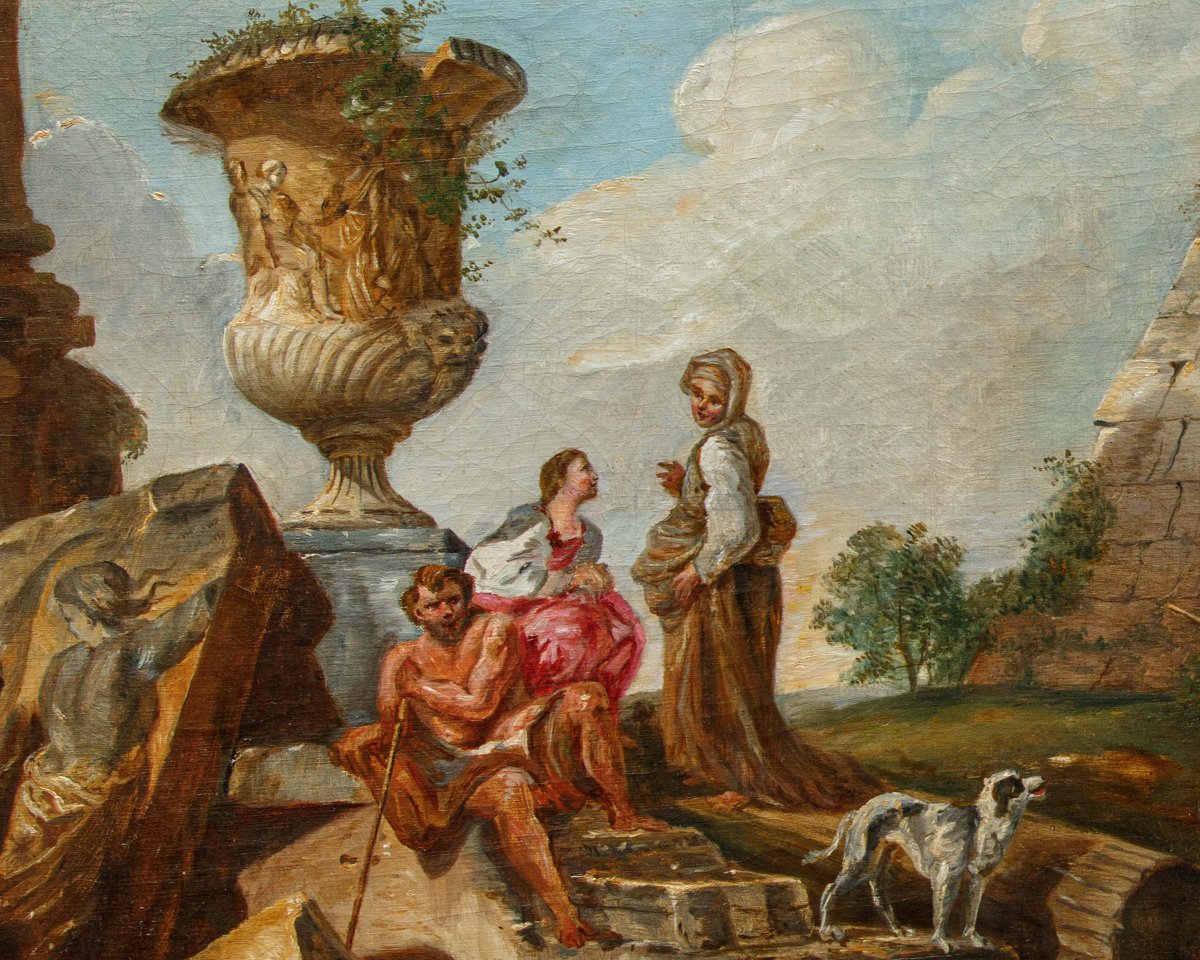
Capriccio of Ruins with the Pyramid of Cestius and Four Figures
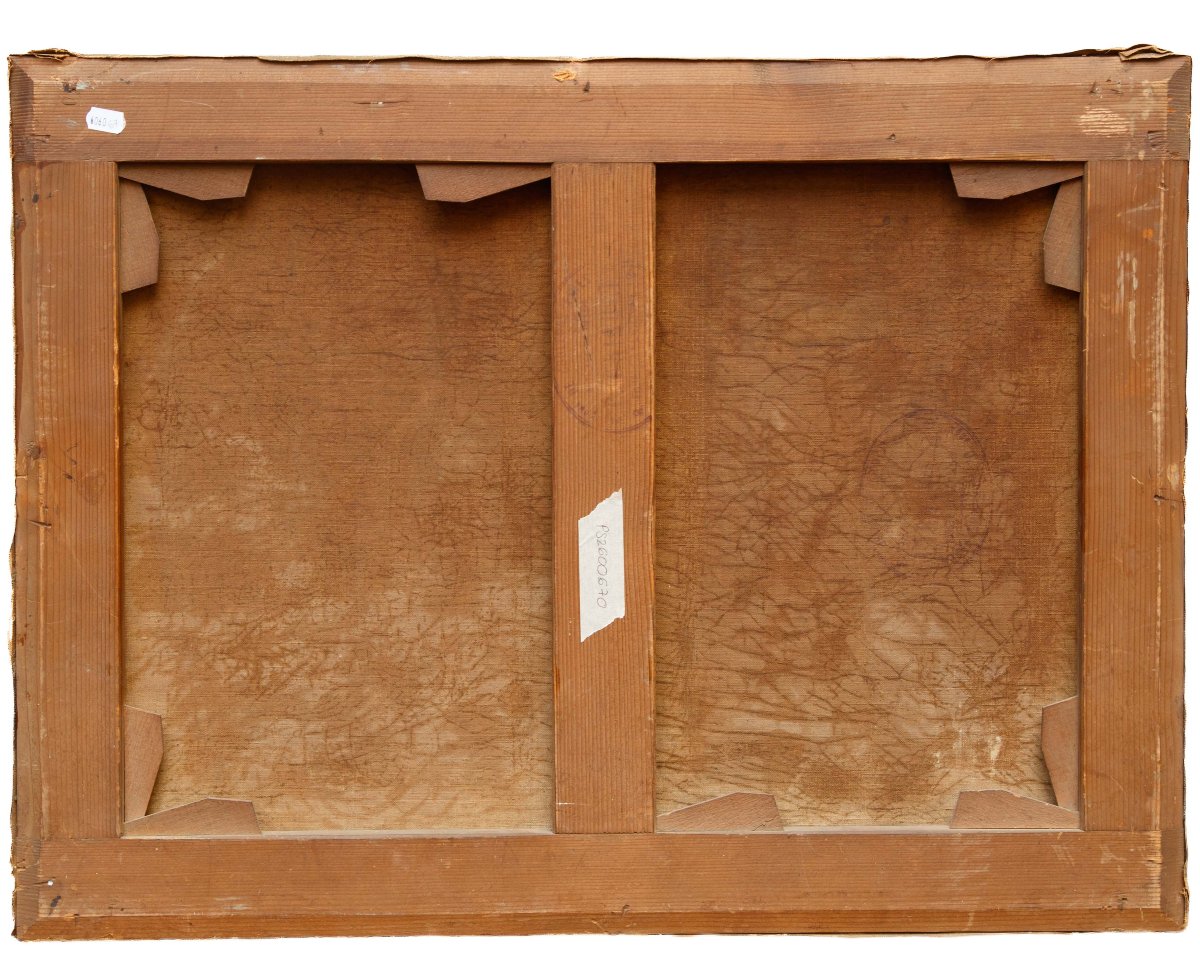
Oil on canvas, 50 x 60 cm
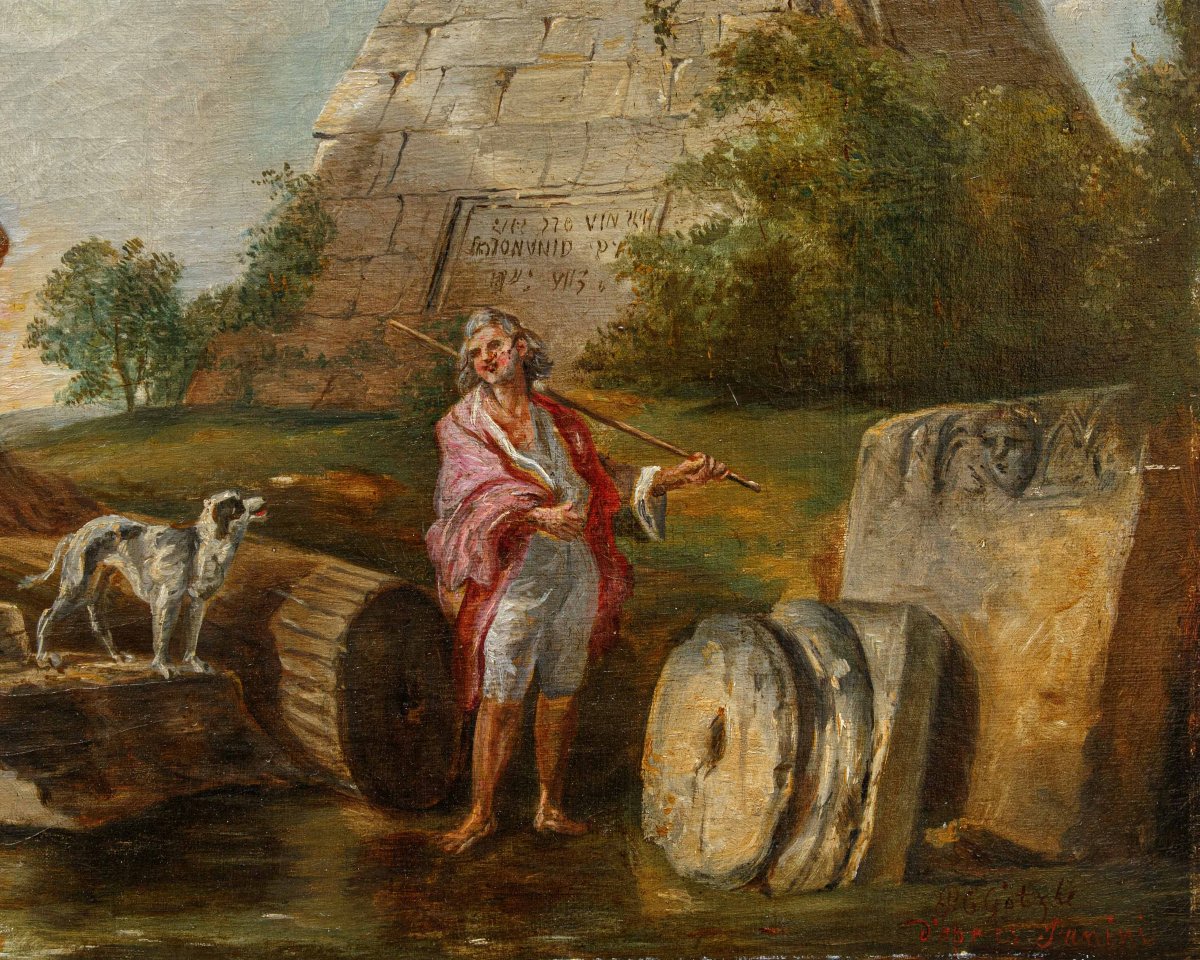
Signed lower right H. Götzke after Panini
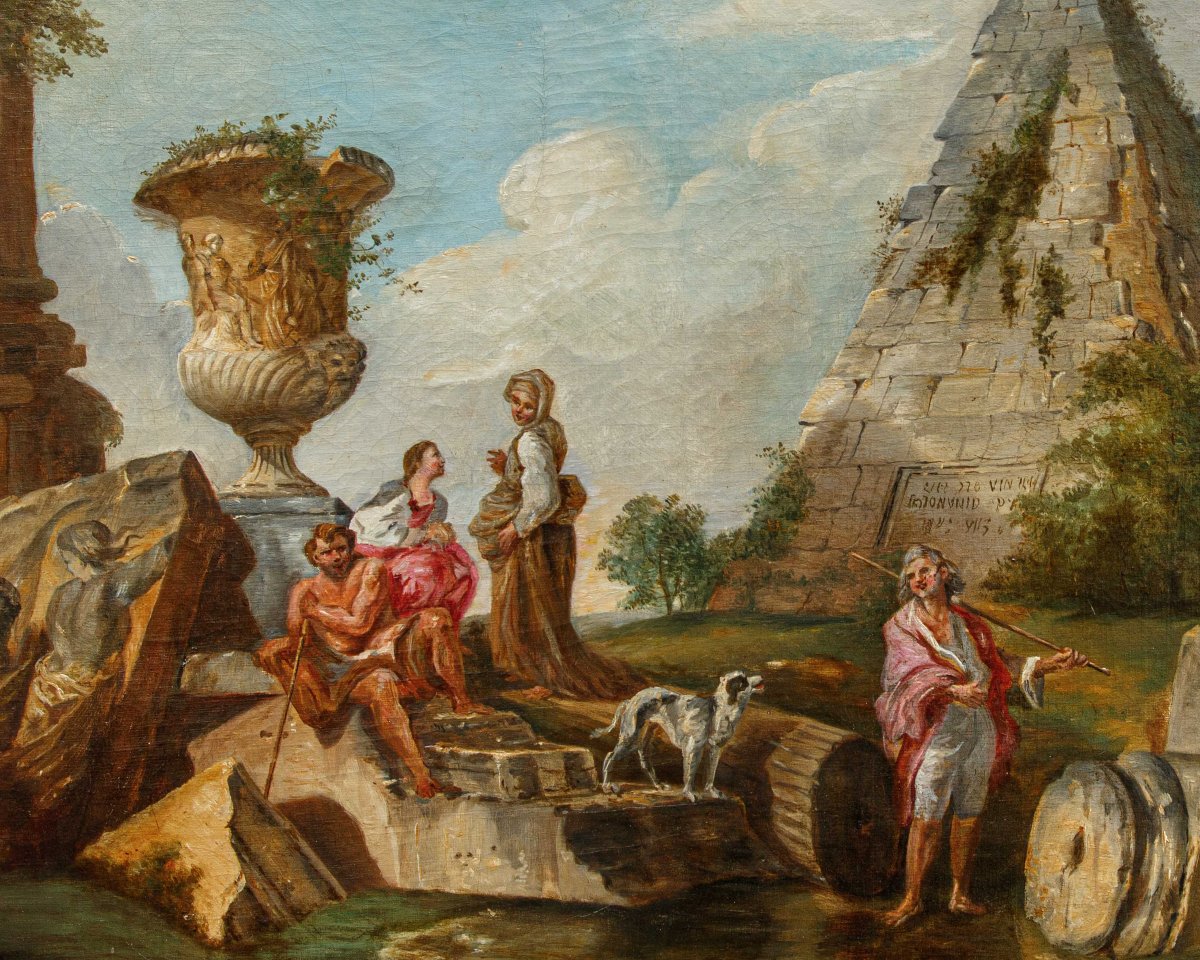
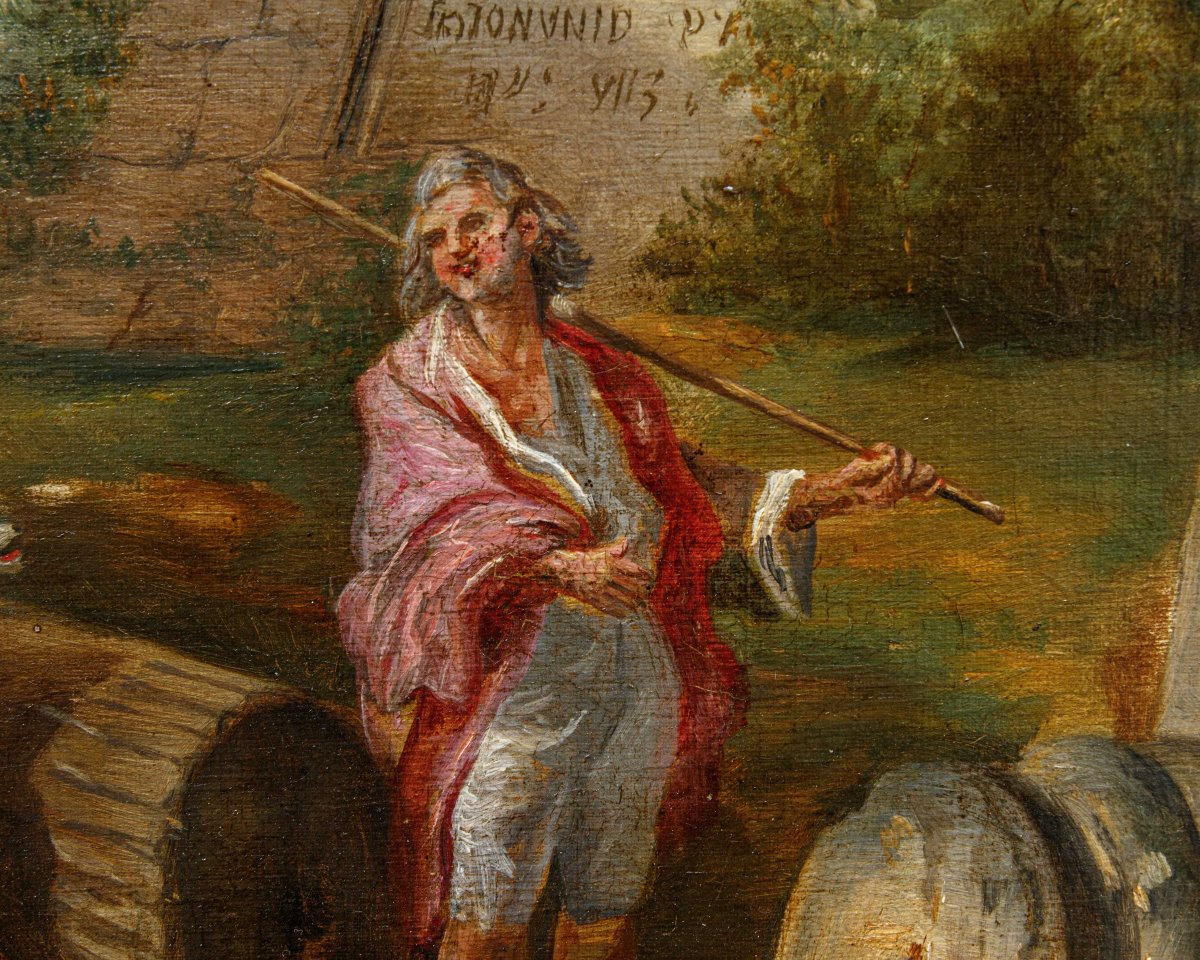
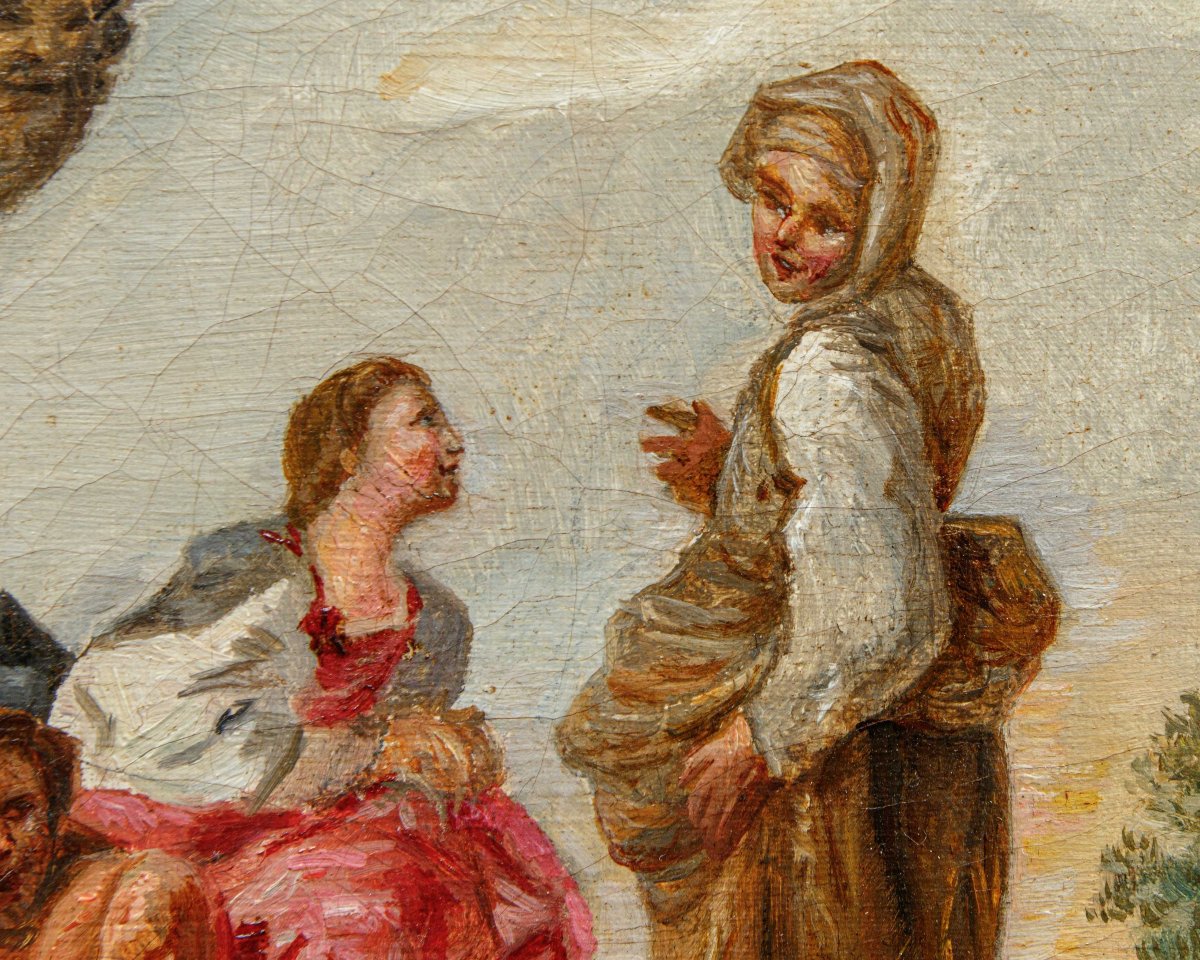
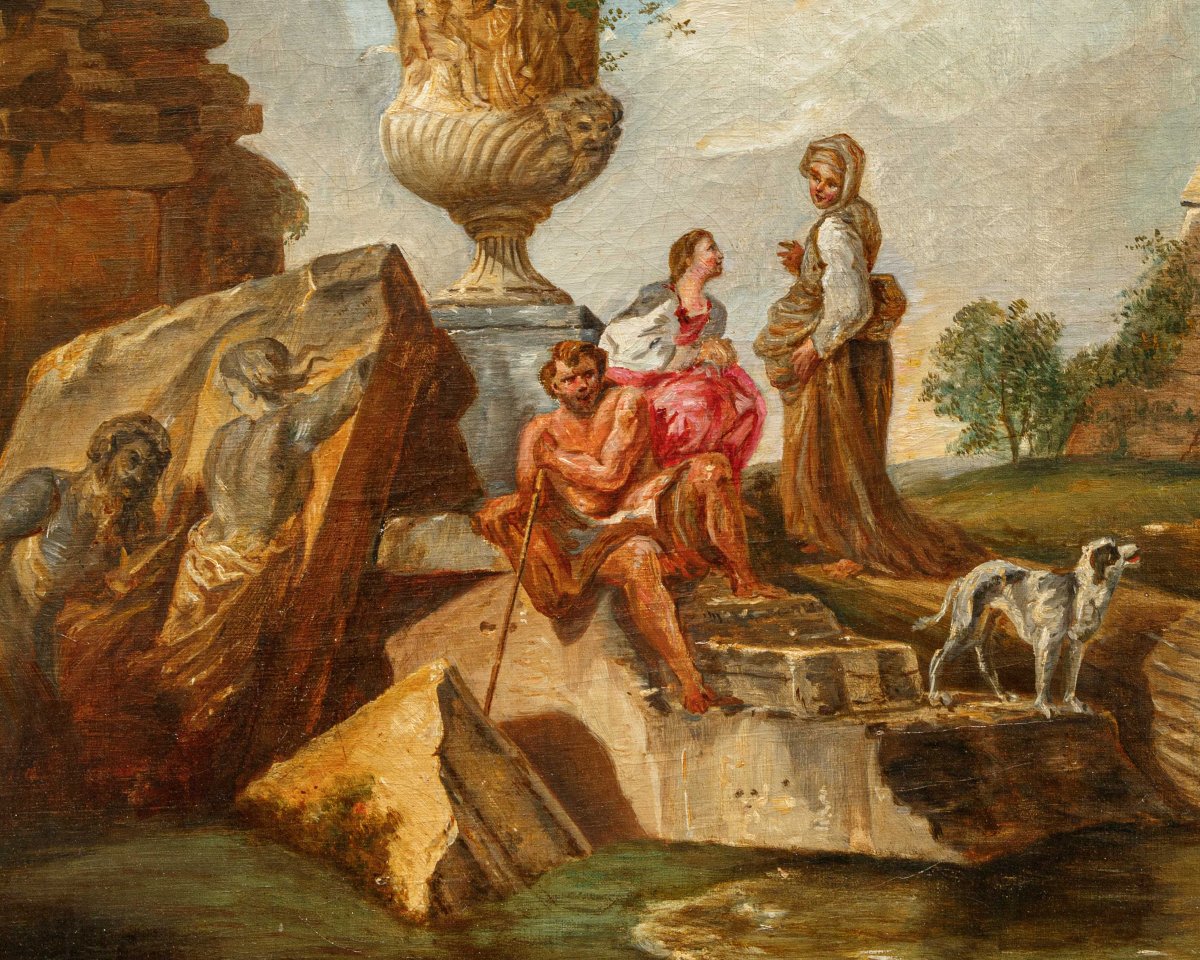
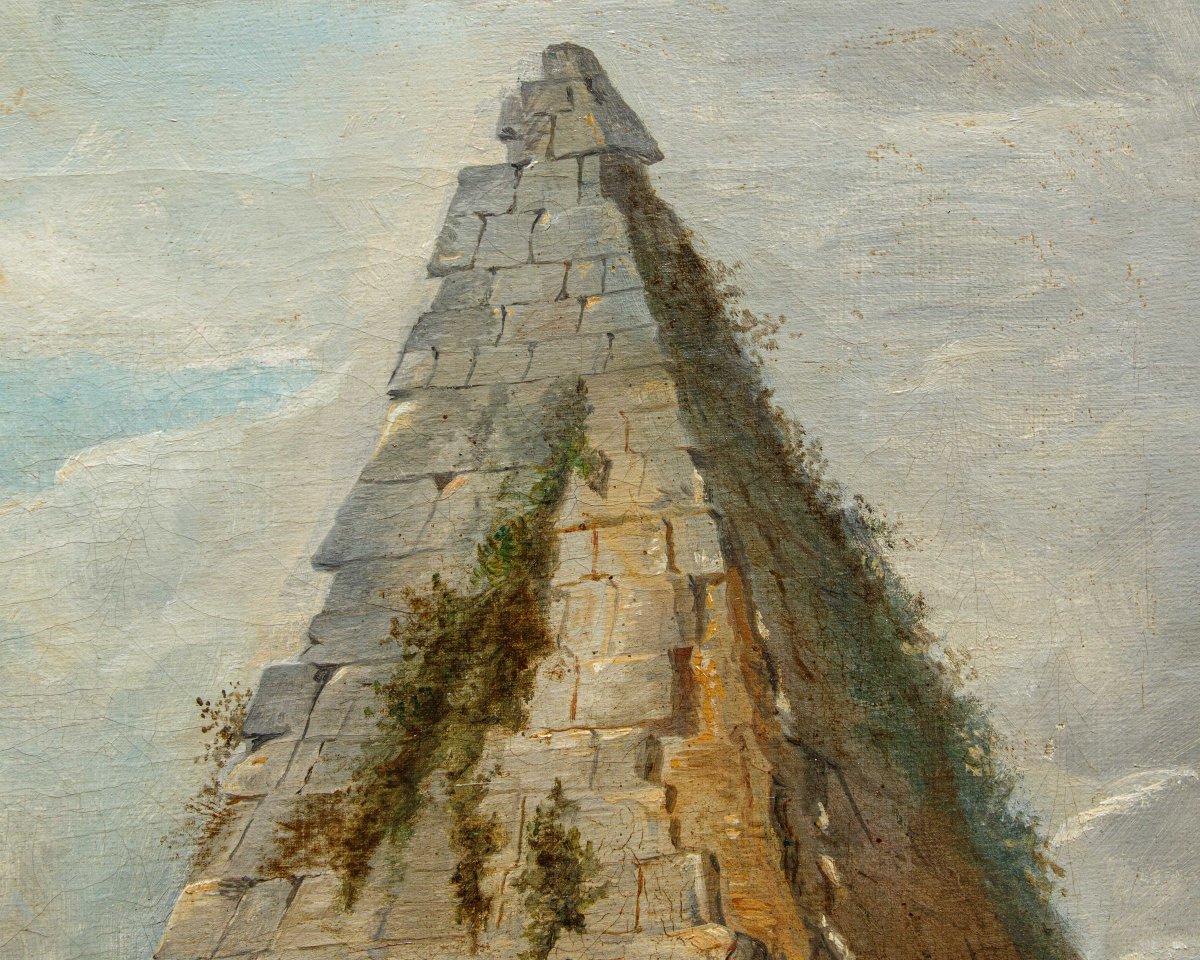
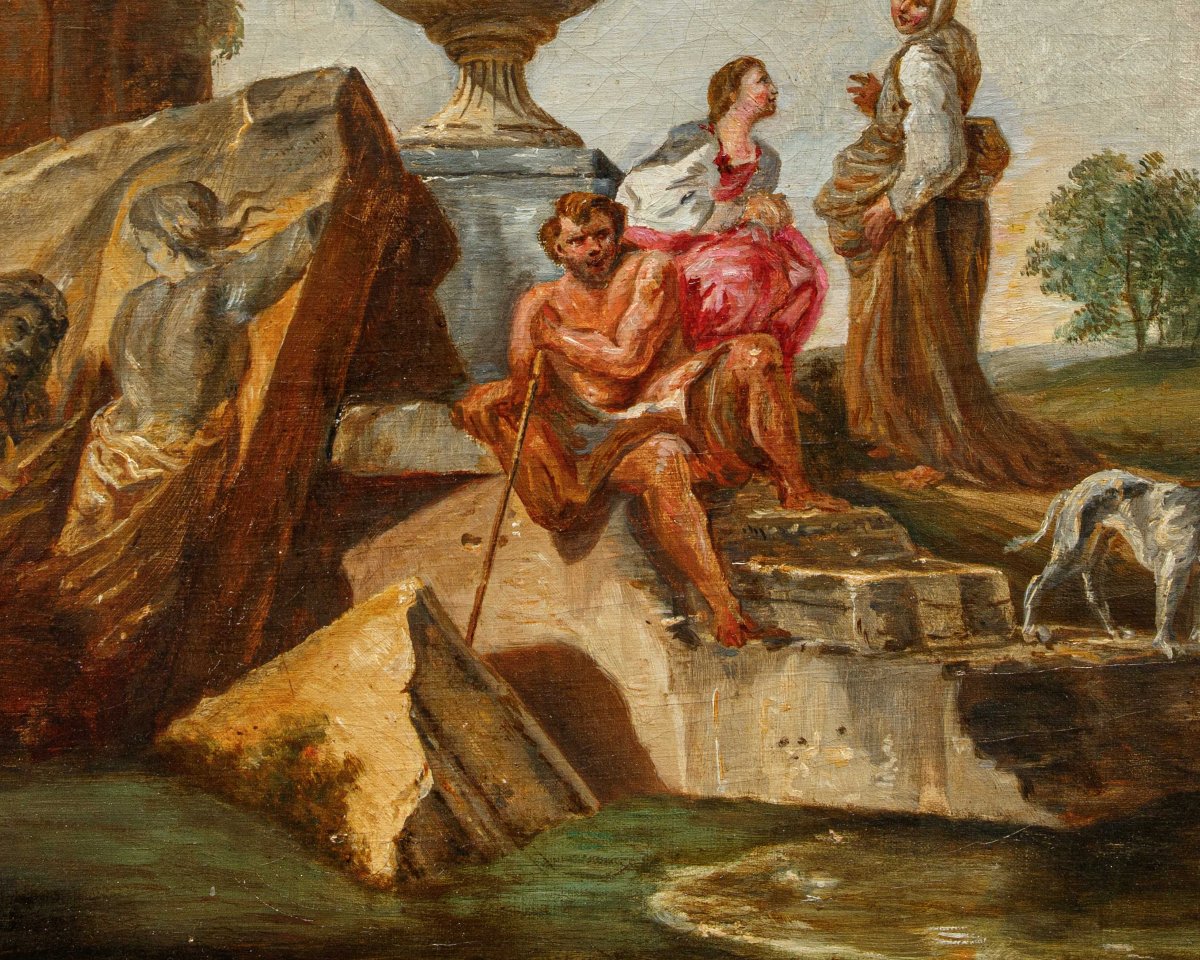
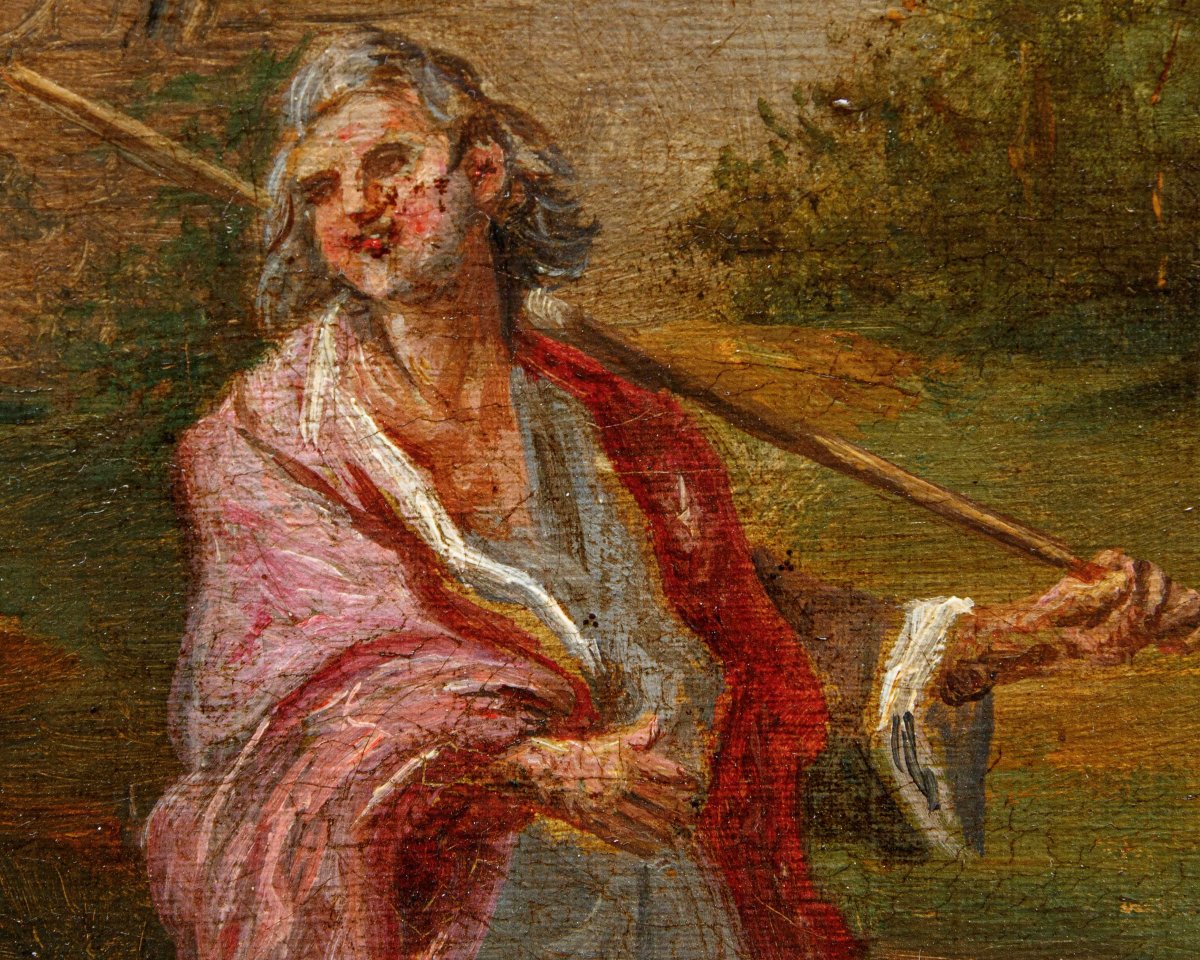
An architectural capriccio combining classical ruins, ancient memories, and everyday life. Set among the remains of an imaginary antiquity dominated by the massive Cestius Pyramid—rendered here in a golden light that accentuates its dark silhouette against a sky streaked with light clouds—this scene brings the composition to life. In the foreground, amid fragments of entablatures, broken columns, and a large garden vase in a classical style, four figures enliven the composition: a bare-chested shepherd, recognizable by the garment slipping from his shoulders, converses with two women, while a short distance away a man with a staff and a dog by his side observes the scene—a theatrical arrangement that closely echoes the scenographic tradition of the Bibiena brothers, with the backdrop of ruins framing the view like a stage curtain.
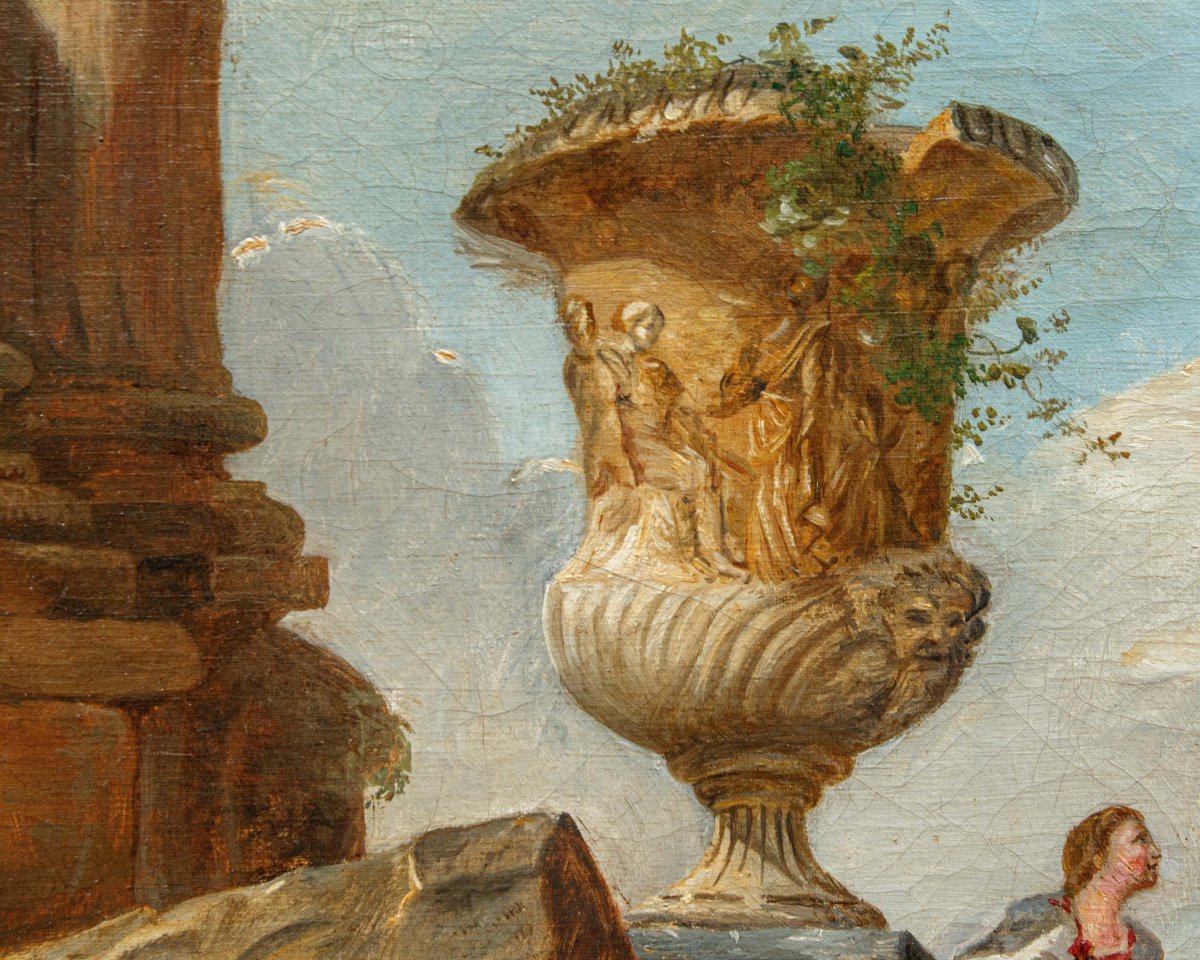
The vase depicted is not an invention of the artist but faithfully reproduces the famous Borghese Vase, a Hellenistic sculpture from the 1st century B.C. It was discovered in Rome in the 16th century, remained in the Borghese collection until it passed to Napoleon in 1807, and is now housed in the Louvre; in the 18th century, numerous replicas made of various materials became widespread, and it is natural to find it among the decorative motifs favored by painters of ruins.
The painting is the work of an artist active in the late 18th century, who signs “H. Götzke” at the bottom but whose identity remains poorly documented to this day. The work appears to be a reproduction of a composition that Francesco Panini executed several times, with minimal variations, throughout his career: in fact, four autograph versions are known to exist: one formerly in the Gamba Collection, one at the Louvre, one in the collection of the Cassa di Risparmio di Piacenza, and one housed at the Diocesan Museum of Milan. Despite differences in detail, all versions feature the shepherd in a short tunic, the bas-relief depicting a satyr and a nymph, and the two women engaged in conversation—elements that Panini revisited and adapted repeatedly throughout his mature career. The iconographic starting point for this composition can be found in a work by Giovanni Ghisolfi, *The Sermon of a Sibyl with the Pyramid of Cestius*, from which Panini drew inspiration to rework it according to his own sensibility for composition and lighting, creating a compositional scheme that, as this version also demonstrates, enjoyed such popularity and widespread circulation that it was taken up and replicated well beyond the artist’s immediate circle.
Period: 18th century
Style: Other Style
Condition: Good condition
Material: Oil painting
Width: 60
Height: 50
Reference (ID): 1826628
Availability: In stock