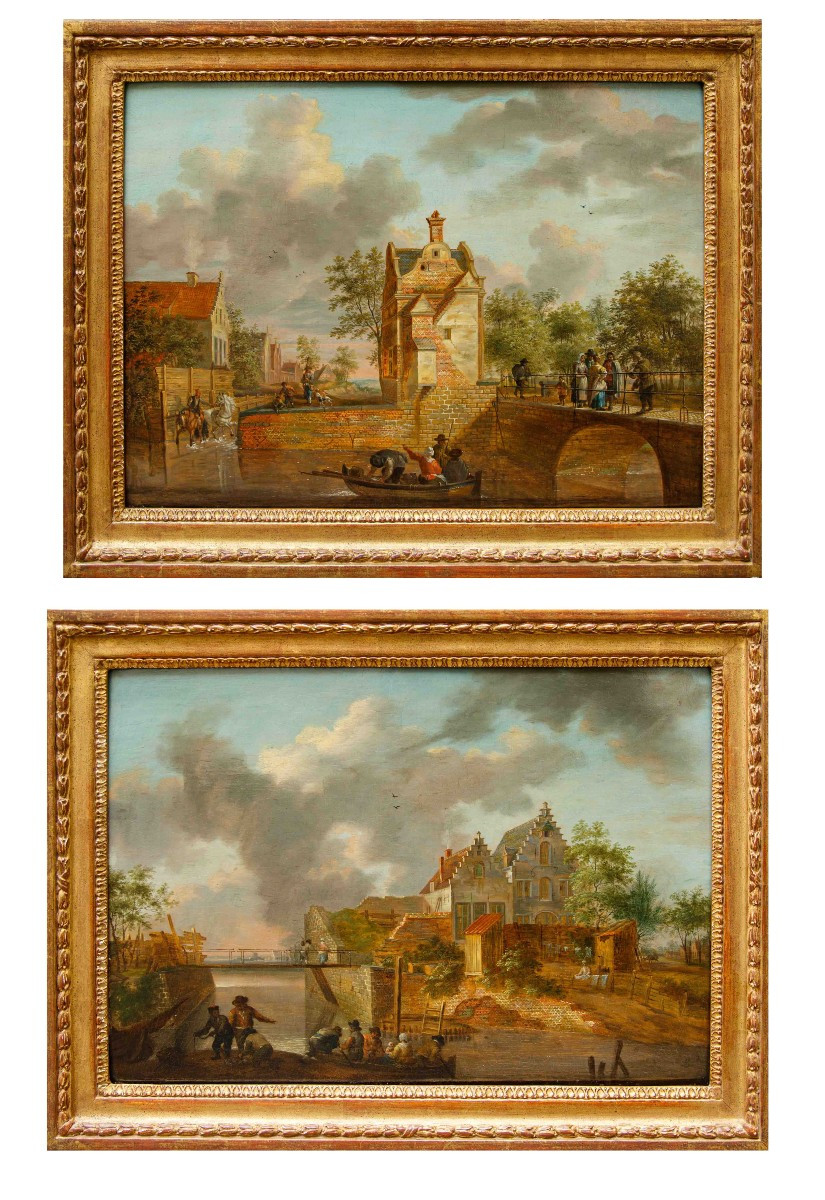


Hendrik Frans De Cort (antwerp, 1742 – London, 1810), River Landscapes
Hendrik Frans de Cort (Antwerp, 1742 – London, 1810)
River Landscapes
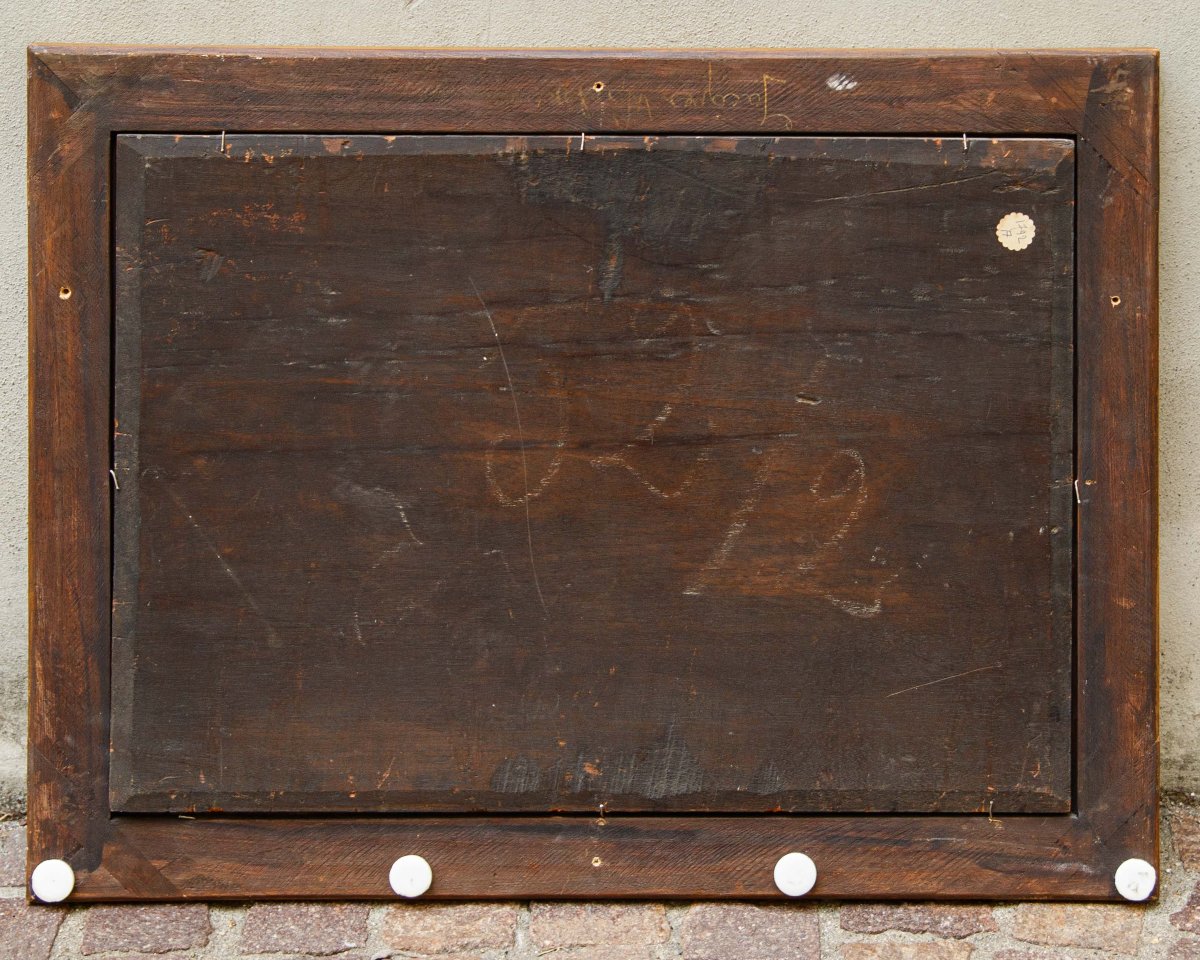
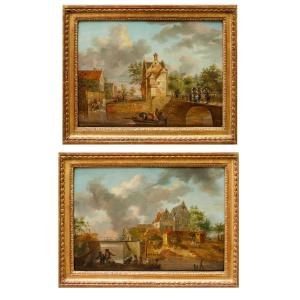
Oil on panel, 39 x 53 cm – with frame, 49 x 65 cm
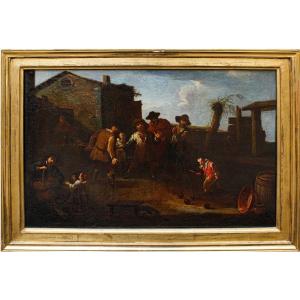
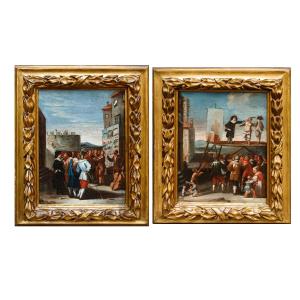
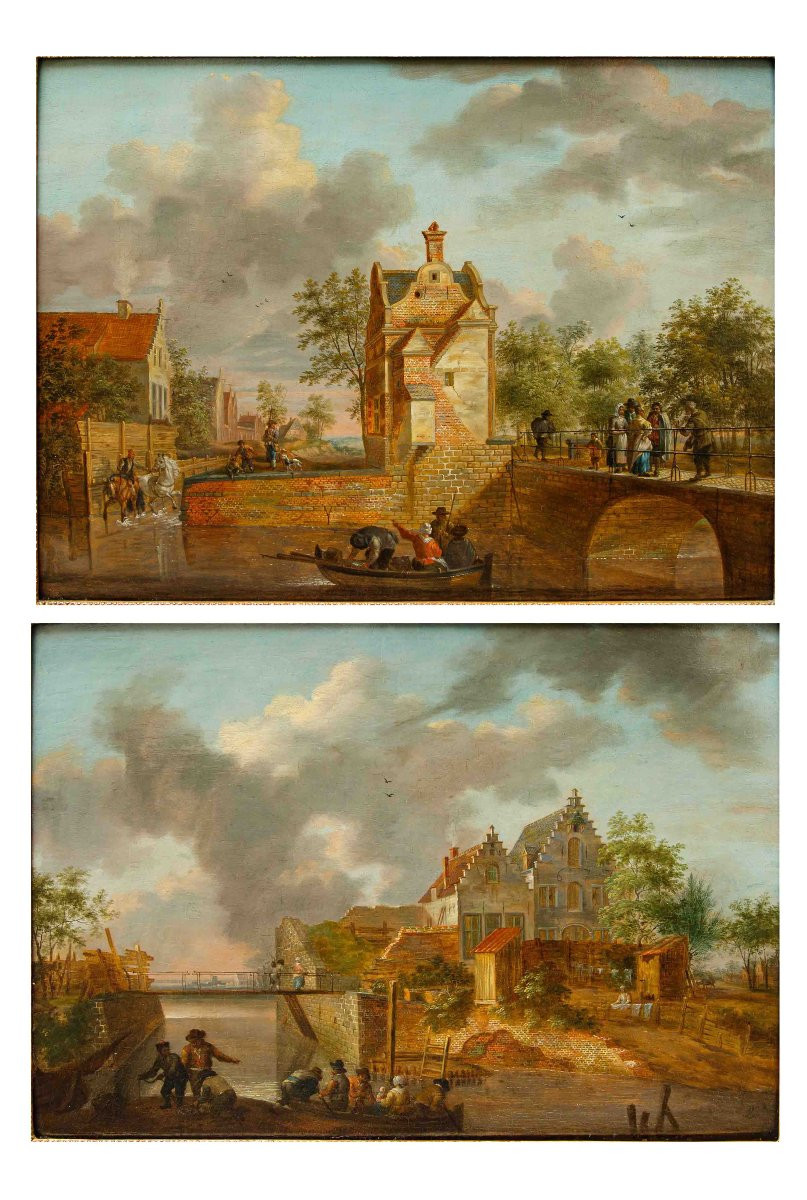
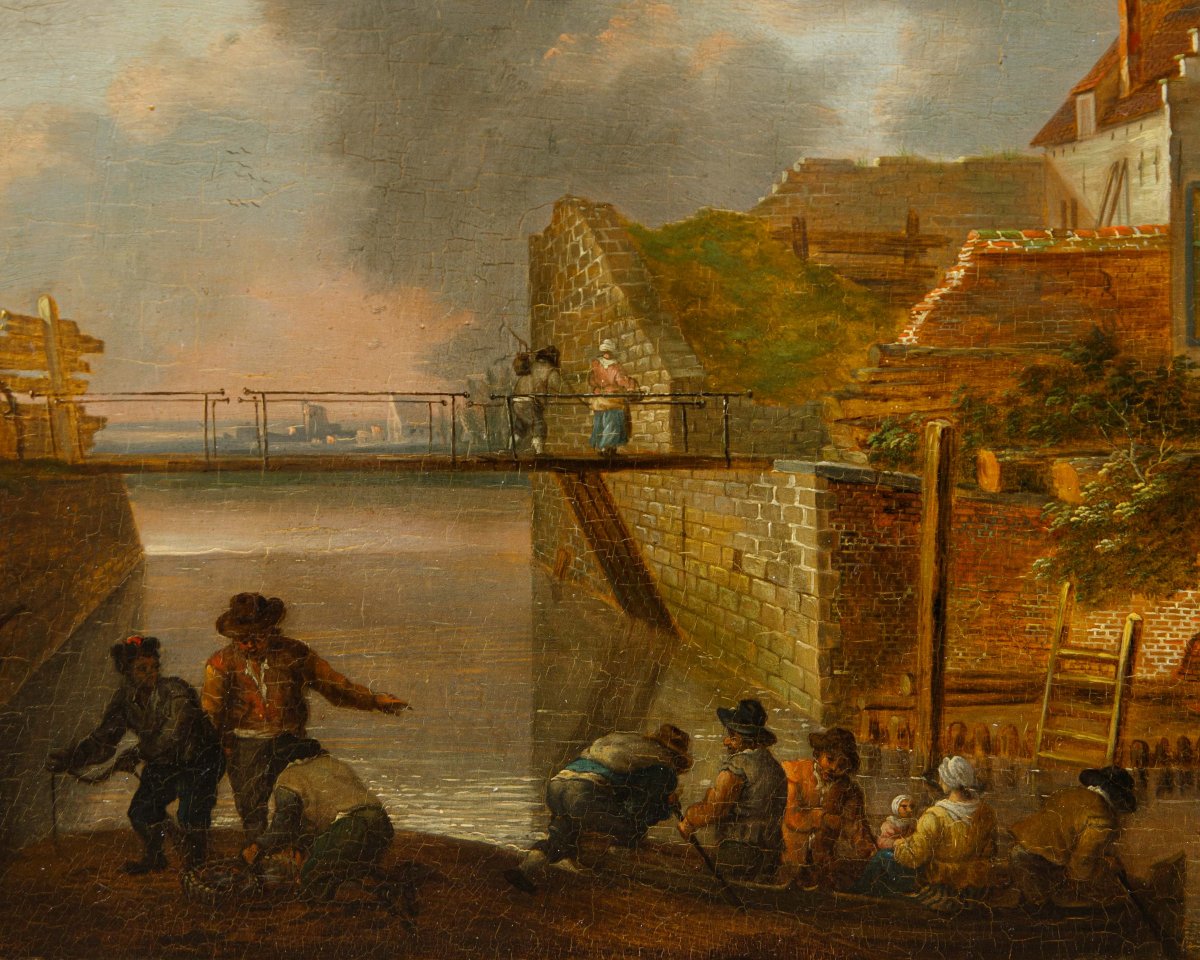
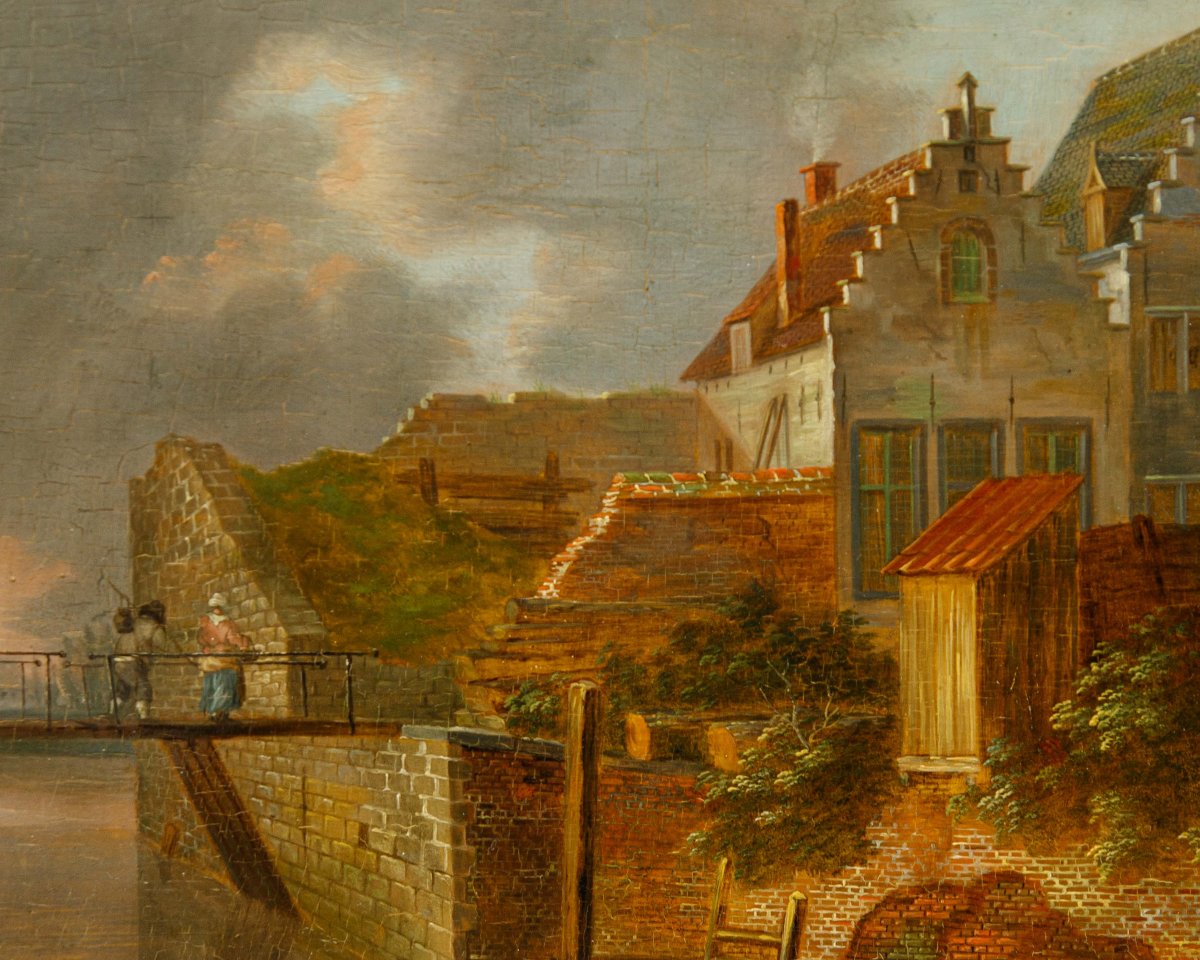
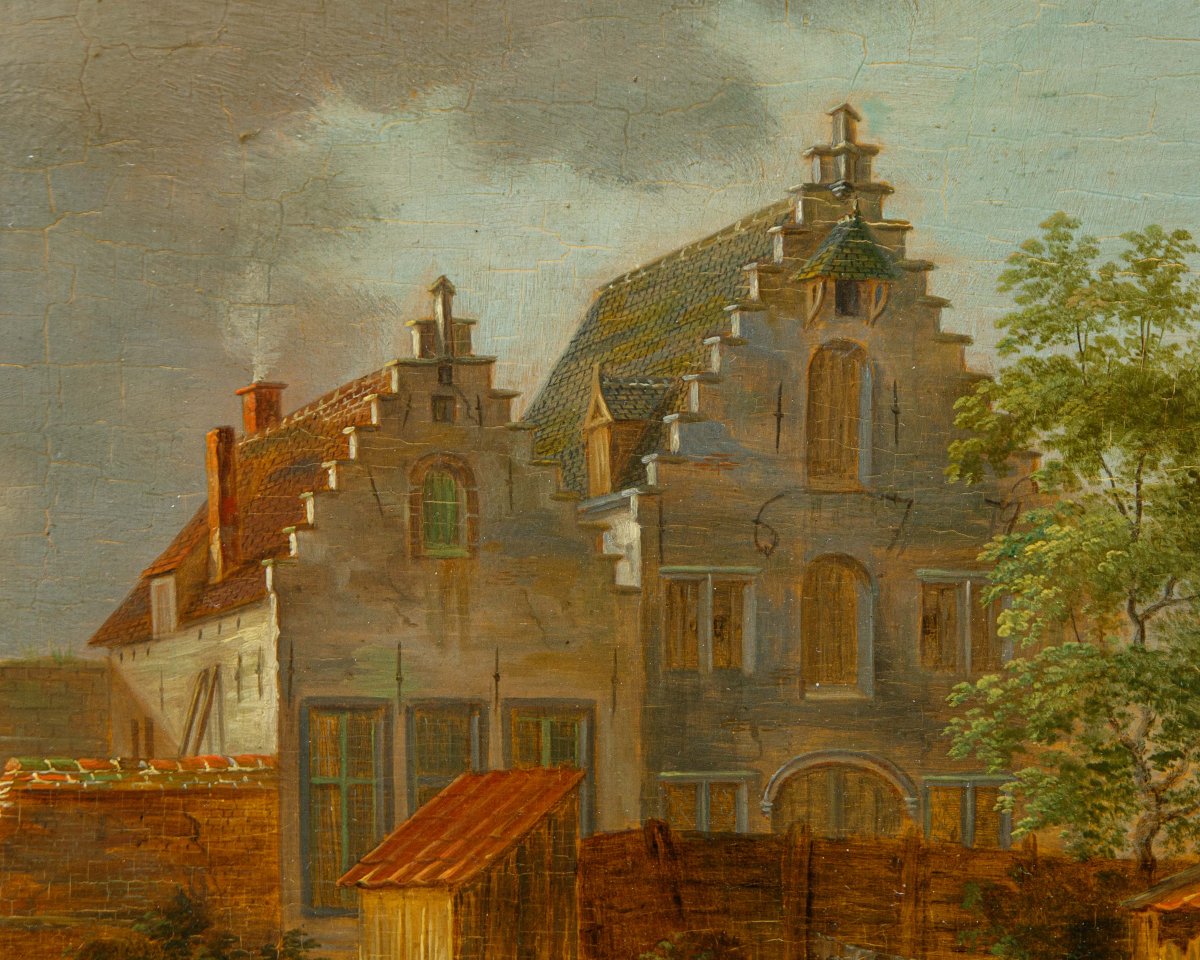
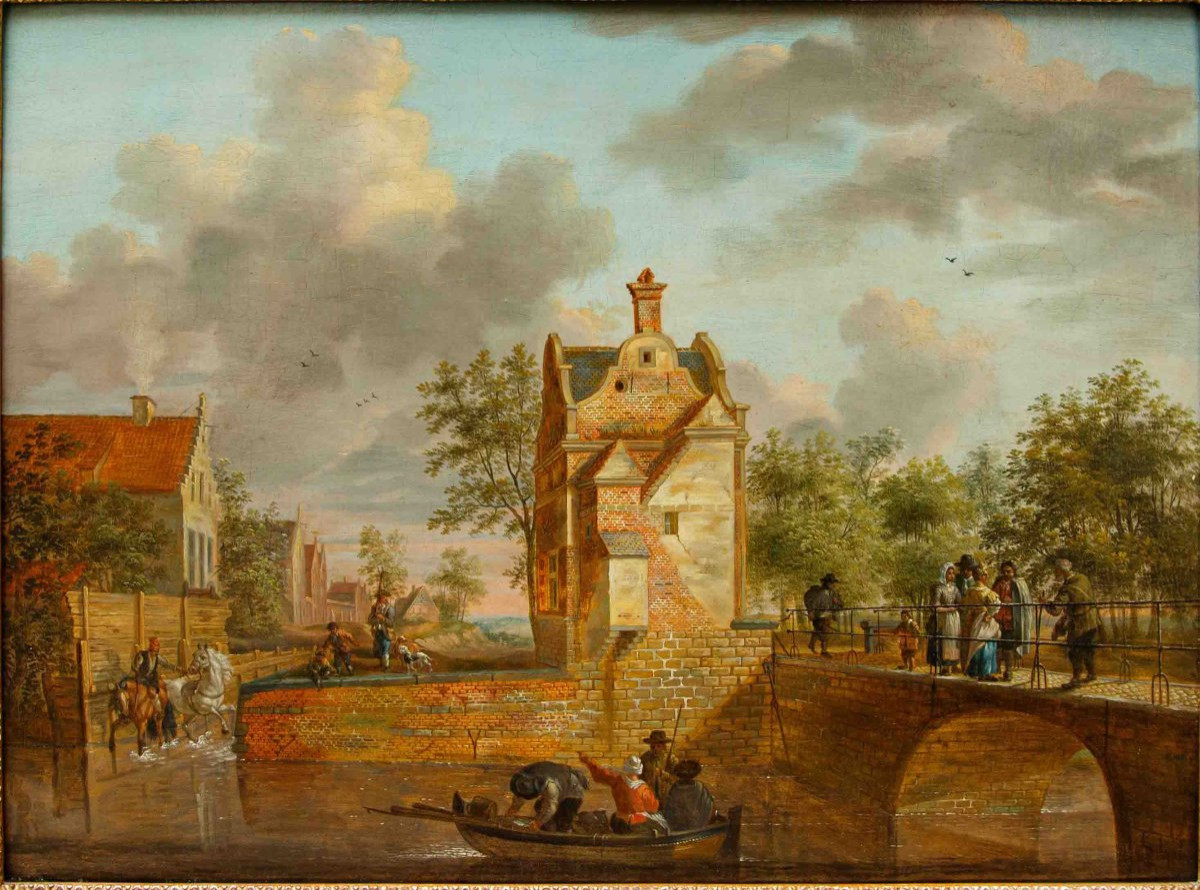
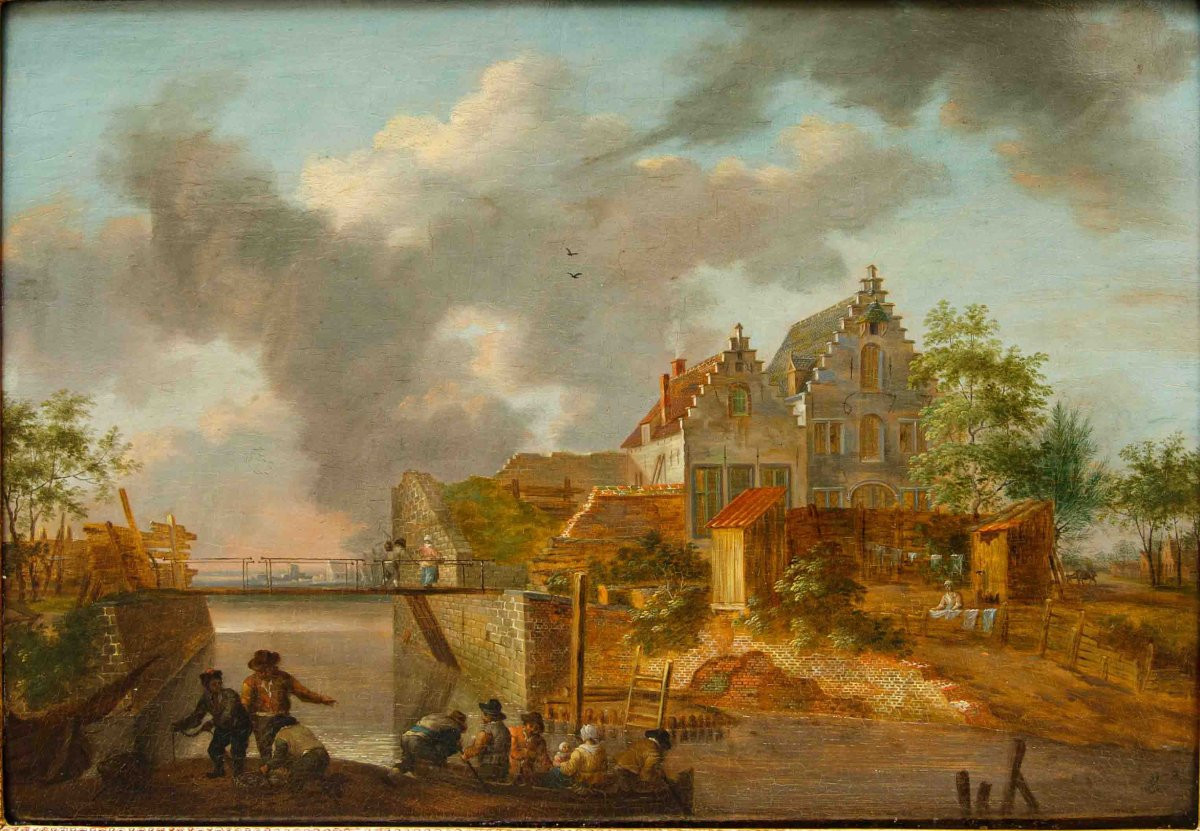
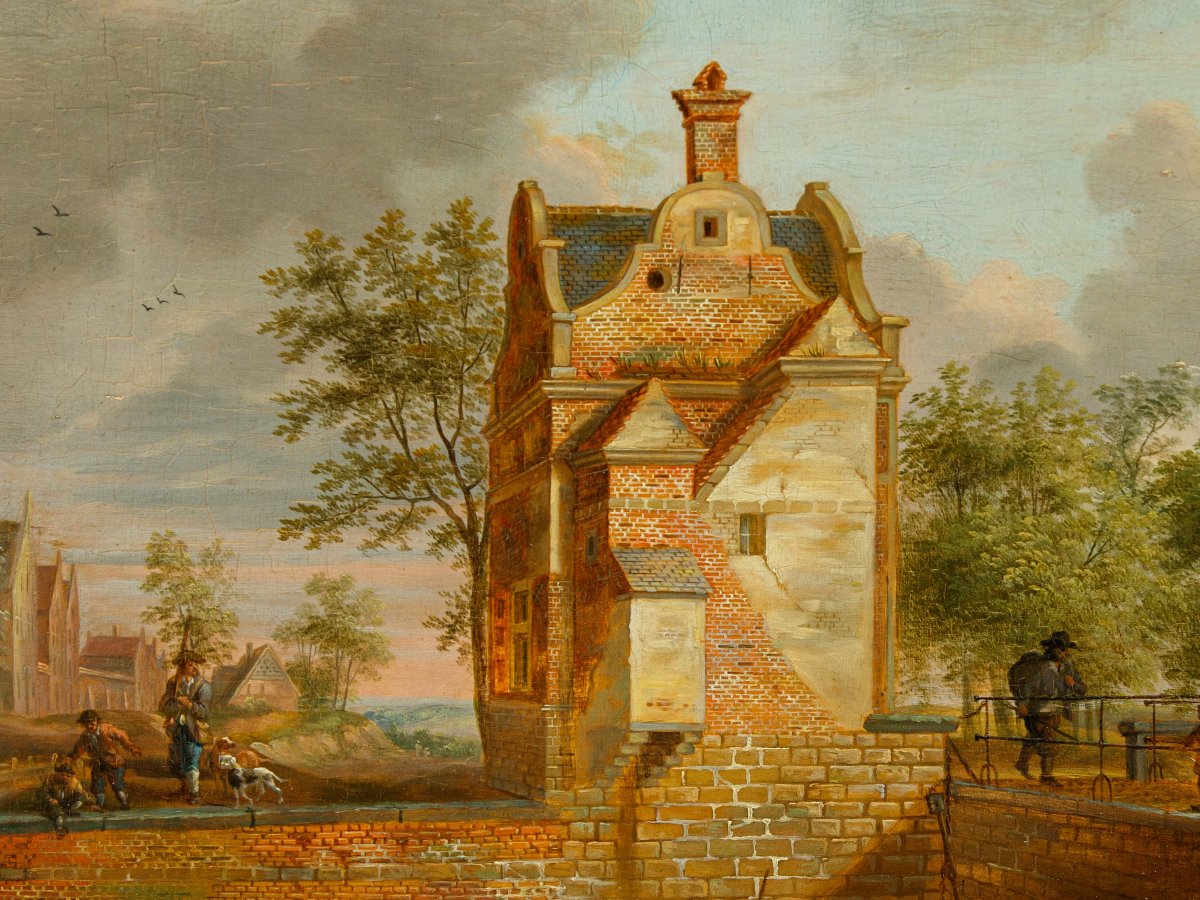
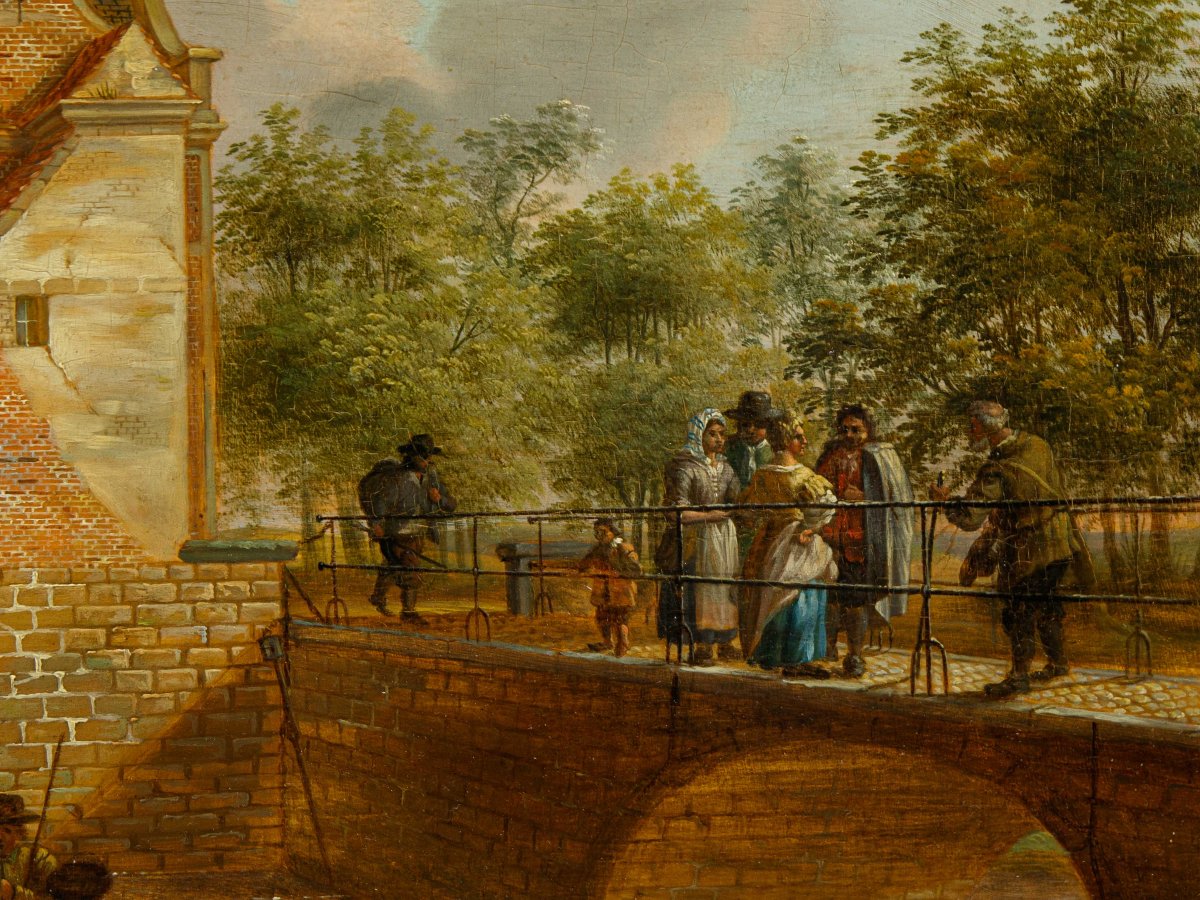
The two panels in question, exquisitely crafted oil paintings on panel, fit seamlessly into the body of work by Hendrik Frans de Cort, an artist who interpreted the legacy of the great 17th-century Flemish landscape tradition with rare sensitivity, bridging it to the topographical and pre-Romantic sensibilities of the late 18th century. De Cort’s stylistic signature emerges here with particular vigor through a painterly approach that favors an analytical rendering of the architecture—typically Nordic with its characteristic stepped profiles—immersed in a clear atmosphere yet charged with luminous vibrations.
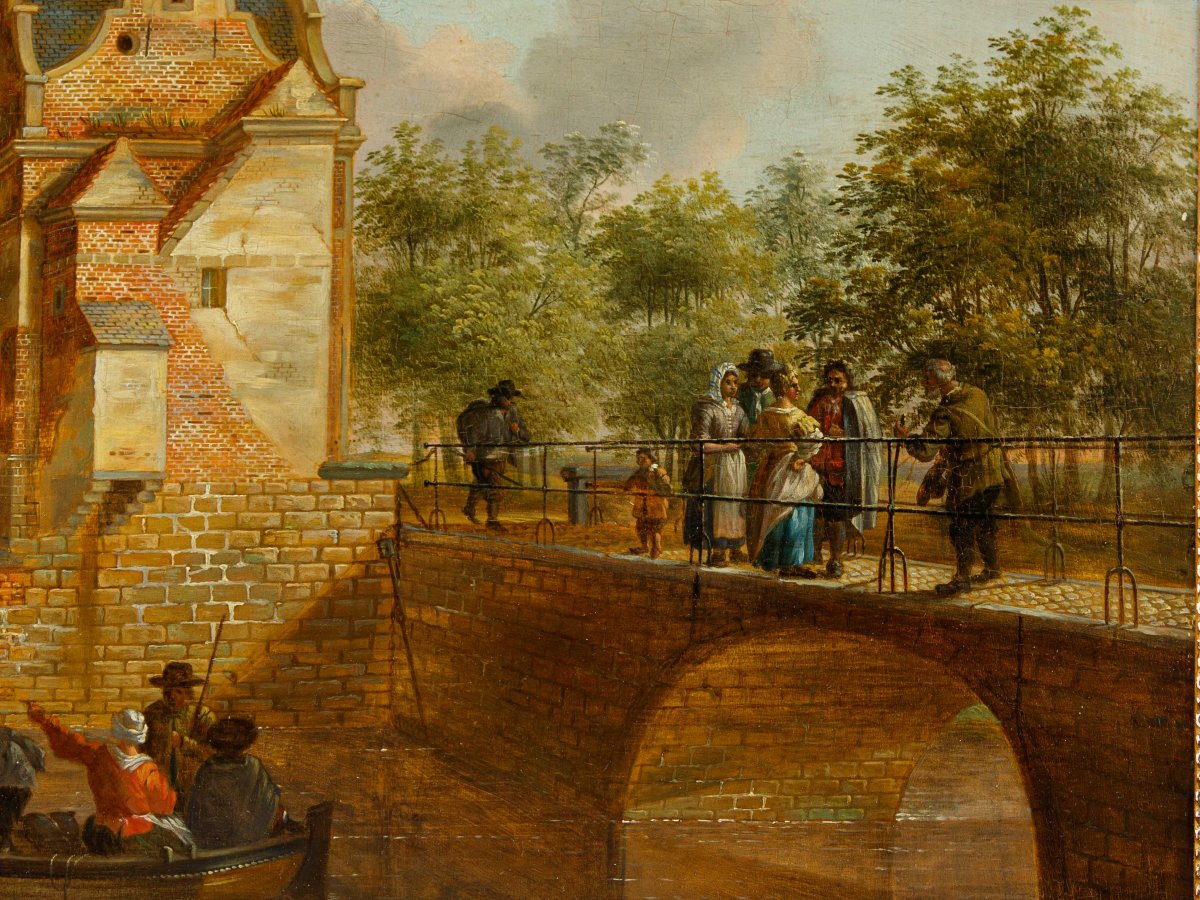
Born in Antwerp in 1742 and trained under Antonie van der Taelen, Hendrik Frans de Cort embodies the figure of the cultured and cosmopolitan painter. After establishing his reputation in his homeland, where he was appointed secretary of the Antwerp Academy, his career took a decisive turn with his move to London in 1788. In Britain, the artist became one of the most sought-after landscape painters by the nobility, specializing in the depiction of stately homes and castle views. This biographical evolution explains the dual nature of his work: on the one hand, a debt to masters such as Meindert Hobbema and Jacob van Ruisdael for his scenic composition; on the other, a descriptive precision that almost borders on archival documentation. In the works presented here, the viewer is immediately captivated by the masterful way in which the painter balances the natural and the man-made elements. The first painting, dominated by an imposing architectural backdrop reflected in the waters of a canal, displays De Cort’s characteristic “style” of rendering clouds: vaporous, almost material masses that filter a low-angle light capable of illuminating the warm tones of the bricks and the pearlescent hues of the plaster. The second panel, which centers the scene around a masonry bridge animated by figures from the populace, highlights the artist’s ability to incorporate the staffage not merely as filler, but as a vital element of the view, lending a sense of tranquil everyday life to the composition. Comparison with museum works confirms the soundness of the attribution. There are striking formal affinities with the famous View of Antwerp Cathedral from the Scheldt (KMSKA, Antwerp), where the treatment of the sky and the meticulous rendering of urban structures reflect the same attention to reality mediated by a poetic vision. Similarly, the views preserved by the British National Trust—such as the series of paintings for the Earl of Cassillis—reveal that same perspectival rigor and color palette, featuring warm browns, deep greens, and bluish grays, which we find intact in these panels.
In conclusion, these works are not merely a demonstration of technical skill in the use of oil on wood, but they also attest to De Cort’s ability to imbue the river landscape with monumental dignity. The brushwork is fluid, yet capable of lingering with almost miniaturistic strokes on the details of the cracks in the bridges or the shimmering reflections on the water, making these paintings significant examples of that crucial transition between the 18th-century idyll and modern analytical landscape painting.
Period: 18th century
Style: Other Style
Condition: Good condition
Material: Oil painting on wood
Width: 53
Height: 39
Reference (ID): 1762401
Availability: In stock