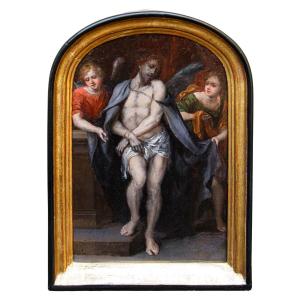


17th Century, Christ With Two Angels At The Tomb
17th century
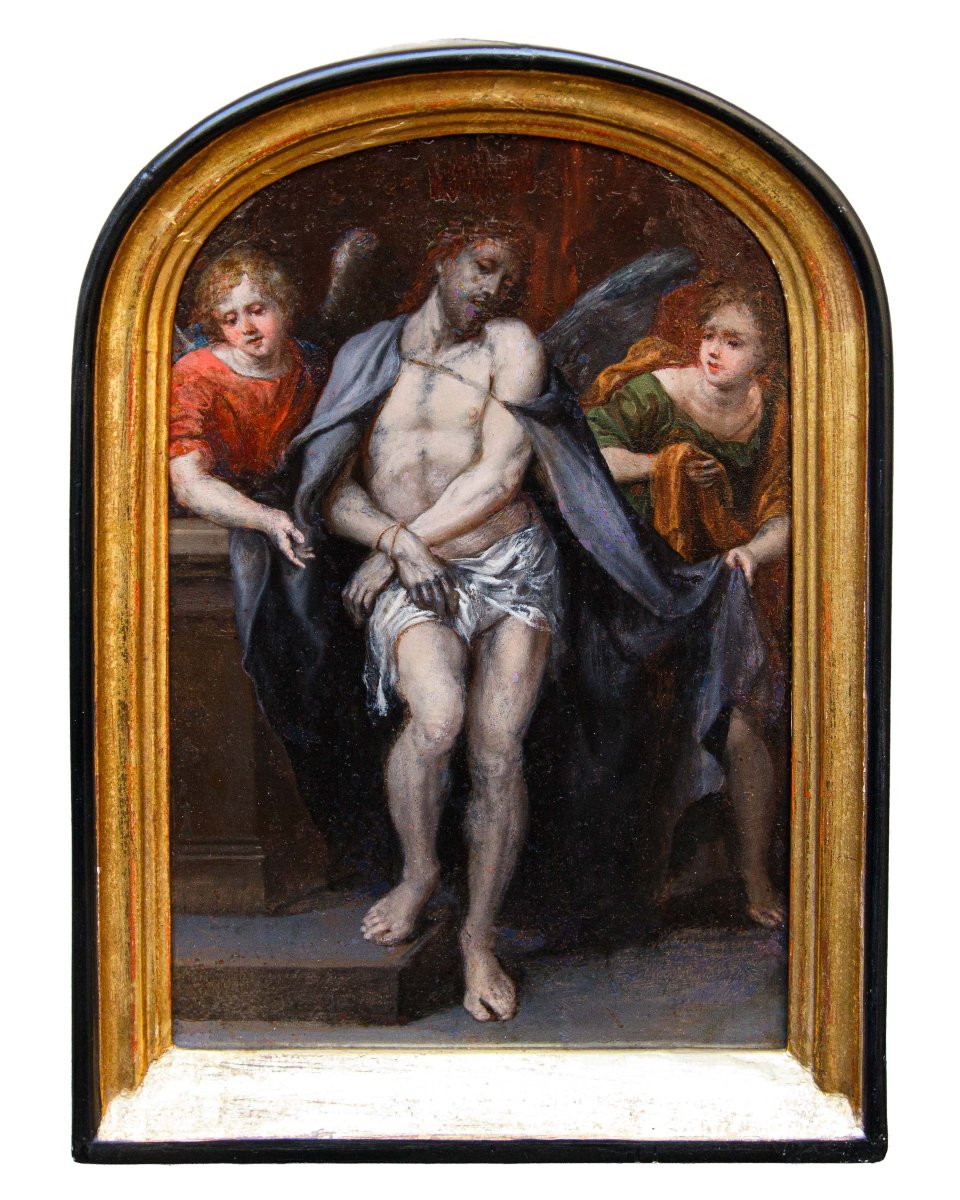
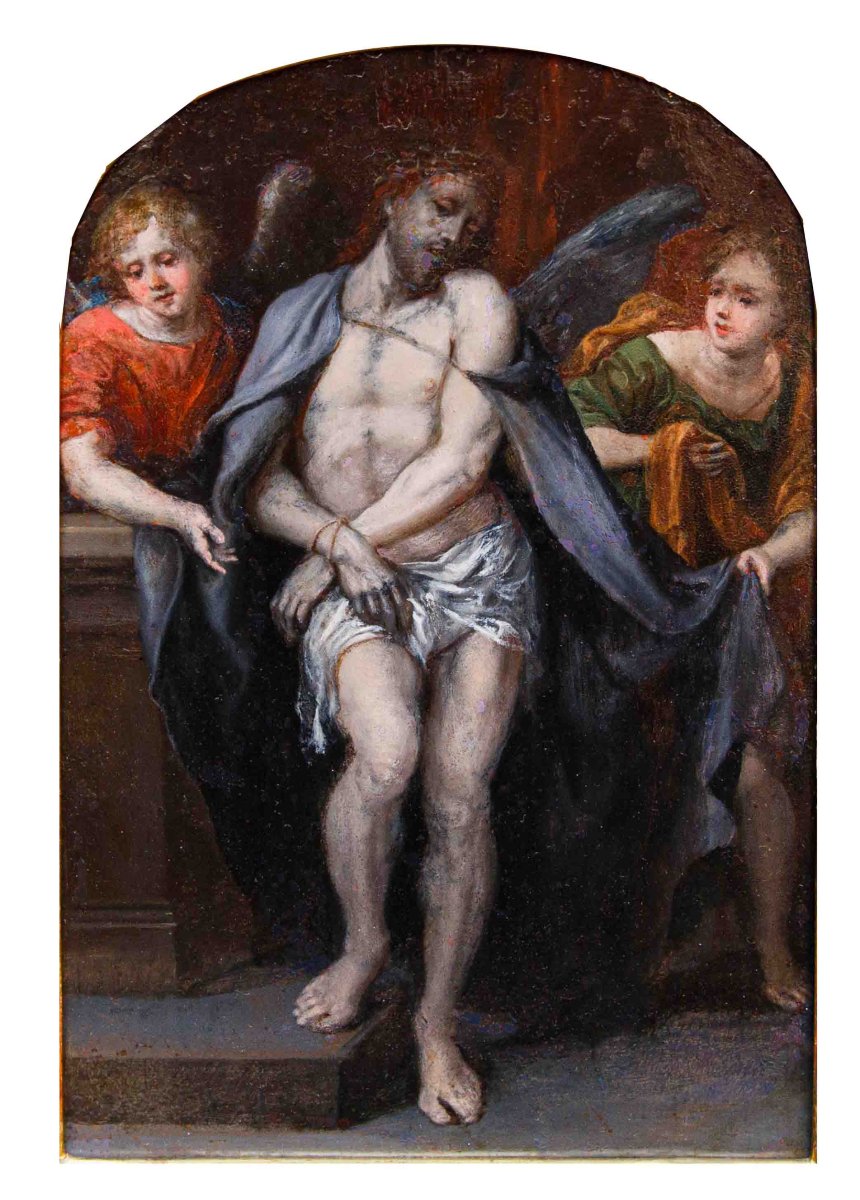
Christ with Two Angels at the Tomb
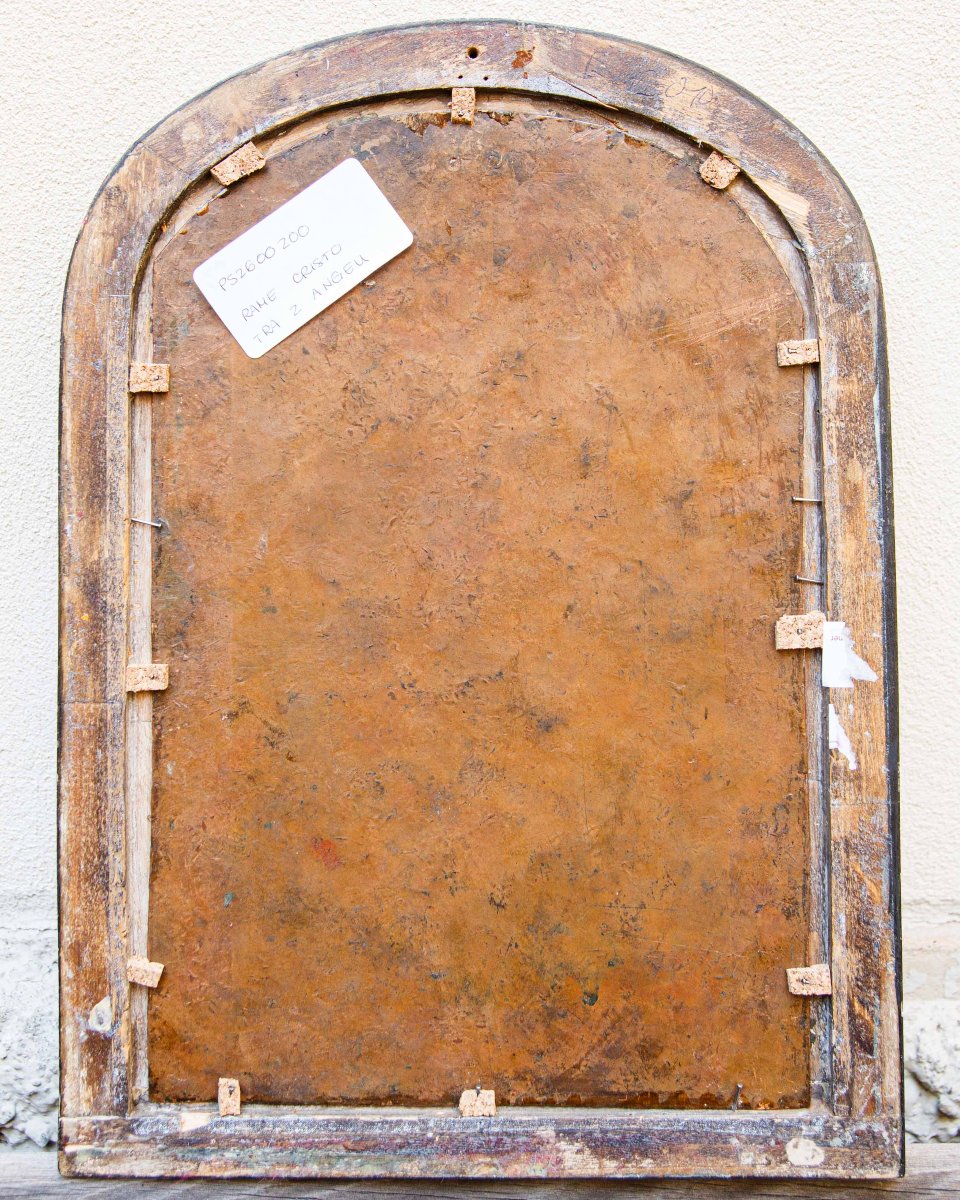
Oil on copper, 31 x 20 cm – with frame, 36 x 26 cm
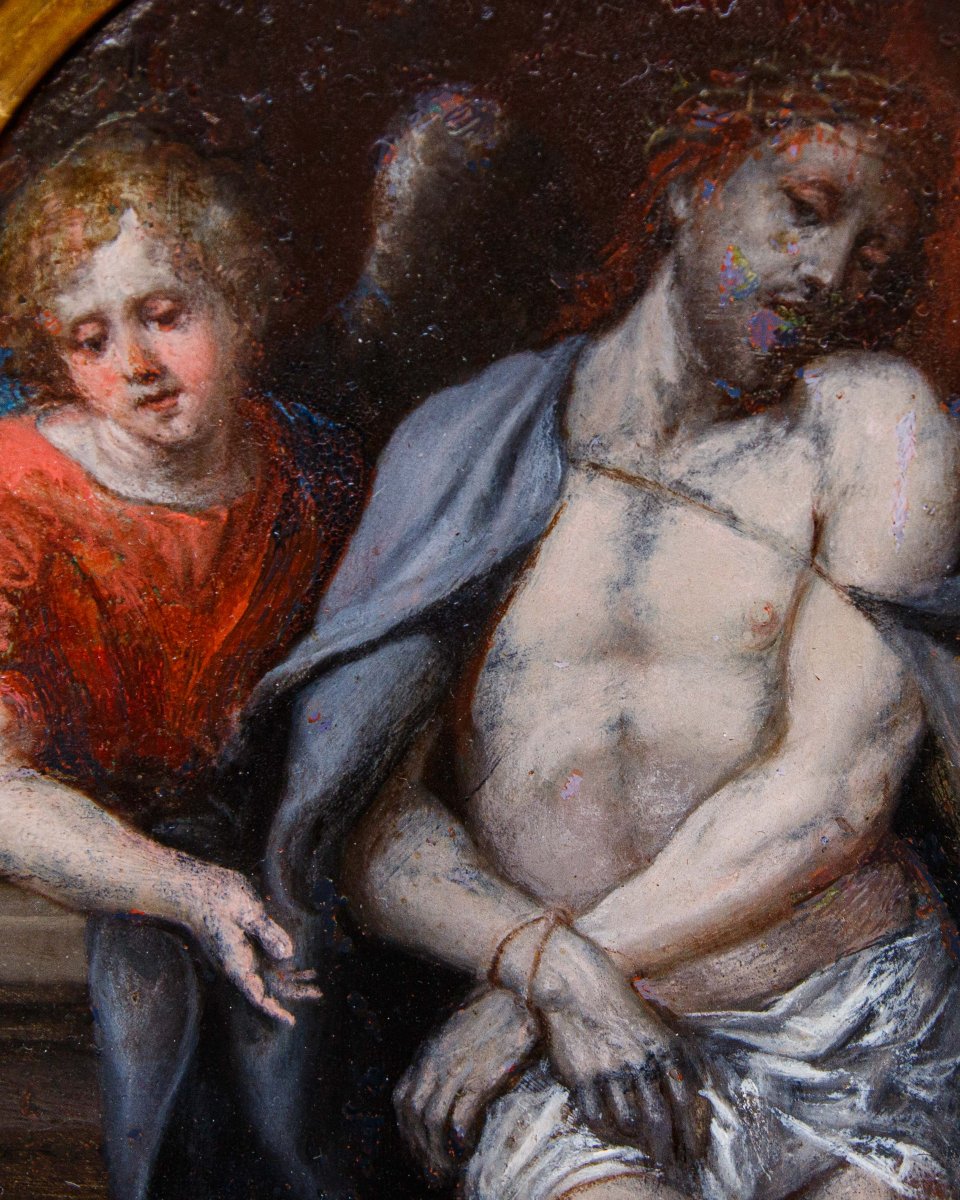
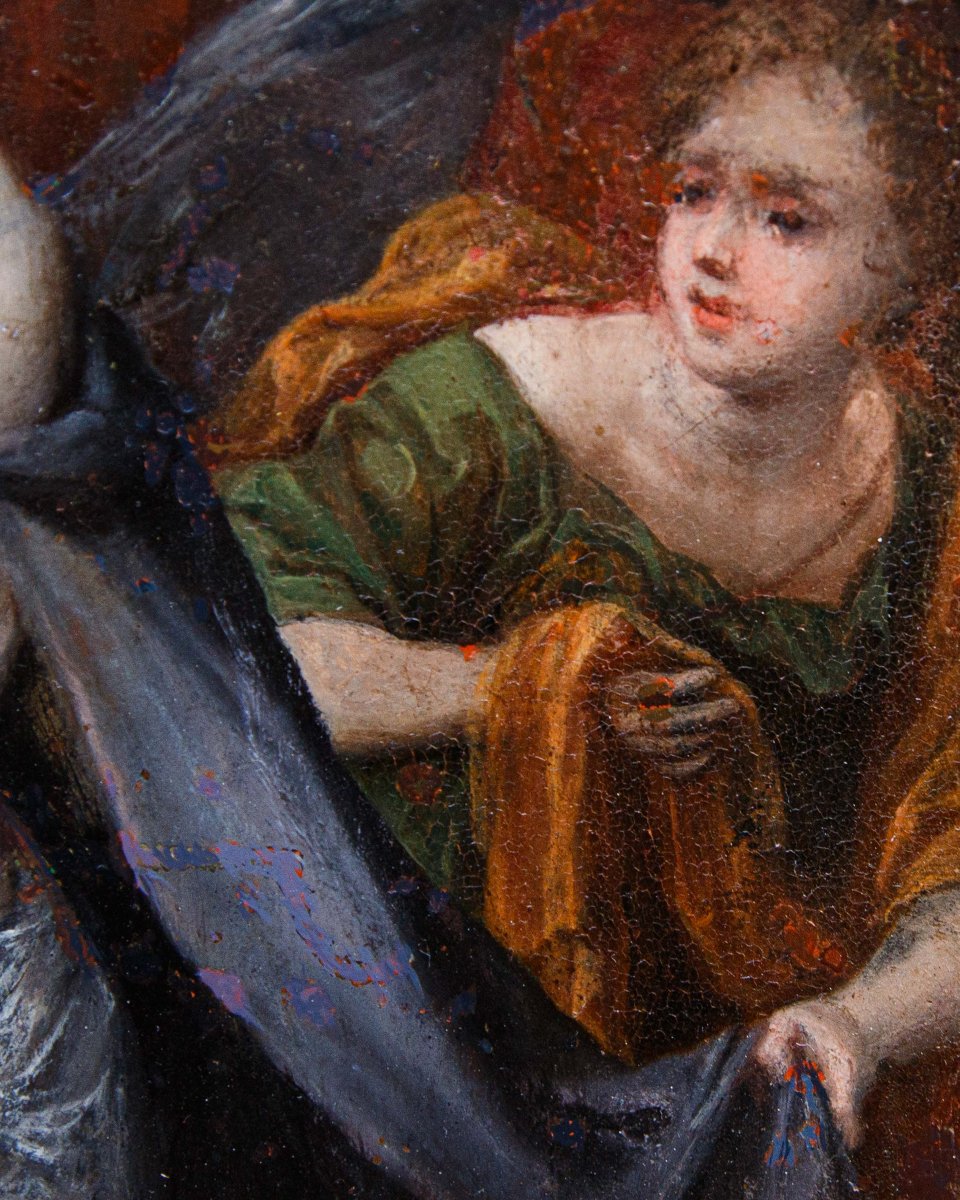
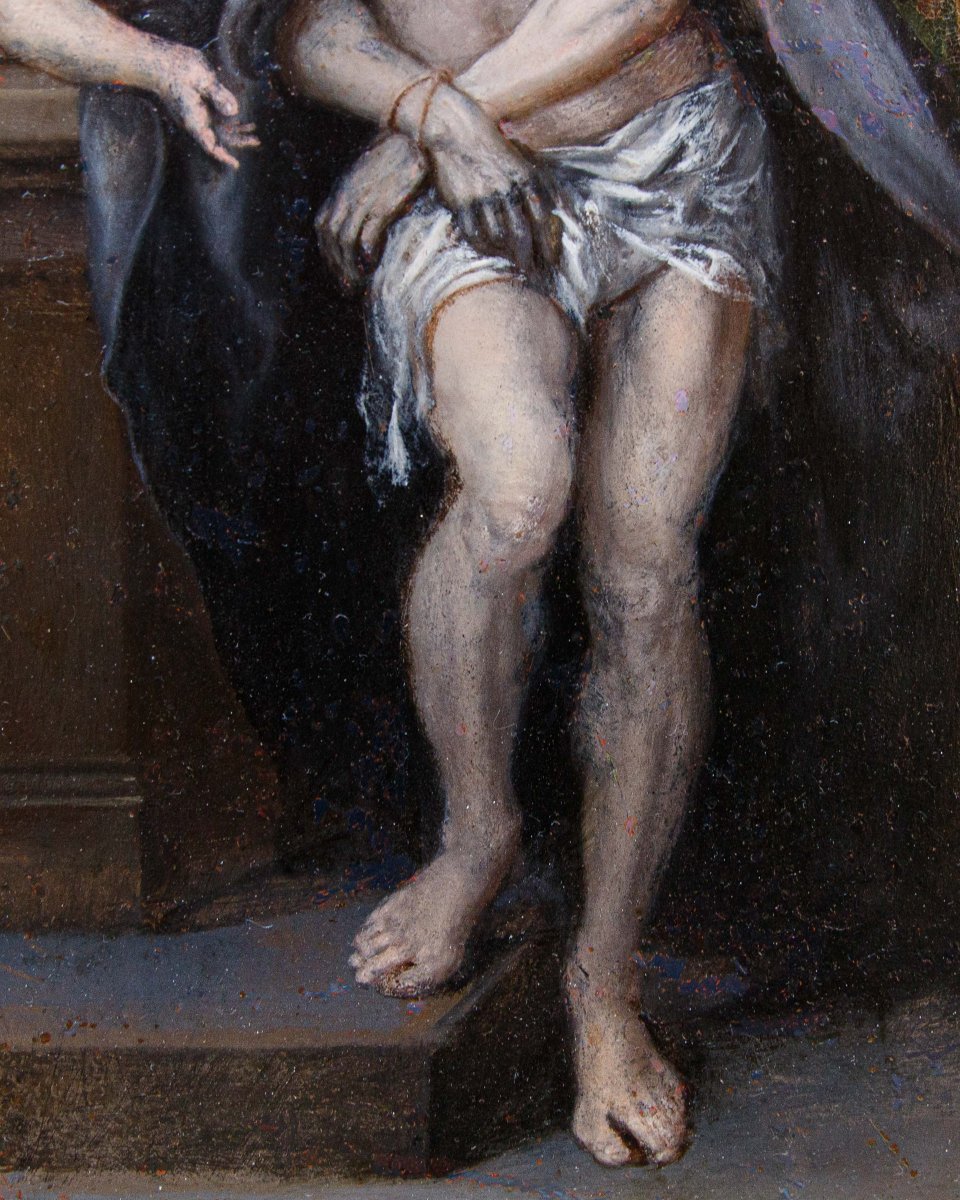
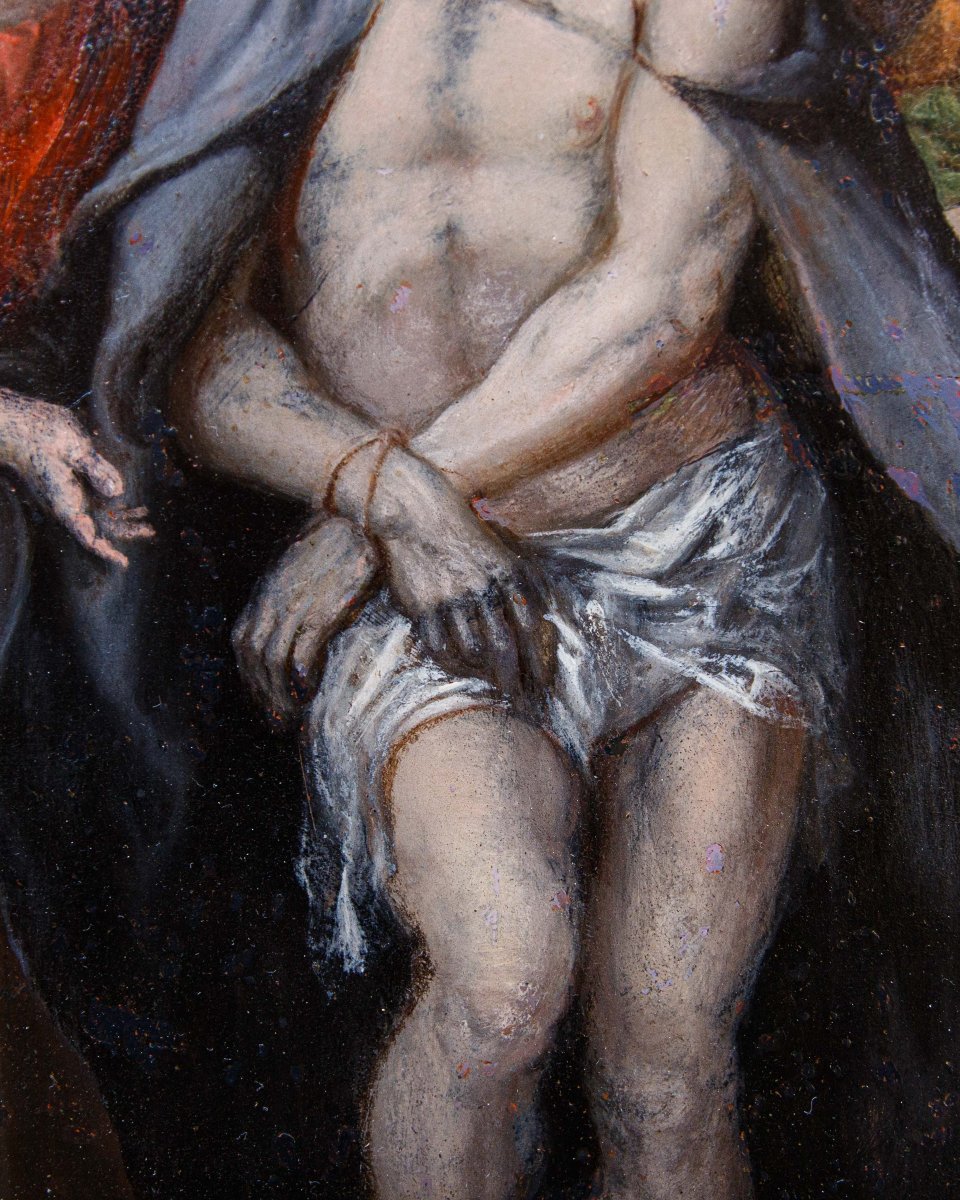
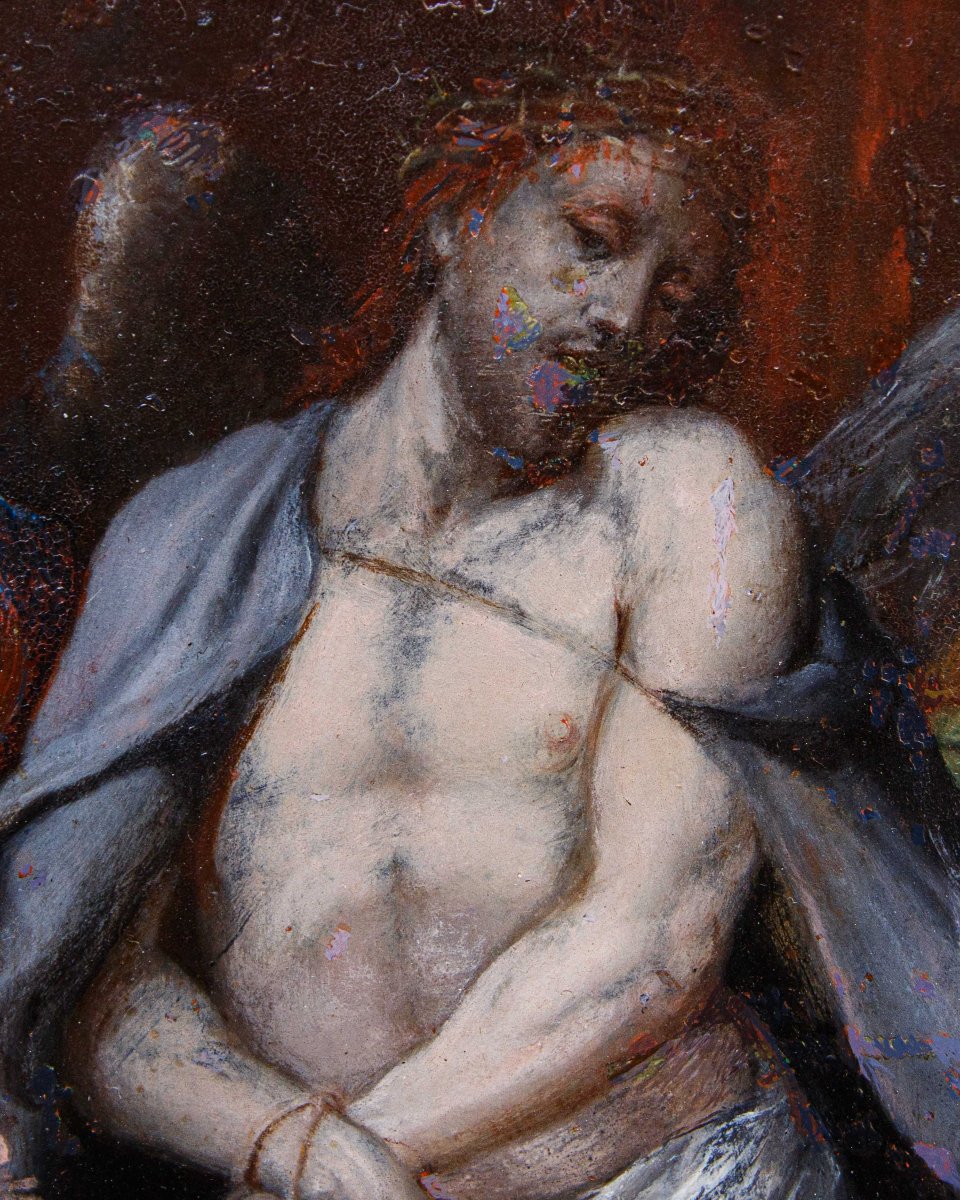
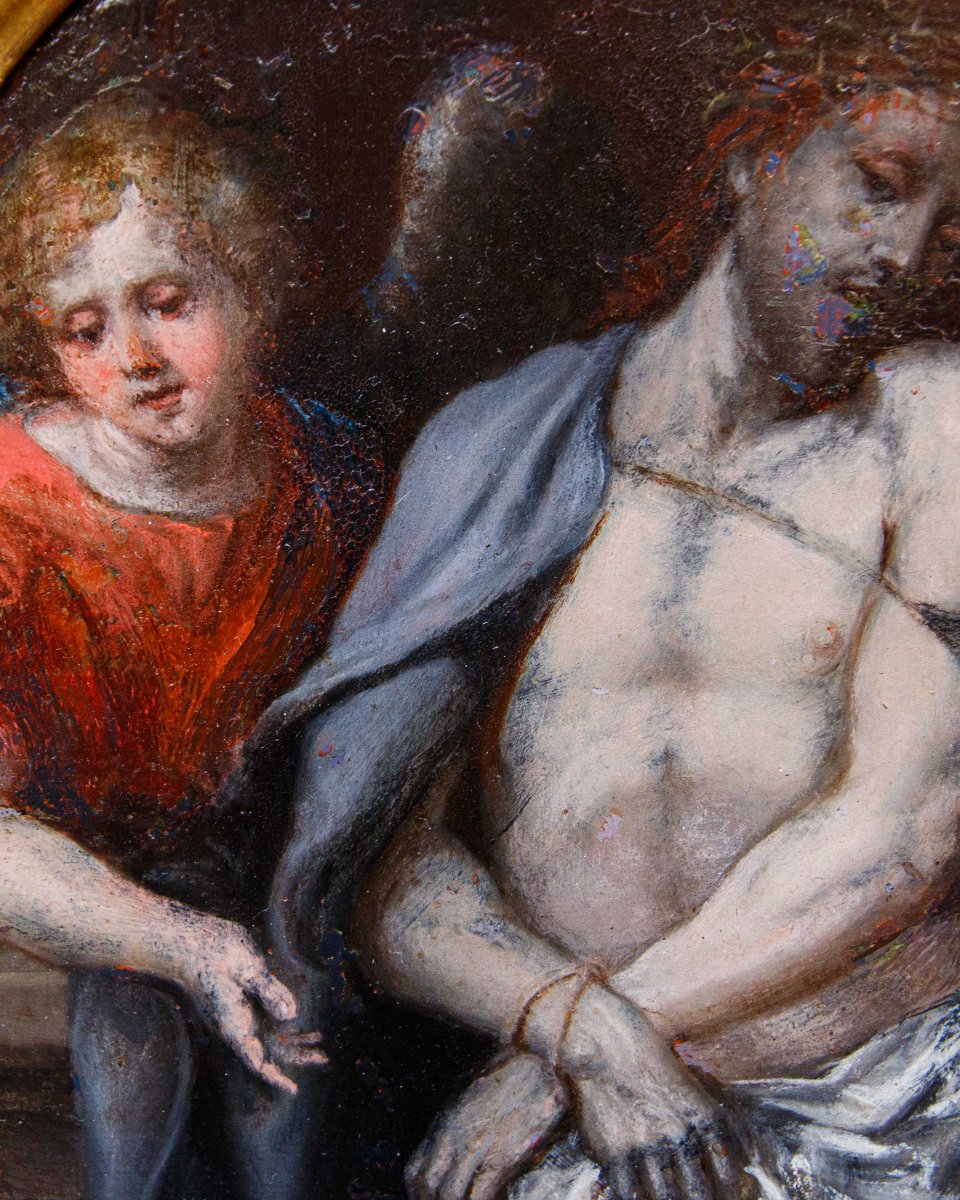
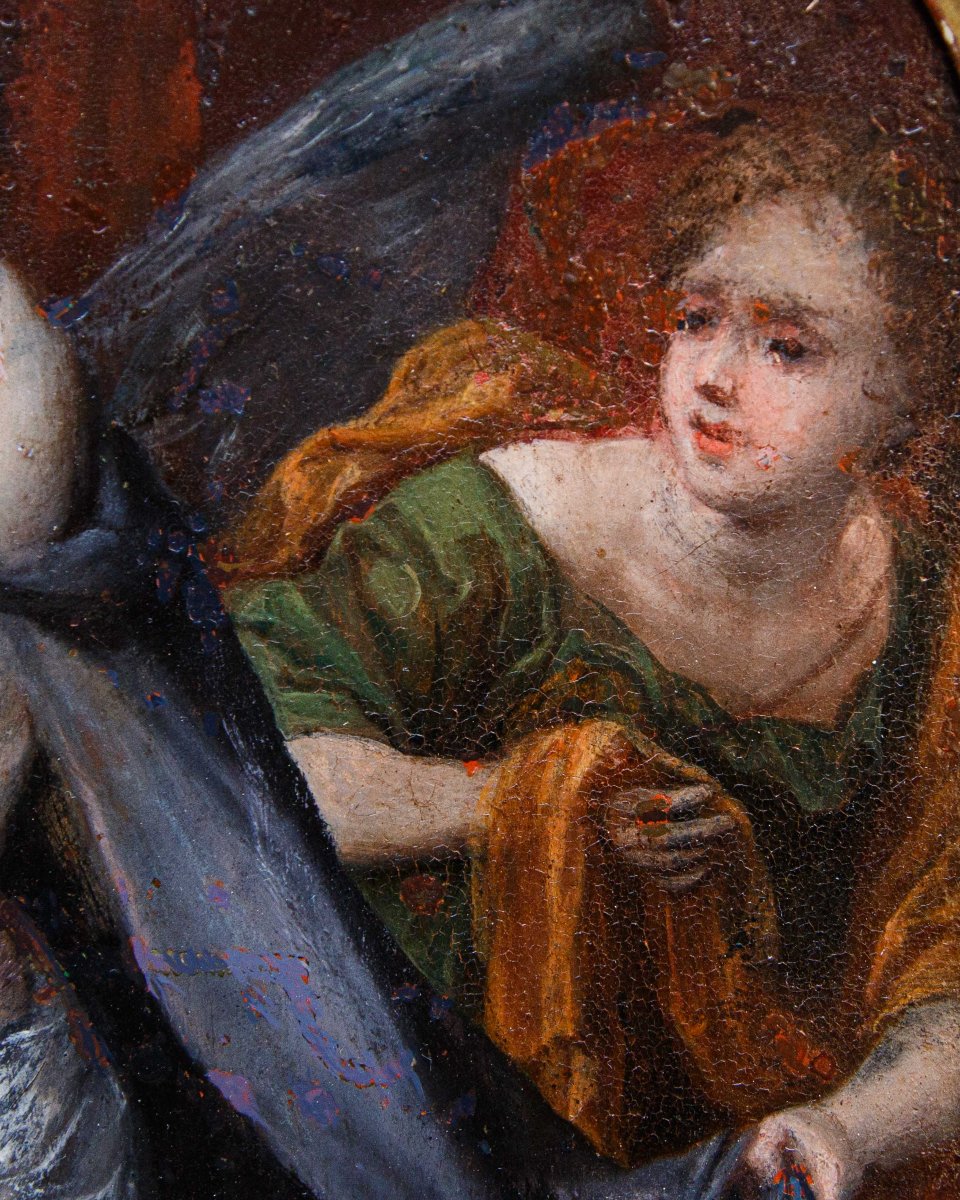
At the center of the composition stands the figure of Christ, standing and slightly reclined, characterized by a diaphanous complexion that emerges vividly from the dark, deep background. Jesus is flanked by two angels in colorful robes, who assist him with gestures full of sorrowful tenderness, supporting the heavy dark cloak that falls over his shoulders. The scene takes place at the tomb, an element that, together with the presence of the angelic figures, directly references the motif of the dead Christ supported by angels—a theme dear to Counter-Reformation and Baroque painting. However, the artist of this copperplate introduces an iconographic variation of great interest: unlike the famous models—such as those by Veronese housed at the Museum of Fine Arts in Boston or Camillo Procaccini’s version—where Christ’s body lies in the sleep of death and devoid of life, here the Savior appears alive, conscious, and standing upright. This compositional choice creates a deliberate semantic ambiguity, blending the moment of the Passion with that of the imminent Resurrection, grafting elements derived from the Ecce Homo tradition onto the framework of the Lamentation. The details are unmistakable: Jesus’ hands are tightly bound at the wrists with a rope, his head is encircled by the crown of thorns, and the cloak draped over him evokes the royal purple of mockery. One senses here an echo of Caravaggio’s famous interpretations, particularly those in the Palazzo Bianco in Genoa and the Prado Museum, where the dignity of suffering is expressed through the tension in the limbs and the downcast gaze. The 17th-century artist thus succeeds in condensing the entire parable of Christian sacrifice into a single frame, transforming the copper into a stage where the Vir Dolorum and Christ, the conqueror of death, coexist. The painting technique, typical of seventeenth-century taste, plays on vibrant contrasts of light, where the light seems to emanate directly from Christ’s tortured flesh, guiding the viewer’s eye toward the marks of martyrdom, ennobled by a masterful brushstroke that lends softness to the fabrics and emotional intensity to the angelic faces. The work thus stands not only as an object of private devotion but as a visual theological reflection on the human and divine nature of the Redeemer.
Period: 17th century
Style: Other Style
Condition: Good condition
Material: Oil painting on copper
Width: 20
Height: 31
Reference (ID): 1830679
Availability: In stock