

English Pendleton Pikeman Sabre Presentation
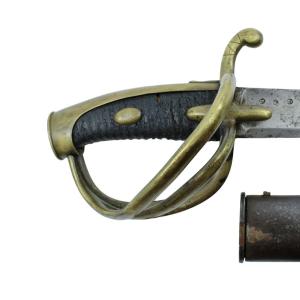
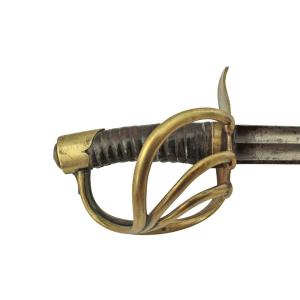
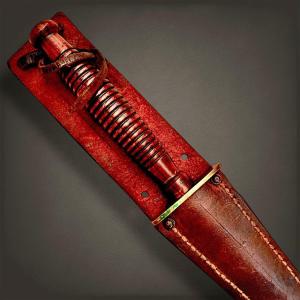
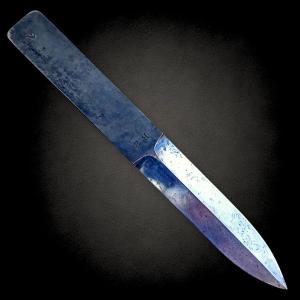
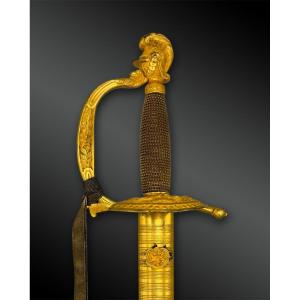
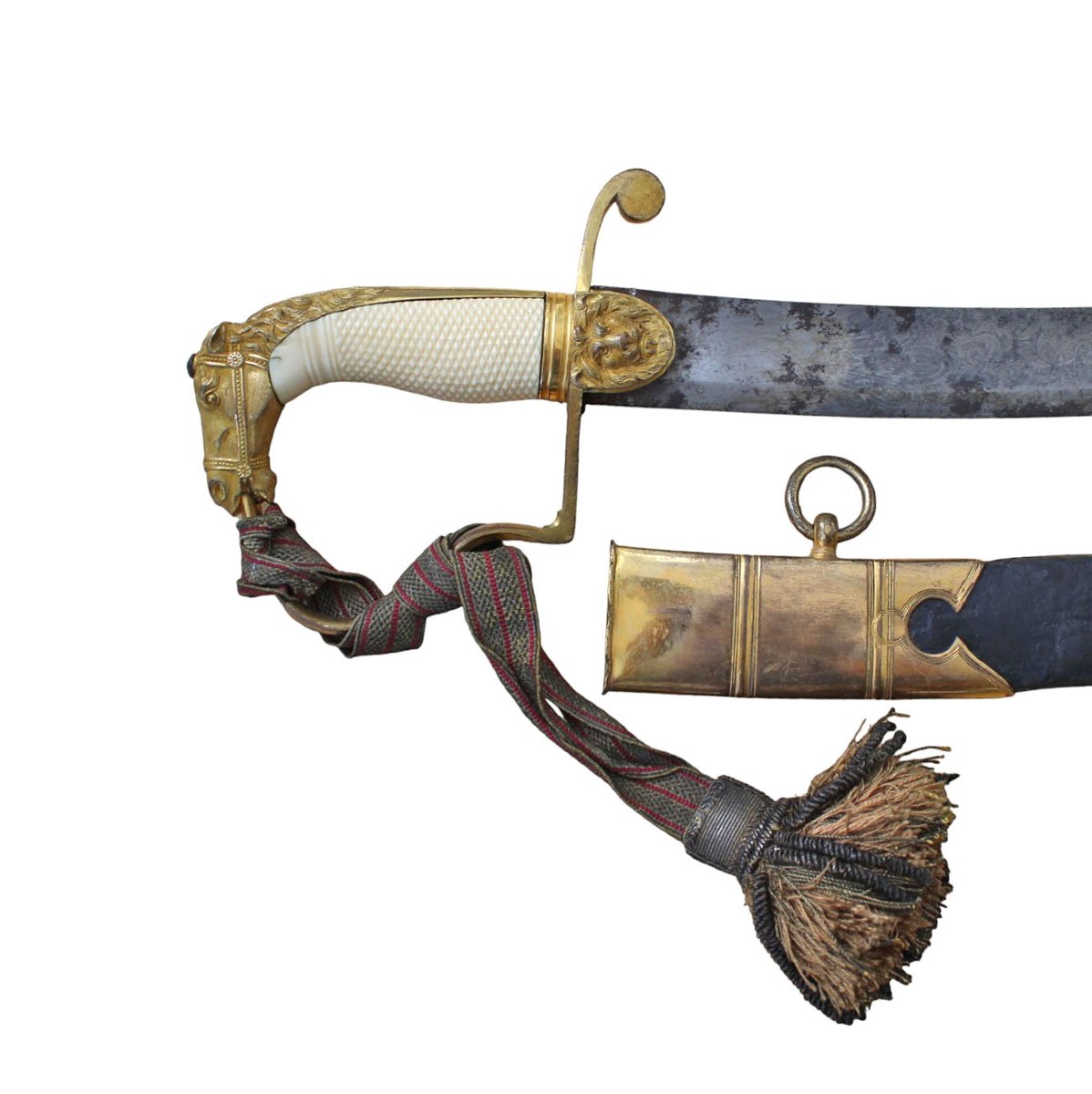
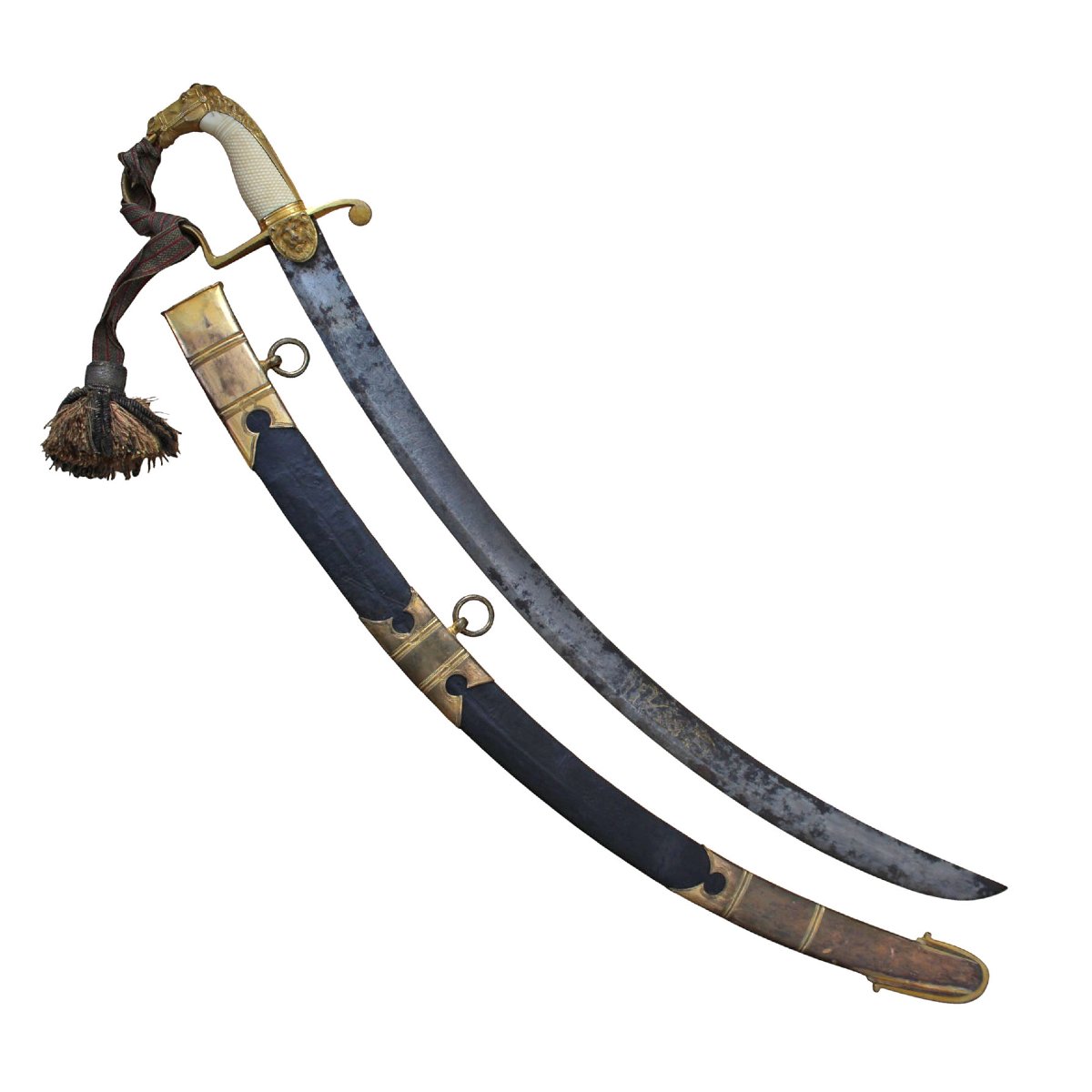
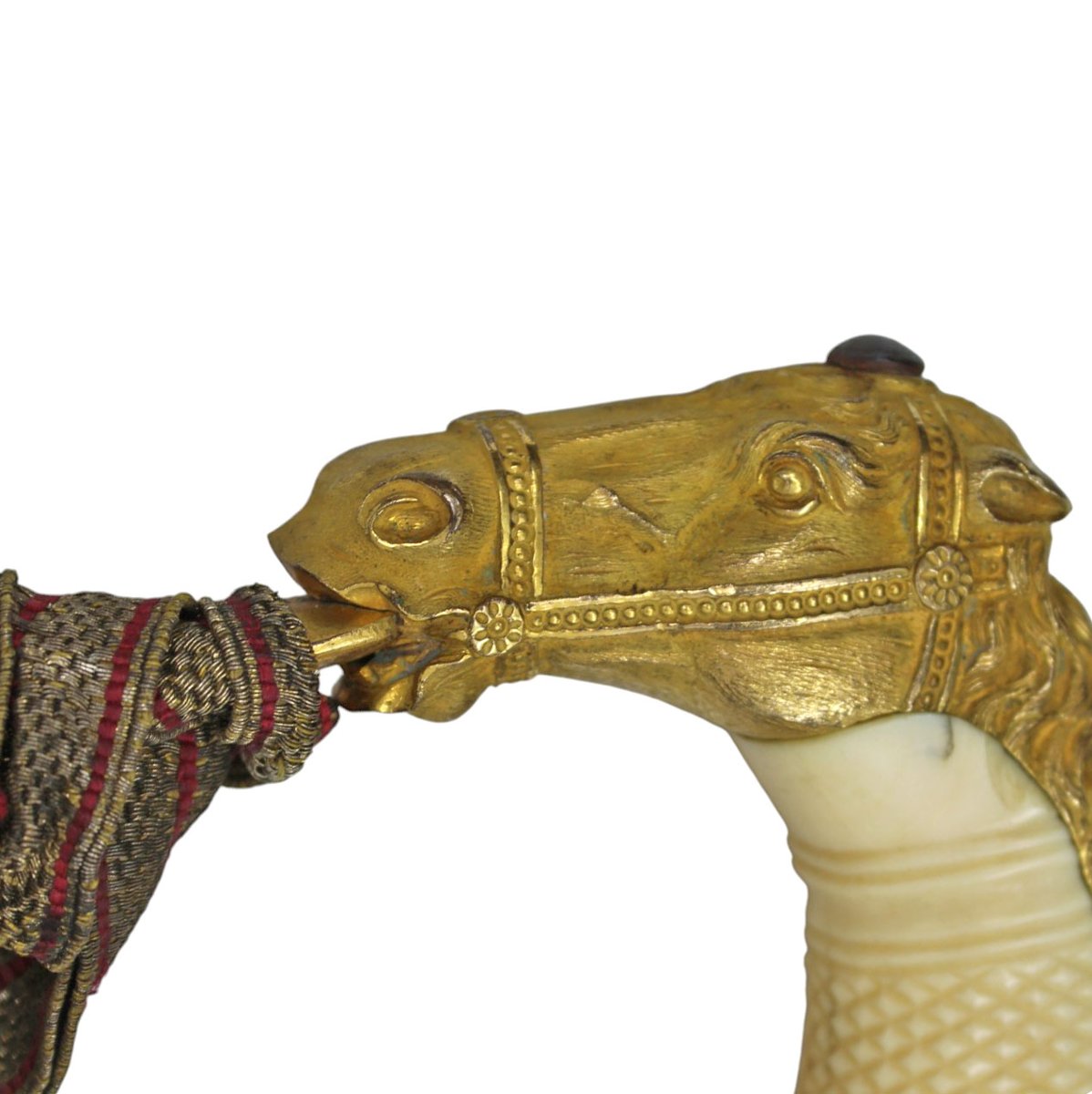
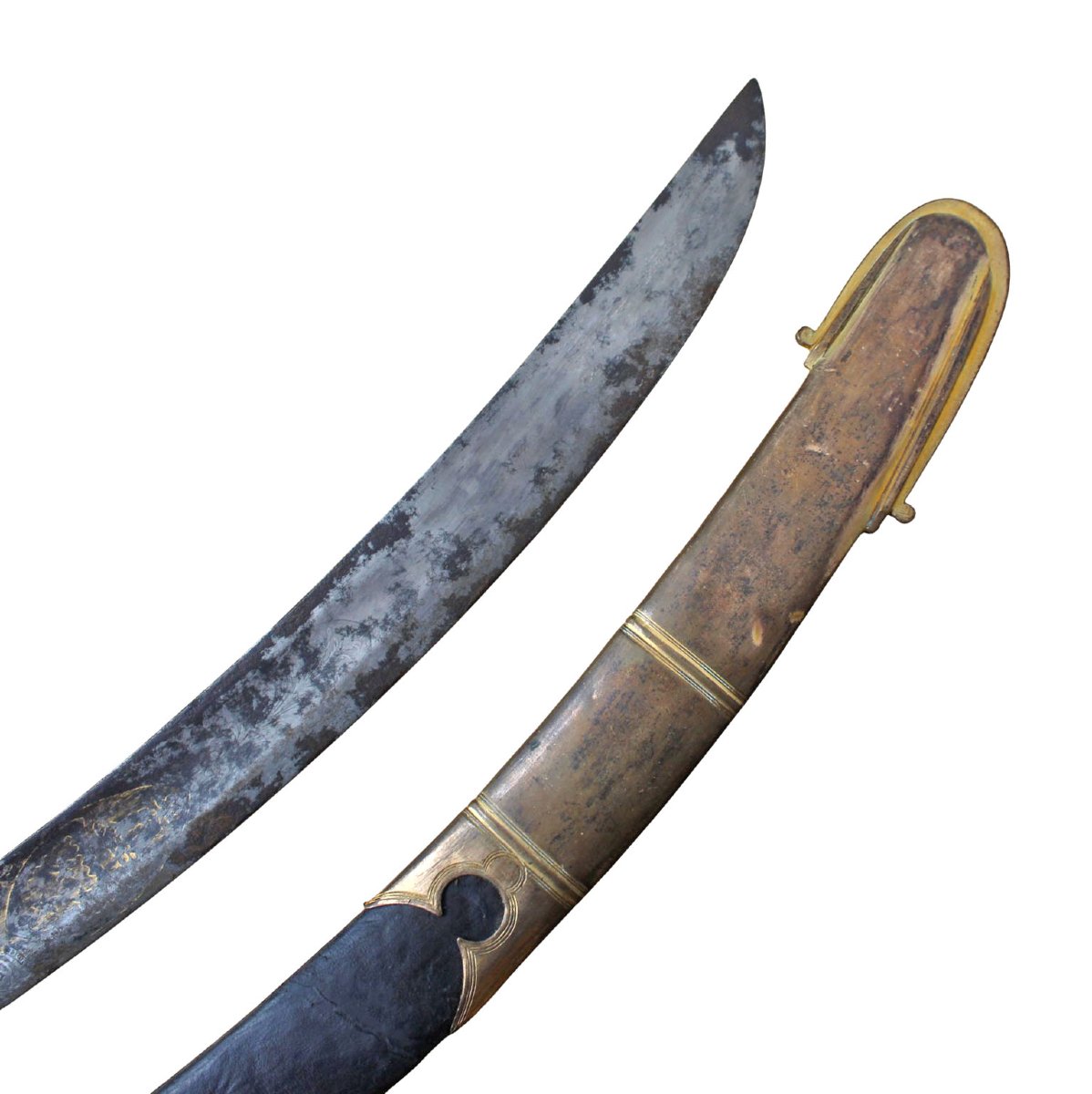
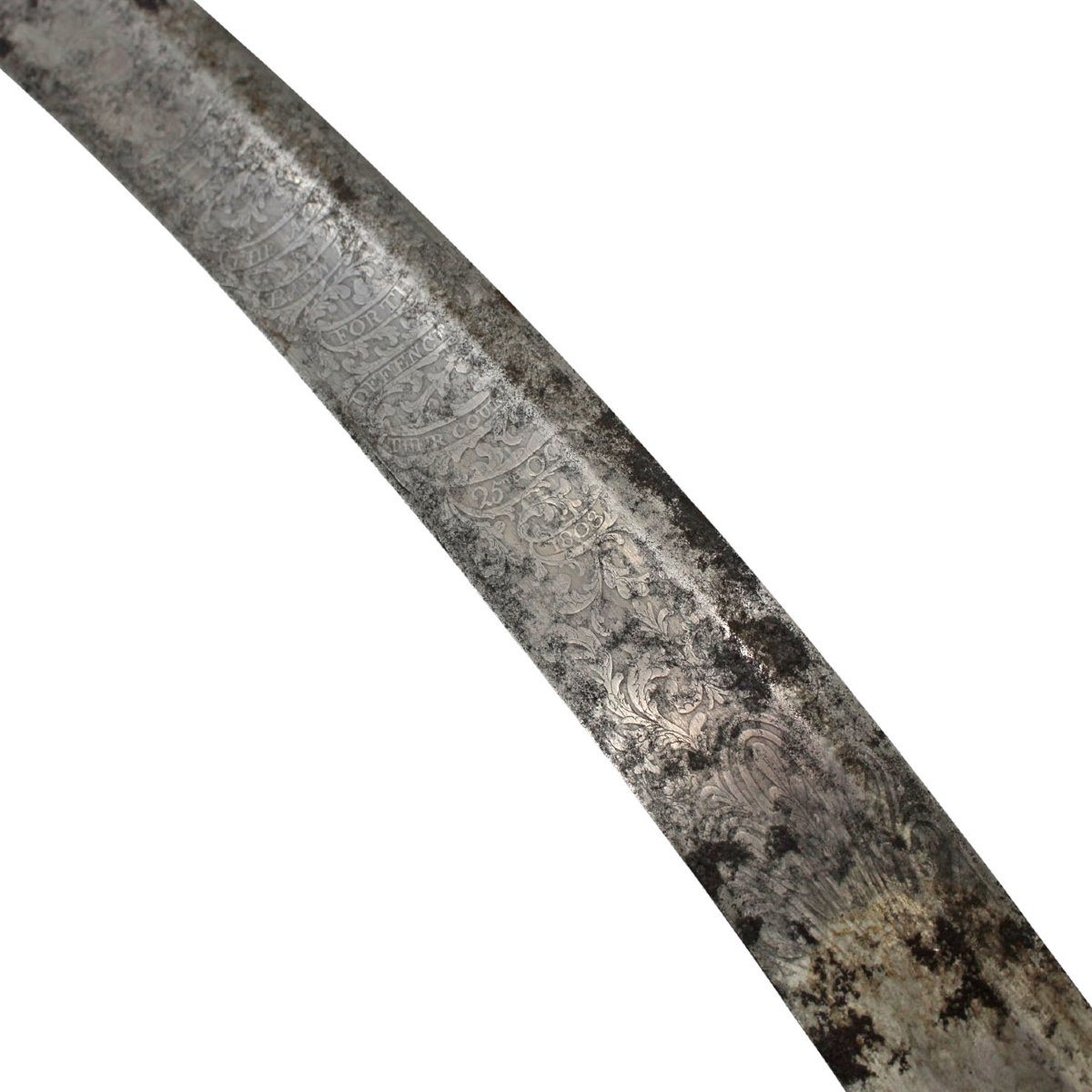
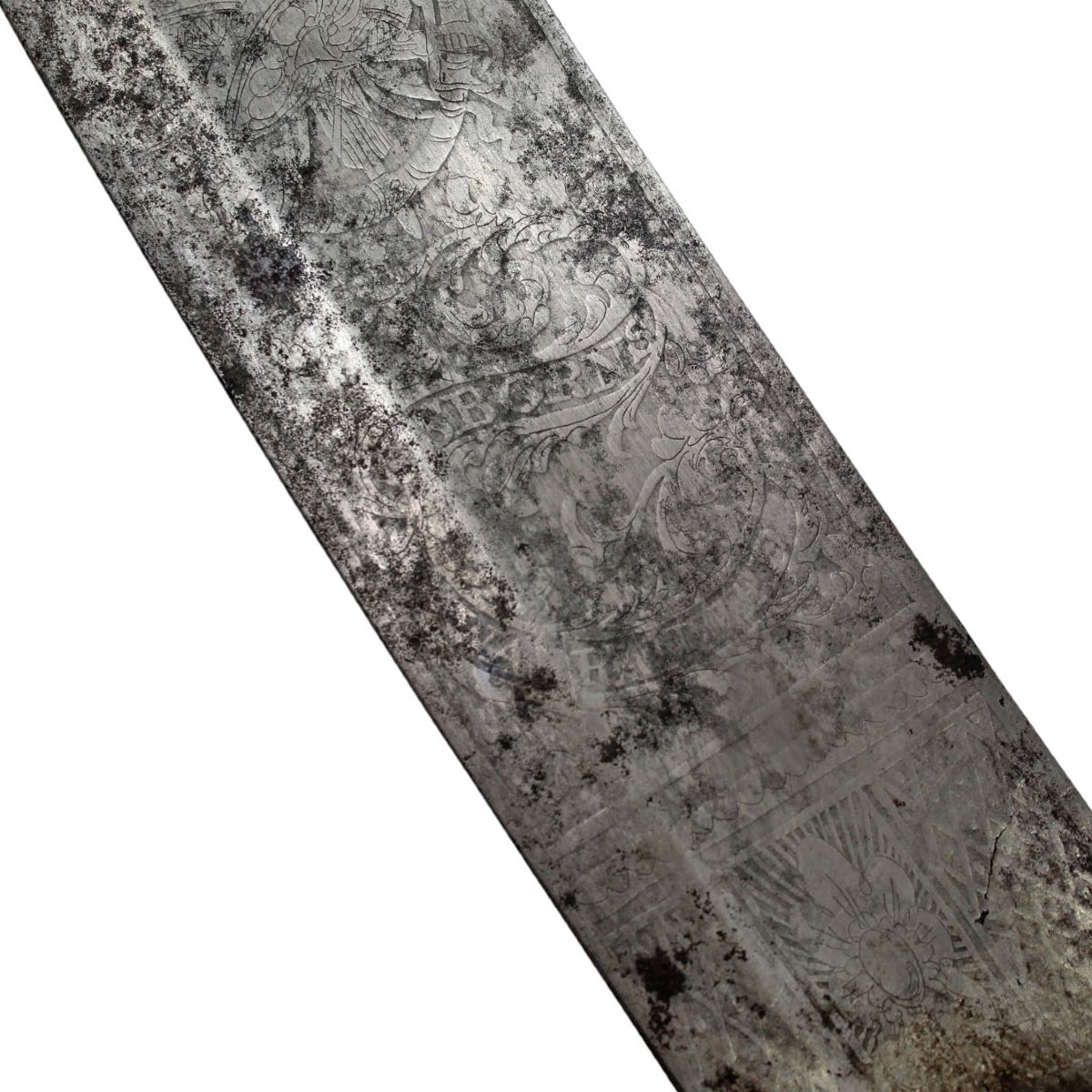
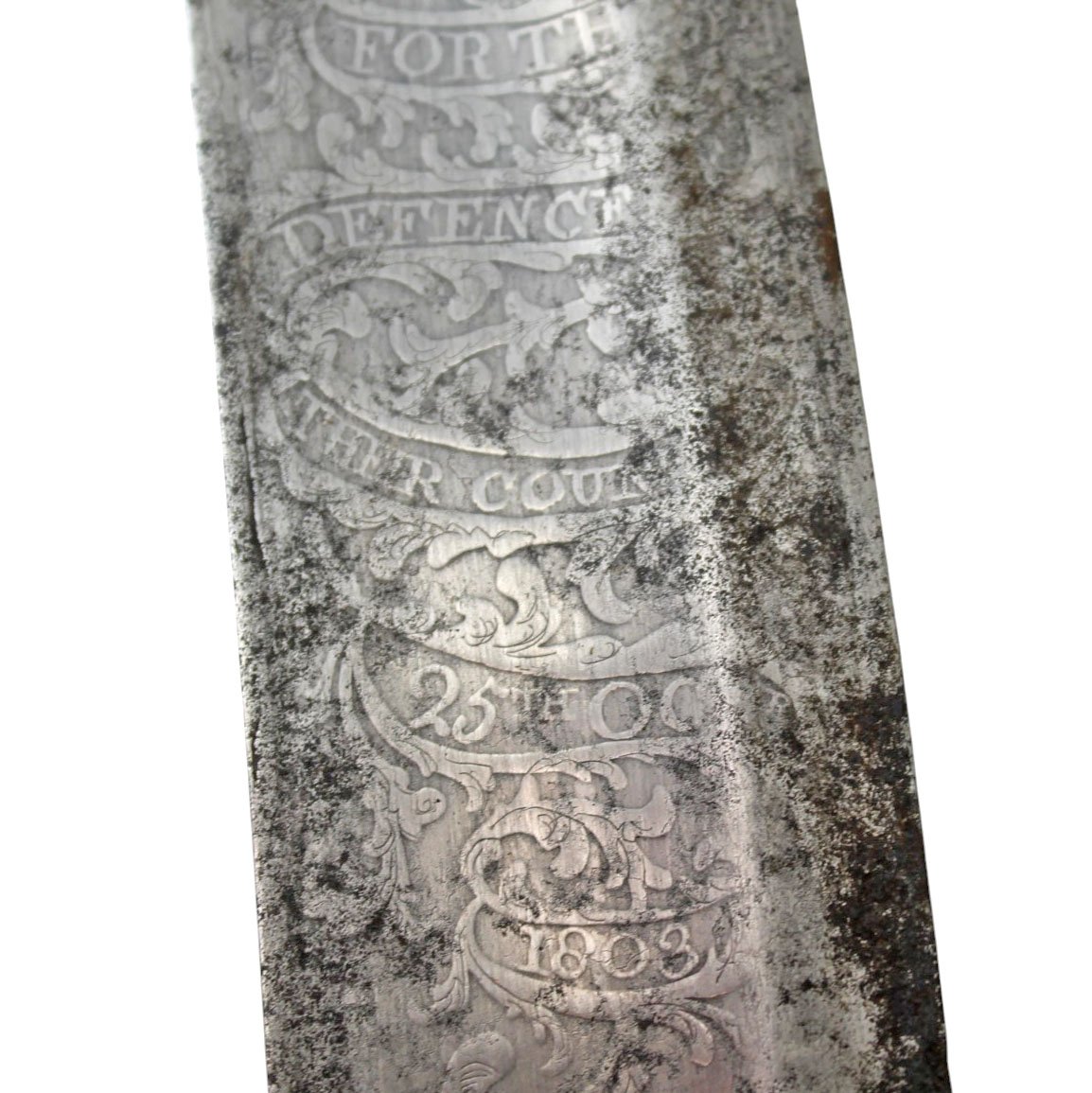
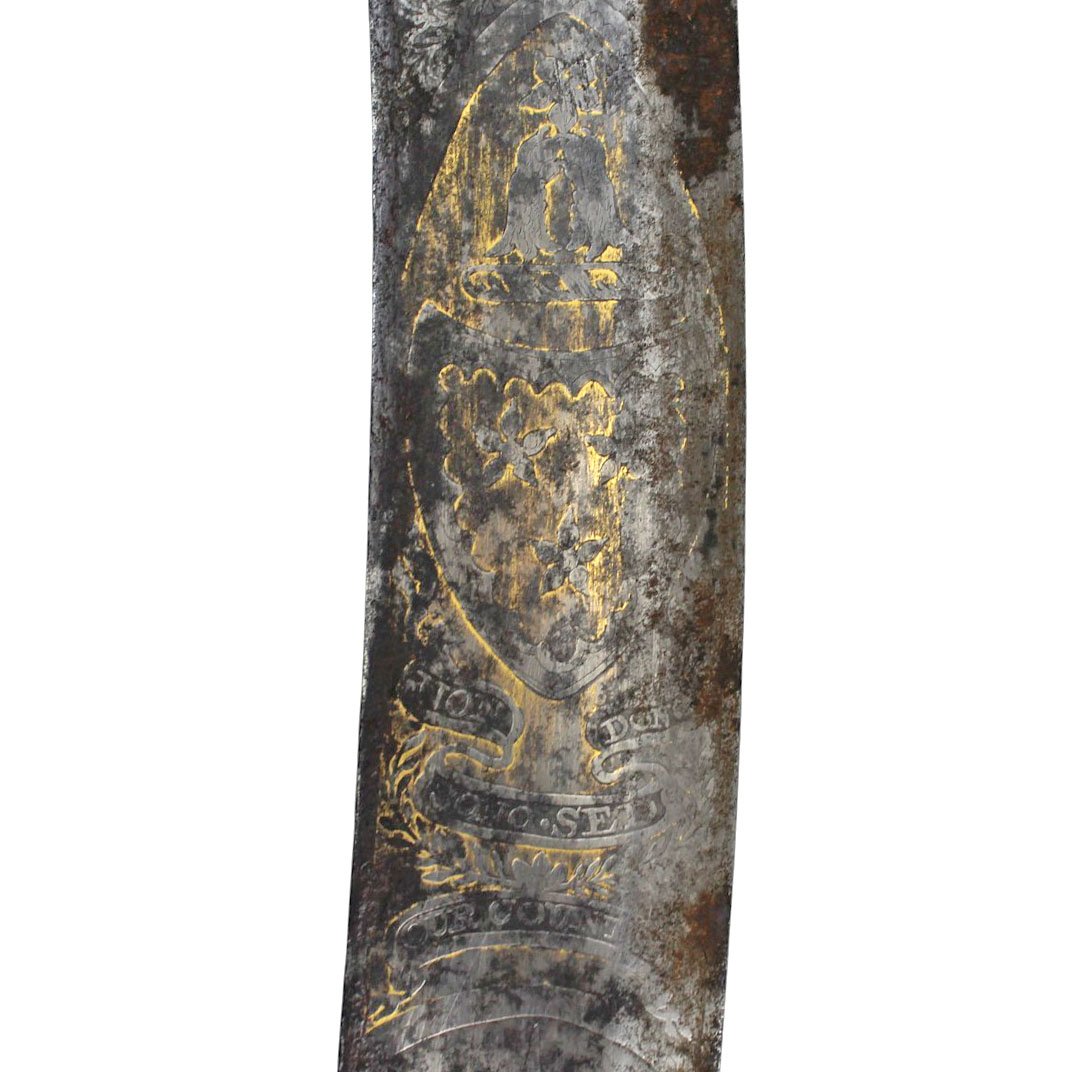
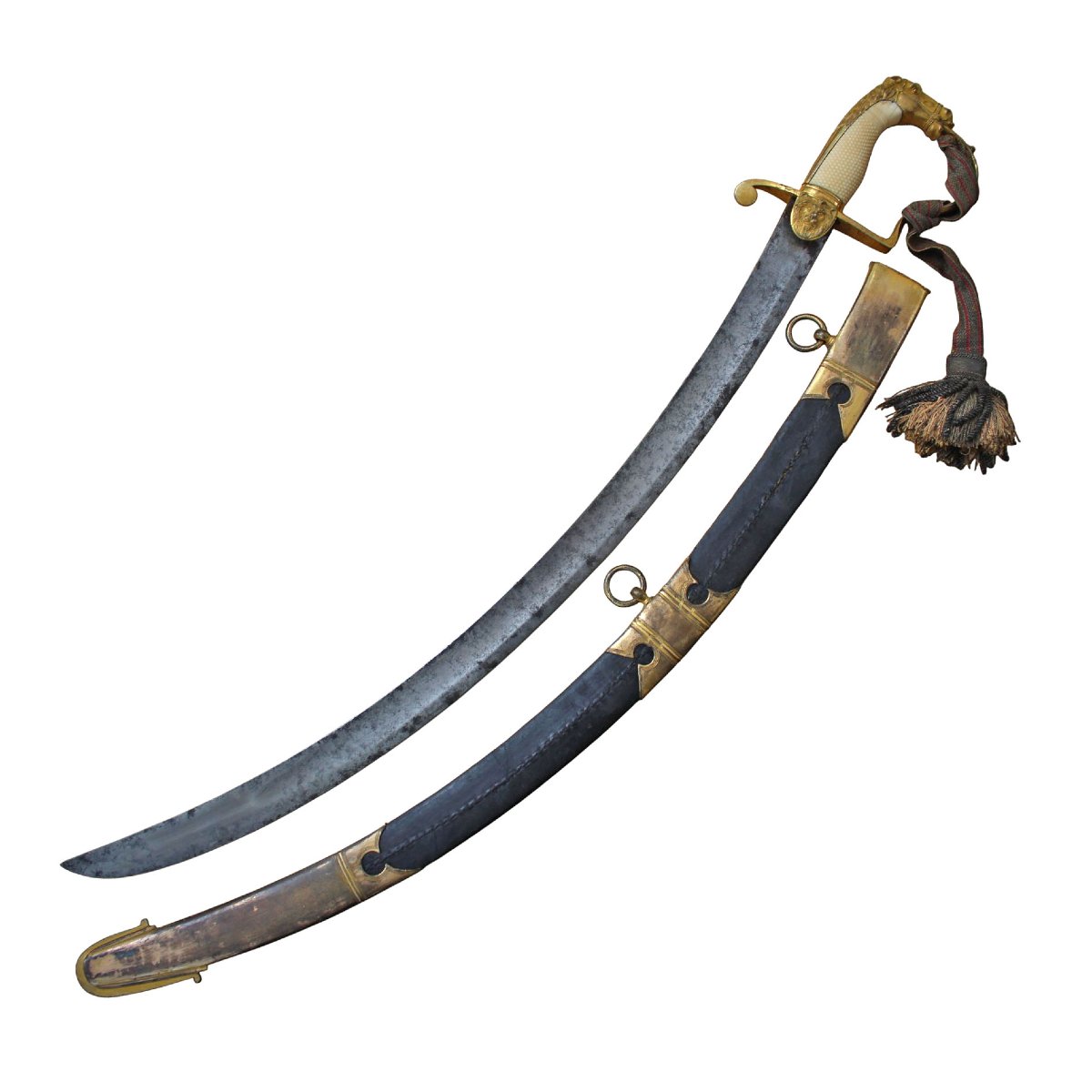
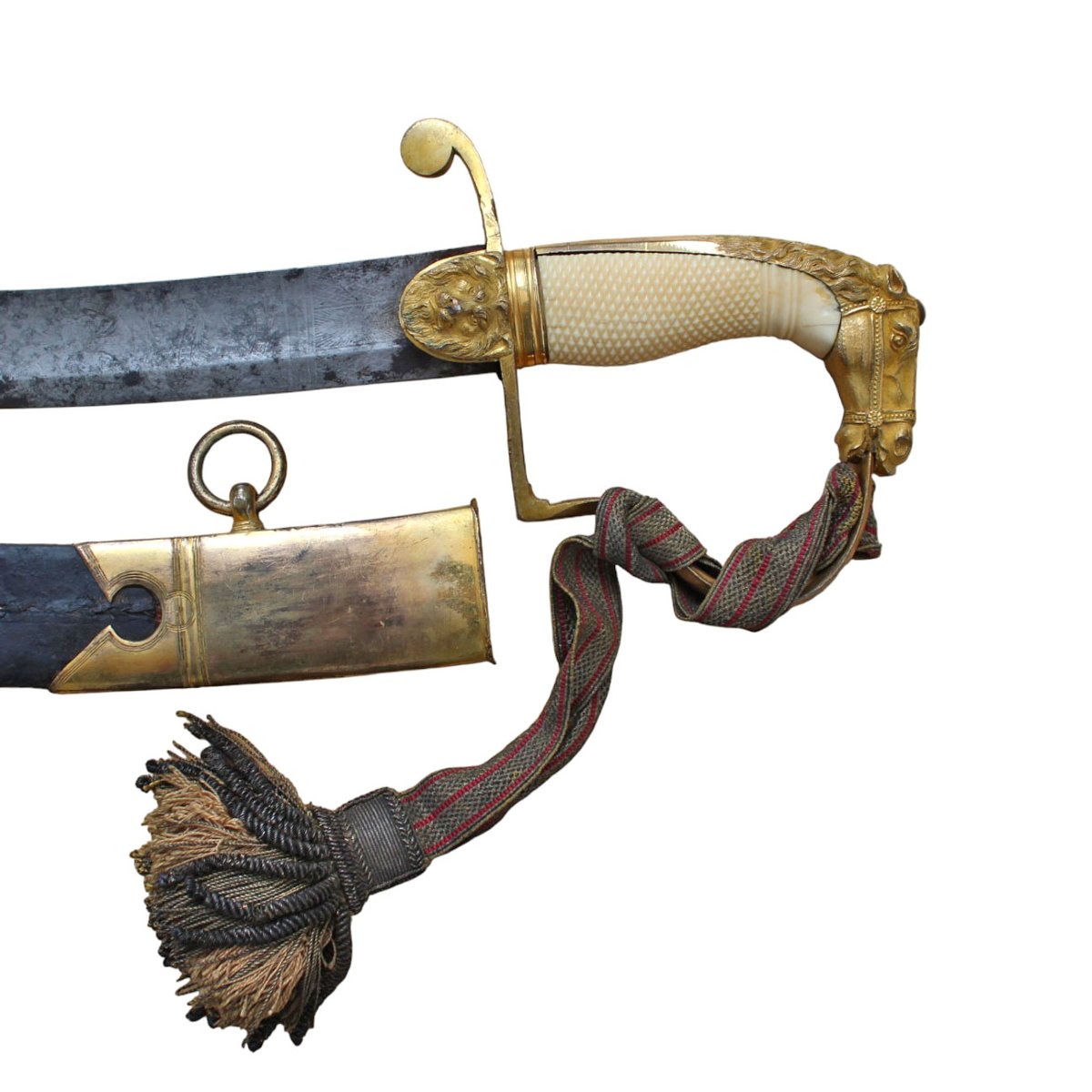
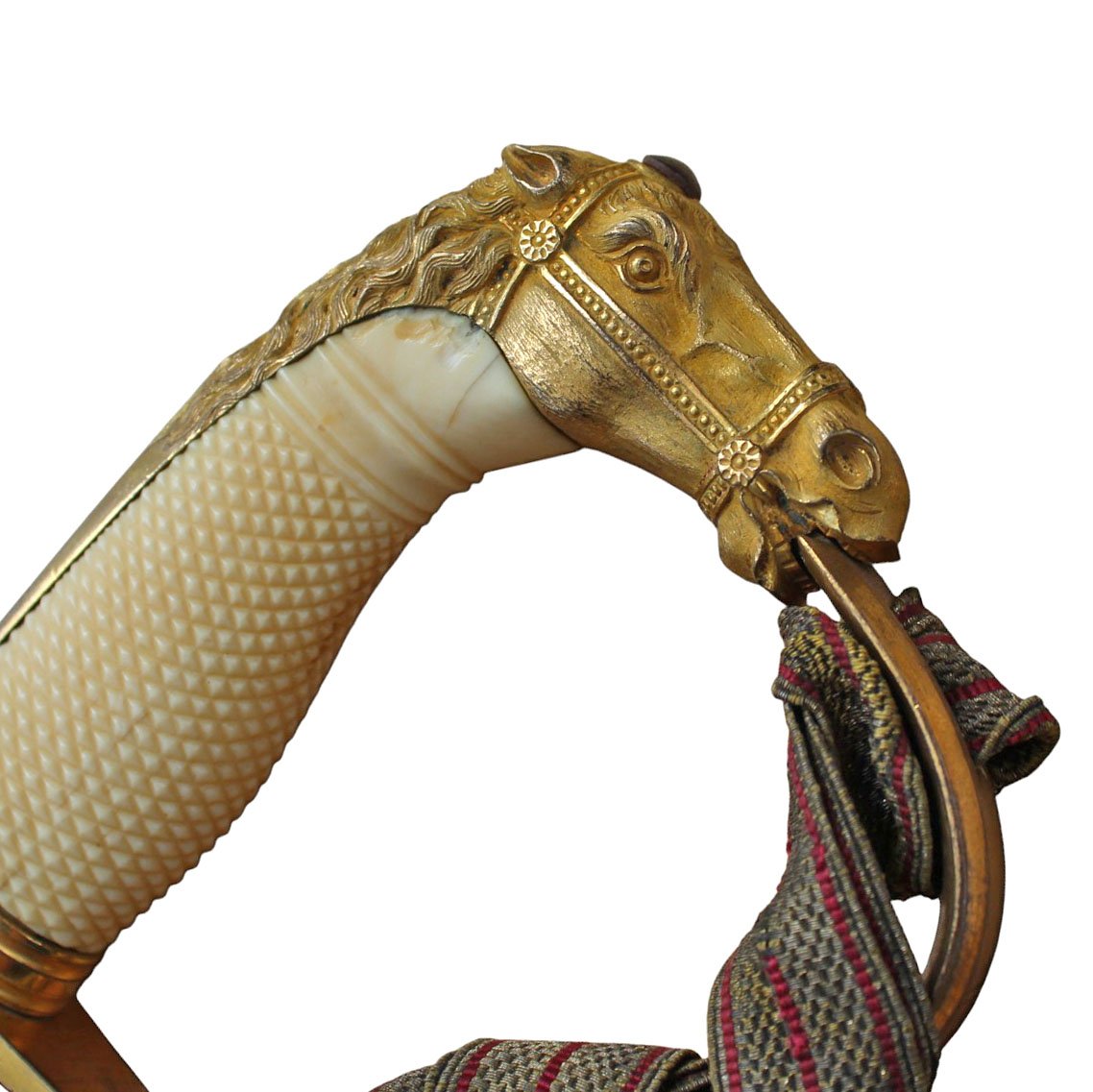
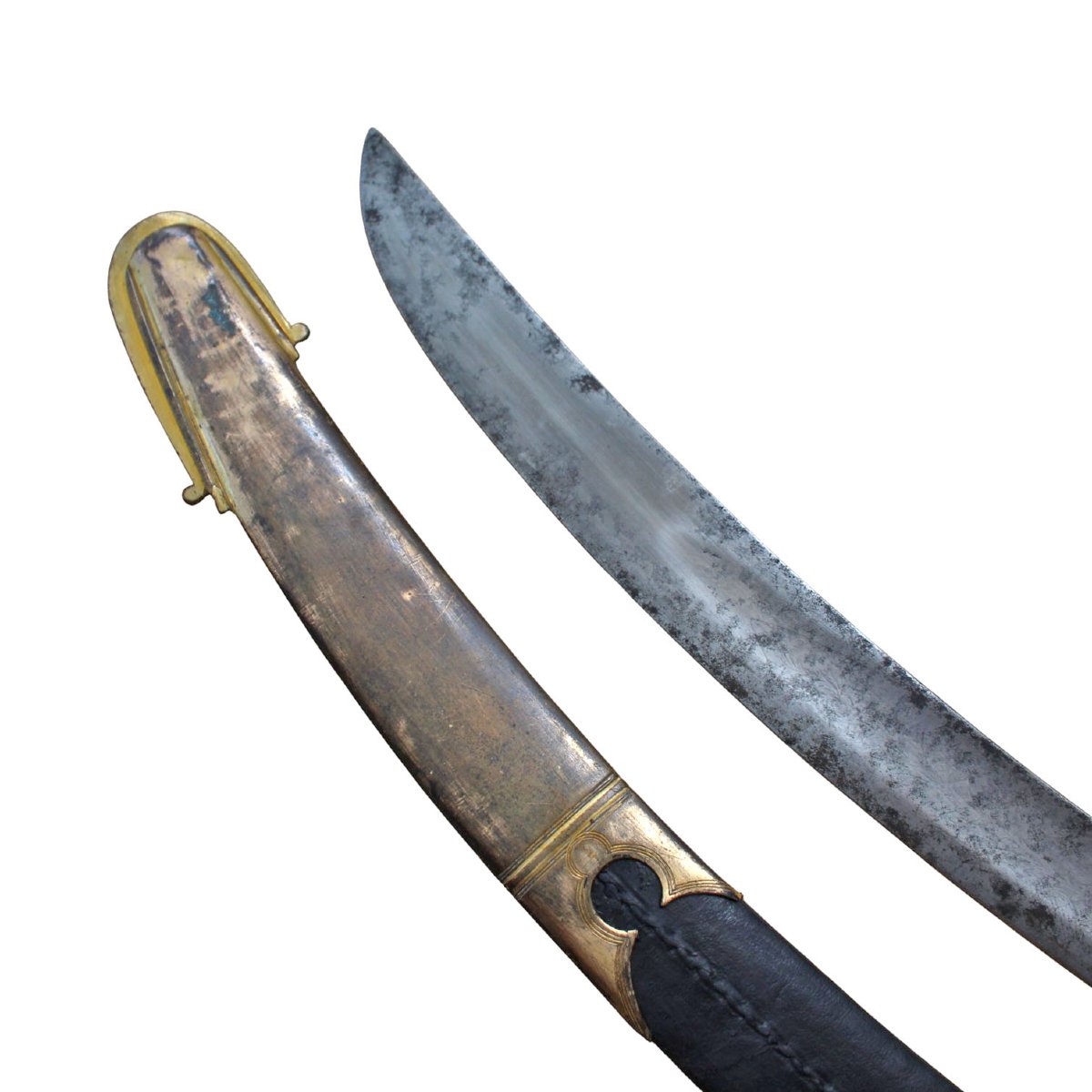
A Georgian-era officer's ceremonial saber, presented to Major General Daniel Seddon. The blade has a single fuller and is engraved along three-quarters of its length on both sides. The upper portion of the engraving depicts the gilded coat of arms of Lieutenant General Daniel Seddon, surmounted by the family motto “Non Sono Sed Dono” and “Our Country.” Further down the blade, framed at the top and bottom by a series of coats of arms and scrolls, is another motto, partially visible and also set within scrolls, the last four panels of which are perfectly legible: “Pendleton /*Volunteer?*/ Pikeman / Raised By The Acres Barn For The / Defense Of / Their Country / Oct. 25, 1803.” The other side of the blade bears the British royal coat of arms, with a profusion of coats of arms and scrolls, and near the base, the inscription “Osborns Warranted.” The hilt consists of a finely hand-chiseled horse-head pommel and a wide, single-phalanx guard, flanked by two lion-head tangs on either side of the crossguard. The hilt is finely checkered and has a tiny chip at the top. The guard retains 90% of its original gilding. An officer’s pommel is attached to the guard. Original black leather scabbard, adorned with gilded brass fittings. The blade has worn and stained engravings, as well as small traces of corrosion.
Note -
Lieutenant General Daniel Seddon began his military career as a lieutenant in the Lancashire Militia in 1778. He subsequently served in the 96th Infantry Regiment and the 100th Infantry Regiment (Loyal Lincolnshire Regiment). In 1781, the latter was sent to India to participate in the Second Anglo-Mysore War. Seddon was wounded, captured, and held as a prisoner of war until 1784, when he returned to Great Britain. After convalescing on half pay until 1788, he returned to India. He was then posted to Ireland as an officer in the 22nd Dragoon Regiment, where he was wounded again. Seddon served in the British Army in Egypt in 1801 and 1802. When Napoleon Bonaparte assembled his Army of England in preparation for the invasion of Great Britain, Seddon was appointed inspecting officer of the militia and volunteer forces raised to repel the French invasion. Seddon participated in the royal review of the volunteers on October 26, 1803. This review most likely included Pendleton’s Pikemen, formed in October 1803 and commanded by his son, William Seddon. The inscription on the swords indicates that the unit was raised near Acre Barn, which was owned by the Seddon family. When Napoleon invaded the Iberian Peninsula in 1808, the British sent Sir Arthur Wellesley to halt the French and reorganize the demoralized Portuguese army. Wellesley asked Seddon to join him as a brigadier in command of the Portuguese cavalry. Seddon was promoted to major general in the British Army in 1813, then to lieutenant general in 1825.Pendleton’s pikemen served as pikemen for only one year before being attached to the Manchester Fusiliers in 1804.
Note -
Lieutenant General Daniel Seddon began his military career as a lieutenant in the Lancashire Militia in 1778. He subsequently served in the 96th Infantry Regiment and the 100th Infantry Regiment (Loyal Lincolnshire Regiment). In 1781, the latter was sent to India to participate in the Second Anglo-Mysore War. Seddon was wounded, captured, and held as a prisoner of war until 1784, when he returned to Great Britain. After convalescing on half pay until 1788, he returned to India. He was then posted to Ireland as an officer in the 22nd Dragoon Regiment, where he was wounded again. Seddon served in the British Army in Egypt in 1801 and 1802. When Napoleon Bonaparte assembled his Army of England in preparation for the invasion of Great Britain, Seddon was appointed inspecting officer of the militia and volunteer forces raised to repel the French invasion. Seddon participated in the royal review of the volunteers on October 26, 1803. This review most likely included Pendleton’s Pikemen, formed in October 1803 and commanded by his son, William Seddon. The inscription on the swords indicates that the unit was raised near Acre Barn, which was owned by the Seddon family. When Napoleon invaded the Iberian Peninsula in 1808, the British sent Sir Arthur Wellesley to halt the French and reorganize the demoralized Portuguese army. Wellesley asked Seddon to join him as a brigadier in command of the Portuguese cavalry. Seddon was promoted to major general in the British Army in 1813, then to lieutenant general in 1825.Pendleton’s pikemen served as pikemen for only one year before being attached to the Manchester Fusiliers in 1804.
3 400 €
Period: 19th century
Style: English Style
Condition: Good condition
Reference (ID): 1783556
Availability: In stock
Print