



Japanese Hammered Bronze Vase By Gyokusendo: Vine Leaves And Grapes
Artist: Gyokusendo (玉川堂)
This remarkable vase (Showa era, 1926-1989) is the work of Gyokusendo (玉川堂), the famous Japanese metal workshopfounded in 1816 in Tsubame, Niigata prefecture, a region long renownedfor the excellence of its metal craftsmanship. For overGyokusendo has remained a family-run workshop, perpetuating the rare andand demanding technique of tsuiki: the art of shaping vases entirely by handfrom a single sheet of copper, without melting, soldering or industrialindustrial intervention.
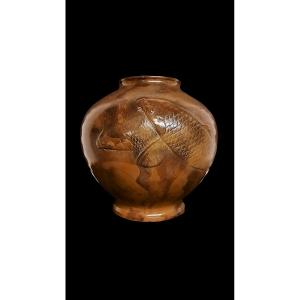
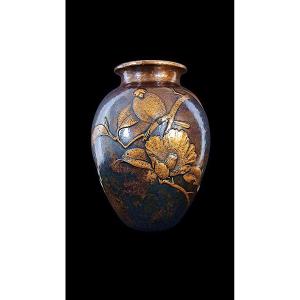
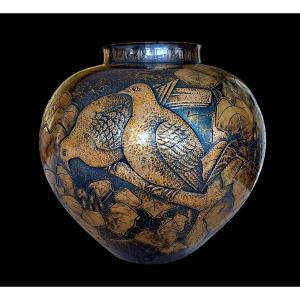
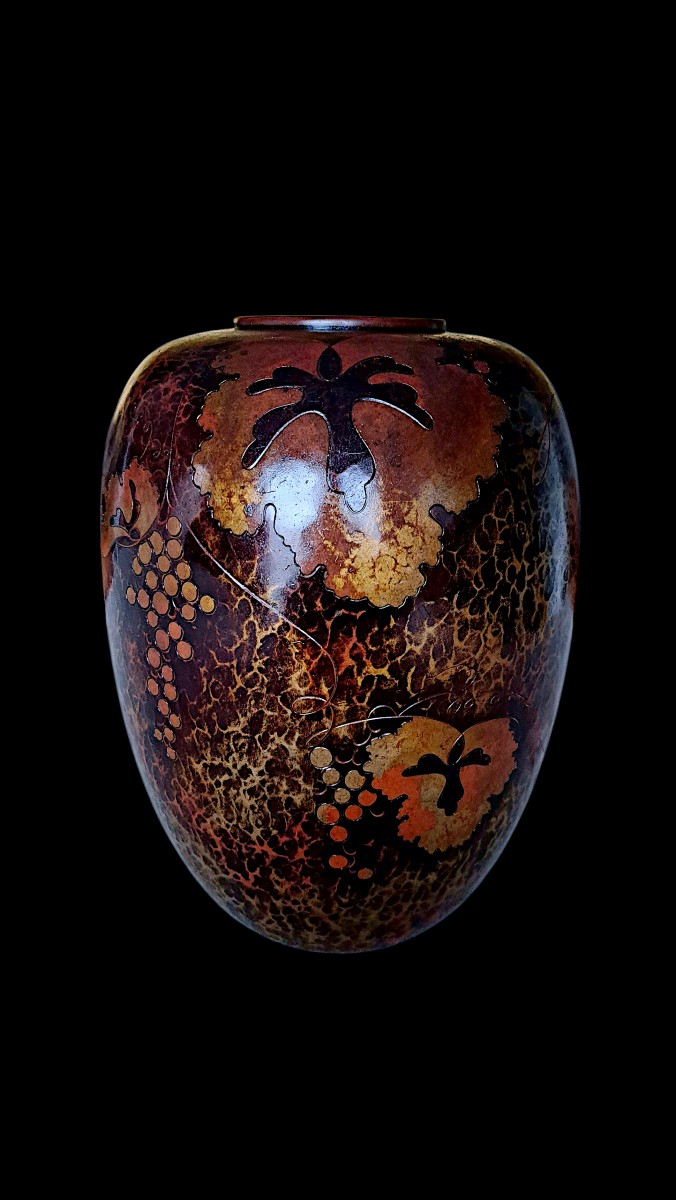
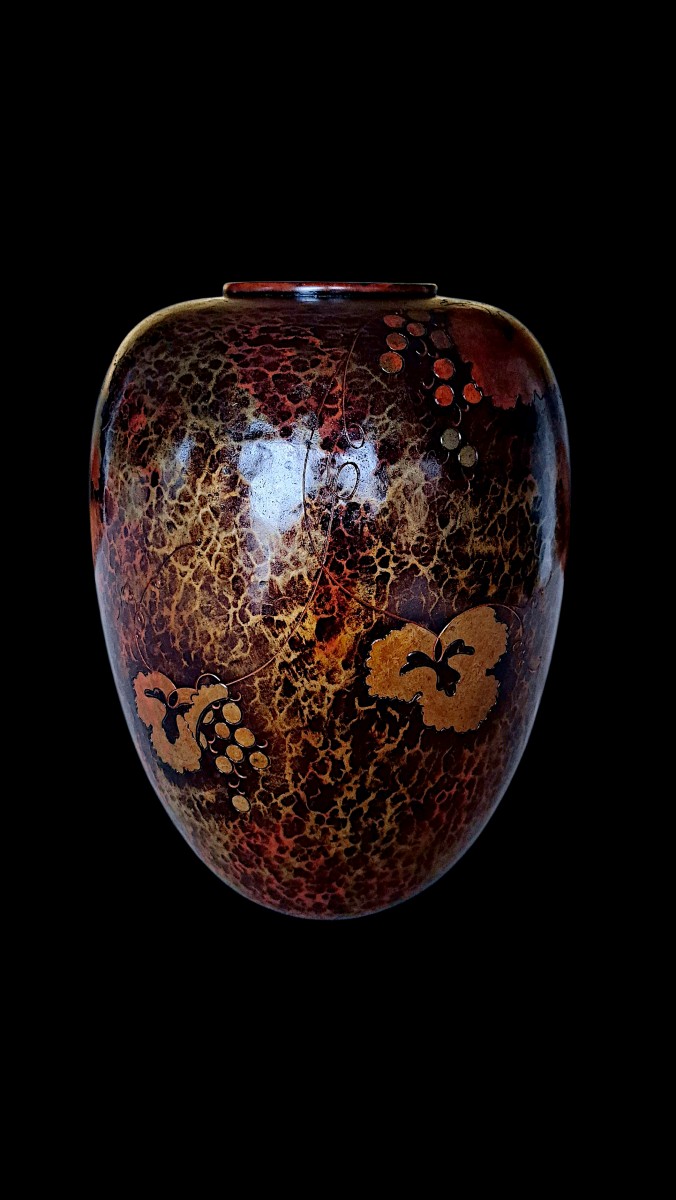
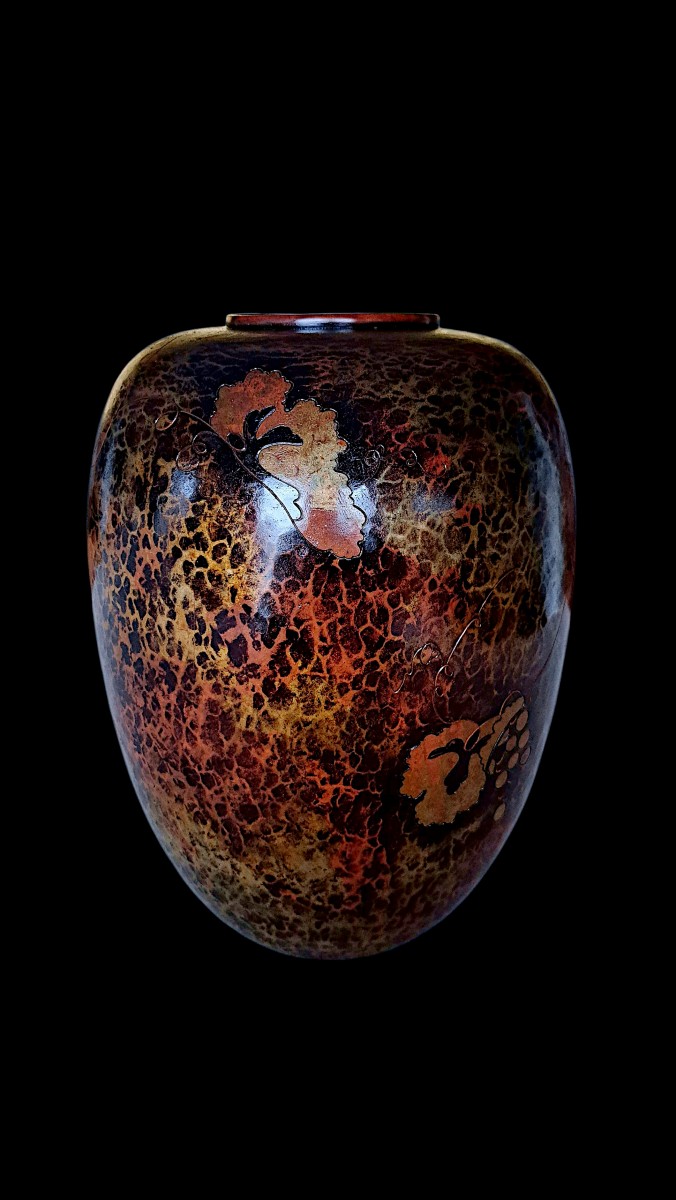
This vase expresses this heritage with remarkable elegance and sobriety.sobriety. Rather than relying on ostentatious ornament, it draws its presencepresence from the discreet authority of its form and the extraordinarysophistication of its surface. Its body, with its harmonious proportions and slightlyproportions and slightly conical shape, allows the eye to travel uninterrupted across arichly nuanced field of hammered copper and patina. Its decoration is basedgrapevine motif, with stylized grape leaves and hanging bunches ofbunches of grapes spread across the surface in a fluid, almost calligraphic rhythm,almost calligraphic. The leaves are rendered with slightly lobed contourslobed contours and darkened lines, while the rounded forms of the grapesemerge with a discreet sculptural emphasis, creating a subtle relief thatseems to grow organically from the metal itself. The motif is both decorativeand symbolic, evoking abundance, cultivation and the cycle of the seasons - themesthemes deeply rooted in Japanese decorative art.
The surface is particularly captivating. A luminous background in warmtones of copper, amber and reddish brown are enriched by passages of deep russetsmoky violet, charcoal and an almost black patina, creating a visual depthvisual depth that changes beautifully under changing light.These tonal variations give the vine leaves and grapes a remarkableand grapes a remarkable vitality, so that the decor seems almost to sparklecurved body of the vase. The overall effect is both painterly and restrained,combining the richness and rigor characteristic of the finest JapaneseJapanese metalwork.
Like all Gyokusendo works, this vase is the fruit of thousands of precise hammer blowsprecise hammer blows, each contributing to the balance, strength and rhythmrhythm of the form. This slow, highly disciplined process leavesthe subtle but undeniable imprint of the craftsman's hand. Each piece isunique: the subtleties of the form, surface and patina give eacheach Gyokusendo an intrinsic singularity, a visual atmosphere and presence of its own.presence.
The techniques perpetuated by Gyokusendo are part of an ancestral know-howrecognized as intangible cultural heritage in Japan.This distinction honors not the objects themselves, but the exceptional human skills andbut rather the exceptional human skills and traditional methodsnational cultural identity. In the case of tsuiki, this knowledge is transmitteddirectly from master to apprentice over years of assiduous practice, ensuringthe continuity of a living tradition of extraordinary refinement.
Gyokusendo's reputation extends far beyond Japan's borders. Aexample is its collaboration with the prestigious Maison de ChampagneChampagne House, who turned to Gyokusendo because it was the only workshopcapable of producing large hand-hammered copper vases of absolute structural soliditythe highest aesthetic standards.It's a discreet but eloquent testimony to the workshop's unique mastery,where technical perfection and artistic sensibility meet without compromise.uncompromisingly.
Buying a Gyokusendo vase is much more than just buying a decorative object.decorative object. It's part of a Japanese craft tradition that values time, patiencetime, patience, knowledge of materials and discreet beauty.beauty. As the copper takes on a patina and deepens over time, the piece gains inexpressiveness, acquiring a presence both personal and timeless.timeless presence.
A superb collector's piece, equally at home in a refined contemporarycontemporary interior, as well as in a prestigious collection of JapaneseJapanese decorative arts collection, or in a place where discreet luxuryin all its splendor.
This vase expresses this heritage with remarkable elegance and sobriety.sobriety. Rather than relying on ostentatious ornament, it draws its presencepresence from the discreet authority of its form and the extraordinarysophistication of its surface. Its body, with its harmonious proportions and slightlyproportions and slightly conical shape, allows the eye to travel uninterrupted across arichly nuanced field of hammered copper and patina. Its decoration is basedgrapevine motif, with stylized grape leaves and hanging bunches ofbunches of grapes spread across the surface in a fluid, almost calligraphic rhythm,almost calligraphic. The leaves are rendered with slightly lobed contourslobed contours and darkened lines, while the rounded forms of the grapesemerge with a discreet sculptural emphasis, creating a subtle relief thatseems to grow organically from the metal itself. The motif is both decorativeand symbolic, evoking abundance, cultivation and the cycle of the seasons - themesthemes deeply rooted in Japanese decorative art.
The surface is particularly captivating. A luminous background in warmtones of copper, amber and reddish brown are enriched by passages of deep russetsmoky violet, charcoal and an almost black patina, creating a visual depthvisual depth that changes beautifully under changing light.These tonal variations give the vine leaves and grapes a remarkableand grapes a remarkable vitality, so that the decor seems almost to sparklecurved body of the vase. The overall effect is both painterly and restrained,combining the richness and rigor characteristic of the finest JapaneseJapanese metalwork.
Like all Gyokusendo works, this vase is the fruit of thousands of precise hammer blowsprecise hammer blows, each contributing to the balance, strength and rhythmrhythm of the form. This slow, highly disciplined process leavesthe subtle but undeniable imprint of the craftsman's hand. Each piece isunique: the subtleties of the form, surface and patina give eacheach Gyokusendo an intrinsic singularity, a visual atmosphere and presence of its own.presence.
The techniques perpetuated by Gyokusendo are part of an ancestral know-howrecognized as intangible cultural heritage in Japan.This distinction honors not the objects themselves, but the exceptional human skills andbut rather the exceptional human skills and traditional methodsnational cultural identity. In the case of tsuiki, this knowledge is transmitteddirectly from master to apprentice over years of assiduous practice, ensuringthe continuity of a living tradition of extraordinary refinement.
Gyokusendo's reputation extends far beyond Japan's borders. Aexample is its collaboration with the prestigious Maison de ChampagneChampagne House, who turned to Gyokusendo because it was the only workshopcapable of producing large hand-hammered copper vases of absolute structural soliditythe highest aesthetic standards.It's a discreet but eloquent testimony to the workshop's unique mastery,where technical perfection and artistic sensibility meet without compromise.uncompromisingly.
Buying a Gyokusendo vase is much more than just buying a decorative object.decorative object. It's part of a Japanese craft tradition that values time, patiencetime, patience, knowledge of materials and discreet beauty.beauty. As the copper takes on a patina and deepens over time, the piece gains inexpressiveness, acquiring a presence both personal and timeless.timeless presence.
A superb collector's piece, equally at home in a refined contemporarycontemporary interior, as well as in a prestigious collection of JapaneseJapanese decorative arts collection, or in a place where discreet luxuryin all its splendor.
1 100 €
Period: 20th century
Style: Design 50's and 60's
Condition: Perfect condition
Material: Bronze
Height: 26 cm
Reference (ID): 1736754
Availability: In stock
Print