

Japanese Bronze - Owl
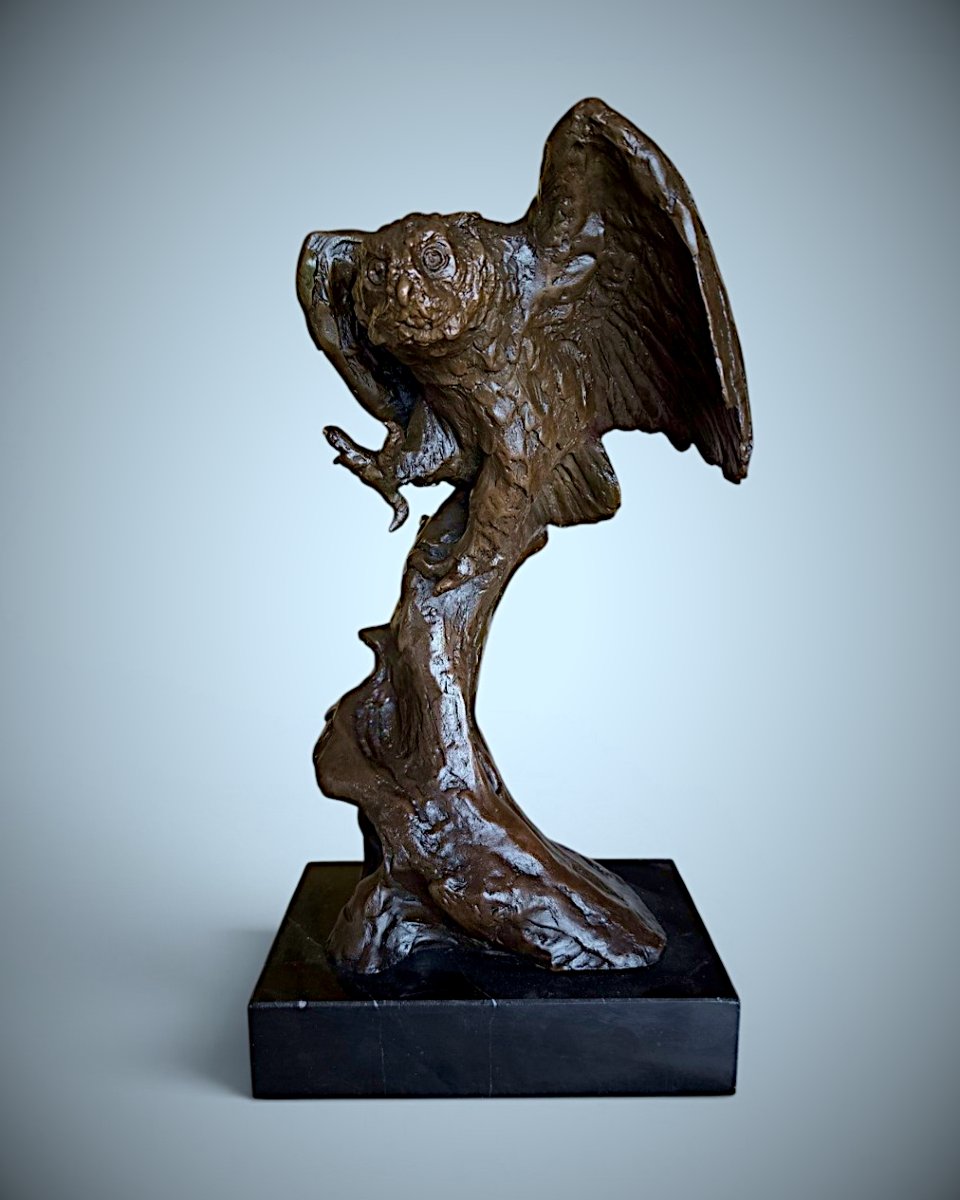
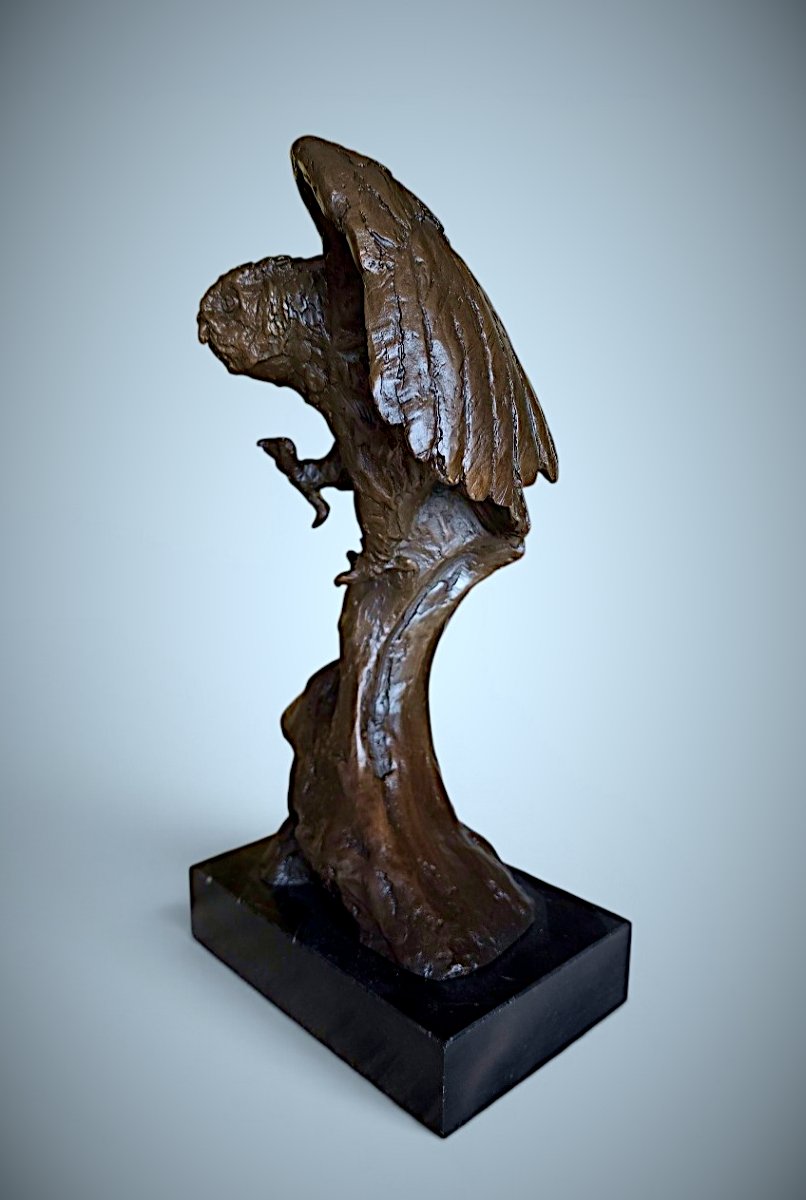
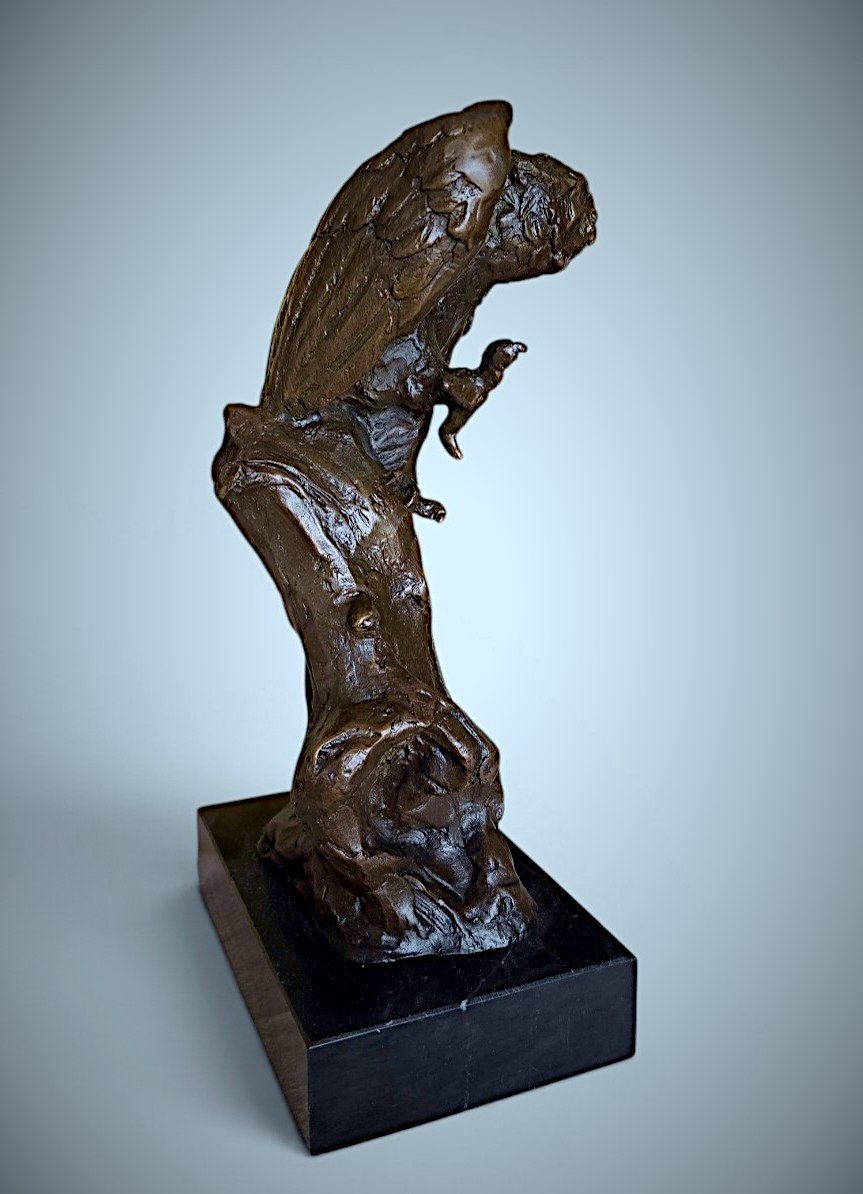
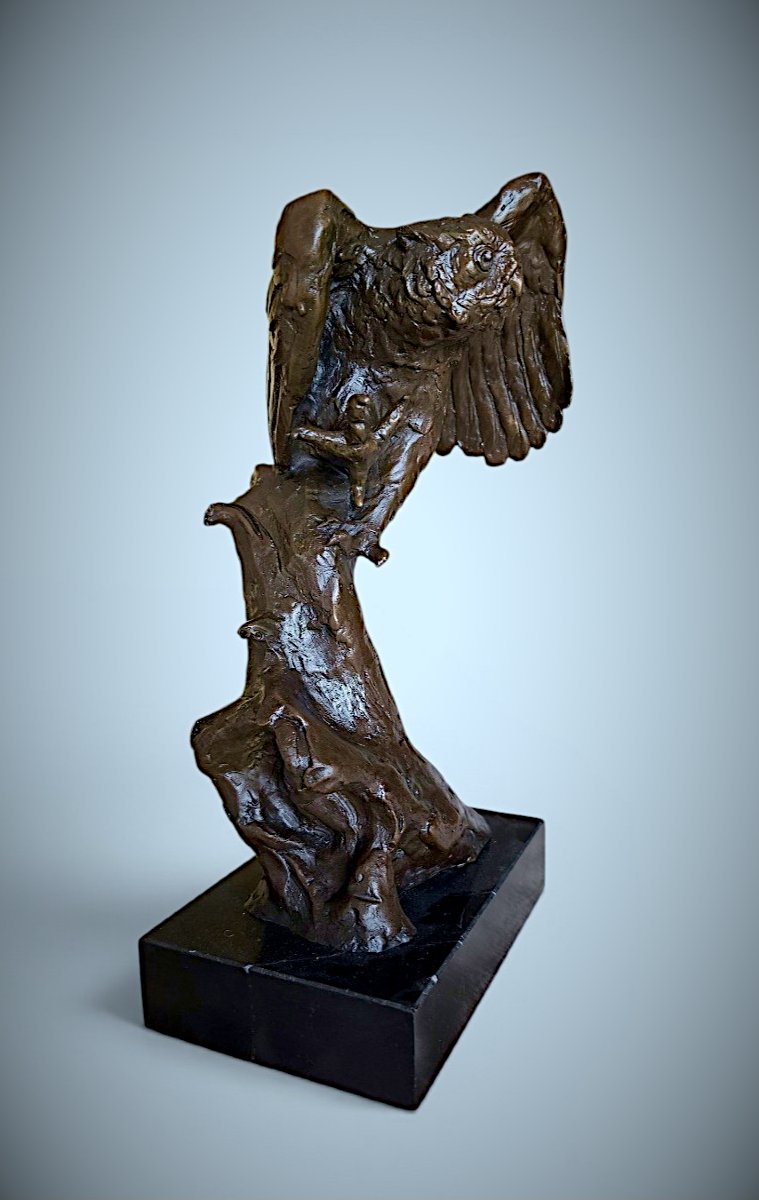
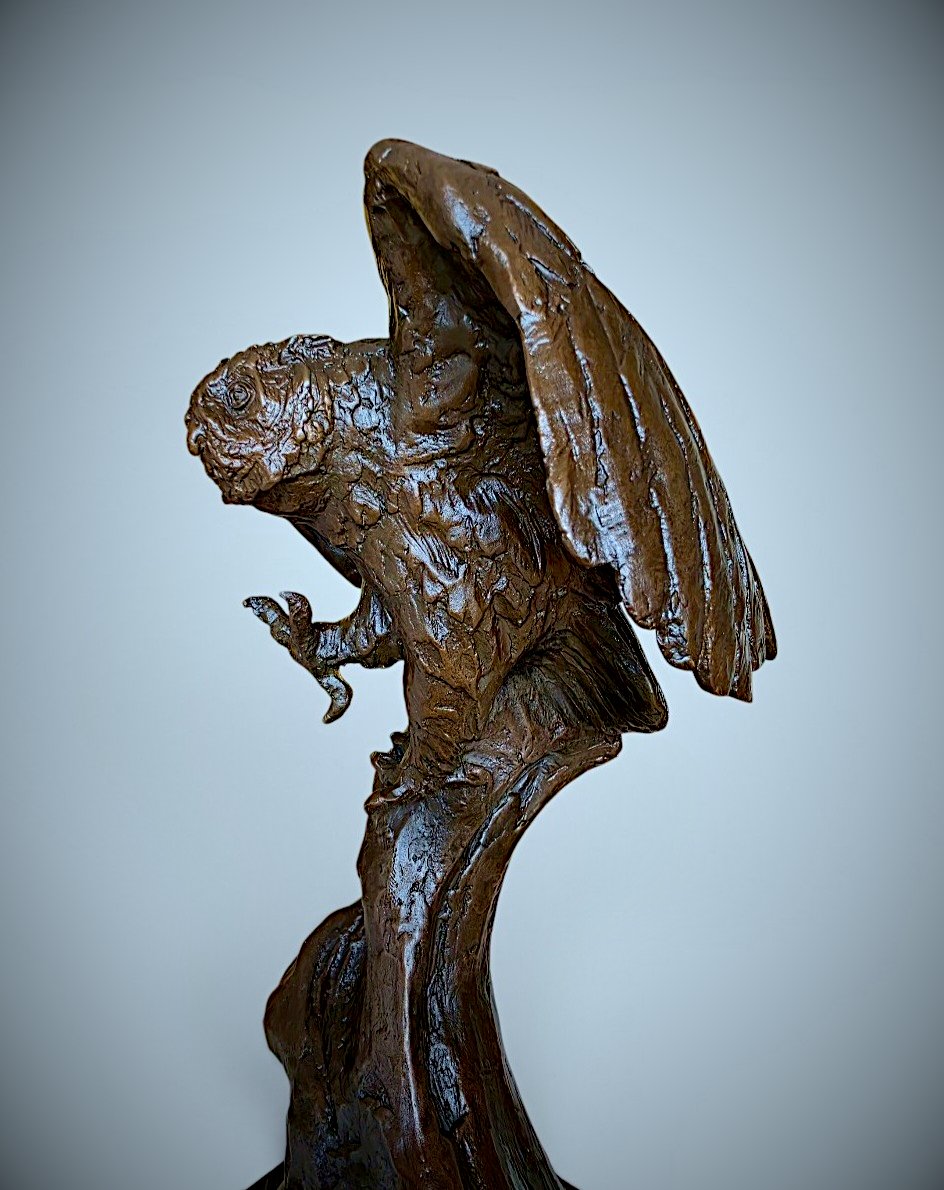
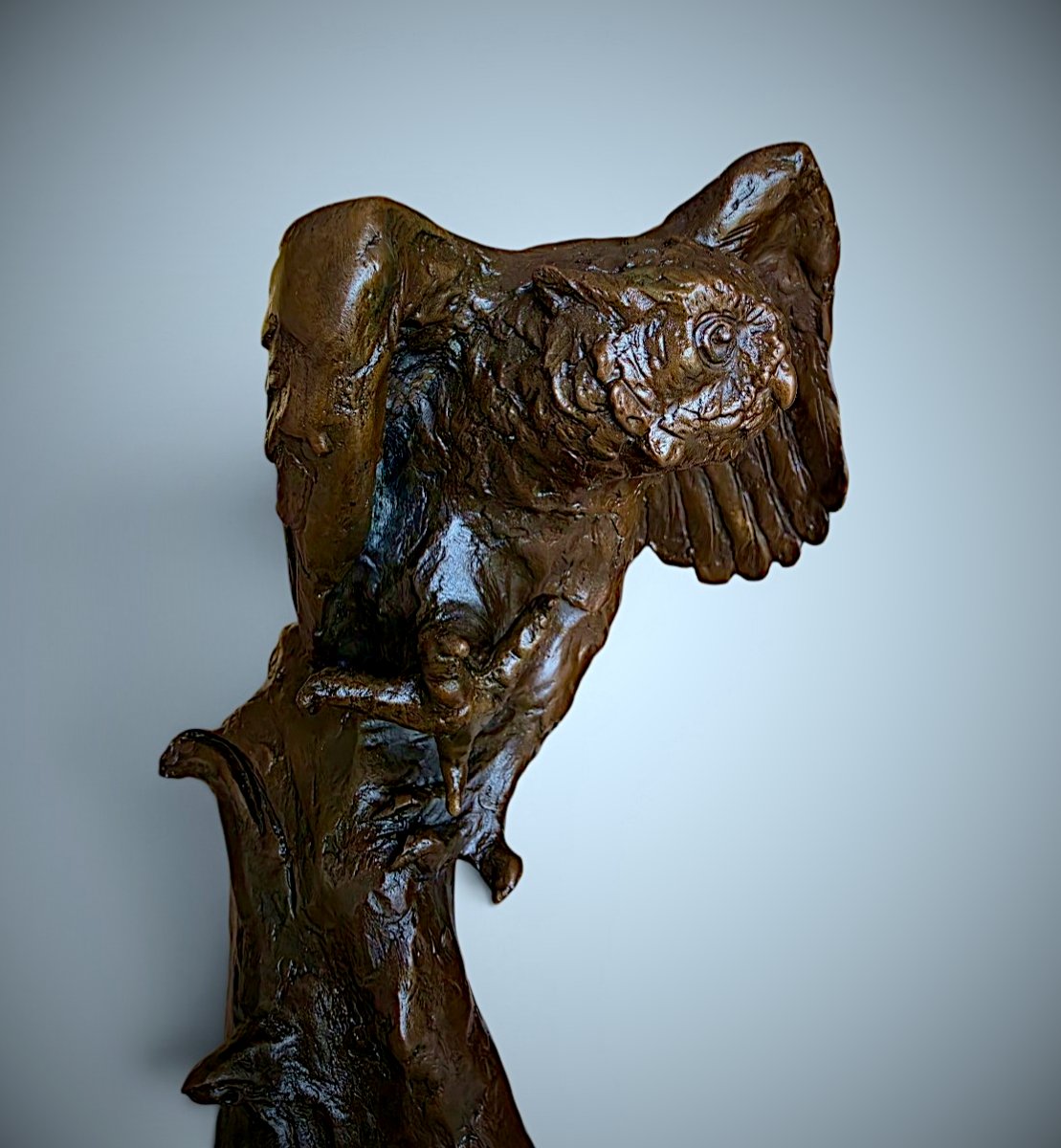
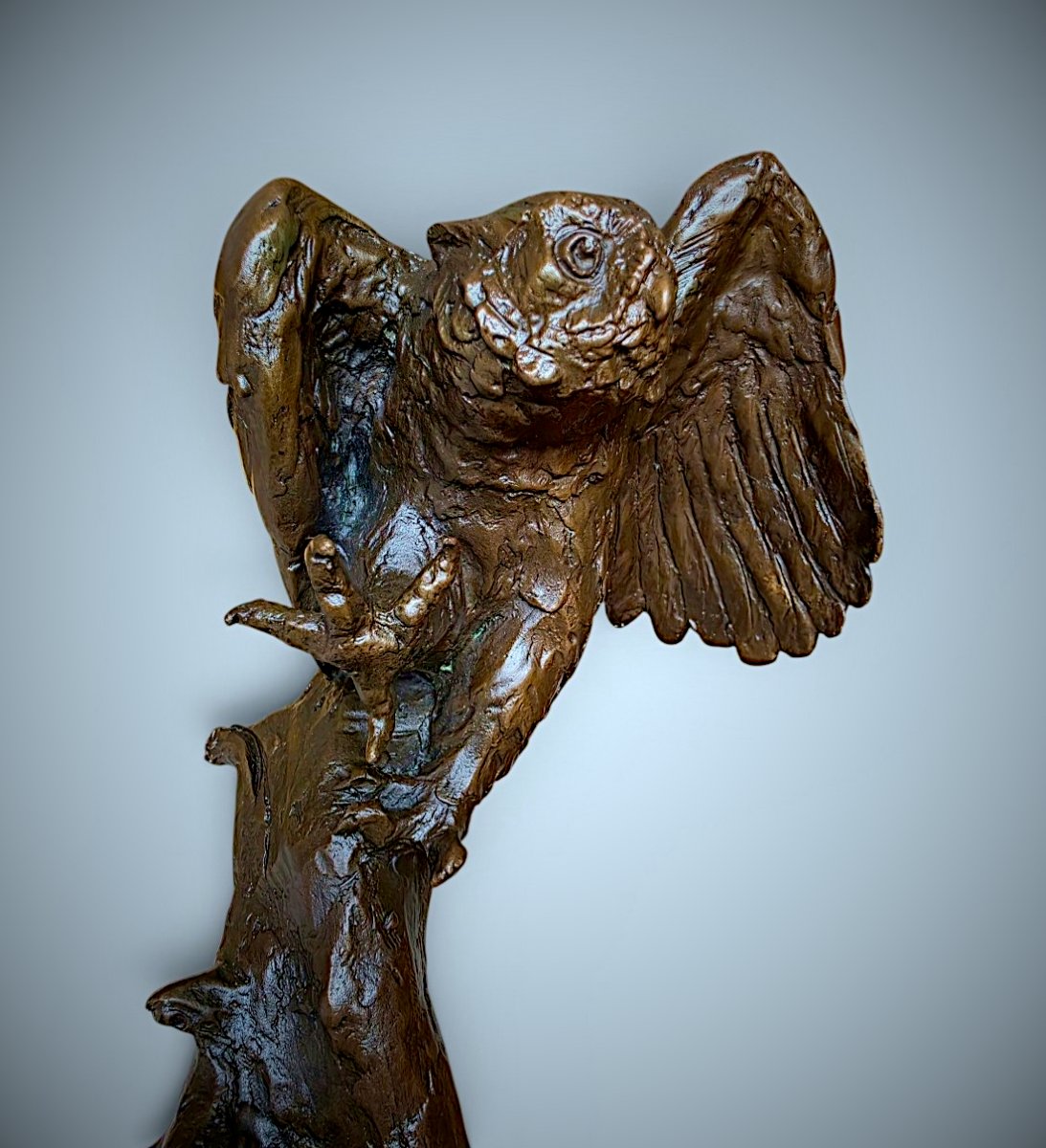
This compelling bronze sculpture captures an owl at the precise moment
between stillness and flight. Perched upon a weathered tree trunk, the bird
raises one talon and partially unfurls its wings, gathering energy for imminent
take-off. The sculptor has masterfully seized a fleeting instant of tension and
movement, transforming a simple wildlife study into a work of remarkable
vitality and sculptural presence.
Created during the early Shōwa period (1926–1945), a time of significant artistic evolution in Japan, the sculpture reflects the synthesis of traditional Japanese craftsmanship with modern sculptural ideals. The decades surrounding 1930 witnessed a flourishing of bronze sculpture as Japanese artists increasingly explored naturalistic and dynamic subjects while maintaining the technical excellence inherited from earlier generations of master metalworkers. Animal subjects became particularly popular, embodying both the Japanese reverence for nature and the influence of European animalier sculpture that had entered Japan during the late Meiji and Taishō periods.
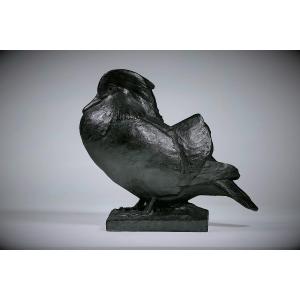
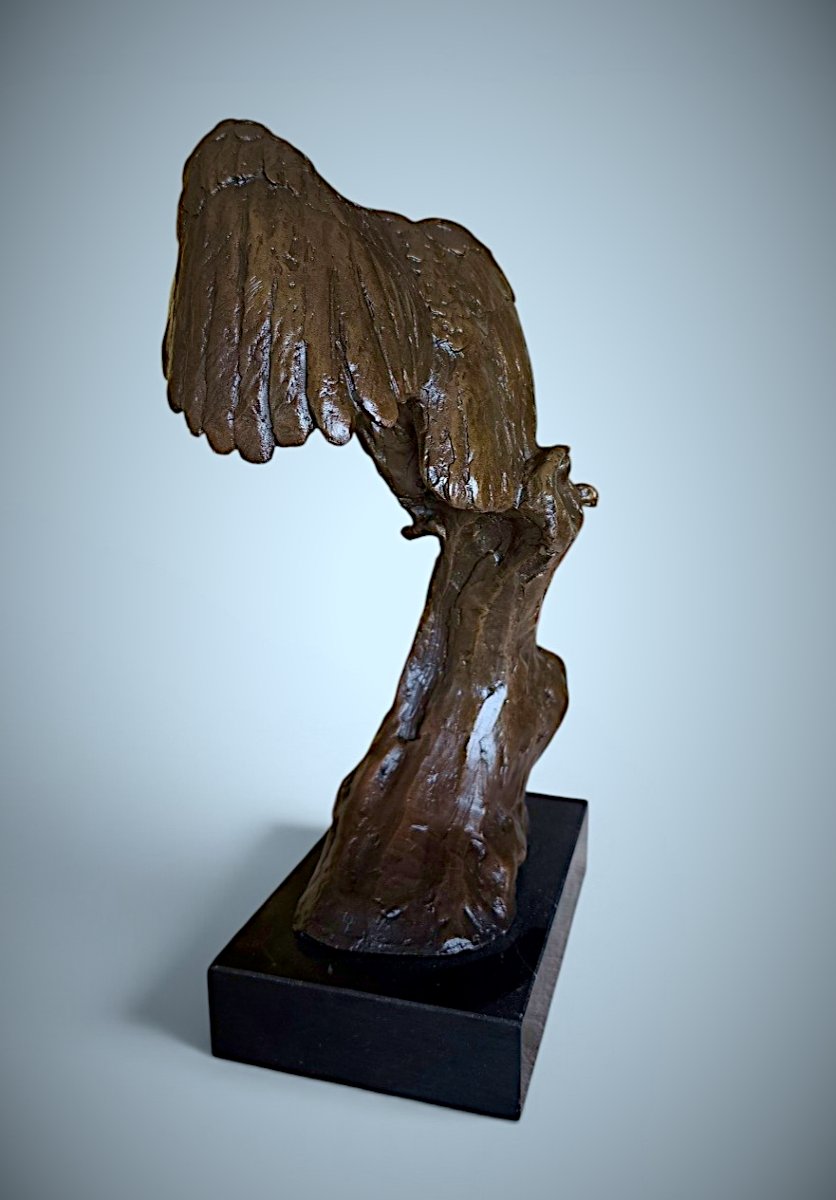
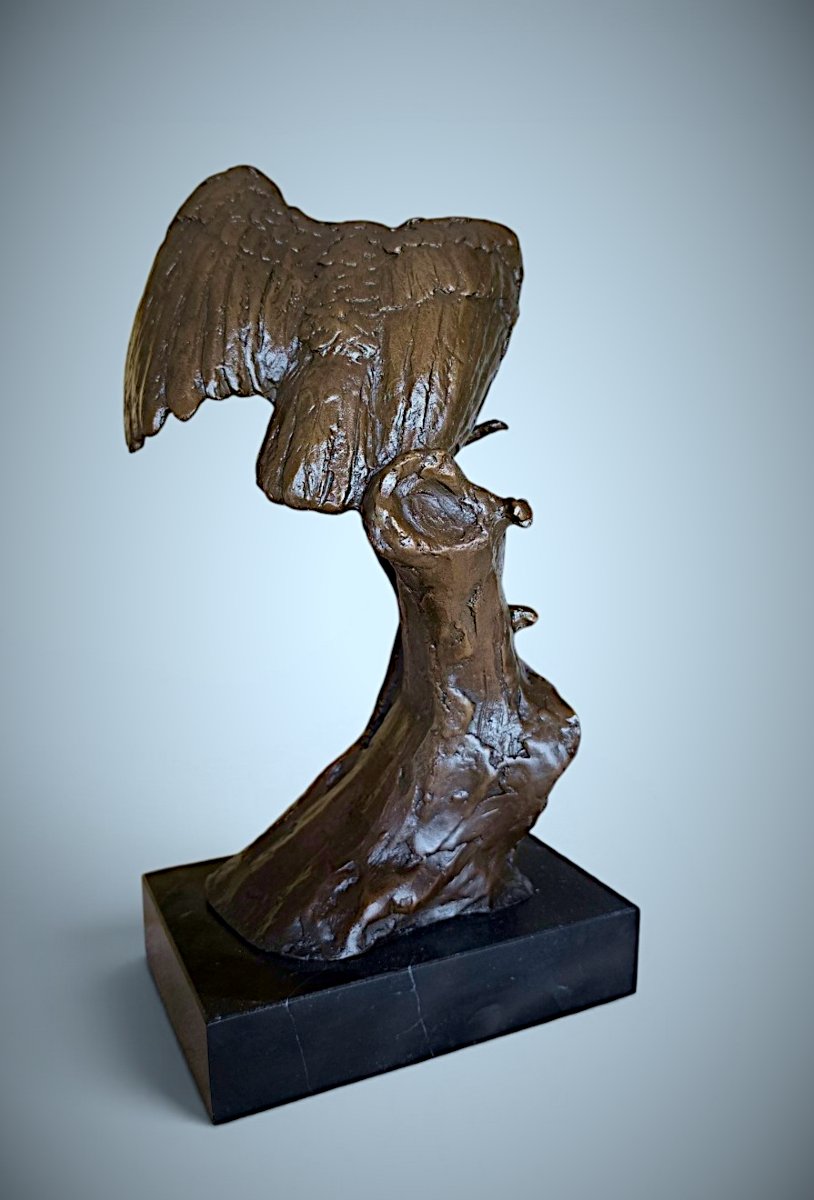
The composition is distinguished by its dramatic silhouette. A sweeping, organically modelled tree trunk rises from the base, supporting the owl in a poised and highly animated stance. The partially extended wings, forward-reaching talon, and alert gaze create a powerful sense of anticipation, as though the bird is about to launch itself into the surrounding air. This successful balance between stability and motion is a hallmark of the finest Japanese wildlife bronzes of the era.
Particularly noteworthy is the sculptor's handling of the surface. Rather than pursuing strict academic realism, the artist employs a vigorous and expressive modelling technique that captures the essence of the owl's plumage and the rugged character of the tree. The richly textured bronze interacts beautifully with light, producing subtle variations across the deep brown patina and enlivening the entire composition. Such tactile surface treatment became increasingly characteristic of Japanese sculpture during the early Shōwa years, when artists sought greater expressive freedom while remaining rooted in traditional craftsmanship.
The owl (fukurō, 梟) occupies a special place within Japanese culture and folklore. Long associated with wisdom, vigilance, protection, and good fortune, it is regarded as an auspicious symbol and frequently appears in Japanese decorative and artistic traditions. The subject therefore possesses both aesthetic appeal and symbolic resonance.
Although unsigned, the sculpture displays a quality of modelling and casting entirely consistent with the accomplished animal bronzes produced in Japan during the first decades of the Shōwa era. The work embodies the period's fascination with capturing the vitality of the natural world, while simultaneously demonstrating the exceptional bronze-casting skills for which Japan had become internationally renowned by the early twentieth century.
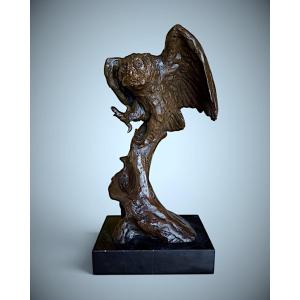
Mounted upon a polished black marble plinth, the sculpture possesses a commanding presence despite its intimate scale. Combining expressive modelling, technical refinement, and a powerful sense of movement, it stands as an excellent example of early Shōwa bronze sculpture, capturing with remarkable sensitivity the silent power and enigmatic beauty of one of nature's most revered birds.
Created during the early Shōwa period (1926–1945), a time of significant artistic evolution in Japan, the sculpture reflects the synthesis of traditional Japanese craftsmanship with modern sculptural ideals. The decades surrounding 1930 witnessed a flourishing of bronze sculpture as Japanese artists increasingly explored naturalistic and dynamic subjects while maintaining the technical excellence inherited from earlier generations of master metalworkers. Animal subjects became particularly popular, embodying both the Japanese reverence for nature and the influence of European animalier sculpture that had entered Japan during the late Meiji and Taishō periods.
The composition is distinguished by its dramatic silhouette. A sweeping, organically modelled tree trunk rises from the base, supporting the owl in a poised and highly animated stance. The partially extended wings, forward-reaching talon, and alert gaze create a powerful sense of anticipation, as though the bird is about to launch itself into the surrounding air. This successful balance between stability and motion is a hallmark of the finest Japanese wildlife bronzes of the era.
Particularly noteworthy is the sculptor's handling of the surface. Rather than pursuing strict academic realism, the artist employs a vigorous and expressive modelling technique that captures the essence of the owl's plumage and the rugged character of the tree. The richly textured bronze interacts beautifully with light, producing subtle variations across the deep brown patina and enlivening the entire composition. Such tactile surface treatment became increasingly characteristic of Japanese sculpture during the early Shōwa years, when artists sought greater expressive freedom while remaining rooted in traditional craftsmanship.
The owl (fukurō, 梟) occupies a special place within Japanese culture and folklore. Long associated with wisdom, vigilance, protection, and good fortune, it is regarded as an auspicious symbol and frequently appears in Japanese decorative and artistic traditions. The subject therefore possesses both aesthetic appeal and symbolic resonance.
Although unsigned, the sculpture displays a quality of modelling and casting entirely consistent with the accomplished animal bronzes produced in Japan during the first decades of the Shōwa era. The work embodies the period's fascination with capturing the vitality of the natural world, while simultaneously demonstrating the exceptional bronze-casting skills for which Japan had become internationally renowned by the early twentieth century.
Mounted upon a polished black marble plinth, the sculpture possesses a commanding presence despite its intimate scale. Combining expressive modelling, technical refinement, and a powerful sense of movement, it stands as an excellent example of early Shōwa bronze sculpture, capturing with remarkable sensitivity the silent power and enigmatic beauty of one of nature's most revered birds.
1 600 €
Period: 20th century
Style: Asian art
Condition: Perfect condition
Material: Bronze
Width: 18 cm
Height: 35 cm
Reference (ID): 1621898
Availability: In stock
Print