

Japanese Hammered Bronze Vase By Gyokusendo: Doves, Branches And Leaves
Artist: Gyokusendo (玉川堂)
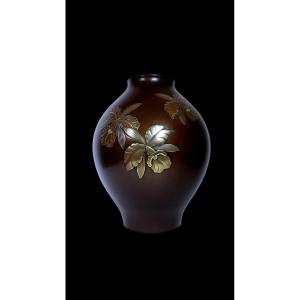
This striking vase, created during the Shōwa period (1926–1989), is awork of Gyokusendo (玉川堂), the celebrated metal atelier founded in 1816 inTsubame, Niigata—an area long renowned for the exceptional quality of its metalcraftsmanship. For over two centuries, Gyokusendo has remained a family-runworkshop, preserving the rare and exacting tsuiki technique: the art of formingvessels entirely by hand from a single sheet of copper, without casting orwelding.
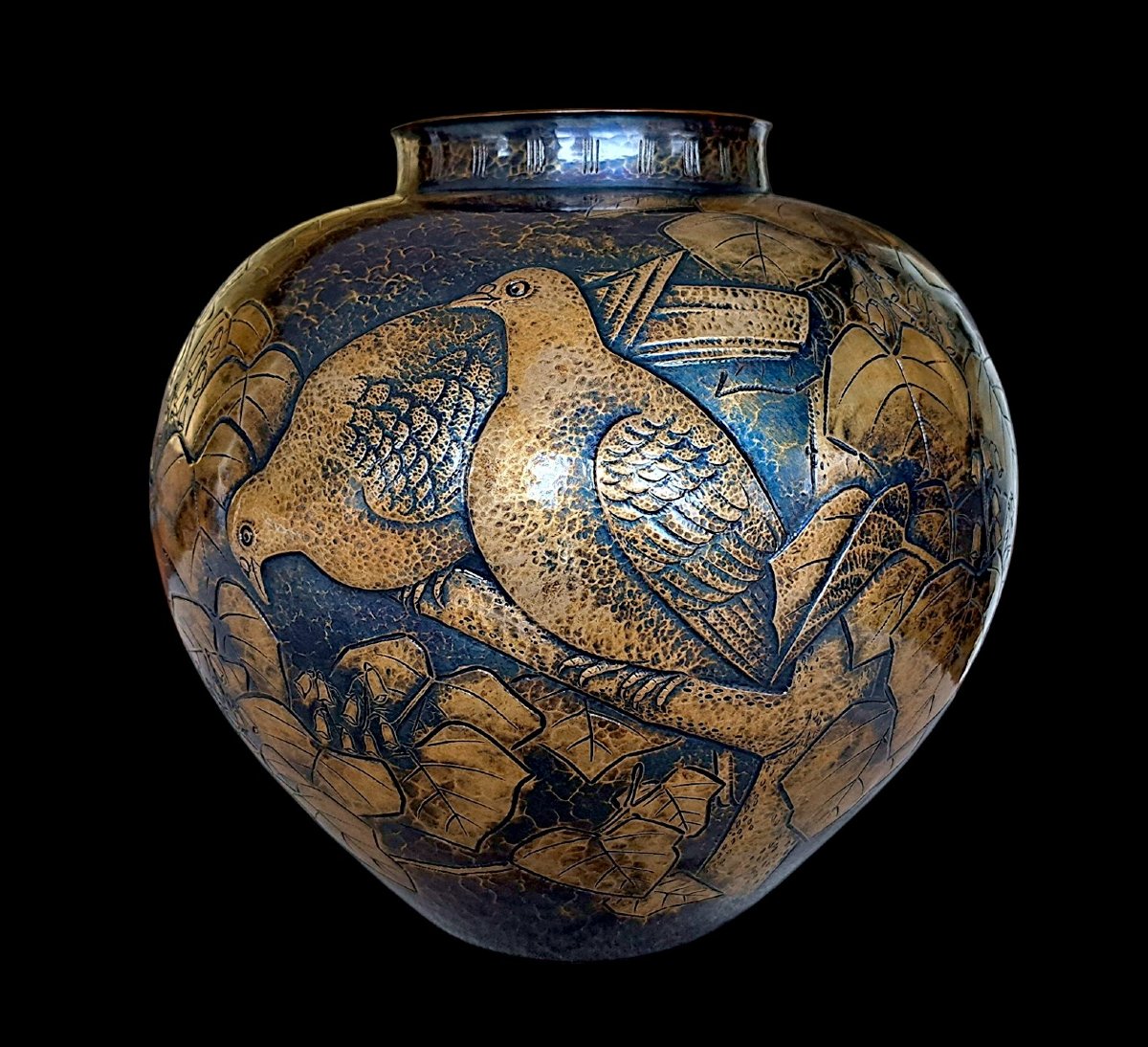
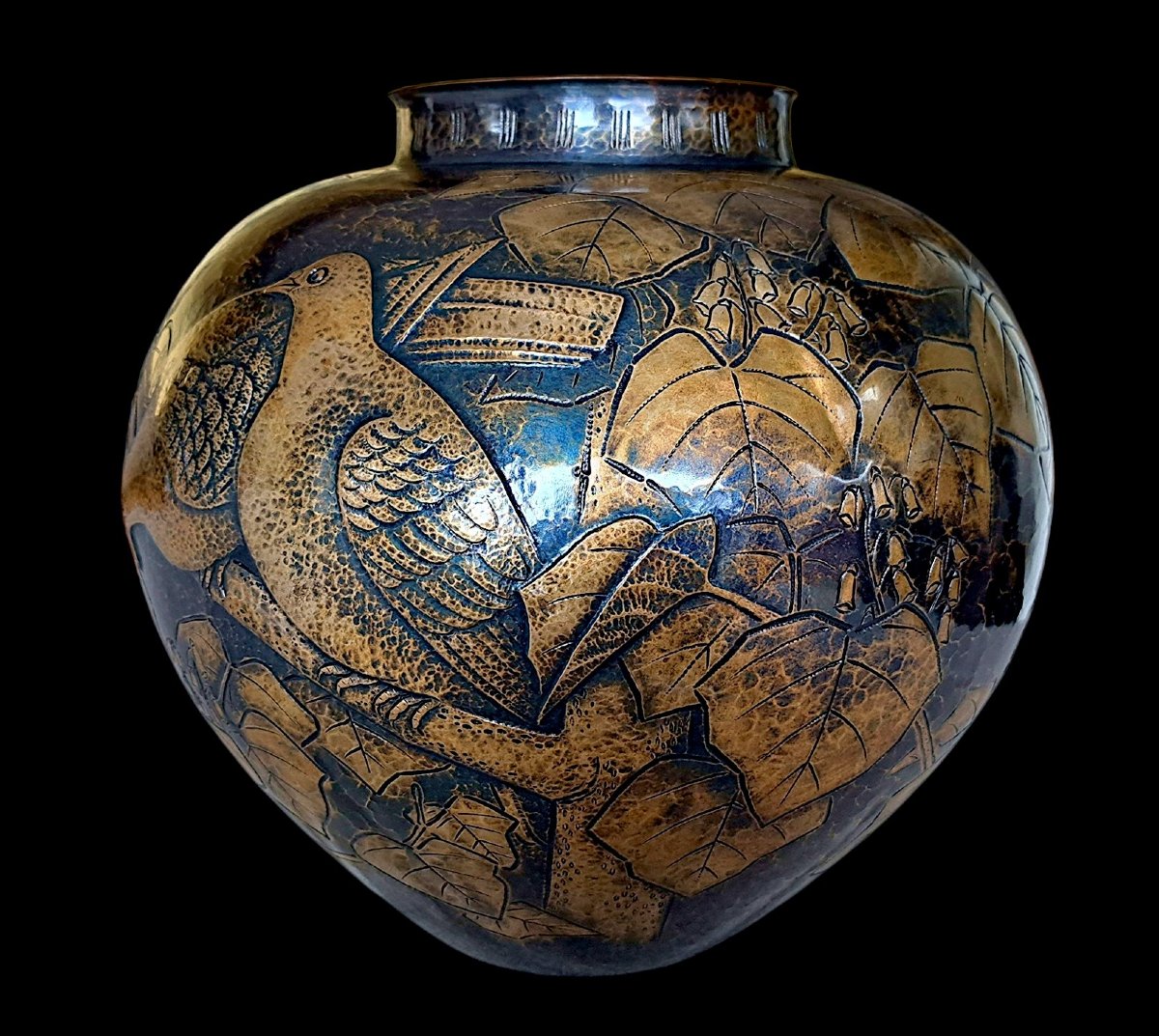
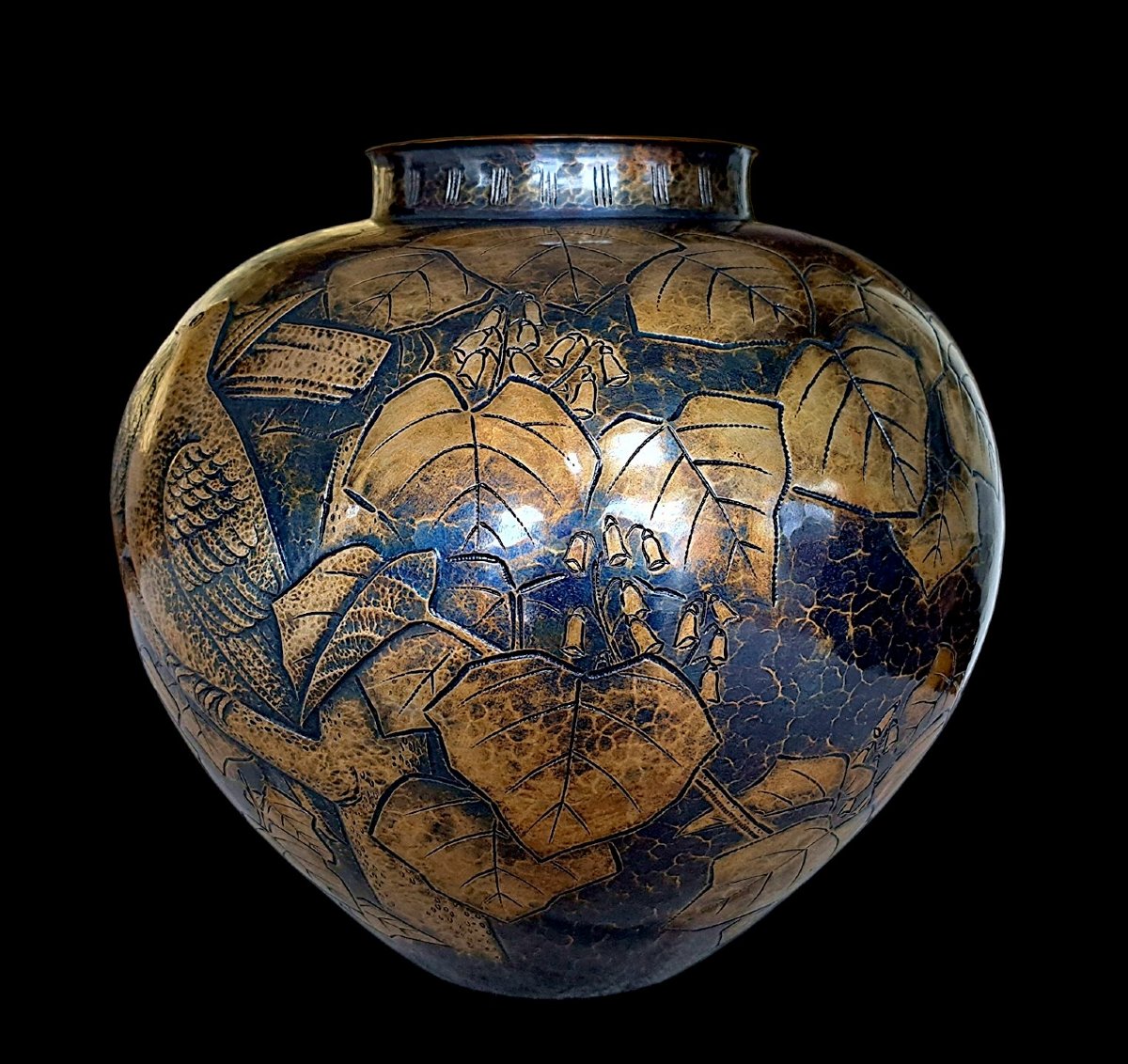
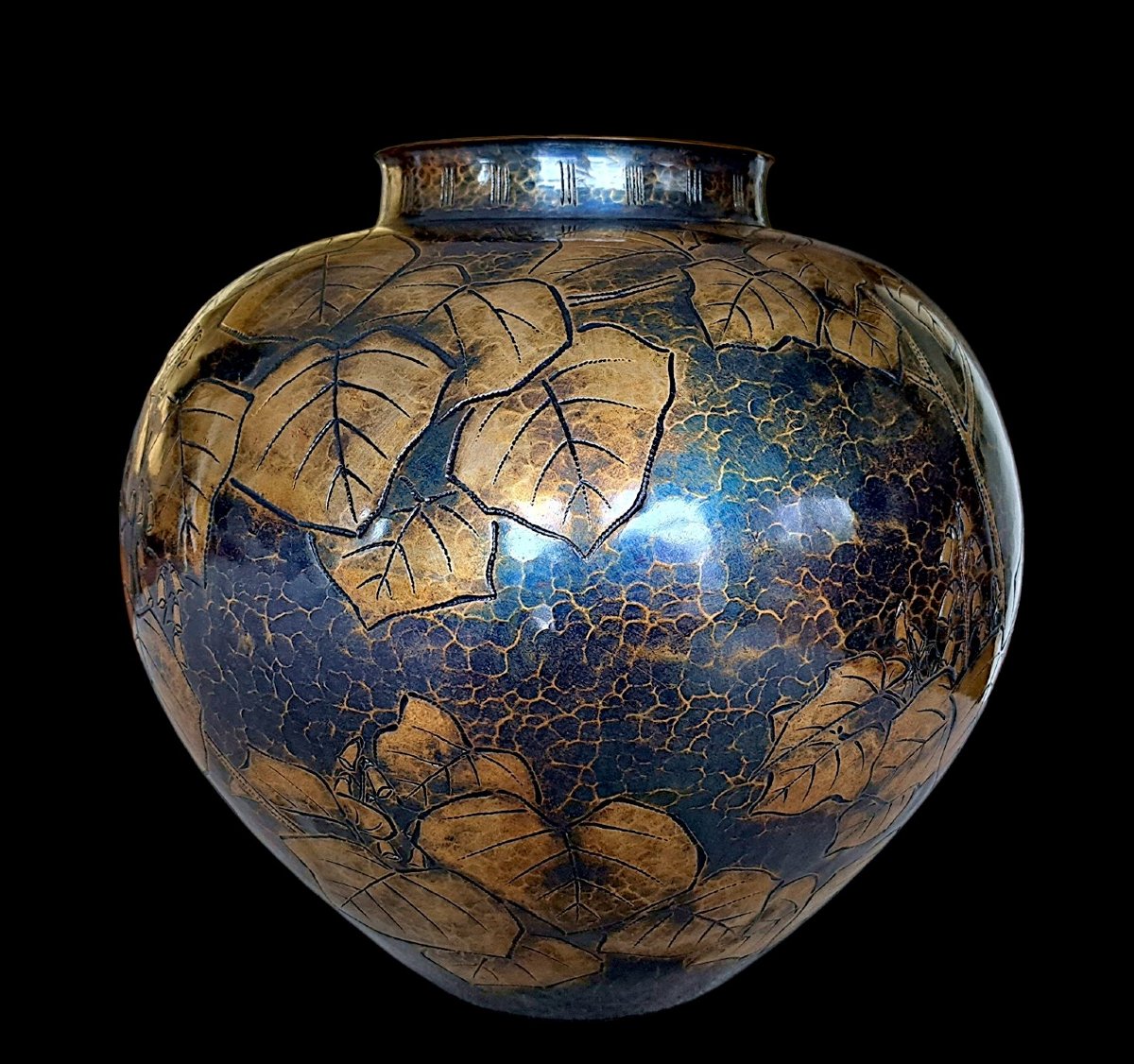
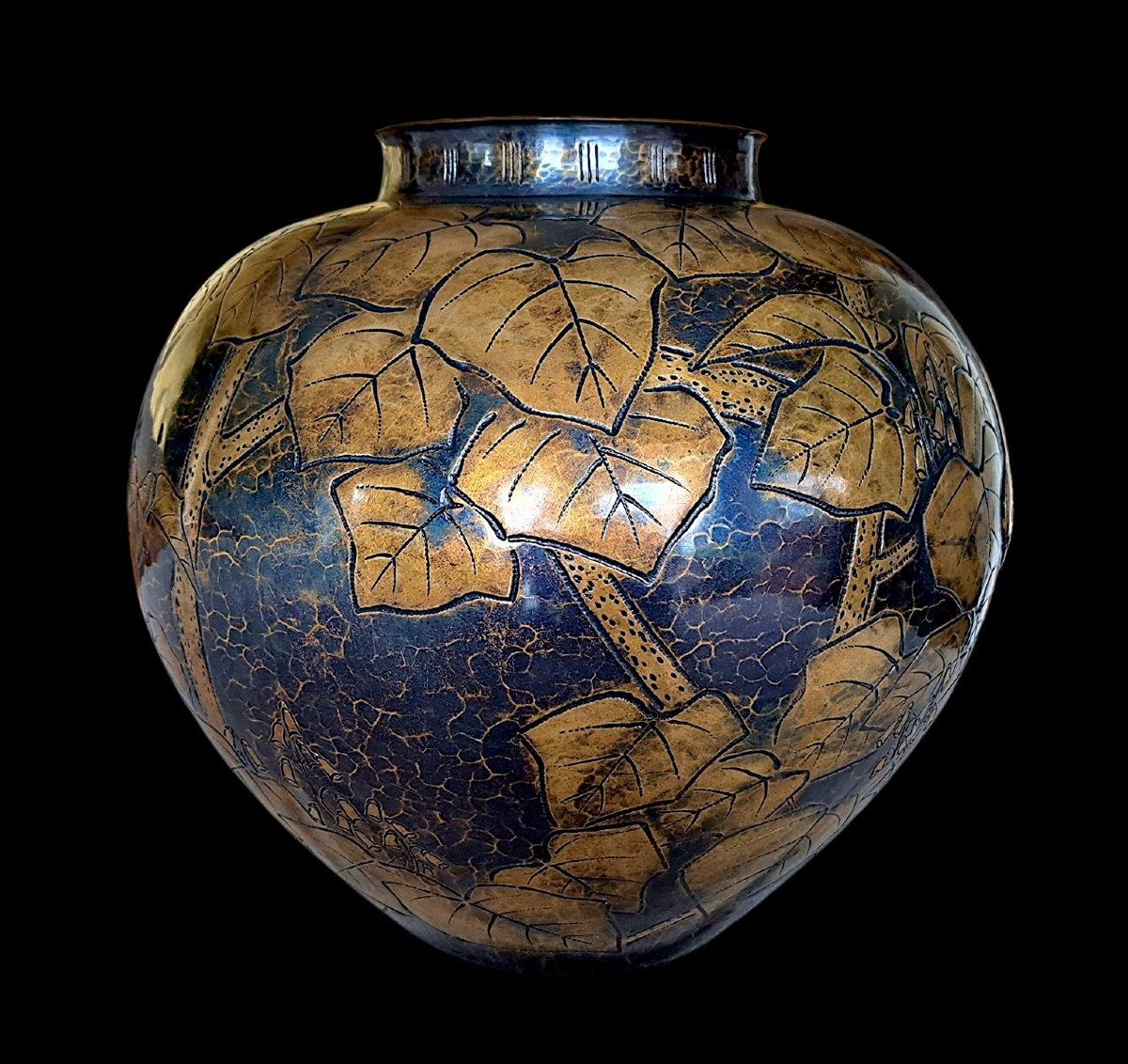
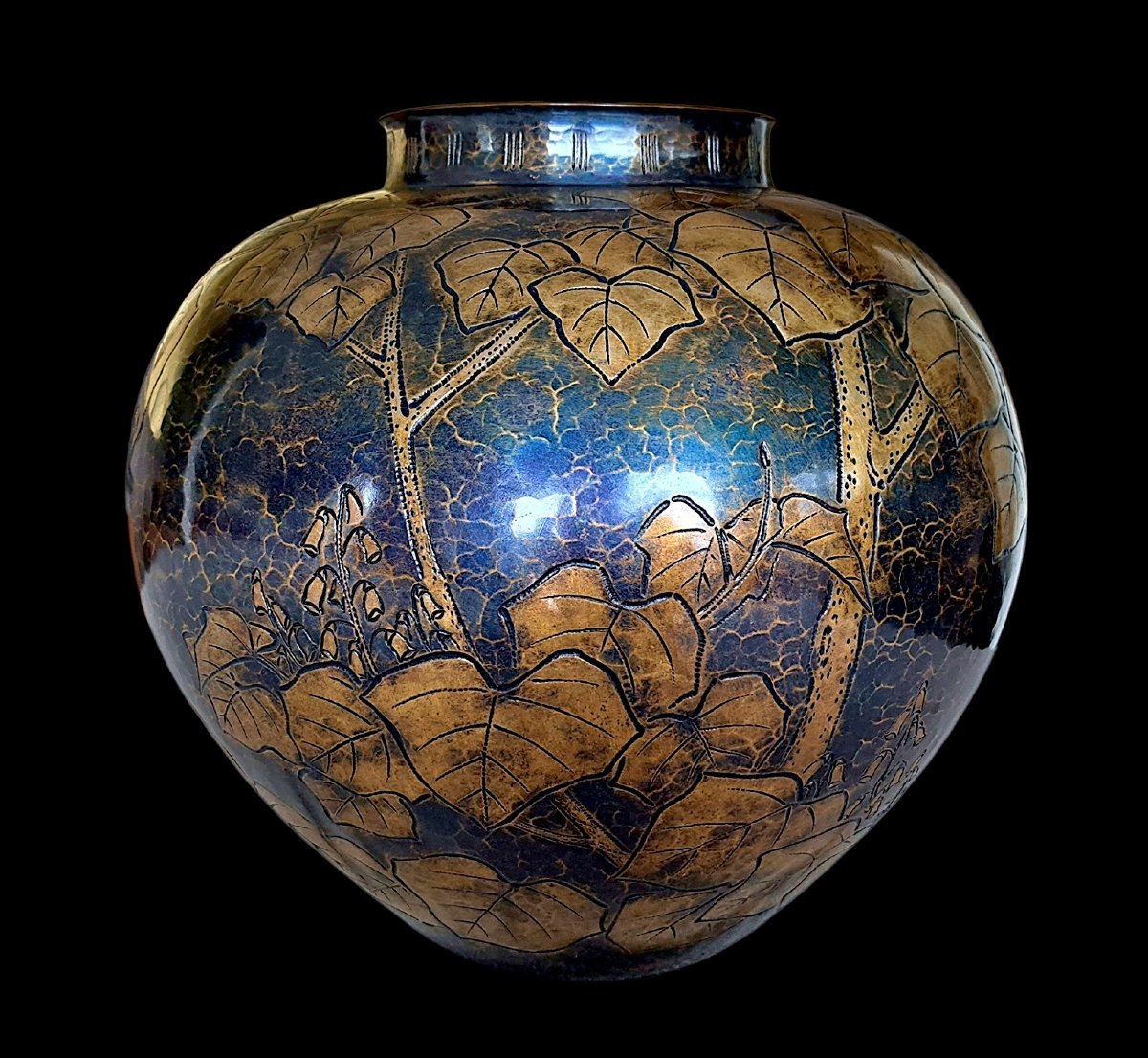
The present vase embodies that legacy with quiet authority. Its beautydoes not rely on excess ornament, but on the refinement of form and theextraordinary subtlety of its surface. The body is elegantly proportioned, itsgently swelling contours allowing the eye to move seamlessly across a richlymodulated field of hammered copper and layered patination.
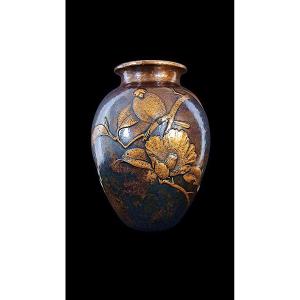
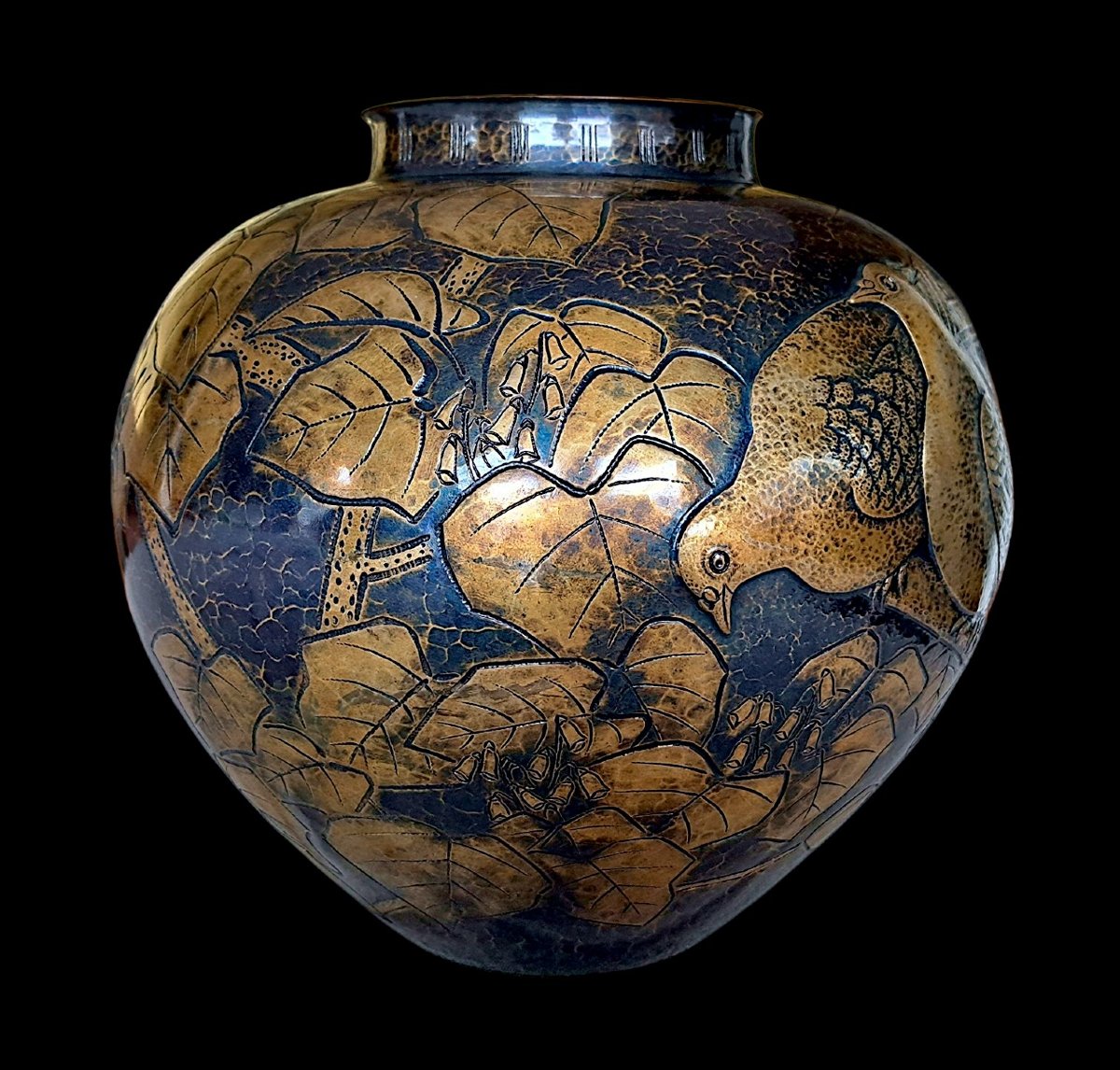
The decoration is centered on a serene avian motif: two doves restingamong stylized foliage, rendered with a graceful, almost calligraphic economyof line. Their softly rounded bodies and delicately articulated wings emerge inlow relief, conveying both tenderness and quiet presence. In Japanese visuallanguage, doves evoke peace, harmony, and fidelity—imbuing the composition witha calm, contemplative resonance.
This imagery unfolds against a striking dark blue ground, a feature thatdistinguishes the present work. The deep, luminous blue—subtly variegated withtones of indigo, charcoal, and near-black—creates a dramatic yet refinedbackdrop, from which the warm copper hues of the birds and foliage emerge withheightened clarity. The contrast between the cool, atmospheric ground and theglowing metal surface lends the vase a remarkable visual depth, shifting gentlywith changing light.
As with all works by Gyokusendo, the vase is the result of thousands ofdeliberate hammer strikes, each contributing to the balance, resilience, andrhythm of the form. The process leaves behind faint but vital traces of themaker’s hand, ensuring that no two pieces are ever identical. Each examplepossesses its own tonal character and subtle individuality.
The techniques preserved by Gyokusendo belong to a lineage recognized inJapan as an Important Intangible Cultural Property—an acknowledgment not ofobjects, but of the exceptional human skill required to sustain suchtraditions. In tsuiki, this knowledge is transmitted directly from master toapprentice over many years, ensuring the continuity of a highly refined craftlanguage.
Gyokusendo’s reputation extends well beyond Japan. Notably, theChampagne house Krug commissioned the workshop to produce large hand-hammeredcopper vessels—an undertaking possible only through Gyokusendo’s unique abilityto combine structural precision with aesthetic refinement. It stands as adiscreet yet powerful testament to the atelier’s singular mastery.
To acquire a vase by Gyokusendo is not simply to obtain a decorativeobject, but to engage with a living tradition—one defined by time, discipline,and material sensitivity. As the copper continues to mature, its patinadeepens, and the piece evolves, gaining further richness and individuality.
A superb collector’s work, equally suited to a refined contemporaryinterior or a serious collection of Japanese decorative arts—where true luxuryis expressed through restraint, craftsmanship, and permanence.
The present vase embodies that legacy with quiet authority. Its beautydoes not rely on excess ornament, but on the refinement of form and theextraordinary subtlety of its surface. The body is elegantly proportioned, itsgently swelling contours allowing the eye to move seamlessly across a richlymodulated field of hammered copper and layered patination.
The decoration is centered on a serene avian motif: two doves restingamong stylized foliage, rendered with a graceful, almost calligraphic economyof line. Their softly rounded bodies and delicately articulated wings emerge inlow relief, conveying both tenderness and quiet presence. In Japanese visuallanguage, doves evoke peace, harmony, and fidelity—imbuing the composition witha calm, contemplative resonance.
This imagery unfolds against a striking dark blue ground, a feature thatdistinguishes the present work. The deep, luminous blue—subtly variegated withtones of indigo, charcoal, and near-black—creates a dramatic yet refinedbackdrop, from which the warm copper hues of the birds and foliage emerge withheightened clarity. The contrast between the cool, atmospheric ground and theglowing metal surface lends the vase a remarkable visual depth, shifting gentlywith changing light.
As with all works by Gyokusendo, the vase is the result of thousands ofdeliberate hammer strikes, each contributing to the balance, resilience, andrhythm of the form. The process leaves behind faint but vital traces of themaker’s hand, ensuring that no two pieces are ever identical. Each examplepossesses its own tonal character and subtle individuality.
The techniques preserved by Gyokusendo belong to a lineage recognized inJapan as an Important Intangible Cultural Property—an acknowledgment not ofobjects, but of the exceptional human skill required to sustain suchtraditions. In tsuiki, this knowledge is transmitted directly from master toapprentice over many years, ensuring the continuity of a highly refined craftlanguage.
Gyokusendo’s reputation extends well beyond Japan. Notably, theChampagne house Krug commissioned the workshop to produce large hand-hammeredcopper vessels—an undertaking possible only through Gyokusendo’s unique abilityto combine structural precision with aesthetic refinement. It stands as adiscreet yet powerful testament to the atelier’s singular mastery.
To acquire a vase by Gyokusendo is not simply to obtain a decorativeobject, but to engage with a living tradition—one defined by time, discipline,and material sensitivity. As the copper continues to mature, its patinadeepens, and the piece evolves, gaining further richness and individuality.
A superb collector’s work, equally suited to a refined contemporaryinterior or a serious collection of Japanese decorative arts—where true luxuryis expressed through restraint, craftsmanship, and permanence.
1 400 €
Period: 20th century
Style: Design 50's and 60's
Condition: Perfect condition
Material: Bronze
Diameter: 28 cm
Height: 25 cm
Reference (ID): 1747817
Availability: In stock
Print