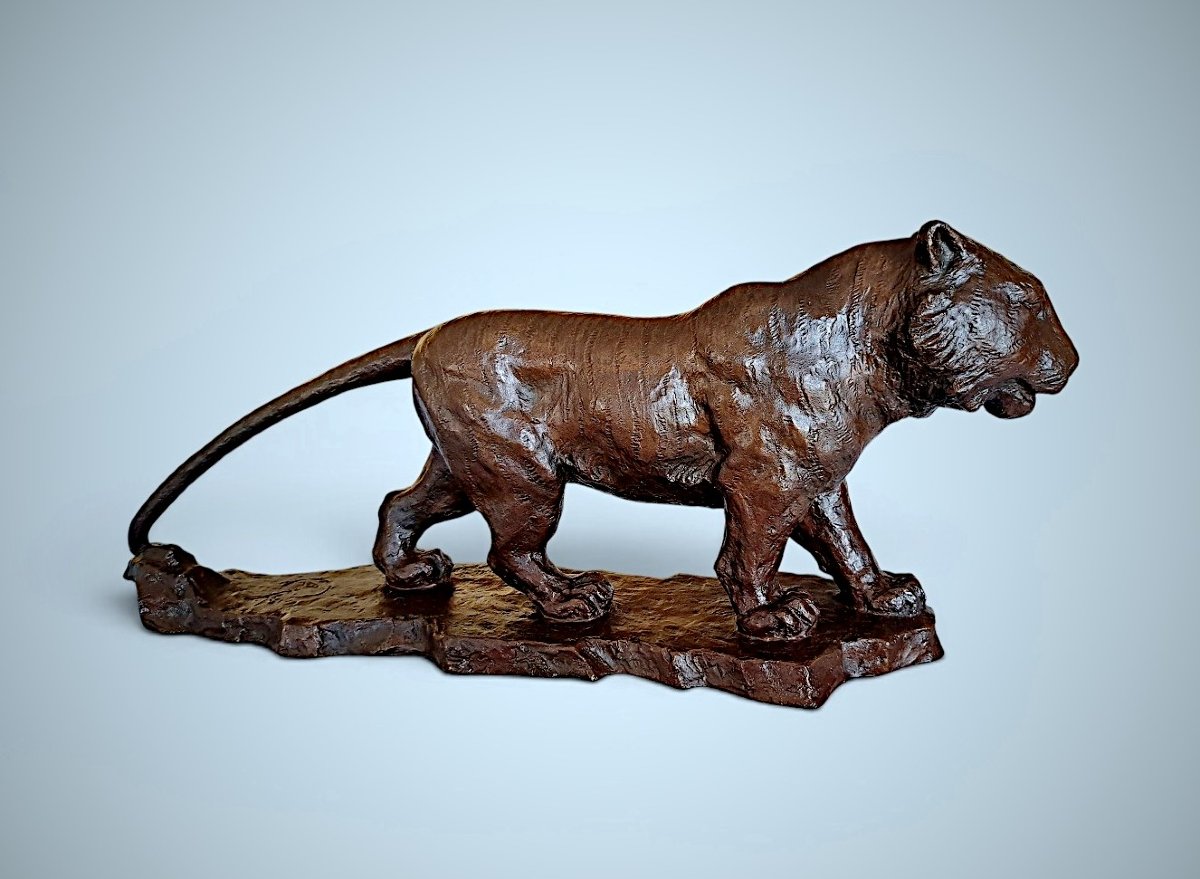

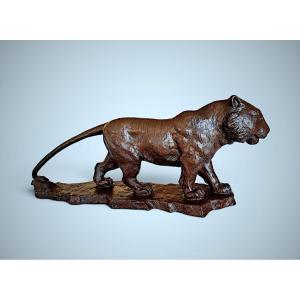


Japanese Bronze By Nakano Shirô (中野四郎): Walking Tiger
Artist: Nakano Shirô 中野四郎, (1901-1968)
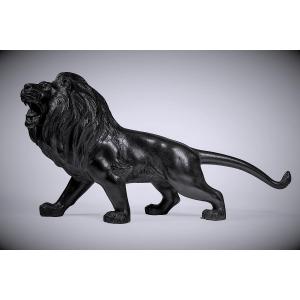
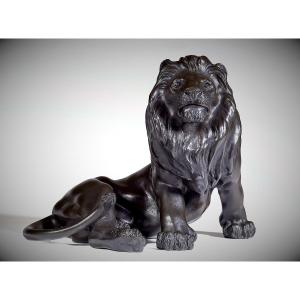
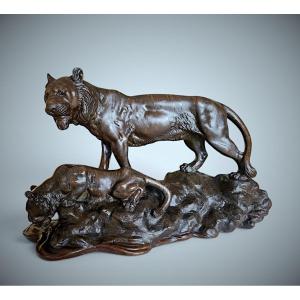
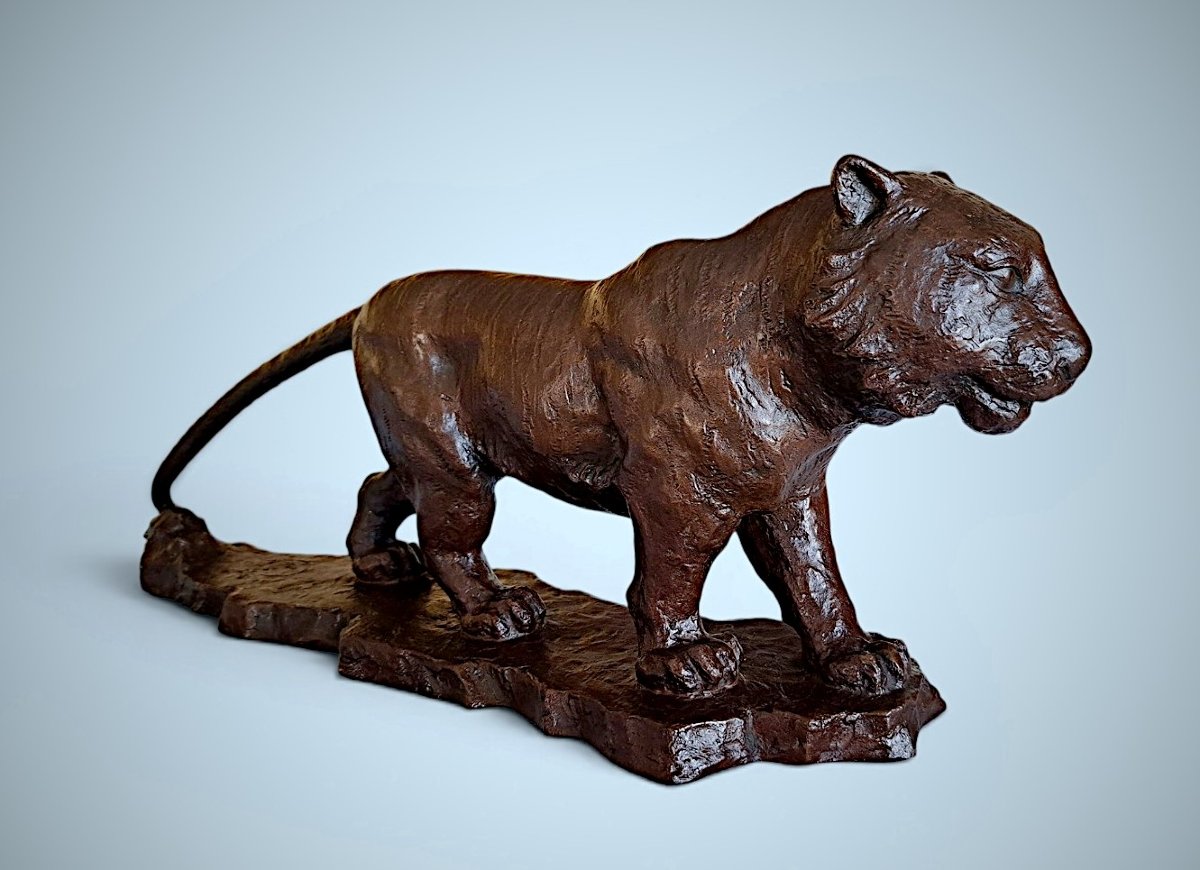
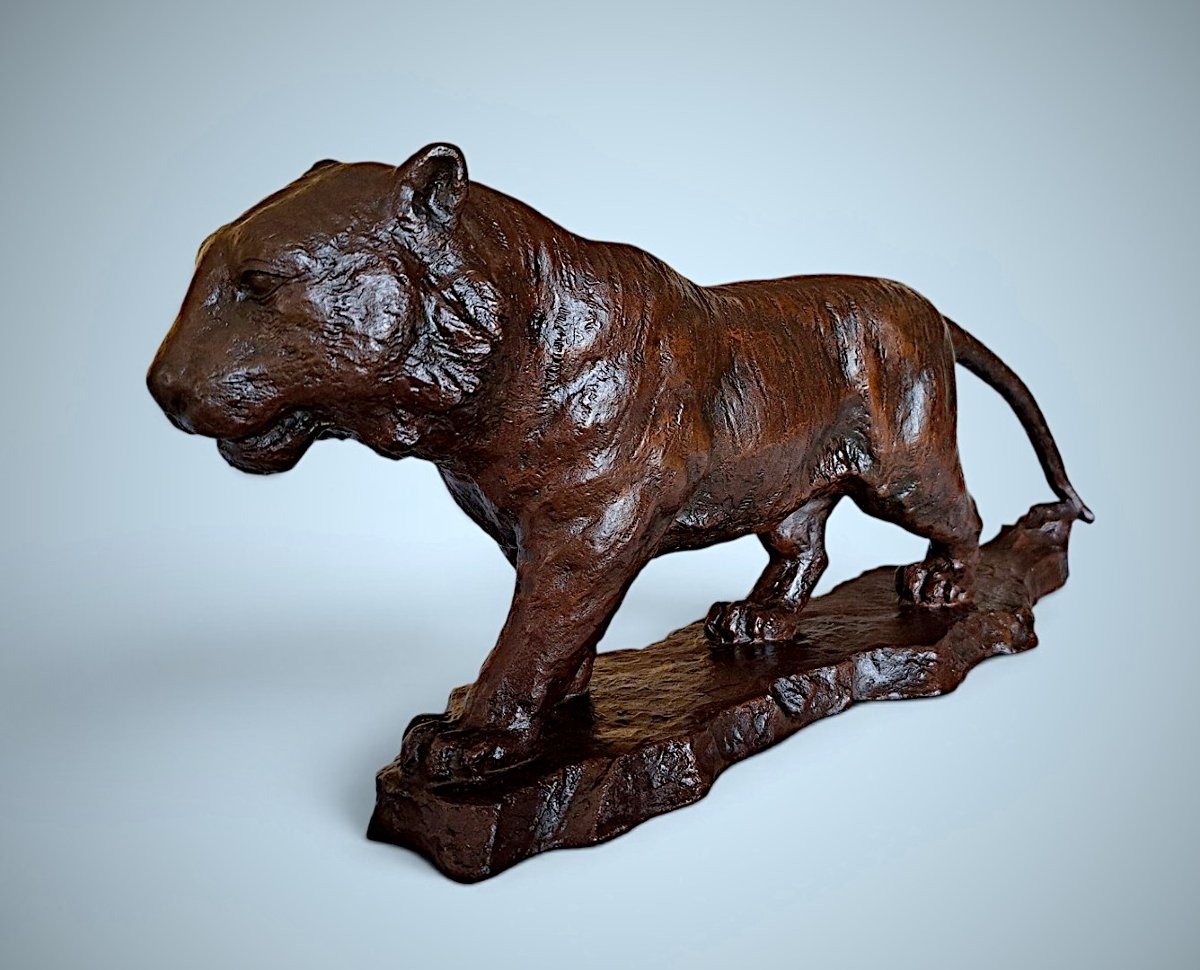
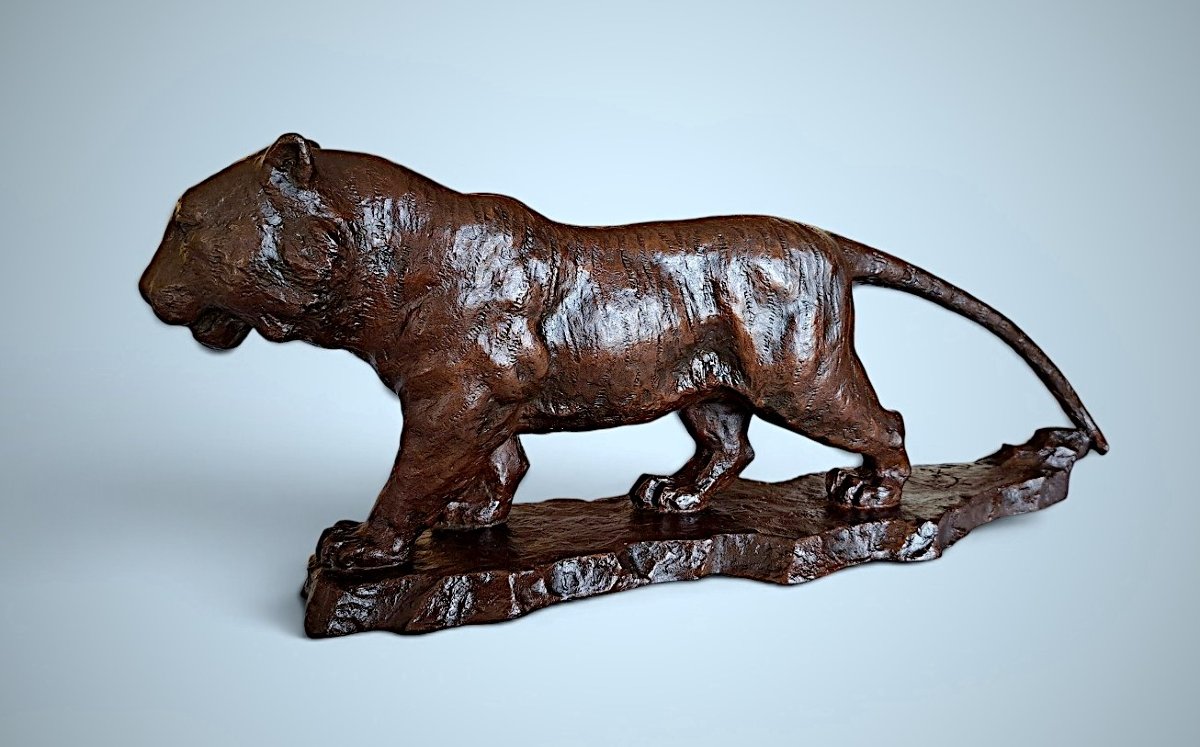
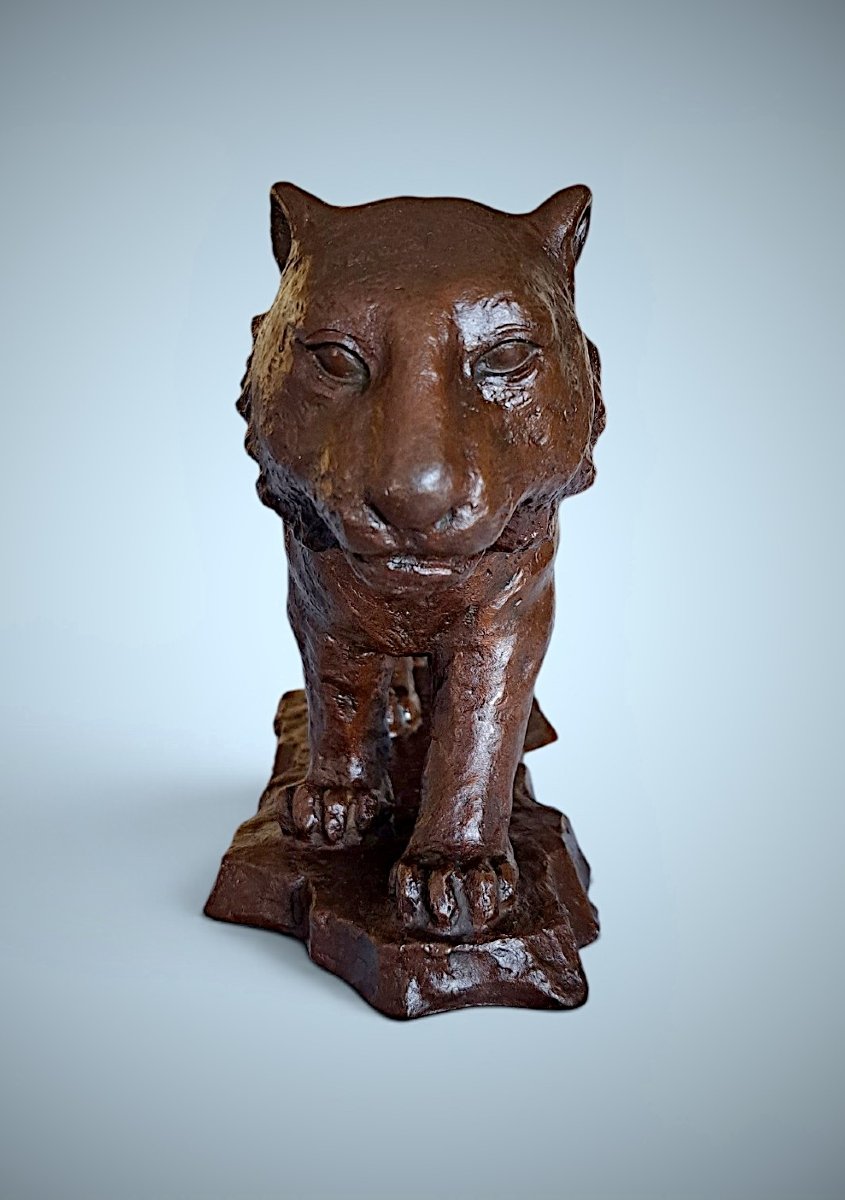
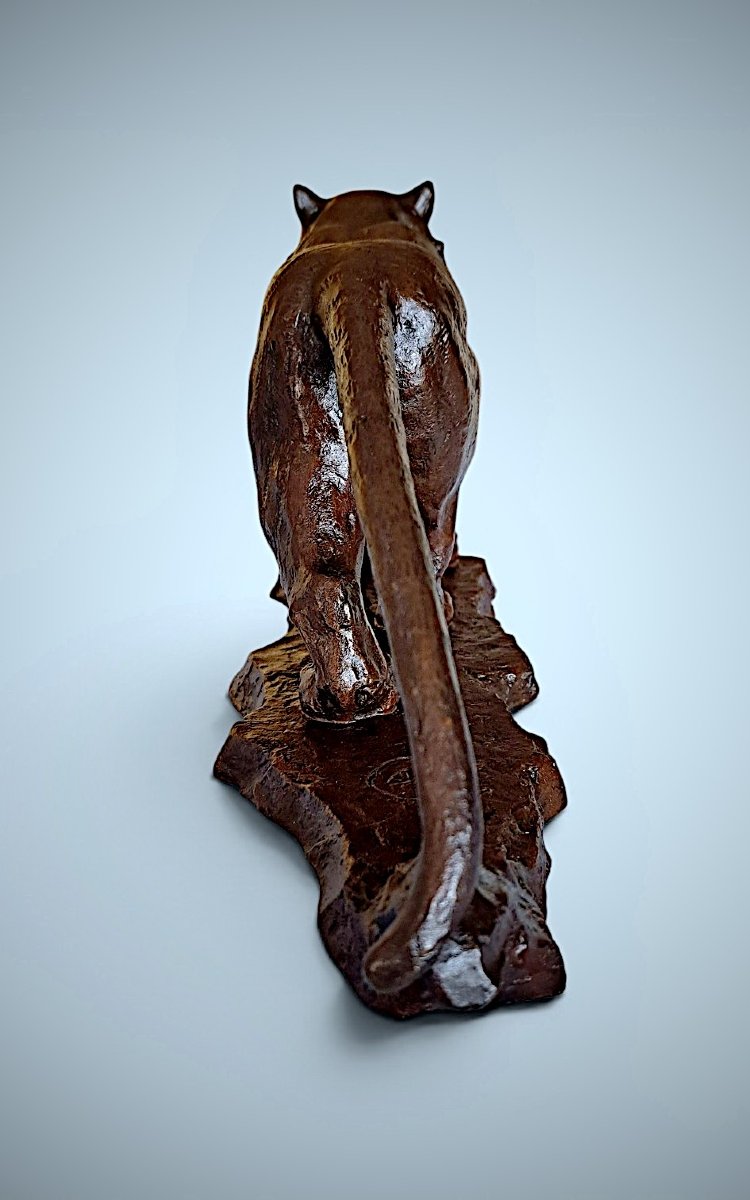
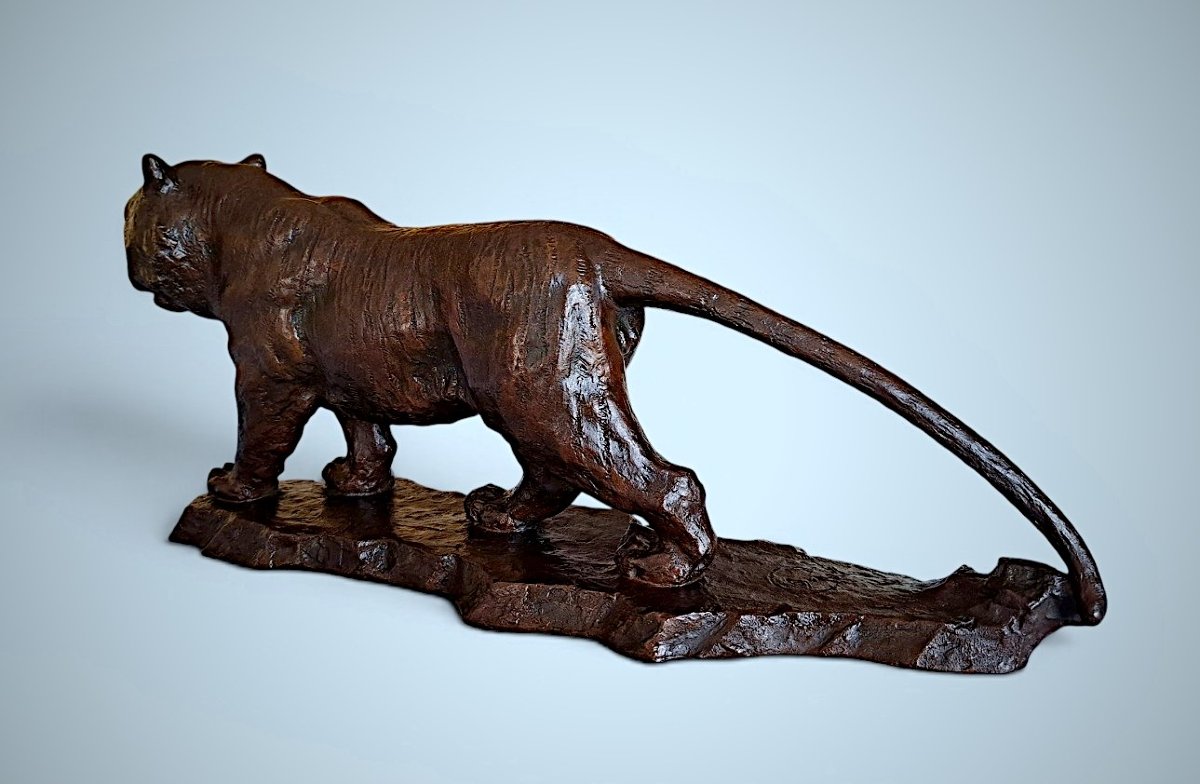
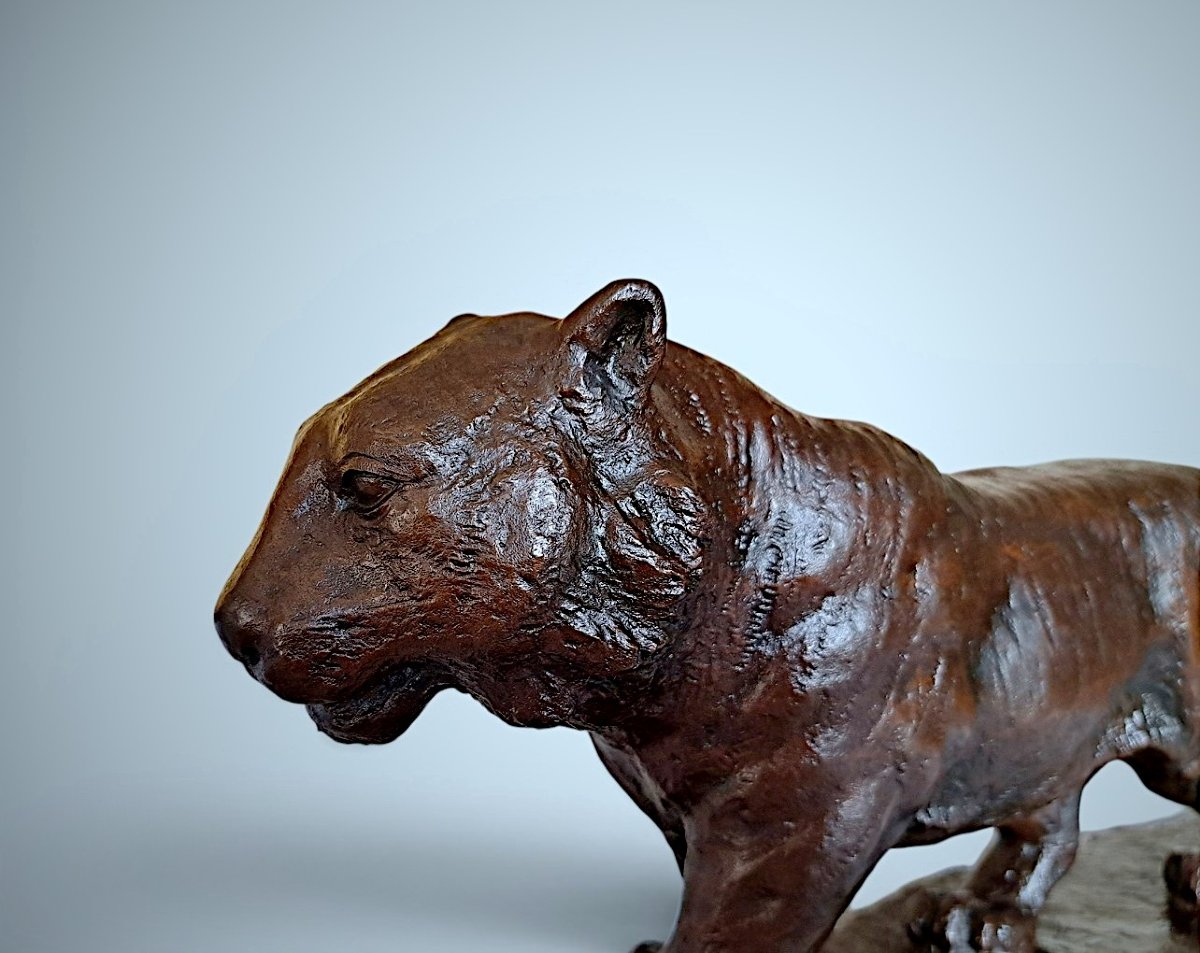
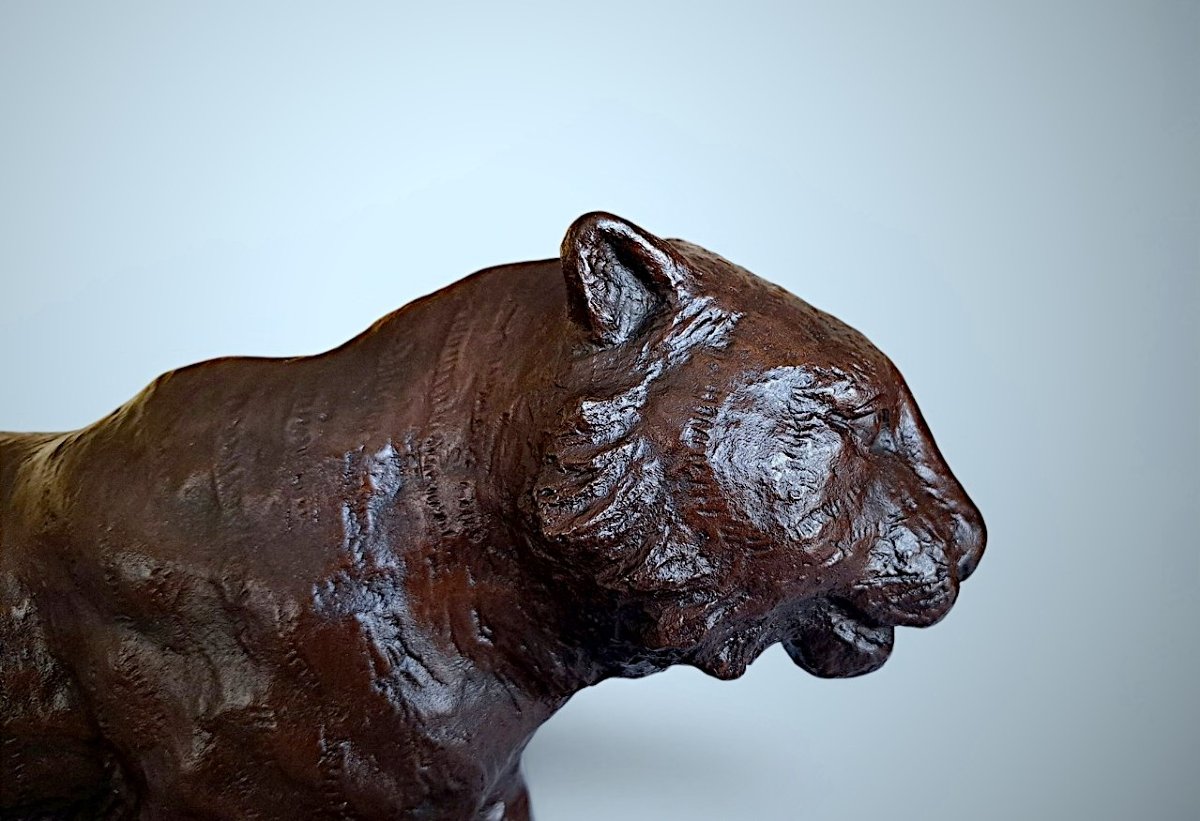
This powerful bronze depicting a walking tiger, by renowned Japanese sculptor Nakano Shirō, exemplifies the artist's mastery of muscular form, naturalistic tension, and sculptural presence. Cast in a deep, lustrous patina, the animal advances with measured weight and serene authority. Its massive shoulders, compact torso, and gently sinuous spine are rendered with Nakano's characteristic sensitivity to anatomical rhythm. The surface, enriched with vigorous tool marks and precise modeling, reinforces the impression of vibrant strength beneath the bronze. Resting on an irregular, rocky base, the tiger appears in full motion, its head slightly lowered, focused. This posture conveys both latent power and graceful movement, qualities that resonate strongly with Nakano's broader sculptural language.
Trained in wood carving at the Tokyo School of Fine Arts, and later recognized for his works in bronze and cement, Nakano developed a realistic vocabulary rooted in a profound study of natural forms. His animal sculptures, though less frequent than his human figures, demonstrate the same subtle balance between mass, structure, and expressive vitality. Nakano Shirō (1901–1968) was born in Yamaguchi Prefecture. An influential figure in 20th-century Japanese sculpture, he exhibited regularly at the Teiten and Bunten exhibitions and earned the title of mukansa—official recognition of his artistic mastery—at the beginning of the Shōwa era. A founding member of the Sōkei-kai (創型会), a major group of sculptors in the postwar period, he was also an important mentor at Saitama University.
Today, his works are featured in several major Japanese museums, including the Yamaguchi Prefectural Museum of Art, the Saitama Museum of Modern Art, and the Shimonoseki City Museum of Art, as well as in public spaces such as Ueno Park. His 1949 sculpture, "Takayama Ukon (高山右近)," is part of the collection of the Vatican Museums in Rome. He died prematurely at the age of 67.
This bronze tiger exemplifies Nakano's ability to elevate realistic sculpture to a serene monumentality. Favoring focused physicality over theatricality, he creates an image that is both naturalistic and timeless, a distilled expression of strength and concentration. Pieces of this caliber, especially animal subjects rendered with such sculptural assurance, are highly sought after by collectors of modern Japanese bronzes.
Trained in wood carving at the Tokyo School of Fine Arts, and later recognized for his works in bronze and cement, Nakano developed a realistic vocabulary rooted in a profound study of natural forms. His animal sculptures, though less frequent than his human figures, demonstrate the same subtle balance between mass, structure, and expressive vitality. Nakano Shirō (1901–1968) was born in Yamaguchi Prefecture. An influential figure in 20th-century Japanese sculpture, he exhibited regularly at the Teiten and Bunten exhibitions and earned the title of mukansa—official recognition of his artistic mastery—at the beginning of the Shōwa era. A founding member of the Sōkei-kai (創型会), a major group of sculptors in the postwar period, he was also an important mentor at Saitama University.
Today, his works are featured in several major Japanese museums, including the Yamaguchi Prefectural Museum of Art, the Saitama Museum of Modern Art, and the Shimonoseki City Museum of Art, as well as in public spaces such as Ueno Park. His 1949 sculpture, "Takayama Ukon (高山右近)," is part of the collection of the Vatican Museums in Rome. He died prematurely at the age of 67.
This bronze tiger exemplifies Nakano's ability to elevate realistic sculpture to a serene monumentality. Favoring focused physicality over theatricality, he creates an image that is both naturalistic and timeless, a distilled expression of strength and concentration. Pieces of this caliber, especially animal subjects rendered with such sculptural assurance, are highly sought after by collectors of modern Japanese bronzes.
650 €
Period: 20th century
Style: Design 50's and 60's
Condition: Perfect condition
Material: Bronze
Length: 42 cm
Height: 18 cm
Reference (ID): 1665261
Availability: In stock
Print