


Japanese Bronze Vase Signed Keiun – Koi
Artist: Keiun 慶雲
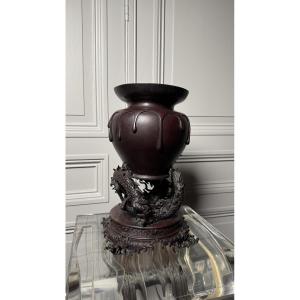
This elegant Japanese bronze vase dates from the beginning of the Showa period, a time renowned for the extraordinary refinement of its metalwork and the international acclaim of Japanese decorative arts.
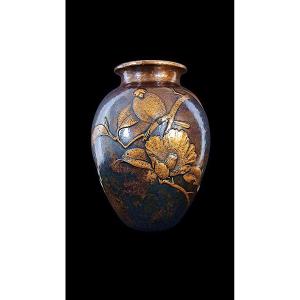
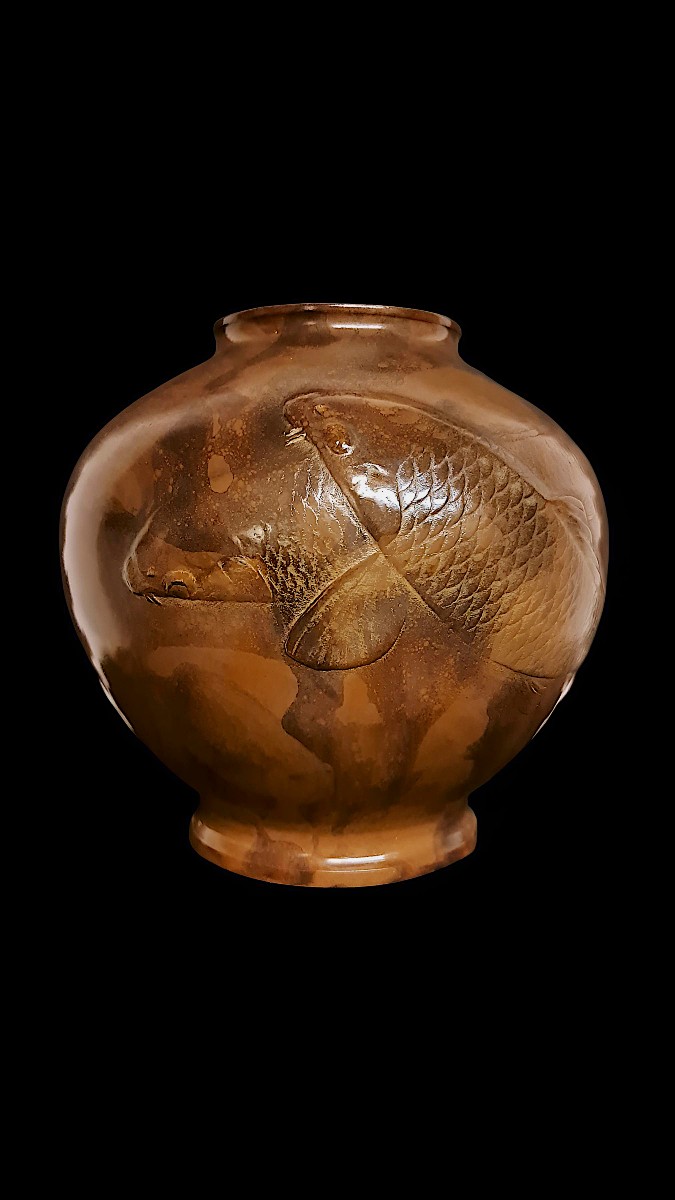
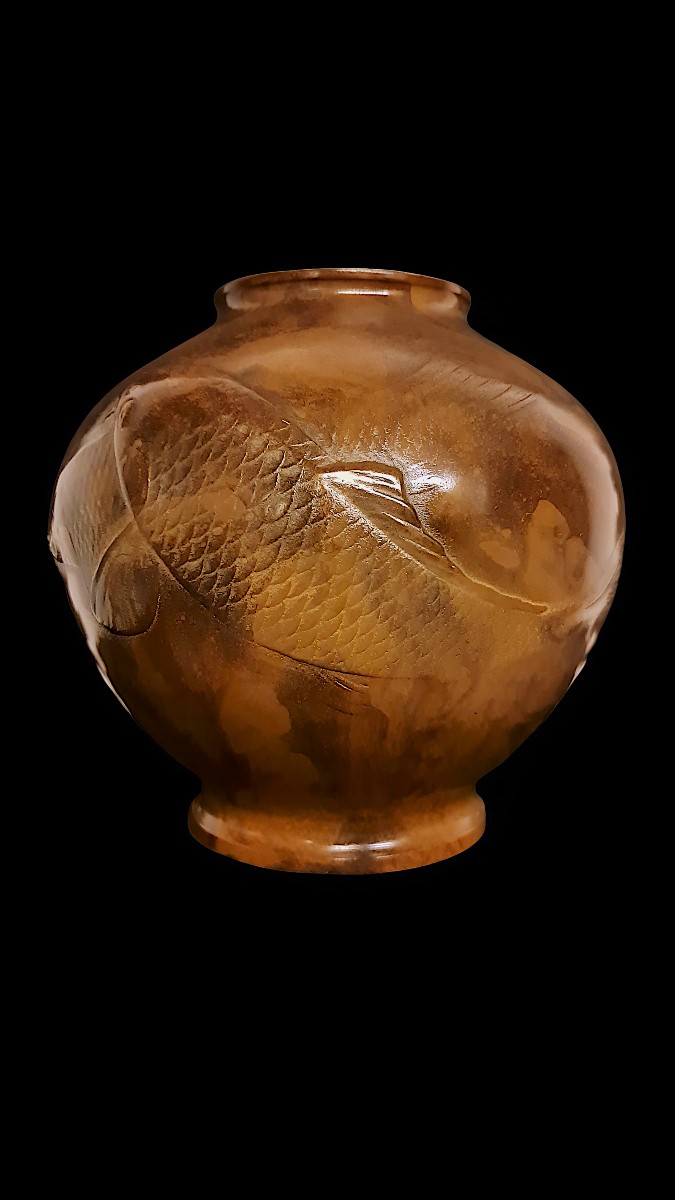
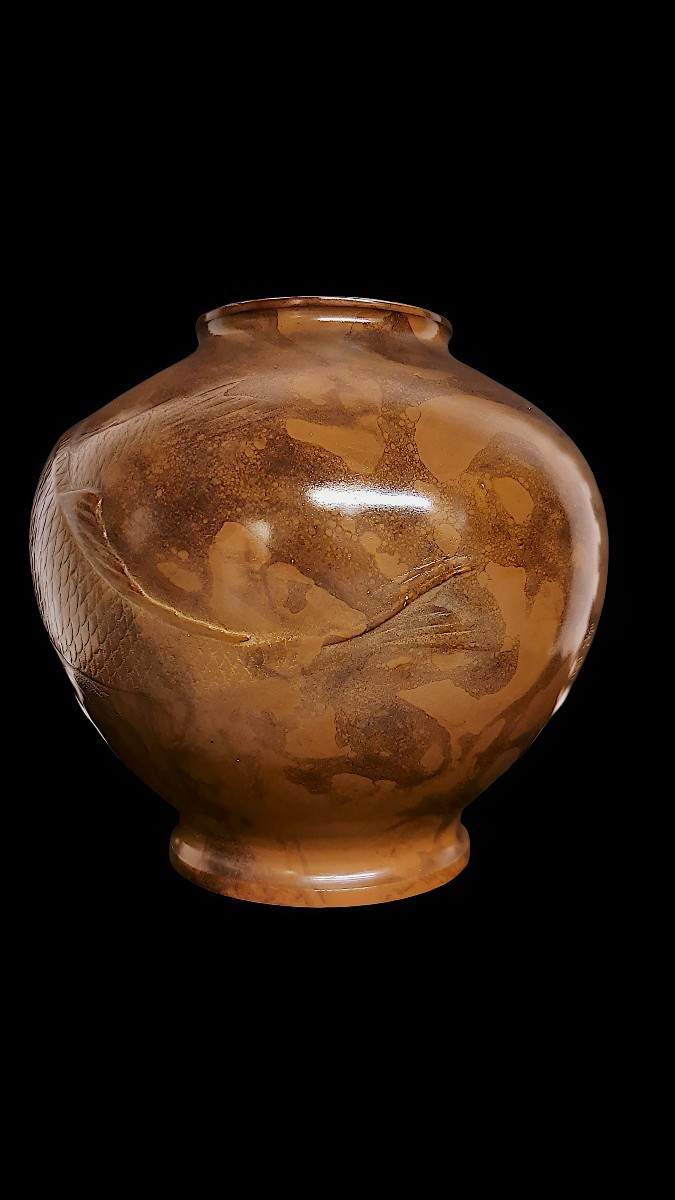
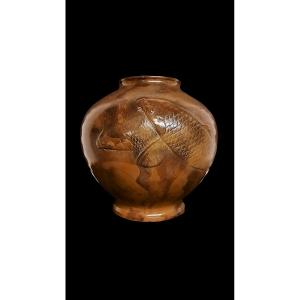
The rounded body is carved in high relief, adorned with two koi carp that gracefully circle the vase. Their bodies are rendered with remarkable finesse; the finely chiseled scales and delicately modeled fins convey both strength and fluidity. In Japanese culture, koi carp are powerful symbols of good fortune, associated with perseverance, courage, prosperity, and success, making them a favorite motif in works intended to express longevity and luck.
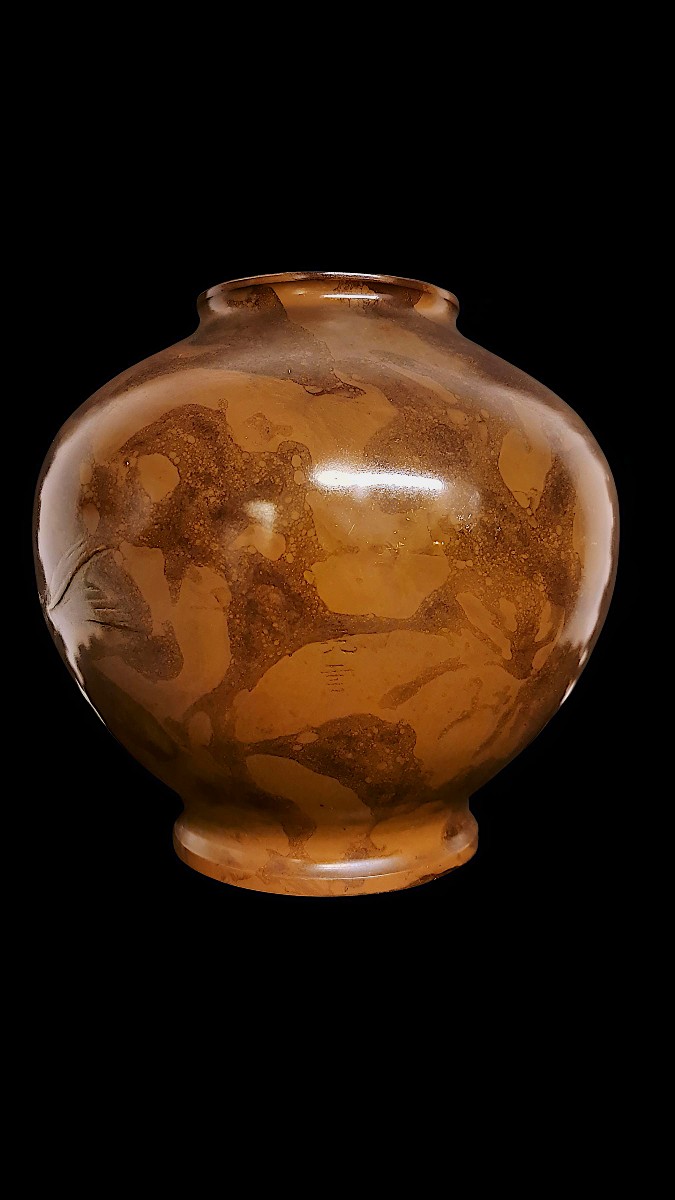
The surface displays a rich brown patina with subtle nuances, achieved through sophisticated chemical processes characteristic of high-quality bronze production during that period. These nuanced tonal variations accentuate the sculptural depth of the koi carp while lending the vase a restrained and refined elegance. The harmony between form, decoration, and surface treatment testifies to the aesthetic maturity of japanese metalwork.
The vase bears an engraved signature of two characters: 慶雲 (Keiun). Meaning "Auspicious Clouds," Keiun is a refined artist's name, typical of japanese bronze workshops. Such signatures are generally associated with high-quality workshop production, combining skillful modeling with a refined finish rather than mass production.
Created at a time when Japanese bronzes were highly sought after, both in Japan and abroad, this vase exemplifies the technical mastery and symbolic richness that characterize the finest pieces of japanese metalwork. With its elegant form, auspicious iconography, and sophisticated patina, this bronze vase signed Keiun is a remarkable example of Japanese decorative art.
Circa 1930.
The rounded body is carved in high relief, adorned with two koi carp that gracefully circle the vase. Their bodies are rendered with remarkable finesse; the finely chiseled scales and delicately modeled fins convey both strength and fluidity. In Japanese culture, koi carp are powerful symbols of good fortune, associated with perseverance, courage, prosperity, and success, making them a favorite motif in works intended to express longevity and luck.
The surface displays a rich brown patina with subtle nuances, achieved through sophisticated chemical processes characteristic of high-quality bronze production during that period. These nuanced tonal variations accentuate the sculptural depth of the koi carp while lending the vase a restrained and refined elegance. The harmony between form, decoration, and surface treatment testifies to the aesthetic maturity of japanese metalwork.
The vase bears an engraved signature of two characters: 慶雲 (Keiun). Meaning "Auspicious Clouds," Keiun is a refined artist's name, typical of japanese bronze workshops. Such signatures are generally associated with high-quality workshop production, combining skillful modeling with a refined finish rather than mass production.
Created at a time when Japanese bronzes were highly sought after, both in Japan and abroad, this vase exemplifies the technical mastery and symbolic richness that characterize the finest pieces of japanese metalwork. With its elegant form, auspicious iconography, and sophisticated patina, this bronze vase signed Keiun is a remarkable example of Japanese decorative art.
Circa 1930.
550 €
Period: 20th century
Style: Asian art
Condition: Good condition
Material: Bronze
Height: 23 cm
Reference (ID): 1689781
Availability: In stock
Print