THIS OBJECT WAS SOLD
Japanese Bronze By Masahiko Katori: Rearing Horse
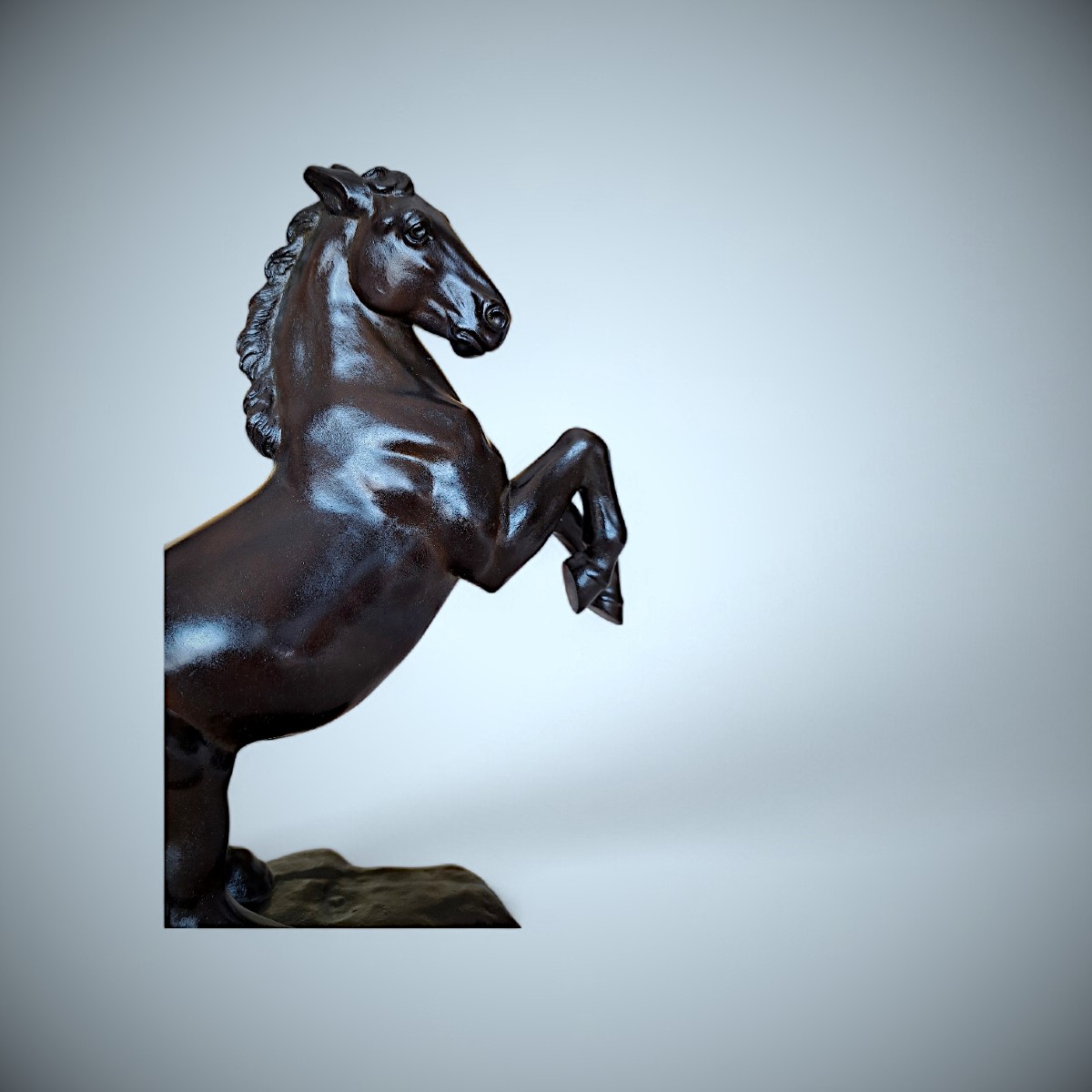
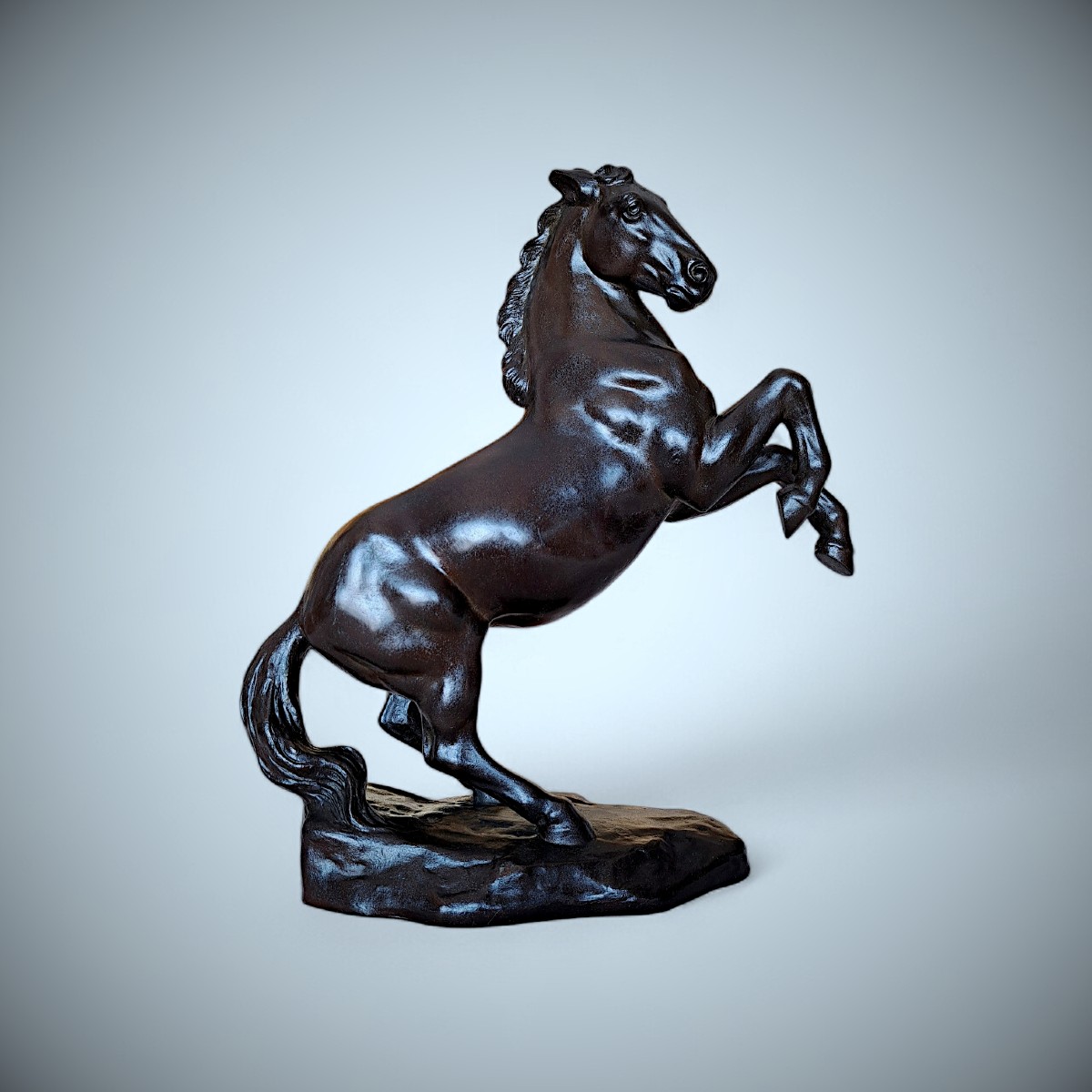
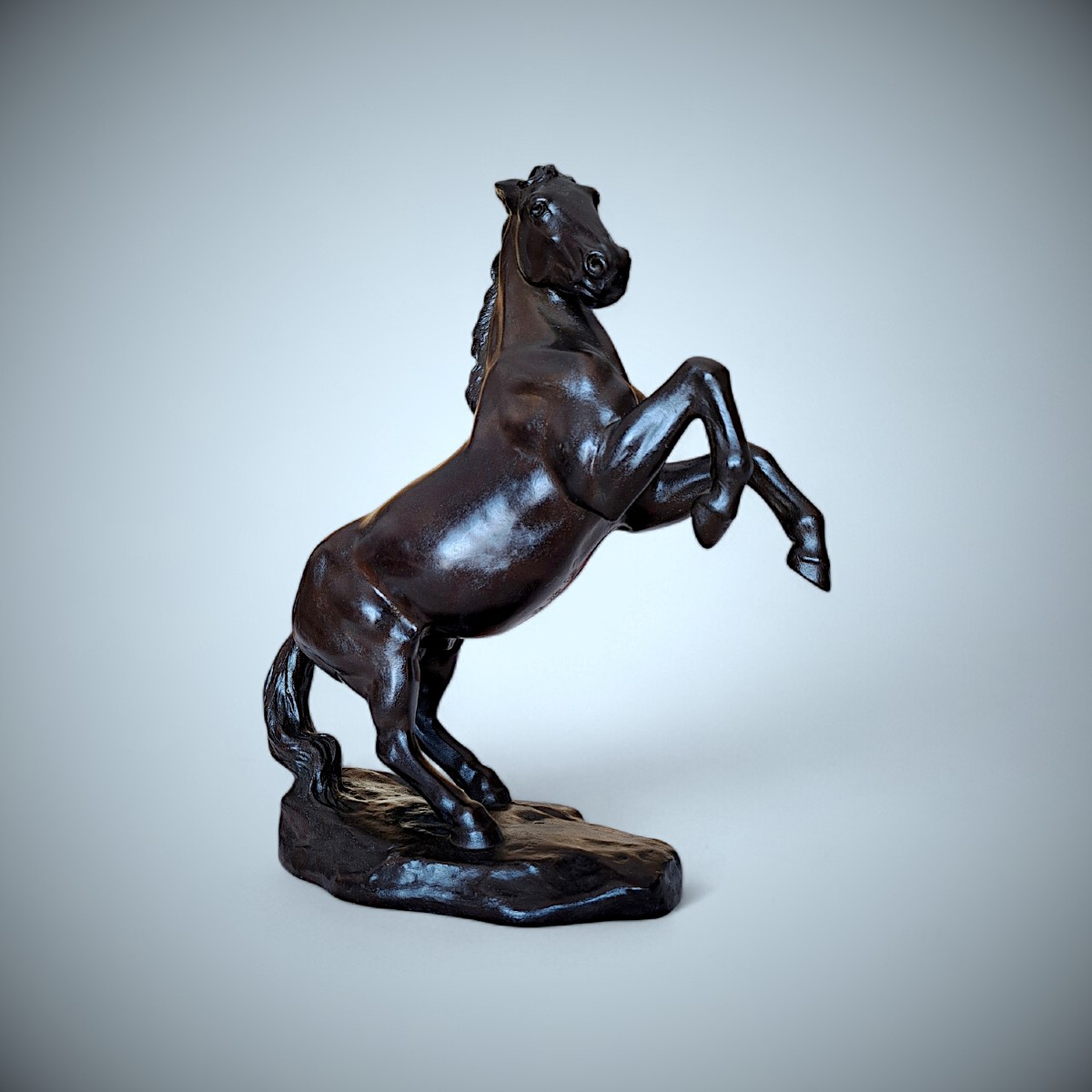
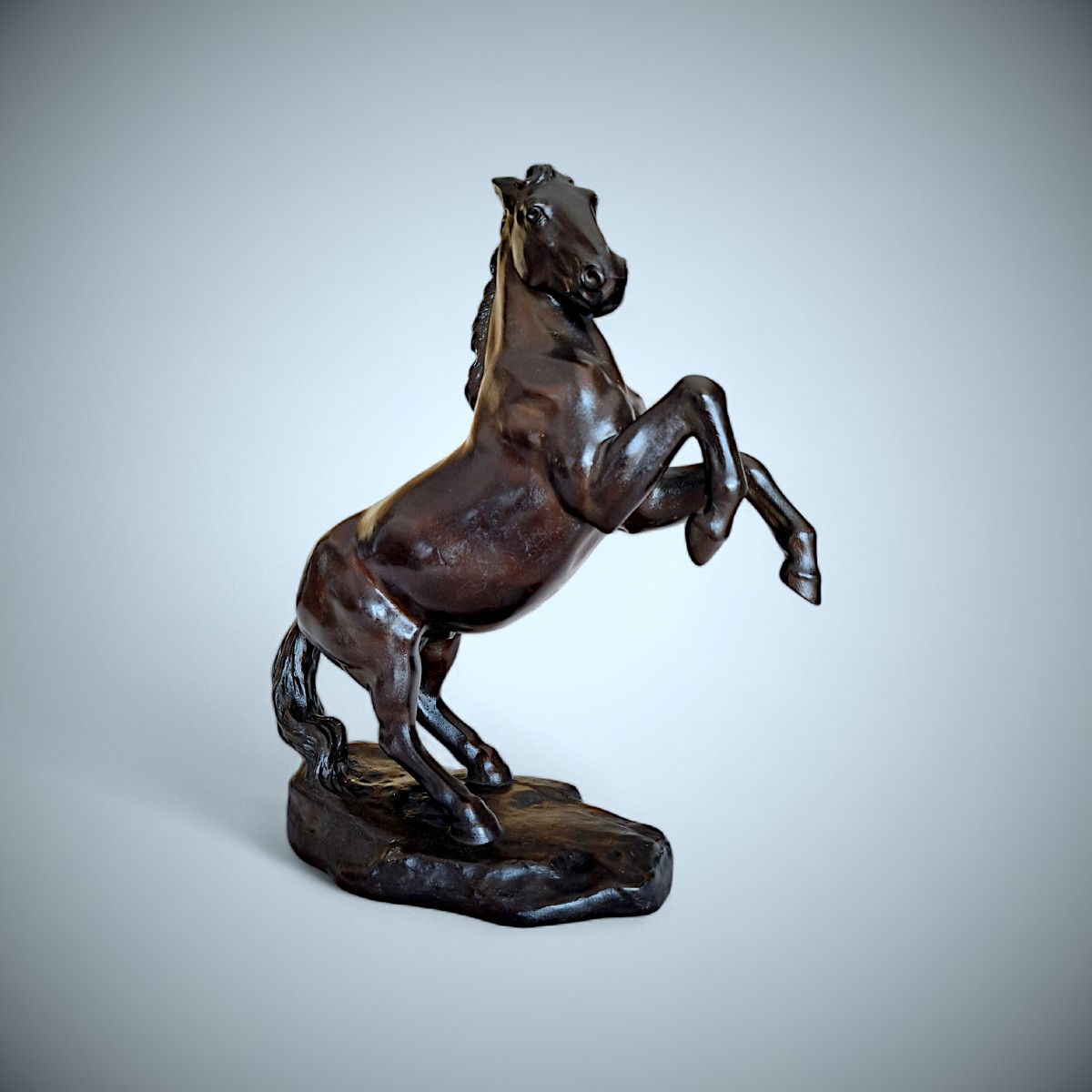
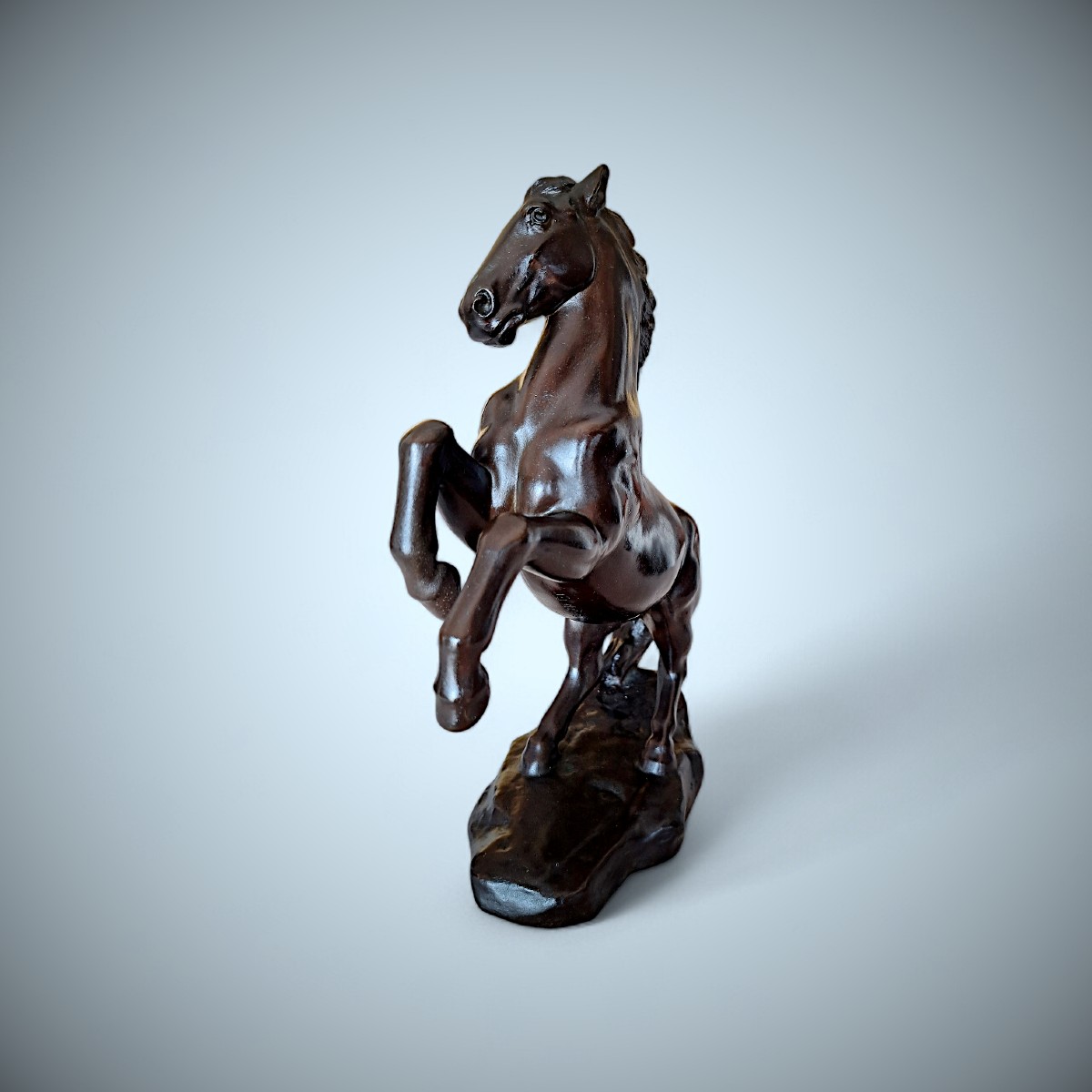
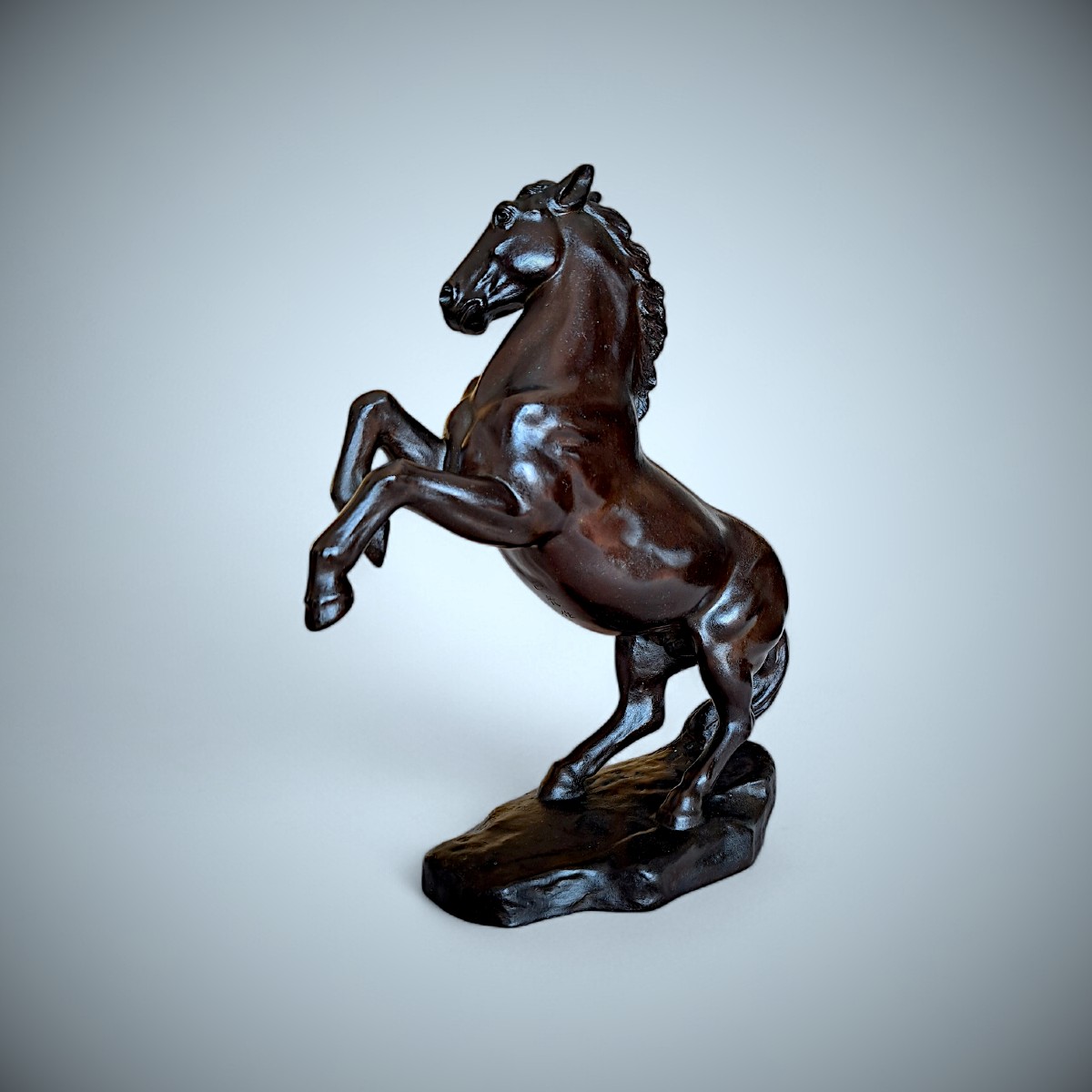
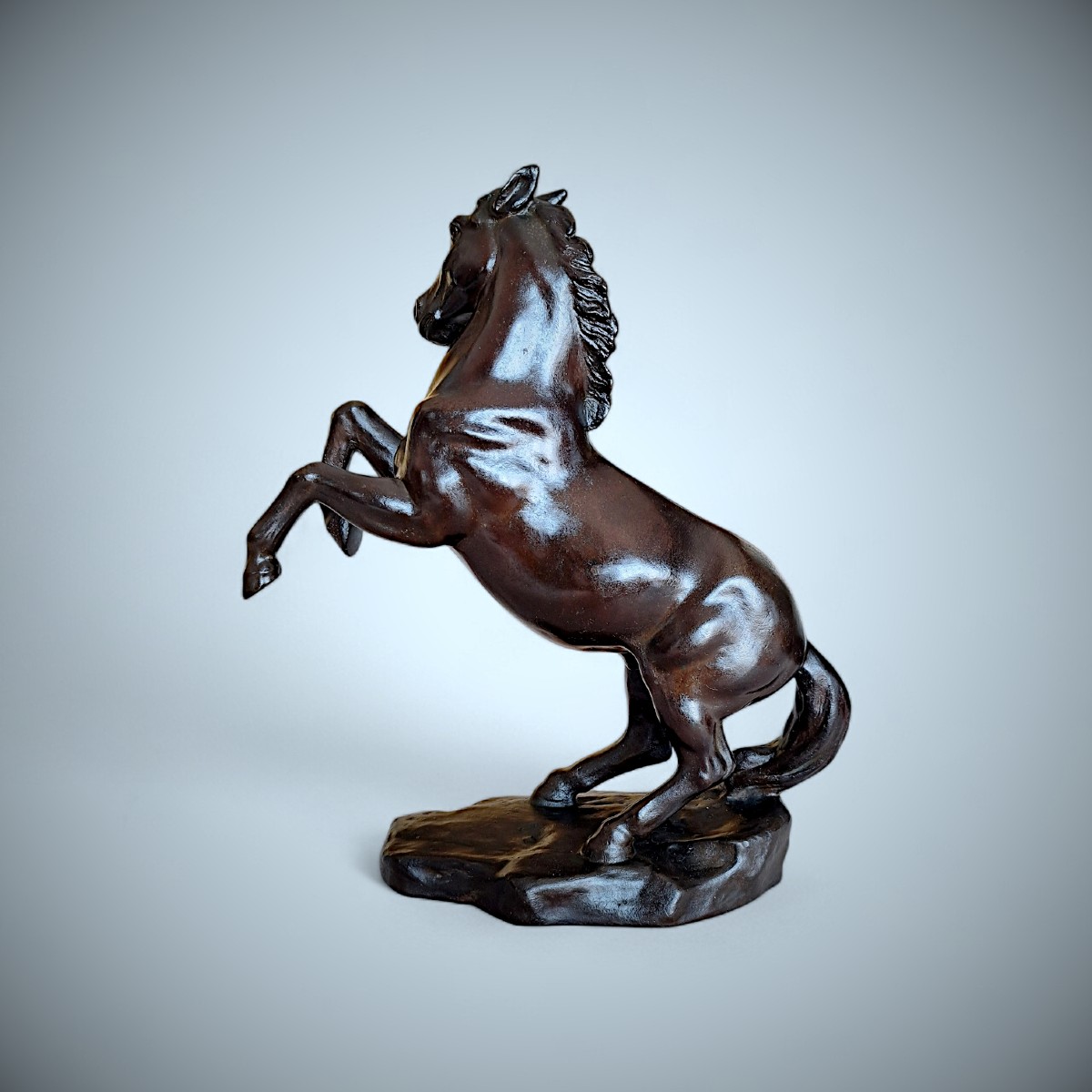
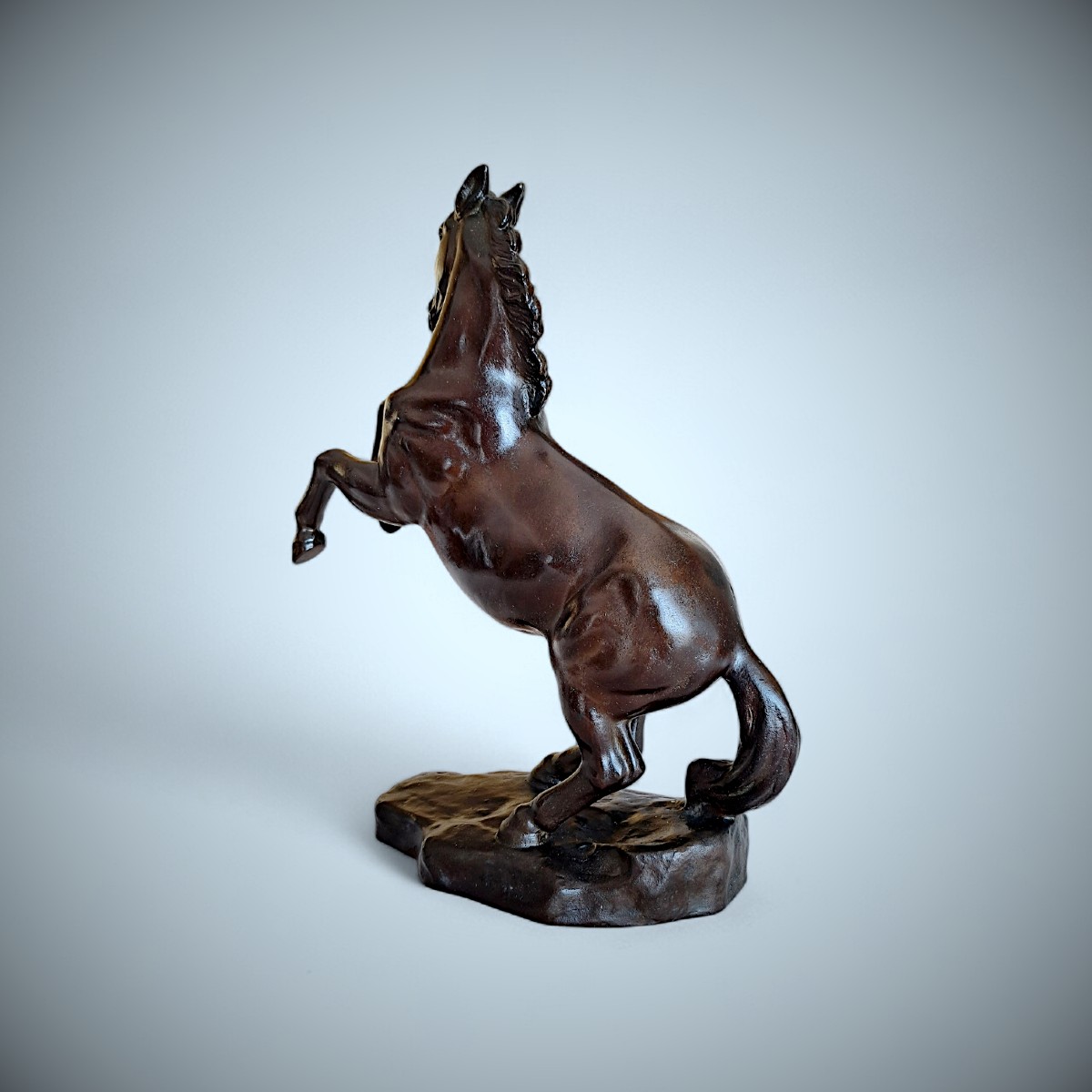
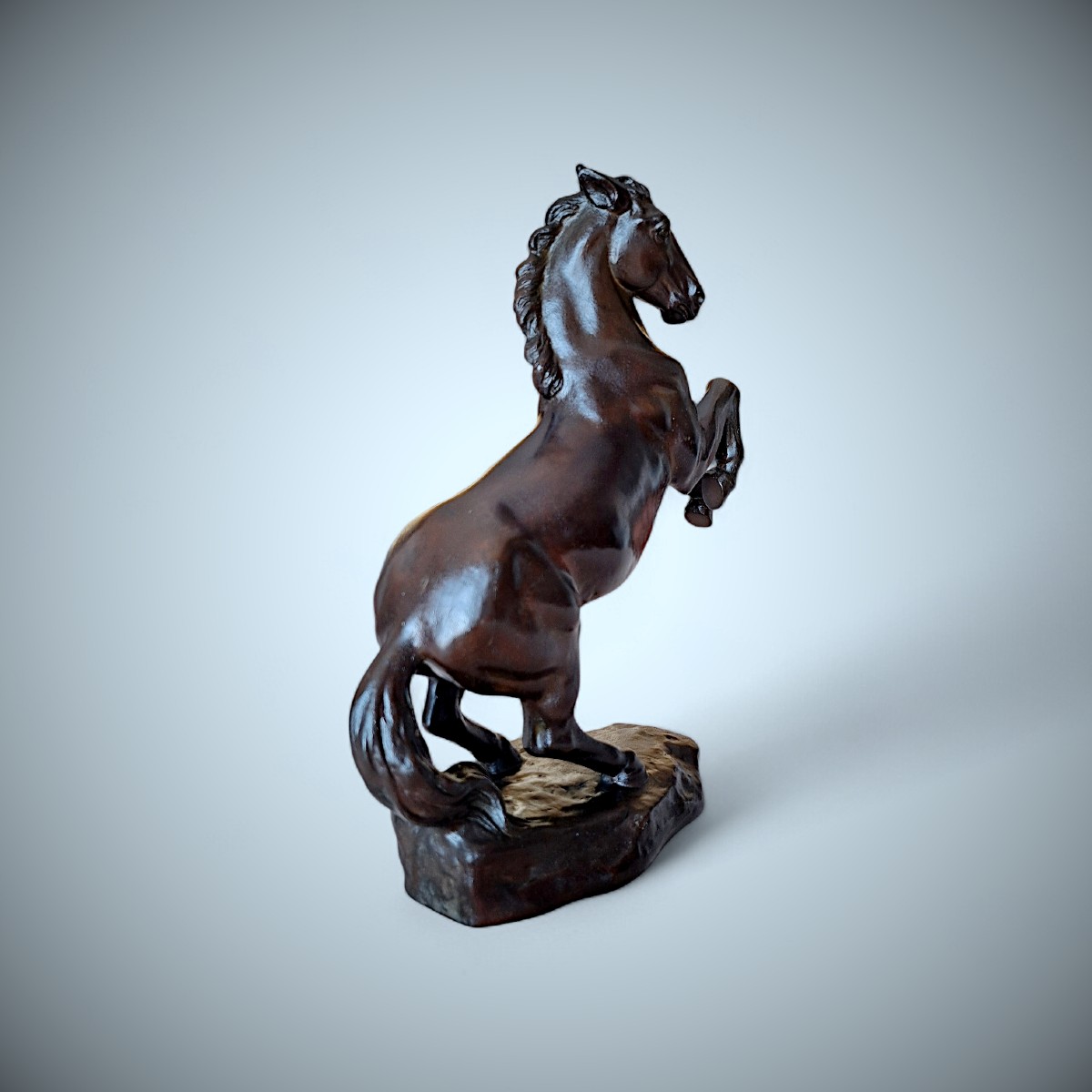
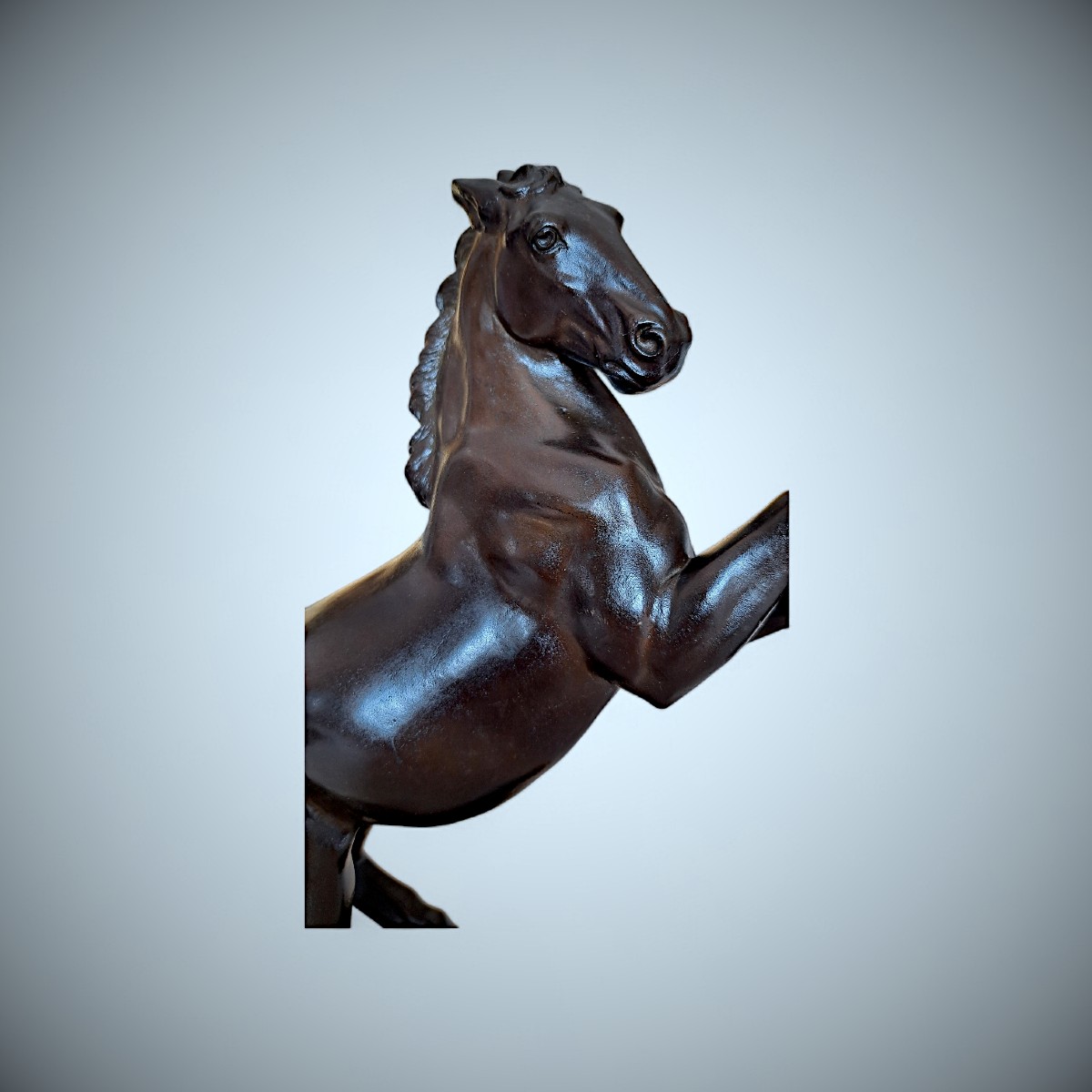
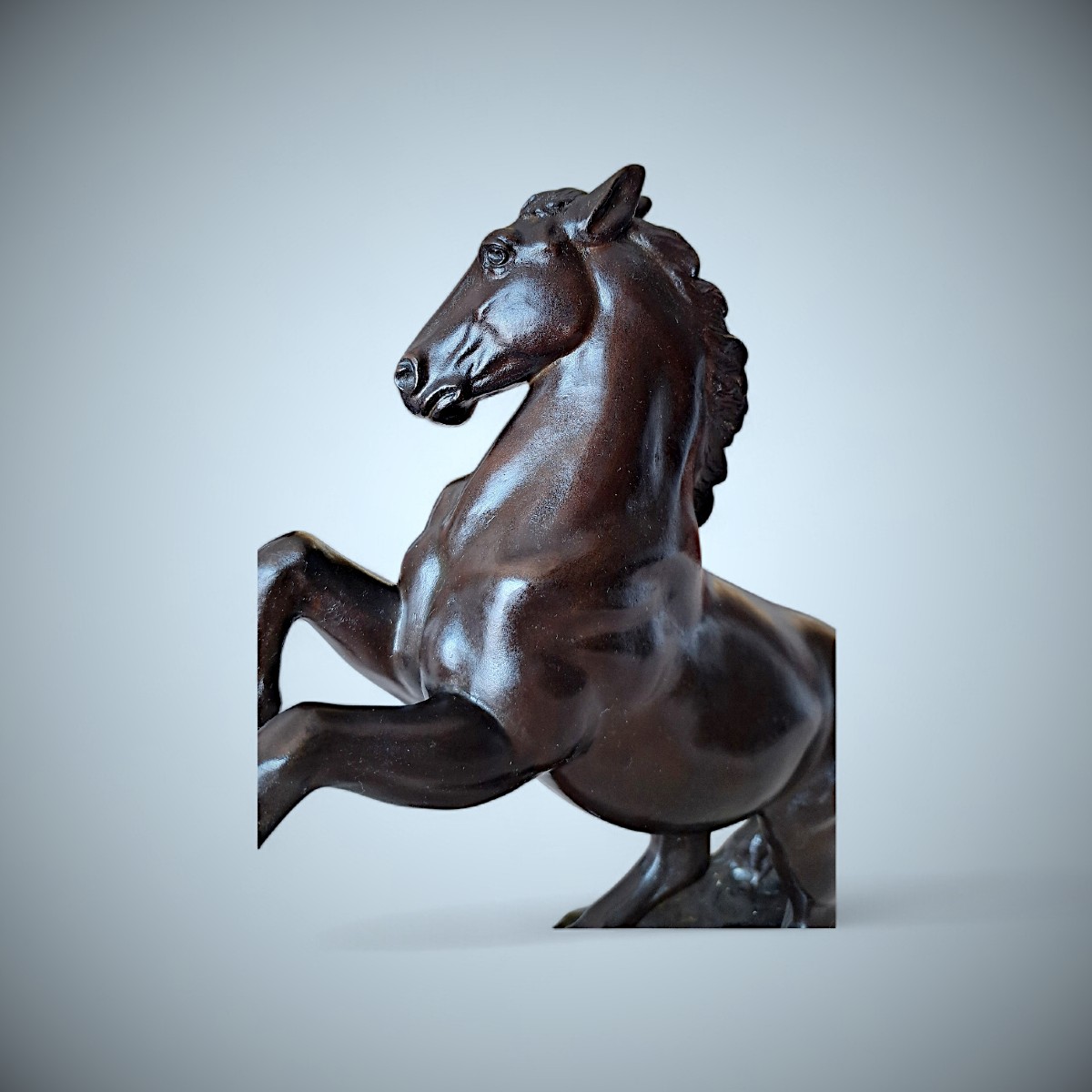


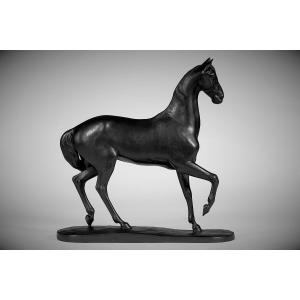
This striking bronze sculpture depicts a rearing horse, captured in a moment of controlled tension and forward momentum. The power of its anatomy, the arched neck, and the raised forelegs are rendered with exceptional clarity and balance, while the subtly modulated surface and deep, lustrous patina accentuate the sculptural volumes. The naturalistic base anchors the composition, reinforcing the contrast between stability and dynamic movement.
This work is by Masahiko Katori 香取正彦, (1899–1988), one of the most important Japanese sculptors of the 20th century. Born in 1899 in the Koishikawa ward of Tokyo, Katori was the son of Hozuma Katori, himself a renowned sculptor, and was immersed in an artistic environment from a very young age. Between 1916 and 1920, he studied Western-style painting at the Pacific Painting Association Research Institute before enrolling at the Tokyo School of Fine Arts (now Tokyo University of the Arts) in 1920. There, he specialized in mold making under Tsuda Eiju, one of the most prominent sculpture professors of the time, and graduated in 1925.
Katori quickly gained international renown. In 1925, the year of his graduation, he exhibited his "Arabesque Strawberry Container" at the International Exhibition of Decorative Arts and Crafts in Paris (Art Deco Exhibition), where he received a bronze medal. Beginning in 1928, he was selected for three consecutive years for the prestigious Exhibition of the Imperial Academy of Fine Arts (Teiten), marking his early admission into Japan's most prestigious artistic circles. In 1953, he received the Japan Academy of Fine Arts Award, further solidifying his status.
This sculpture belongs to Katori's early creative period (circa 1920-1930), a formative phase characterized by a strong adherence to Western sculptural realism, combined with a refined Japanese sensibility in the treatment of surfaces and composition. Animal subjects, particularly horses, allowed Katori to demonstrate his keen sense of observation of nature and his exceptional mastery of volume, balance, and movement.
In recognition of his exceptional contribution to Japanese art, Katori was named a Living National Treasure (Ningen Kokuho) in 1977. In 1988, the year of his death, he was elected a member of the Japan Academy of Fine Arts. A major work by a master sculptor, this bronze stands as an eloquent example of modern Japanese sculpture, at the crossroads of tradition, international influences, and technical excellence.
This work is by Masahiko Katori 香取正彦, (1899–1988), one of the most important Japanese sculptors of the 20th century. Born in 1899 in the Koishikawa ward of Tokyo, Katori was the son of Hozuma Katori, himself a renowned sculptor, and was immersed in an artistic environment from a very young age. Between 1916 and 1920, he studied Western-style painting at the Pacific Painting Association Research Institute before enrolling at the Tokyo School of Fine Arts (now Tokyo University of the Arts) in 1920. There, he specialized in mold making under Tsuda Eiju, one of the most prominent sculpture professors of the time, and graduated in 1925.
Katori quickly gained international renown. In 1925, the year of his graduation, he exhibited his "Arabesque Strawberry Container" at the International Exhibition of Decorative Arts and Crafts in Paris (Art Deco Exhibition), where he received a bronze medal. Beginning in 1928, he was selected for three consecutive years for the prestigious Exhibition of the Imperial Academy of Fine Arts (Teiten), marking his early admission into Japan's most prestigious artistic circles. In 1953, he received the Japan Academy of Fine Arts Award, further solidifying his status.
This sculpture belongs to Katori's early creative period (circa 1920-1930), a formative phase characterized by a strong adherence to Western sculptural realism, combined with a refined Japanese sensibility in the treatment of surfaces and composition. Animal subjects, particularly horses, allowed Katori to demonstrate his keen sense of observation of nature and his exceptional mastery of volume, balance, and movement.
In recognition of his exceptional contribution to Japanese art, Katori was named a Living National Treasure (Ningen Kokuho) in 1977. In 1988, the year of his death, he was elected a member of the Japan Academy of Fine Arts. A major work by a master sculptor, this bronze stands as an eloquent example of modern Japanese sculpture, at the crossroads of tradition, international influences, and technical excellence.
Explore similar pieces and discover your ideal find:
Asian Bronze Sculptures