

Japanese Bronze Vase, Cast By Chūgeisha After A Model By Neya Chūroku - Flying Fish
This elegant bronze vase embodies the refined modernism of early Shōwa-era Japanese metalwork (around 1930), uniting sculptural clarity with poetic natural imagery.
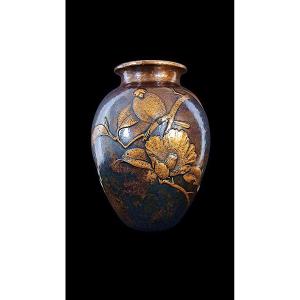
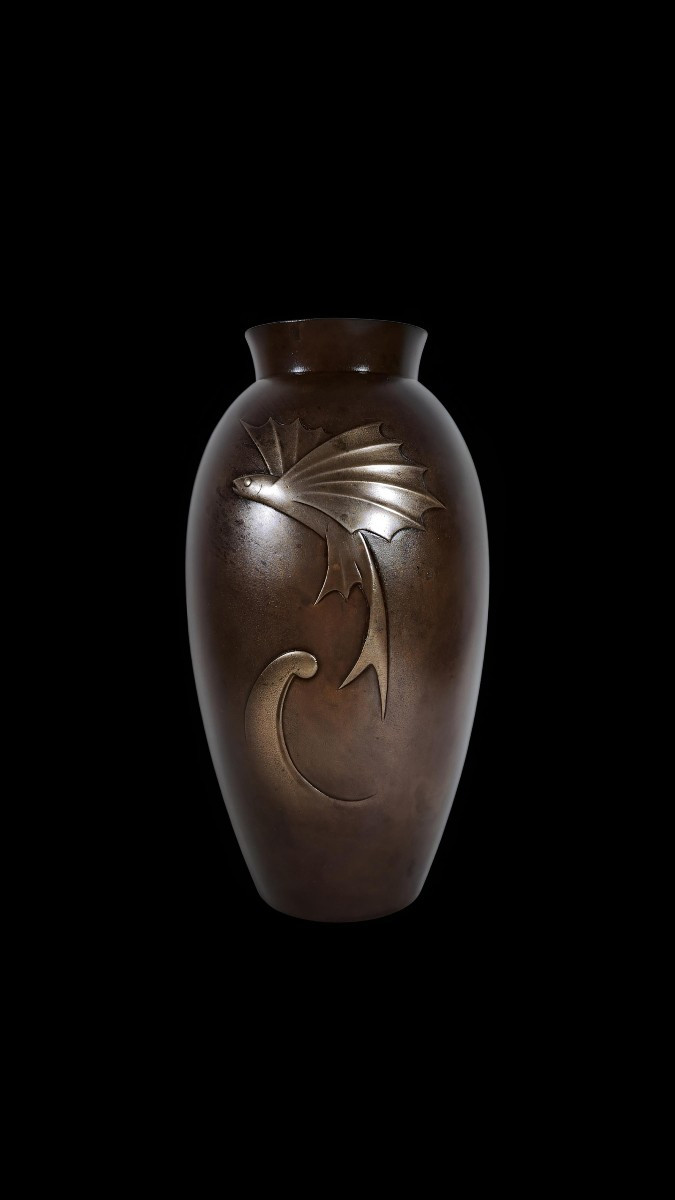
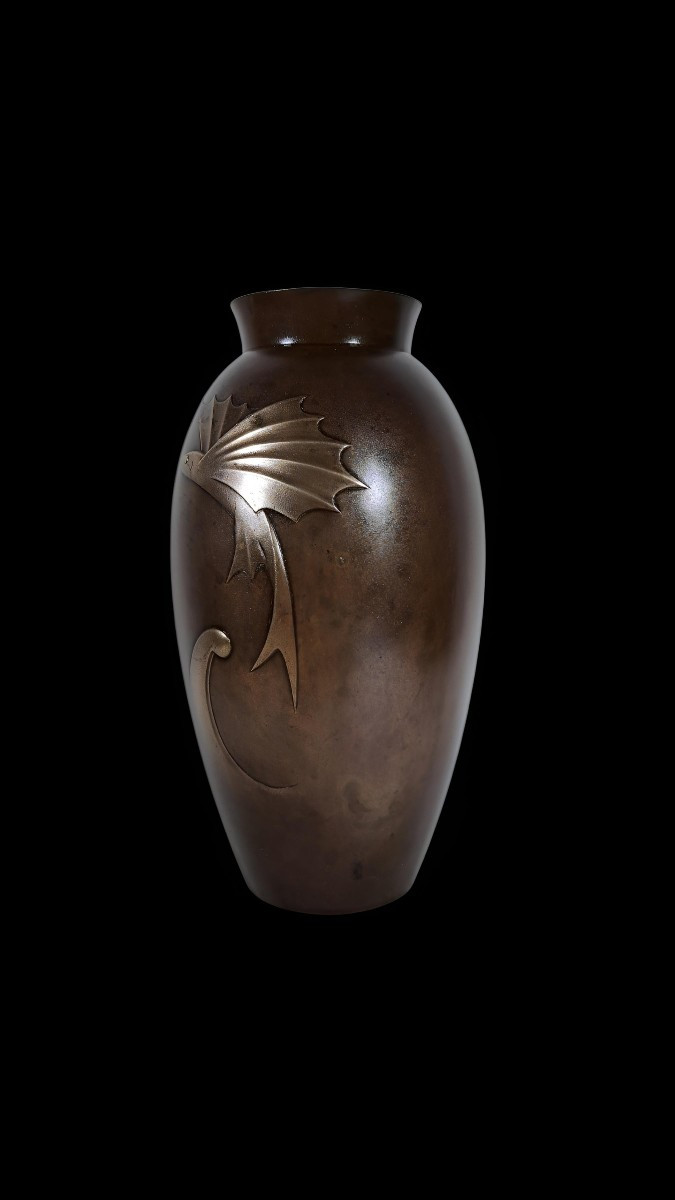
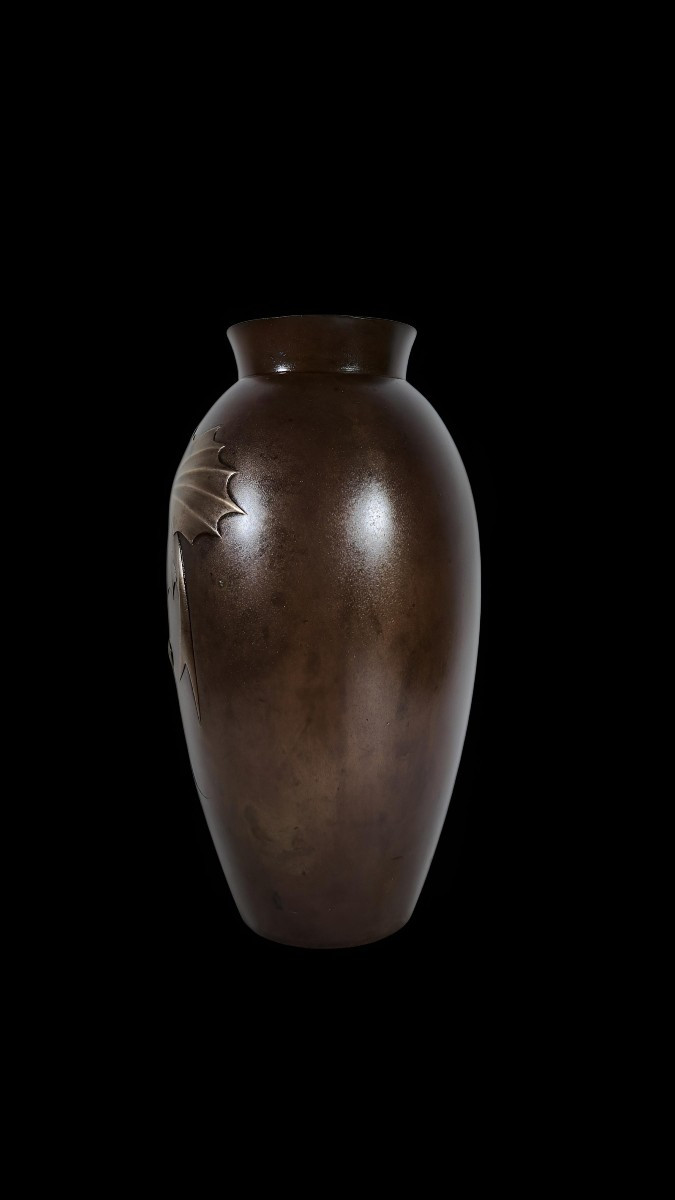
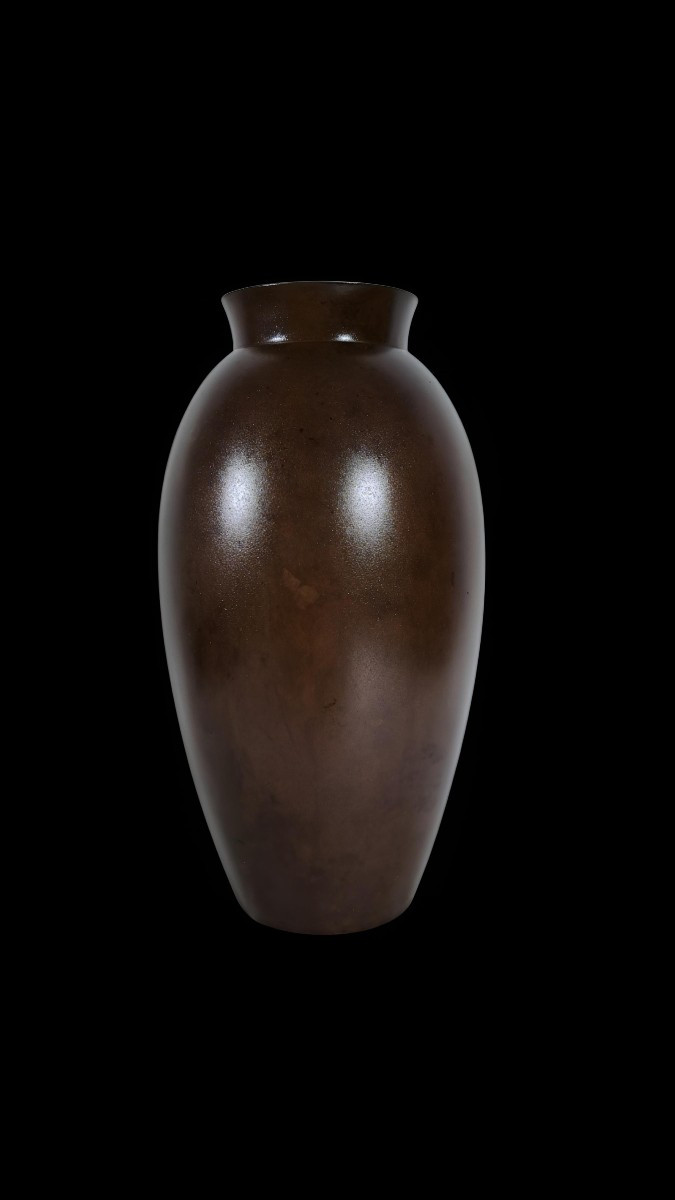
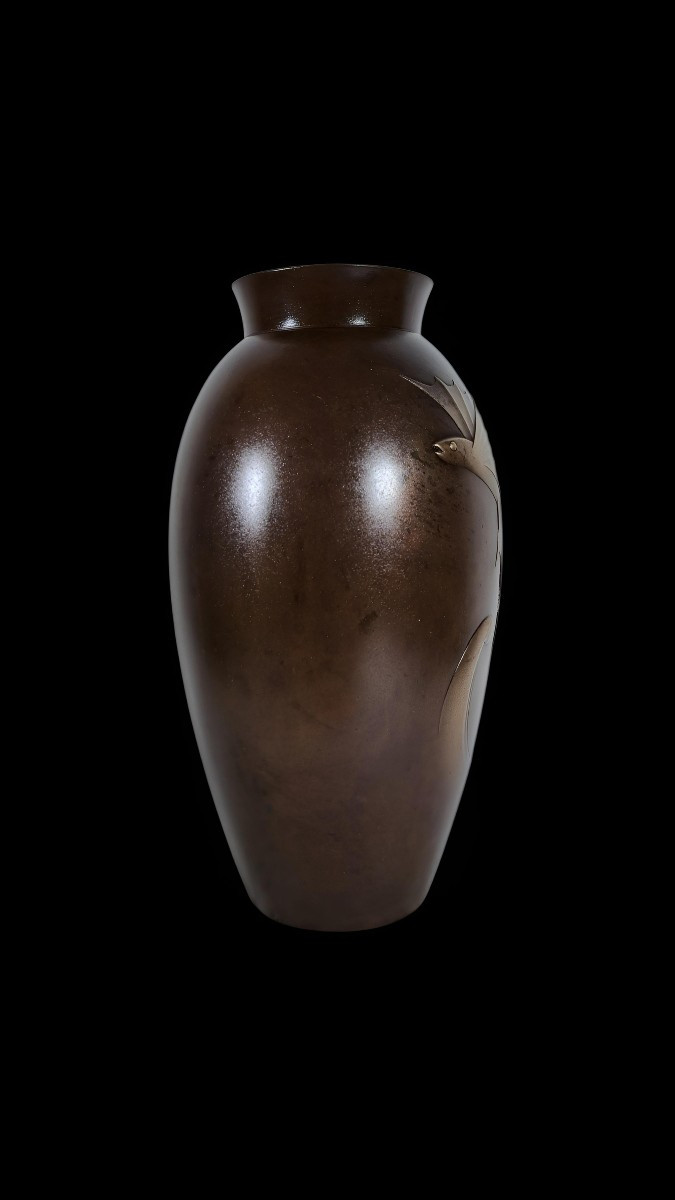
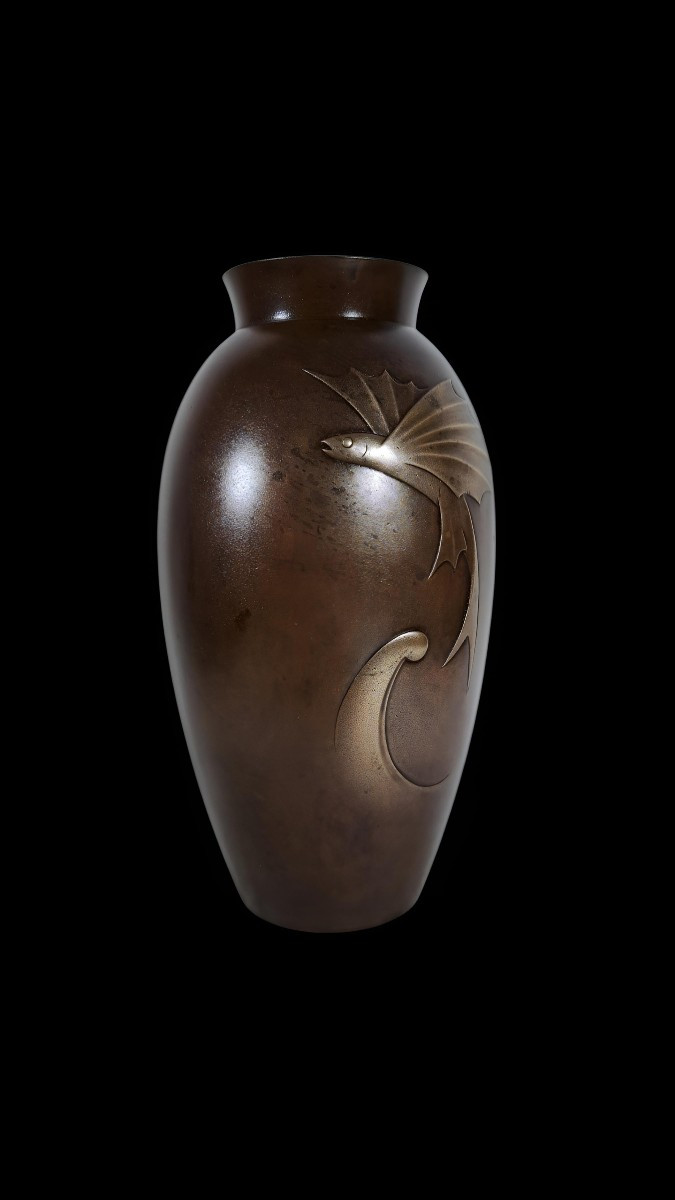
Rising in a restrained ovoid silhouette to a gently flared rim, the vase provides a soothing architectural setting for a single, exquisitely articulated motif: a flying fish rising above a rippling wave. The creature's outstretched pectoral fins resemble stylized wings, their veins standing out sharply against the softly textured surface. The body arches upward in a sweeping, calligraphic curve, mirrored by the upward movement below—a composition of aerial motion suspended in stillness. The interplay between the polished relief and the matte background animates the bronze, allowing light to play across the fins while the surrounding patina retains a velvety depth. The warm, subtly nuanced brown surface enhances the sense of marine atmosphere and vitality.
This design is inspired by a model by Neya Chūroku (1897–1987), a major figure in 20th-century Japanese metal art. Trained in the academic tradition and active in the national exhibition system, Neya developed a unique aesthetic language, distilling natural forms into rigorous and rhythmic abstractions. His work often blends realism and stylization, not by depicting nature in detail, but by translating it through sculptural movement and refined lines. The flying fish presented here perfectly illustrates this approach: dynamic and controlled, decorative yet structurally integrated into the form of the vessel.
The casting was carried out by Chūgeisha in Takaoka, the historical center of bronze production in Japan. Workshops such as Chūgeisha were not merely technical foundries, but highly skilled workshops capable of translating sophisticated artistic designs into finished works of exceptional precision. The crispness of the fin's contours, the precision of the wave, and the subtle patina testify to a mastery of casting and finishing techniques characteristic of Takaoka's finest workshops.
This collaboration between the artist and the workshop exemplifies a key characteristic of modern bronze practice in Japan: the harmonious integration of artistic conception and artisanal execution. Far from diminishing the artist's contribution, such partnerships have elevated the material, ensuring that the sculptural vision is realized through impeccable material mastery and technical perfection.
Dating from the early Shōwa period, this vase marks a departure from the exuberant naturalism of Meiji-era export bronzes, embracing a more refined and architectural aesthetic. Its controlled ornamentation, balanced proportions, and understated dynamism place it firmly within the lineage of sophisticated 20th-century Japanese metalwork—a piece where the sea, movement, and form are distilled into a timeless bronze.
Rising in a restrained ovoid silhouette to a gently flared rim, the vase provides a soothing architectural setting for a single, exquisitely articulated motif: a flying fish rising above a rippling wave. The creature's outstretched pectoral fins resemble stylized wings, their veins standing out sharply against the softly textured surface. The body arches upward in a sweeping, calligraphic curve, mirrored by the upward movement below—a composition of aerial motion suspended in stillness. The interplay between the polished relief and the matte background animates the bronze, allowing light to play across the fins while the surrounding patina retains a velvety depth. The warm, subtly nuanced brown surface enhances the sense of marine atmosphere and vitality.
This design is inspired by a model by Neya Chūroku (1897–1987), a major figure in 20th-century Japanese metal art. Trained in the academic tradition and active in the national exhibition system, Neya developed a unique aesthetic language, distilling natural forms into rigorous and rhythmic abstractions. His work often blends realism and stylization, not by depicting nature in detail, but by translating it through sculptural movement and refined lines. The flying fish presented here perfectly illustrates this approach: dynamic and controlled, decorative yet structurally integrated into the form of the vessel.
The casting was carried out by Chūgeisha in Takaoka, the historical center of bronze production in Japan. Workshops such as Chūgeisha were not merely technical foundries, but highly skilled workshops capable of translating sophisticated artistic designs into finished works of exceptional precision. The crispness of the fin's contours, the precision of the wave, and the subtle patina testify to a mastery of casting and finishing techniques characteristic of Takaoka's finest workshops.
This collaboration between the artist and the workshop exemplifies a key characteristic of modern bronze practice in Japan: the harmonious integration of artistic conception and artisanal execution. Far from diminishing the artist's contribution, such partnerships have elevated the material, ensuring that the sculptural vision is realized through impeccable material mastery and technical perfection.
Dating from the early Shōwa period, this vase marks a departure from the exuberant naturalism of Meiji-era export bronzes, embracing a more refined and architectural aesthetic. Its controlled ornamentation, balanced proportions, and understated dynamism place it firmly within the lineage of sophisticated 20th-century Japanese metalwork—a piece where the sea, movement, and form are distilled into a timeless bronze.
500 €
Period: 20th century
Style: Art Deco
Condition: Good condition
Material: Bronze
Height: 25 cm
Reference (ID): 1716288
Availability: In stock
Print