

Japanese Bronze By Onoda Harumasa - Cat With A Temari Ball
Artist: Onoda Harumasa 小野田晴正
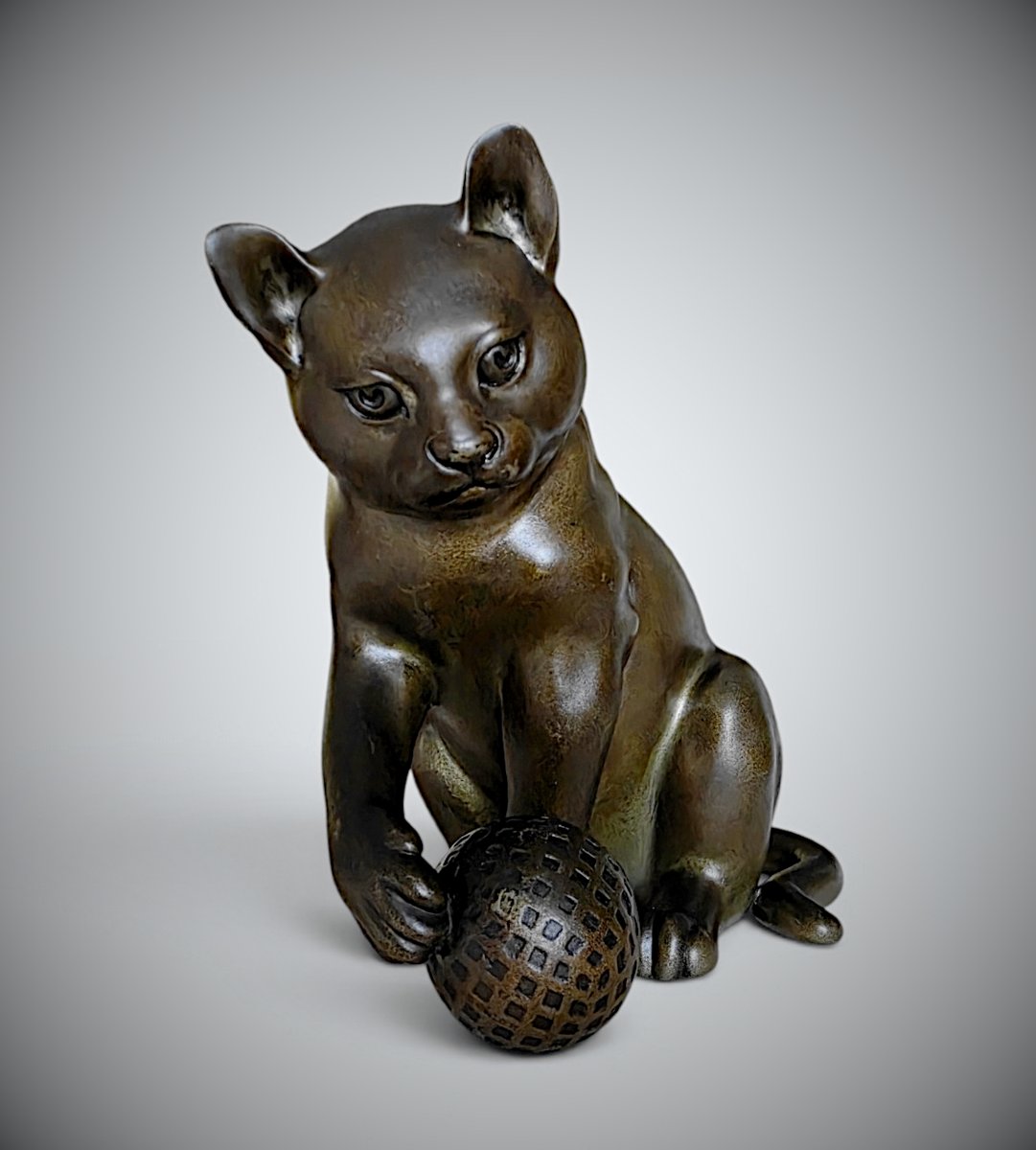
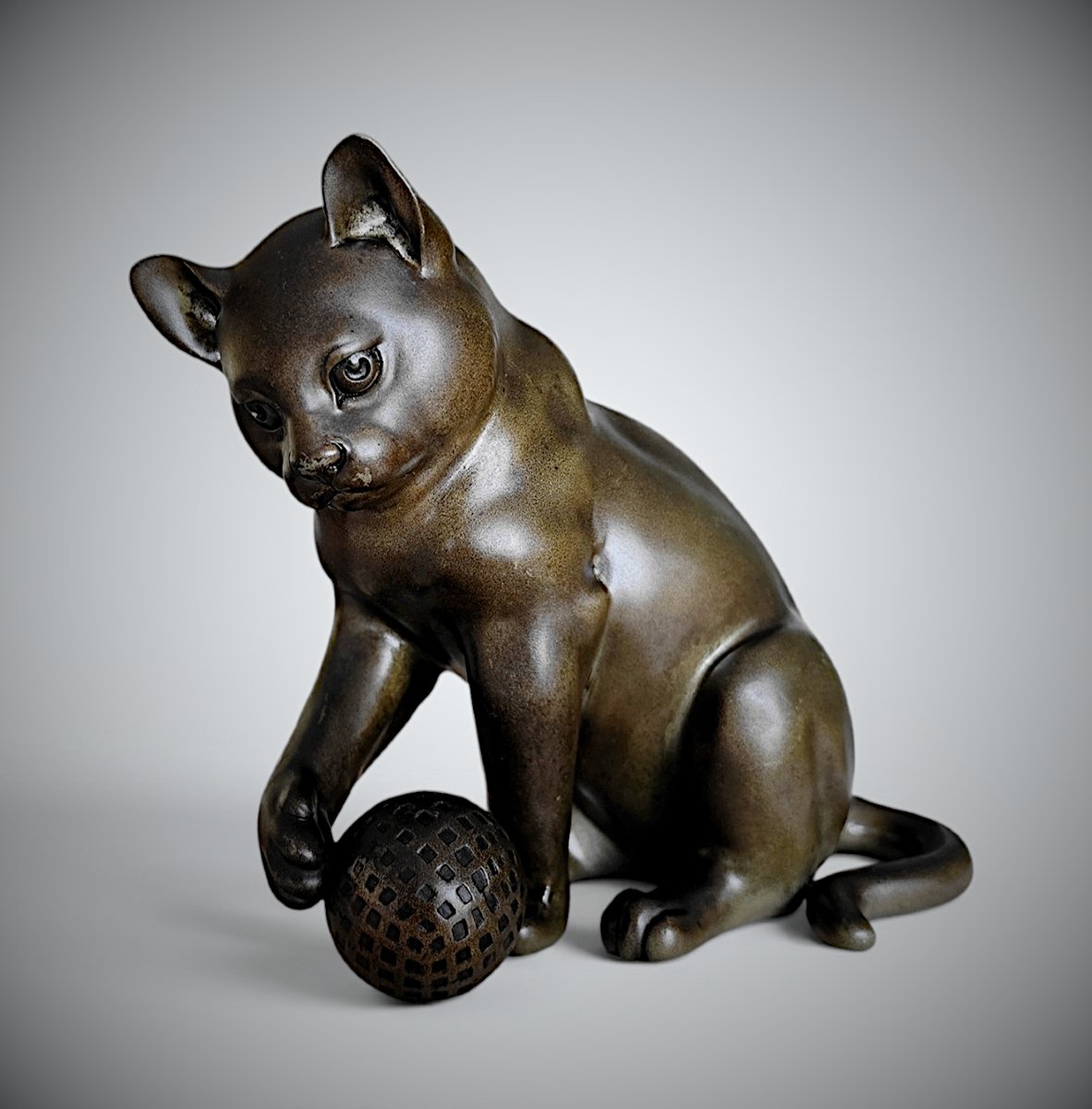
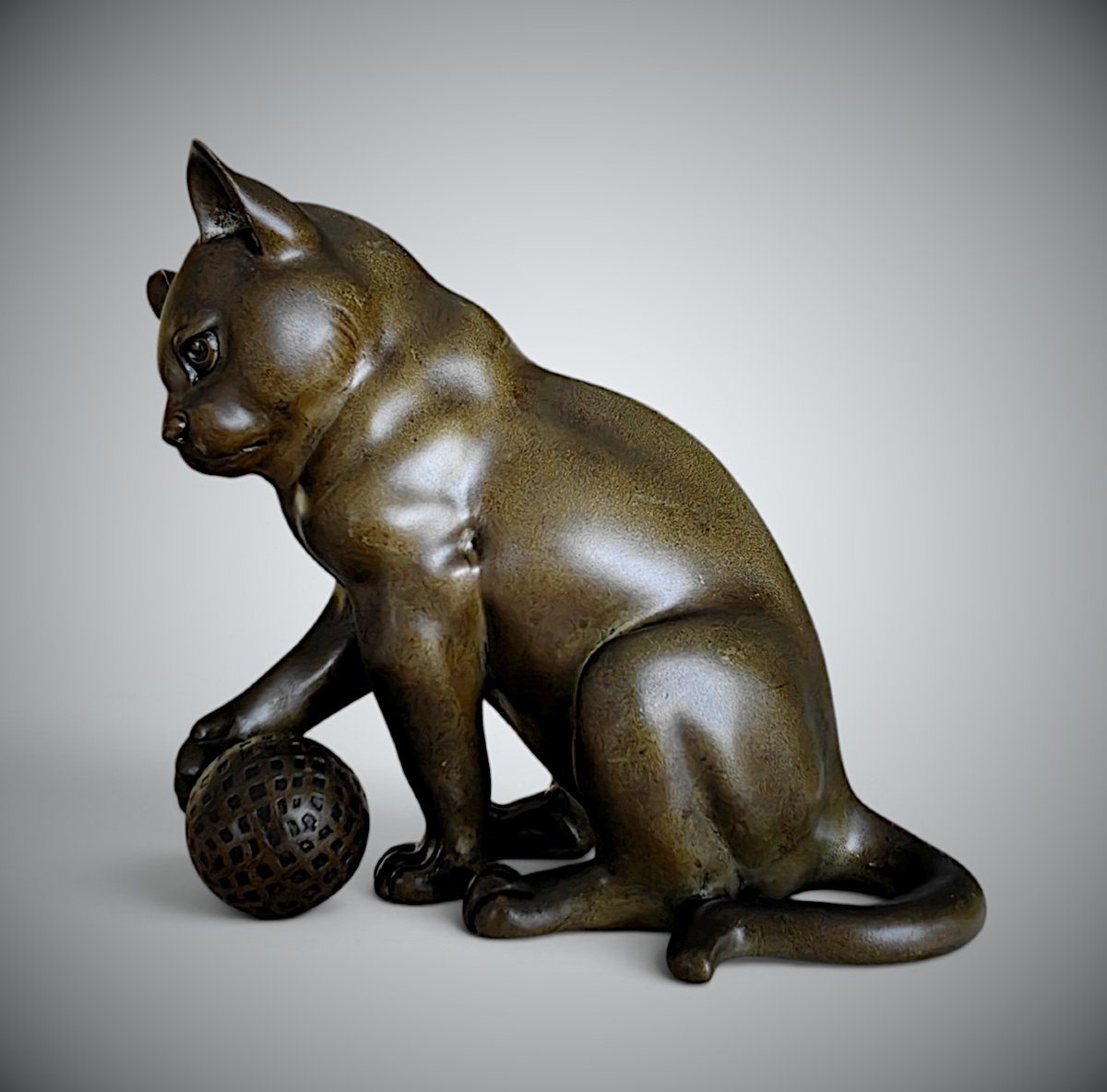
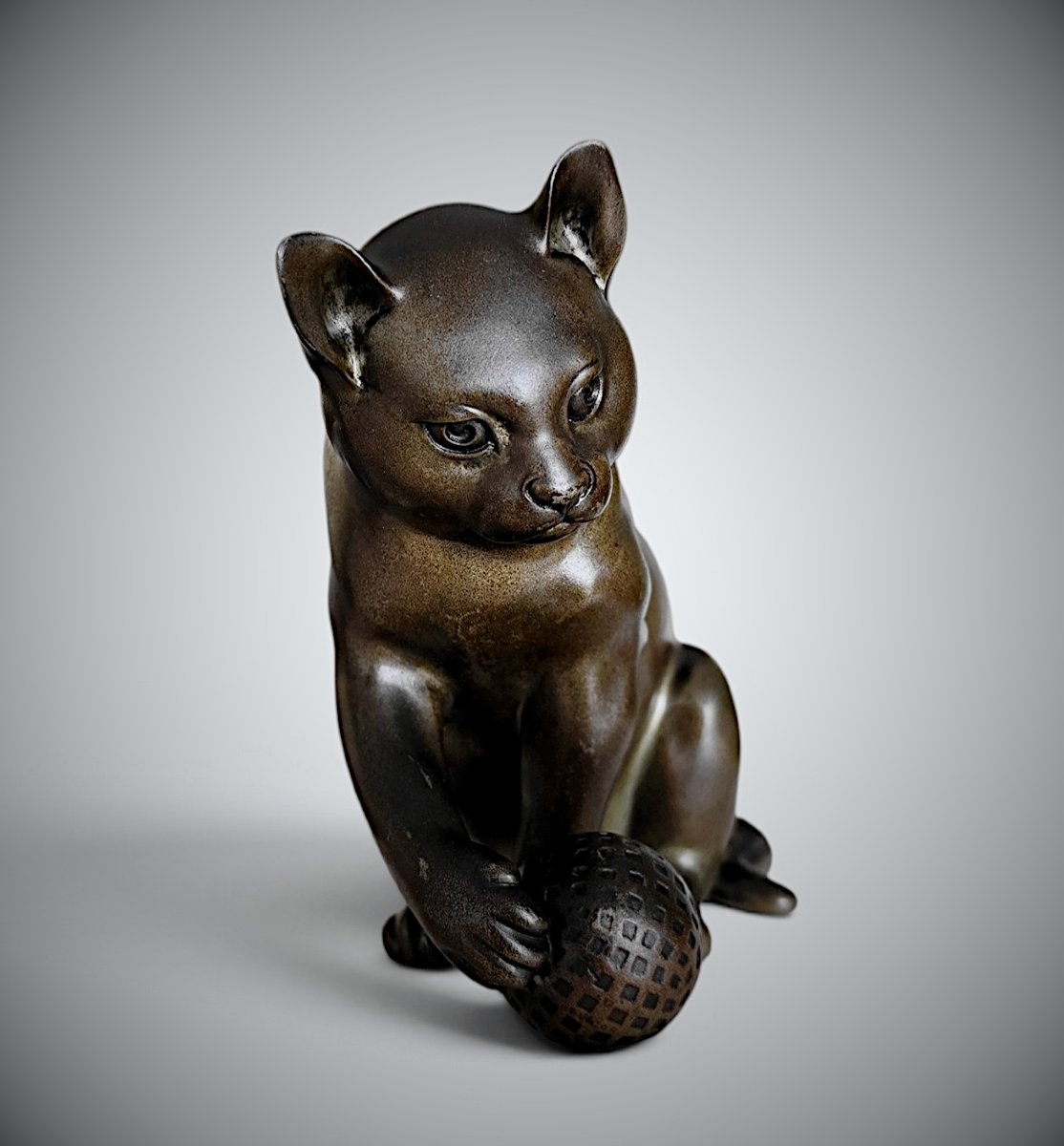
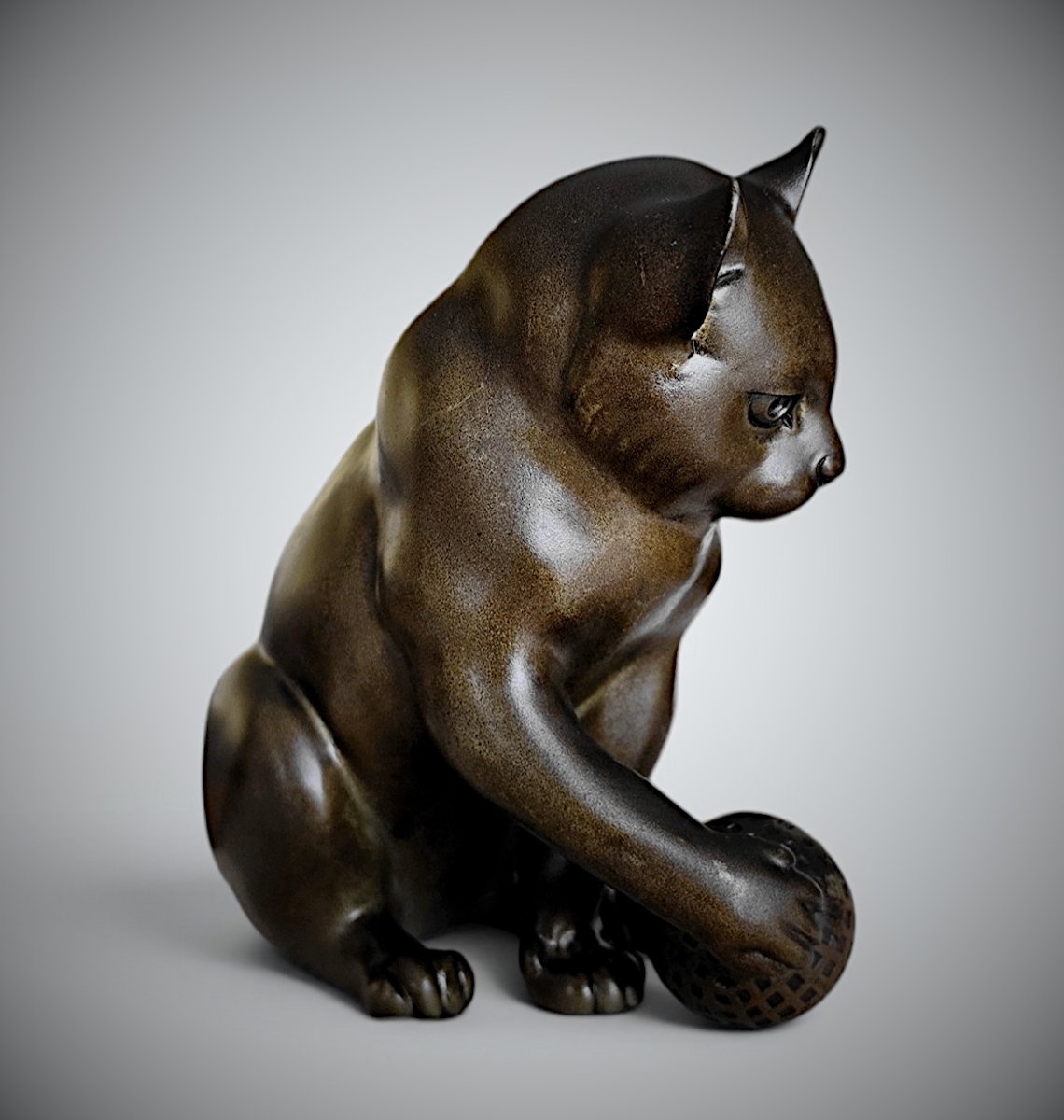
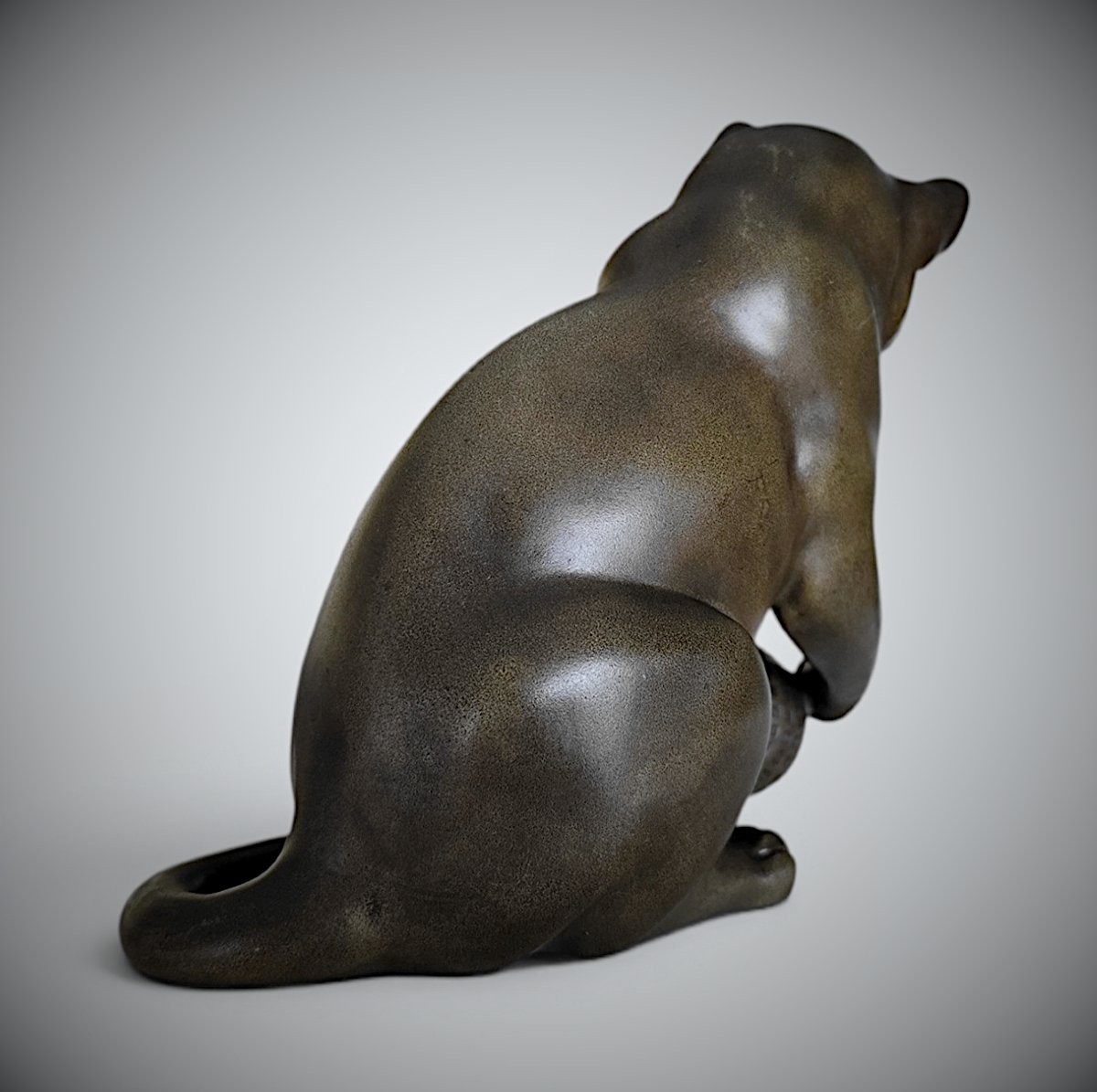
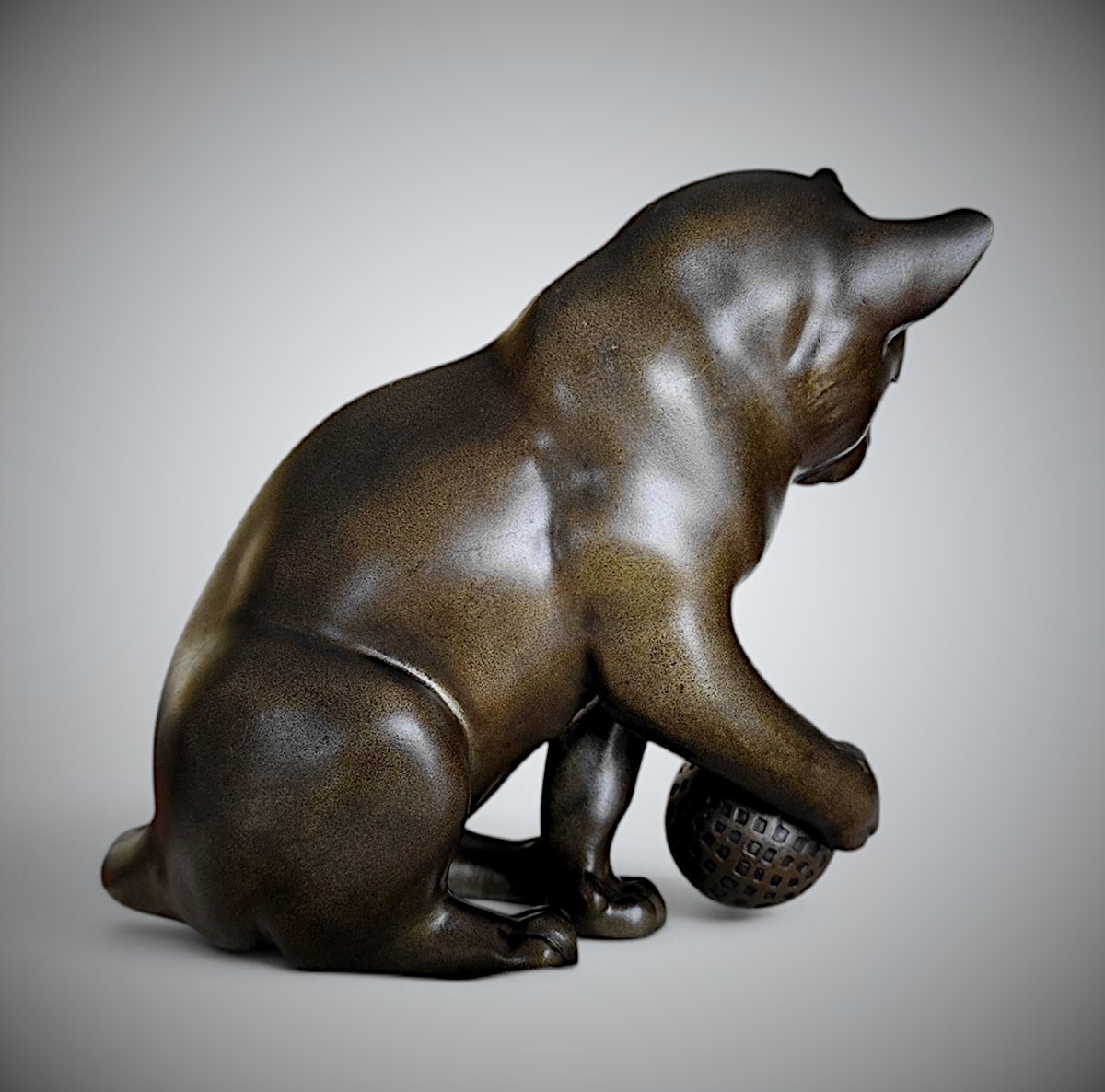
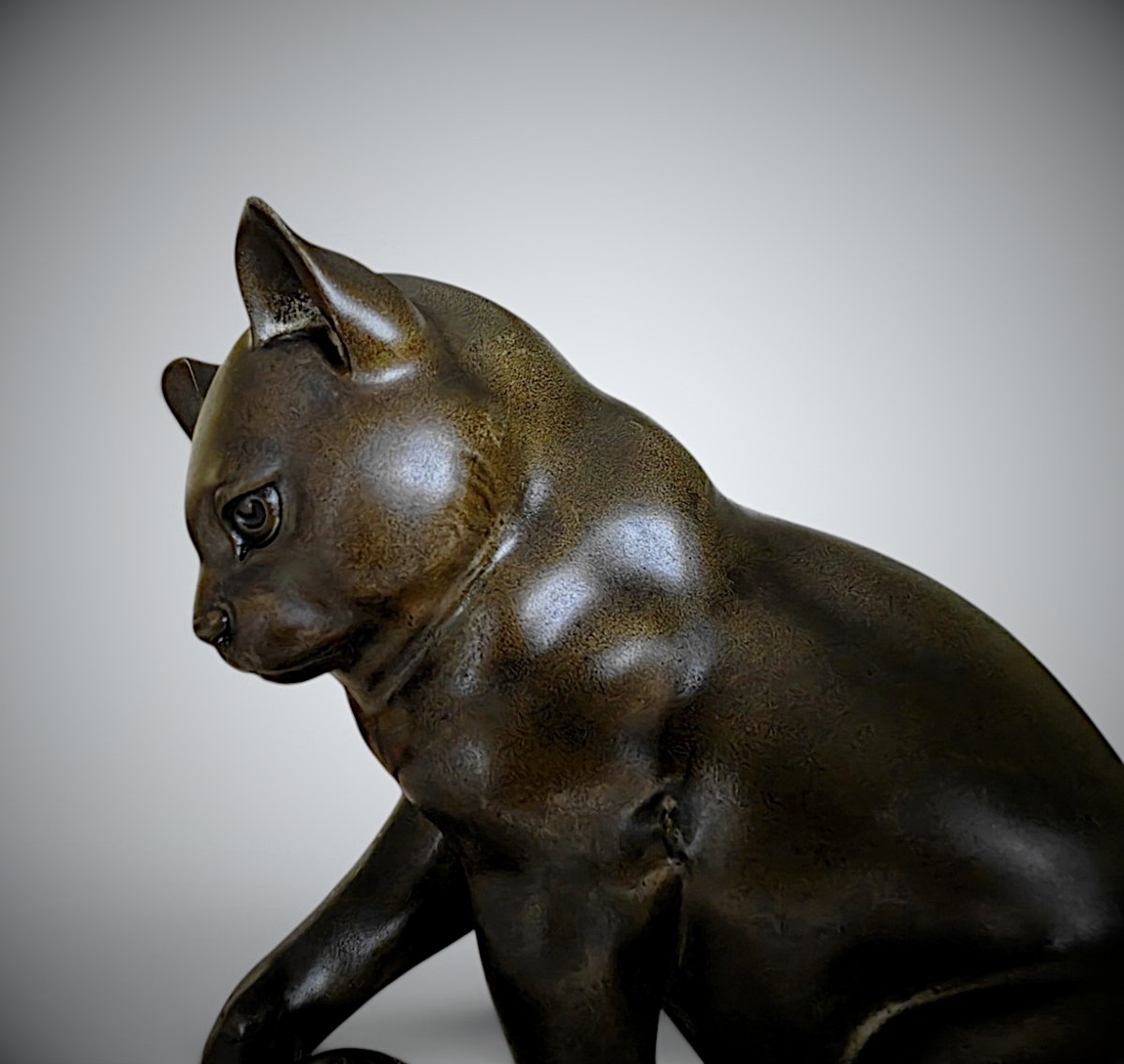
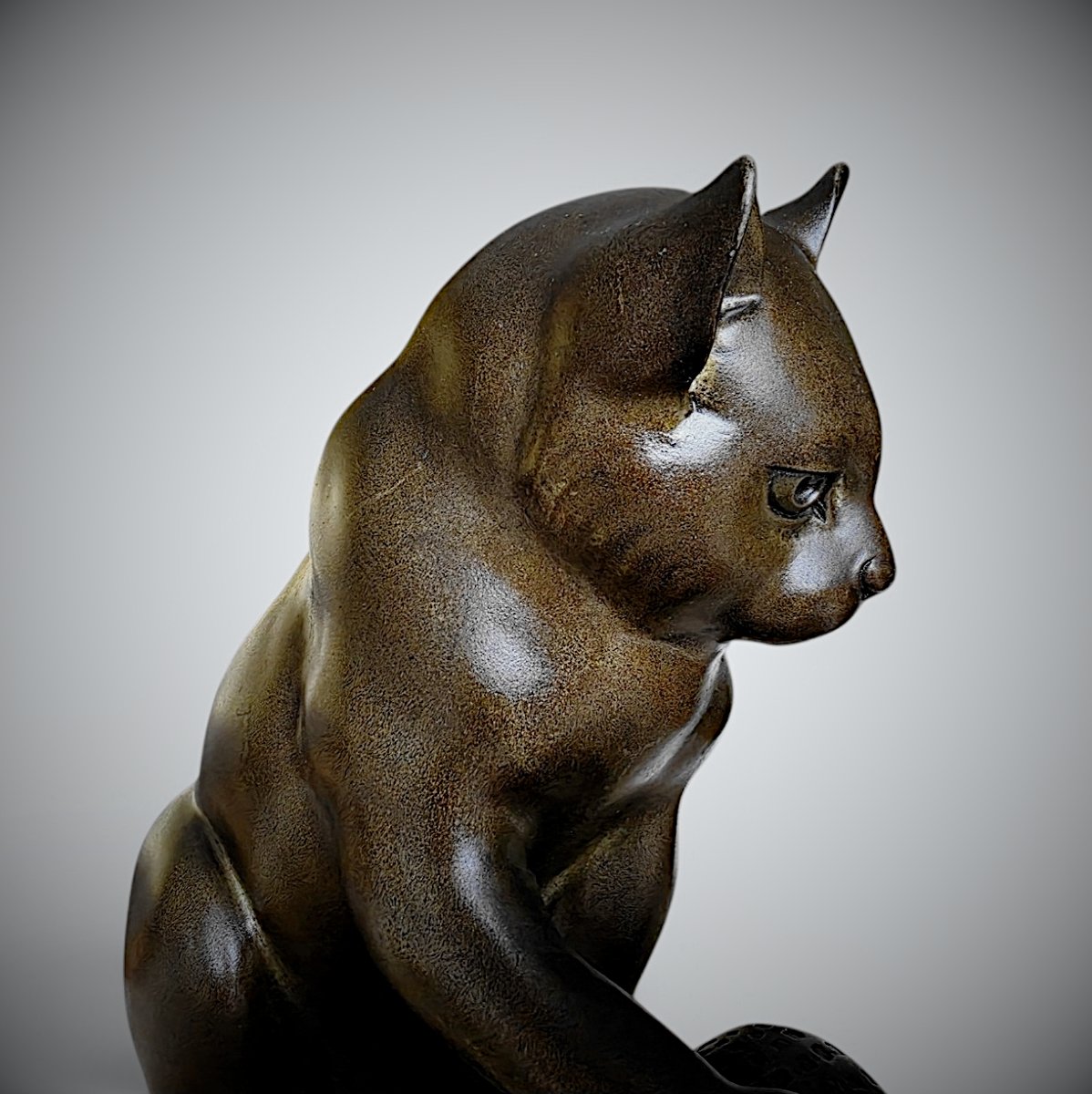
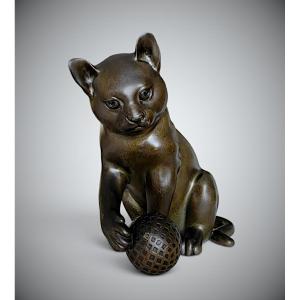
This charming bronze study of a seated cat exemplifies the refined animal sculpture for which the elusive Japanese metal artist Onoda Harumasa 小野田晴正 is remembered. Captured in a moment of quiet curiosity, the feline gently steadies a patterned ball beneath its paw, while its inquisitively tilted head and alert expression imbue the composition with remarkable vitality and character. The work transcends simple naturalism ,combining technical virtuosity, symbolism, and a profound appreciation for everyday beauty.
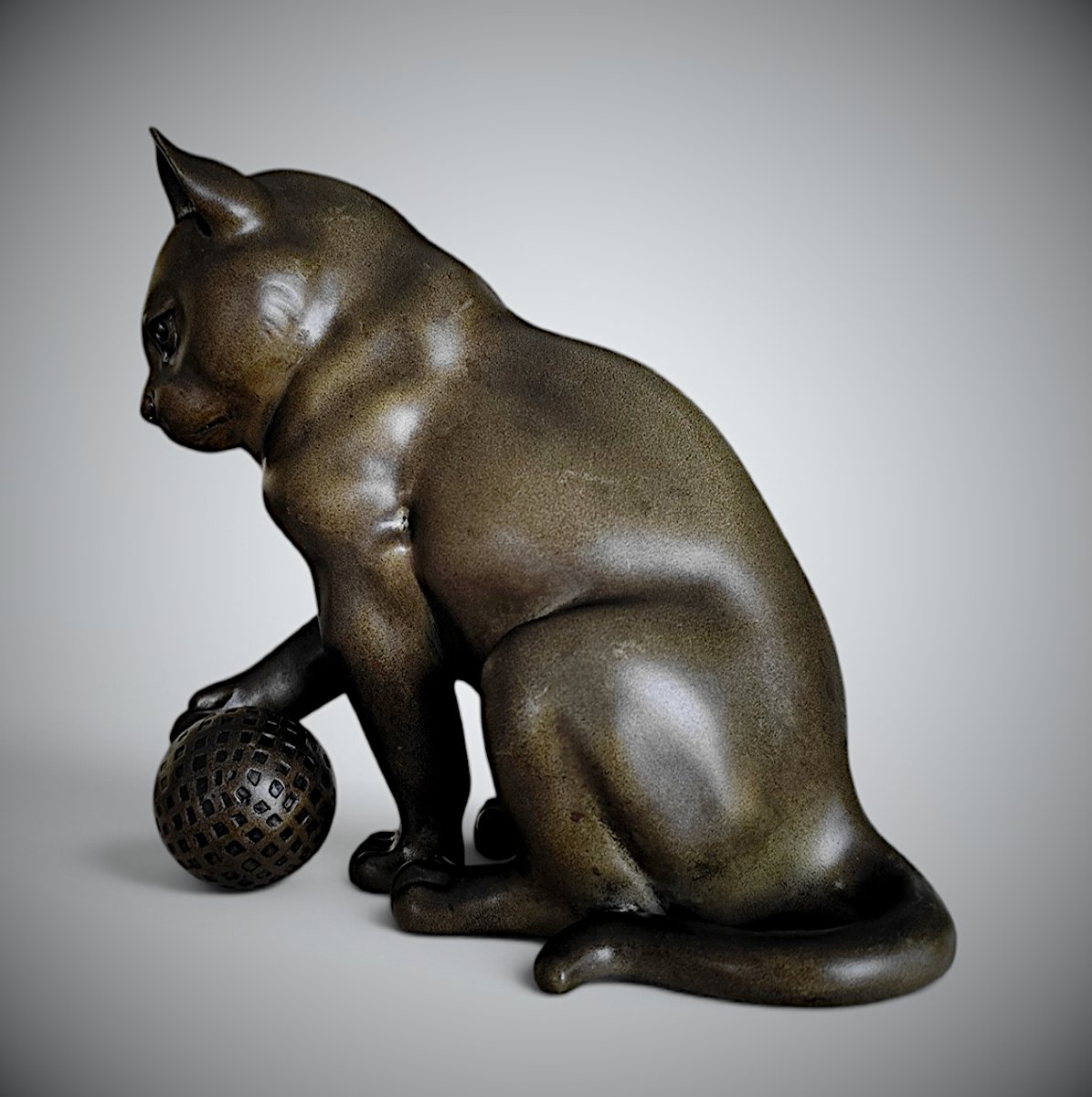
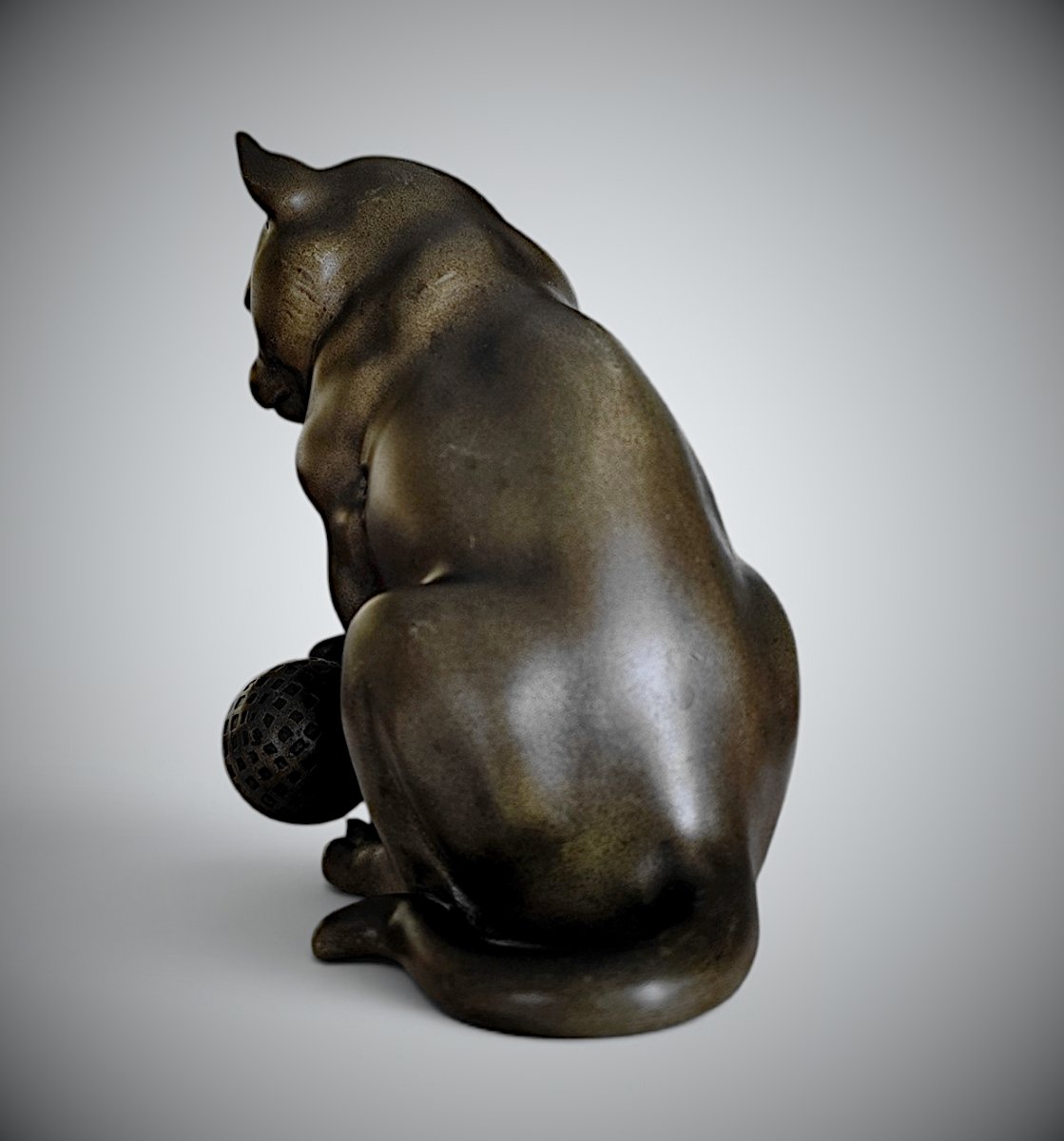
The sculpture demonstrates Harumasa's mastery of traditional Japanese bronze casting (chūzō). The softly modelled anatomy, subtle transitions of form, and richly nuanced patination reveal an artist deeply sensitive to both surface and volume. Rather than relying on dramatic movement, Harumasa achieves his effect through restraint and observation. The rounded contours, carefully balanced proportions, and expressive treatment of the cat create a work of exceptional warmth and intimacy.
Particularly significant is the ball held beneath the animal's paw. Far more than a simple toy, it displays the distinctive geometric relief pattern associated with a traditional Japanese Temari (手鞠). Originally fashioned from remnants of silk kimono fabric and tightly wrapped with brightly coloured threads, Temari balls evolved from children's play things into treasured gifts exchanged during the New Year. They were often presented by parents to their children as talismans of good fortune and protection. In Japanese culture, the interwoven threads symbolize the weaving together of happiness, harmonious relationships, longevity, and prosperity. Within this sculpture, the Temari transforms the composition into an auspicious image conveying domestic contentment and blessings for a fortunate life.
The pairing of a cat and a ball occupies a special place within Japanese art of the Meiji, Taishō, and early Shōwa periods. Cats had long enjoyed a privileged status in Japan, originally valued for protecting precious Buddhist manuscripts and temple treasures from rodents. Over time they became symbols of comfort, prosperity, and household harmony. A playful cat engaged with a ball therefore evokes an atmosphere of peace, innocence, and abundance, qualities highly appreciated by collectors of Japanese decorative arts.
For a master founder such as Harumasa, the subject also offered an ideal opportunity to demonstrate technical excellence. The contrast between the organic, flowing forms of the animal and the precise geometric structure of theTemari showcases his remarkable command of bronze. The smooth, lustrous surfaces of the cat interact beautifully with the deeply modelled texture of the ball, creating a sophisticated play of light and shadow. The textured lattice pattern has been meticulously carved into the bronze and enhanced through careful patination, allowing the two elements to complement one another while highlighting their differing visual qualities.
This treatment reflects the aesthetic ideals associated with the influential Tokyo casting tradition and the circles surrounding the Tokyo Chūkin Kai (Tokyo Foundry Art Association), where technical perfection and the artistic elevation of everyday subjects were highly valued. Harumasa's ability to transform a familiar domestic scene into an object of sculptural refinement places him firmly within this distinguished lineage.
Onoda Harumasa remains one of the most enigmatic figures in modern Japanese metalwork. His birth and death dates are presently unknown, and little documentary evidence concerning his life survives. Yet the rarity of his works only heightens their significance. Surviving examples testify to an artist of exceptional skill whose bronzes belong to the golden age of Japanese artistic metalwork.
Harumasa is associated with the artistic name Jōun (如雲), a gō adopted by accomplished metal artists and master founders. He should not be confused with the celebrated bronze sculptor Ōshima Jōun, despite their shared artistic name. Harumasa belonged to a distinct artistic lineage and is believed to have trained under Kaniye Kuniharu, a contemporary of Ōshima Jōun and an important figure within Tokyo's casting community. Through this lineage, Harumasa ultimately traces his artistic heritage to the great sculptural traditions associated with Kitamura Kōun, one of the founding masters of modern Japanese sculpture.
The quality of Harumasa's work is further evidenced by the survival of museum-held pieces. Among the most important is a bronze figure of Jurōjin preserved within the renowned Yoshizawa Collection. This significant ensemble, accompanied by a bronze incense burner and ceremonial nyoi sceptre, has been exhibited through the collections of the Sano City Museum, confirming the enduring esteem in which Harumasa's craftsmanship is held.
Combining auspicious symbolism, exceptional casting, and refined artistic sensibility, this bronze cat with Temari ball is a particularly attractive example of Onoda Harumasa's rare oeuvre. Both playful and sophisticated, it embodies the harmony between technical mastery and poetic subject matter that characterizes the finest achievements of early twentieth-century Japanese bronze art.
The sculpture demonstrates Harumasa's mastery of traditional Japanese bronze casting (chūzō). The softly modelled anatomy, subtle transitions of form, and richly nuanced patination reveal an artist deeply sensitive to both surface and volume. Rather than relying on dramatic movement, Harumasa achieves his effect through restraint and observation. The rounded contours, carefully balanced proportions, and expressive treatment of the cat create a work of exceptional warmth and intimacy.
Particularly significant is the ball held beneath the animal's paw. Far more than a simple toy, it displays the distinctive geometric relief pattern associated with a traditional Japanese Temari (手鞠). Originally fashioned from remnants of silk kimono fabric and tightly wrapped with brightly coloured threads, Temari balls evolved from children's play things into treasured gifts exchanged during the New Year. They were often presented by parents to their children as talismans of good fortune and protection. In Japanese culture, the interwoven threads symbolize the weaving together of happiness, harmonious relationships, longevity, and prosperity. Within this sculpture, the Temari transforms the composition into an auspicious image conveying domestic contentment and blessings for a fortunate life.
The pairing of a cat and a ball occupies a special place within Japanese art of the Meiji, Taishō, and early Shōwa periods. Cats had long enjoyed a privileged status in Japan, originally valued for protecting precious Buddhist manuscripts and temple treasures from rodents. Over time they became symbols of comfort, prosperity, and household harmony. A playful cat engaged with a ball therefore evokes an atmosphere of peace, innocence, and abundance, qualities highly appreciated by collectors of Japanese decorative arts.
For a master founder such as Harumasa, the subject also offered an ideal opportunity to demonstrate technical excellence. The contrast between the organic, flowing forms of the animal and the precise geometric structure of theTemari showcases his remarkable command of bronze. The smooth, lustrous surfaces of the cat interact beautifully with the deeply modelled texture of the ball, creating a sophisticated play of light and shadow. The textured lattice pattern has been meticulously carved into the bronze and enhanced through careful patination, allowing the two elements to complement one another while highlighting their differing visual qualities.
This treatment reflects the aesthetic ideals associated with the influential Tokyo casting tradition and the circles surrounding the Tokyo Chūkin Kai (Tokyo Foundry Art Association), where technical perfection and the artistic elevation of everyday subjects were highly valued. Harumasa's ability to transform a familiar domestic scene into an object of sculptural refinement places him firmly within this distinguished lineage.
Onoda Harumasa remains one of the most enigmatic figures in modern Japanese metalwork. His birth and death dates are presently unknown, and little documentary evidence concerning his life survives. Yet the rarity of his works only heightens their significance. Surviving examples testify to an artist of exceptional skill whose bronzes belong to the golden age of Japanese artistic metalwork.
Harumasa is associated with the artistic name Jōun (如雲), a gō adopted by accomplished metal artists and master founders. He should not be confused with the celebrated bronze sculptor Ōshima Jōun, despite their shared artistic name. Harumasa belonged to a distinct artistic lineage and is believed to have trained under Kaniye Kuniharu, a contemporary of Ōshima Jōun and an important figure within Tokyo's casting community. Through this lineage, Harumasa ultimately traces his artistic heritage to the great sculptural traditions associated with Kitamura Kōun, one of the founding masters of modern Japanese sculpture.
The quality of Harumasa's work is further evidenced by the survival of museum-held pieces. Among the most important is a bronze figure of Jurōjin preserved within the renowned Yoshizawa Collection. This significant ensemble, accompanied by a bronze incense burner and ceremonial nyoi sceptre, has been exhibited through the collections of the Sano City Museum, confirming the enduring esteem in which Harumasa's craftsmanship is held.
Combining auspicious symbolism, exceptional casting, and refined artistic sensibility, this bronze cat with Temari ball is a particularly attractive example of Onoda Harumasa's rare oeuvre. Both playful and sophisticated, it embodies the harmony between technical mastery and poetic subject matter that characterizes the finest achievements of early twentieth-century Japanese bronze art.
1 500 €
Period: 20th century
Style: Art Deco
Condition: Good condition
Material: Bronze
Width: 20 cm
Height: 18 cm
Reference (ID): 1777901
Availability: In stock
Print