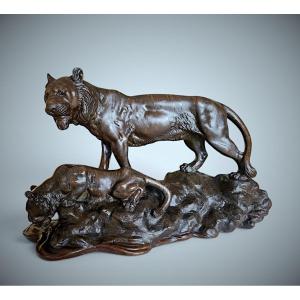


Japanese Bronze Genryusai Seiya - Tiger And Cub By A Rocky Stream
Artist: Genryusai Seiya 源龍斎誠谷
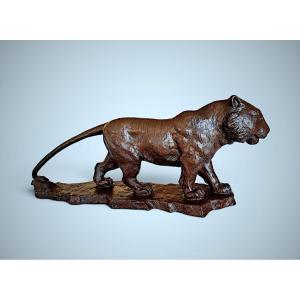
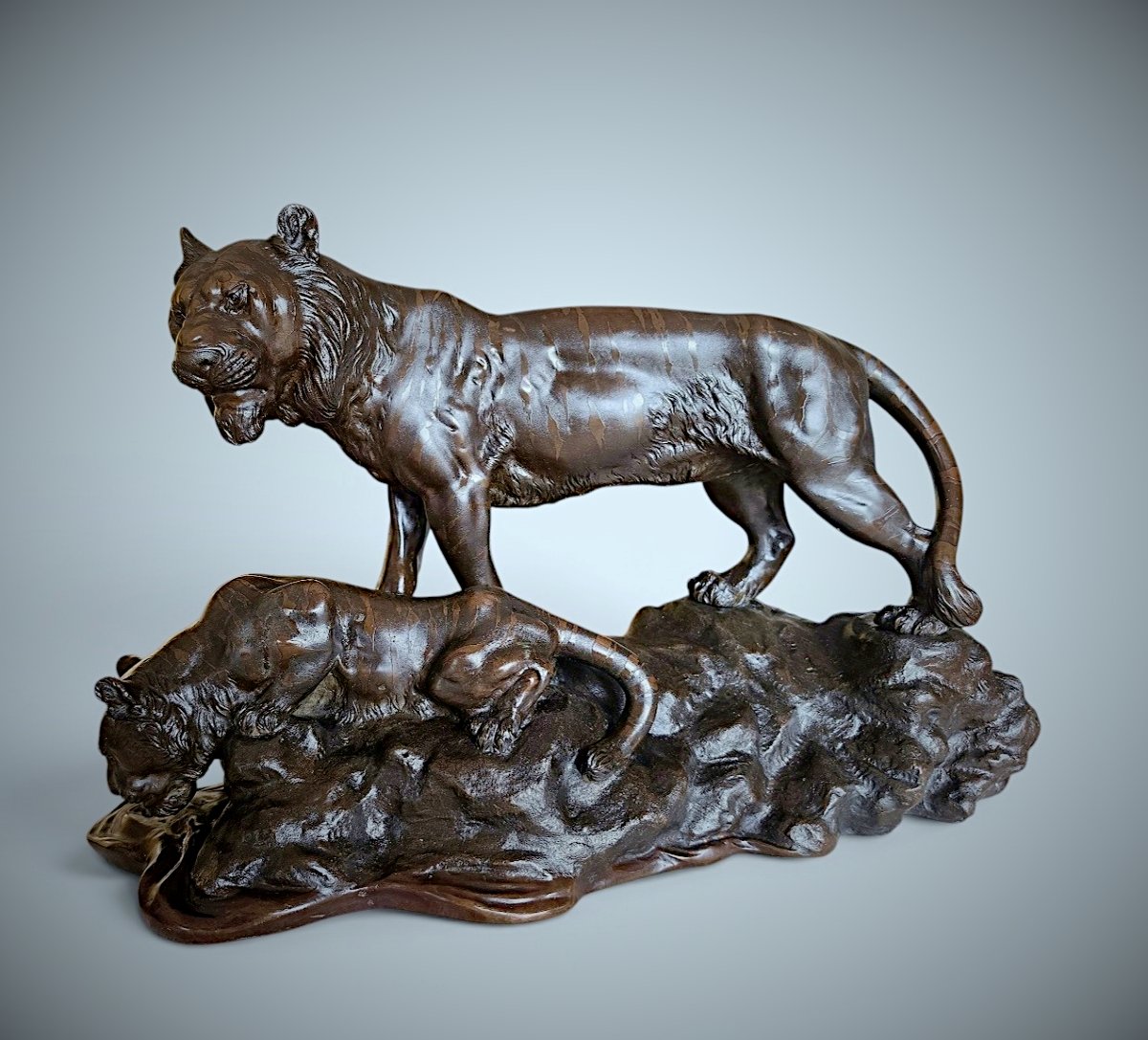
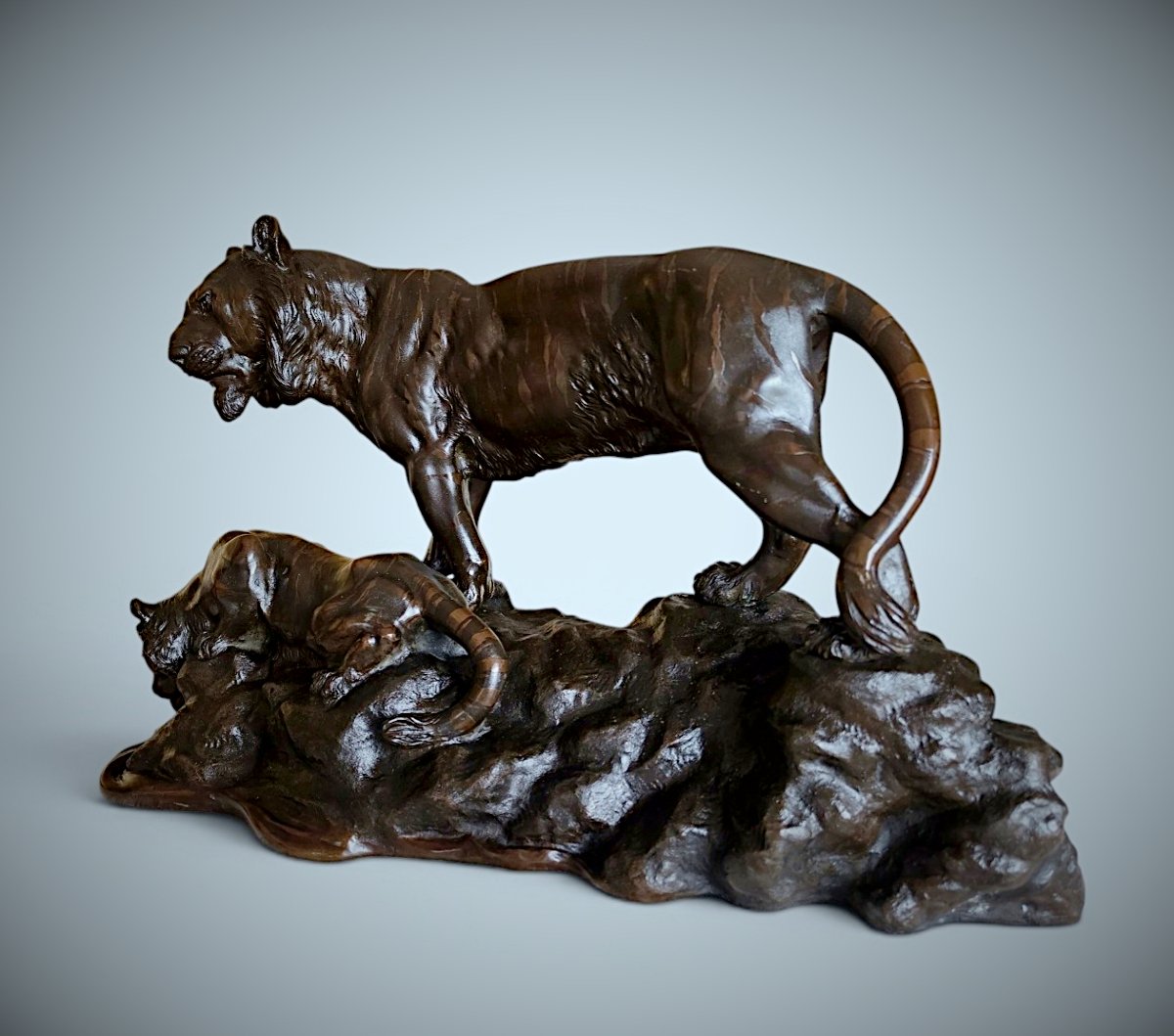
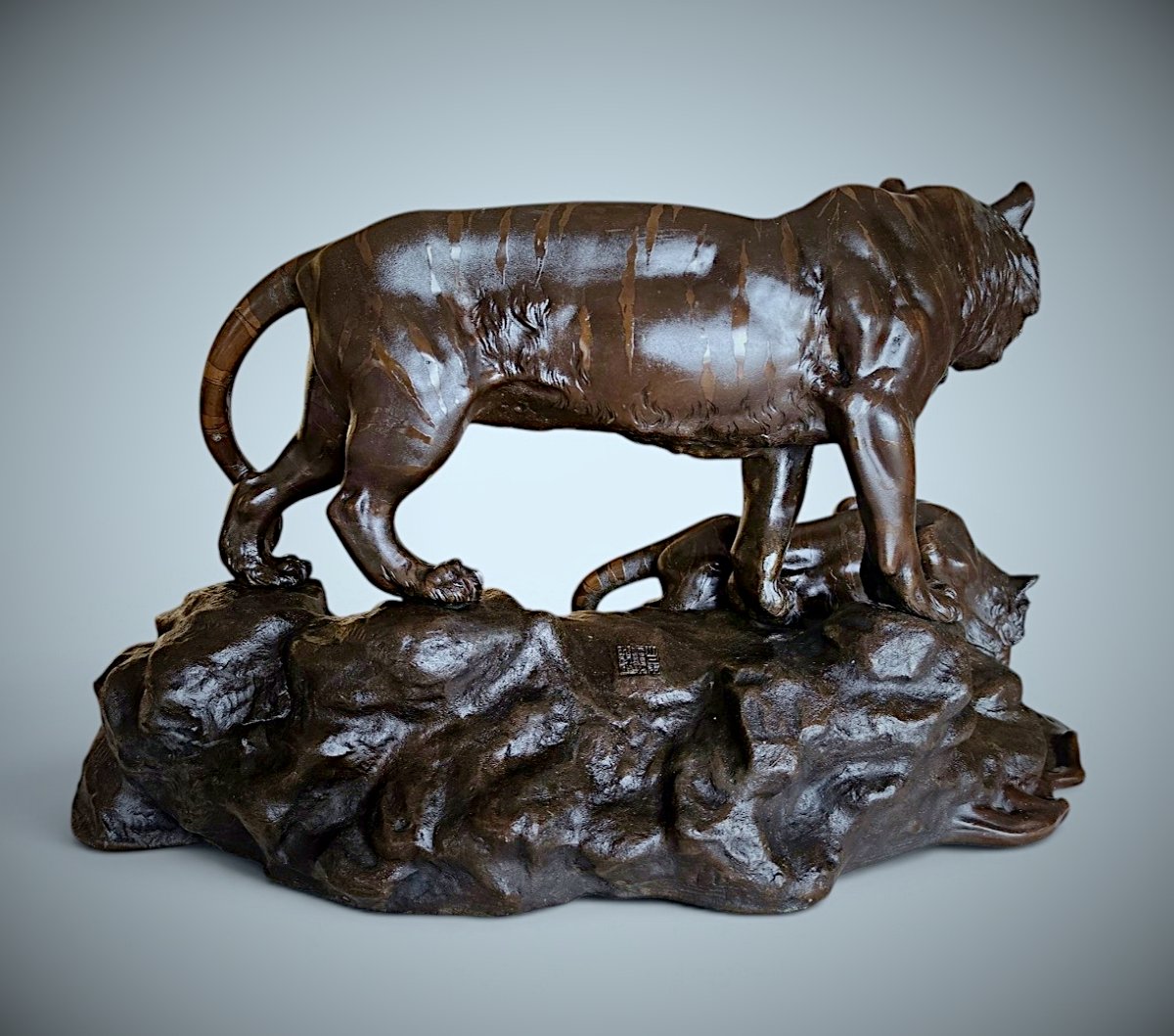
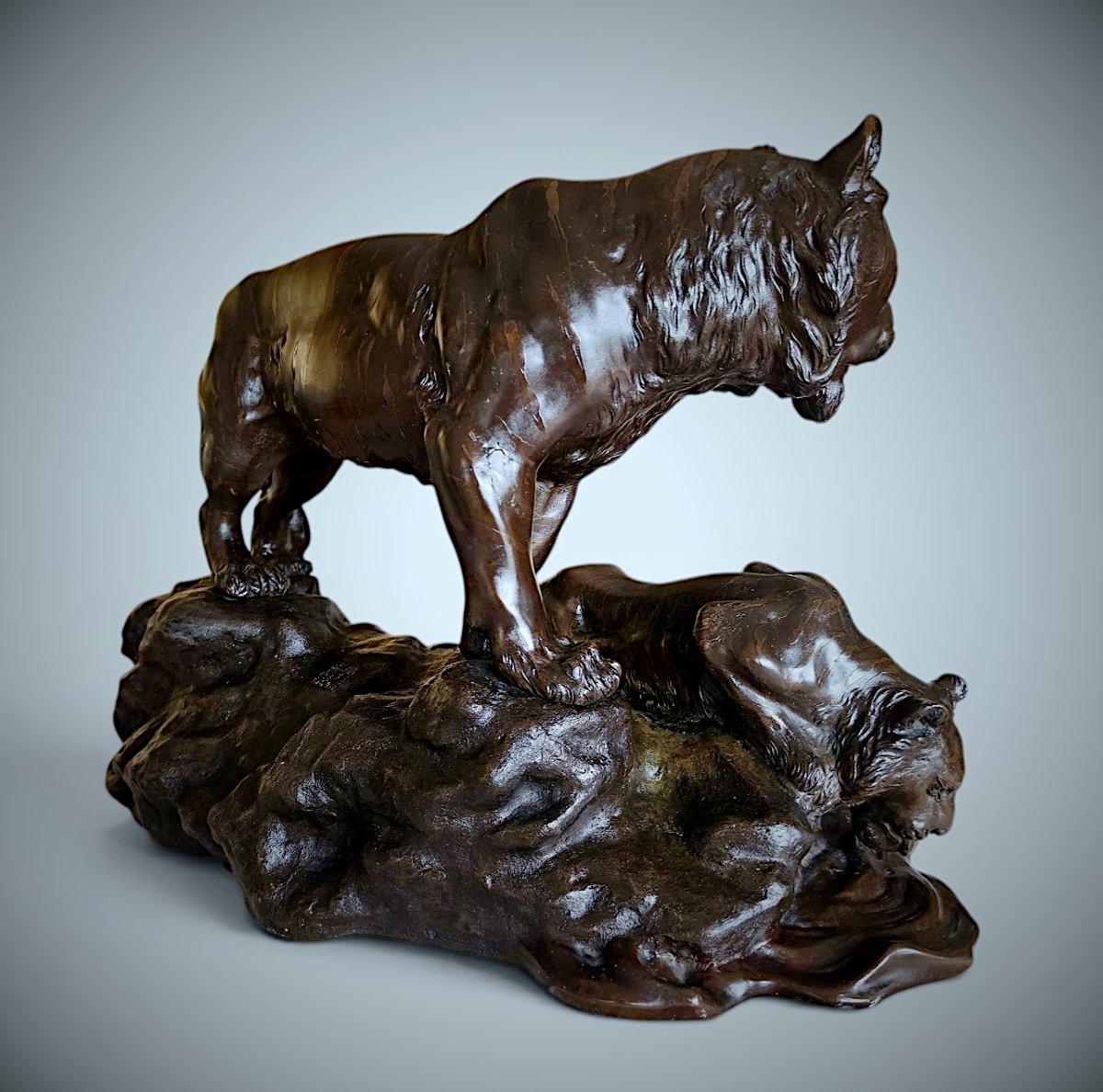
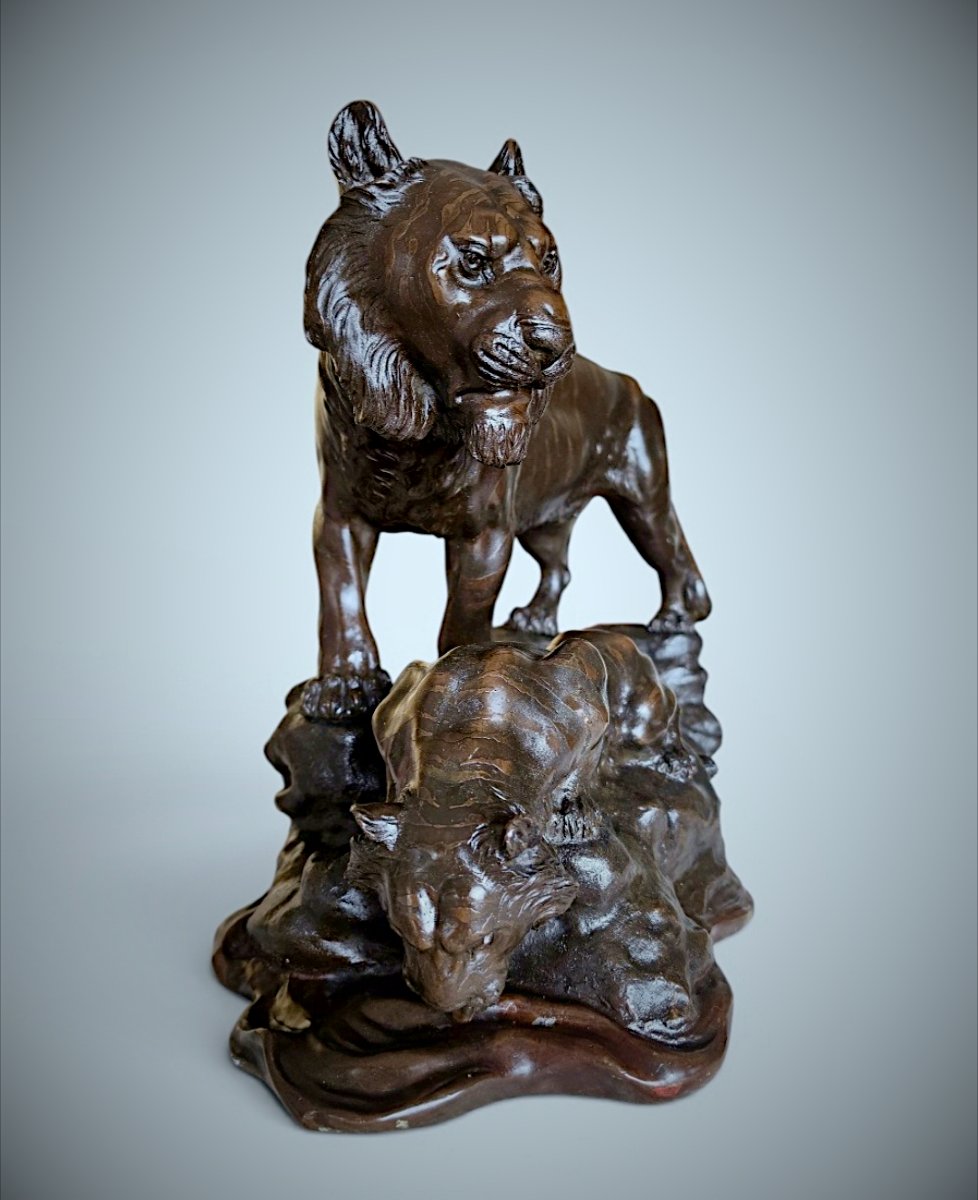
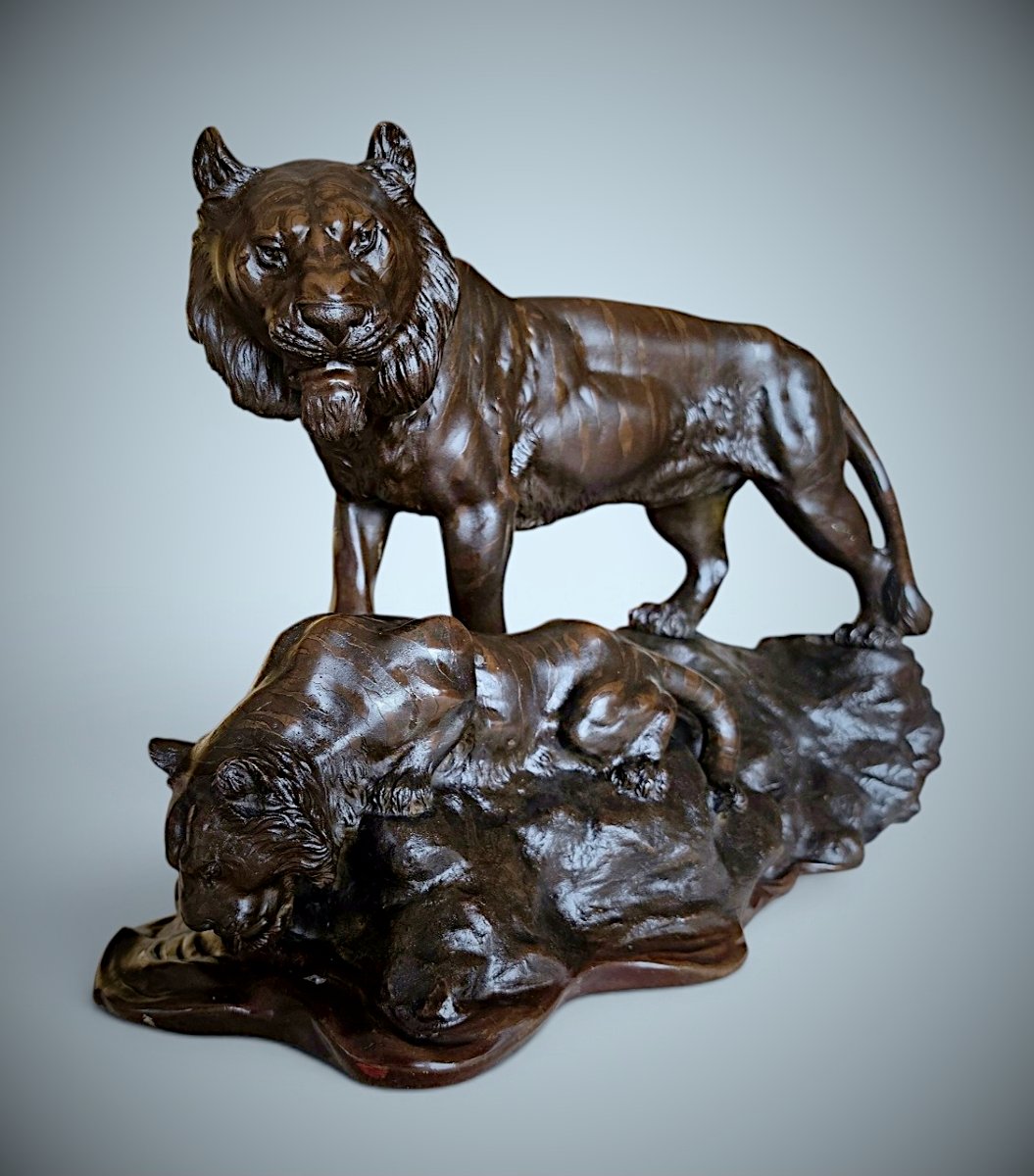
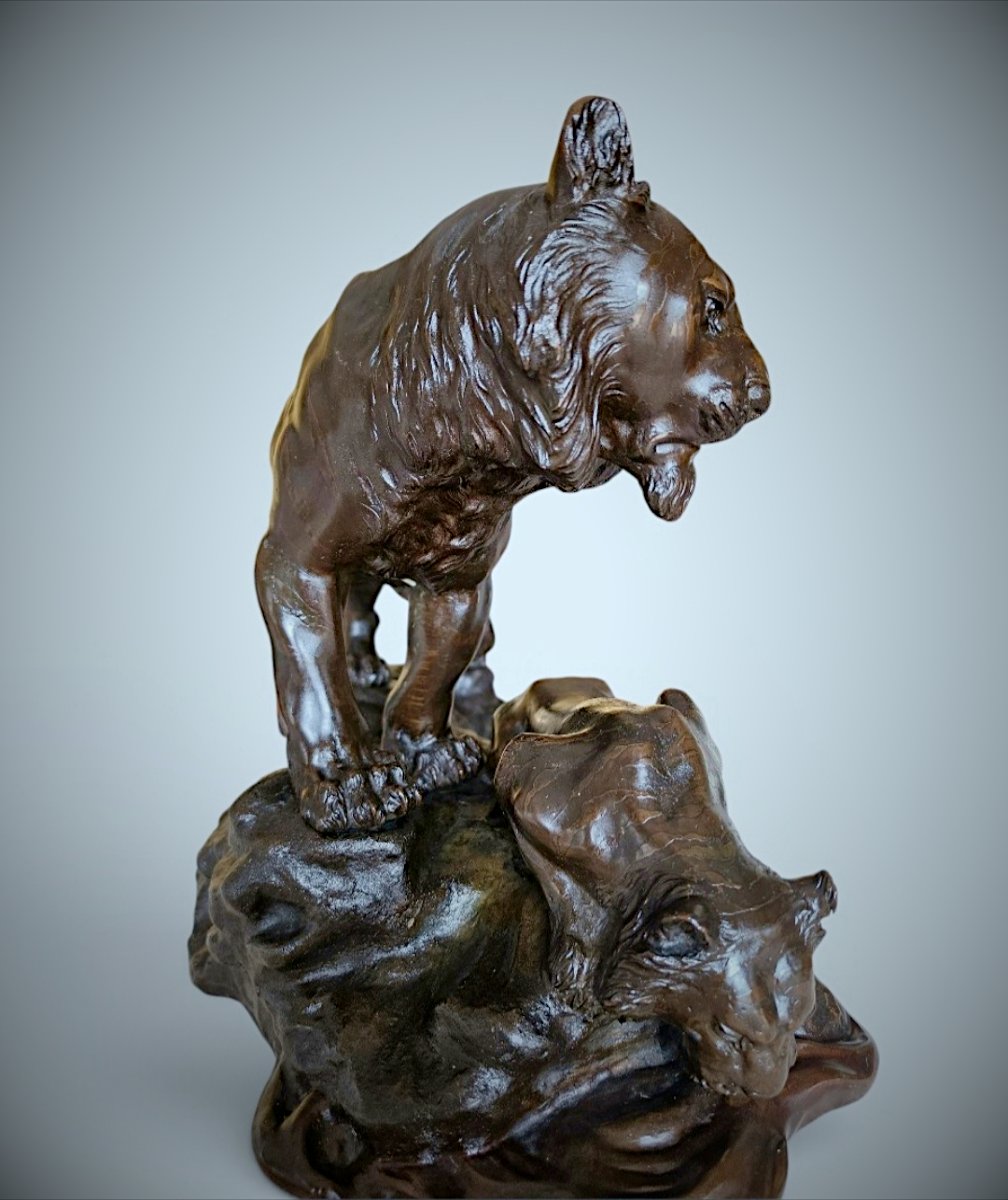
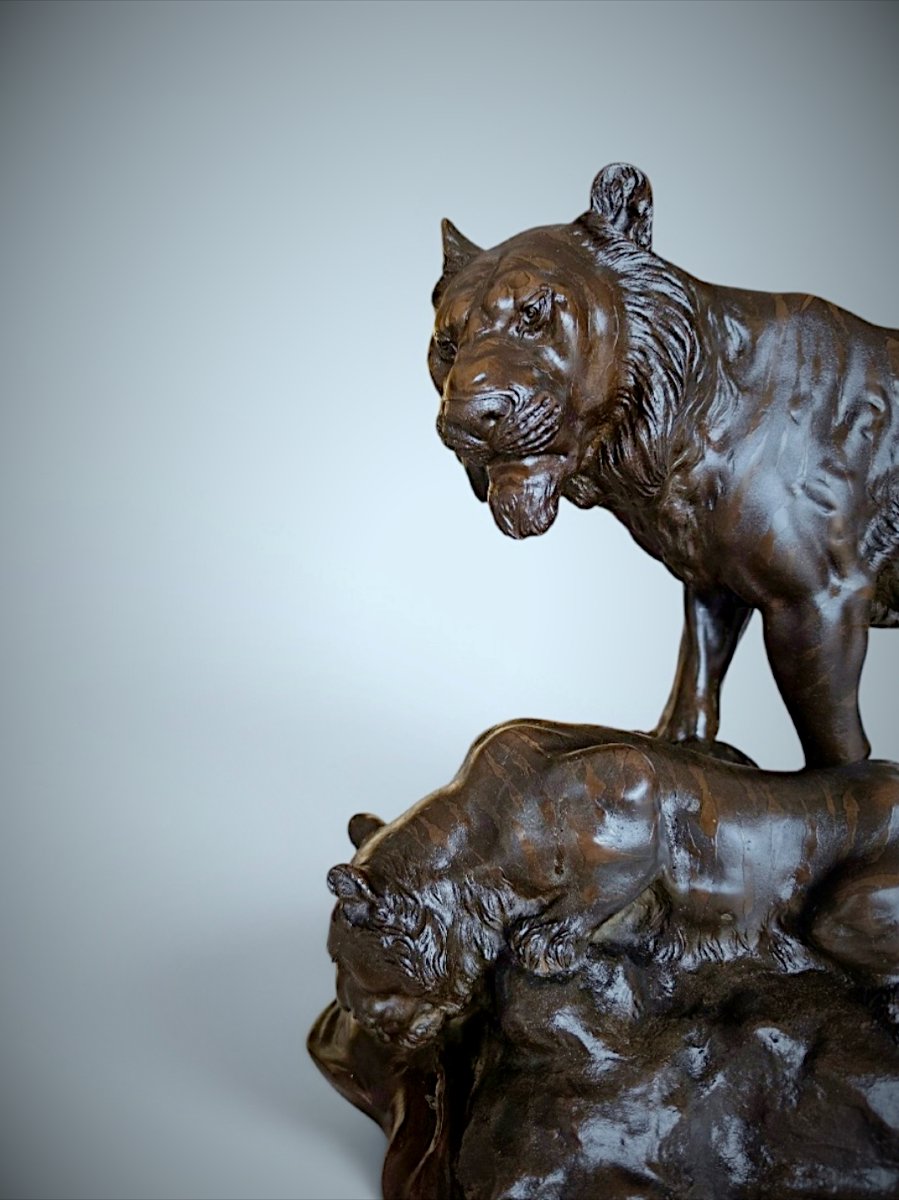
This exceptional bronze group, created during the golden age of Japanese metalwork in the late nineteenth century, depicts a powerful tiger standing vigil above its young as the cub bends to drink from the edge of a rocky stream. Combining technical virtuosity with a remarkable sensitivity to animal behavior, the composition embodies the qualities that established Meiji-period bronze sculpture among the most admired decorative arts of the era.
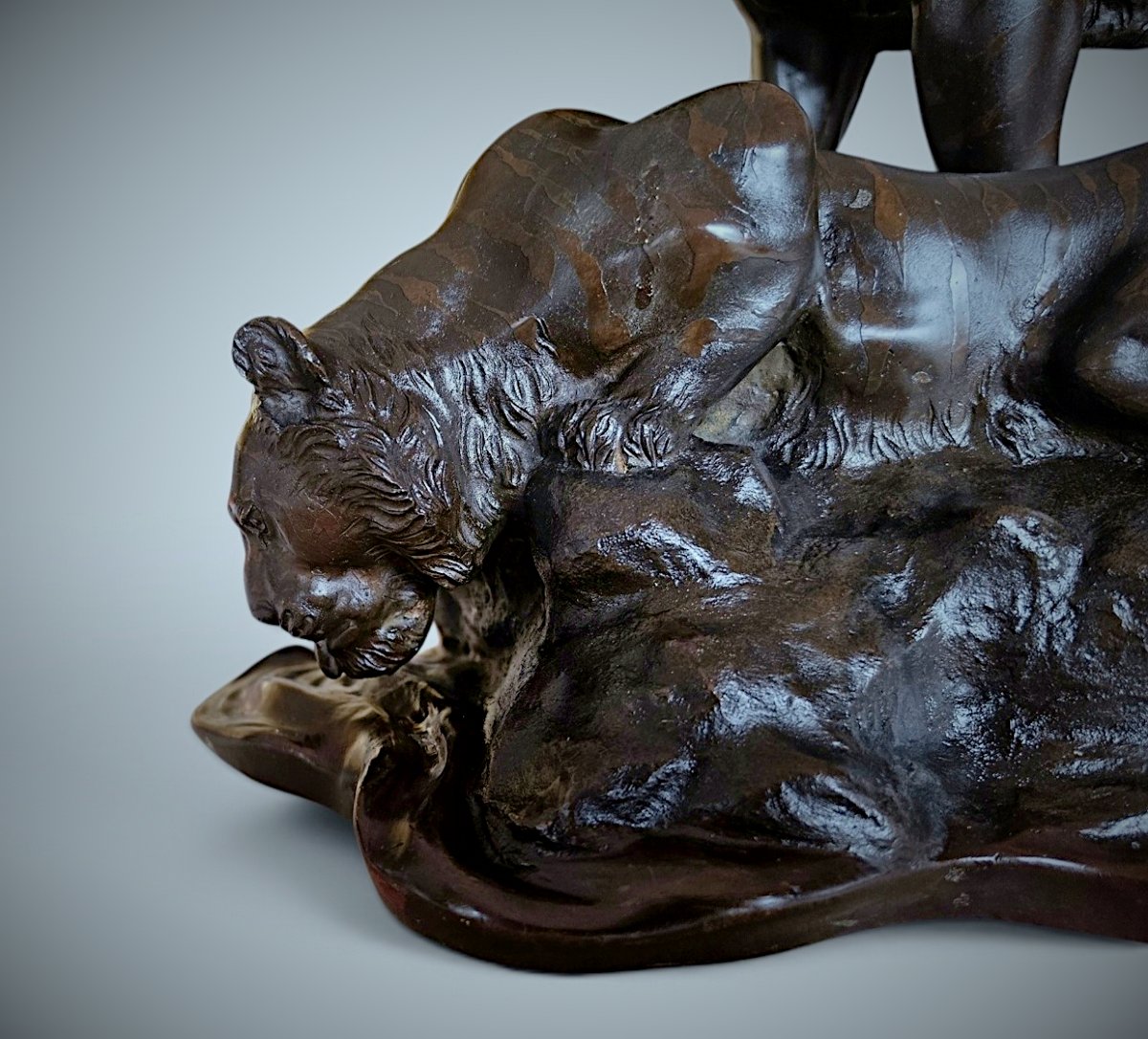
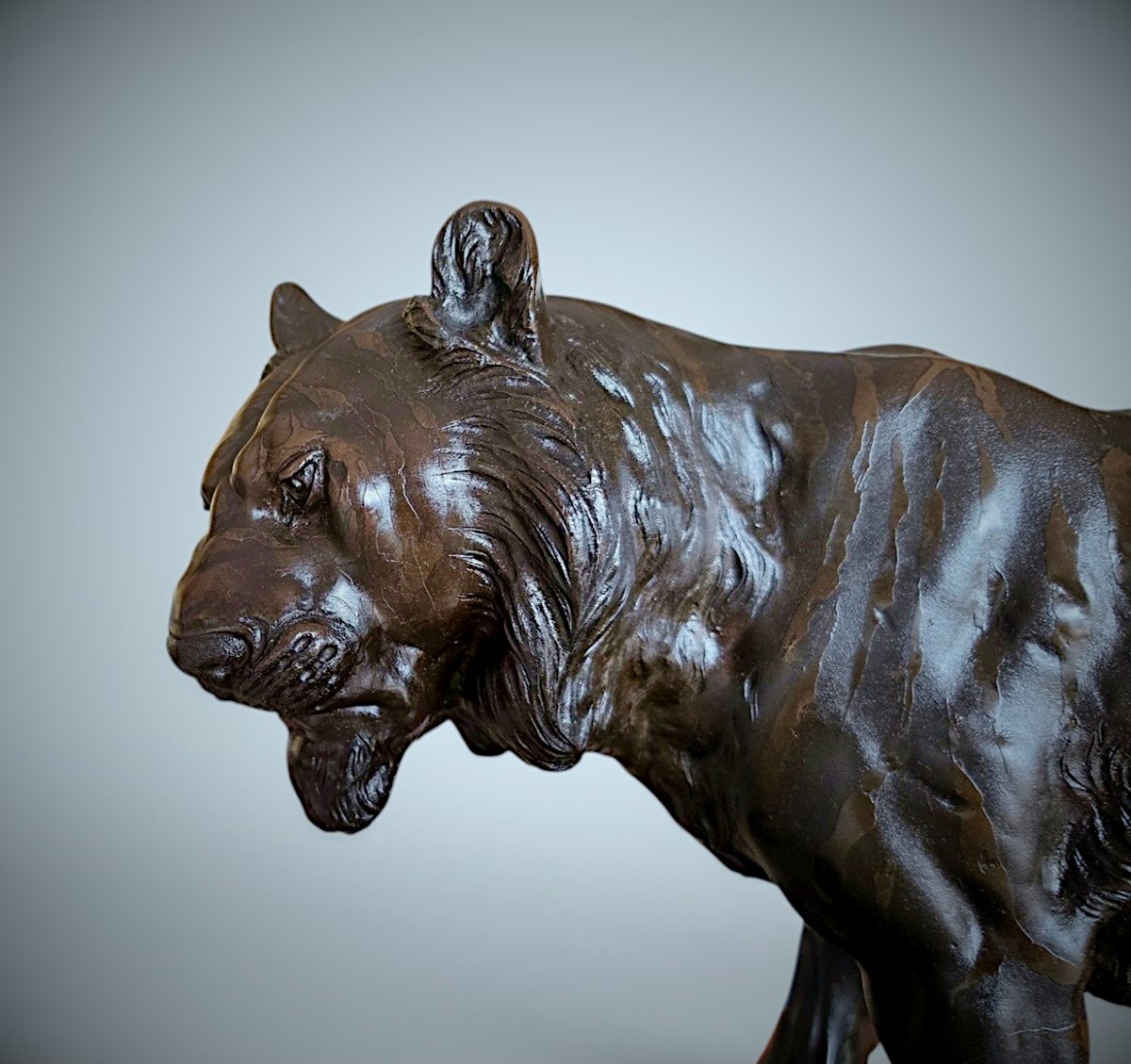
The sculptor has masterfully captured a moment of quiet tension and natural intimacy. The adult tiger, positioned prominently upon the elevated rock formation, surveys its surroundings with an alert and commanding presence. In contrast, the cub, absorbed in drinking, introduces a note of innocence and vulnerability. This interplay between strength and dependence creates a compelling narrative that elevates the work beyond mere zoological representation. The sculpture conveys not only anatomical accuracy but also an understanding of the emotional bond between parent and offspring, a quality seldom achieved with such refinement in bronze.
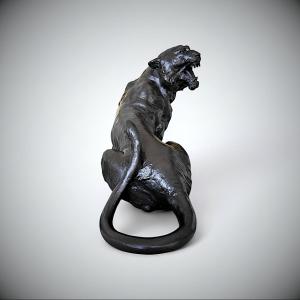
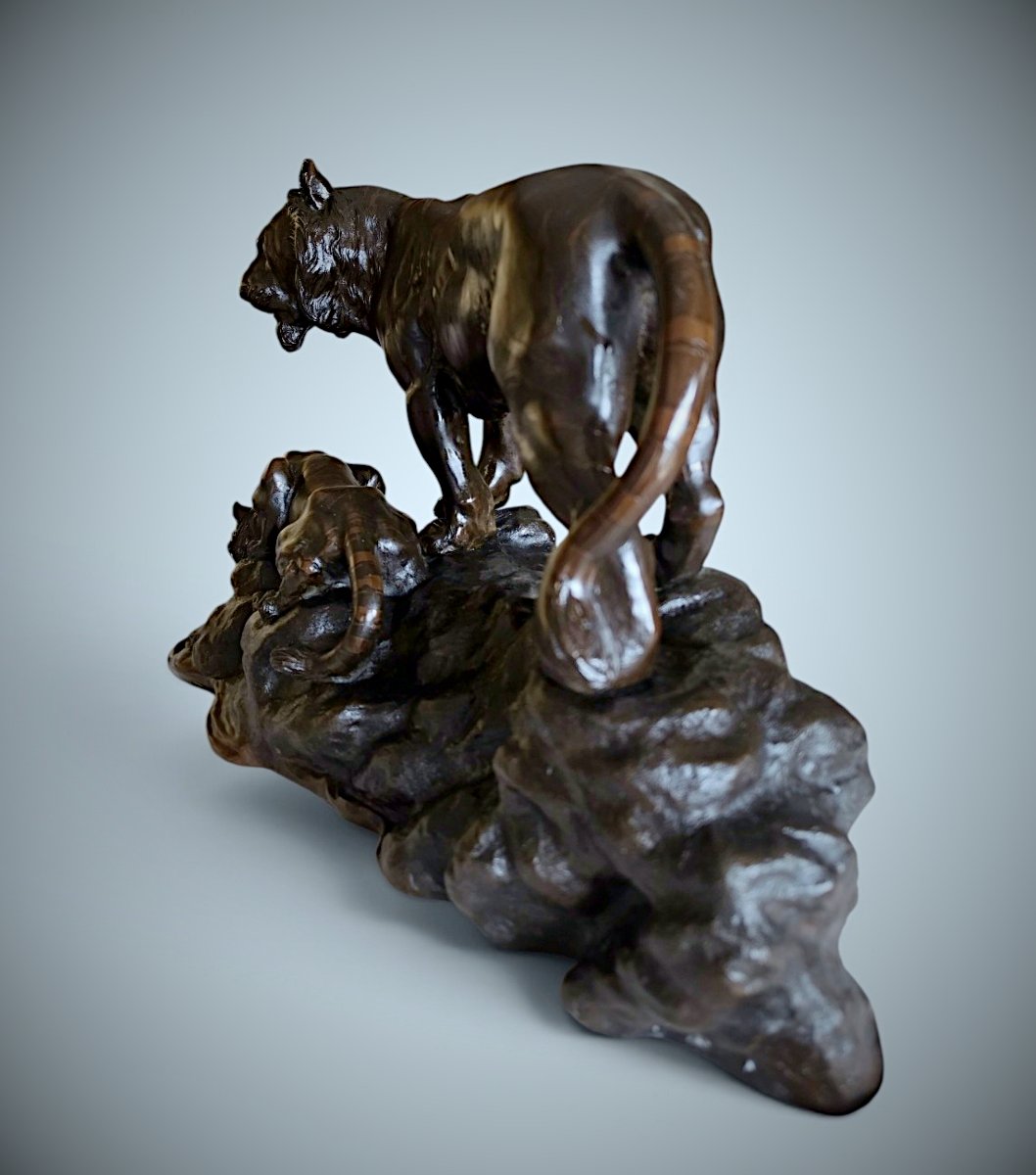
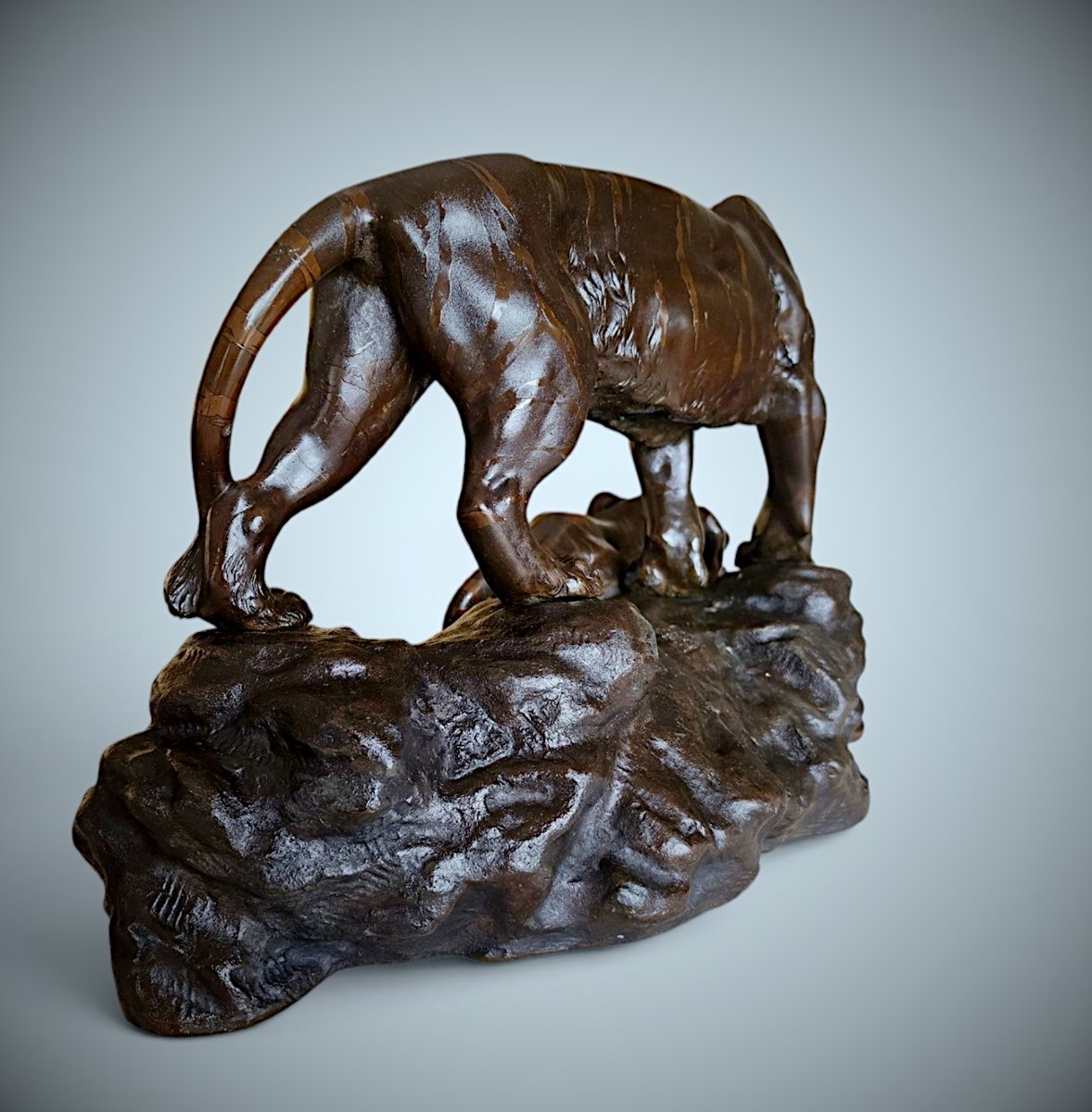
Particularly noteworthy is the extraordinary treatment of the animals'coats. Through painstaking chasing and nuanced surface modeling, Seiya succeeded in suggesting the varying textures of fur, musculature, and skin beneath the bronze surface. The subtle striping is integrated into the modeling rather than merely engraved, creating an impression of movement and vitality. The rich, multi-toned patination ranges from warm chestnut and deep chocolate hues to lighter amber highlights, enhancing the sculpture's depth and giving the bronze an almost organic presence. As light moves across the surface, the carefully modulated finish reveals ever-changing details in the anatomy and composition.
The rocky base is equally accomplished. Rather than serving as a simple support, it forms an integral part of the narrative, evoking the rugged terrain of the tiger's natural habitat. The sculptor contrasts the smooth, polished surfaces of the animals with the irregular textures of the rocks and flowing water, demonstrating a sophisticated command of both form and finish.
The work bears the signature Dai Nihon Genryūsai Seiya sei (大日本源龍斎誠谷製), meaning "Made by Genryūsai Seiya Great Japan." The inclusion of the prestigious term Dai Nihon ("Great Japan") is characteristic of works produced during the height of the Meiji era, a period marked by national confidence and a conscious effort to showcase Japanese artistic achievement to an international audience. Such signatures are frequently encountered on high-quality export works intended for the great international exhibitions and luxury markets of Europe and North America.
Genryūsai Seiya was among the most accomplished bronze artists associated with the flourishing export workshops of the Meiji period. Whilerelatively little is known of his personal life, his workshop earned a reputation for producing bronzes of exceptional quality, including animal subjects, genre figures, and elaborate decorative objects. His creations are distinguished by their technical precision, sophisticated patination, and remarkable naturalism. Works bearing the Seiya signature were highly prized by Western collectors, who were captivated by the unprecedented realism and artistic sophistication of Japanese metalwork.
The popularity of tiger subjects in Meiji art is itself significant.Tigers were not indigenous to Japan and carried powerful symbolic associations of strength, courage, and authority. For centuries, Japanese artists relied on imported Chinese paintings and descriptions when depicting these animals. Following Japan's opening to the world after 1868, however, artists gained increasing access to living specimens through zoological collections such as the newly established Ueno Zoological Gardens in Tokyo. This exposure allowed sculptors like Seiya to study animal anatomy directly, resulting in a level of realism previously unattainable. The present bronze reflects this shift, combining scientific observation with the expressive sensibility of traditional Japanese art.
Large-scale bronze groups of this quality required a highly coordinated workshop involving modelers, casters, chasers, and patinators, each contributing specialist expertise. The present work exemplifies the collaborative mastery that characterized the finest Meiji ateliers. Its technical excellence, impressive scale, and sophisticated composition place it among the most desirable categories of Japanese export bronze sculpture.
Today, bronzes by Genryūsai Seiya are appreciated not only as decorative masterpieces but also as important expressions of Japan's emergence onto the international artistic stage during the Meiji period. This striking tiger and cub group stands as a superb example of that achievement—an elegant synthesis of naturalistic observation, sculptural power, and refined craftsmanship tha tcontinues to captivate collectors more than a century after its creation.
The sculptor has masterfully captured a moment of quiet tension and natural intimacy. The adult tiger, positioned prominently upon the elevated rock formation, surveys its surroundings with an alert and commanding presence. In contrast, the cub, absorbed in drinking, introduces a note of innocence and vulnerability. This interplay between strength and dependence creates a compelling narrative that elevates the work beyond mere zoological representation. The sculpture conveys not only anatomical accuracy but also an understanding of the emotional bond between parent and offspring, a quality seldom achieved with such refinement in bronze.
Particularly noteworthy is the extraordinary treatment of the animals'coats. Through painstaking chasing and nuanced surface modeling, Seiya succeeded in suggesting the varying textures of fur, musculature, and skin beneath the bronze surface. The subtle striping is integrated into the modeling rather than merely engraved, creating an impression of movement and vitality. The rich, multi-toned patination ranges from warm chestnut and deep chocolate hues to lighter amber highlights, enhancing the sculpture's depth and giving the bronze an almost organic presence. As light moves across the surface, the carefully modulated finish reveals ever-changing details in the anatomy and composition.
The rocky base is equally accomplished. Rather than serving as a simple support, it forms an integral part of the narrative, evoking the rugged terrain of the tiger's natural habitat. The sculptor contrasts the smooth, polished surfaces of the animals with the irregular textures of the rocks and flowing water, demonstrating a sophisticated command of both form and finish.
The work bears the signature Dai Nihon Genryūsai Seiya sei (大日本源龍斎誠谷製), meaning "Made by Genryūsai Seiya Great Japan." The inclusion of the prestigious term Dai Nihon ("Great Japan") is characteristic of works produced during the height of the Meiji era, a period marked by national confidence and a conscious effort to showcase Japanese artistic achievement to an international audience. Such signatures are frequently encountered on high-quality export works intended for the great international exhibitions and luxury markets of Europe and North America.
Genryūsai Seiya was among the most accomplished bronze artists associated with the flourishing export workshops of the Meiji period. Whilerelatively little is known of his personal life, his workshop earned a reputation for producing bronzes of exceptional quality, including animal subjects, genre figures, and elaborate decorative objects. His creations are distinguished by their technical precision, sophisticated patination, and remarkable naturalism. Works bearing the Seiya signature were highly prized by Western collectors, who were captivated by the unprecedented realism and artistic sophistication of Japanese metalwork.
The popularity of tiger subjects in Meiji art is itself significant.Tigers were not indigenous to Japan and carried powerful symbolic associations of strength, courage, and authority. For centuries, Japanese artists relied on imported Chinese paintings and descriptions when depicting these animals. Following Japan's opening to the world after 1868, however, artists gained increasing access to living specimens through zoological collections such as the newly established Ueno Zoological Gardens in Tokyo. This exposure allowed sculptors like Seiya to study animal anatomy directly, resulting in a level of realism previously unattainable. The present bronze reflects this shift, combining scientific observation with the expressive sensibility of traditional Japanese art.
Large-scale bronze groups of this quality required a highly coordinated workshop involving modelers, casters, chasers, and patinators, each contributing specialist expertise. The present work exemplifies the collaborative mastery that characterized the finest Meiji ateliers. Its technical excellence, impressive scale, and sophisticated composition place it among the most desirable categories of Japanese export bronze sculpture.
Today, bronzes by Genryūsai Seiya are appreciated not only as decorative masterpieces but also as important expressions of Japan's emergence onto the international artistic stage during the Meiji period. This striking tiger and cub group stands as a superb example of that achievement—an elegant synthesis of naturalistic observation, sculptural power, and refined craftsmanship tha tcontinues to captivate collectors more than a century after its creation.
3 750 €
Period: 19th century
Style: Asian art
Condition: Good condition
Material: Bronze
Length: 58 cm
Height: 36 cm
Reference (ID): 1773664
Availability: In stock
Print