

Rare Denarius Of Macrinus With Securitas — Certificate Of Authenticity
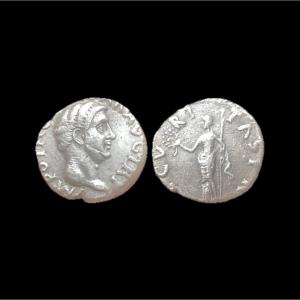
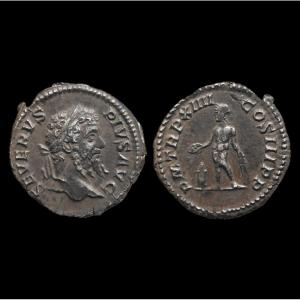
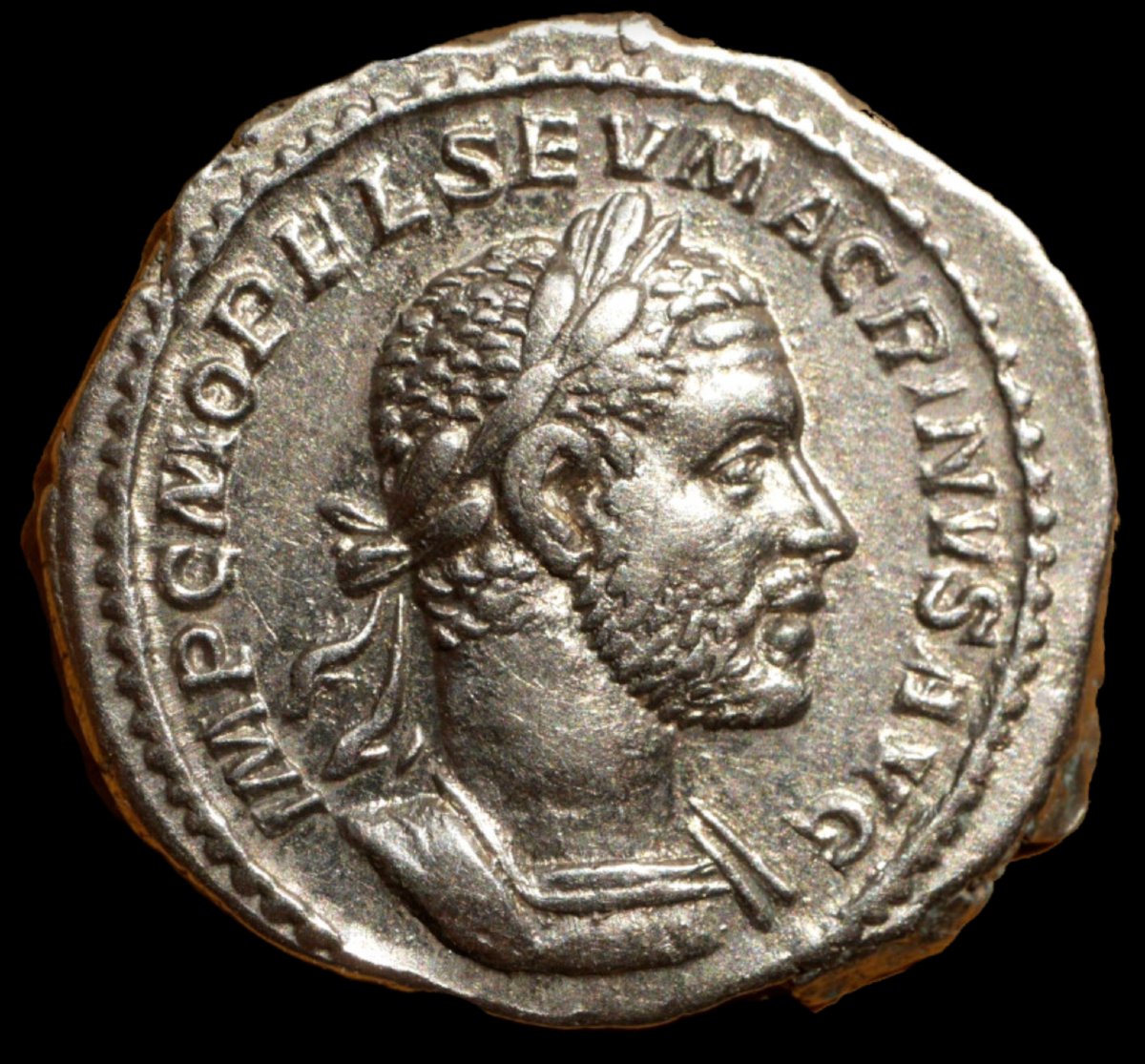
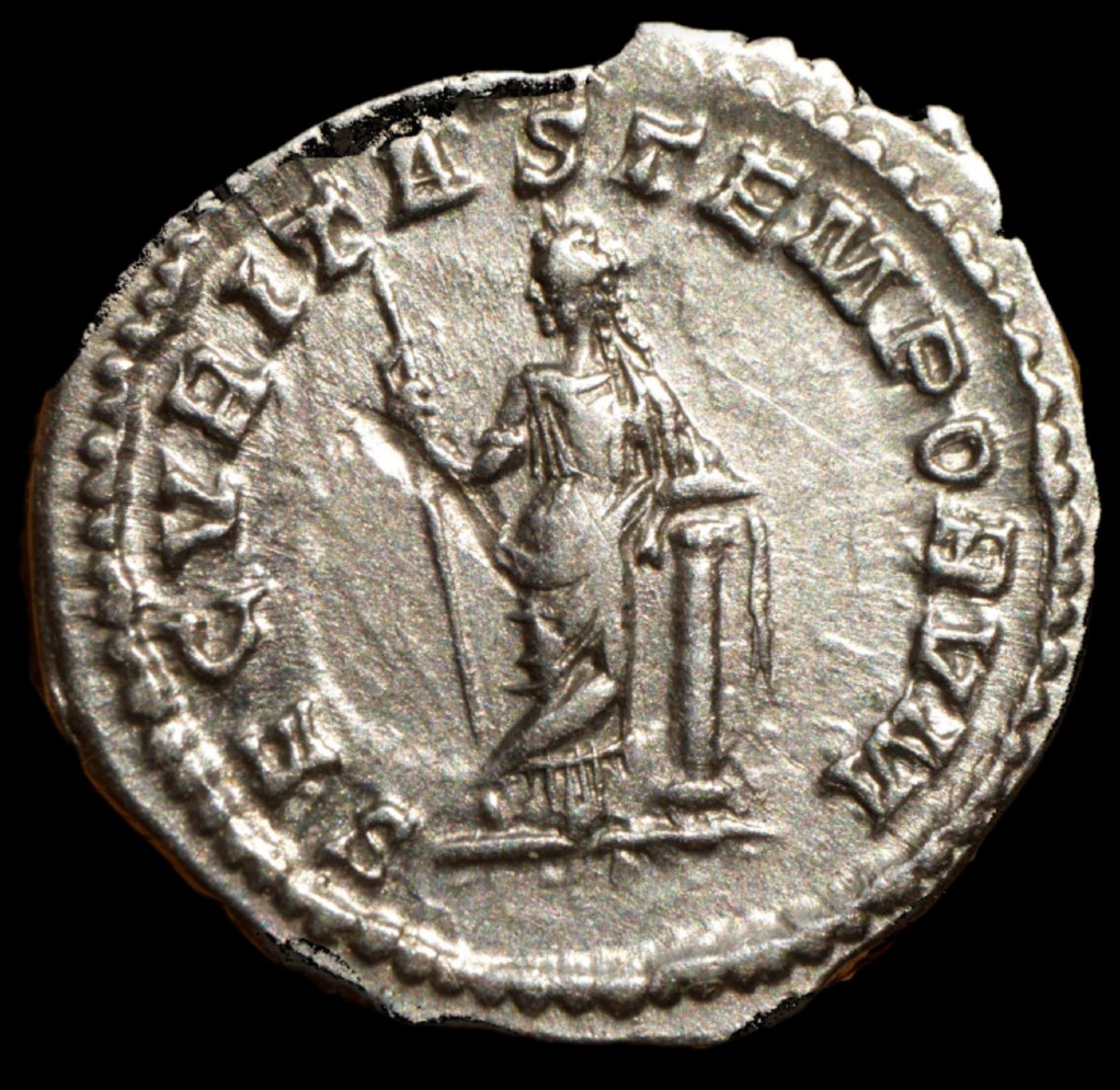
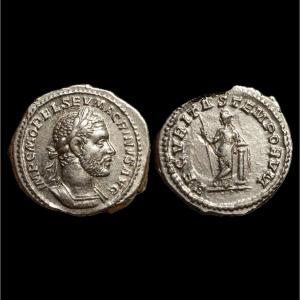
This silver denarius of Macrinus, struck at Rome in AD 217, belongs to a particularly sought-after type from the very beginning of his principate, with on the obverse the titulature IMP C M OPEL SEV MACRINVS AVG around a laureate and cuirassed bust right, and on the reverse the legend PONTIF MAX TR P COS P P accompanying Securitas standing left, legs crossed, holding a vertical scepter and leaning on a column; this attribution corresponds to RIC IV.2, 24b, to OCRE ric.4.mcs.24b, as well as to the concordances RSC 62 and BMCRE 40 noted in the reference literature. The type entry published by Numista gives for this issue a silver denarius of 20 mm, hammer struck, with a reference weight of 3 g and an observed range of about 2.07 to 3.39 g, while the Numista rarity index reaches 97, placing the type in a zone of real attractiveness for collectors of Severan denarii.
Each specimen is examined, described, and accompanied by a certificate of authenticity in accordance with the standards of the art and heritage market; the present piece immediately draws attention for the quality of its portrait, the sober elegance of its Securitas reverse, and an overall physiognomy that is particularly harmonious for an issue from the brief reign of Macrinus, emperor from 217 to 218, the first Roman ruler from the equestrian order to reach the imperial throne without having belonged to the Senate.
Analysis & Expertise
Close observation under ×10 magnification and raking light. Direct examination of the obverse reveals a portrait of Macrinus right of very convincing presence, whose physiognomic construction remains especially legible, with a broad forehead, a clearly open eye, a firm nasal line, a well-drawn mouth, and a carefully structured beard, while the laurel wreath spreads cleanly across the hair and the beginning of the cuirass still retains crisp relief; the beaded border frames the whole with regularity around a large portion of the circumference, and the legend, very largely preserved, offers sustained readability that reinforces the official bearing of the obverse.
The reverse stands out for a composition of great classical nobility, as Securitas can be recognized with fine immediacy in her characteristic posture—legs crossed, left arm resting on a column, right hand holding a vertical scepter; the figure’s silhouette remains clear, the column preserves a well-built verticality, and the peripheral legend, despite slight flan tension at the upper portion, remains readable in a very satisfactory manner in its principal development. This combined legibility of portrait and reverse is one of the specimen’s major attractions, in that it allows the coin to fully restore the type’s iconographic dignity.
The silver surface presents a homogeneous ancient appearance, in a sustained light-gray tone, with relief still crisp on the high points of the face, wreath, and reverse figure; small edge irregularities—natural for an ancient hammered flan—integrate harmoniously into the coin’s physiognomy without breaking its visual coherence, while the tension of the border, the modeling of the letters, and the continuity of the reliefs fully accord with an ancient Rome strike. The whole thus offers that particularly sought-after balance between a well-set portrait, an ample legend, an emblematic reverse, and a sound metallic presence, giving the coin a strongly affirmed collecting character. The type description published by Numista and the British Museum notice for a Macrinus denarius with Securitas moreover confirm the perfect coherence of this general iconography, with laureate and cuirassed bust on the obverse and Securitas standing leaning on a column on the reverse.
Characteristics
Authority. The issue belongs to Macrinus, Roman emperor from 217 to 218, under the full name Marcus Opellius Macrinus, as it appears in historical and numismatic sources.
Mint. The mint indicated for this type is Rome, in accordance with the Numista reference entry and the OCRE concordances attached to RIC IV.2, 24b.
Dating. The strike belongs to AD 217, i.e., the opening phase of Macrinus’ reign.
Denomination. This is a denarius, as explicitly given by the type entry.
Metal. The metal is silver, as indicated by the consulted catalogues.
Weight. The recorded weight for this specimen is 3.30 g, a figure very favorably situated within Numista’s documented range for the type, about 2.07 to 3.39 g.
Diameter. The recorded diameter is 20 mm, in perfect coherence with the reference dimension published for this issue.
Obverse. The obverse bears the legend IMP C M OPEL SEV MACRINVS AVG around a laureate and cuirassed bust right.
Reverse. The reverse bears PONTIF MAX TR P COS P P, with draped Securitas standing left, legs crossed, holding a vertical scepter and leaning on a column, exactly in accordance with the recorded type.
Typological references. Identification rests on RIC IV.2, 24b, with the corresponding OCRE ric.4.mcs.24b, and the concordances RSC 62 and BMCRE 40 as cited in the references associated with this type entry.
Rarity. The type may rightly be presented as rare and sought-after, with a Numista rarity index of 97.
Historical context
This denarius belongs to one of the most compressed and tension-laden moments of Roman imperial history, since Macrinus succeeds Caracalla in 217 and reigns only a little over a year before his fall in 218; historical syntheses note that he was the first emperor to reach the throne without having pursued a senatorial career, giving all his coinage a particular political weight as an instrument for the rapid legitimization of a new power.
Within this framework, the Securitas reverse takes on a meaning of rare aptness, for the figure of public security—calm, stable, leaning on her column—offers to the gaze a promise of order, continuity, and appeasement at the very moment when the Empire passes through a delicate succession; the titulature PONTIF MAX TR P COS P P adds to this image the full institutional dignity of the prince, emphasizing the union of religious, tribunician, consular, and paternal functions that underpin imperial authority. The Numista type notice moreover expressly associates this reverse with the legend of Securitas, showing how clearly and coherently this issue fits within a political message.
Cultural value
The cultural value of this piece is high, because it unites—within a small-module silver coin—three dimensions that strongly resonate with the discerning collector: first, the relative rarity of a very brief reign; second, the classical quality of a late Severan portrait; and finally, the symbolic force of the Securitas reverse, one of the soberest and most intelligible formulations of Roman imperial language.
It should be added that this type possesses true cabinet presence, not through decorative excess, but through compositional discipline: the obverse asserts the imperial person with clarity, the reverse responds with an immediately intelligible emblem, and the coin as a whole conveys the sense of an authority seeking to speak with measure rather than with emphasis; it is precisely this sovereign economy of means—so deeply Roman—that gives the specimen its accent of numismatic distinction.
In the broader light of the history of forms, this coin belongs to the Severan period, a moment when the imperial portrait still combines individual vigor, institutional legibility, and symbolic density, within an aesthetic that could be compared—on the level of civilization—to what early third-century Roman official art can produce at its most effective: not a beauty of ornament, but a beauty of authority.
Traceability & Guarantees
From a European provenance, from an established numismatic dealer, this specimen was acquired through a specialized international transaction conducted within a recognized numismatic network and validated by reference experts, in accordance with the highest standards of the art and heritage market; examination of the present object is based on direct observation of its stylistic, technical, and material characteristics, compared against the recognized references for Roman imperial coinage.
Each specimen is examined, described, and accompanied by a certificate of authenticity in accordance with the standards of the art and heritage market; in the present case, the concordance between the obverse titulature, the Securitas figure leaning on a column, the observed metrological data, and the references RIC IV.2, 24b, OCRE ric.4.mcs.24b, RSC 62, and BMCRE 40 establishes a particularly solid numismatic attribution.
Period: Before 16th century
Style: Rome and Antic Greece
Condition: Good condition
Reference (ID): 1730214
Availability: In stock