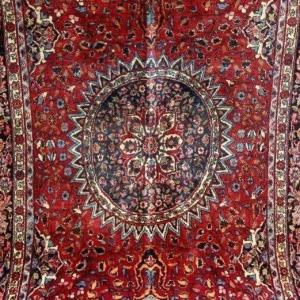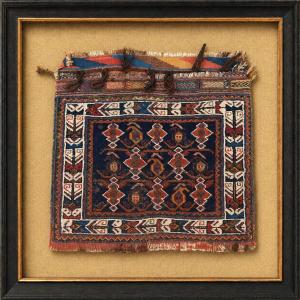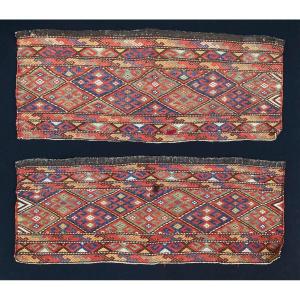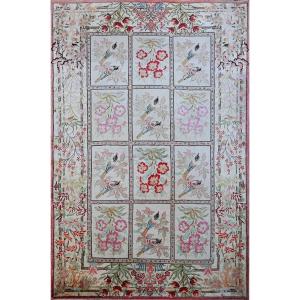
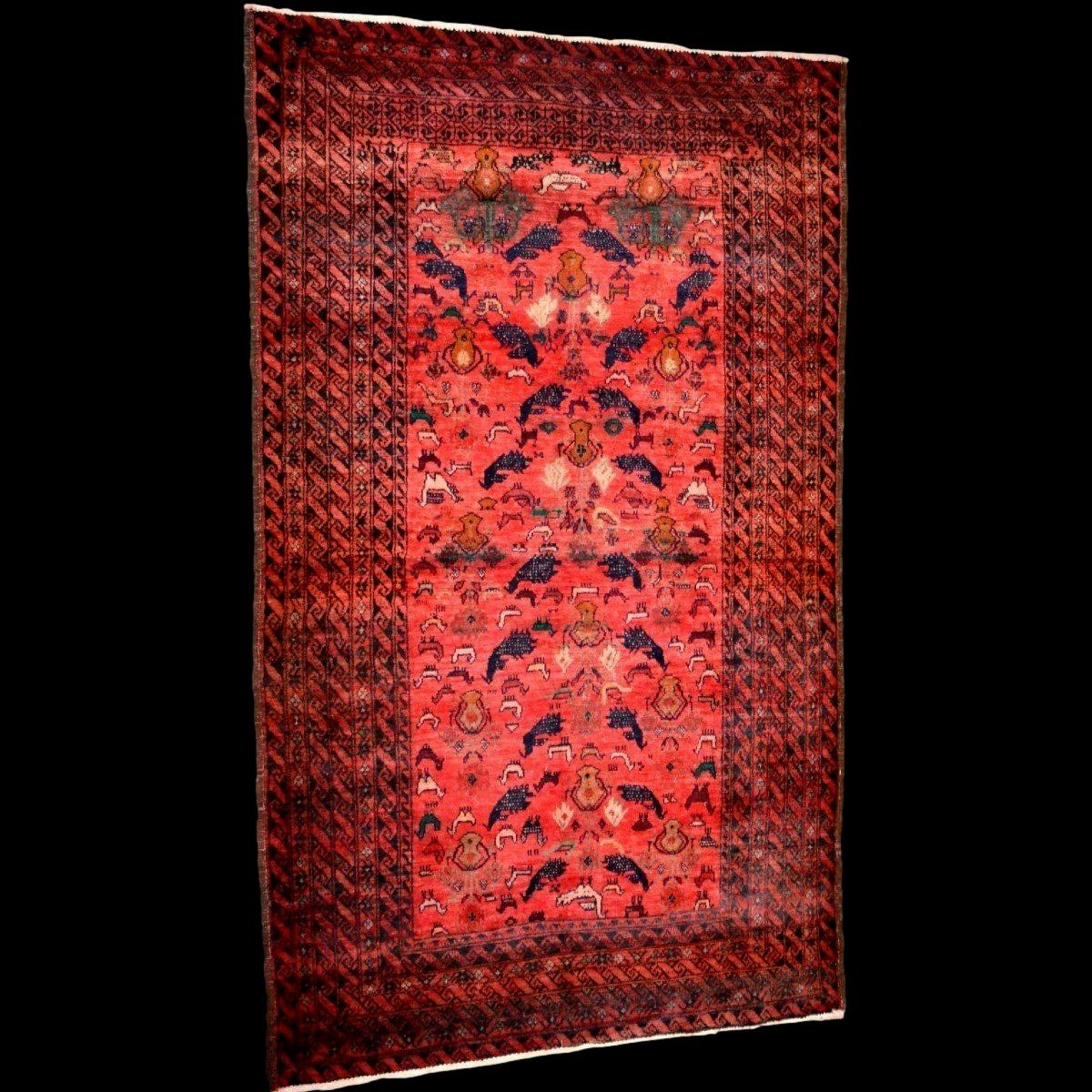
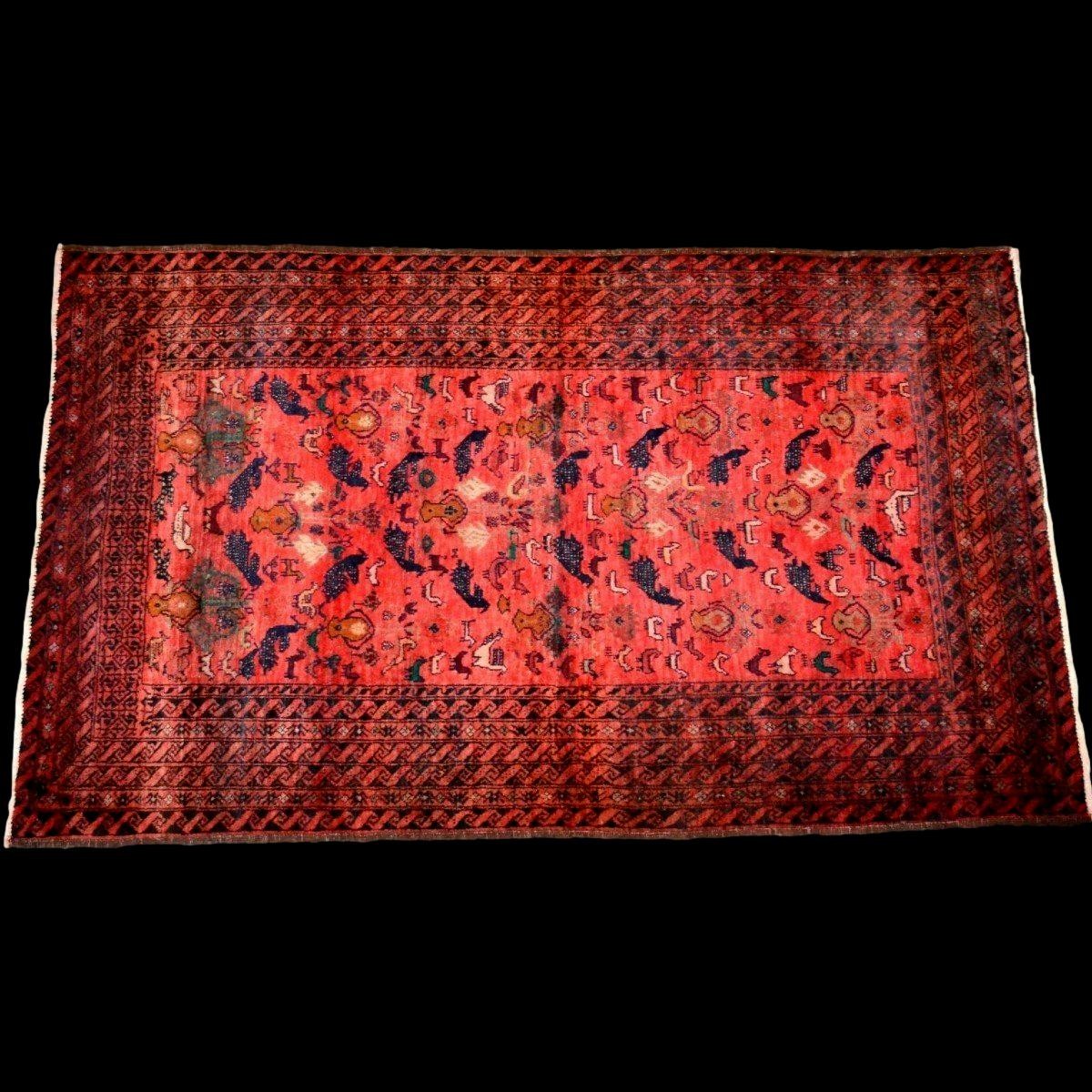
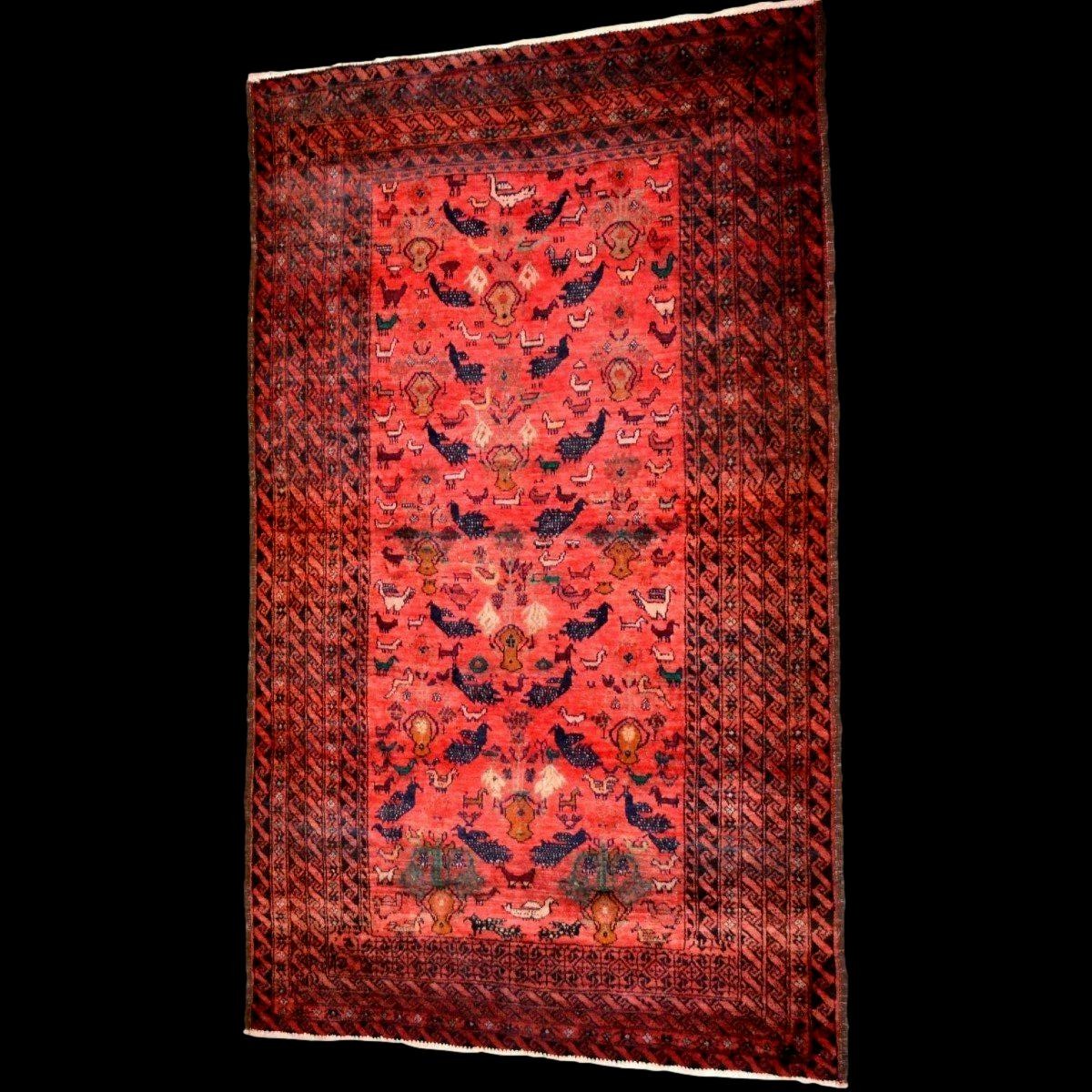
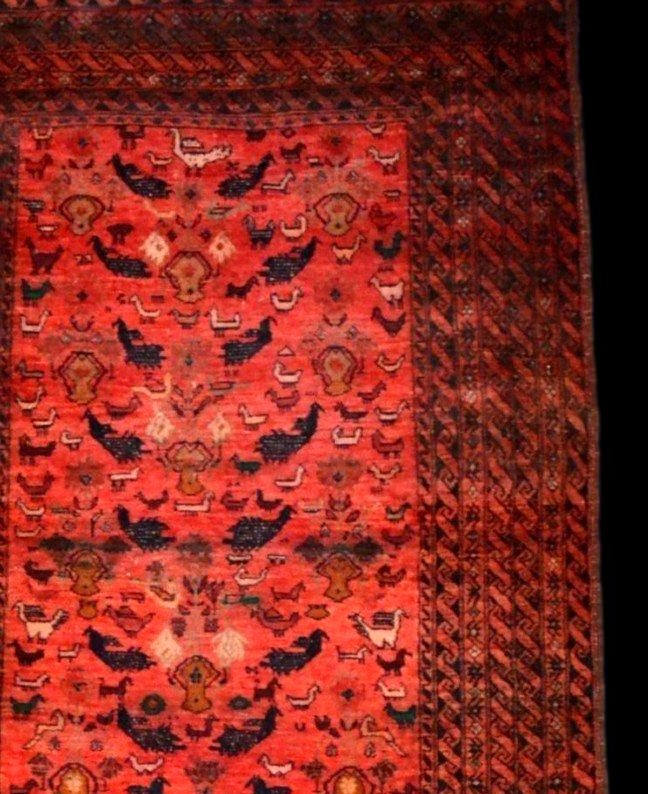
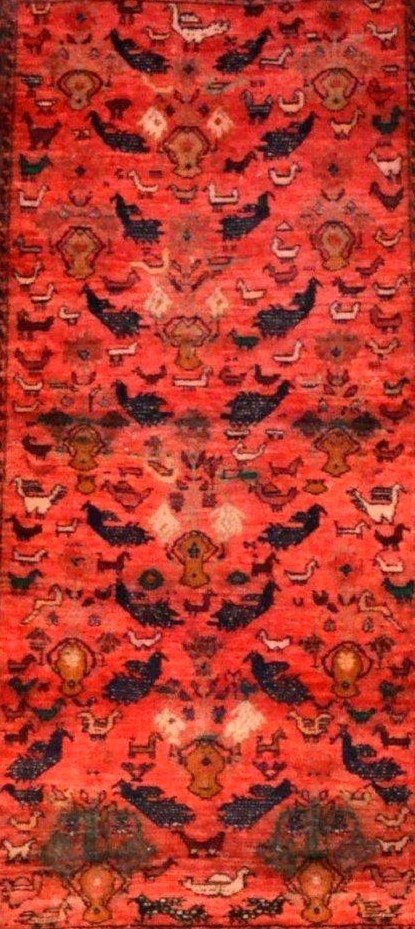
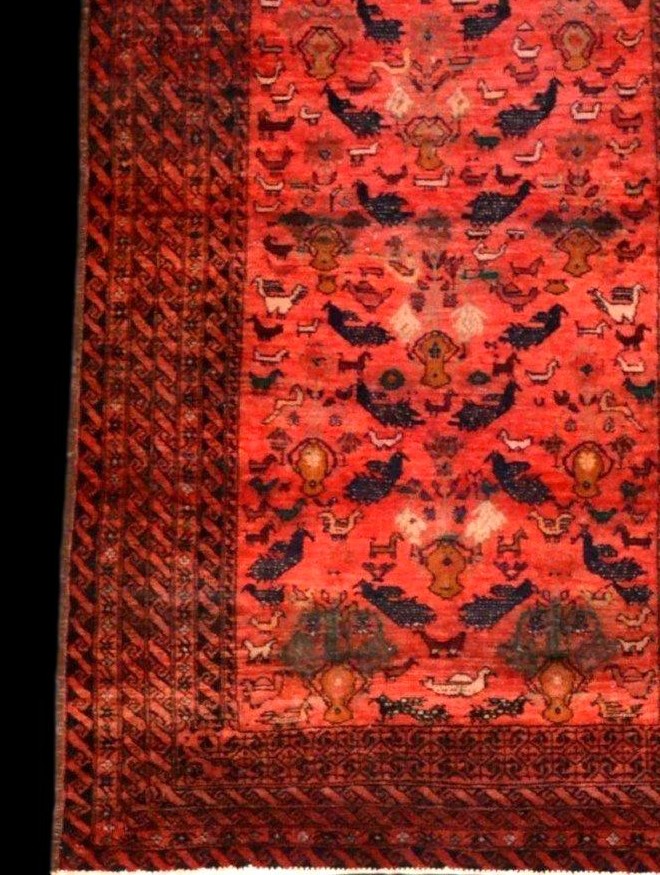
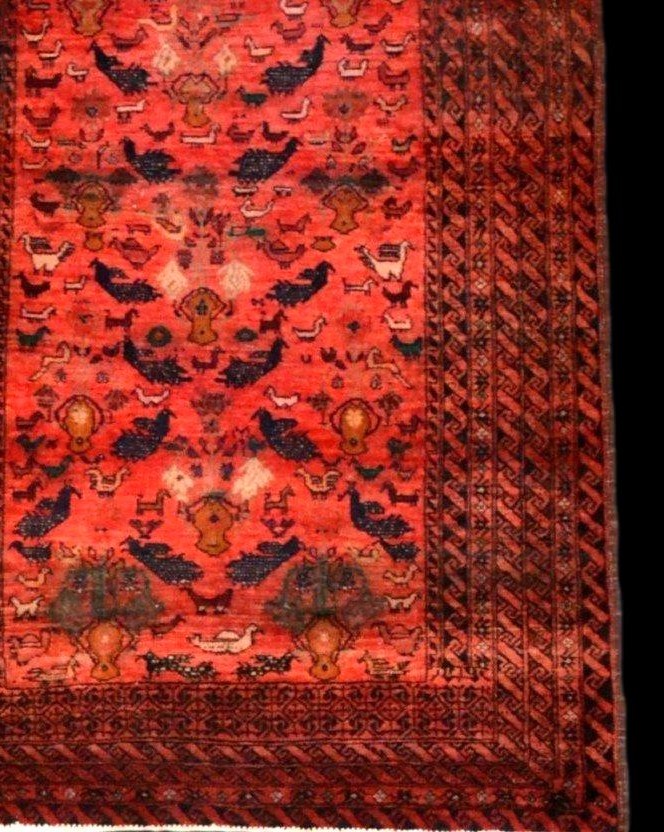
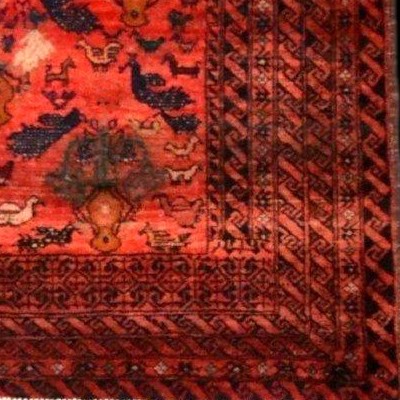
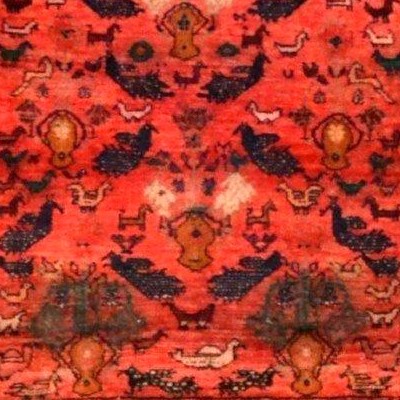


Bechir Rug, Central Asia, 115 X 193 Cm, Animal Motif, Hand-knotted Wool, Mid-20th Century
Artist: Turkmènes
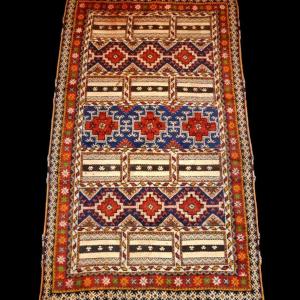
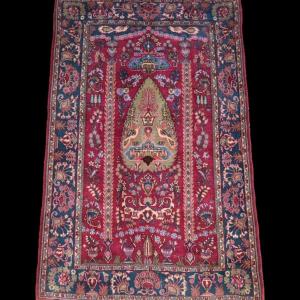
Central Asia, beautiful Bechir rug with rare animal motifs, made of fine hand-knotted wool dyed with natural colors.
From the mid-20th century, around 1950-1960, in very good condition, showing only very slight signs of wear.
These rugs are knotted and woven by nomadic tribes in the Amu Darya region, the former Emirate of Bochara, Central Asia, using sheep's wool but also extensively with unbleached camel wool.
The wool used for these rugs is always very soft and of very high quality, which gives Bechir rugs their reputation as high-quality pieces.
These rugs can be dark and muted, red, wine-colored, wine lees, earth-toned, but also very light, camel-colored.
The design is geometric, drawing motifs from the decorations of the Caucasus as well as ancient Persia.
The most sought-after are the animal rugs and prayer rugs featuring a niche, the mihrab, rectangular in shape, characteristic of these tribes (the niche indicates the Qibla (the direction of the Kaaba in Mecca).
Bechir carpets are also called Ersari-Bechir, originating from the Amu Darya region, the former Emirate of Bukhara, Afghanistan, and Turkmenistan.
These are nomadic carpets, so they are quite small. Until recently, the warps and wefts were always made of wool (before 1940), but the use of cotton has replaced wool.
The knot used remains the Persian knot.
The large number of motifs used shows Persian influence, and the geometric patterns link them to the Central Asian carpet family.
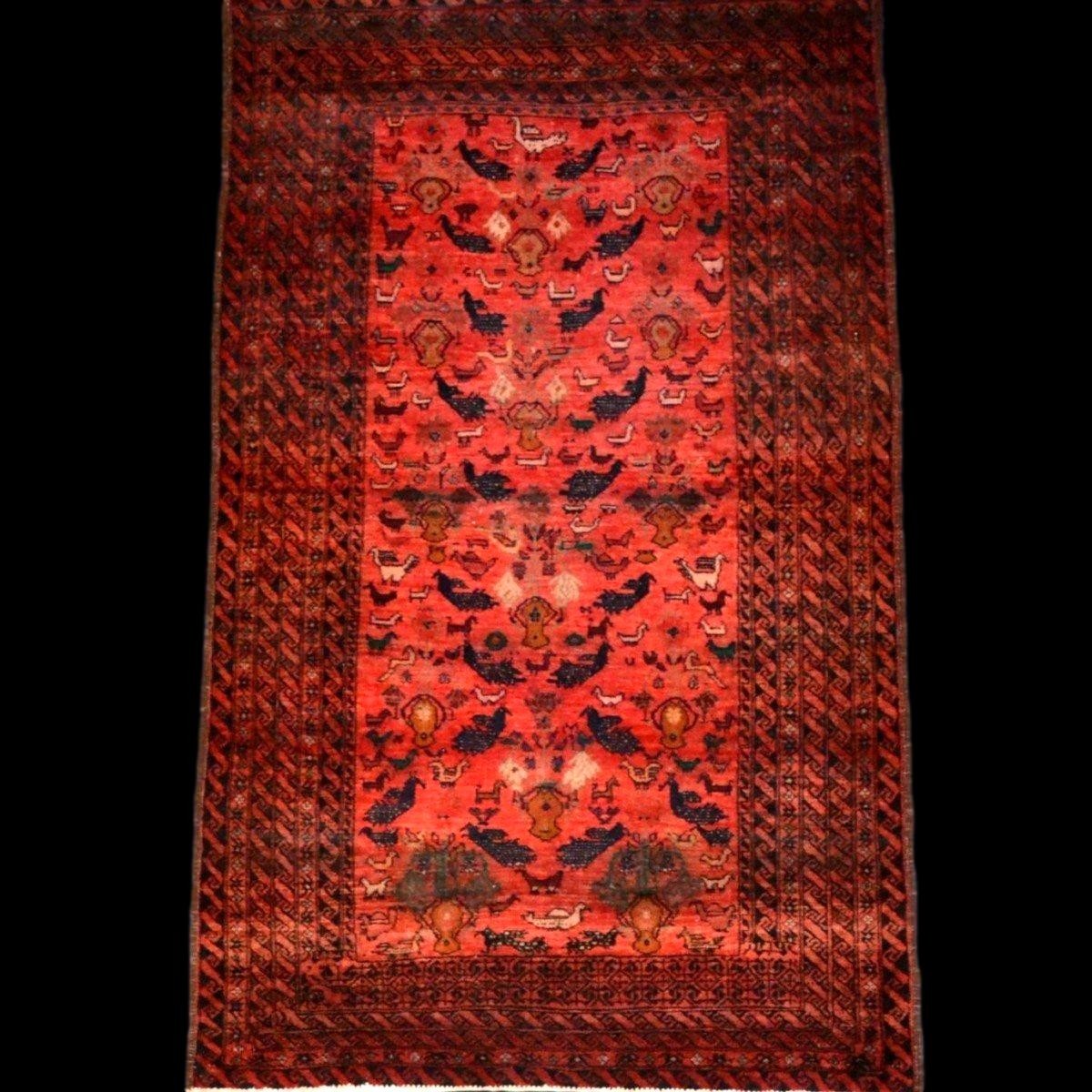
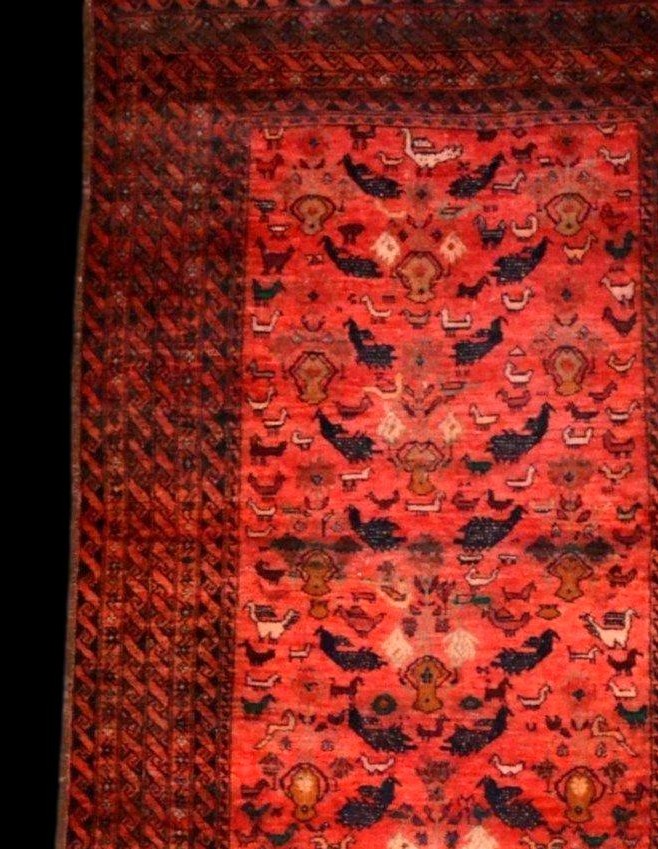
The interior decoration often reveals a very high degree of geometric elaboration, in all its symbolism and symmetry. Our model features a great many animals.
Blue peacocks, horses, ducks, chickens, camels... the animals these populations live alongside.
The brown designs represent pregnant women, the culmination of life, motifs found on some nomadic pieces from Central Asia, Asia Minor, and on some Moroccan rugs. At the bottom of the rug, two vases give birth to trees of life, a widespread motif.
The design is somewhat simple, almost childlike, even modern, yet it possesses a certain magic in its forms and colors.
The sumptuous border is very effective, in the style of Afghan and Central Asian rugs.
The Béchir, with seven wide bands and eight narrow bands, features floral Greek key patterns and friezes resembling the Caucasian border of the running dog.
Proof that the art of rug making is a vast melting pot, a blend of numerous influences from all parts of the Orient. This rug has been professionally and ecologically cleaned.
Dimensions: Width: 115 cm (45") x Length: 193 cm ( 78")
FREE SHIPPING WITHIN FRANCE €0 / EUROPE €25 / WORLD €50.
For more information, you can contact me at +33 6 13 36 09 30, 7 days a week, or by email at winsteinprovence@gmail.com. Thank you in advance.
www.winsteinprovence.com
Texts, photos Winstein, all rights reserved.
COME VISIT US!!!
Ref WINSTEIN 1165
From the mid-20th century, around 1950-1960, in very good condition, showing only very slight signs of wear.
These rugs are knotted and woven by nomadic tribes in the Amu Darya region, the former Emirate of Bochara, Central Asia, using sheep's wool but also extensively with unbleached camel wool.
The wool used for these rugs is always very soft and of very high quality, which gives Bechir rugs their reputation as high-quality pieces.
These rugs can be dark and muted, red, wine-colored, wine lees, earth-toned, but also very light, camel-colored.
The design is geometric, drawing motifs from the decorations of the Caucasus as well as ancient Persia.
The most sought-after are the animal rugs and prayer rugs featuring a niche, the mihrab, rectangular in shape, characteristic of these tribes (the niche indicates the Qibla (the direction of the Kaaba in Mecca).
Bechir carpets are also called Ersari-Bechir, originating from the Amu Darya region, the former Emirate of Bukhara, Afghanistan, and Turkmenistan.
These are nomadic carpets, so they are quite small. Until recently, the warps and wefts were always made of wool (before 1940), but the use of cotton has replaced wool.
The knot used remains the Persian knot.
The large number of motifs used shows Persian influence, and the geometric patterns link them to the Central Asian carpet family.
The interior decoration often reveals a very high degree of geometric elaboration, in all its symbolism and symmetry. Our model features a great many animals.
Blue peacocks, horses, ducks, chickens, camels... the animals these populations live alongside.
The brown designs represent pregnant women, the culmination of life, motifs found on some nomadic pieces from Central Asia, Asia Minor, and on some Moroccan rugs. At the bottom of the rug, two vases give birth to trees of life, a widespread motif.
The design is somewhat simple, almost childlike, even modern, yet it possesses a certain magic in its forms and colors.
The sumptuous border is very effective, in the style of Afghan and Central Asian rugs.
The Béchir, with seven wide bands and eight narrow bands, features floral Greek key patterns and friezes resembling the Caucasian border of the running dog.
Proof that the art of rug making is a vast melting pot, a blend of numerous influences from all parts of the Orient. This rug has been professionally and ecologically cleaned.
Dimensions: Width: 115 cm (45") x Length: 193 cm ( 78")
FREE SHIPPING WITHIN FRANCE €0 / EUROPE €25 / WORLD €50.
For more information, you can contact me at +33 6 13 36 09 30, 7 days a week, or by email at winsteinprovence@gmail.com. Thank you in advance.
www.winsteinprovence.com
Texts, photos Winstein, all rights reserved.
COME VISIT US!!!
Ref WINSTEIN 1165
1 160 €
Period: 20th century
Style: Orientalism
Condition: Excellent condition
Material: Wool
Length: 193 cm - 78"
Width: 115 cm - 45"
Reference (ID): 1716684
Availability: In stock
Print