THIS OBJECT WAS SOLD
First Empire Trooper Cuirassier Sabre Model An XIII, Napoleon
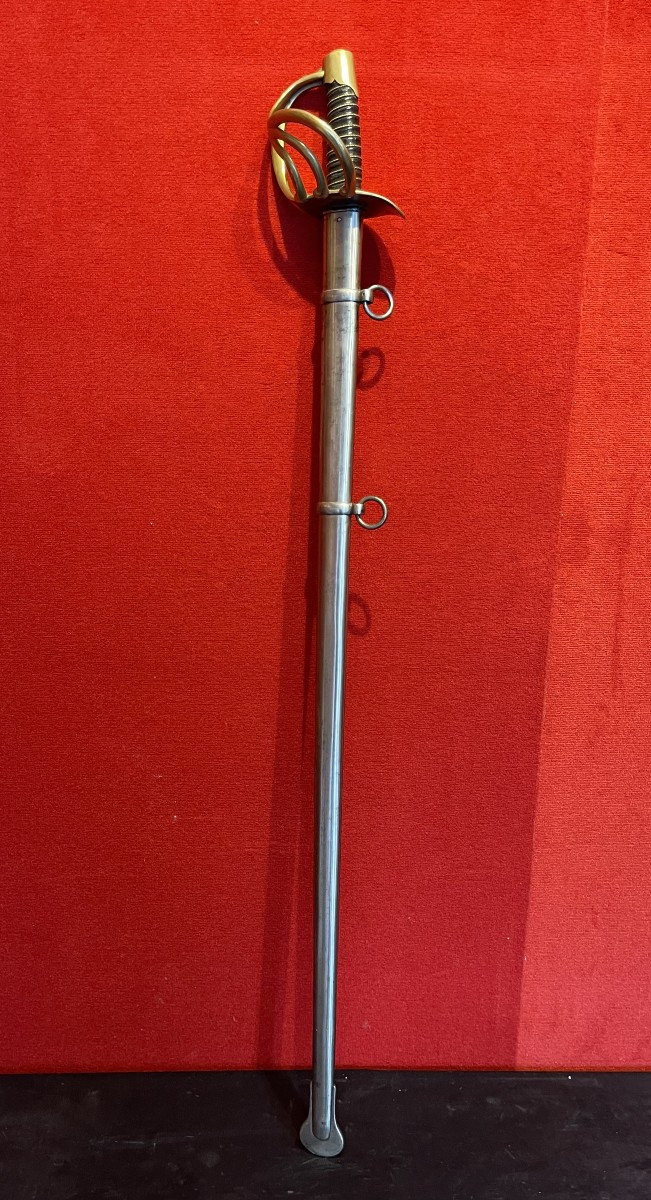
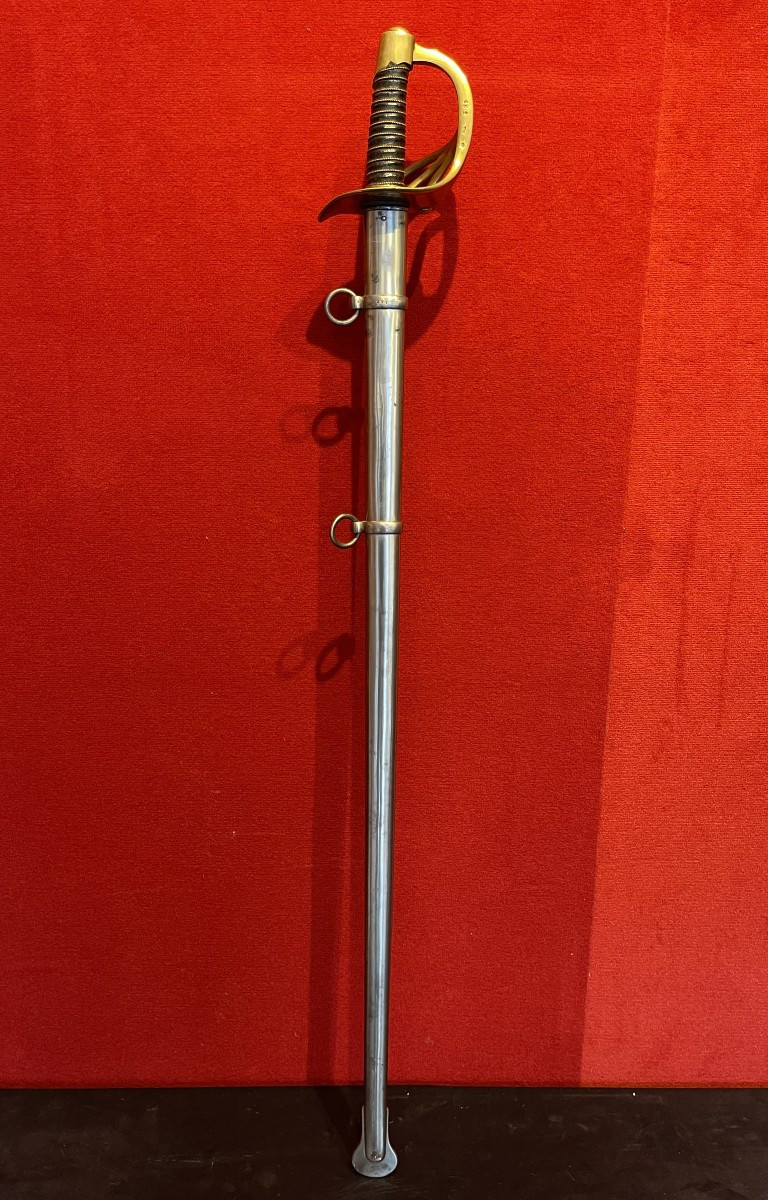
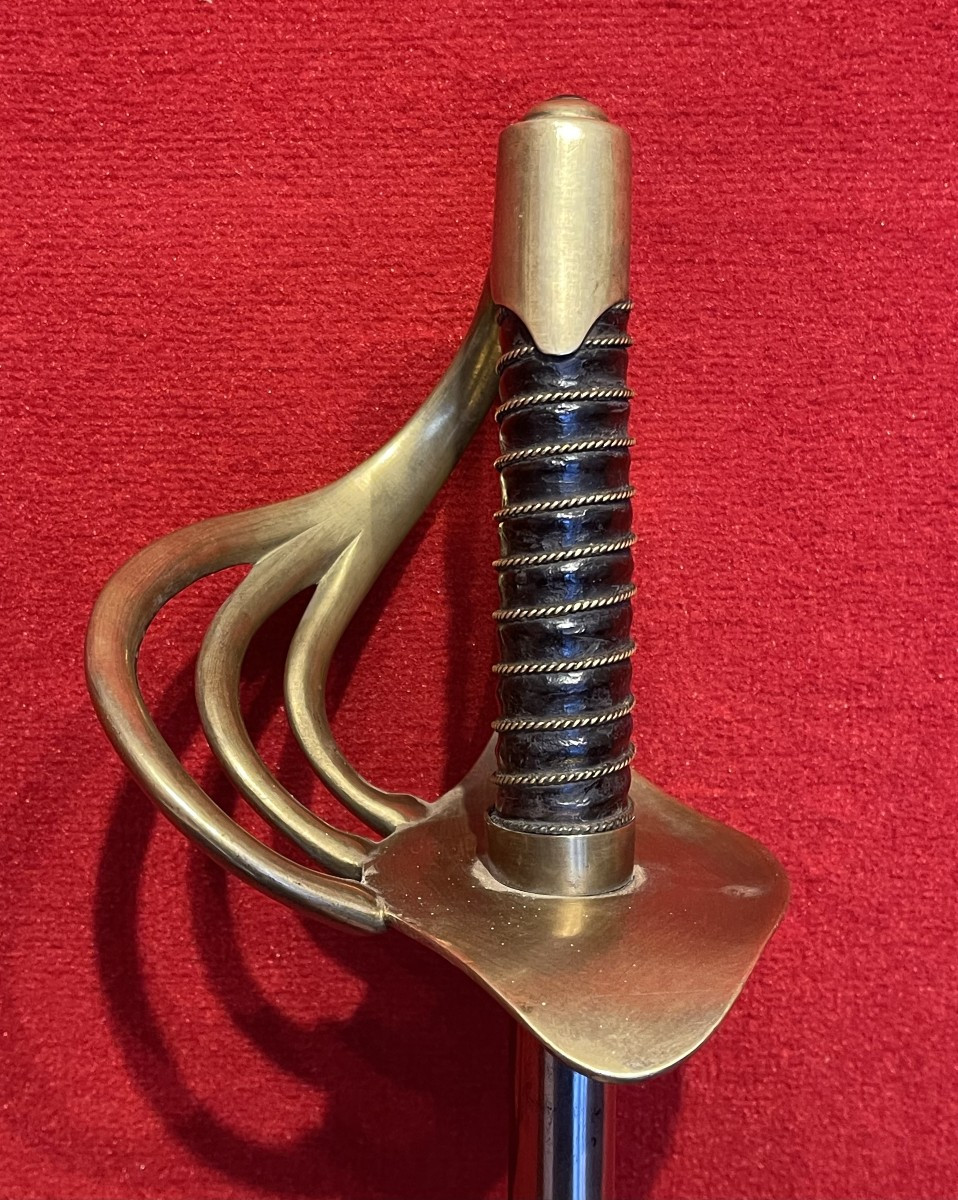
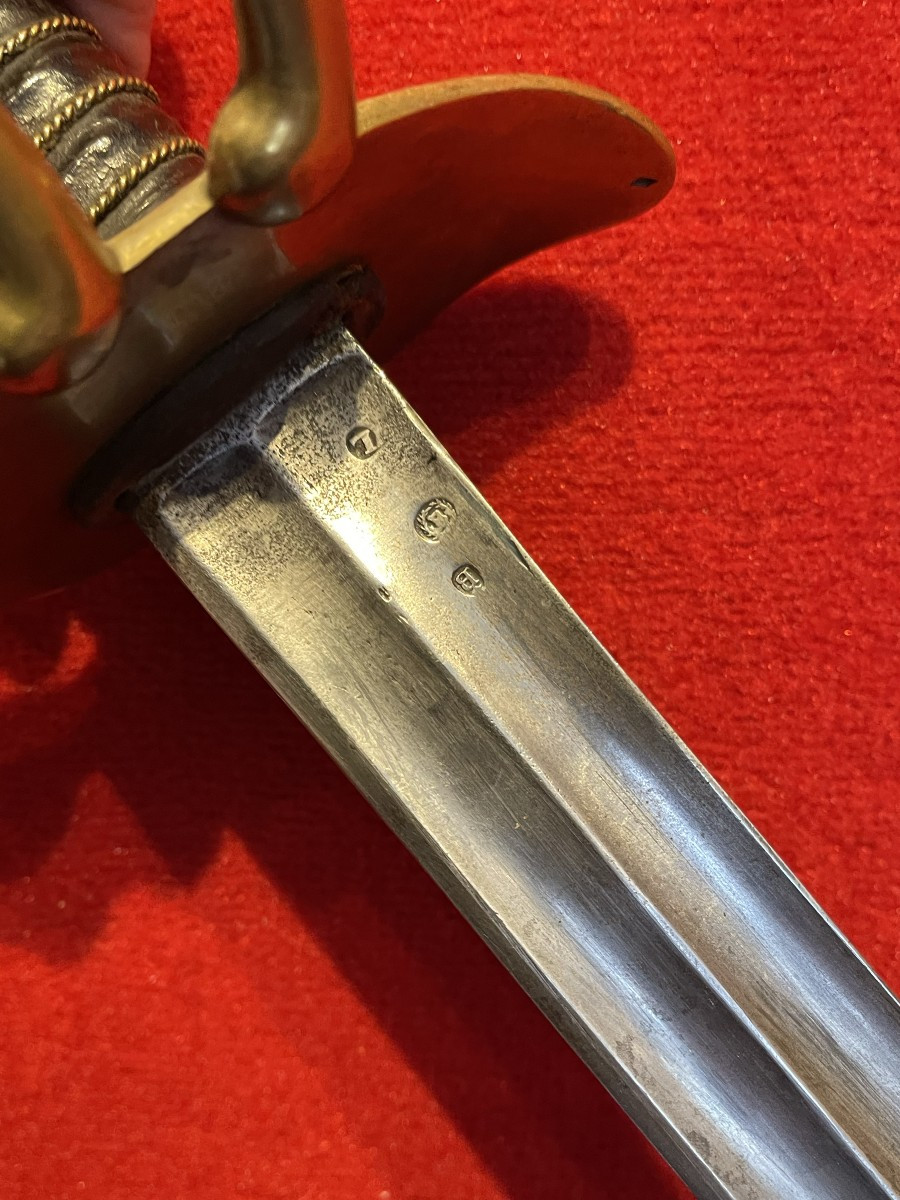
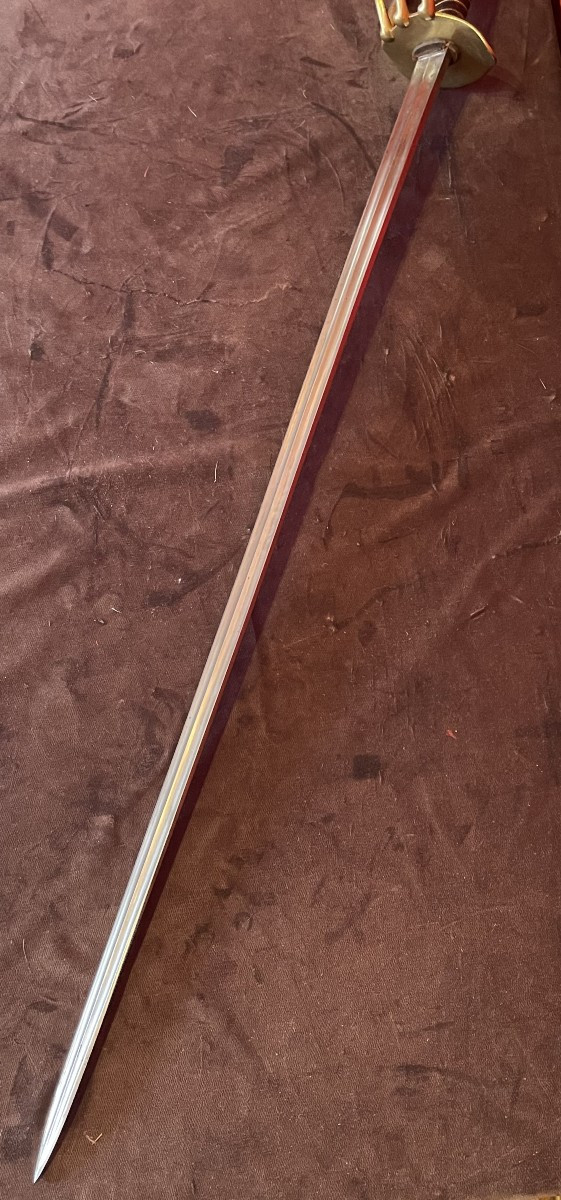
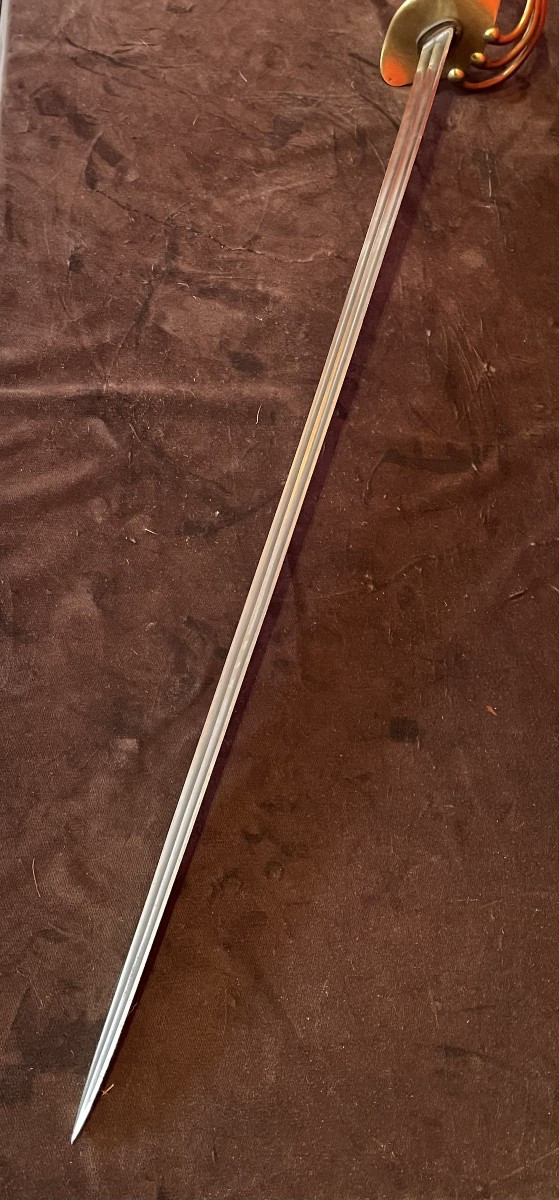


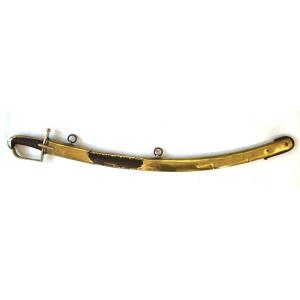
A First Empire, Model AN XIII cuirassier's sabre for trooper, manufactured at the Imperial Manufactory of Klingenthal.
The superb straight blade has double fullers and a flat back. The point was centered in 1816 following official regulation.
The blade bears the following hallmarks:
"L" in a circle, identifying Louis Lobstein, first inspector at the Klingenthal factory from 1804 to 1821.
"B" in a laurel wreath, identifying the controller Jean-Georges Bick from 1812 to May 1815.
"B" surmounted by a star in an oval, identifying Etienne Borson, director of the Klingenthal factory from August 1814 to August 1816.
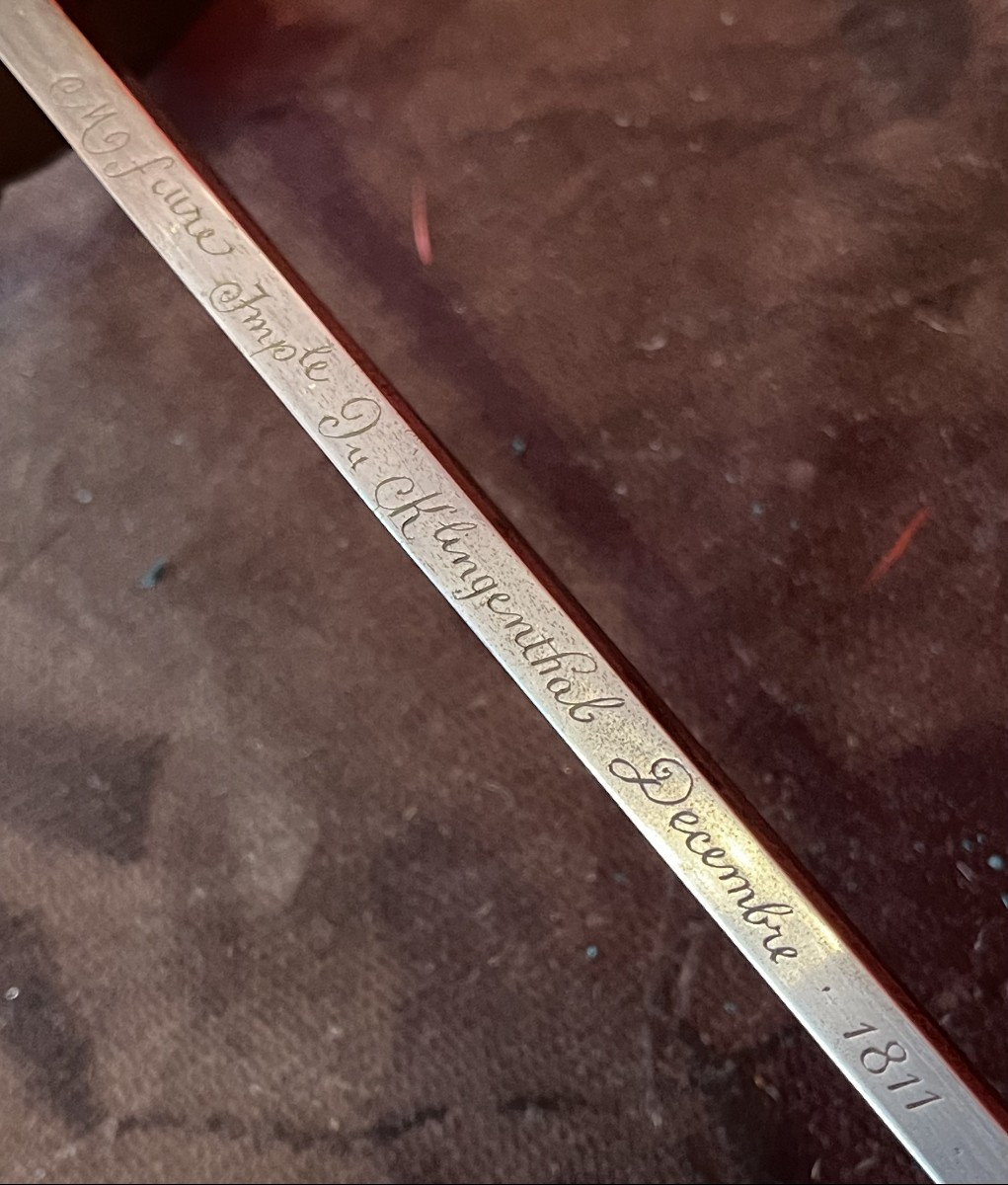
The back of the blade is also engraved "Mfture Imple du Klingenthal" (for Imperial Manufacture of Klingenthal). The date "December 1811" is apocryphal. Given the hallmarks described above, it is possible to date the blade to the Hundred Days period, between March and May 1815.
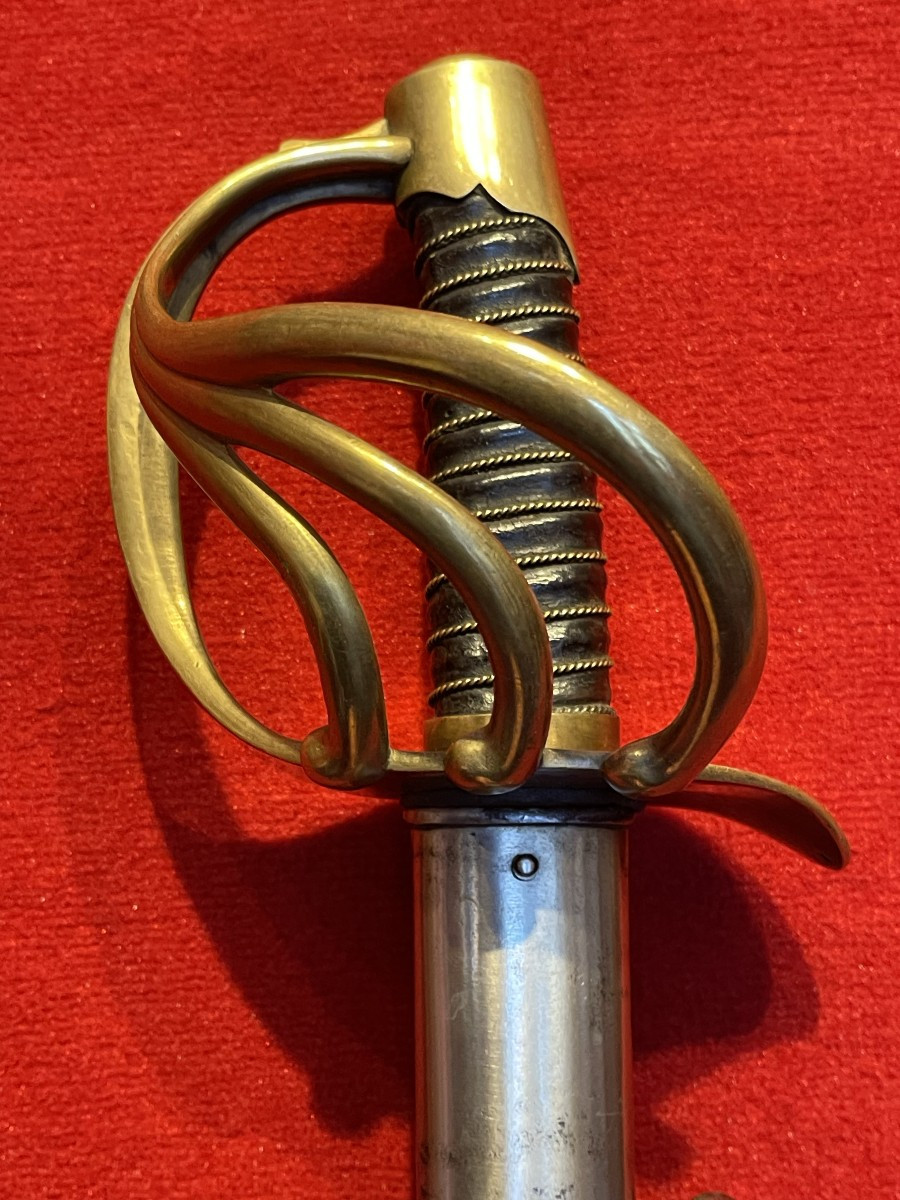
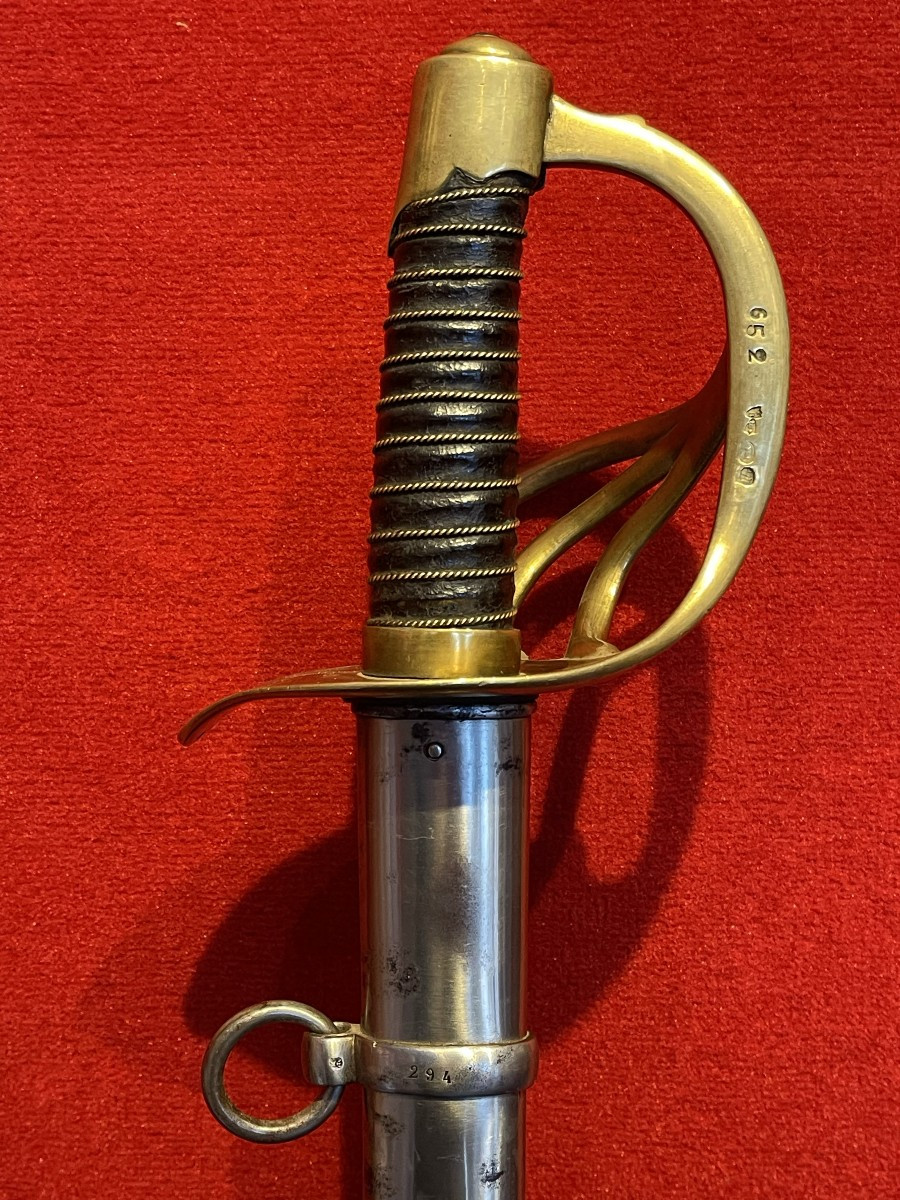
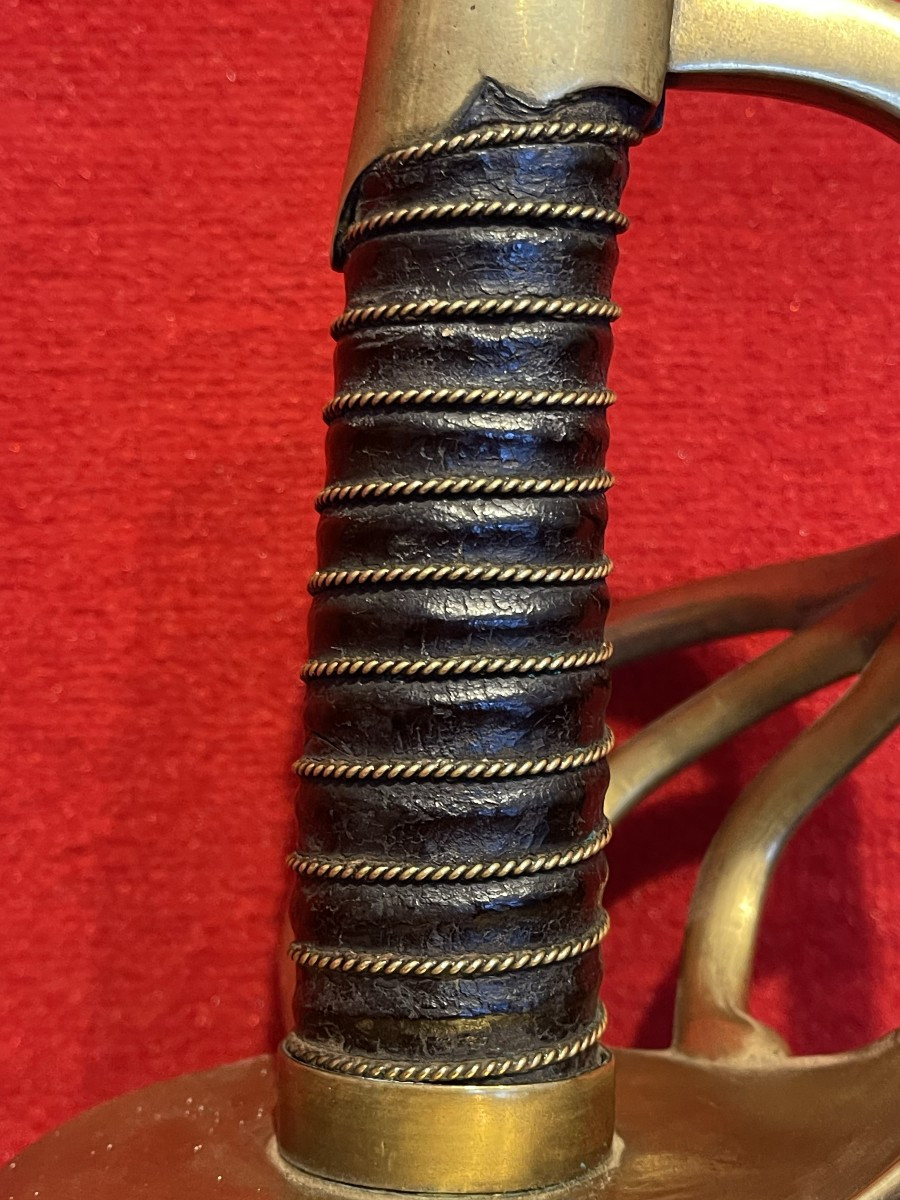
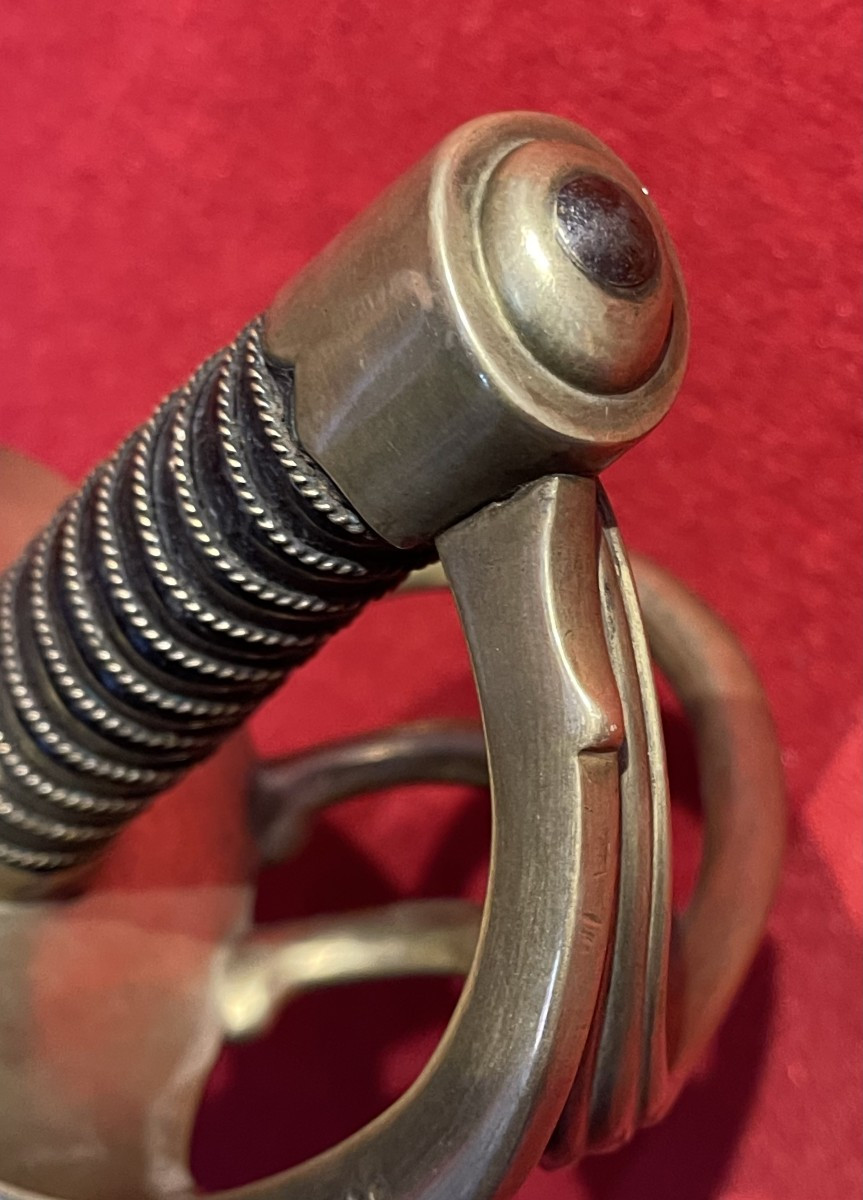
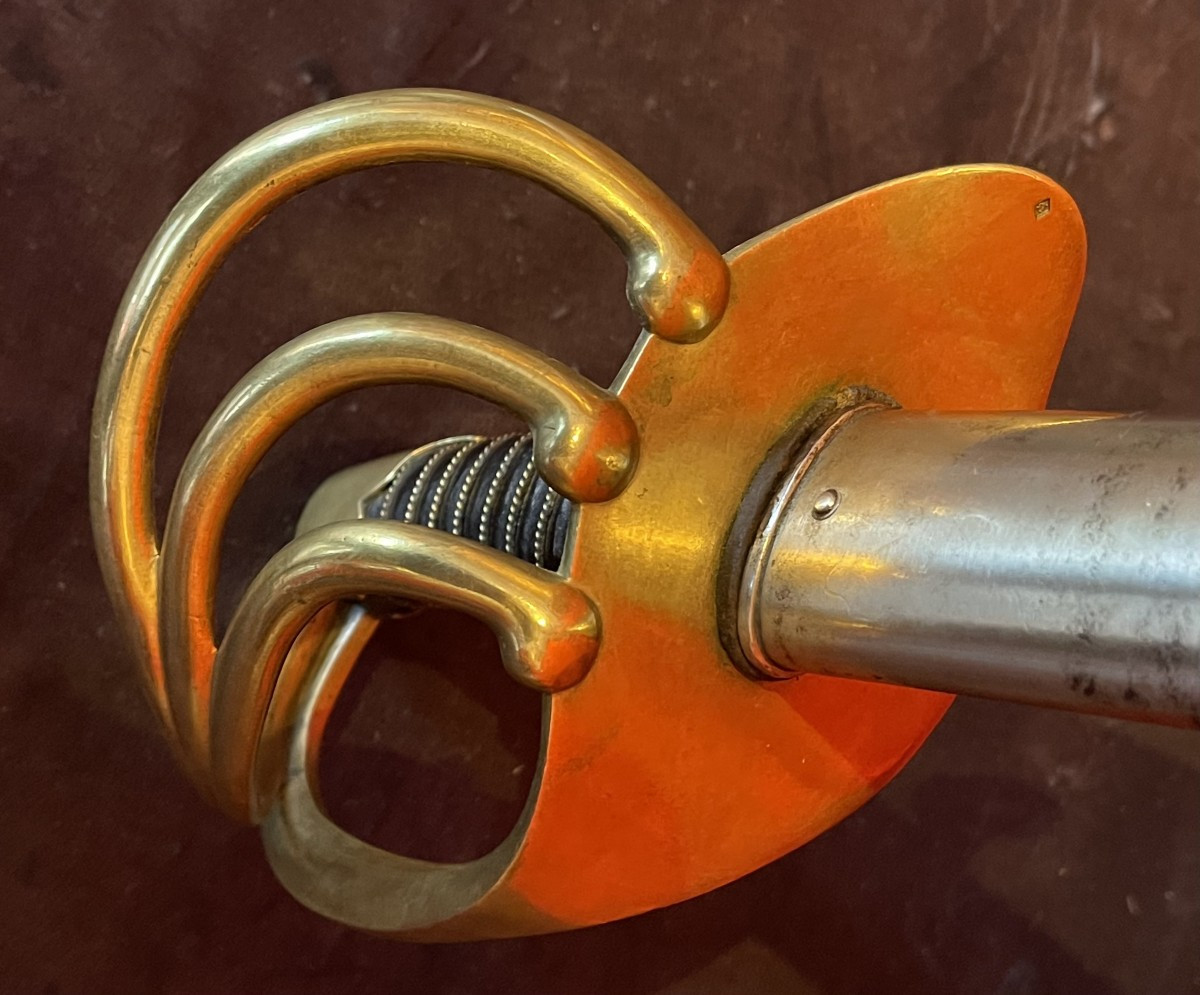
Brass hilt model AN XIII with four-branch guard. Wooden grip covered in leather with brass wire wrapping. The main guard branch is numbered "652". It also bears the hallmarks "B" with a star in a shield identifying François-Antoine Bisch, inspector at the Châtellerault arsenal from 1844. This saber was therefore returned to the Châtellerault factory at that time—presumably for repair.
Indeed, AN XIII sabers continued their long service well after the fall of the First Empire. They armed cuirassiers during the Restoration, the Second Empire… and even into the early years of the Third Republic.
Metal scabbard with two bands model 1816, numbered "294".
Dimensions:
Overall length of the weapon with its scabbard: approximately 117 cm.
Blade length: approximately 96 cm.
Length scabbard: approximately 100 cm
Very good overall condition.
The superb straight blade has double fullers and a flat back. The point was centered in 1816 following official regulation.
The blade bears the following hallmarks:
"L" in a circle, identifying Louis Lobstein, first inspector at the Klingenthal factory from 1804 to 1821.
"B" in a laurel wreath, identifying the controller Jean-Georges Bick from 1812 to May 1815.
"B" surmounted by a star in an oval, identifying Etienne Borson, director of the Klingenthal factory from August 1814 to August 1816.
The back of the blade is also engraved "Mfture Imple du Klingenthal" (for Imperial Manufacture of Klingenthal). The date "December 1811" is apocryphal. Given the hallmarks described above, it is possible to date the blade to the Hundred Days period, between March and May 1815.
Brass hilt model AN XIII with four-branch guard. Wooden grip covered in leather with brass wire wrapping. The main guard branch is numbered "652". It also bears the hallmarks "B" with a star in a shield identifying François-Antoine Bisch, inspector at the Châtellerault arsenal from 1844. This saber was therefore returned to the Châtellerault factory at that time—presumably for repair.
Indeed, AN XIII sabers continued their long service well after the fall of the First Empire. They armed cuirassiers during the Restoration, the Second Empire… and even into the early years of the Third Republic.
Metal scabbard with two bands model 1816, numbered "294".
Dimensions:
Overall length of the weapon with its scabbard: approximately 117 cm.
Blade length: approximately 96 cm.
Length scabbard: approximately 100 cm
Very good overall condition.
Explore similar pieces and discover your ideal find:
Edged Weapons