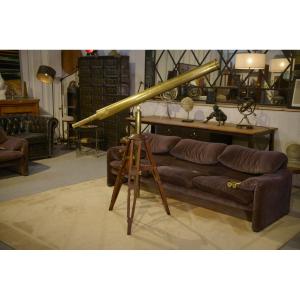
A set of two brass scientific instruments, signed “Butterfield à Paris,” made by the renowned engineer and instrument maker Michael Butterfield (c. 1635–1724), active in Paris during the reign of Loui[...]
A brass hourglass with six columns and hexagonal bases. It features a bulb with two bubbled glass vials, one of which has two bulbs. The seal is made of waxed paper covered with a black waxed cord. Th[...]
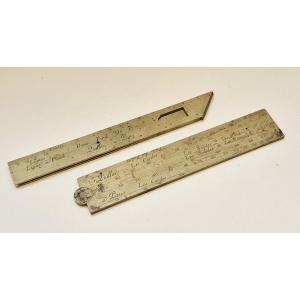
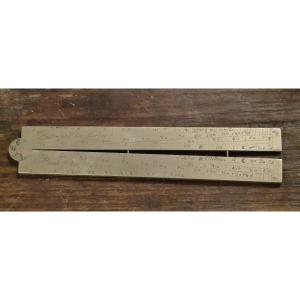
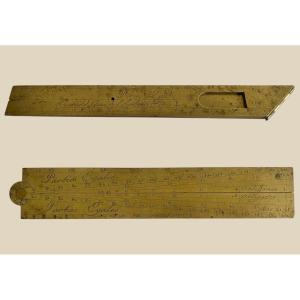
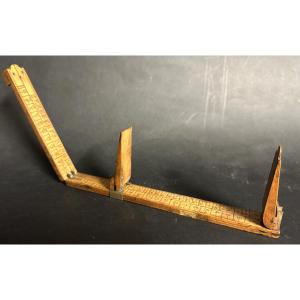
Antique brass folding rule/square – Butterfield Paris – “Pied de Roy”, “Pied du Rhin” scales – 18th century
Rare antique brass folding rule and square, signed Butterfield Paris, dating from the lat[...]
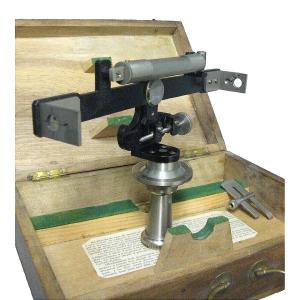
A beautiful three-part theodolite, signed by the CABASSON company. Founded 1791 on Rue de la Chaussée-d'Antin. Workshops and Shops: 29 Rue Joubert, Paris. Our model dates from the 1870s/90s. Overall [...]
A fine pair of blown glass apothecary ampoules, circa 19th century. They feature emery stoppers and a frosted pontil mark at the base and top of the ampoule body. Some air bubbles are present. Total h[...]
Two lovely blown glass bottles, greenish and translucent, with a thick, inward-curving base, a visible pontil mark, a beautiful shoulder, and an elongated neck with a flared end. Two pretty glass piec[...]
Pewter bleeding palette, circular with a molded, rounded rim, with an openwork bracket decorated with stars and a flamed heart.Control mark: "PARIS", used from 1780.Mark of Louis Nicolas Boicervoise, [...]
SCIENTIFIC OBJECTS Metrology, measuring instruments MUSEUM, Exceptional bronze with gilt patina stack of nested weights in cups(Royal standard weight) of 16 Marks (a unit of weight created by Charle[...]
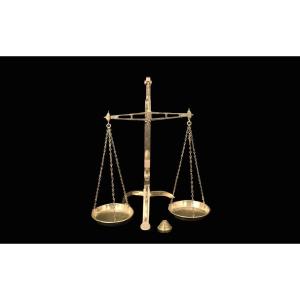
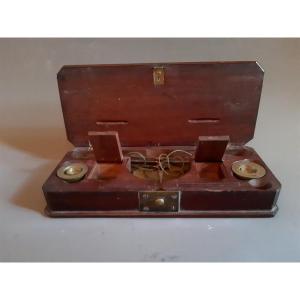
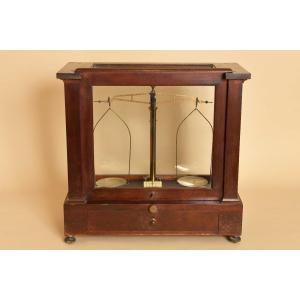
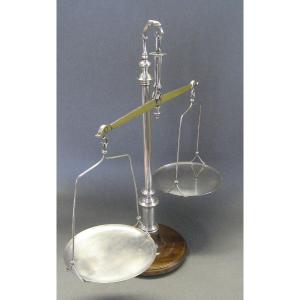
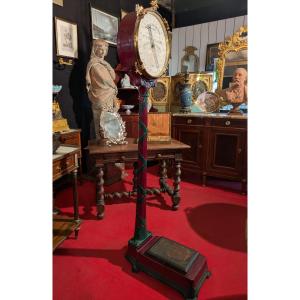
Large money changer's scale with 500-gram pans. Signed by Charpentier at P Couronné, 73 Rue Saint Denis, Weights and Measures Adjuster for the Treasury, the Crown, the Bank of France, the Mint and Med[...]
18th-Century English Brass Sector, Signed “R. Glynne Fecit”, c. 1750–1775
Length (closed): 16 cm — Width: 3.8 cm — Material: Solid brass
A fine mid-18th-century English brass sector, clearly signed [...]
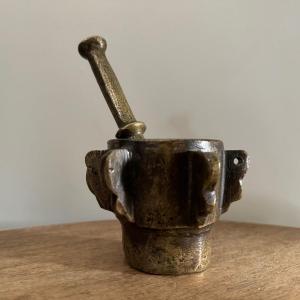
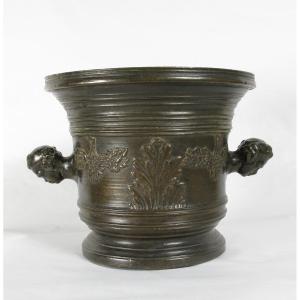
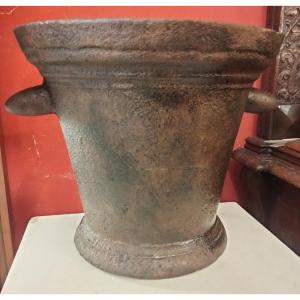
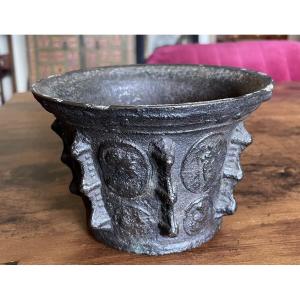
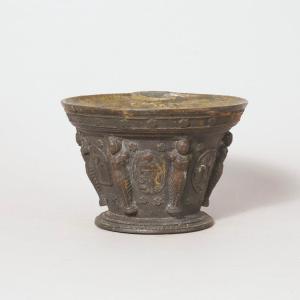
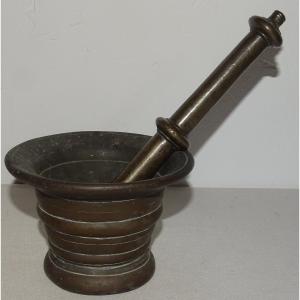
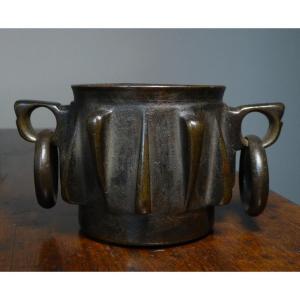
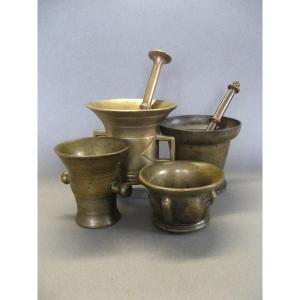
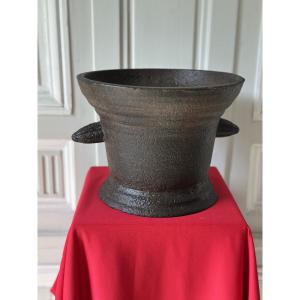
This bronze mortar dates from the 17th century. It is an object from the High Renaissance period. It is in good overall condition, with slight oxidation, signs of wear from use, and a few dents. Our p[...]
Five blown glass test tubes and their walnut stand, dating from the 18th century. Stand dimensions: 33.3 cm x 10 cm x 24.5 cm high. Height of the tallest test tube: 25 cm
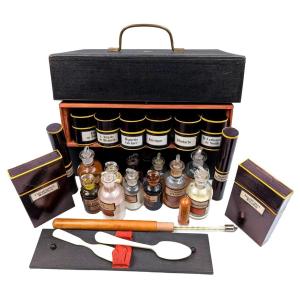
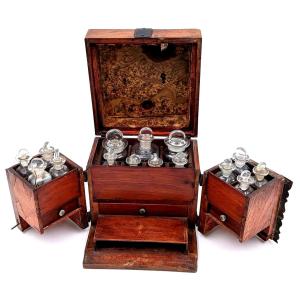
A walnut traveling apothecary case. It contains a few bottles but is unfortunately incomplete. It's a lovely example of the itinerant apothecaries of the 18th century.
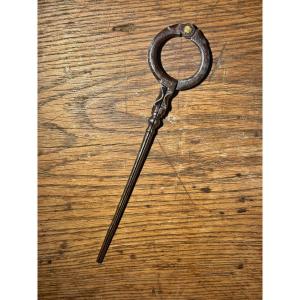
Cast iron pharmacy cork cutter, late 18th century. Traditionally used to reduce the size of corks so they could be inserted into a vial or bottle, thus creating an airtight seal. This is a traditional[...]
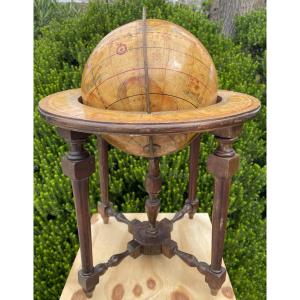
A very beautiful and antique armillary sphere of the heliocentric type, Copernican system, dating from the 18th century. In good condition, with some wear to the engraved inscriptions, very decorative[...]
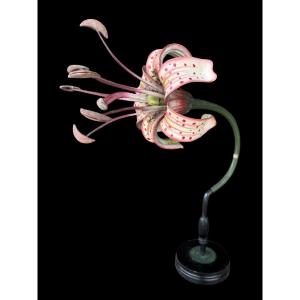
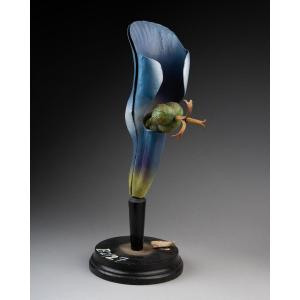
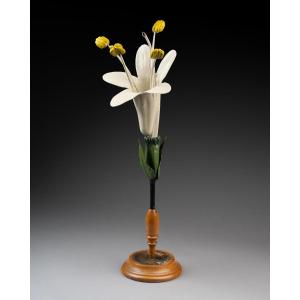
A beautiful educational object representing a large sunflower seed. The object opens in three parts to reveal the entire seed and its germ. A highly original, almost abstract piece. In good condition.[...]
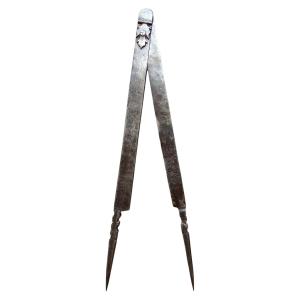
Large, unsigned German technical drawing instrument set, dating from the second half of the 18th century. This large set includes: - A beam compass with two dry points, one of which can be replaced wi[...]
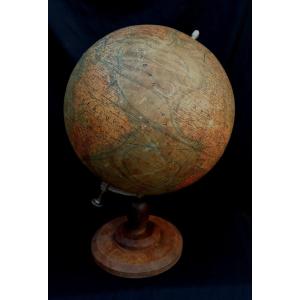
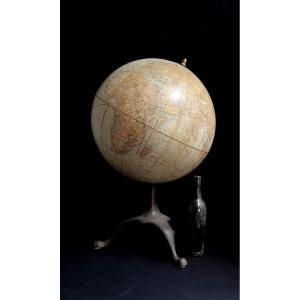
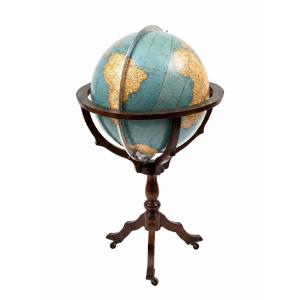
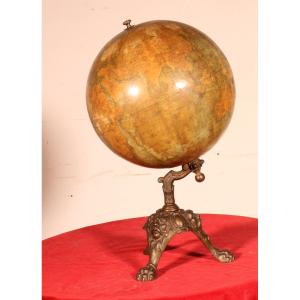
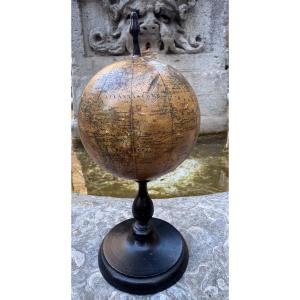
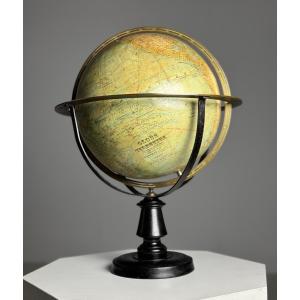
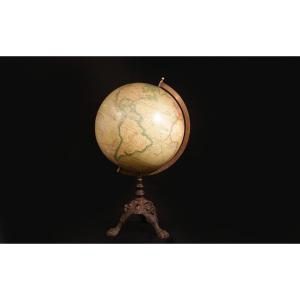
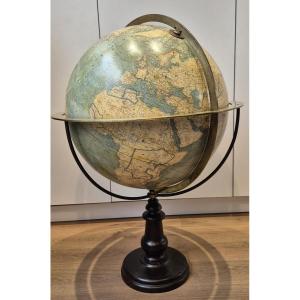
Globe Terrestrial by C. Abel Klinger, Artistic Institute, Nuremberg - 1848-1855 'The Earth according to the newest discoveries' by JA Bühler. The terrestrial globe itself is made of plaster, surrounde[...]
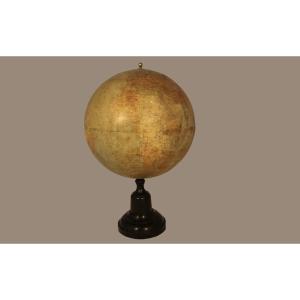
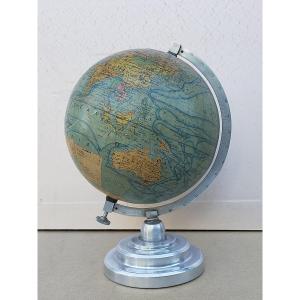
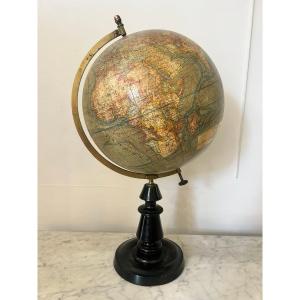
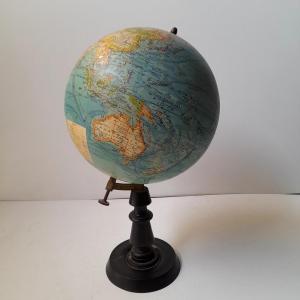
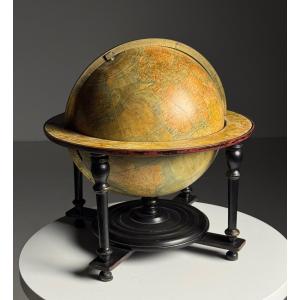
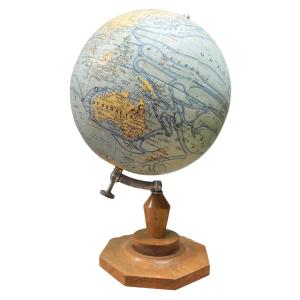
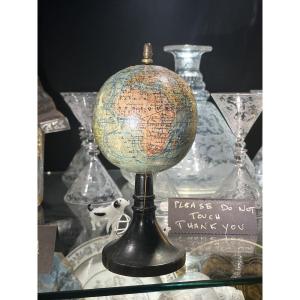
Charming small terrestrial globe from the early 20th century, circa 1910, by J. Forest, Paris, published by Girard & Barrière. The globe has a superb blackened wood base with beautiful turning and a g[...]
Lenticular-shaped pewter spittoon with tubular spout and screw-on cap. Diameter: 12.6 cm. Length: 16.5 cm PARIS, Second half of the 19th century Rare medical object in perfect condition.Bibliography :[...]
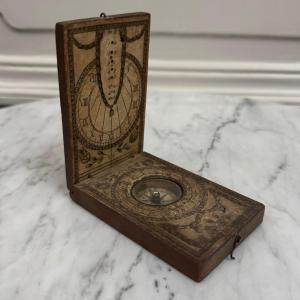
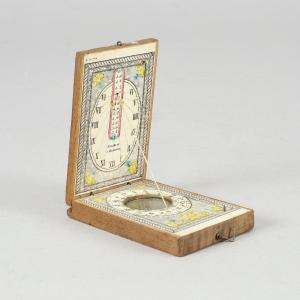
Pocket-sized diptych sundial, made of wood, 18th century, with compass. It is covered with polychrome paper on both sides, with a floral design on the inside and scientific information on the lid. Whe[...]
Hammond typewriter, model 12 half-moon, 1905. The Hammond typewriter is named after its designer, James Bartlett Hammond (1839-1913). He believed that the typewriter should allow not only the use of d[...]
Two theaters gilt metal telescopes with mother-of-pearl, blue stones, and black rubber inlay. One is signed Jacker in Paris. Condition: needs restoration, damaged, missing stones (9 pieces). Dimension[...]
A fine example of a camera lucida bearing the signature "Moreau Opticien / 16 rue de Seine," indicating that it was made by the Parisian optical firm Moreau, founded in 1830 and active until the 1890s[...]
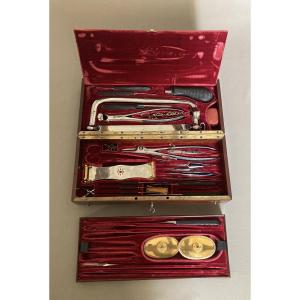
Antique surgical equipment from the early 20th century, headlamp and case marked Drapier & Sons, United France. Ideal for a cabinet of curiosities or a collection of antique surgical instruments. Good[...]
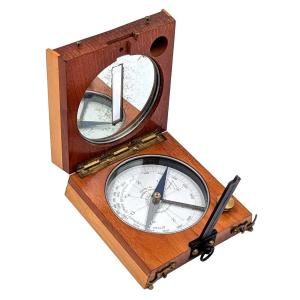
This instrument consists of a brass base and stand, to which a semi-circular metal dial and a gnomon are attached. The circular base has a felt underside. It incorporates a compass with a central need[...]
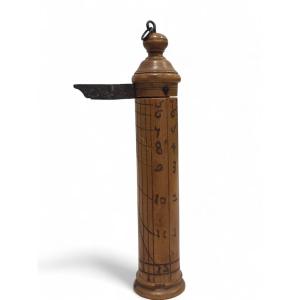
A charming 19th-century portable sundial, presented in an elegant turned wooden case. This compact and refined scientific instrument testifies to the craftsmanship and precision of 19th-century timeke[...]
A rare 19th-century Asian portable bronze sundial. This exquisite instrument combines scientific function with artistic ornamentation, reflecting the refined taste and craftsmanship of Asian decorativ[...]
A rare 19th-century Asian portable sundial, finely crafted in bronze and adorned with semi-precious stones. This exquisite instrument combines scientific functionality with artistic ornamentation, ref[...]
An elegant 19th-century portable sundial, crafted from partially silvered bronze and finely engraved with precise graduations and decorative details. This compact timekeeping instrument testifies to t[...]
A charming 19th-century portable sundial, presented in its original wooden case. This compact instrument exemplifies the craftsmanship and functionality of 19th-century scientific inventions. Designed[...]
An exceptional 18th-century octagonal brass sundial, signed "Johan Schrettegger, Augsburg," featuring a blued steel pointer, a folding latitude arc engraved from 10° to 90°, and an engraved equinoctia[...]
An elegant 19th-century portable sundial, signed "Dollond London," finely crafted in wood and brass. The renowned Dollond family of London were among the most prominent makers of scientific instrument[...]
A charming portable sundial in engraved wood, dating from the 19th century. This compact timekeeping instrument exemplifies the practical elegance and craftsmanship of traditional scientific instrumen[...]
This 19th-century horizontal bronze sundial is a remarkable piece. It is inspired by the designs of Erasmus Habermel (c. 1538–1606, Prague), one of the most celebrated instrument makers of the late Re[...]
A rare 19th-century Chinese portable sundial, finely crafted in engraved and enameled bronze. This instrument, with its precise details, testifies to the craftsmanship and scientific artistry of Qing [...]
A rare and fascinating 19th-century terrestrial globe, finely carved in ivory, which opens to reveal a sundial hidden inside. This extraordinary piece illustrates the skill and ingenuity of 19th-centu[...]
A rare 19th-century American portable sundial, finely engraved on bronze, bearing the names of various American cities for geographical reference and calibration. This remarkably crafted instrument te[...]
A magnificent 19th-century portable sundial, signed "T. Mason, Dublin," made of partially silvered brass and adorned with delicate engravings. This elegant scientific instrument testifies to the preci[...]
An exceptional German portable sundial, finely engraved and made of gilt brass, signed "J. Vogler," and preserved in its original case. Made in the 18th century, this exquisite instrument testifies to[...]
An elegant 19th-century pocket sundial, designed to be carried by hand, crafted from finely engraved silver-plated metal. This compact and functional timepiece reflects the refinement and precision ch[...]
A charming portable sundial in engraved wood, dating from the 19th century. This compact timekeeping instrument illustrates the practical elegance and craftsmanship of traditional scientific tools of [...]
A rare portable sundial in engraved ivory, a fine example of 17th-century German scientific instrumentation, probably made in Nuremberg, a city renowned for its precision and horological innovations. [...]
An exceptional portable sundial in engraved ivory, a fine example of 18th-century German craftsmanship, likely made in Nuremberg, one of Europe's historic centers for the manufacture of scientific ins[...]
An elegant, portable brass sundial, finely engraved and signed "Menant à Paris," testifying to the precision and expertise of French artisans specializing in scientific instruments. This compact and e[...]
An elegant, portable bronze sextant, used for nautical navigation. Finely crafted, it features precise details and a compact design. A beautiful example of traditional maritime instrumentation, it tes[...]
Drum microscope with niche by Charles Chevalier c.1832. The microscope, stored for transport in its mahogany case, opens by means of a sliding drawer and the microscope is screwed onto the body of the[...]
Rare equinoctial ring. Signed "N Bion A PARIS", circa 1700, in bronze, composed of meridian and equatorial rings. Latitude engraved with names of European cities alternating with floral motifs. Rotati[...]
Field surgical kit. The rarity of this piece lies in the number of items it contains: Mayo scissors, curved Mayo scissors, needle holder, swabbing forceps, and smear forceps. Plus one (unidentified). [...]
Exceptionally large compound microscope (51 cm). It is mounted on double columns. Rack and pinion screw for adjusting the tube. Instrument attributable to Radiguet.
18th-century Japanese horn eyeglasses. These distinctive glasses feature a movable nosepiece that allows adjustment on the bridge of the nose for optimal vision. It is rare to find these glasses with [...]
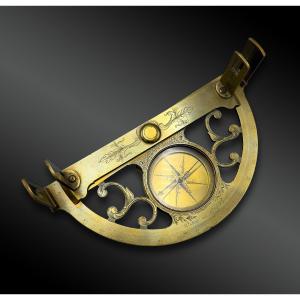
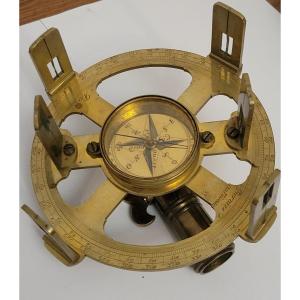
18 th - century bronze graphomètre with sighting vanes , made by renard , ParisGeodeticvand topographic instrumentCompass diamètre : 4,7 cmHeight with ball joint and base : 15 cmWidth : 18 cmComplete [...]
Small wooden and brass sundial by Beringer, whose initial is stamped at the bottom right, and on the other side the number 48 corresponds to the latitude of the place for which it is drawn (a little n[...]
Proantic uses a cookie to analyze traffic and improve its service by using Google Analytics. Data sent to Google Analytics (frequency of visits to the site and pages visited) are anonymous. No other cookie tracks your activity, your personal data is not collected. Thank you for helping us to have better understanding how Proantic is used.