


Louis Azéma (1876–1963) Sailing Boats And Rowing Boats In A Mediterranean Harbour, 1933
Louis Azéma (1876–1963)
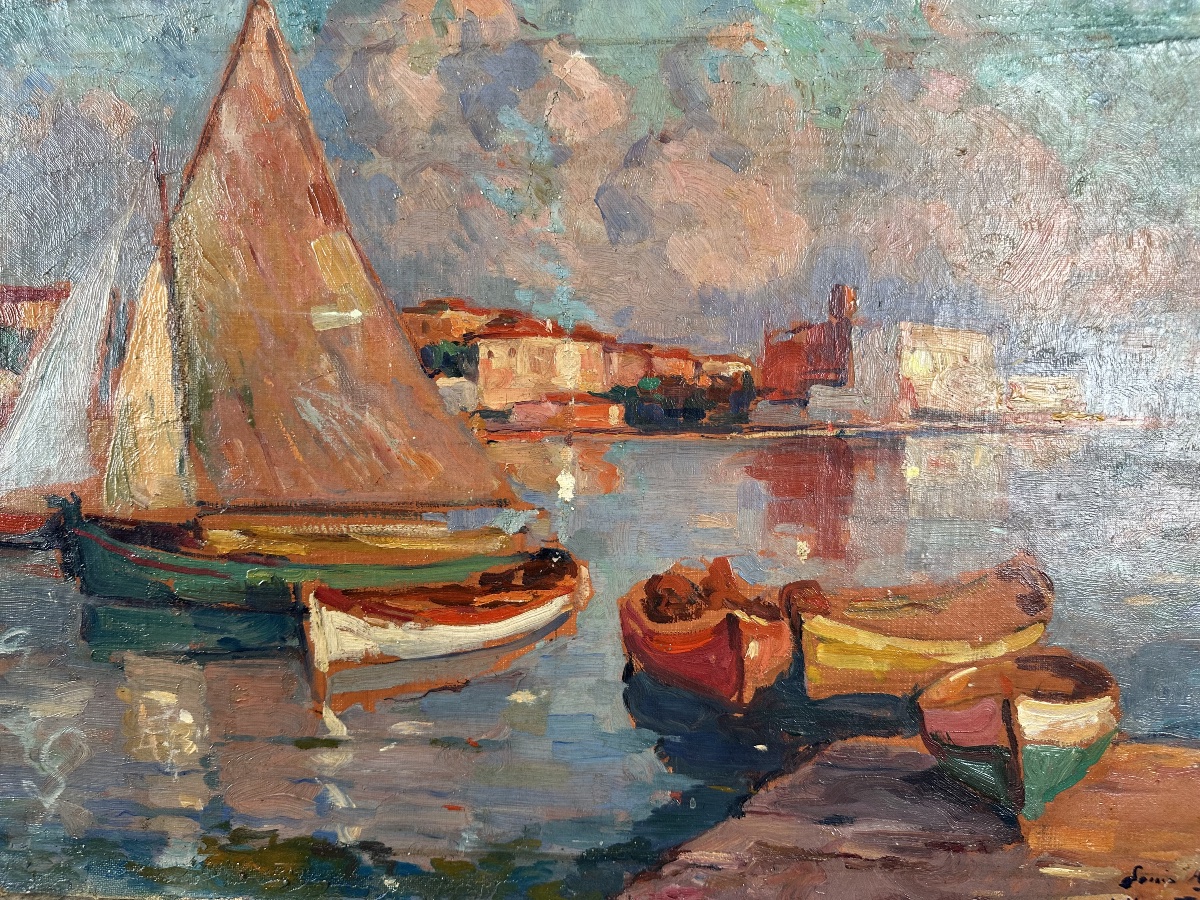
Sailing Boats and Rowing Boats in a Mediterranean Harbour, 1933
Oil on canvas — 38 × 61 cm
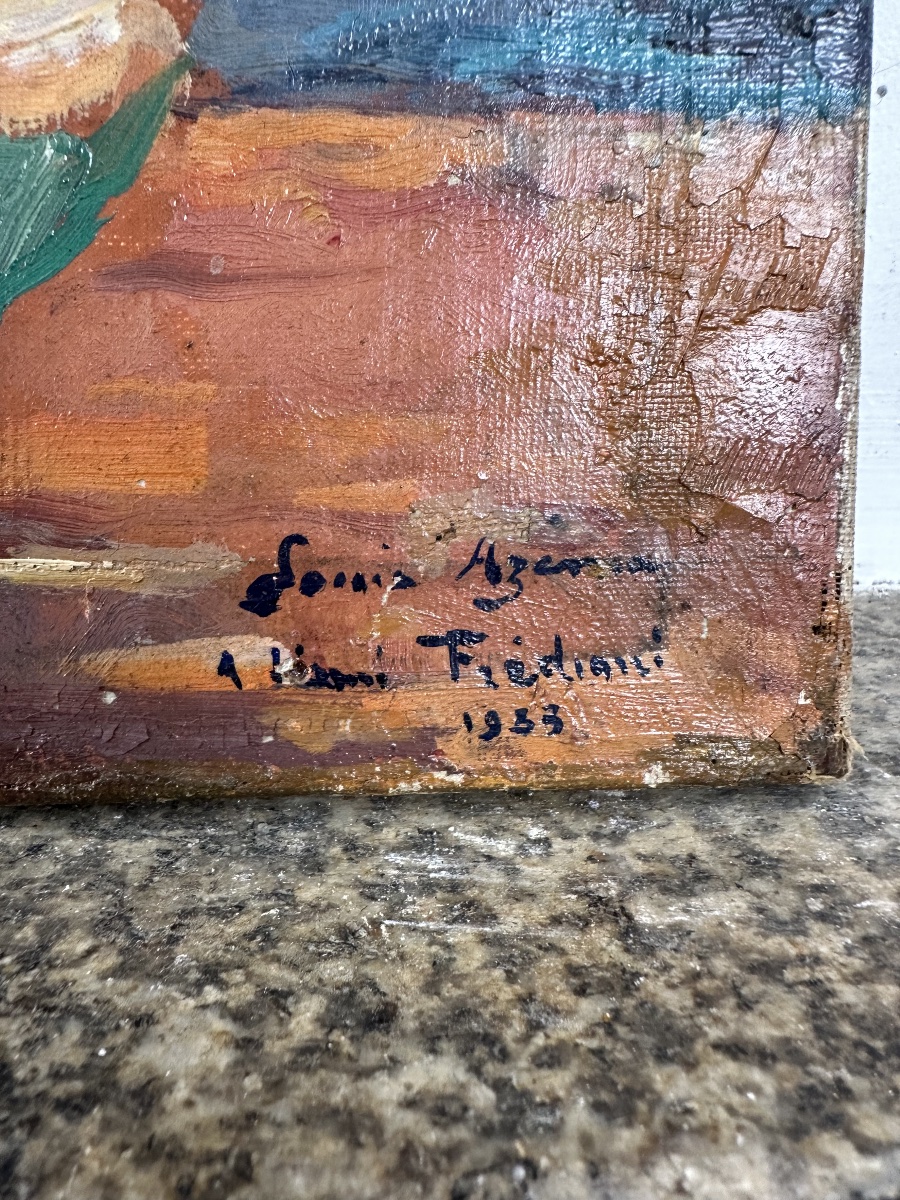
Signed, dedicated and dated lower right; the date reads “1933”.
An artist between painting and music
Born in Agde in 1876, Louis Azéma studied at the fine arts schools of Montpellier and Paris, with teachers including Gustave Moreau, François Flameng and Fernand Cormon. He received a gold medal at the 1921 Salon. Alongside painting, he pursued a career as an opera singer: the Bibliothèque nationale de France records him as Bartholo in The Marriage of Figaro at the Opéra-Comique in 1919. Painting and performance therefore developed as parallel artistic activities. His work is also represented at the Musée des Augustins in Toulouse, which purchased L’Arracheur de pommes de terre at the 1949 Salon. Dated 1933, this harbour scene belongs to his mature career. Training and award, BnF, Musée des Augustins.
Light shaped through colour
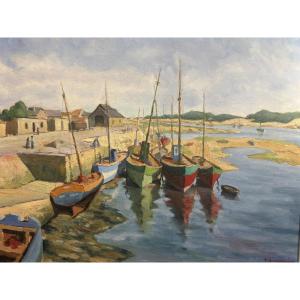
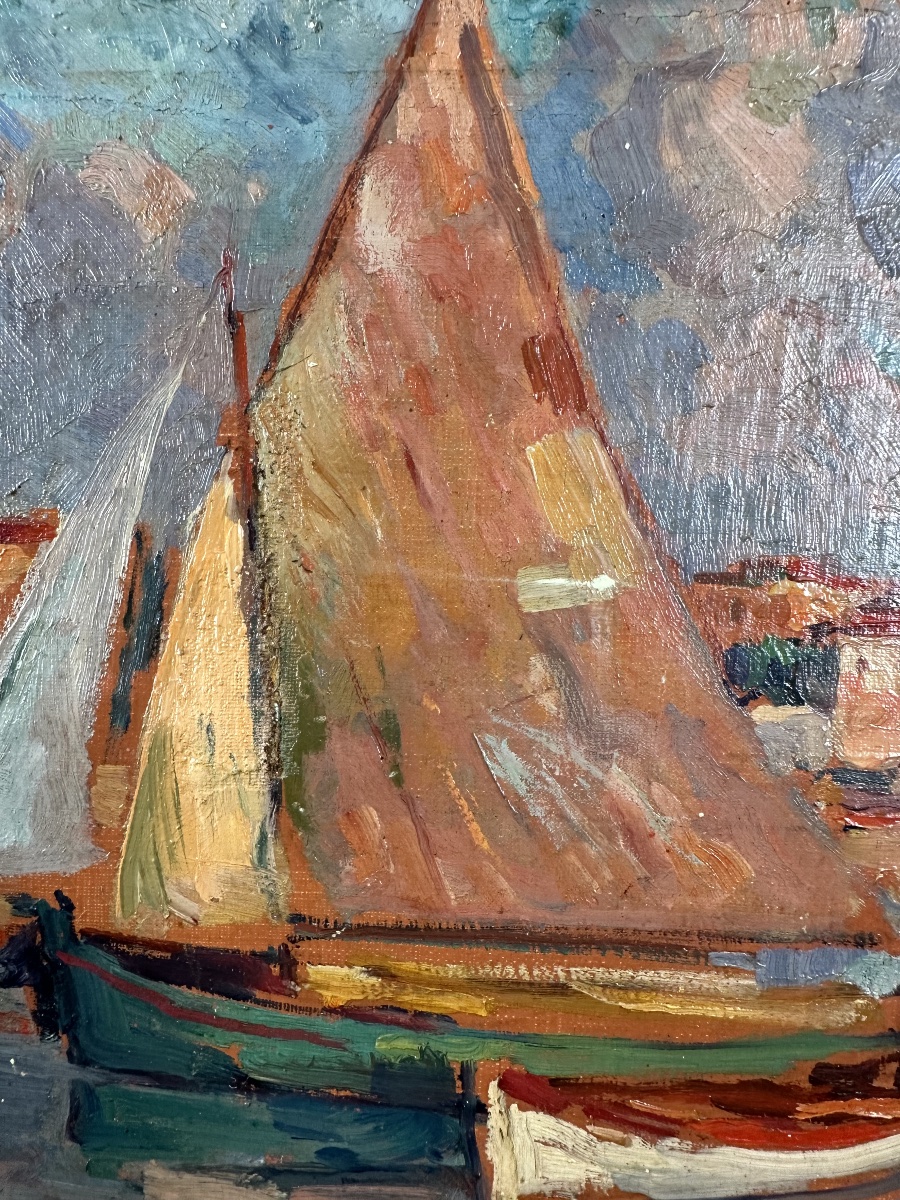
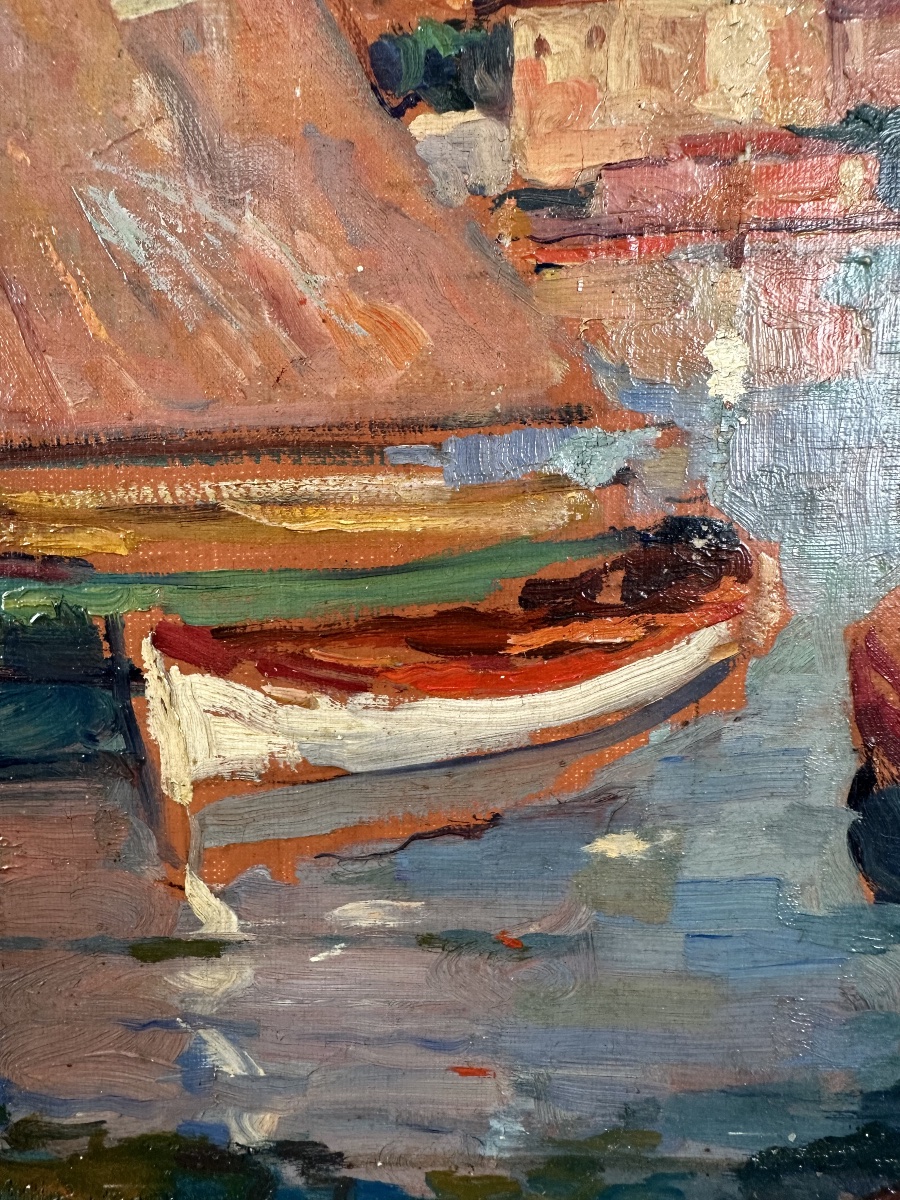
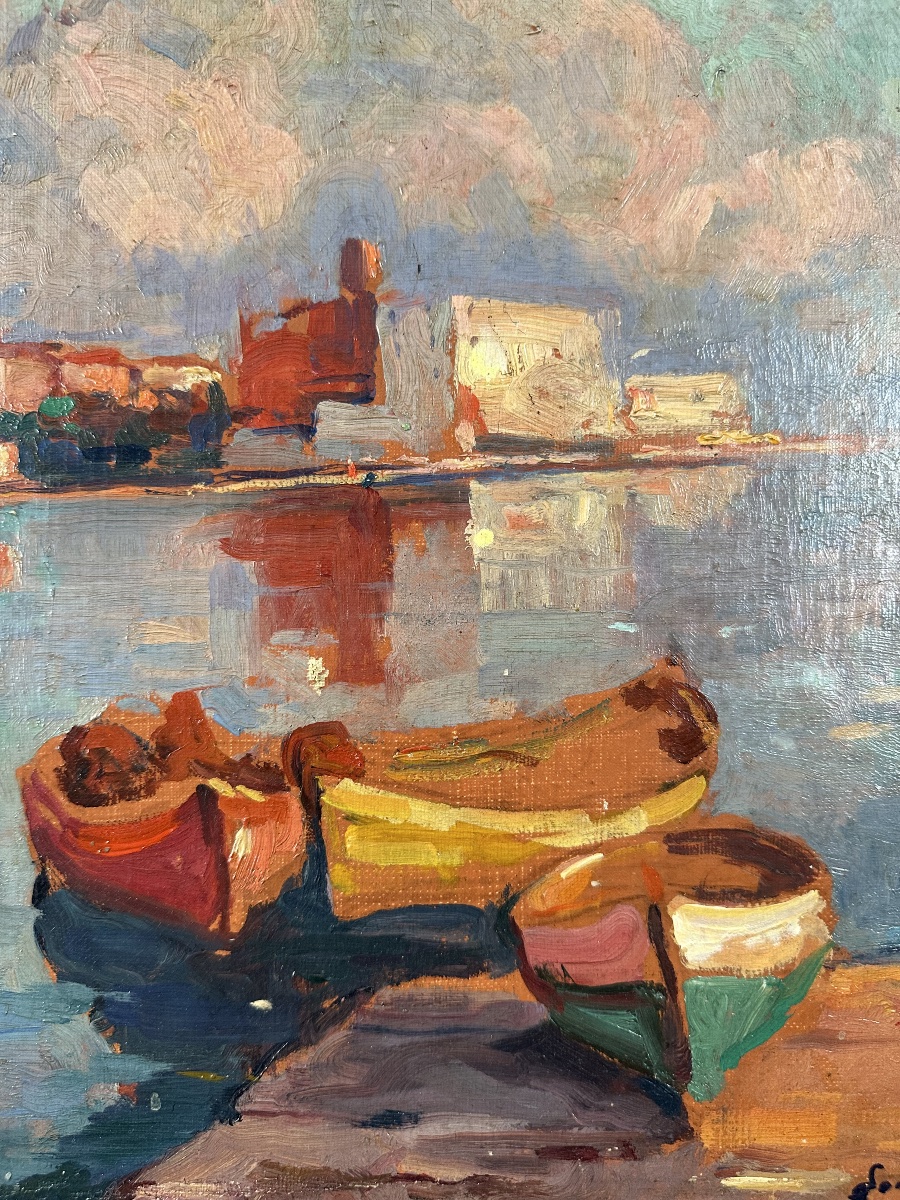
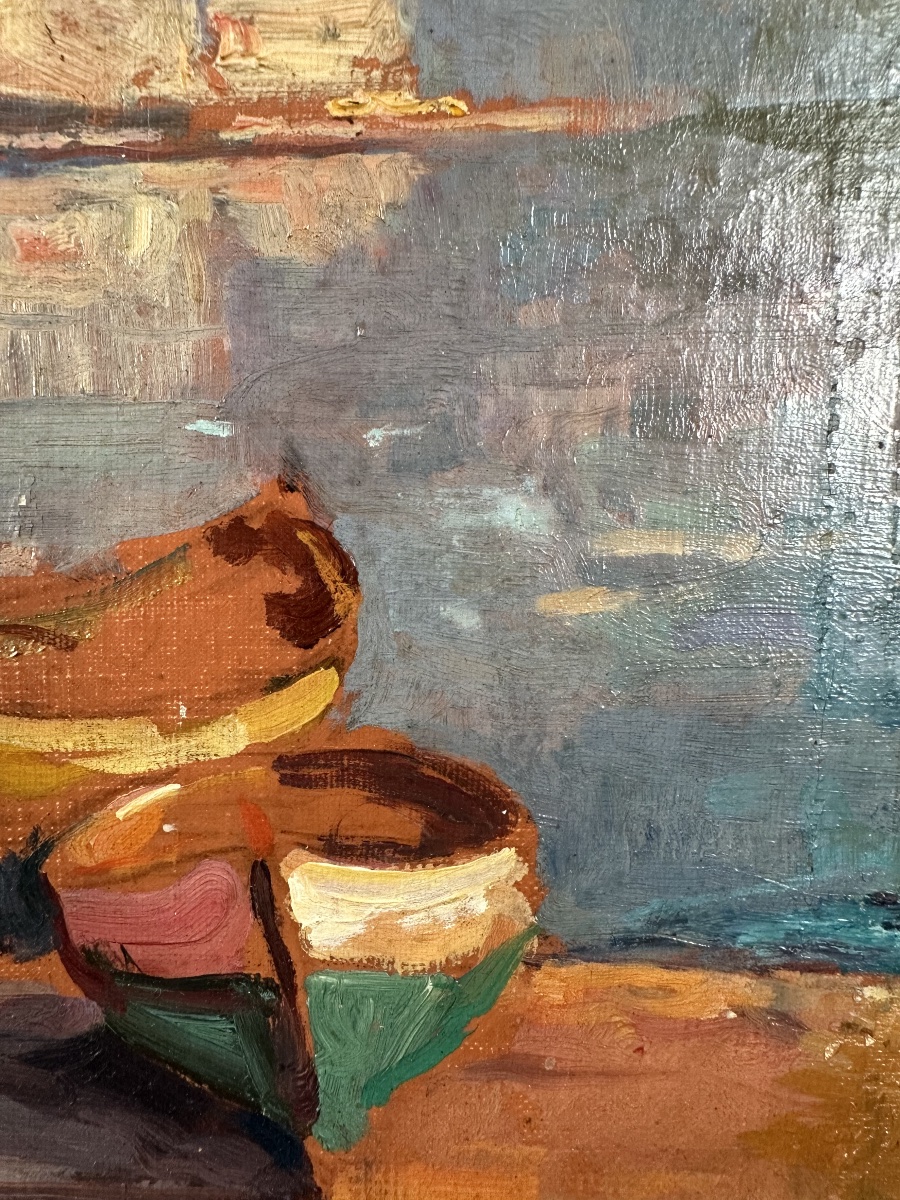
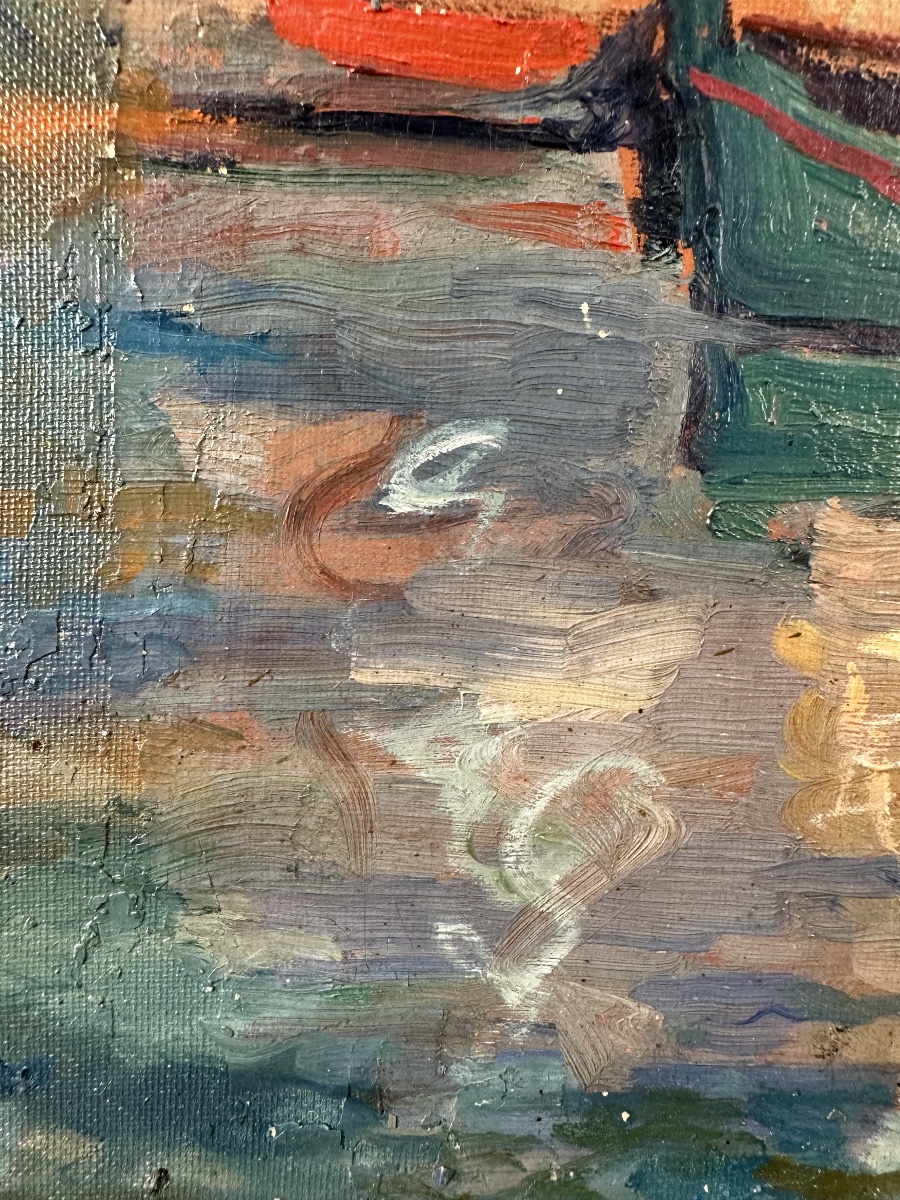
The painting combines Post-Impressionist brushwork with a freedom of colour recalling Fauvism. Orange, red and pink boats meet turquoise and blue-grey water; the clouds repeat these warmer tones, connecting sky and harbour. The large triangular sail structures the left side, while the foreground boats lead the eye towards the quay. Reflections applied in separate strokes give the water a quiet shimmer. The substantial paint surface models hulls and sails without making their outlines rigid.
Boats at rest
Several vessels gather in sheltered water before a luminous town marked by a tower. A large ochre sail rises on the left; on the right, red, yellow and green hulls line a pink-toned quay. The stillness allows the relationship between boats and reflections to become the principal subject. The dedication adds a personal dimension to the harbour view, although its recipient has not been identified. Within this horizontal format, Azéma creates a warm marine painting in which colour conveys atmosphere as much as form.
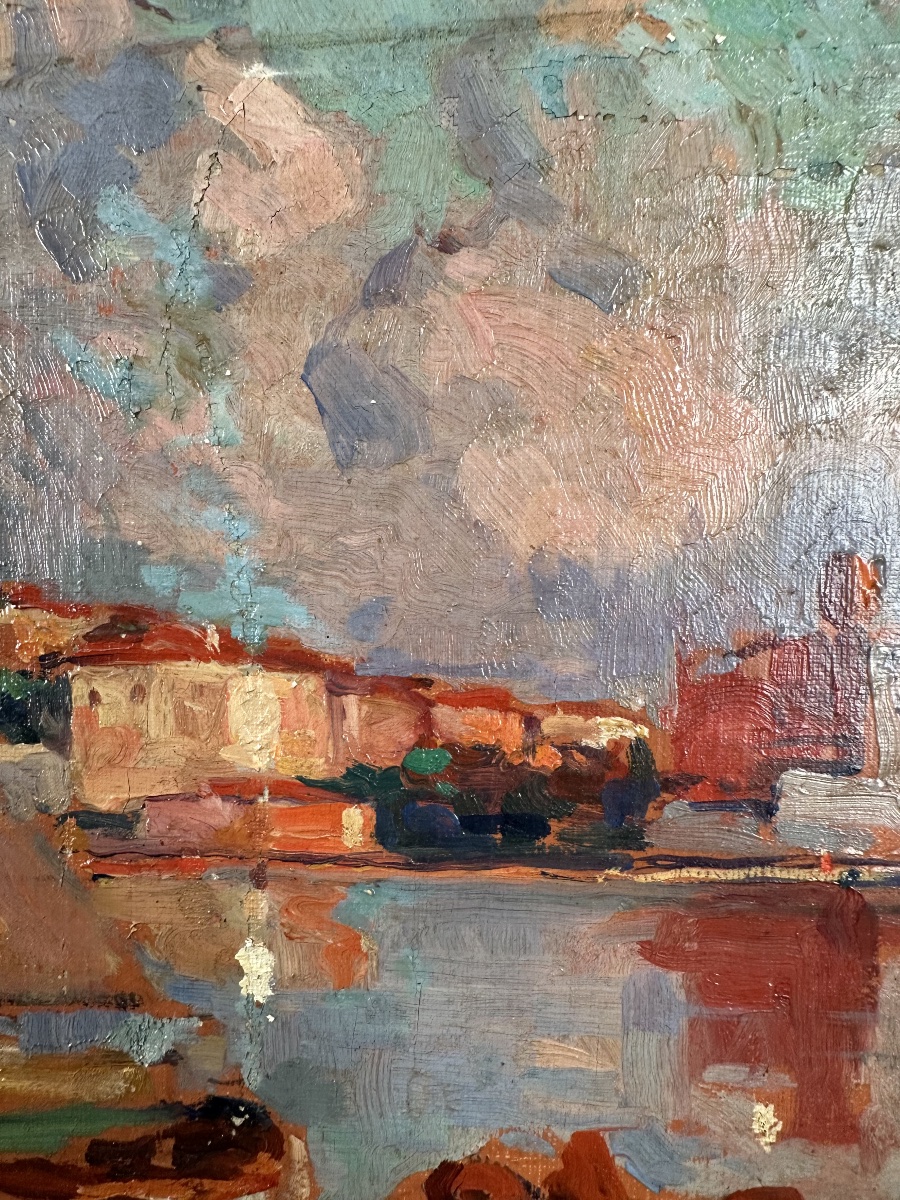
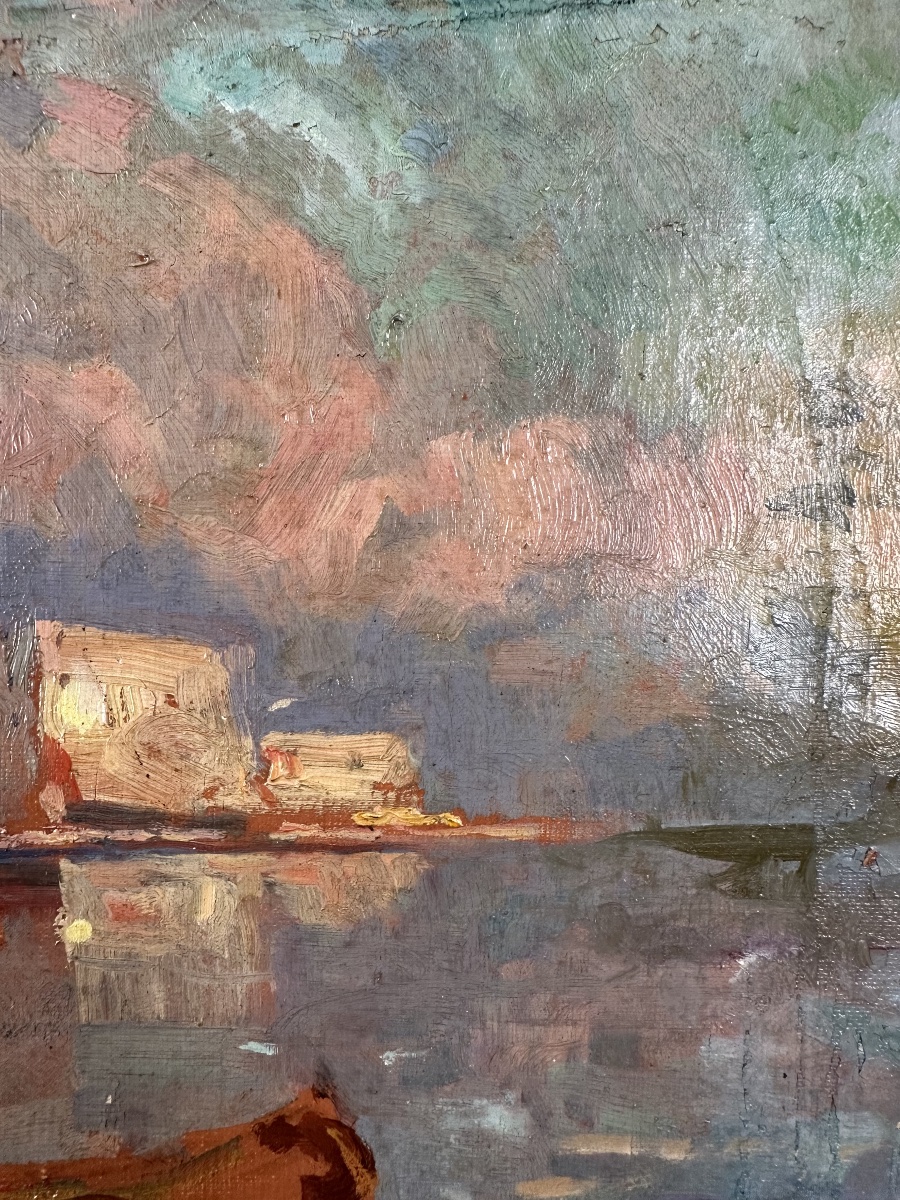
Condition: craquelure, particularly apparent on the right, and wear with small paint losses along the edges.
DEUTSCH
Louis Azéma (1876–1963)
Segelboote und Ruderboote in einem Mittelmeerhafen, 1933
Öl auf Leinwand — 38 × 61 cm
Unten rechts signiert, gewidmet und datiert; die Jahreszahl wird als „1933“ gelesen.
Ein Künstler zwischen Malerei und Musik
Louis Azéma wurde 1876 in Agde geboren und studierte an den Kunsthochschulen von Montpellier und Paris, unter anderem bei Gustave Moreau, François Flameng und Fernand Cormon. Im Salon von 1921 erhielt er eine Goldmedaille. Neben der Malerei verfolgte er eine Laufbahn als Opernsänger: Die französische Nationalbibliothek dokumentiert seinen Auftritt als Bartholo in Die Hochzeit des Figaro an der Opéra-Comique im Jahr 1919. Malerei und Gesang bildeten somit zwei parallele Bereiche seines künstlerischen Lebens. Das Musée des Augustins in Toulouse besitzt sein Gemälde L’Arracheur de pommes de terre, das 1949 im Salon erworben wurde. Die auf 1933 datierte Hafenansicht gehört zu seiner reifen Schaffenszeit. Ausbildung und Auszeichnung, BnF, Musée des Augustins.
Licht aus Farbe
Das Gemälde verbindet eine postimpressionistische Pinselführung mit einer an den Fauvismus erinnernden Freiheit der Farbe. Orange, Rot und Rosa der Boote treffen auf Türkis und Blaugrau des Wassers. Die Wolken greifen die warmen Töne auf und verbinden Himmel und Hafen. Das große dreieckige Segel gliedert die linke Bildhälfte; die Boote im Vordergrund führen den Blick zum Kai. In einzelnen Pinselzügen gesetzte Spiegelungen verleihen dem Wasser ein ruhiges Schimmern. Der kräftige Farbauftrag modelliert Rümpfe und Segel, ohne ihre Umrisse zu verhärten.
Ruhende Boote
Mehrere Boote liegen im geschützten Wasser vor einer hellen, von einem Turm geprägten Stadt. Links erhebt sich ein großes ockerfarbenes Segel; rechts säumen rote, gelbe und grüne Bootsrümpfe einen rosafarbenen Kai. Die Ruhe der Szene lässt das Zusammenspiel der Boote mit ihren Spiegelungen hervortreten. Die Widmung verleiht der Hafenansicht eine persönliche Dimension, auch wenn ihr Empfänger bislang nicht identifiziert ist. Im Querformat schafft Azéma ein warmtoniges Hafenbild, in dem Farbe gleichermaßen Atmosphäre und Form vermittelt.
Erhaltung: Krakelee, besonders rechts sichtbar, sowie Bereibungen und kleine Farbausbrüche an den Rändern.
Period: 19th century
Style: Other Style
Condition: Excellent condition
Material: Oil painting
Reference (ID): 1845578
Availability: In stock