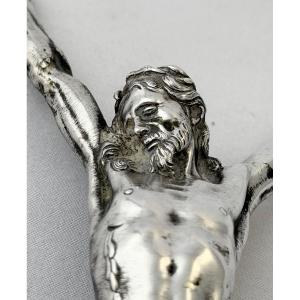


Flanders, 1680–1720, Solid Silver And Vermeil, Corpus Christi In Cast Silver
Corpus Christi made of solid silver and vermeil
Date: 1680–1720
Solid silver, cast and chased; perizonium in vermeil
Dimensions: 20 × 9 cm — Weight: 250 g
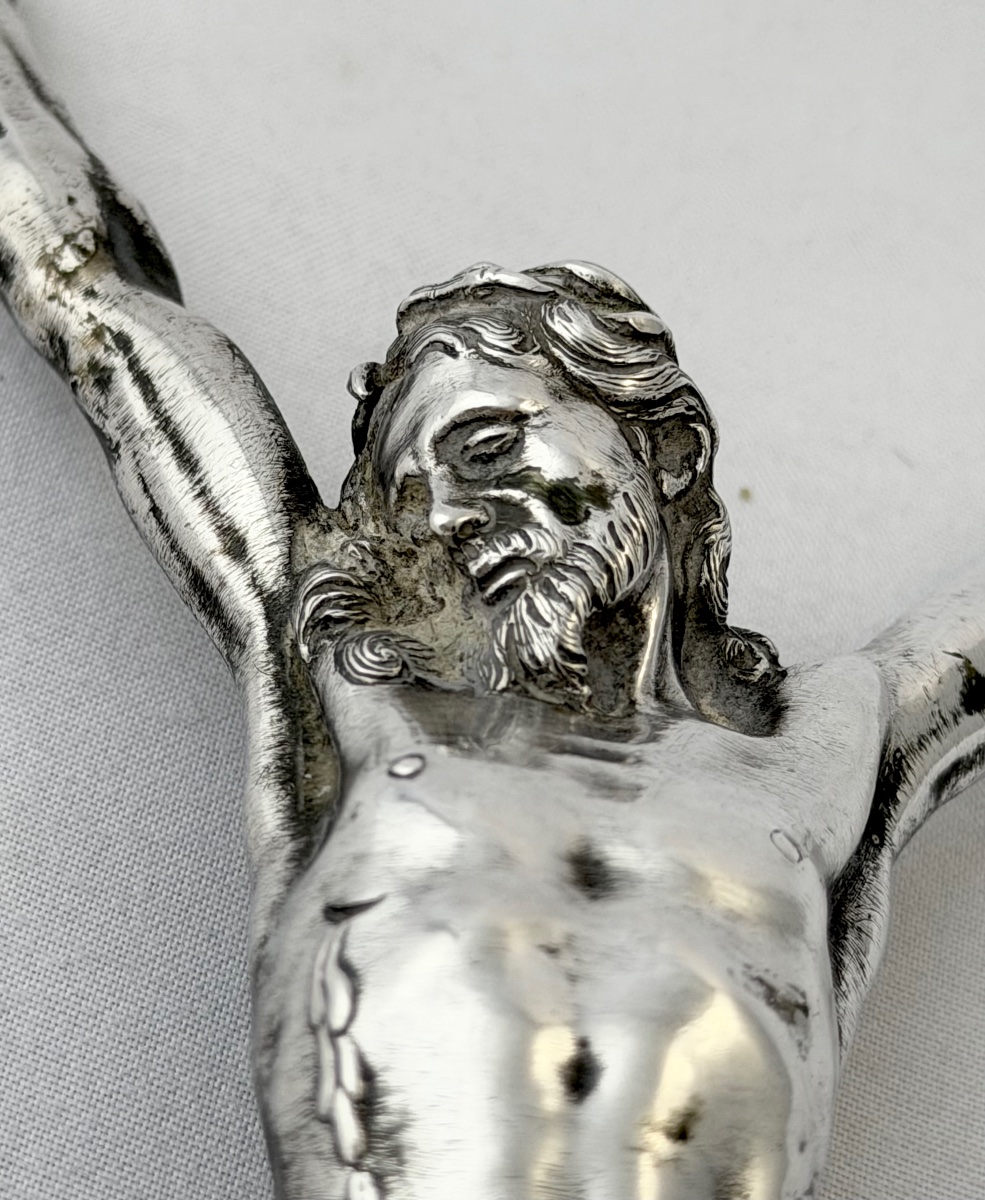
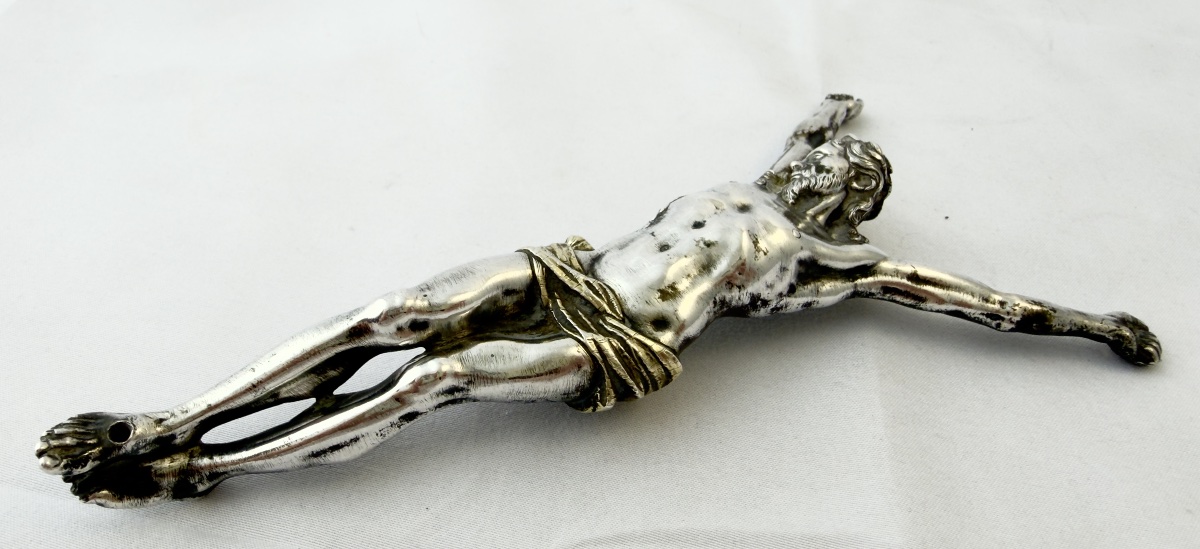
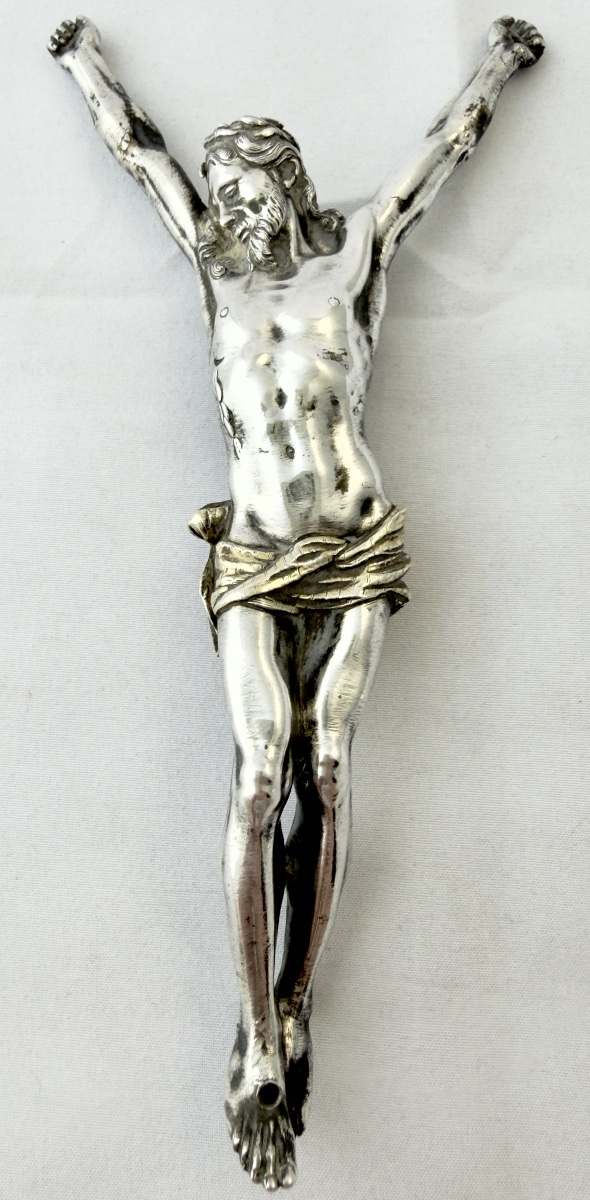
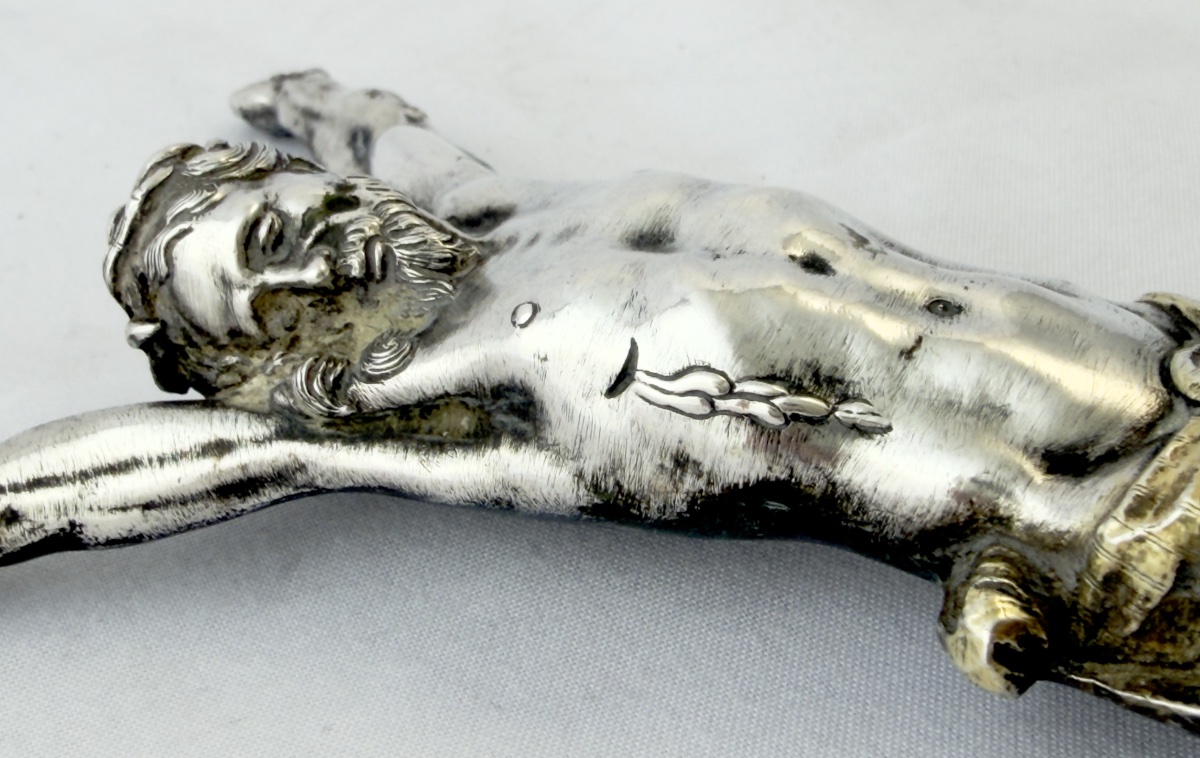
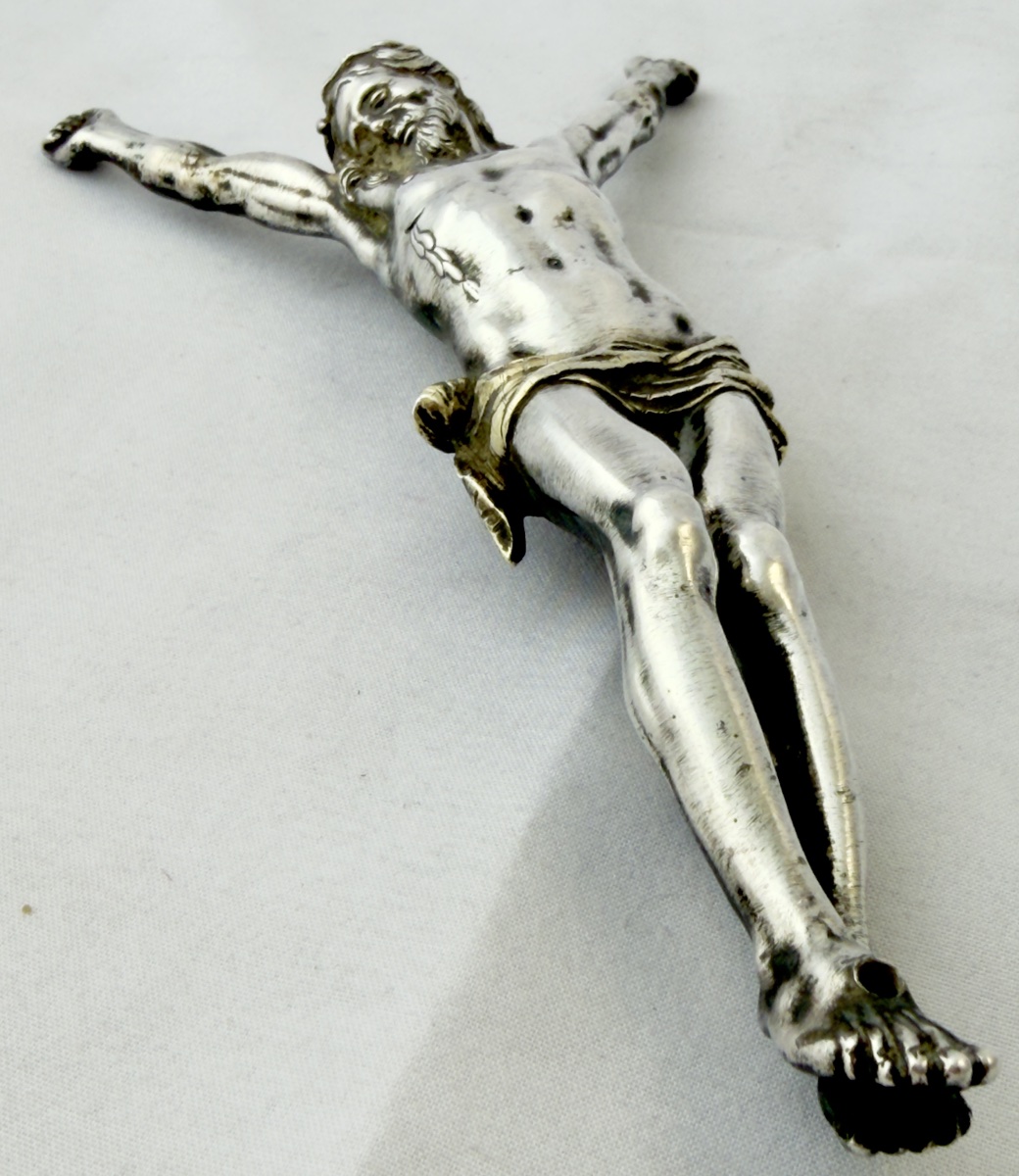
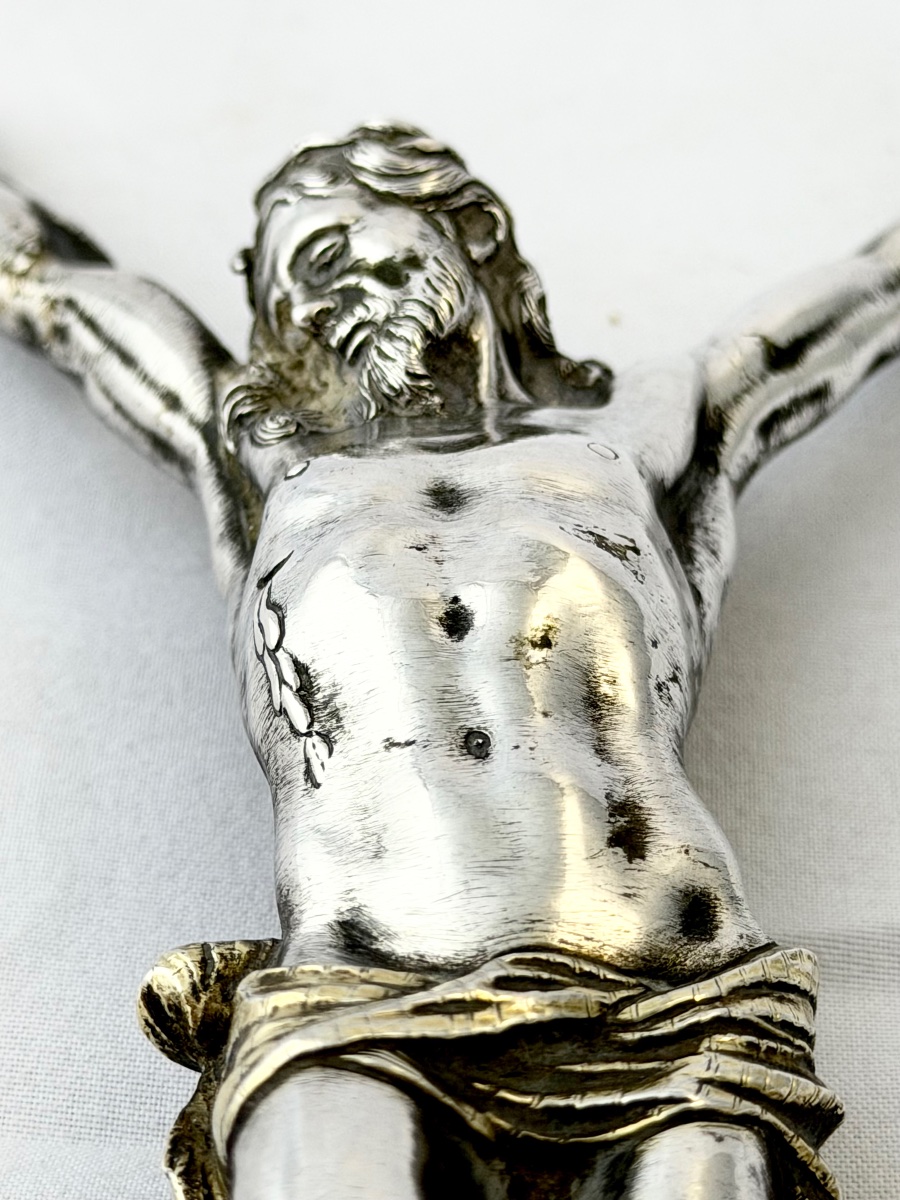
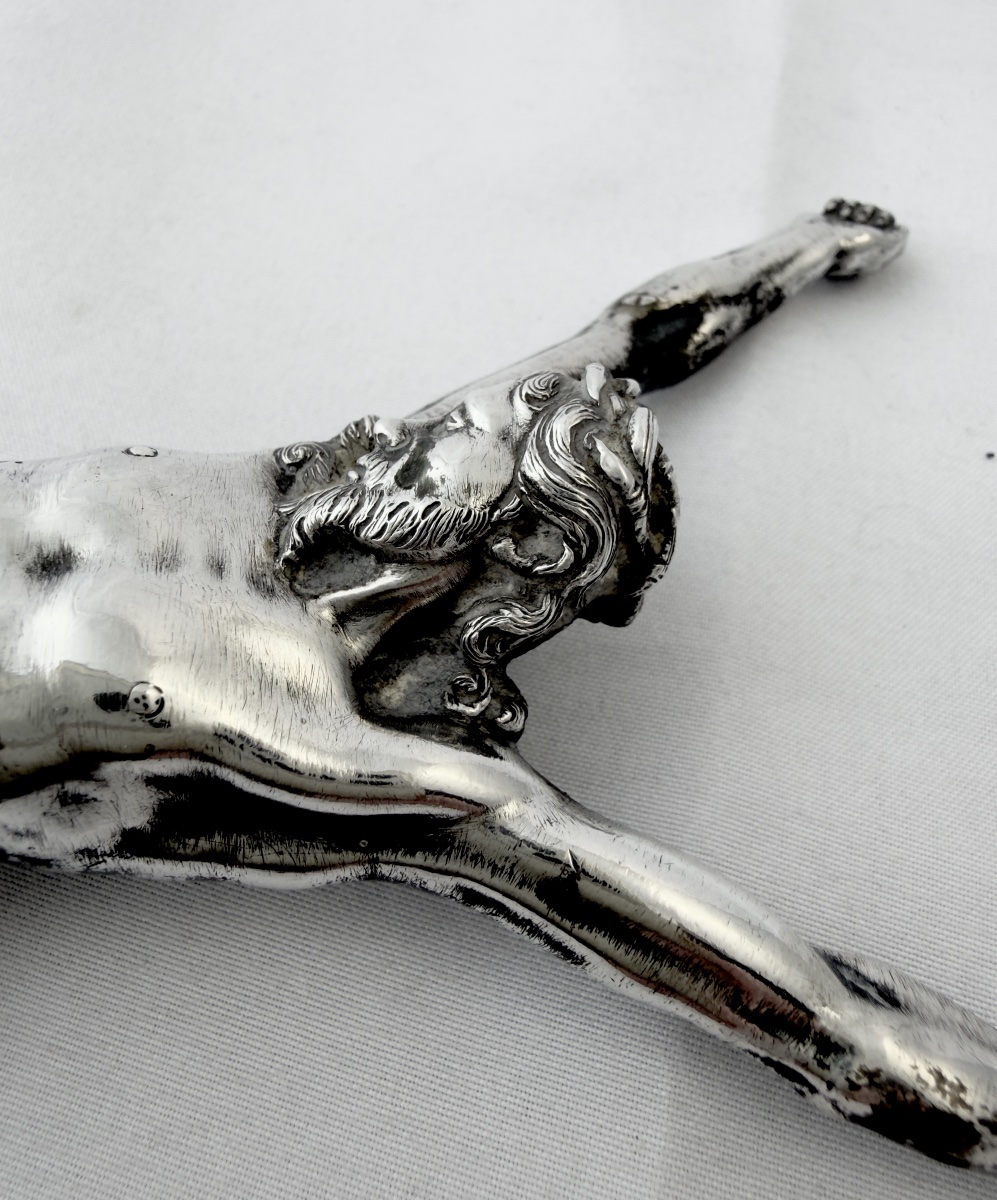
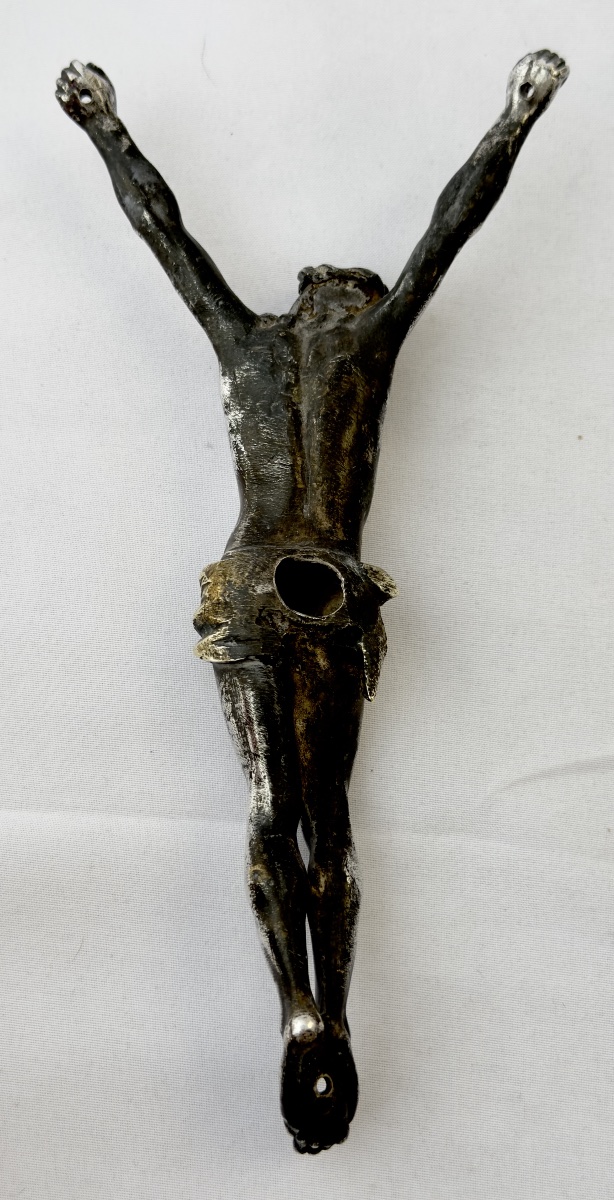
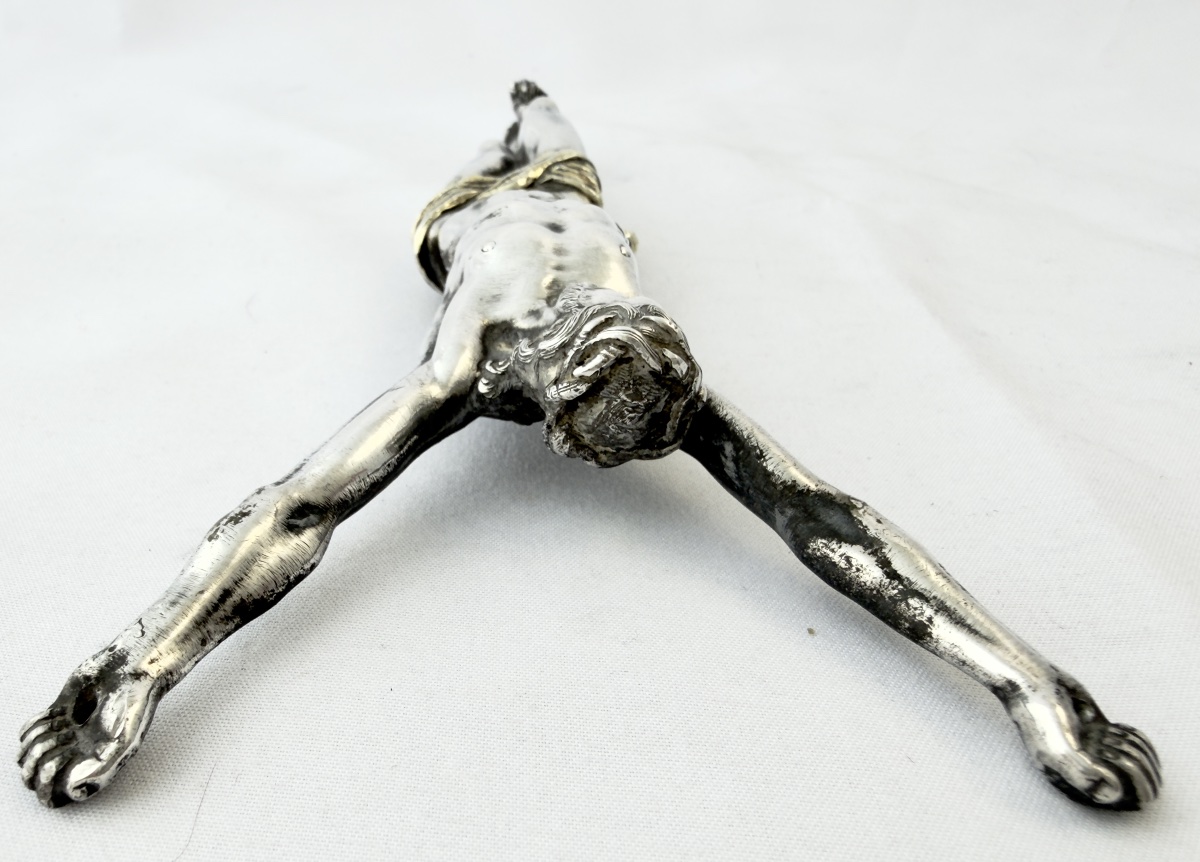
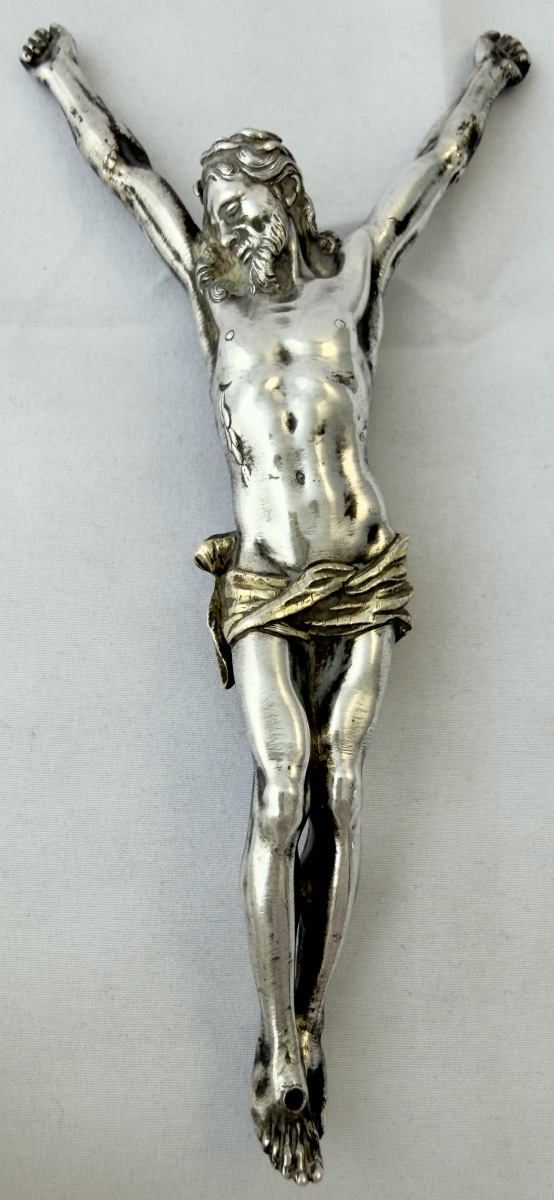
This Corpus Christi stands out for the finesse of its craftsmanship and the refinement of its chasing. The slender body features carefully modeled anatomy: the tension in the arms, the contours of the chest, the shape of the abdomen, and the articulation of the legs are rendered with great sensitivity. The head is tilted toward the right shoulder; the lowered eyelids and slightly parted mouth give the face an expression of contemplation and surrender. The hair, composed of long, wavy strands, and the beard are the result of particularly delicate craftsmanship.
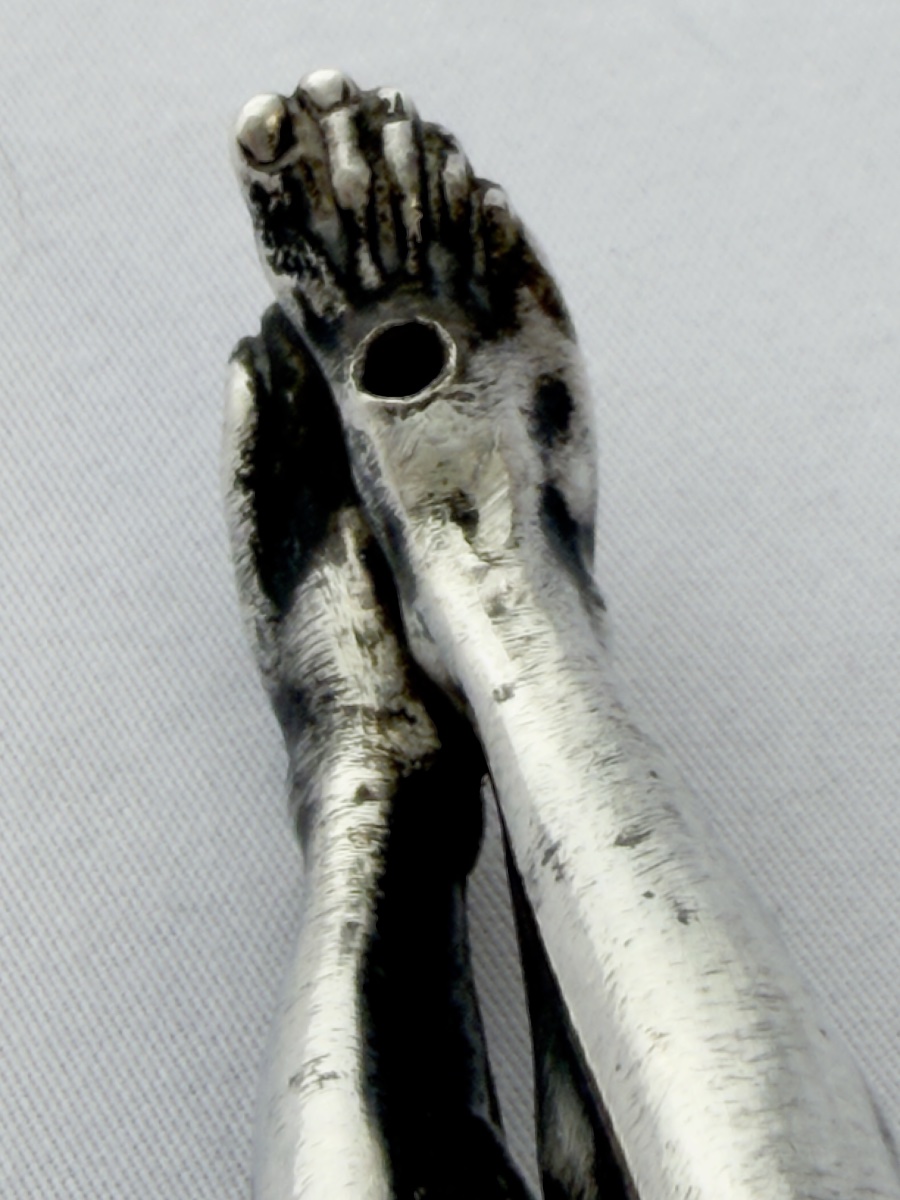
The wound in the right side is emphasized by engraved streaks of blood. The legs are drawn together and the feet overlap, while the piercings in the hands and feet correspond to the crucifixion of the figure.
The perizonium—the cloth draped around Christ’s loins—is made of vermeil, that is, gold-plated silver. Its diagonal, overlapping folds, gathered on the right side of the figure, bring the composition to life. The gilding creates a warm contrast with the silver of the body and highlights the richness of the drapery.
This is a piece cast in silver and then carefully chiseled, rather than a figure created by hammering or embossing a sheet of silver. The quality of the modeling and the precision of the details give this piece of silverwork the character of a true sculpture. Its stylistic features allow it to be dated between 1680 and 1720.
The most striking iconographic feature lies in the position of the arms. Instead of spreading out almost horizontally to form a T-shaped silhouette with the body, they rise above the shoulders, giving Christ a distinctive Y-shaped silhouette. This arrangement accentuates the elongation of the body and conveys the weight of the suspended figure.
This style was widely used in Baroque art, particularly in the work of Peter Paul Rubens. Drawing inspiration from the great Italian Renaissance masters, Rubens developed depictions of the Crucifixion in which the raised arms heighten the anatomical tension and dramatic intensity. This style has notably been compared to Michelangelo’s *The Punishment of Haman* in the Sistine Chapel.
It finds a particularly remarkable sculptural interpretation in the work of the Bavarian artist Georg Petel (1601/02–1634), a contemporary of Rubens who was deeply influenced by his art. Petel created ivory figures of Christ with arms raised high. This composition also offers a technical advantage: it allows the body and arms to be carved from a single piece of ivory, whereas figures with arms spread wide often require the arms to be carved separately and then assembled.
Petel also helped popularize the perizonium held in place by a cord, whose drapery reveals a significant portion of the thigh. This treatment combines the fluidity of the fabric with the figure’s anatomical naturalism. (okv.be)
These innovations found numerous variations in 17th-century European sculpture, particularly in the works associated with François Duquesnoy, a Flemish sculptor based in Rome, and in the Christs attributed to the Antwerp sculptor Matthieu van Beveren. The works attributed to van Beveren are distinguished in particular by their slender proportions and the attention paid to the effect of gravity on the body. (sothebys.com)
The Louvre thus holds an ivory Christ, dated to around 1700–1715, which is inspired by a prototype housed at St. John Lateran in Rome and attributed to Duquesnoy. The museum highlights the elongated form of this model and the nearly vertical position of its arms. This comparison sheds light on the iconographic tradition to which this body of work belongs. (collections.louvre.fr)
This history ultimately calls for a nuanced understanding of the traditional term “Jansenist Christ,” often used to refer to depictions of Christ with his arms close together. This posture has sometimes been interpreted as expressing a salvation reserved for a select few. However, the position of the arms alone is not sufficient to establish such a meaning: Rubens’s models predate the 1640 publication of Cornelius Jansenius’s *Augustinus*. For this body of work, the designation “Christ in the Y-position in the Flemish Baroque tradition” therefore seems more precise and historically better grounded. (sothebys.com, revuedesdeuxmondes.fr)
Period: 17th century
Style: Louis 14th, Regency
Condition: Excellent condition
Material: Sterling silver
Length: 20 cm
Width: 9 cm
Reference (ID): 1838464
Availability: In stock