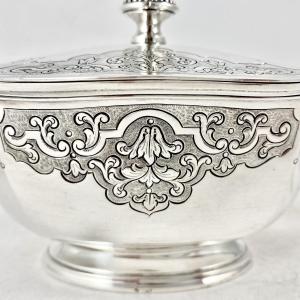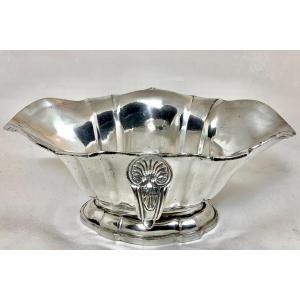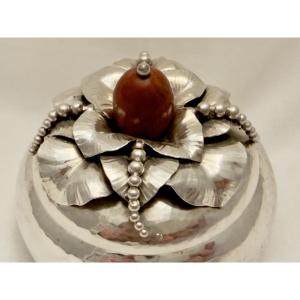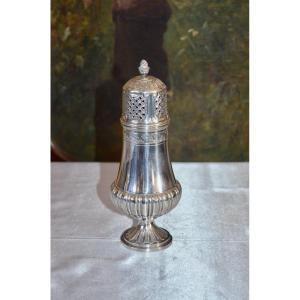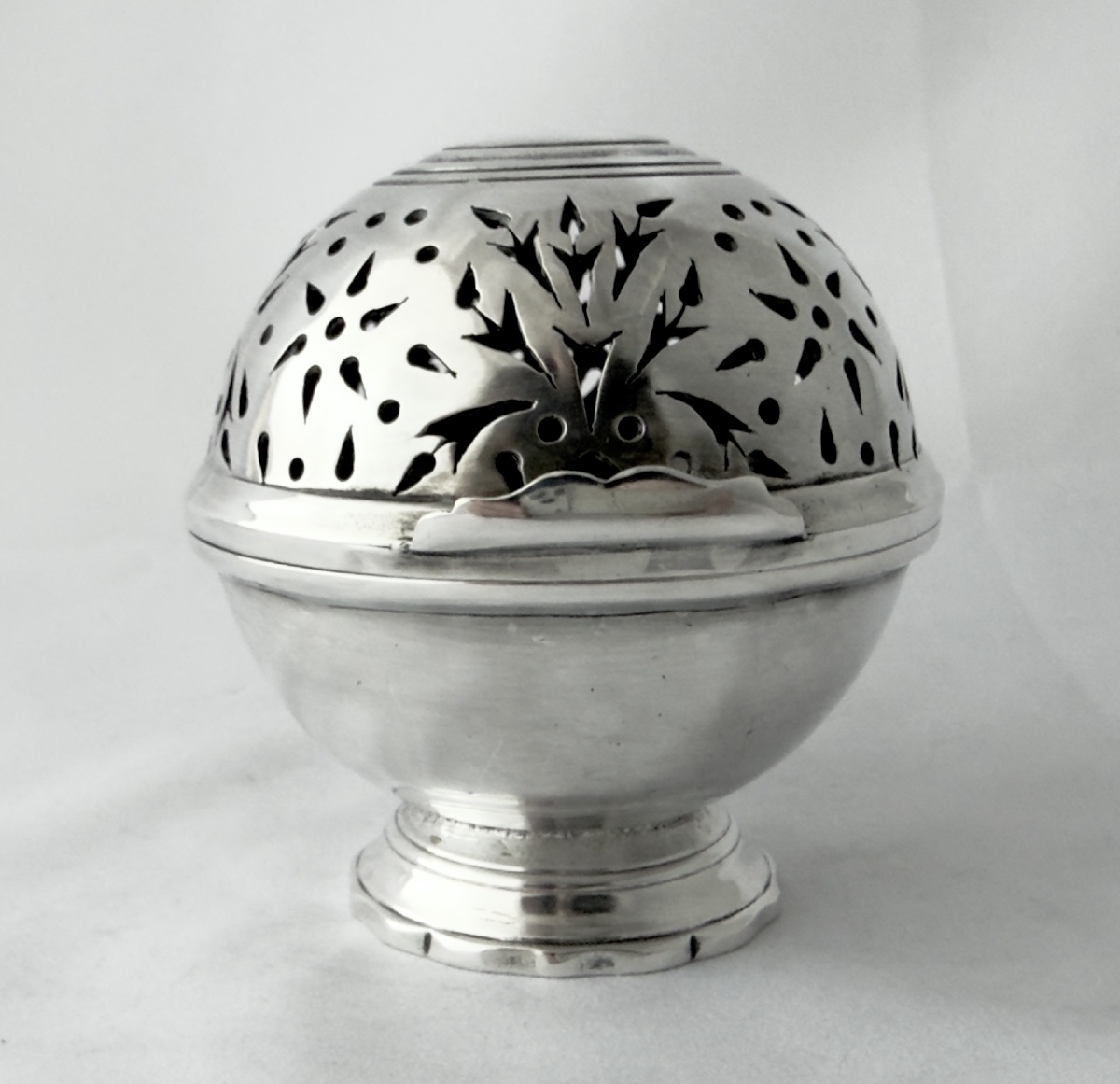
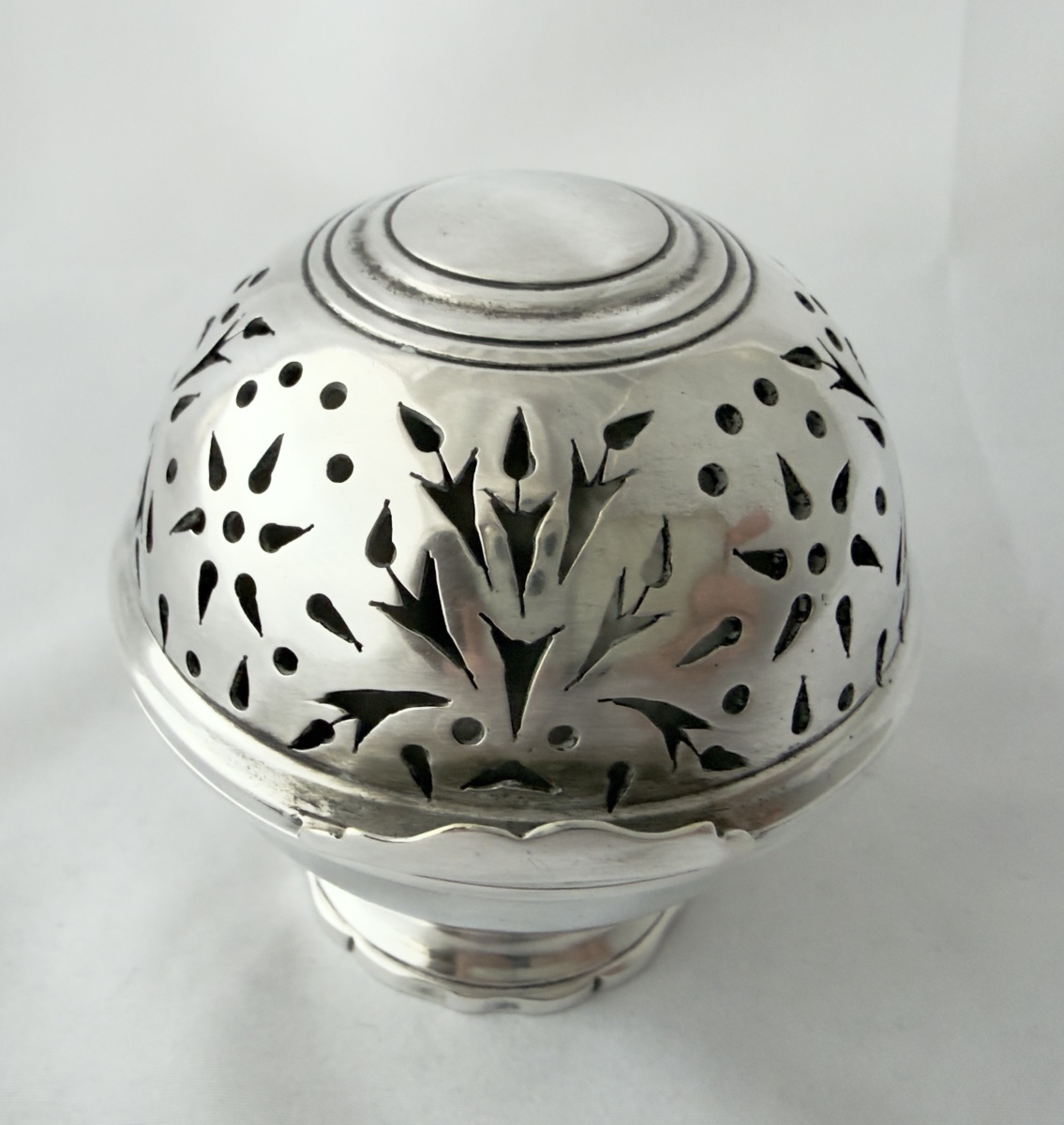
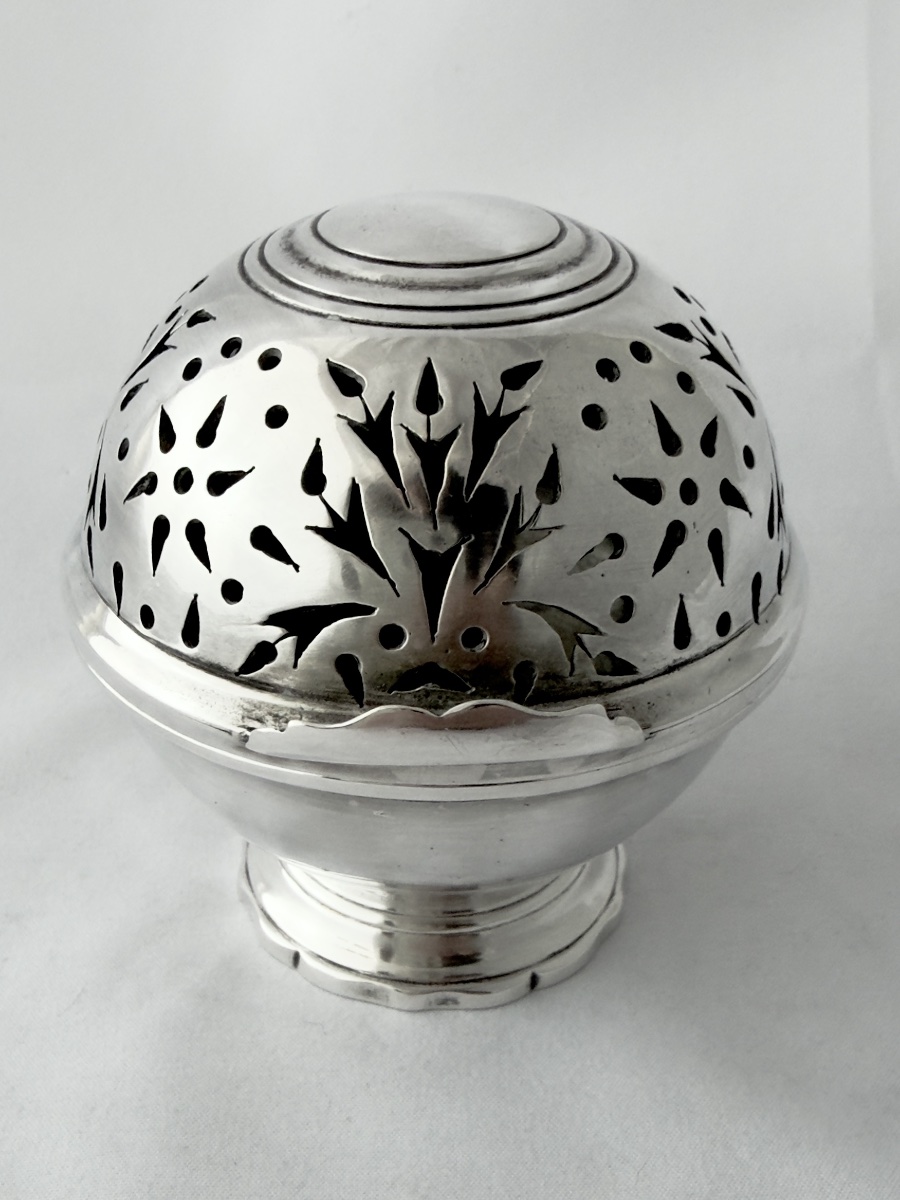
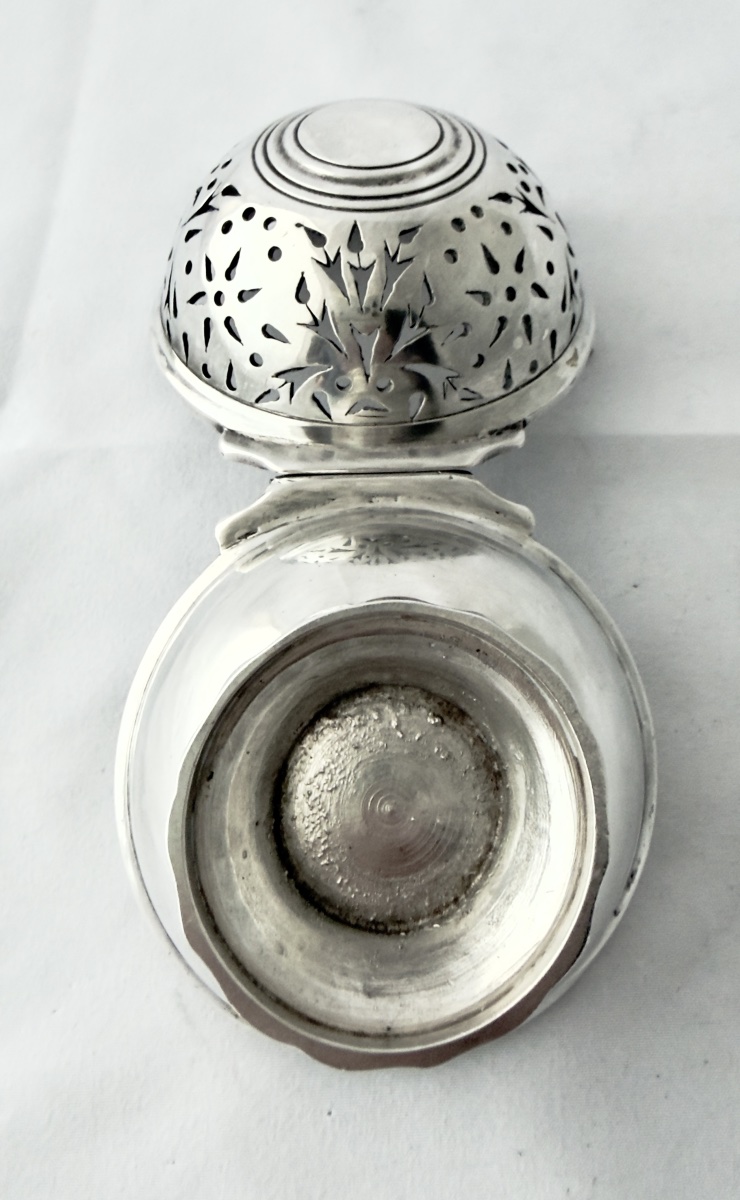
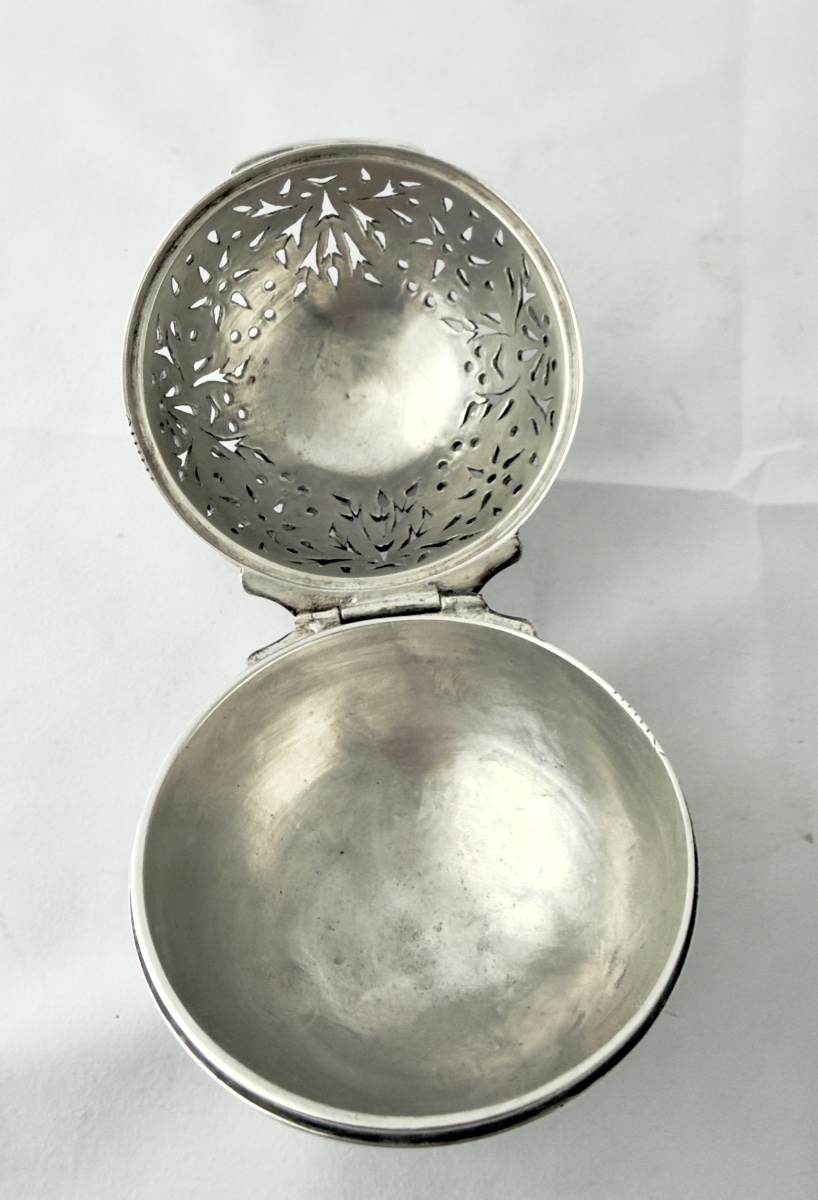
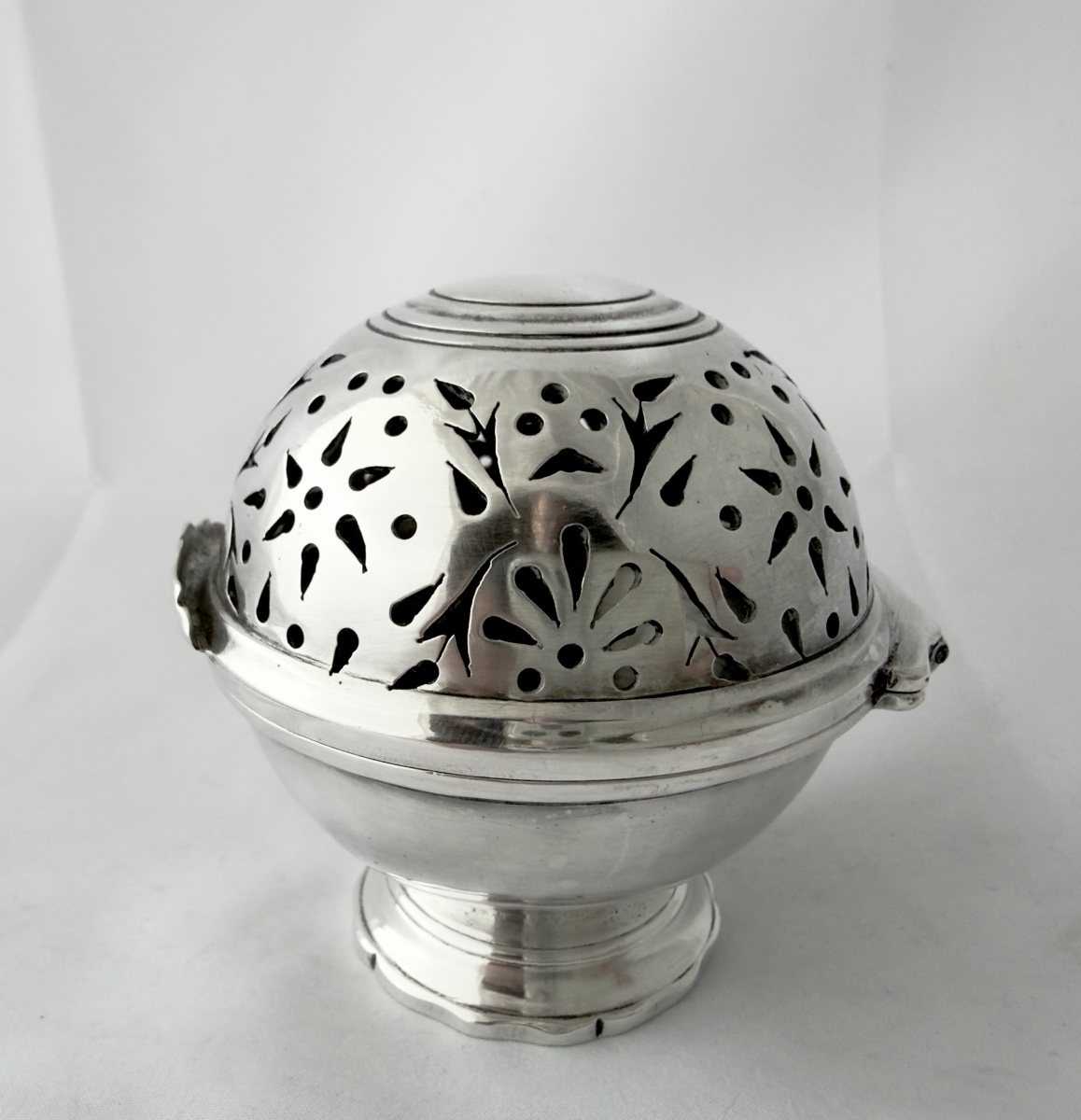
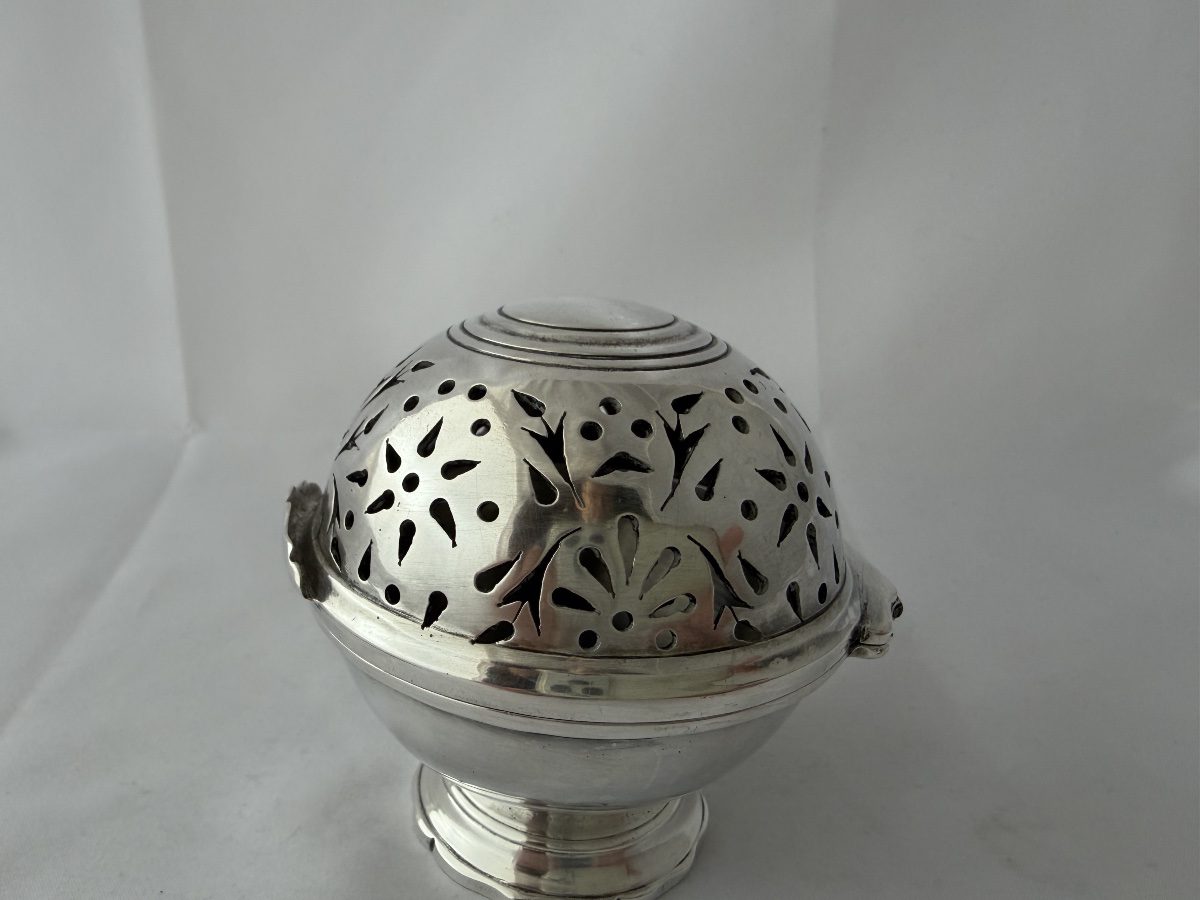
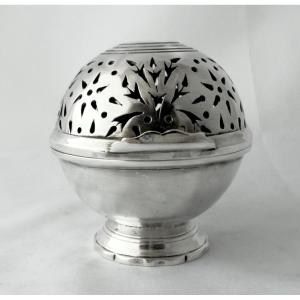


France, 1740–1770, Silver-plated Metal, Sponge Ball, Re-silvered In The 20th Century
Soap bowls and sponge bowls first appeared in the 18th century as refined accessories for aristocratic and men’s grooming routines. Generally designed as a pair, they often took the form of two small spherical silver containers. The first, completely sealed, held soap, which was frequently sold in the form of a ball at the time. The second was openwork to allow air to circulate and enable the damp sponge to dry.
These objects were often used alongside the shaving basin and the various utensils employed for shaving, hairstyling, and facial care. Their presence in France is attested at least as early as the 1730s, as evidenced by a pair made in Douai around 1739. They appear to have enjoyed their greatest popularity between the mid-18th century and the third quarter of the 18th century, a period during which Parisian and provincial silversmiths produced richly chased examples, some bearing coats of arms. The pair made in Paris by François Joubert in 1765–1766, now housed at the Louvre, perfectly illustrates the combination of practical function, luxury, and decorative refinement that characterized the toiletries sets of the era.
In the 18th century, natural sponges were a widely known and commercially available toiletries product in France, although they were primarily imported from the Mediterranean regions. Sponges were harvested primarily along the coasts of the eastern Mediterranean and North Africa, then transported to major trading ports. Marseille played a key role in their importation and distribution throughout the French market, while merchants based in Livorno were actively involved in the trade of sponges from Barbary.
Soft, absorbent, and reusable, the sponge was used for personal hygiene—both for the body and the face—as well as by barbers and wigmakers. Its presence in toiletries, inventories, and travel kits indicates a sufficiently widespread use to justify the manufacture of a container specifically designed to hold it. It is important, however, to distinguish between social practices: the ornate silver sponge boxes belonged to the wealthy, while the sponge itself could be used much more widely in ordinary containers. The openwork box served a practical purpose: to dry the sponge and limit the effects of prolonged moisture.
Period: 18th century
Style: Louis 14th, Regency
Condition: Perfect condition
Material: Silver metal
Reference (ID): 1782362
Availability: In stock