

17th Century Solid Silver Blessing Box
Brussels, c. 1690, Spanish Netherlands, Johannes Du Ry, master silversmith
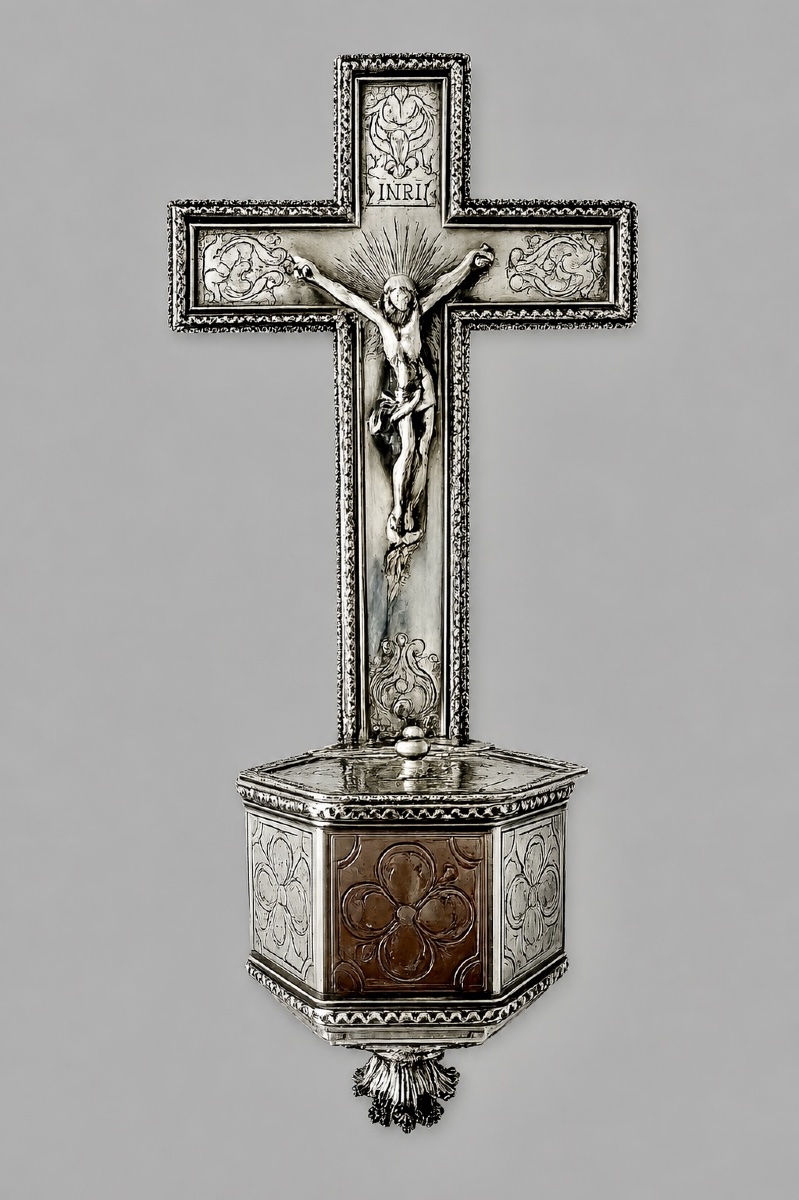
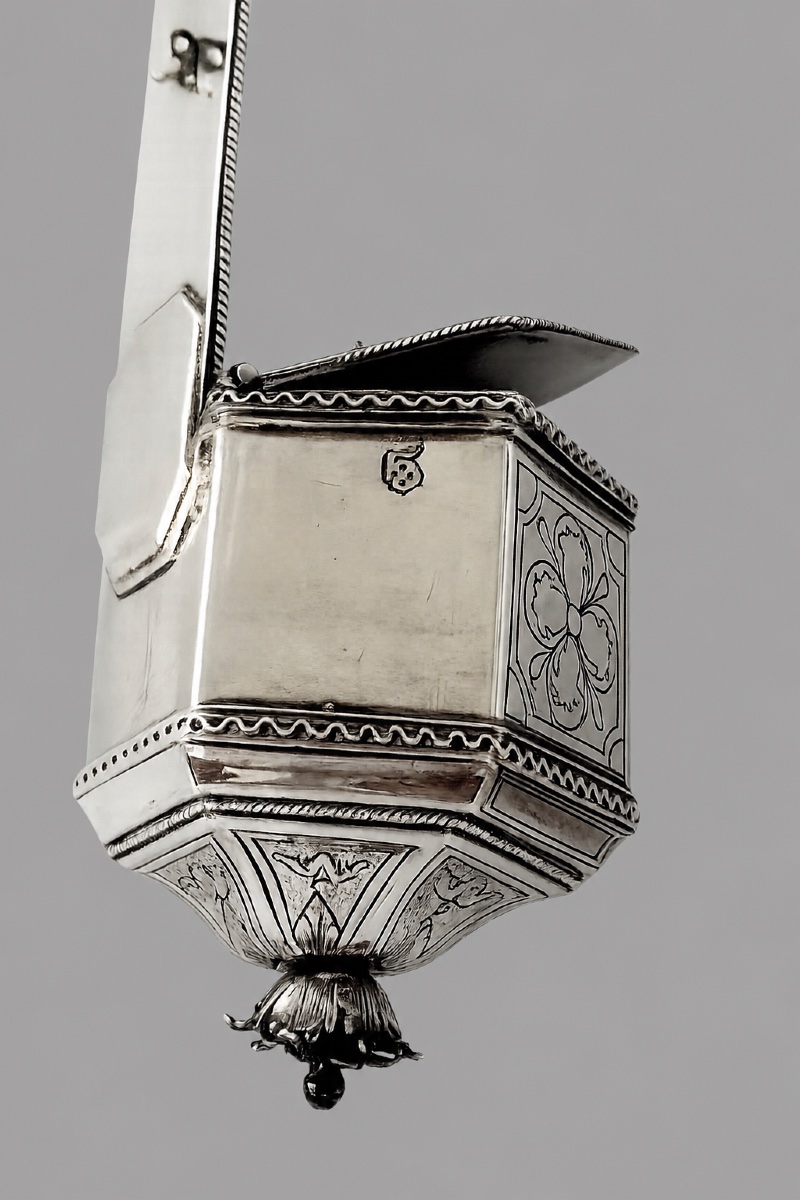
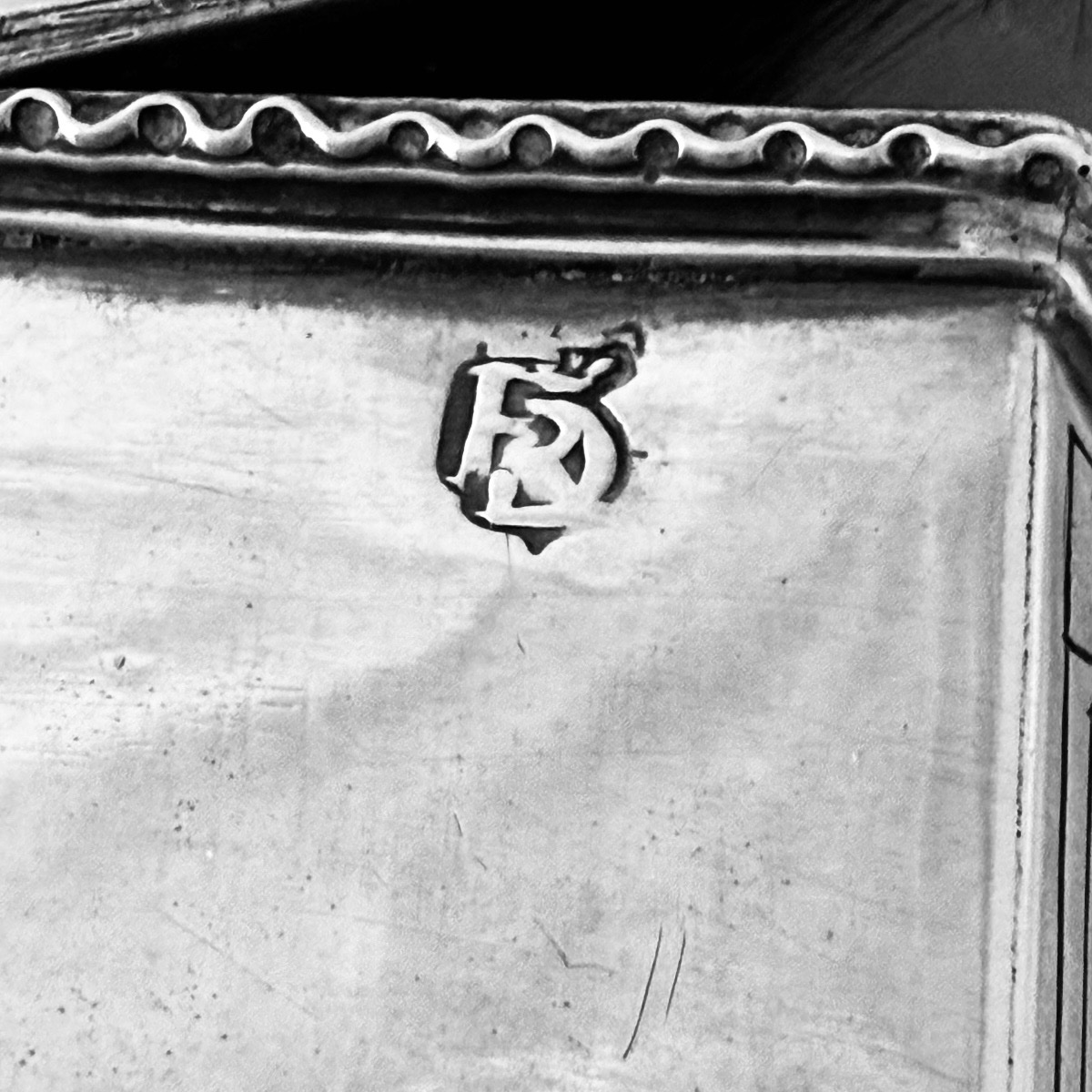
A rare solid-silver wall-mounted holy water font made in Brussels in the late 17th century by master silversmith Johannes Du Ry; his RD hallmark is preserved on the side of the reservoir.
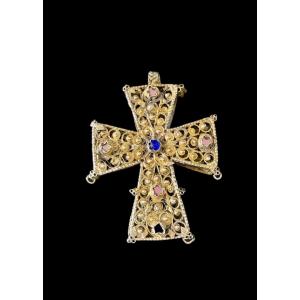
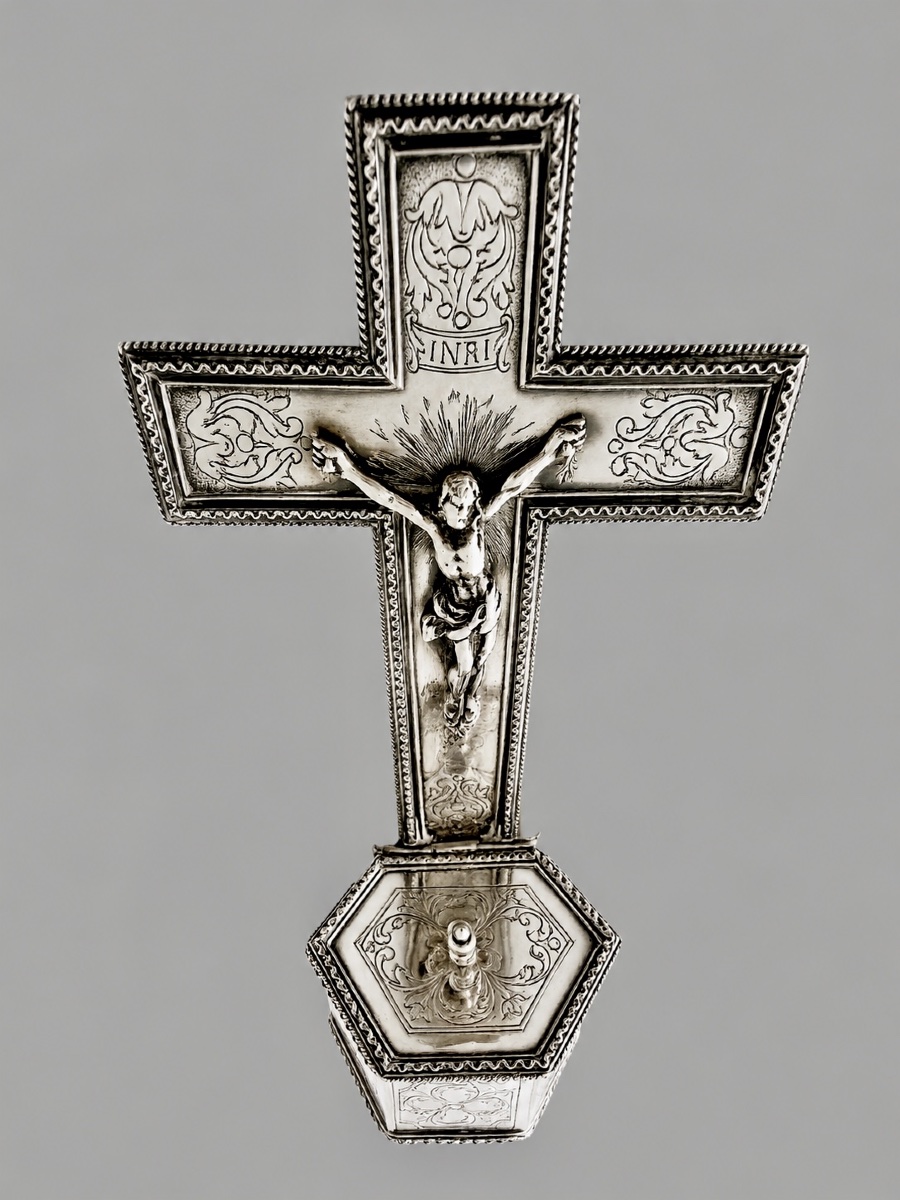
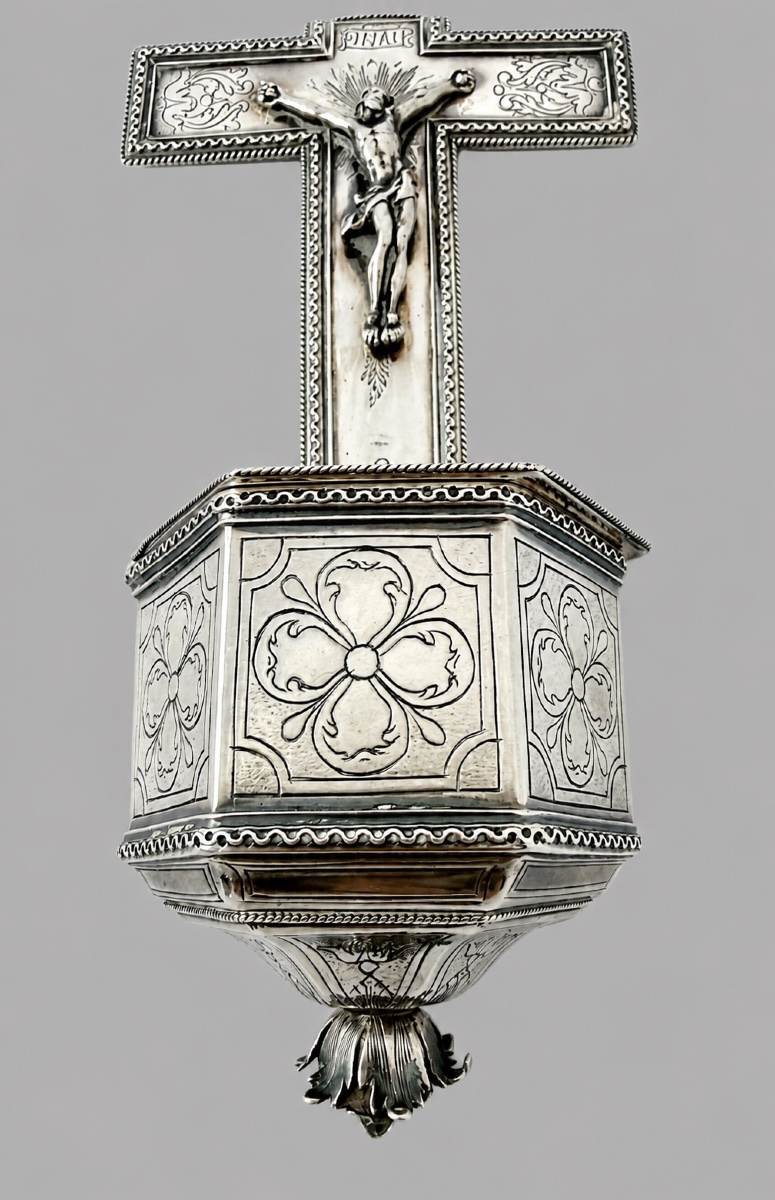
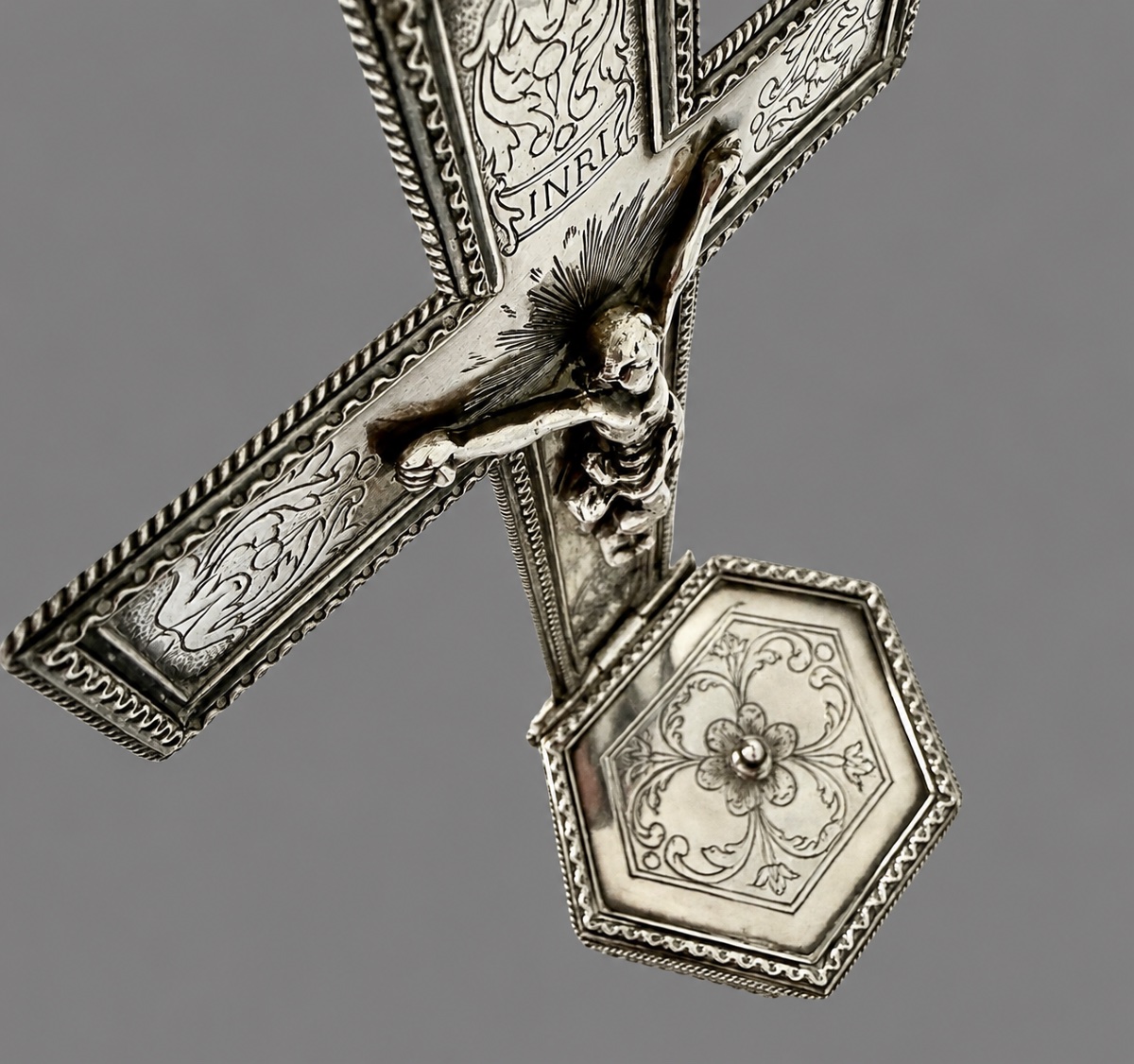
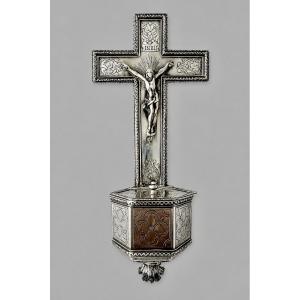
The piece consists of a Latin cross surmounting a hexagonal reservoir fitted with a hinged lid, designed to hold holy water. With its balanced composition and rich decoration, this work stands as a remarkable example of late 17th-century religious silverwork from Brussels.
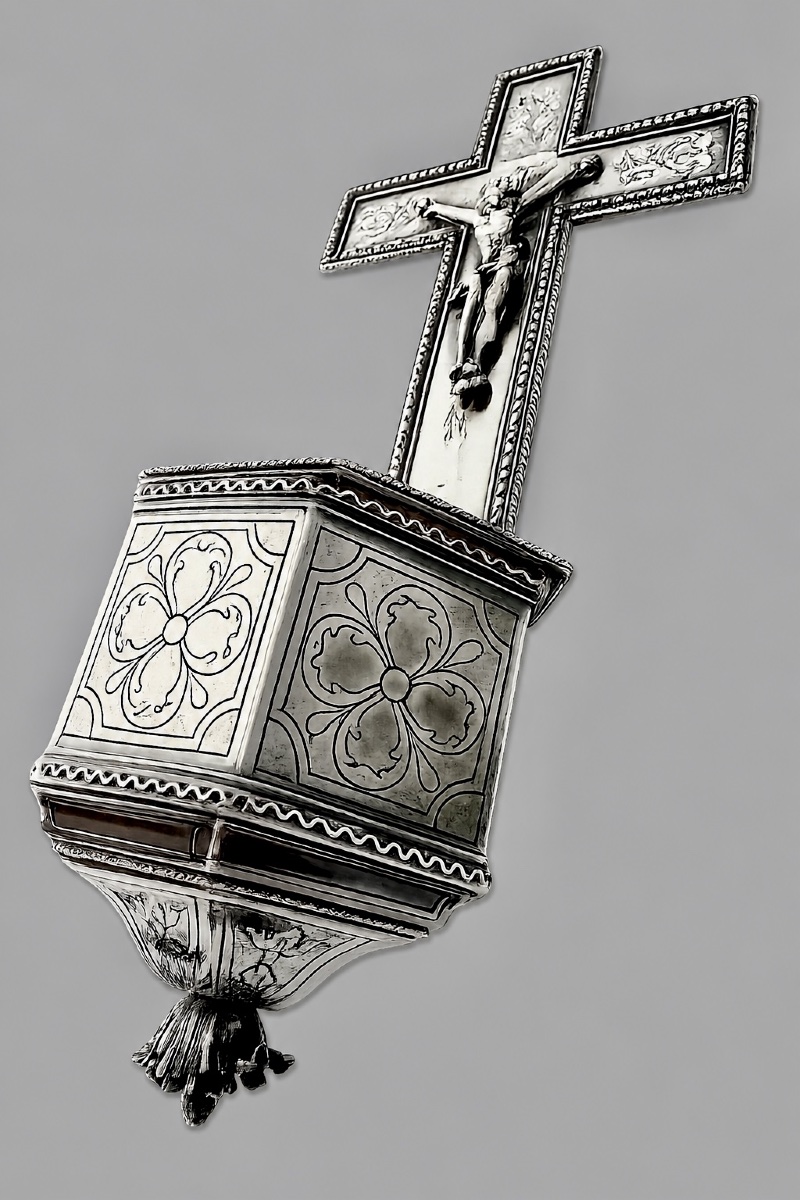
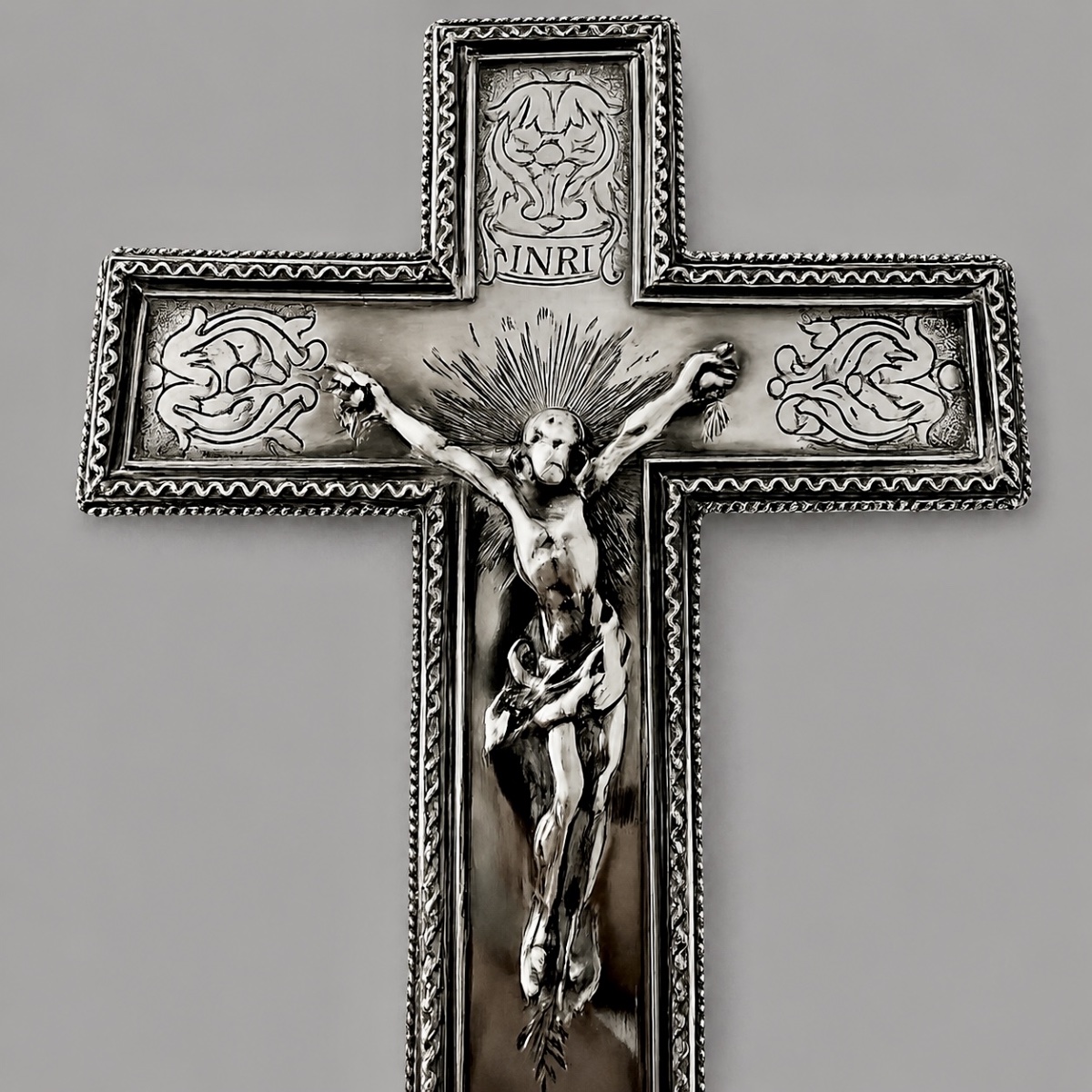
The cross, accented with twisted wires and delicate applied wavy friezes, is adorned with leaf scrolls engraved on an amati background. Christ, cast and then entirely reworked with a chisel, stands out in high relief against a radiating, engraved halo. His slender physique, the rendering of the perizonium, and the expressiveness of his face are fully in keeping with the Baroque style of the former Southern Netherlands. The INRI inscription, set within a cartouche, completes the composition.
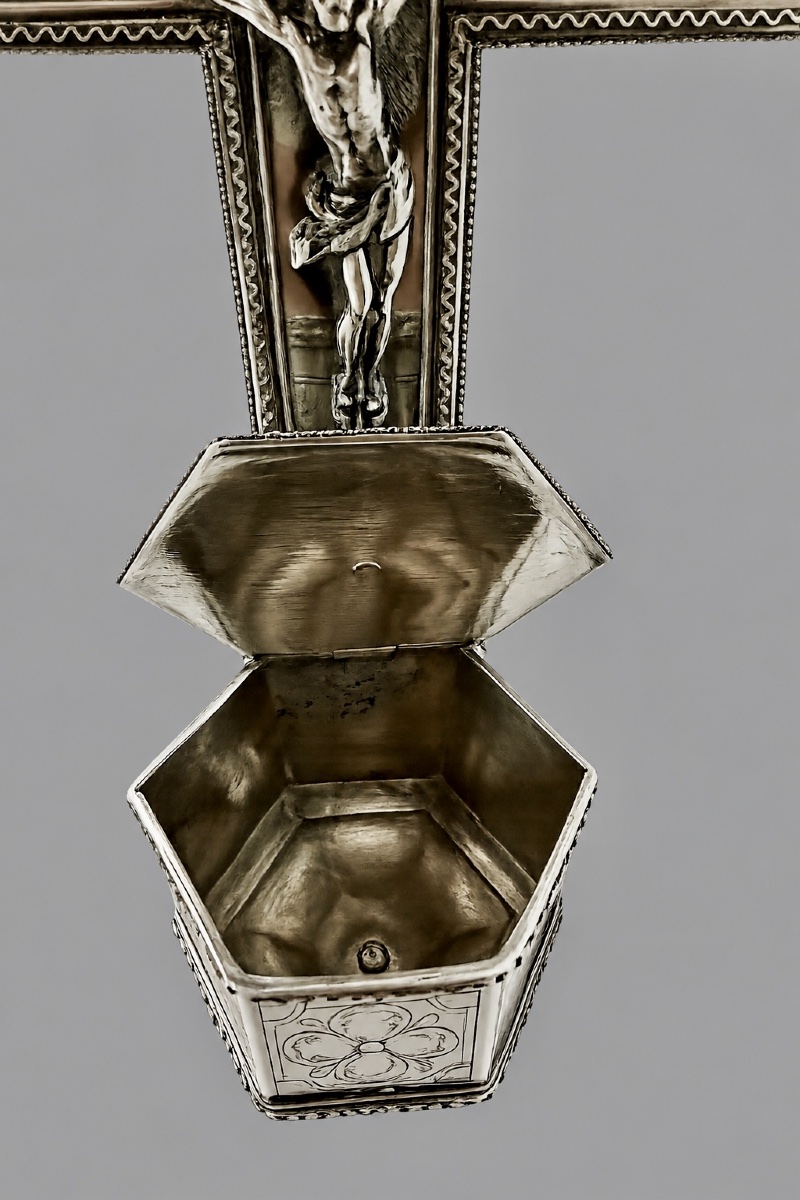
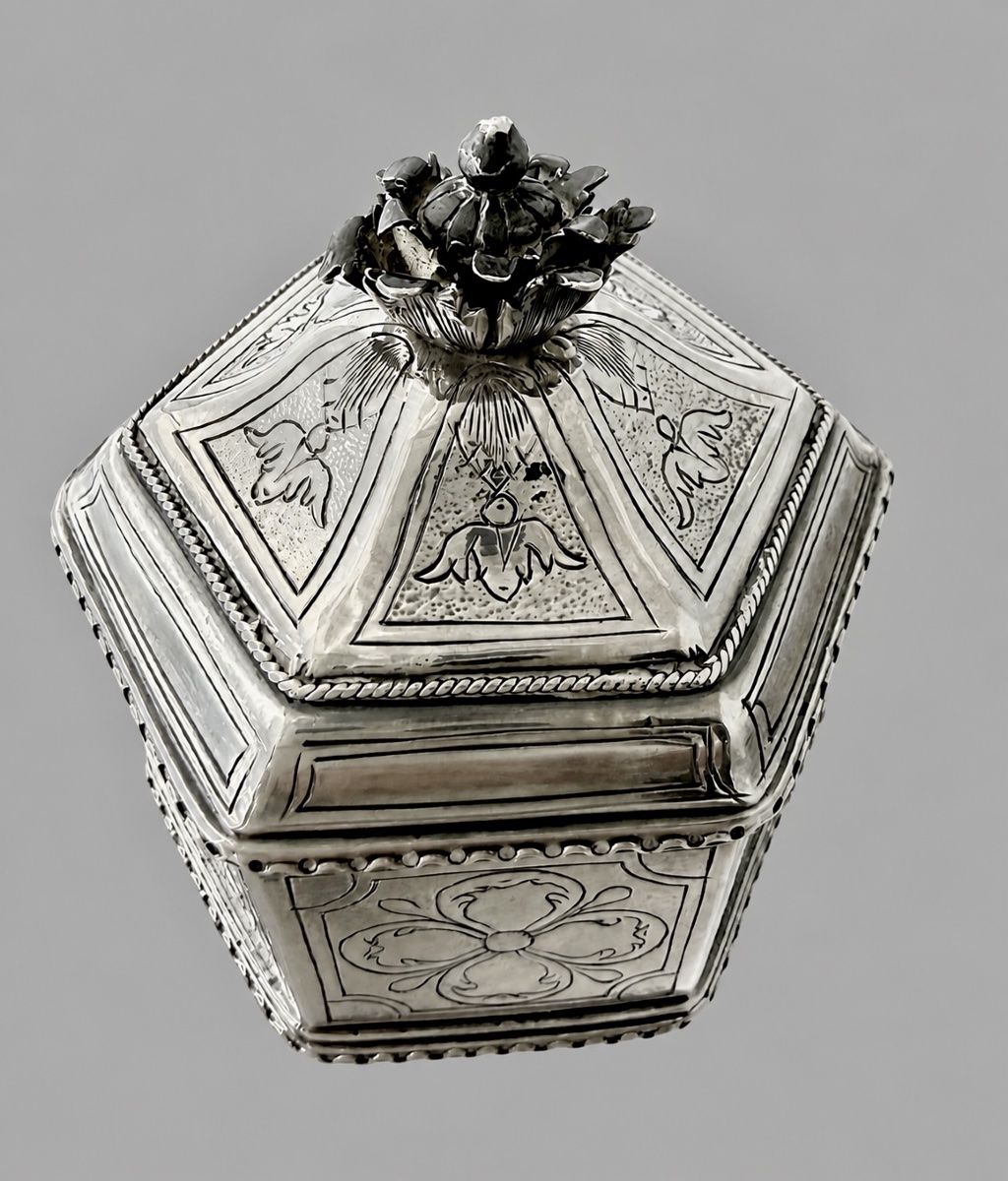
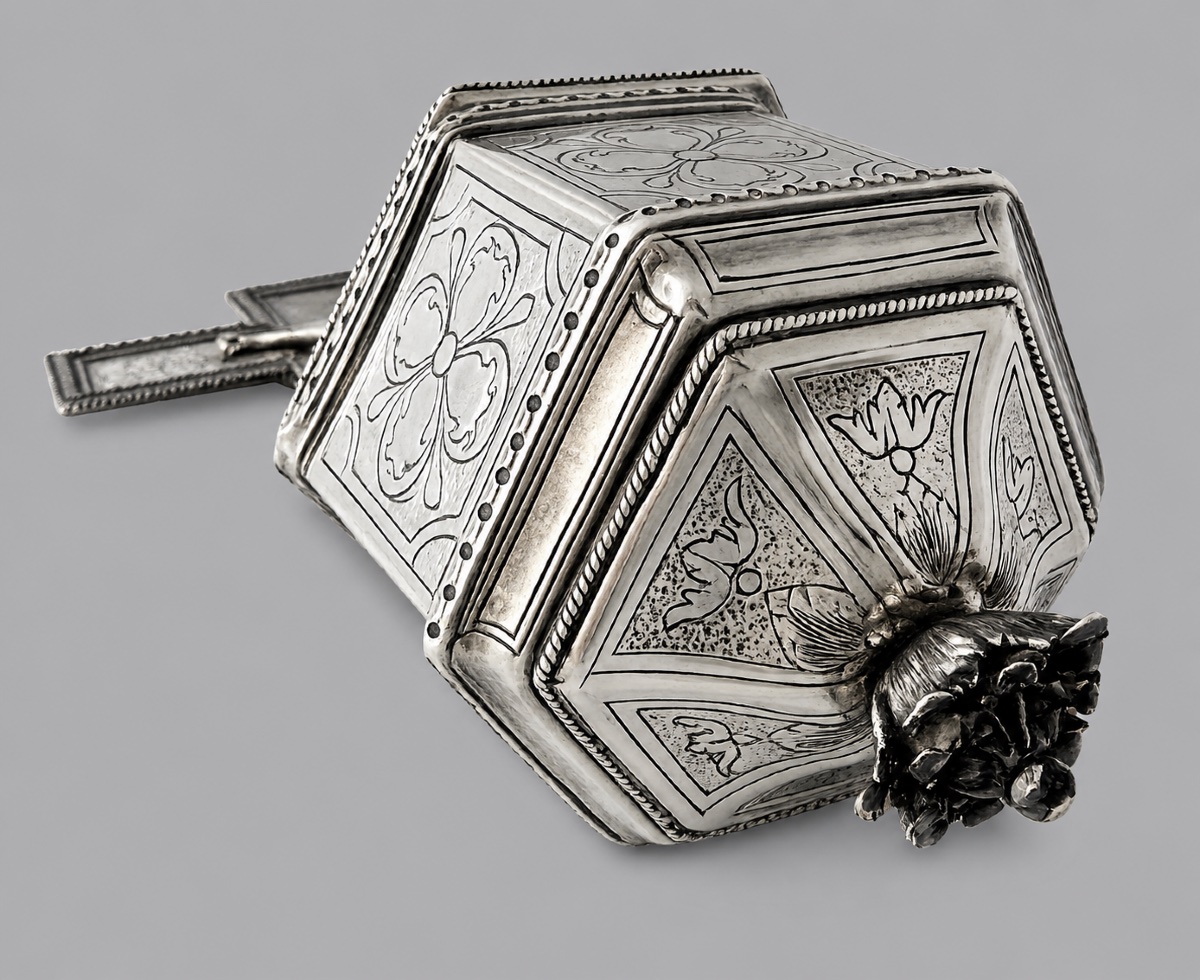
The hexagonal-shaped basin features a particularly elaborate design. Each panel is framed by moldings and decorated with a stylized floral motif, while the lid features an engraved radiating design. The basin rests on a faceted base topped by an elegant floral finial that has been cast and chiseled. With its chamfered composition, the piece evokes the architecture of the Brabant pulpits of the second half of the 17th century.
The interior of the basin, made entirely of solid silver, features a faceted bottom that converges toward a slight central indentation, revealing the care taken with the object’s hidden parts. This quality of craftsmanship attests to a workshop of the very highest order.
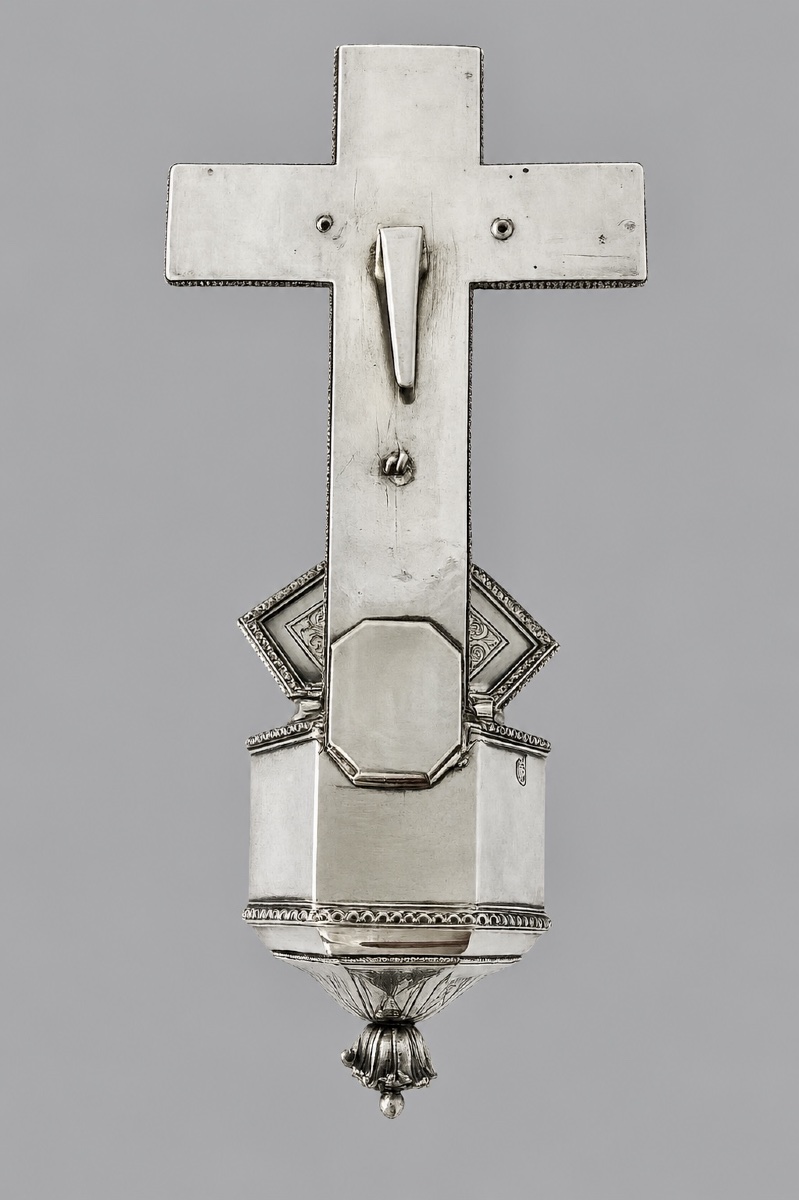
The reverse, deliberately understated, retains its original suspension system as well as Johannes Du Ry’s master’s mark, RD.
The wall-mounted holy water font played an essential role in the private devotions of Catholic families. Hanging near a bed, a door, or in a home oratory, it allowed one to make the sign of the cross with holy water upon waking, at bedtime, or before leaving the house. Its development took place against the backdrop of the Counter-Reformation, which reaffirmed the importance of sacred images and sacramentals in daily life.
Silver domestic holy water fonts from the 17th and 18th centuries are rare today. The Brussels examples that have survived are rare, and works attributable to Johannes Du Ry appear very infrequently on the market as well as in currently accessible public collections. By way of comparison, the Museum of the City of Brussels holds a silver household holy water font made in 1732 by Petrus Augustinus Ivens, while a Brussels holy water font from 1753 was sold at Christie’s. Our example is older and belongs to an earlier generation of silversmiths.
Brussels, late 17th century.
Period: 17th century
Style: Louis 14th, Regency
Condition: Perfect condition
Material: Sterling silver
Reference (ID): 1803724
Availability: In stock