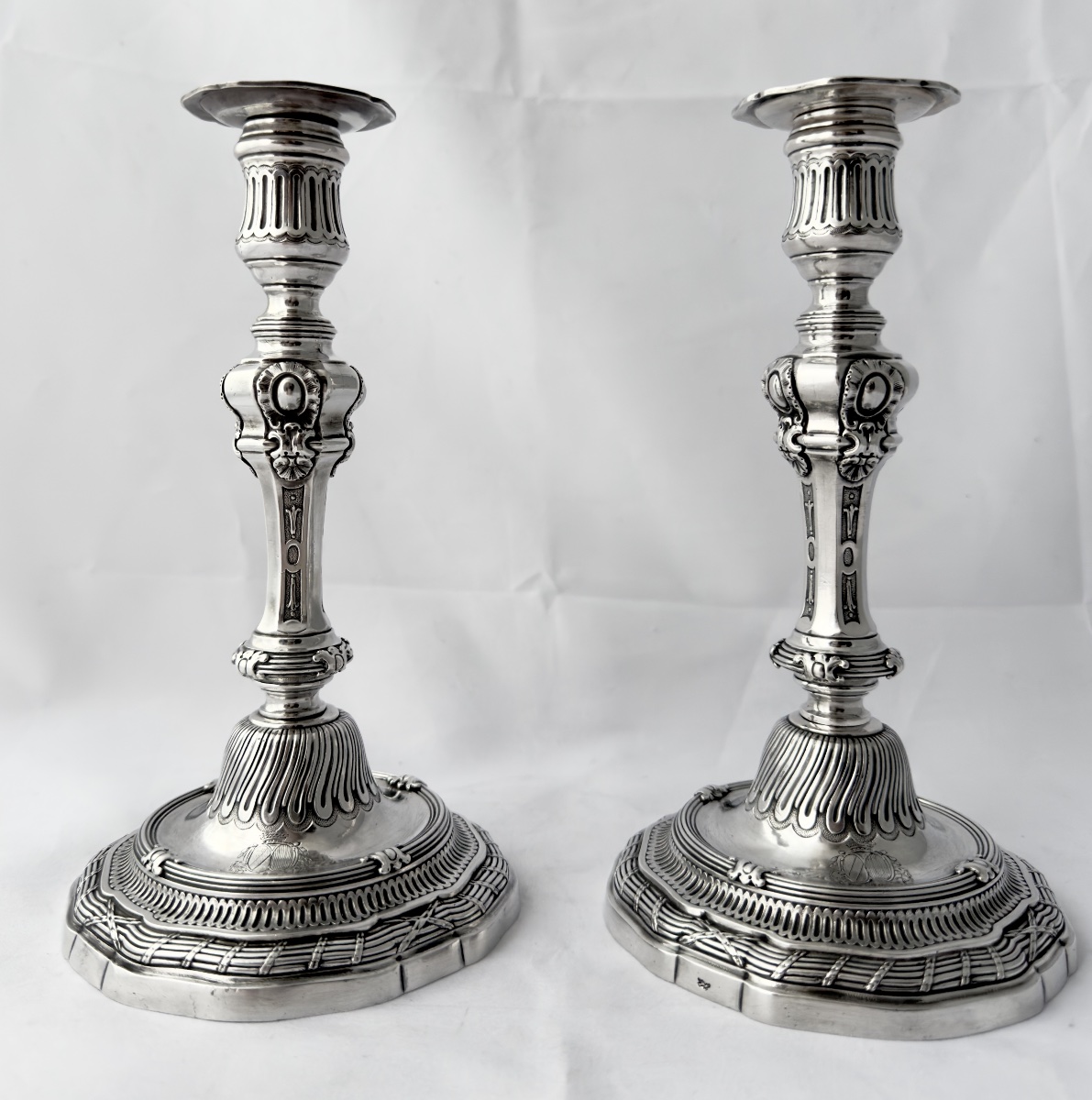


Paris, 1748, Alexis III Loir, Pair Of Dressing Table Candlesticks, Identical To Those Of The Duchess Of Cadaval
Alexis Loir III
Pair of Silver Toilet Candlesticks – Paris, 1748
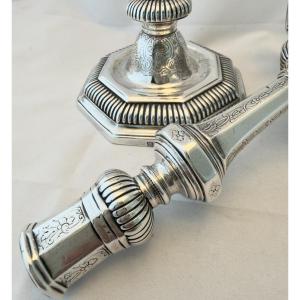
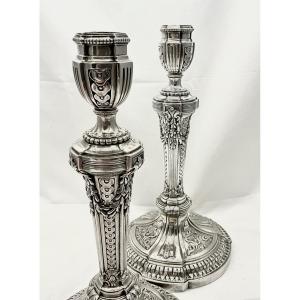
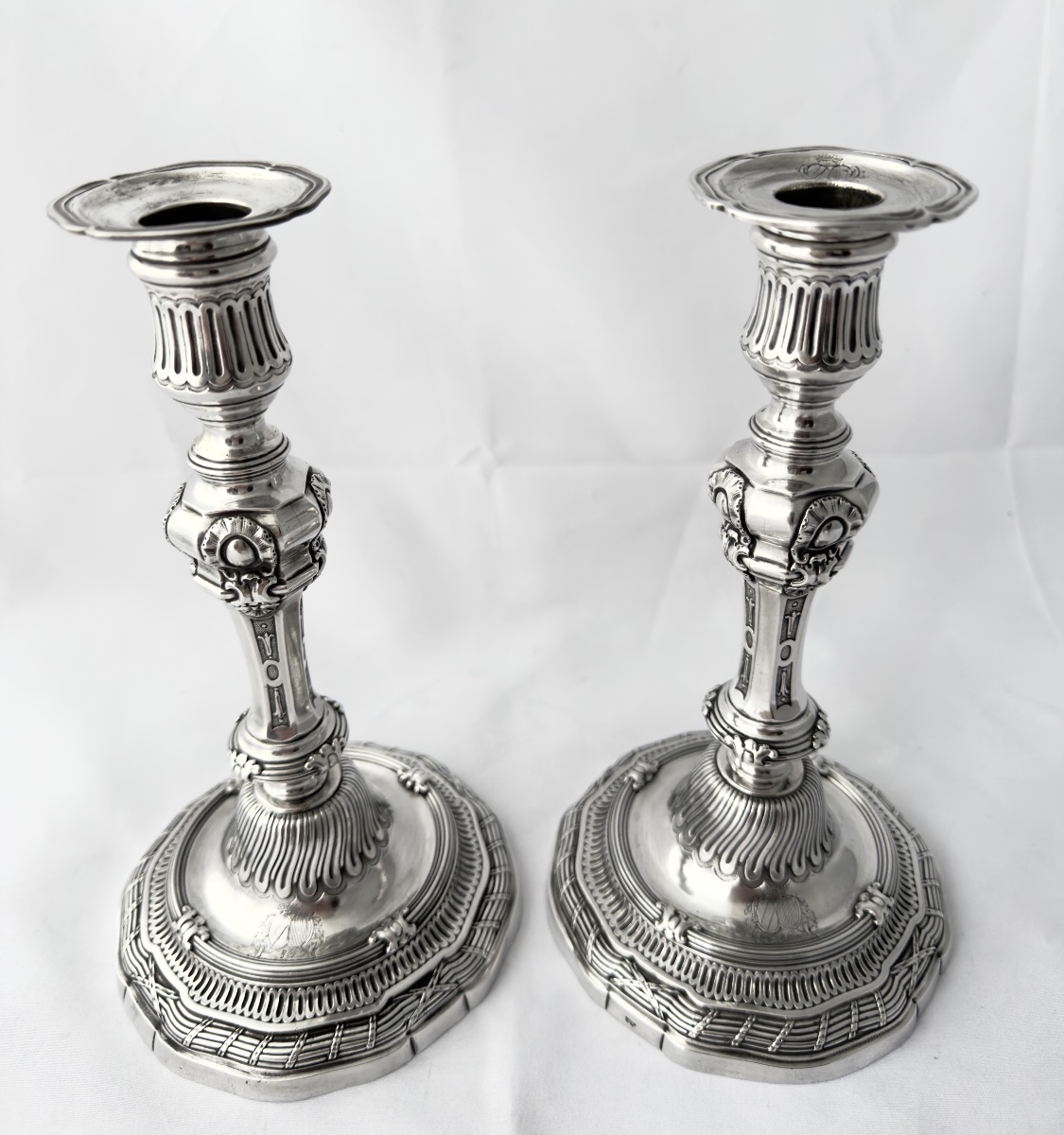
A rare pair of solid silver candlesticks made in Paris in 1748 by Alexis Loir III, who was admitted as a master silversmith in 1733.
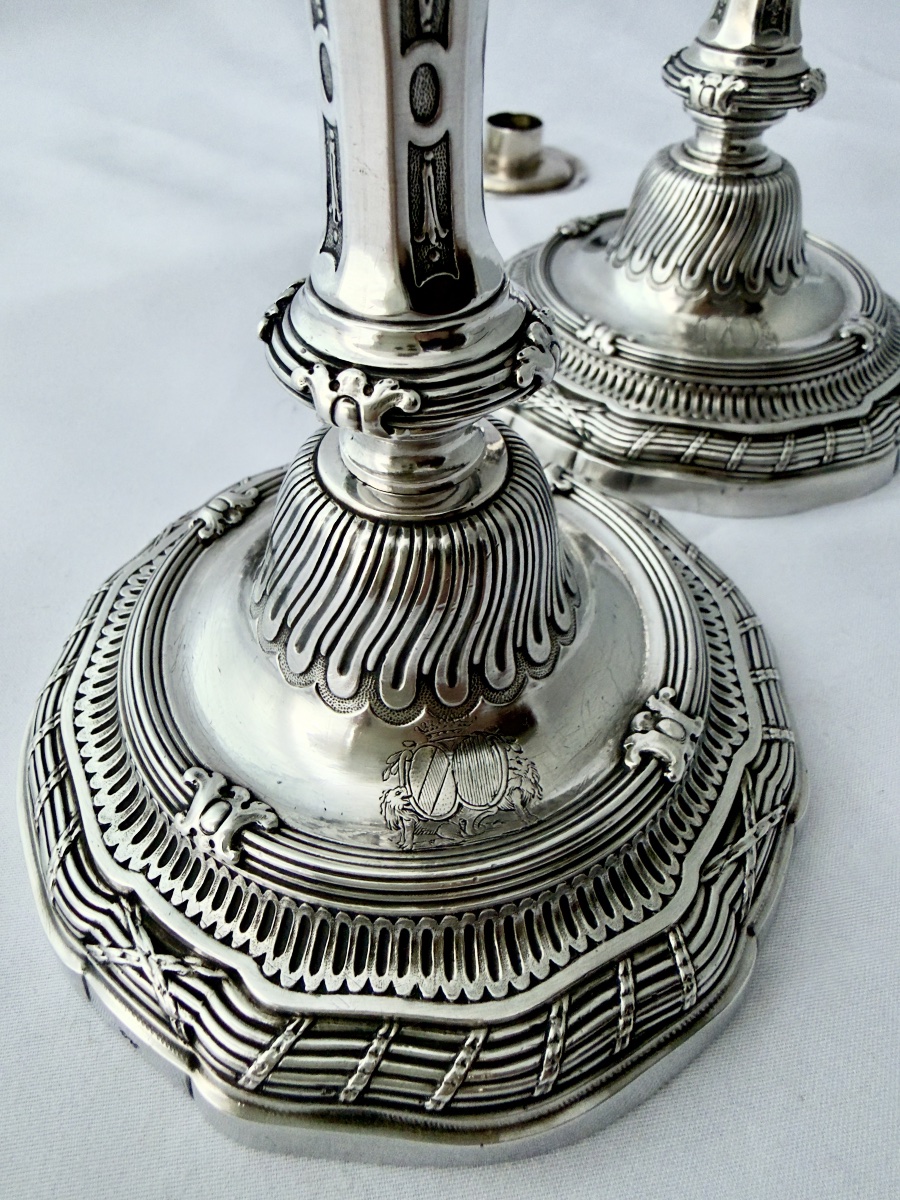
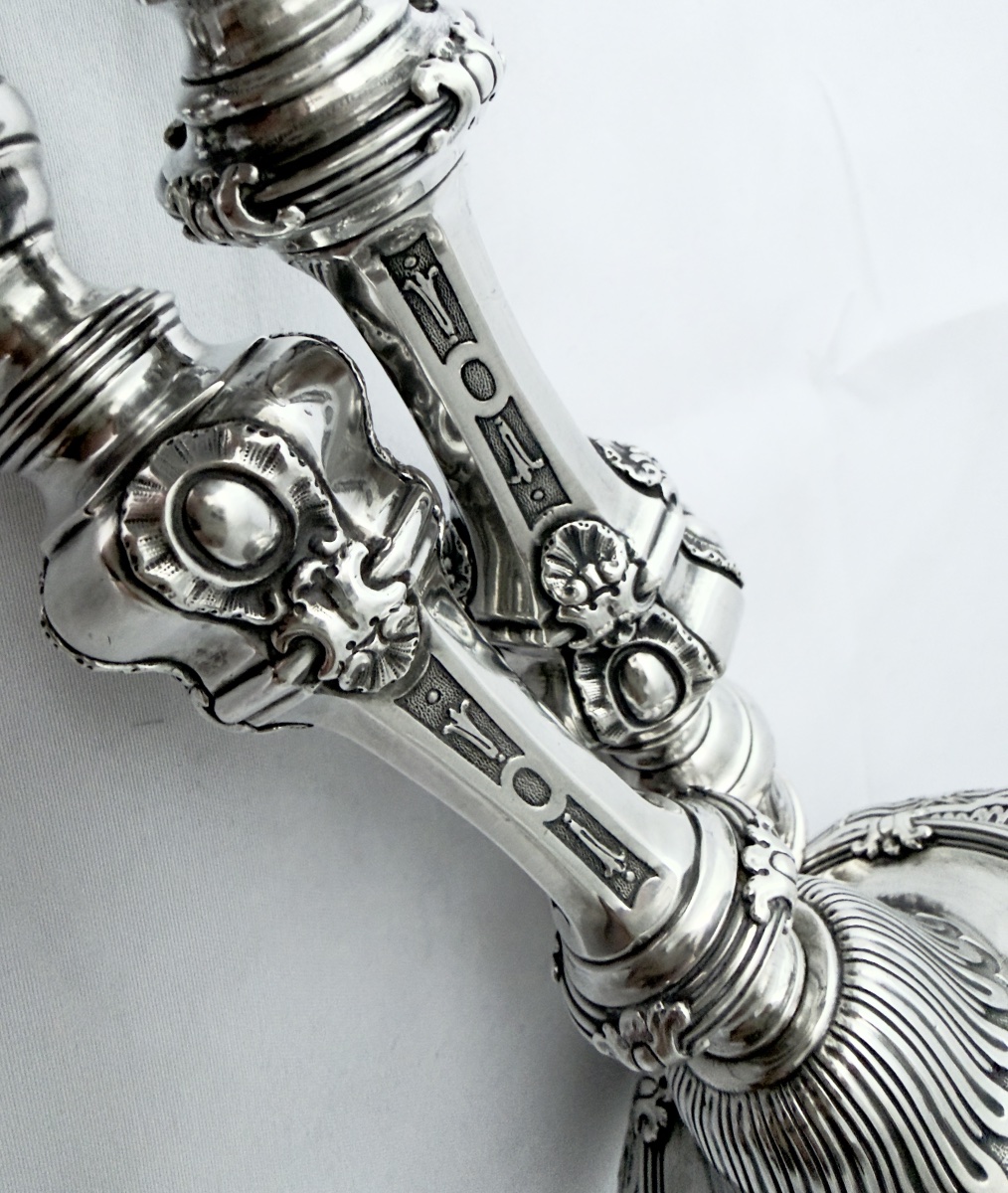
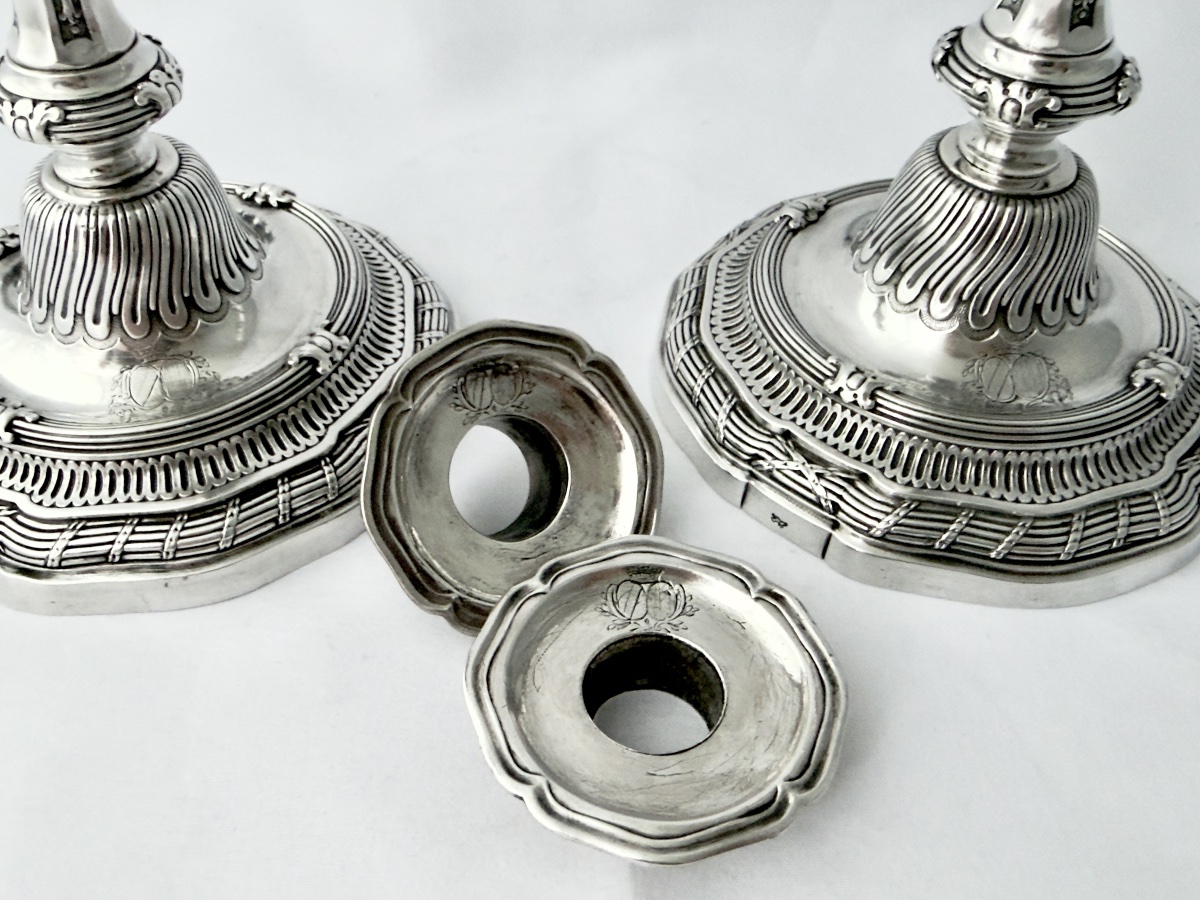
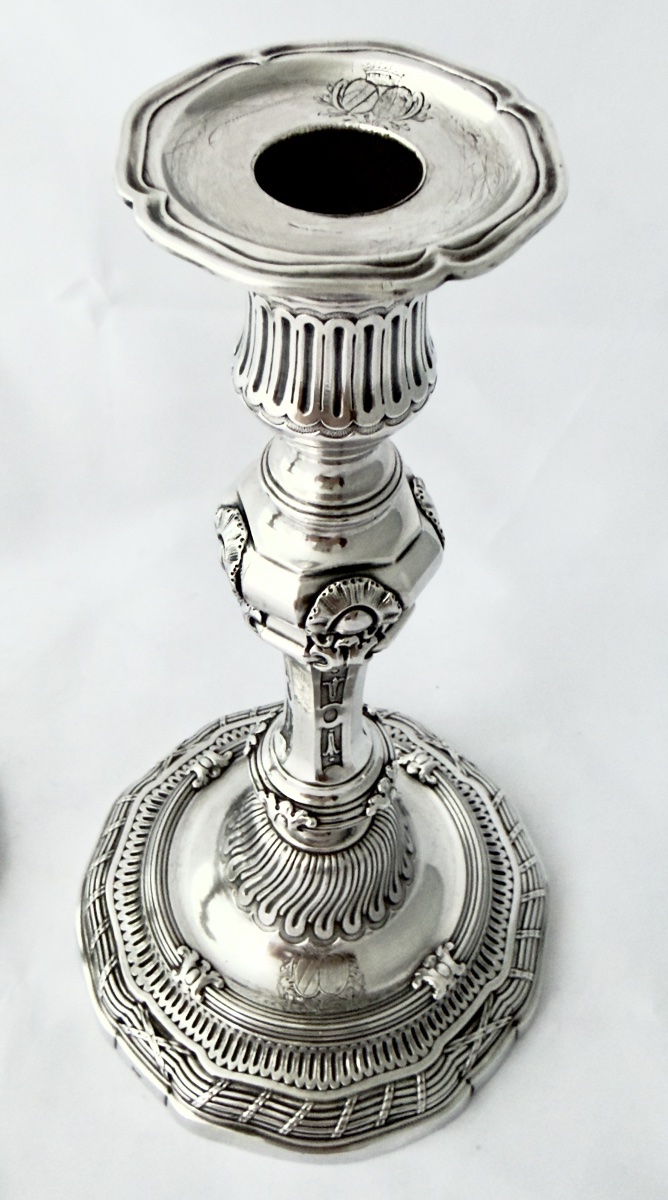
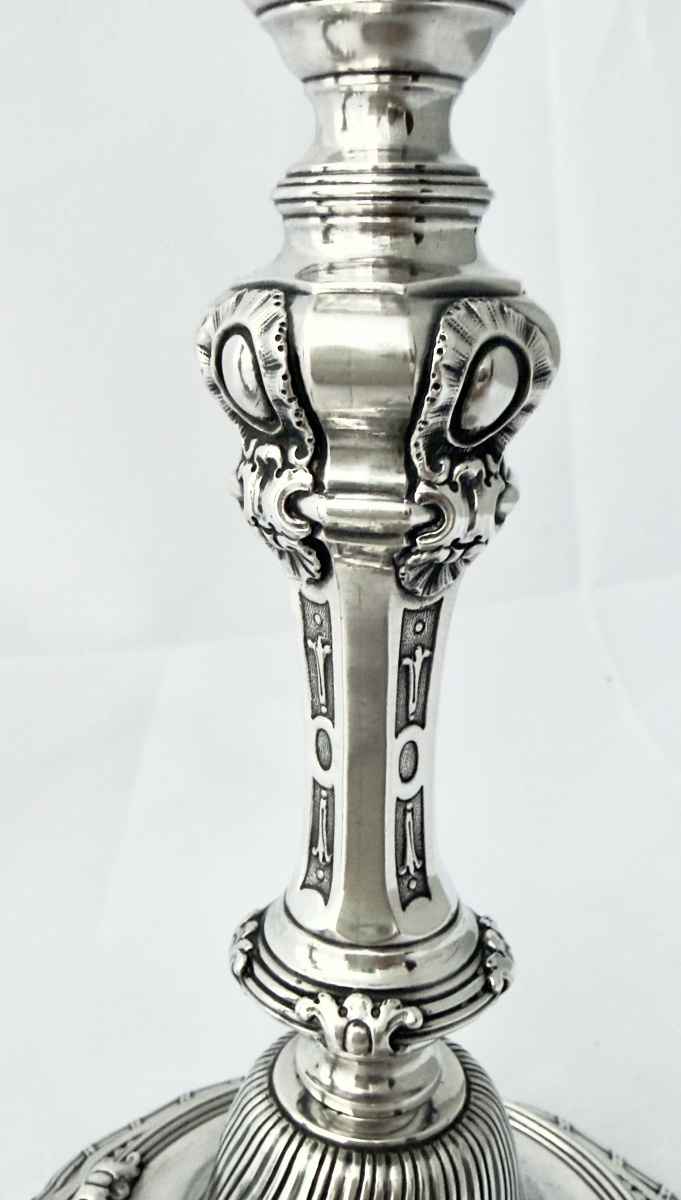
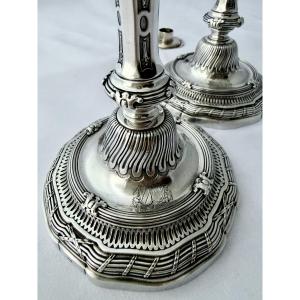
Measuring 20 cm in height and weighing 1,070 g in total, the candlesticks are distinguished by their particularly elegant and compact proportions. Each stands on a shaped circular base outlined with moulded borders and punctuated by applied motifs. The base rises to a domed centre decorated with broad spiral fluting and surmounted by a moulded knop. The faceted stem, articulated by successive projections and recesses, is decorated with lambrequins and cartouches, while shells accentuate the shoulder. The upper vase-shaped section repeats the fluting found on the lower part. Both candlesticks are accompanied by their wax pans.
The decoration is particularly characteristic of the transitional period during the early reign of Louis XV, when the ornamental vocabulary inherited from the Régence style was gradually evolving towards the Rococo. The composition remains largely symmetrical, orderly and architectural, particularly in the construction of the base and stem. The more freely curved cartouches decorating the stem, however, already anticipate the emerging Rococo style. Rococo asymmetry is otherwise still relatively restrained: the lambrequins, shells, fluting and mouldings remain firmly rooted in the decorative vocabulary of the Régence. These candlesticks therefore provide an excellent illustration of a period in which a still classical and symmetrical structure was beginning to soften under the influence of the new Rococo taste.
Hallmarks and coats of arms
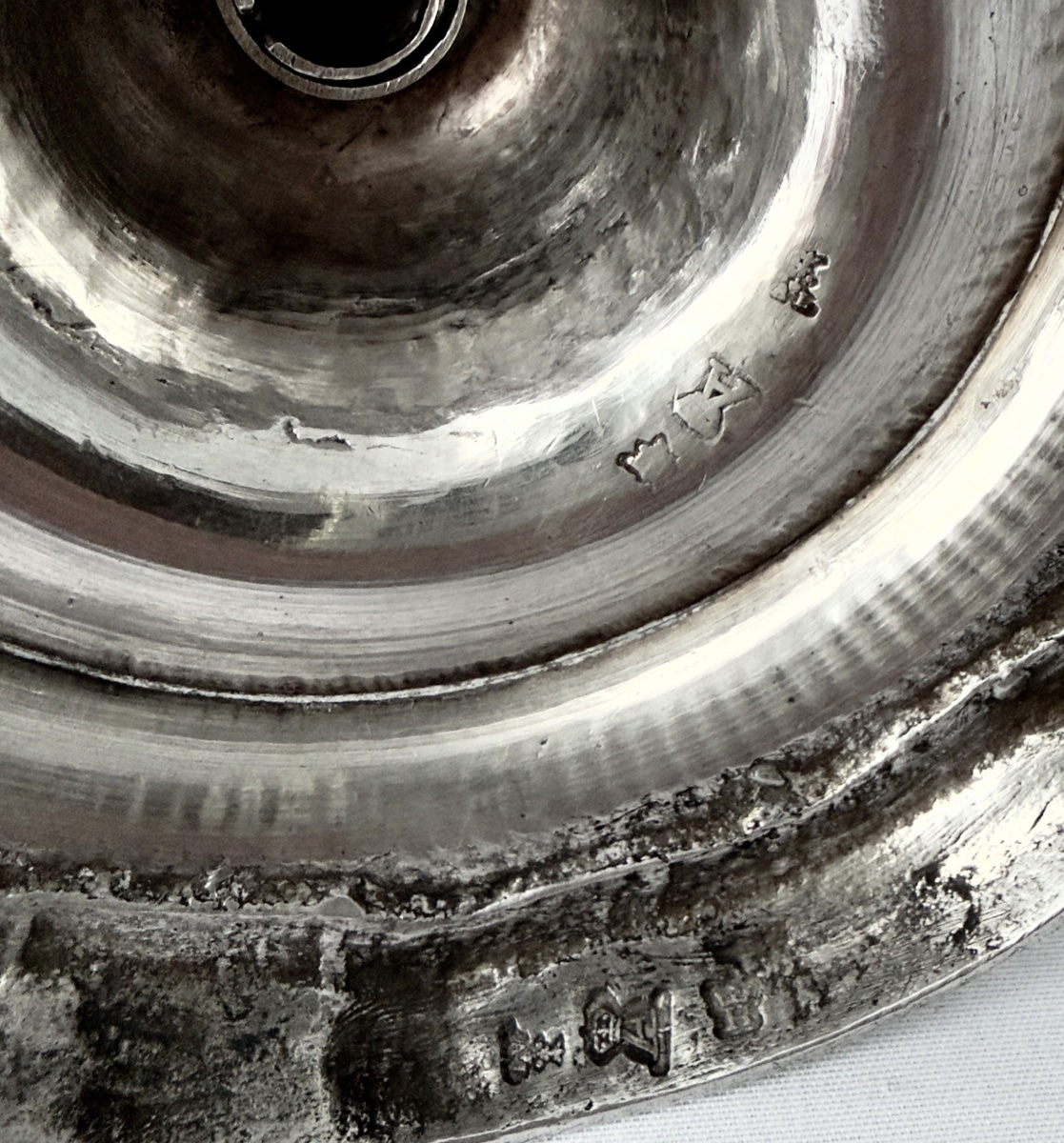
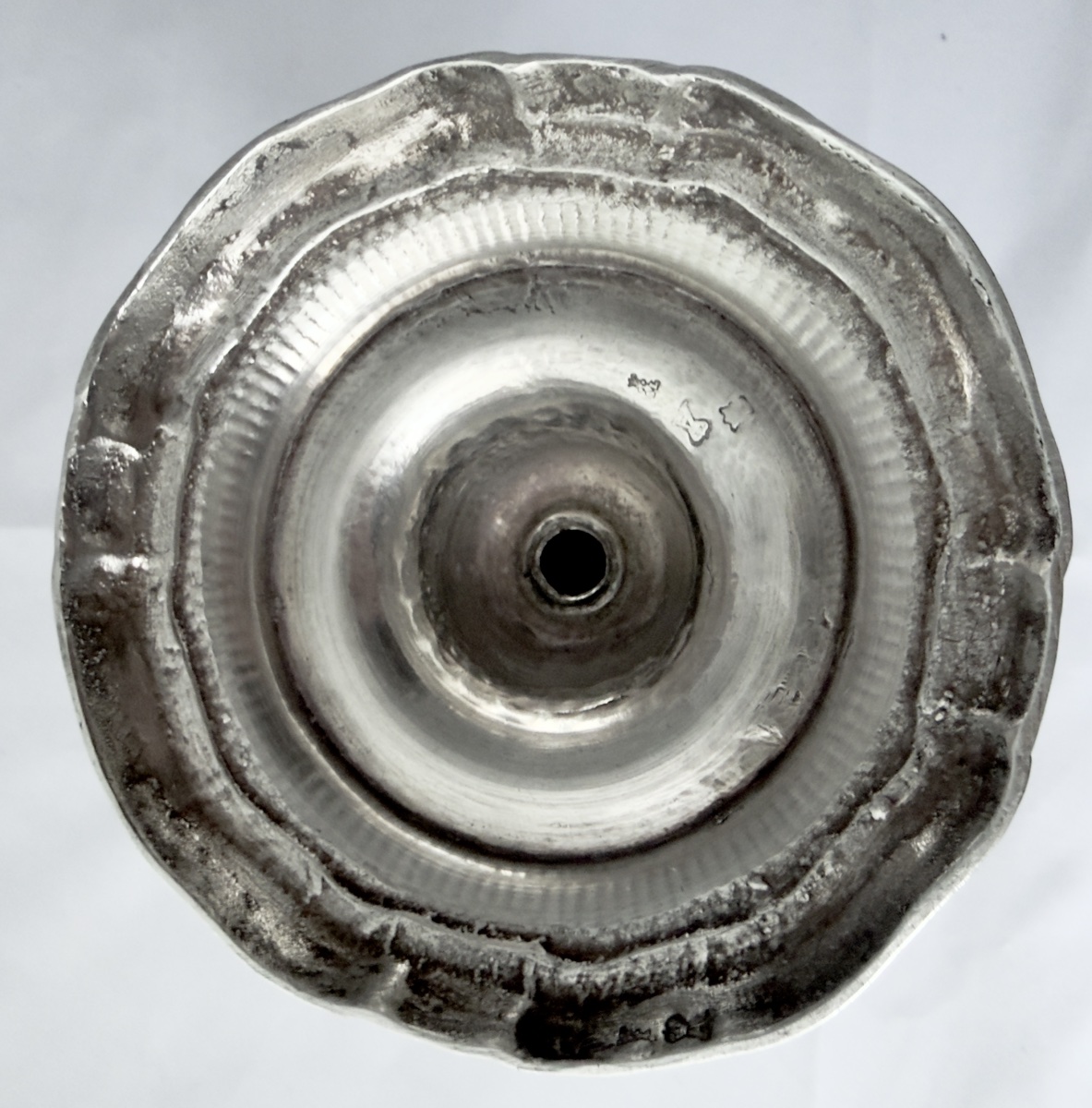
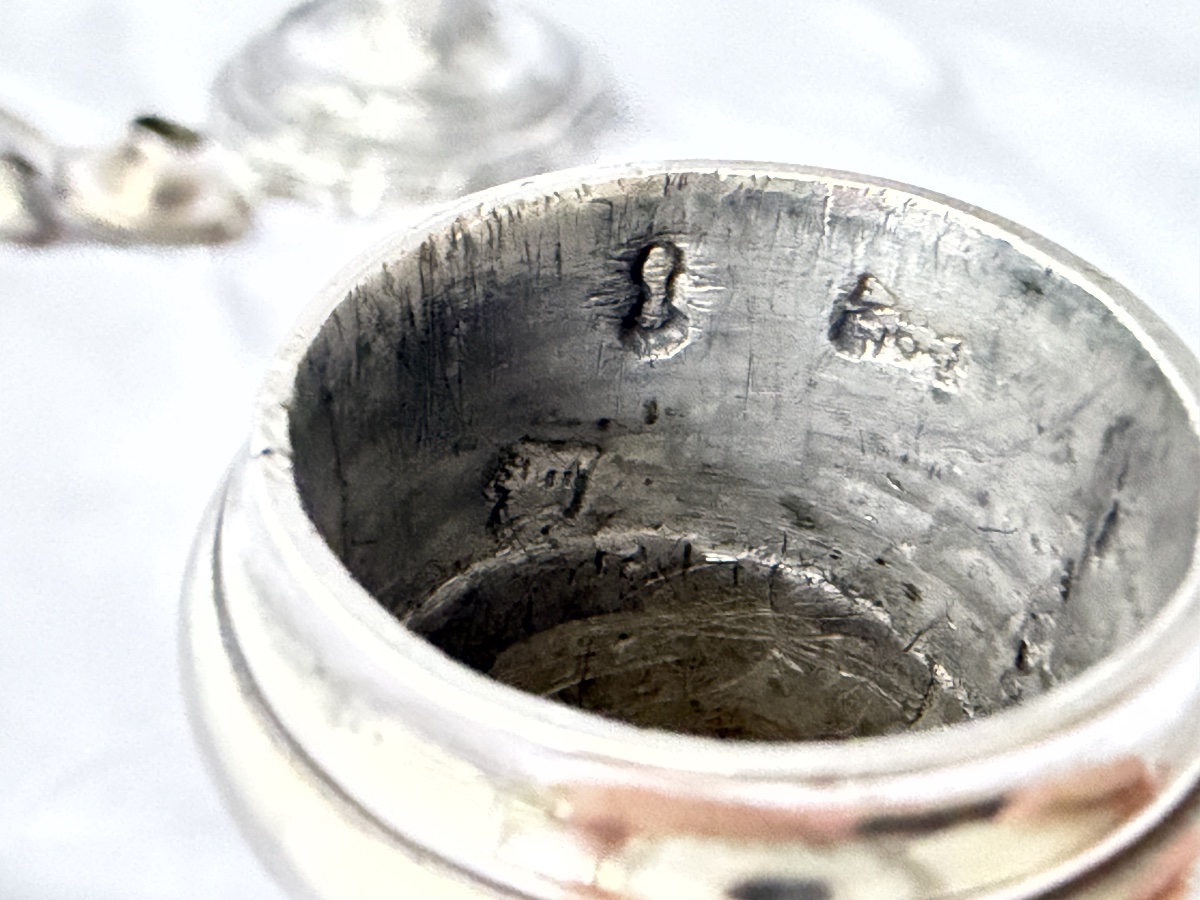
The candlesticks bear the statutory Paris hallmarks: the maker’s mark of Alexis Loir III, the Paris charge mark for 1744–1750, the discharge mark for large silver articles, and the crowned date-letter H for 1748. In accordance with the customary practice of Parisian silversmiths at the time, hallmarks are also struck inside the candle sockets.
The two wax pans differ in this respect: one is unmarked, while the other bears a Paris discharge mark for 1766, indicating that it is slightly later than the candlesticks themselves.
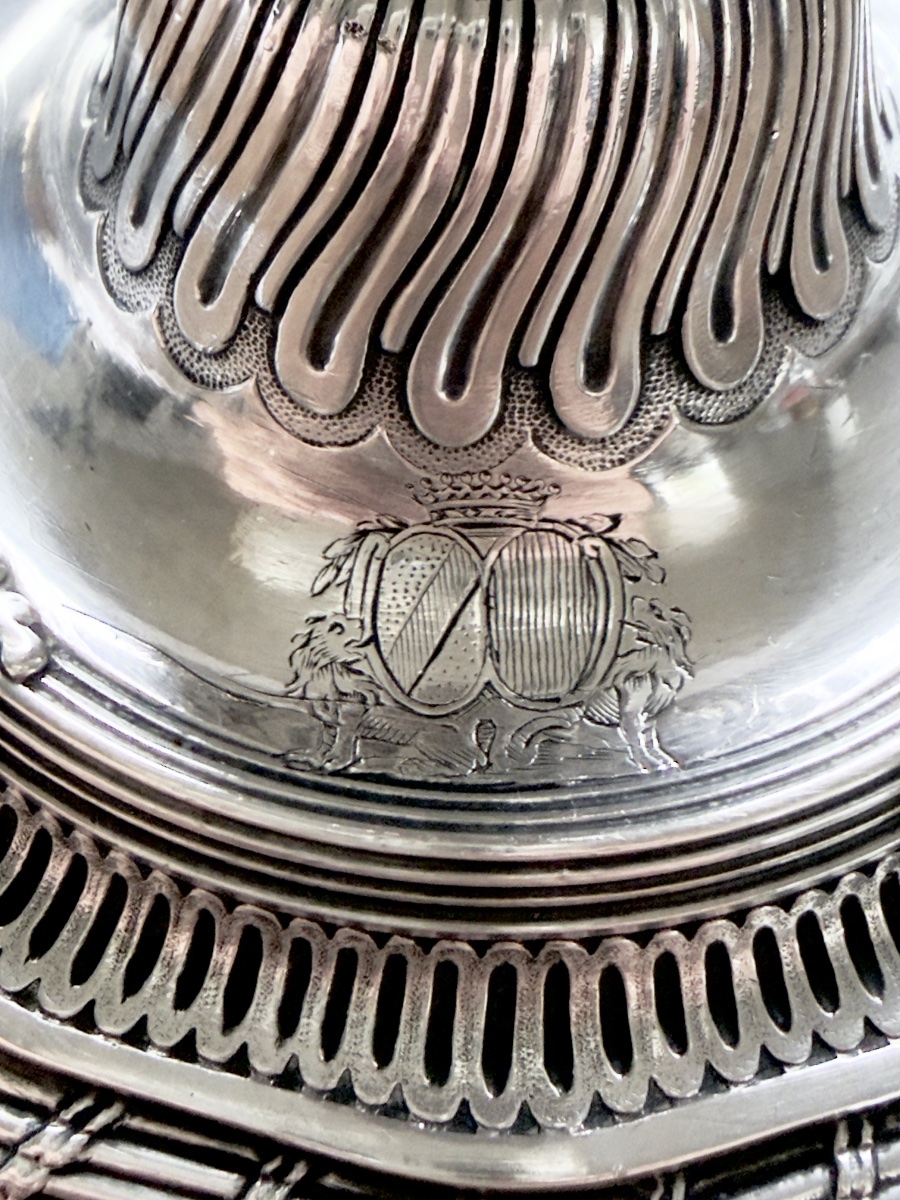
The coats of arms provide another interesting feature. The husband’s arms remain clearly legible and may be blazoned “Or, a bend sinister Gules”. This relatively simple heraldic composition was used by several French families and, at the present stage of research, does not permit the original owners to be identified with certainty. The wife’s arms, on the other hand, were deliberately effaced on all four elements, making their identification impossible today.
Alexis Loir III
Born into an important dynasty of Parisian silversmiths, Alexis Loir III was admitted as a master in 1733 and died in 1775. He belonged to a family that produced several generations of silversmiths and artists in Paris. His work is particularly renowned for candlesticks. In his study of the toilet service of the Duchess of Cadaval, Yves Carlier indeed describes Loir as a silversmith specialised in this field.
The present pair differs from the table candlesticks by Alexis Loir more commonly encountered on the market through its particularly small dimensions. At only 20 cm high, these candlesticks are approximately five centimetres shorter than many of Loir’s known table candlesticks. This unusual size can be convincingly explained by comparison with another pair by Alexis Loir III, now preserved in an American museum.
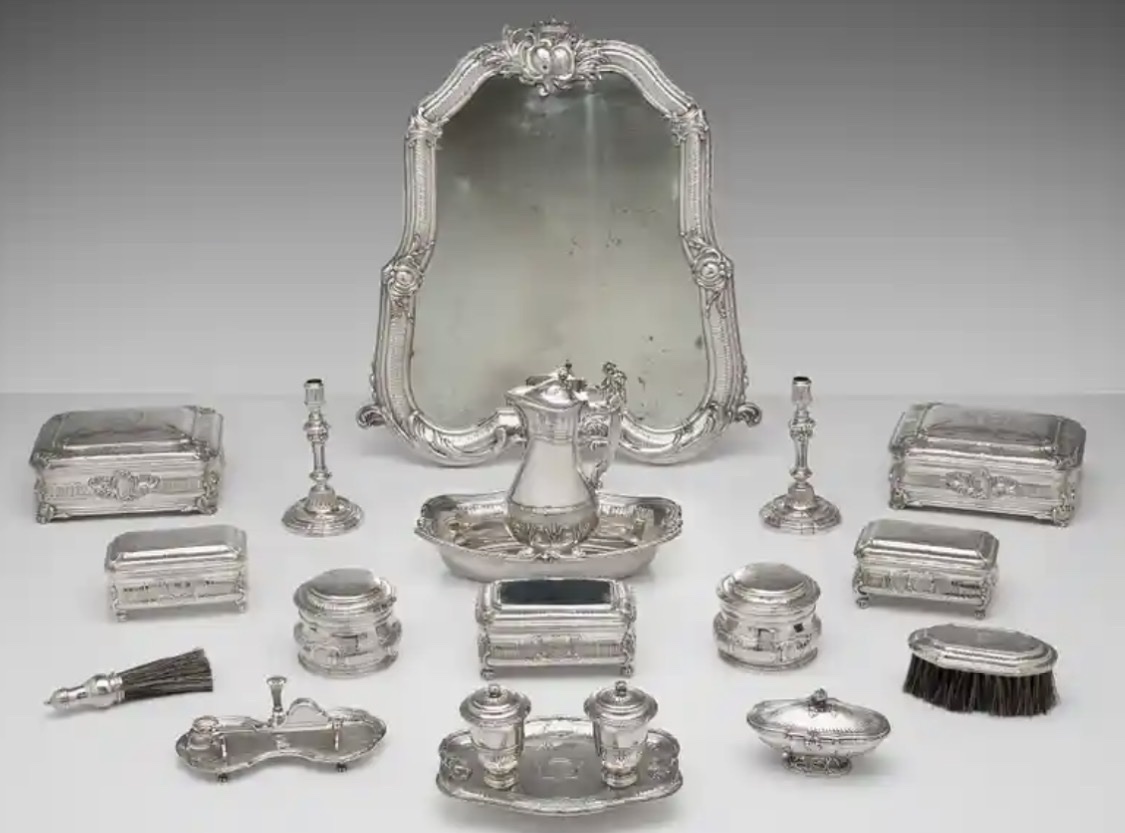
An identical model in the toilet service of the Duchess of Cadaval
A pair of candlesticks of the same model, also made by Alexis Loir III, is preserved in the Detroit Institute of Arts (inv. 53.191–192). It was made in 1738–1739 for the toilet service of Henriette-Julie-Gabrielle de Lorraine (1724–1761), Princess of Lorraine, who became Duchess of Cadaval through her marriage to Dom Jaime Pereira de Mello, 3rd Duke of Cadaval.
A detailed comparison of the two pairs reveals not merely a stylistic resemblance: they are the same model of candlestick. They share the same proportions and construction, from the design of the base and its domed centre to the profile of the stem and upper vase-shaped section, as well as the same arrangement of fluting, lambrequins, cartouches and shells.
The prestigious Cadaval toilet service formed part of the trousseau prepared in France for the Princess of Lorraine’s marriage. Its production was supervised by her great-uncle Charles de Lorraine, Prince of Lorraine and Grand Écuyer de France. The overall commission was entrusted to the silversmith Étienne Pollet, who in turn employed several specialist Parisian silversmiths to execute particular elements of the service. For the candlesticks, he commissioned Alexis Loir III, whom Yves Carlier describes as a specialist in this type of work.
The dimensions and weights provide further striking confirmation of the relationship between the two pairs. The Cadaval candlesticks are exactly 20 cm high, precisely the same height as the present pair. The pair in Detroit weighs 1,103 g, compared with 1,070 g for the present examples. Ten years apart, Alexis Loir III therefore employed the same model, in the same dimensions and with an almost identical weight.
This comparison also helps establish the function of the present candlesticks. Their height of only 20 cm, considerably less than that of the table candlesticks by Loir more commonly encountered, is significant: the identical model in Detroit formed part of a documented toilet service. The present pair may therefore confidently be identified as toilet candlesticks rather than candlesticks intended for the dining table.
Their weight provides further support for this identification. Yves Carlier records that the small silver candlesticks made in 1738 for the daughters of Louis XV who were being educated at the Abbey of Fontevraud weighed approximately 445 g each, while the silver-gilt examples made the following year for their sister Élisabeth weighed approximately 550 g each. At an average of 535 g per candlestick, the present pair falls precisely within the range documented for these princely toilet candlesticks.
The toilet service of the Duchess of Cadaval remained in the family for almost two centuries, until 1931, when it was sold by the 9th Duke of Cadaval. It was then acquired by the celebrated Parisian dealer Jacques Helft, an important specialist in antique silver. In 1952 it passed into the collection of Elizabeth and Harvey Firestone Jr., before the two candlesticks by Alexis Loir III entered the collection of the Detroit Institute of Arts in 1953.
The Detroit pair therefore provides an exceptional comparison for the present candlesticks: the same maker, the same model, the same 20 cm height, the same decoration and an almost identical weight. Made ten years later, in 1748, the present pair represents a rare surviving example of Alexis Loir III reusing a model whose function as part of one of the great aristocratic toilet services of the eighteenth century is firmly documented.
Maker: Alexis Loir III, master in 1733
Paris: 1748
Material: solid silver
Height: 20 cm
Total weight: 1,070 g
Reference: Yves Carlier, “Details of the Toilet Service of the Duchesse de Cadaval”, Bulletin of the Detroit Institute of Arts, fig. 8, Alexis Loir III, pair of candlesticks, 1738–1739, Detroit Institute of Arts, inv. 53.191–192. The archival documents concerning the Cadaval commission studied by Carlier are preserved in the Archives nationales, Paris, T 491⁵.
Period: 18th century
Style: Louis 14th, Regency
Condition: Excellent condition
Material: Sterling silver
Height: 20 cm
Reference (ID): 1815835
Availability: In stock