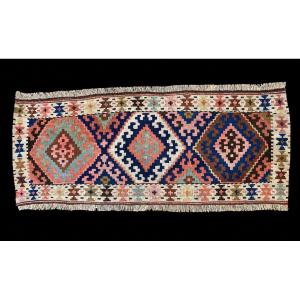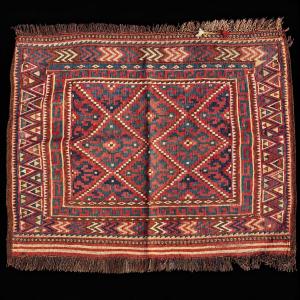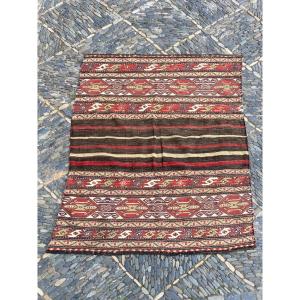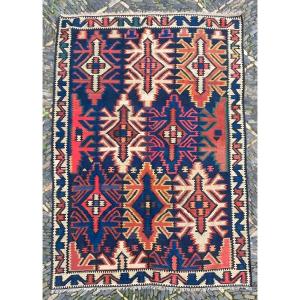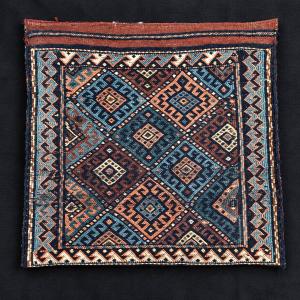




Namakdan (salt Bag). Bathiyari / Persia. Circa 1900. 58 X 40 Cm
Salt pouch, Namakdan. Bakhtiari, Chahar Mahal, Western Persia. Circa 1900.
An essential item for nomadic life
The namakdan was used to store and transport salt, an essential commodity for nomadic communities. It was used for daily consumption, but also to feed the herds, for which salt provided a mineral supplement not always found in sufficient quantities in the pastures. Designed to accompany the nomads on their journeys, this pouch met a practical need while also reflecting the care taken with everyday objects.
A Remarkable Construction
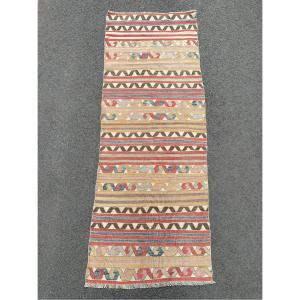
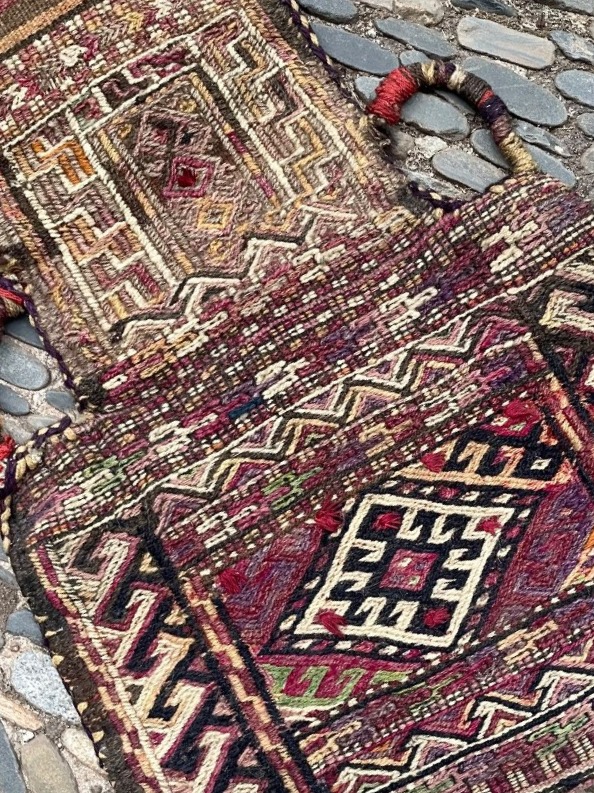
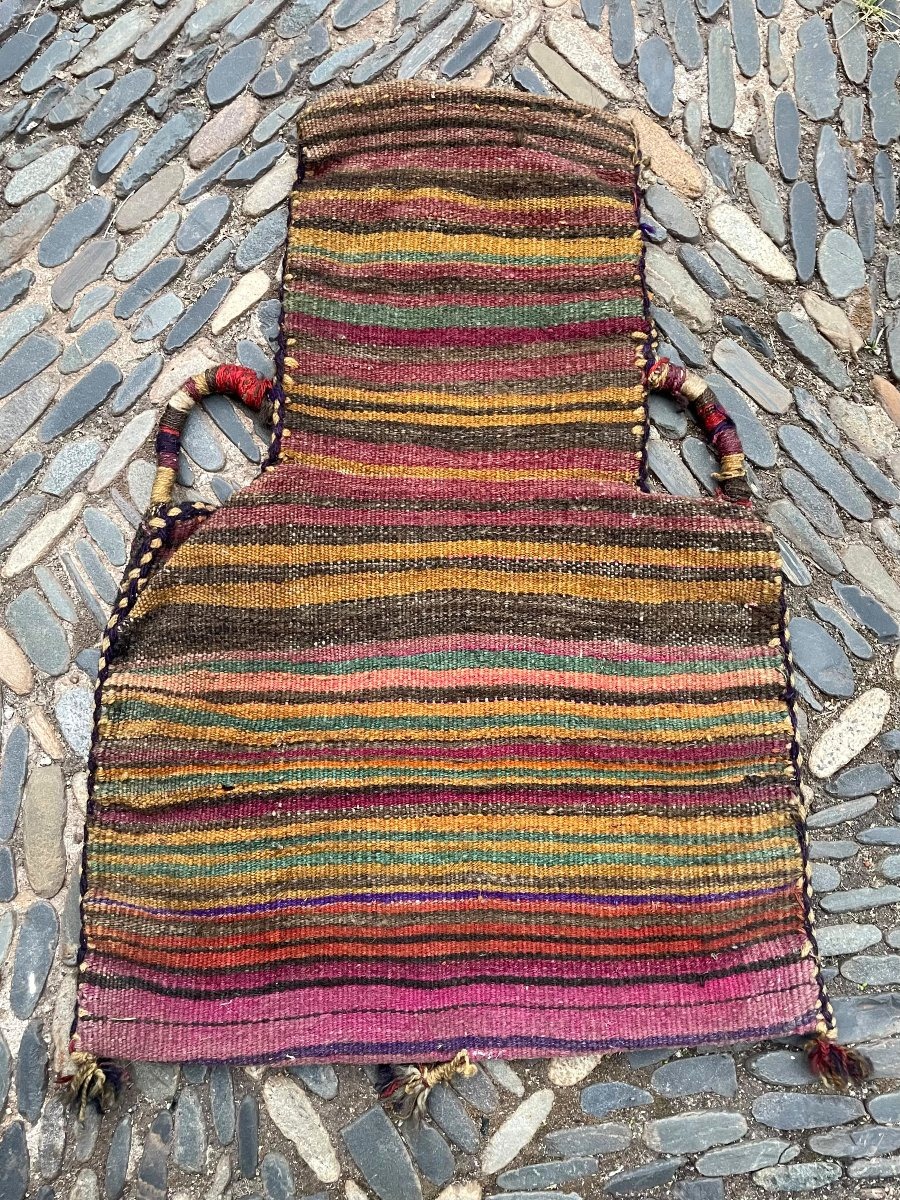
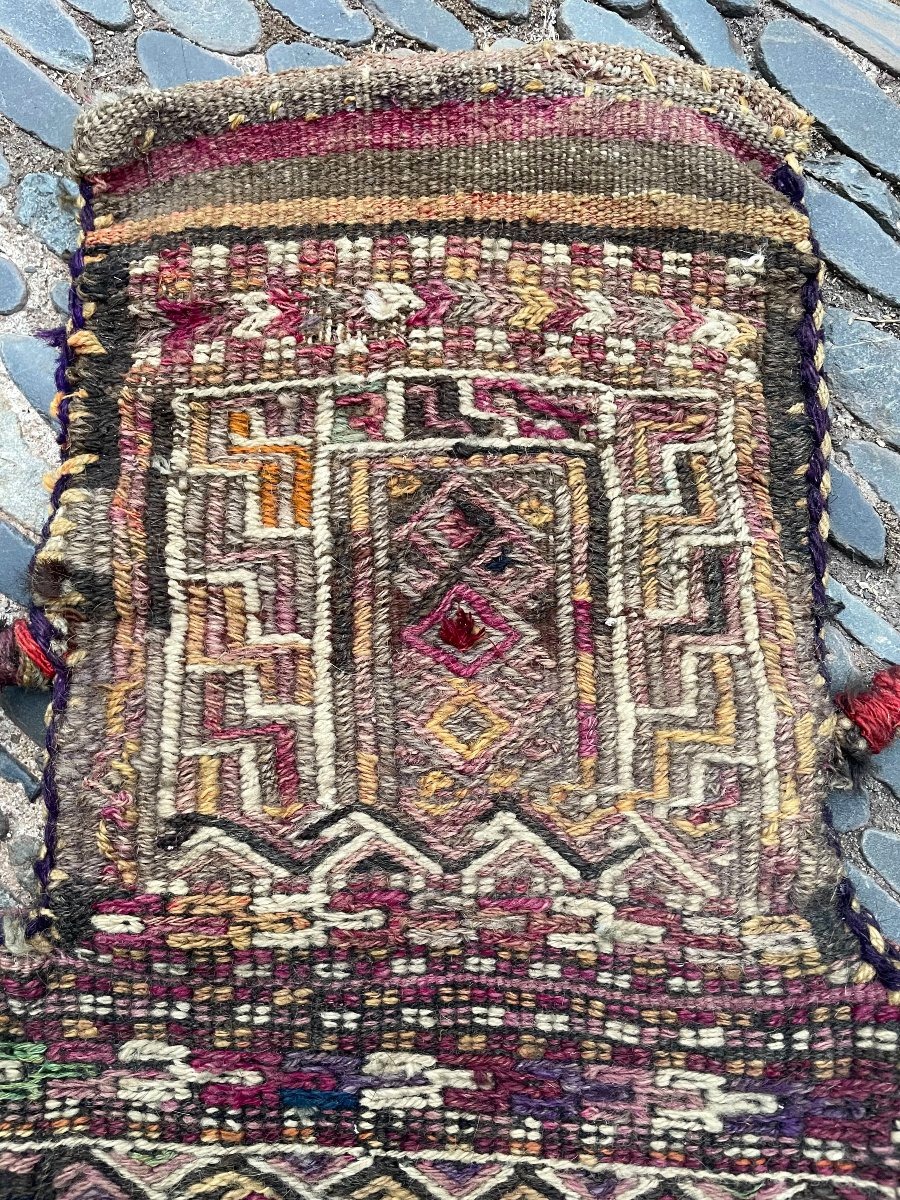
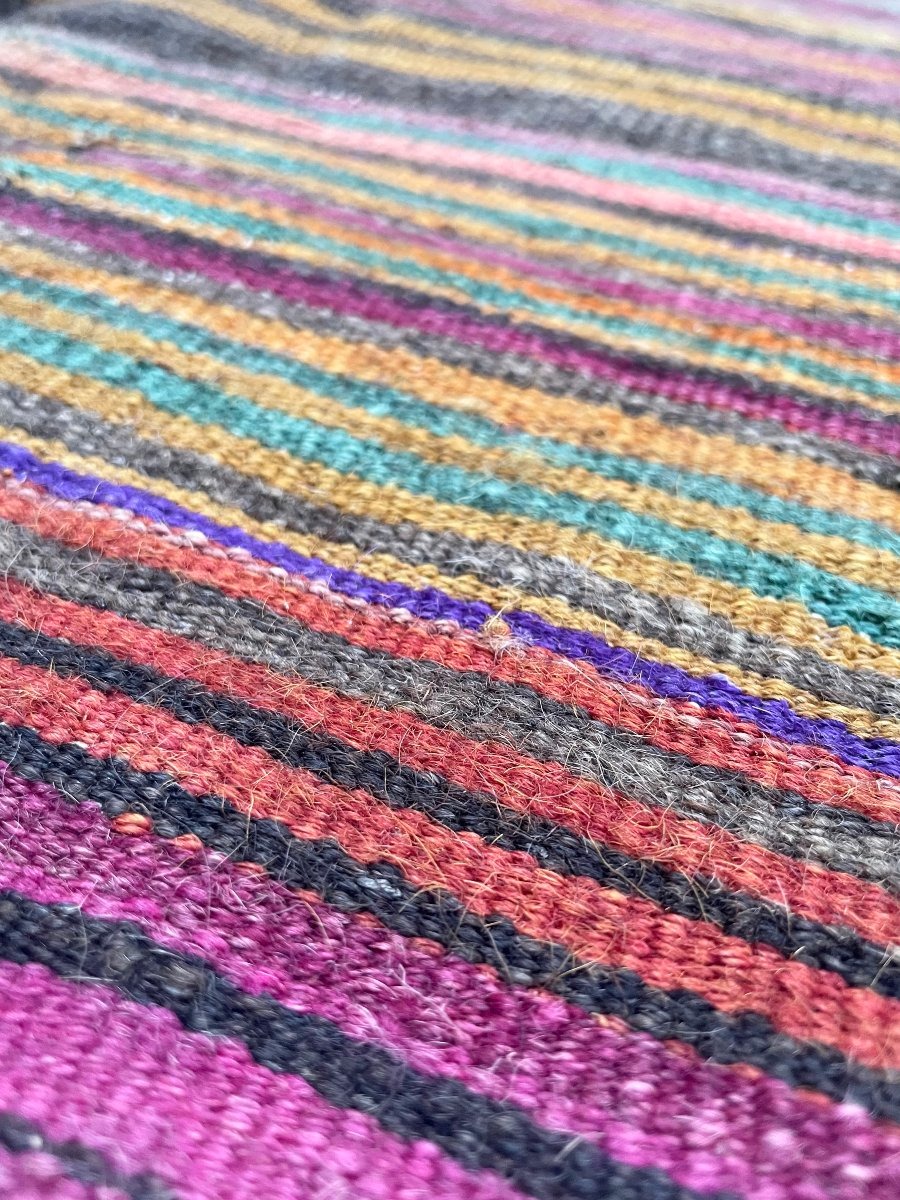
The front is made using the sumak technique, which gives the design its relief and striking appearance. On the back, a series of polychrome horizontal bands, woven in a simpler pattern, contrasts with the richness of the front. The overall design reveals an ingenious construction, tailored to the object’s intended use.
A rare example with its handles
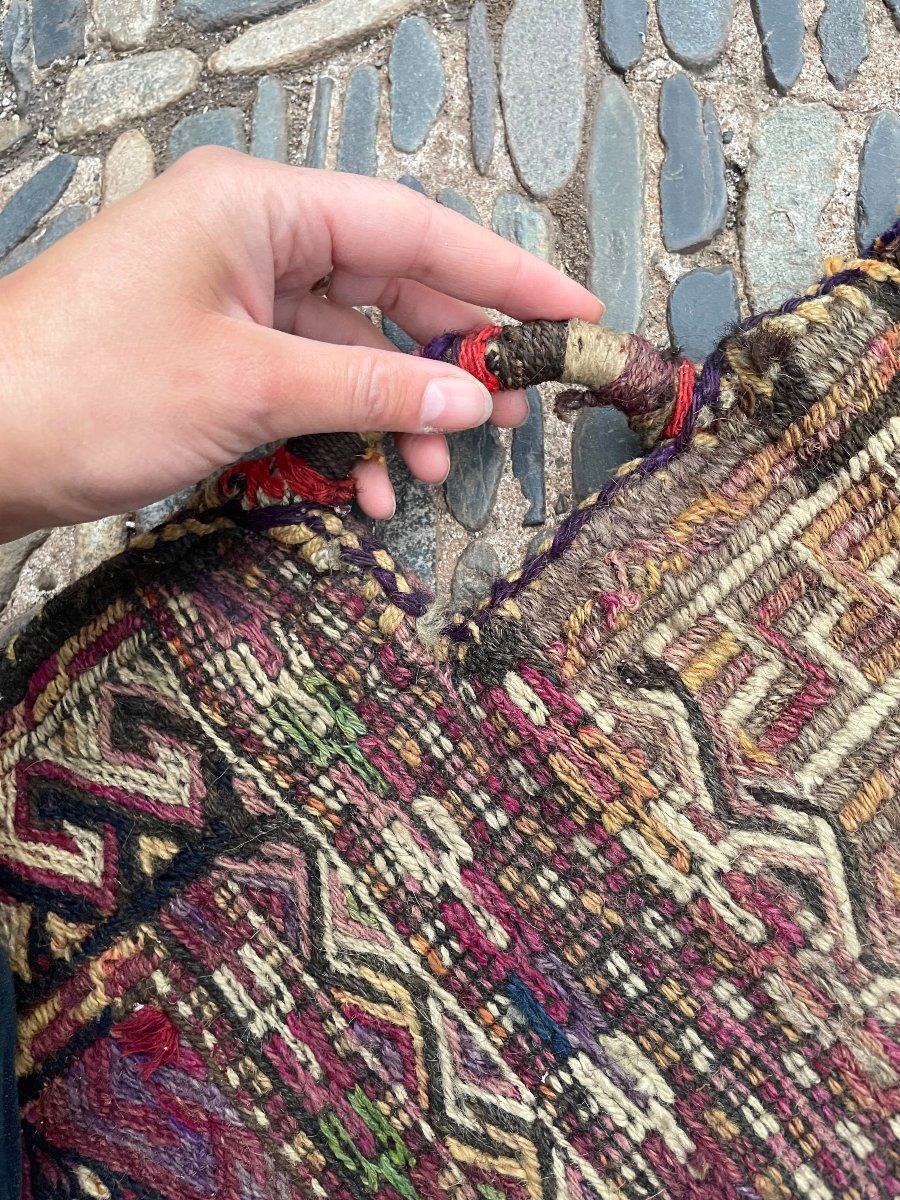
The side handles are still intact. This is a valuable detail: these elements were particularly vulnerable to strain and tearing over time. Their preservation now allows us to more clearly understand the shape and manner in which this pouch could have been carried or fastened.
A warm color palette
Wine-red and deep brown tones dominate the composition. Shades of ivory and ochre brighten the motifs, while subtle touches of green and blue add further accents. The overall effect maintains a subdued harmony, enlivened by the natural variations in hue.
Namakdan, salt pouch
Bakhtiari, Chahar Mahal, Western Persia
Mixed media
Wool on wool
Plant-based dye
Circa 1900
Dimensions: 58 × 40 cm
Choosing an antique rug or textile is often a serendipitous encounter.
If this piece catches your eye, or if you’d like more information or photos, I’d be happy to discuss it with you.
Laurent Consul
Beauty of Kilims
06 42 61 73 46
An essential item for nomadic life
The namakdan was used to store and transport salt, an essential commodity for nomadic communities. It was used for daily consumption, but also to feed the herds, for which salt provided a mineral supplement not always found in sufficient quantities in the pastures. Designed to accompany the nomads on their journeys, this pouch met a practical need while also reflecting the care taken with everyday objects.
A Remarkable Construction
The front is made using the sumak technique, which gives the design its relief and striking appearance. On the back, a series of polychrome horizontal bands, woven in a simpler pattern, contrasts with the richness of the front. The overall design reveals an ingenious construction, tailored to the object’s intended use.
A rare example with its handles
The side handles are still intact. This is a valuable detail: these elements were particularly vulnerable to strain and tearing over time. Their preservation now allows us to more clearly understand the shape and manner in which this pouch could have been carried or fastened.
A warm color palette
Wine-red and deep brown tones dominate the composition. Shades of ivory and ochre brighten the motifs, while subtle touches of green and blue add further accents. The overall effect maintains a subdued harmony, enlivened by the natural variations in hue.
Namakdan, salt pouch
Bakhtiari, Chahar Mahal, Western Persia
Mixed media
Wool on wool
Plant-based dye
Circa 1900
Dimensions: 58 × 40 cm
Choosing an antique rug or textile is often a serendipitous encounter.
If this piece catches your eye, or if you’d like more information or photos, I’d be happy to discuss it with you.
Laurent Consul
Beauty of Kilims
06 42 61 73 46
320 €
Period: 20th century
Style: Orientalism
Condition: Excellent condition
Material: Wool
Length: 58 cm
Width: 40 cm
Reference (ID): 1836298
Availability: In stock
Print