

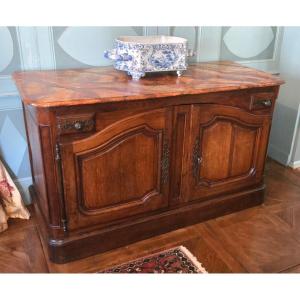


A Hunting Sideboard Originally Made From An 18th-century Two-part Paneled Sideboard
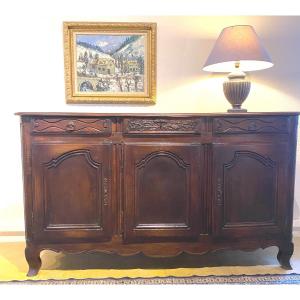
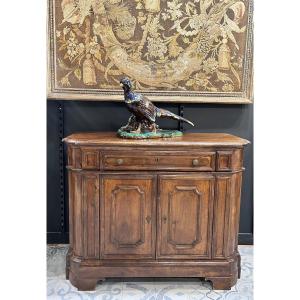
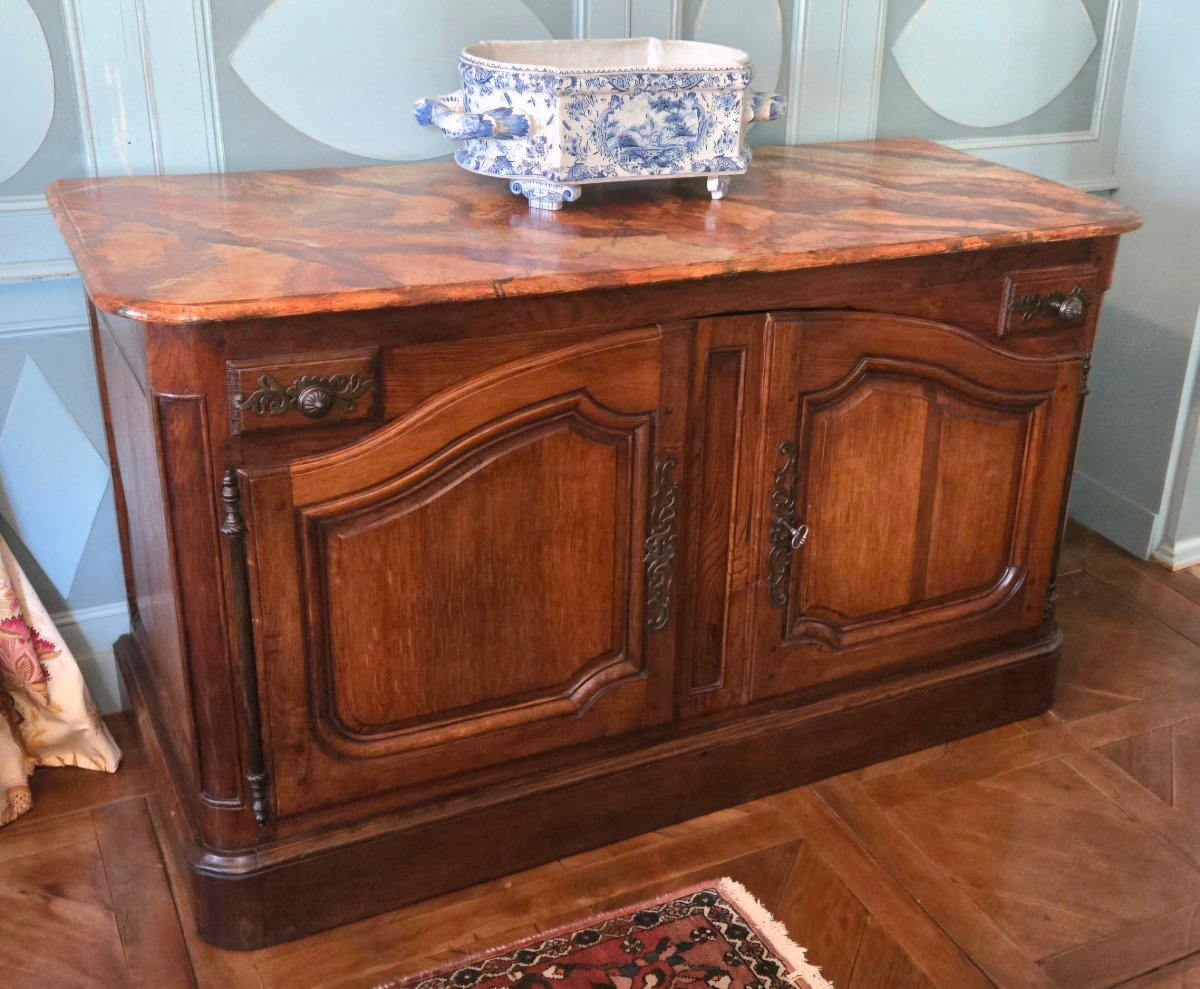
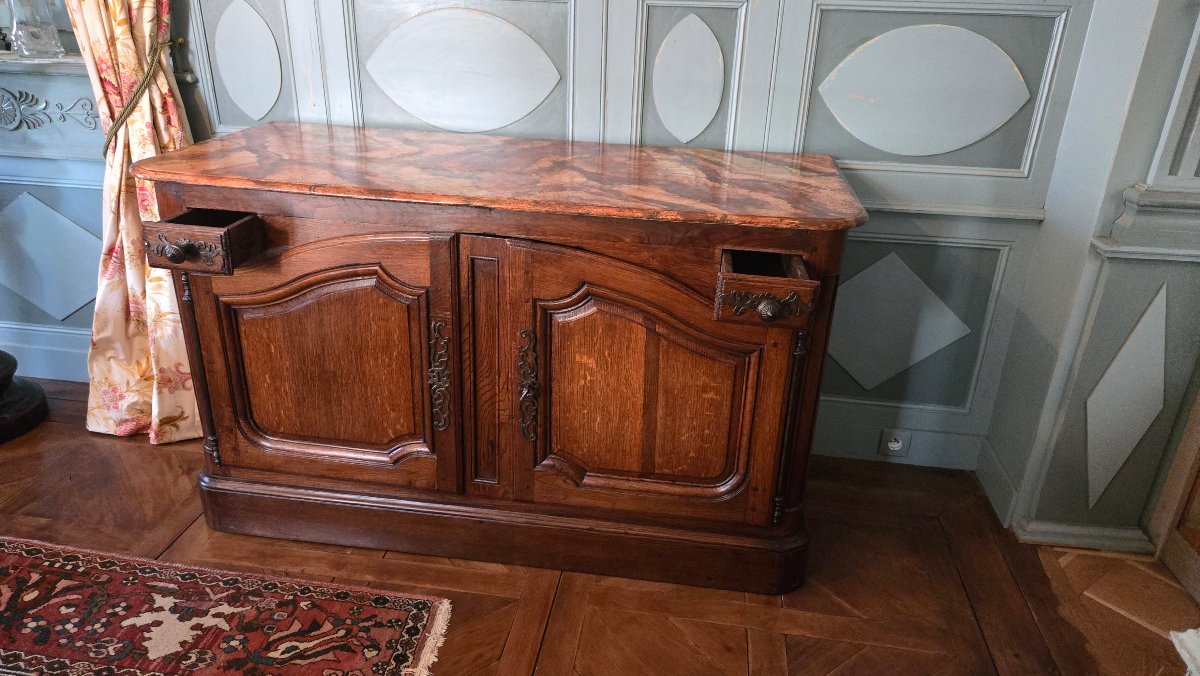
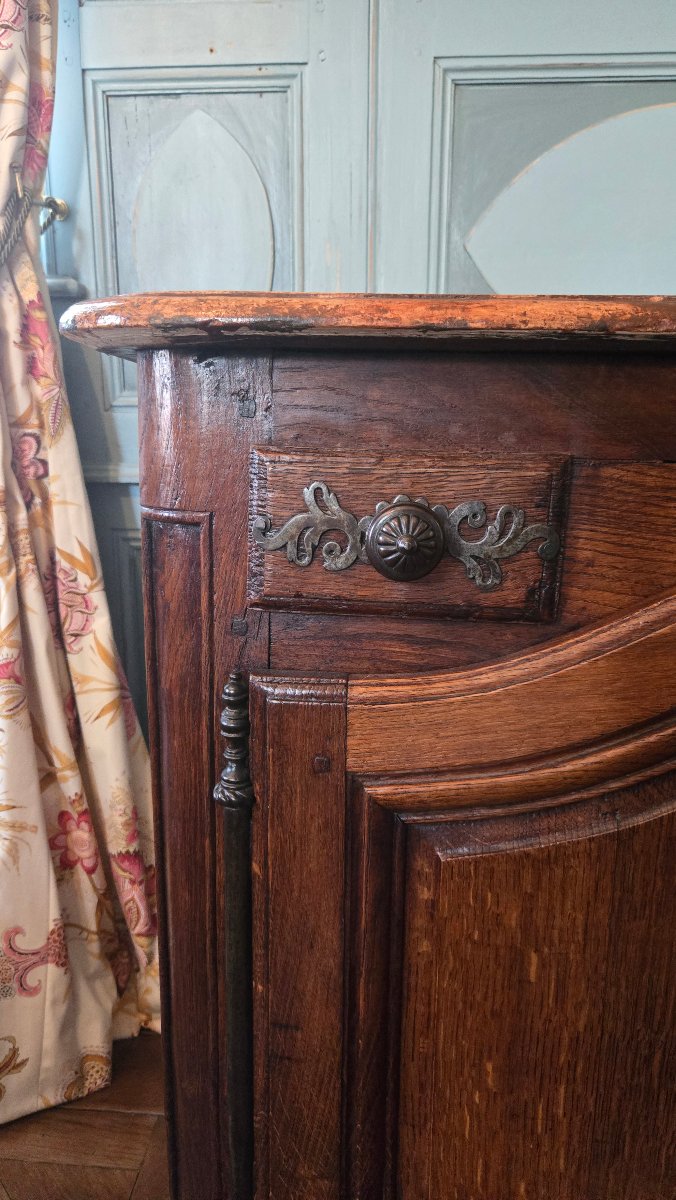
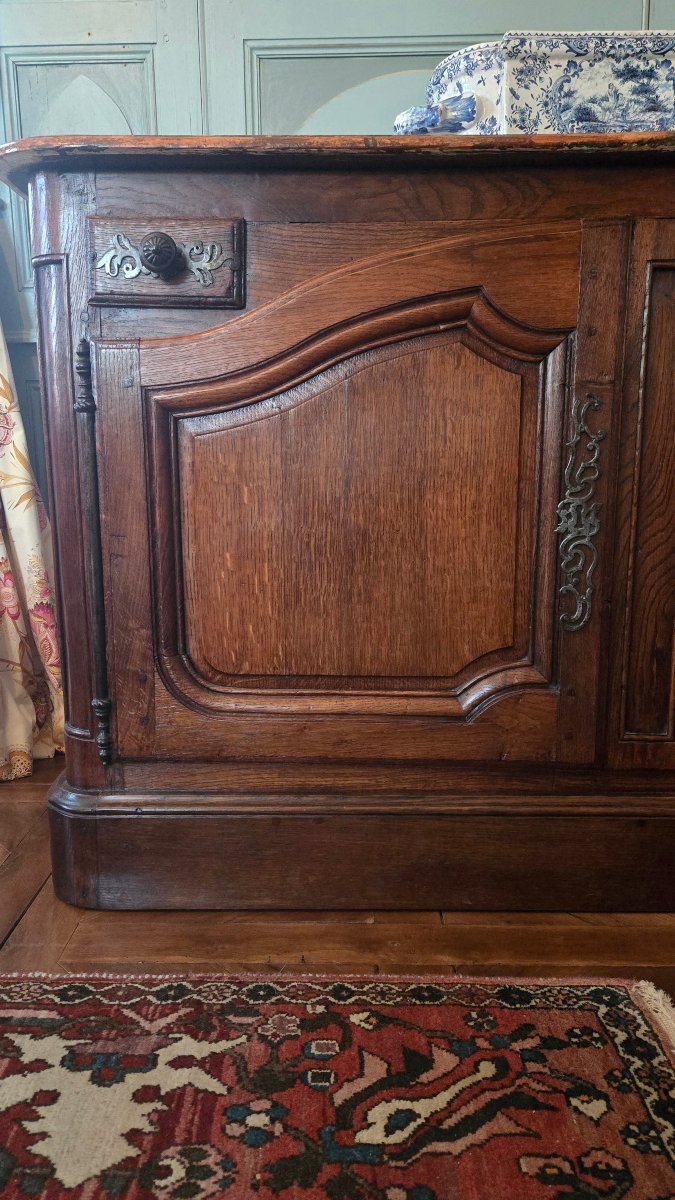
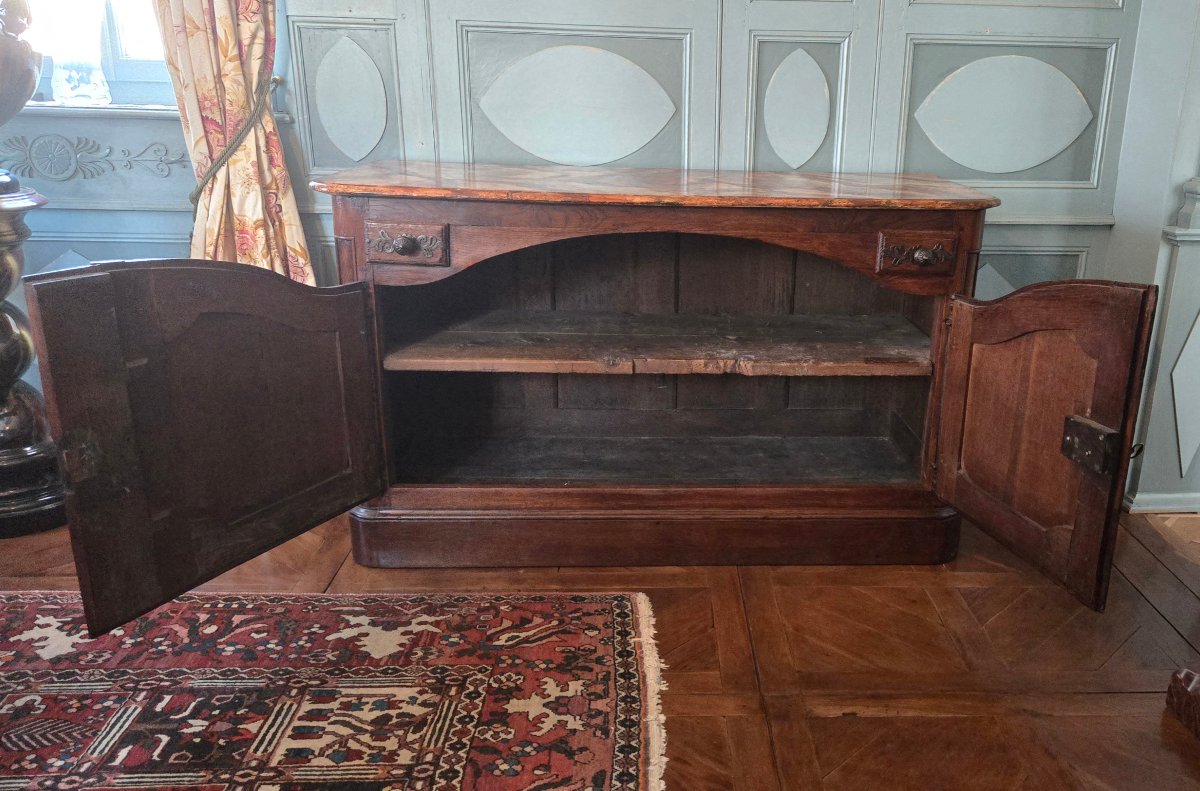
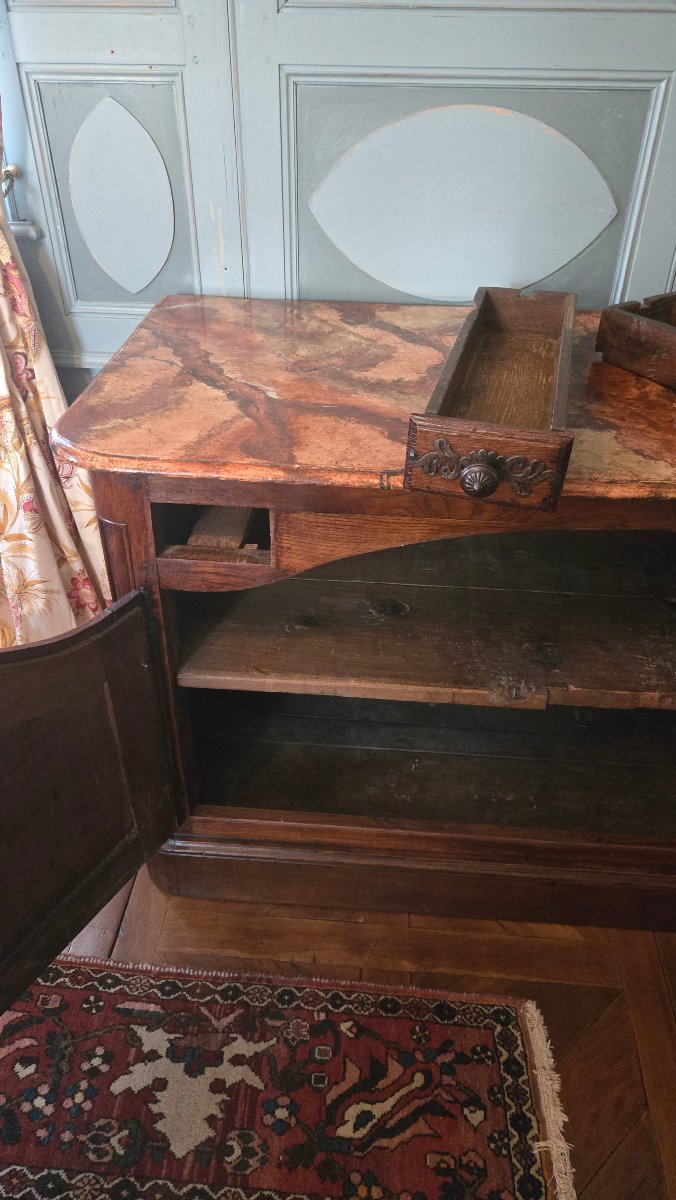
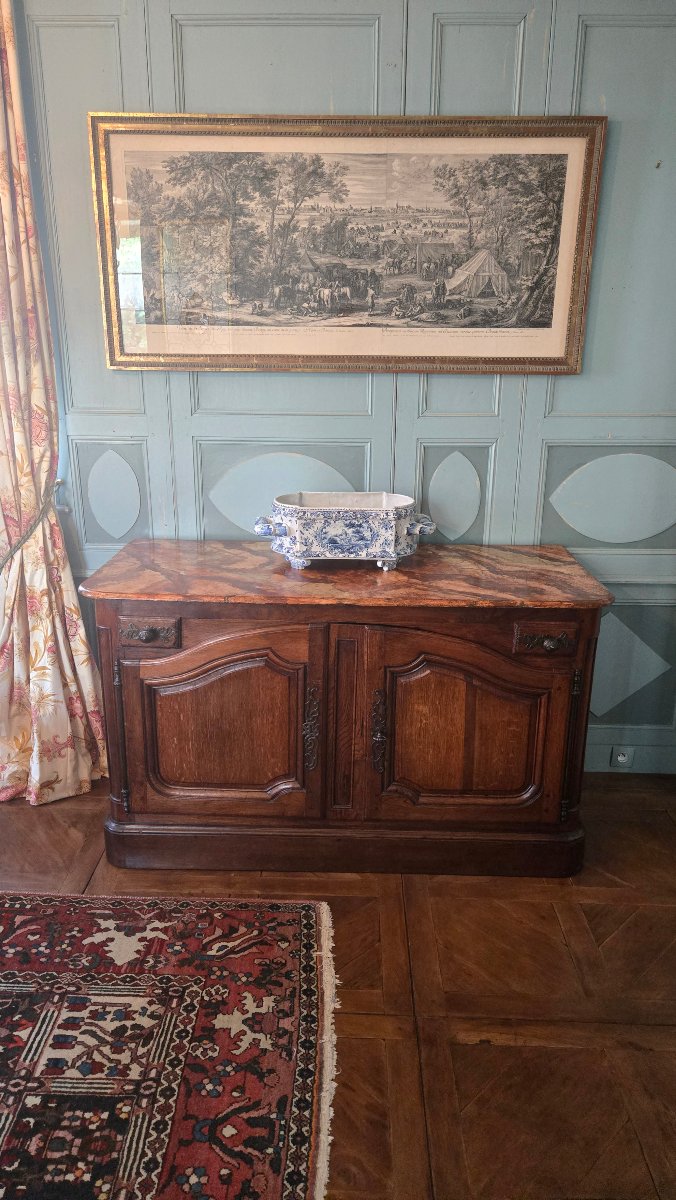
An oak sideboard that opens at the front with two doors featuring scalloped panels and elegantly profiled moldings, surmounted by two knife drawers positioned at the ends of the top crossbar. The front legs are rounded, while the sides each feature a panel with a flat band, set within a molded frame.
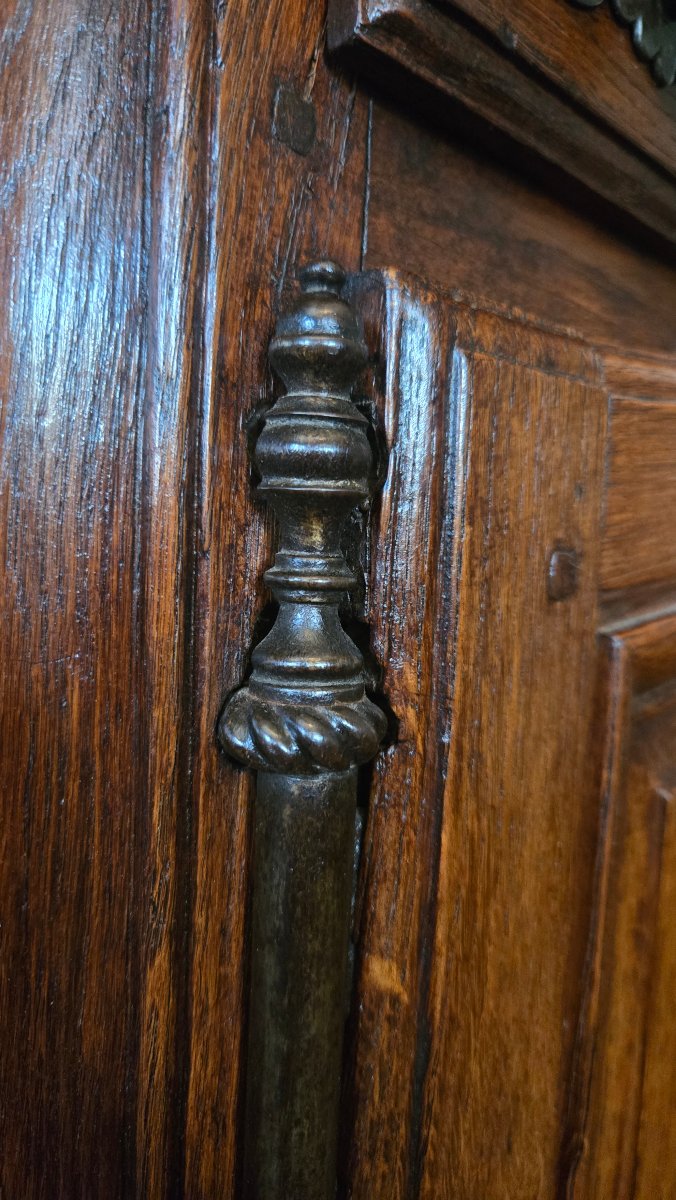
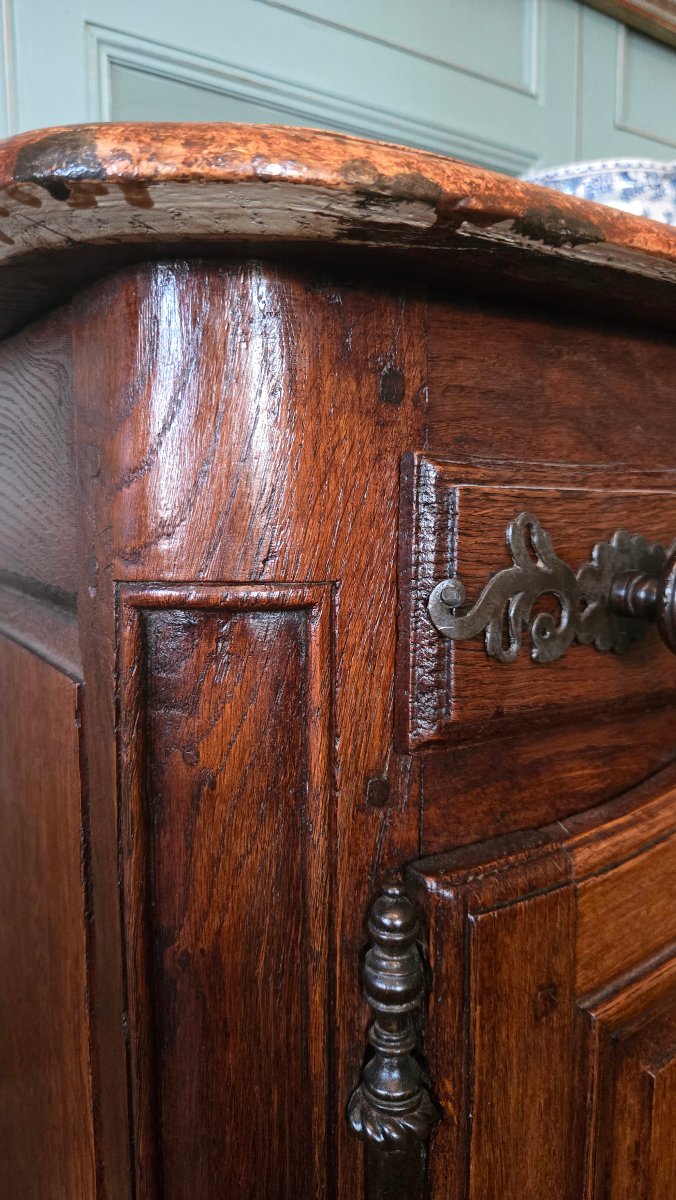
The piece retains its remarkable original ironwork, which is of fine craftsmanship. The doors are hinged on long steel latch pins with turned and molded caps. The cut-and-openwork iron lock plates feature an elegant decoration of foliage and scrollwork, characteristic of the first half of the 18th century. The cutlery drawers retain their steel pull knobs with a radiating design, mounted on openwork plates adorned with foliage motifs. This set of metalwork, executed with particular care, attests to the high quality of the cabinet’s craftsmanship.
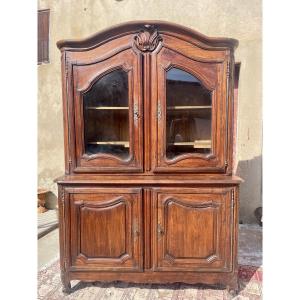
Originally, this sideboard formed the lower section of a two-part paneled sideboard, resting on a plinth base and topped by an upper section opening with two doors, crowned by a gendarme’s-cap cornice. This arrangement is characteristic of paneled sideboards from the first half of the 18th century.
Over the course of its history, the piece has undergone several successive transformations, reflecting changing tastes and uses.
Initially, to adapt it to Louis XV tastes, its plinth base was removed and replaced with a scalloped base, accompanied by a lower front crossbar with a scalloped edge. At the same time, the upper section was converted into an open china cabinet: its doors were removed and its depth reduced.
In a second phase, the upper section was permanently removed. The lower section was then retained on its own, while the shell-shaped base and the scalloped crossbar were replaced with a new plinth base, restoring the piece’s original layout.
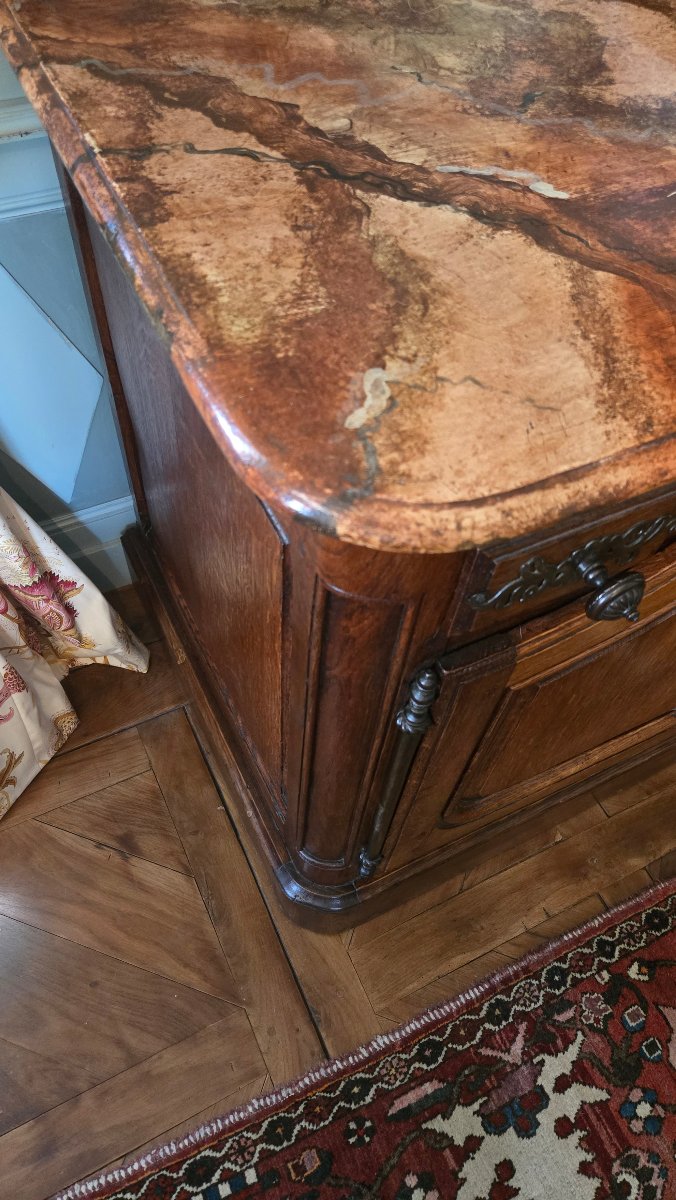
The original oak top was preserved and given a marble-effect paint finish, featuring rich shades of ochre, brown, and reddish tones, crisscrossed with dark veins. This painted decoration, featuring a beautiful patina and signs of age, gives the piece the appearance of a hunting sideboard with a marble top.
Despite these successive transformations, the lower section has retained the essence of its original construction, notably its doors, knife drawers, top, bottom panel, and back panels. It has not been reduced in width or depth.
This sideboard thus illustrates the evolution of an early 18th-century paneled cabinet, first adapted to the Louis XV style and then transformed into a low sideboard that now resembles a hunting sideboard, while retaining the quality of its original woodwork and ironwork.
Dimensions:
Width: 152 cm Depth: 64 cm Height: 88.5 cm
The piece retains its remarkable original ironwork, which is of fine craftsmanship. The doors are hinged on long steel latch pins with turned and molded caps. The cut-and-openwork iron lock plates feature an elegant decoration of foliage and scrollwork, characteristic of the first half of the 18th century. The cutlery drawers retain their steel pull knobs with a radiating design, mounted on openwork plates adorned with foliage motifs. This set of metalwork, executed with particular care, attests to the high quality of the cabinet’s craftsmanship.
Originally, this sideboard formed the lower section of a two-part paneled sideboard, resting on a plinth base and topped by an upper section opening with two doors, crowned by a gendarme’s-cap cornice. This arrangement is characteristic of paneled sideboards from the first half of the 18th century.
Over the course of its history, the piece has undergone several successive transformations, reflecting changing tastes and uses.
Initially, to adapt it to Louis XV tastes, its plinth base was removed and replaced with a scalloped base, accompanied by a lower front crossbar with a scalloped edge. At the same time, the upper section was converted into an open china cabinet: its doors were removed and its depth reduced.
In a second phase, the upper section was permanently removed. The lower section was then retained on its own, while the shell-shaped base and the scalloped crossbar were replaced with a new plinth base, restoring the piece’s original layout.
The original oak top was preserved and given a marble-effect paint finish, featuring rich shades of ochre, brown, and reddish tones, crisscrossed with dark veins. This painted decoration, featuring a beautiful patina and signs of age, gives the piece the appearance of a hunting sideboard with a marble top.
Despite these successive transformations, the lower section has retained the essence of its original construction, notably its doors, knife drawers, top, bottom panel, and back panels. It has not been reduced in width or depth.
This sideboard thus illustrates the evolution of an early 18th-century paneled cabinet, first adapted to the Louis XV style and then transformed into a low sideboard that now resembles a hunting sideboard, while retaining the quality of its original woodwork and ironwork.
Dimensions:
Width: 152 cm Depth: 64 cm Height: 88.5 cm
2 400 €
Period: 19th century
Style: Louis 14th, Regency
Condition: Good condition
Material: Oak
Reference (ID): 1835043
Availability: In stock
Print