


Tafresh Rug, 142 X 196 Cm, Hand-knotted Kork Wool From Iran, Circa 1900–1920
Artist: Art D'iran
Tafresh rug, from the early 20th century, originally from Iran.
Made of high-quality wool, this Persian rug measures 142 cm wide by 196 cm long.
These magnificent rugs, knotted in Tafresh—a small Iranian town near Arak—are quite rare.
This particular style is distinctive, featuring much more vibrant patterns and color nuances than those knotted in neighboring areas of the Hamadan district.
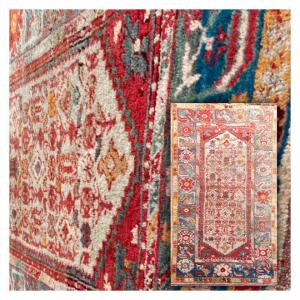
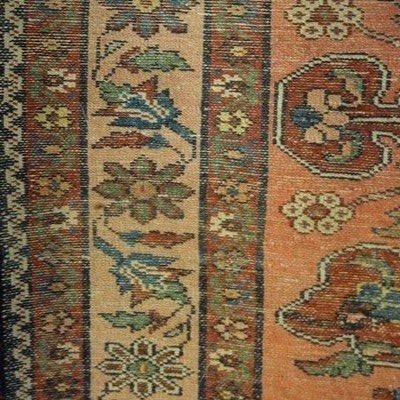
The weave of these pieces is simple; on the back, you can see the two loops forming the knot, which makes them very durable.
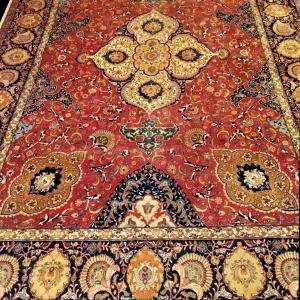
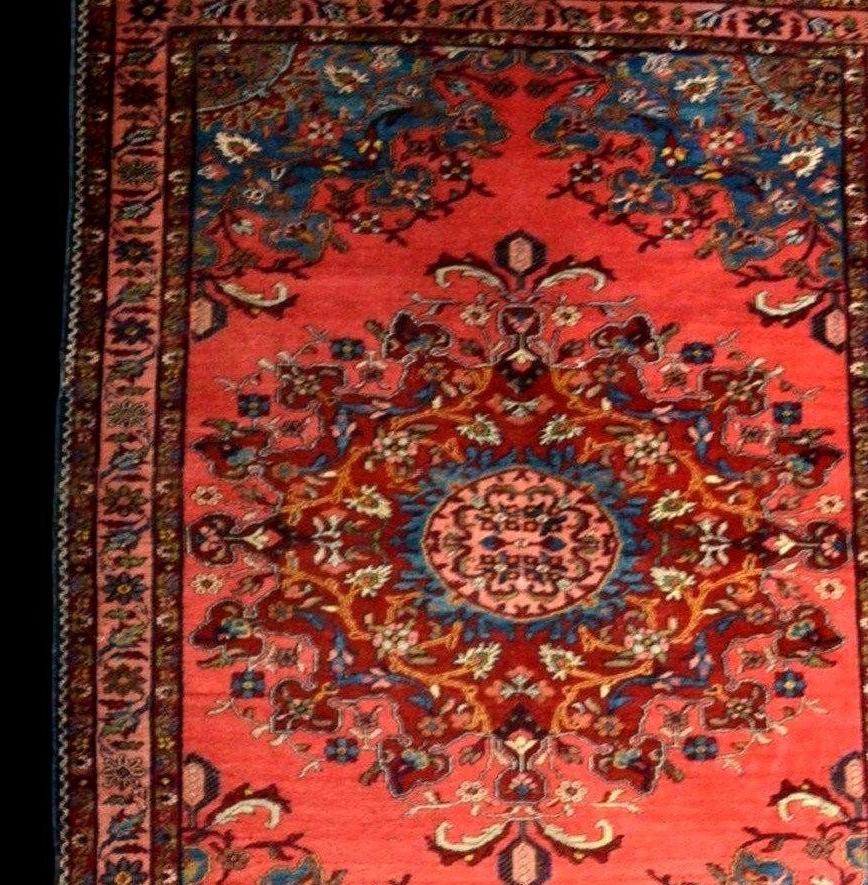
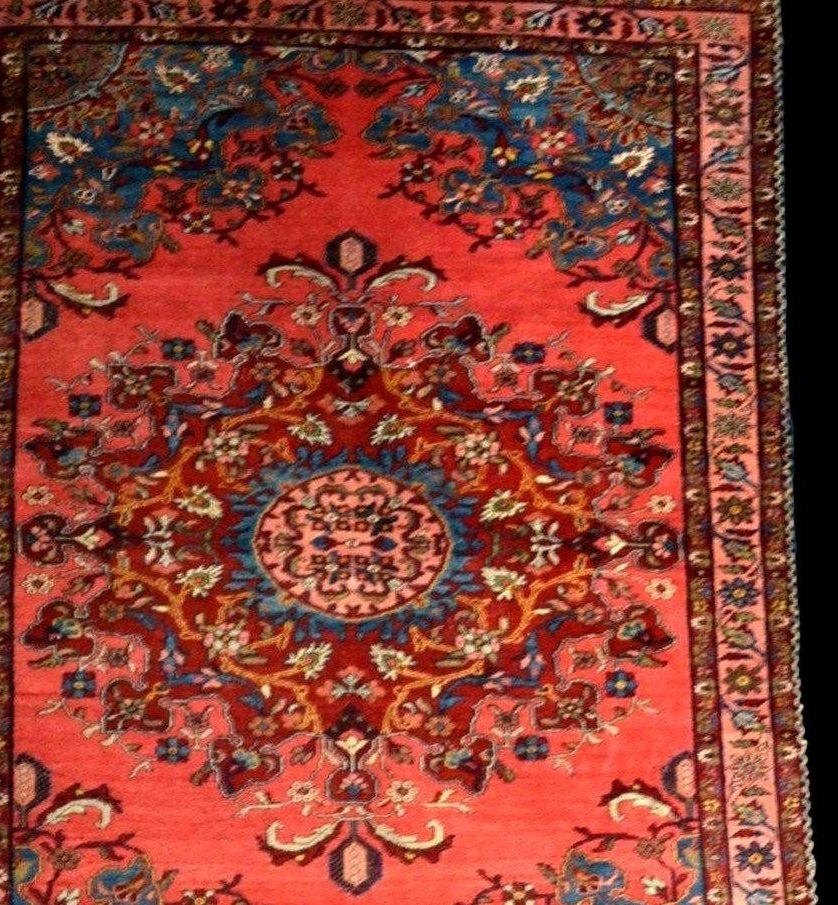
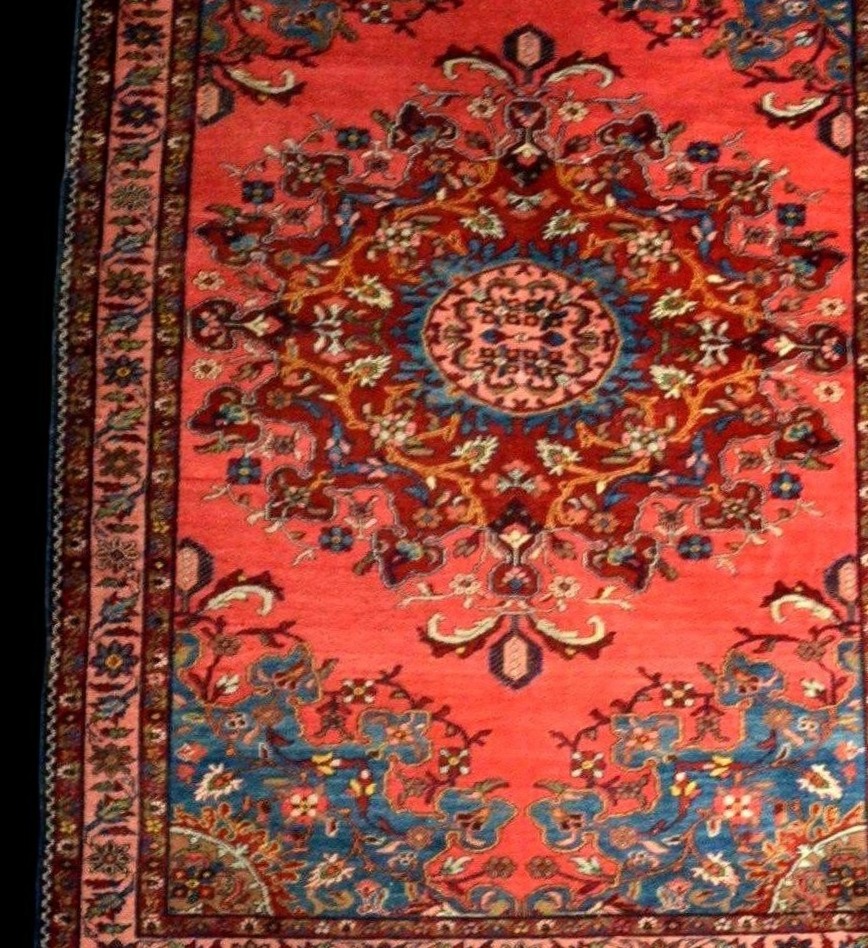
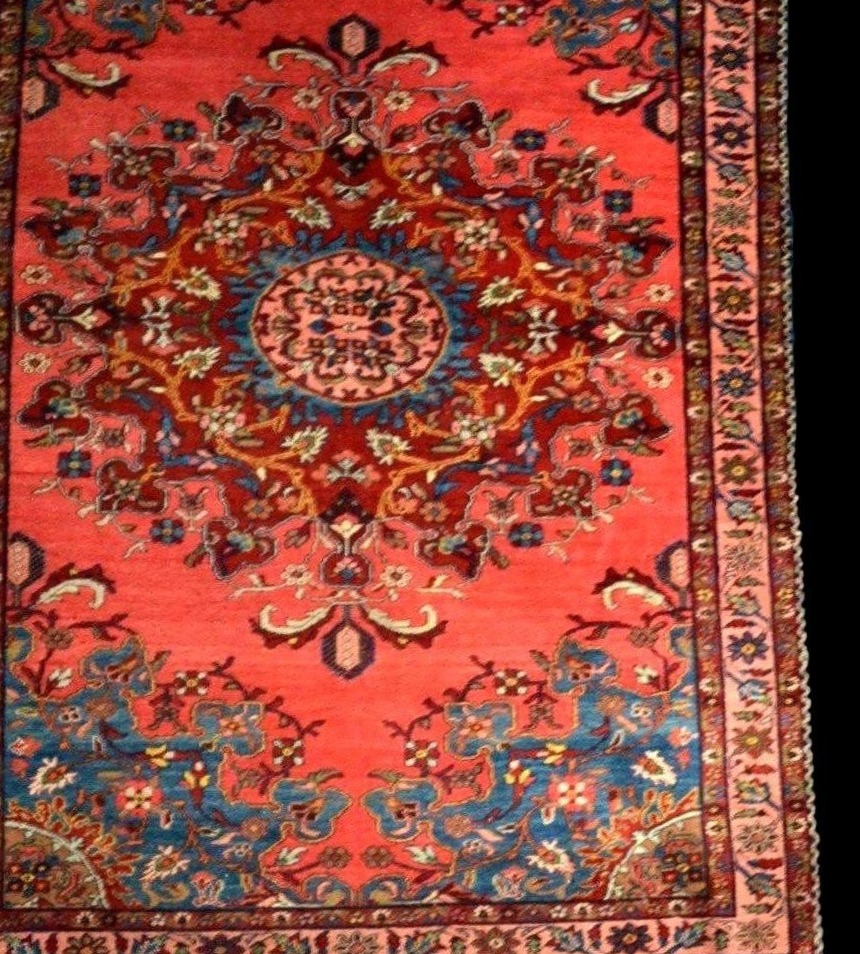
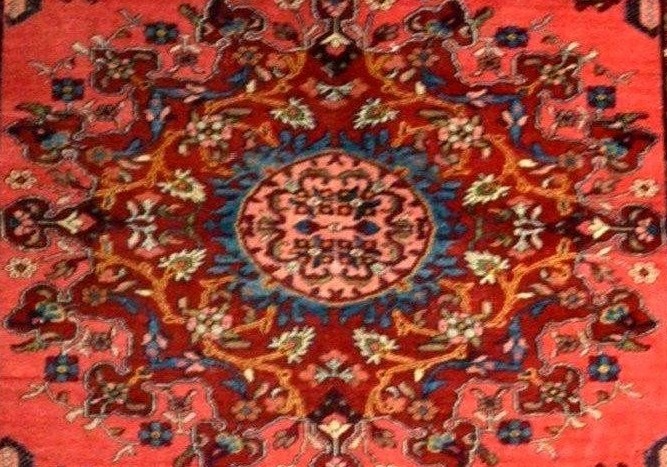
The defining feature of these carpets, which are quite rare on the market, is the large, highly sophisticated medallion with tassels that adorns the center of their field.
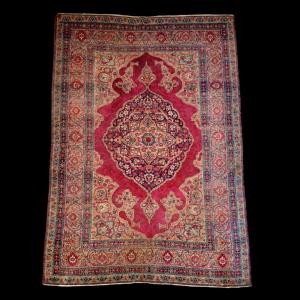
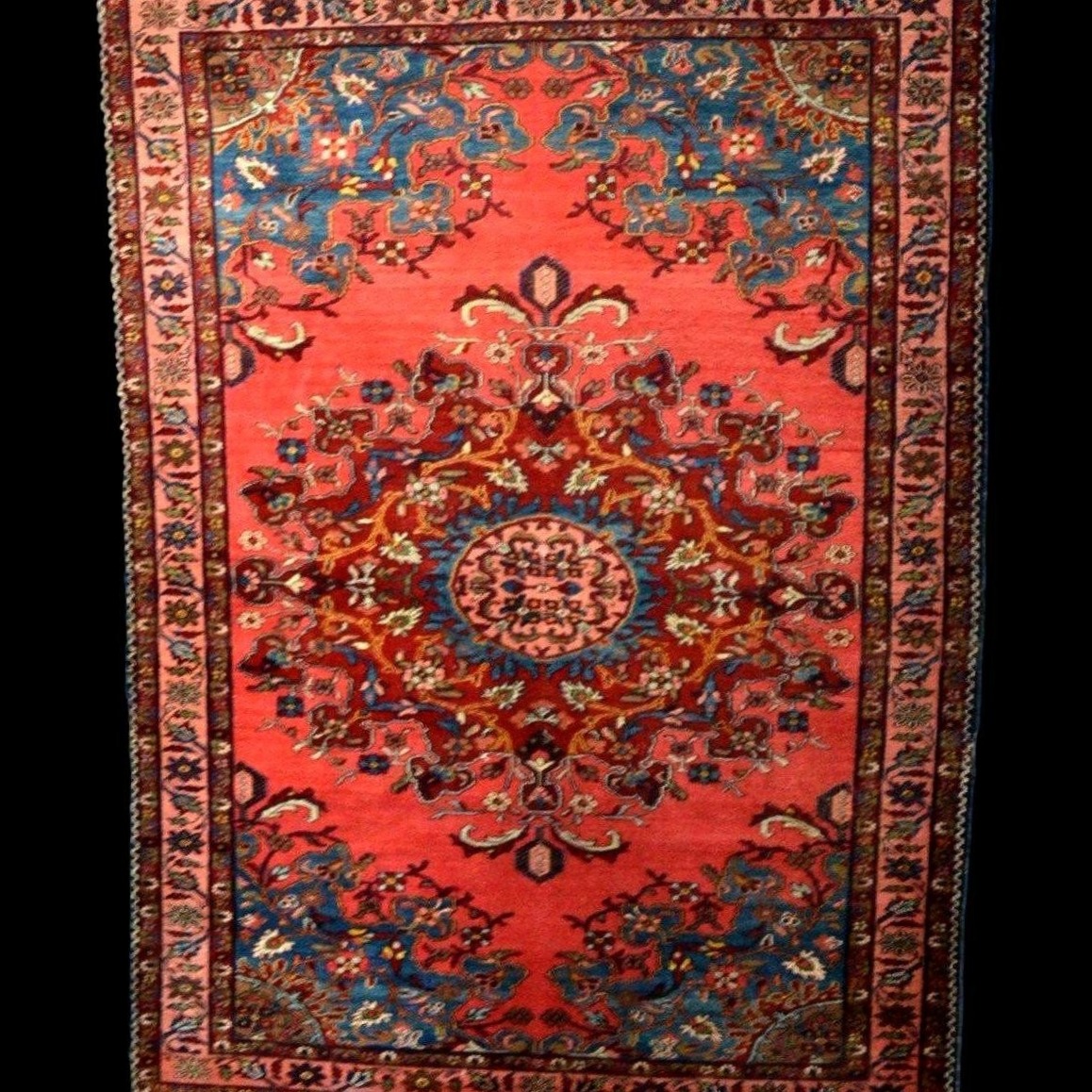
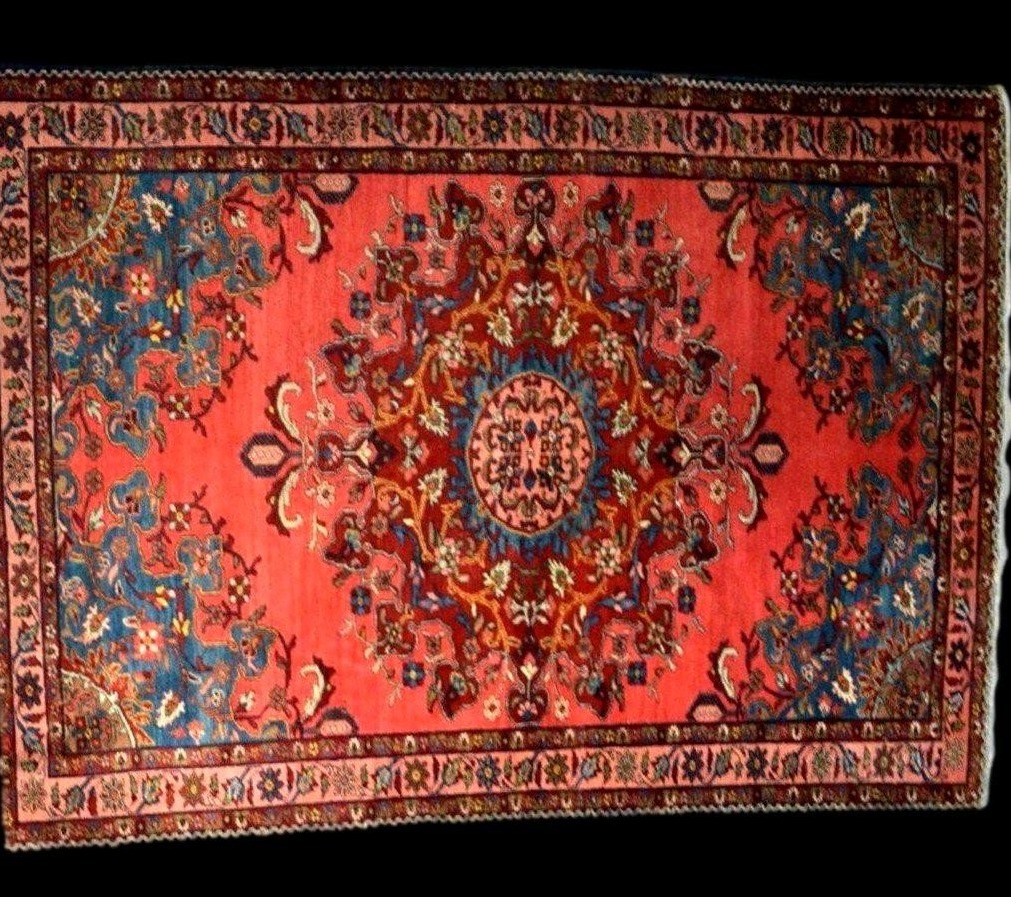
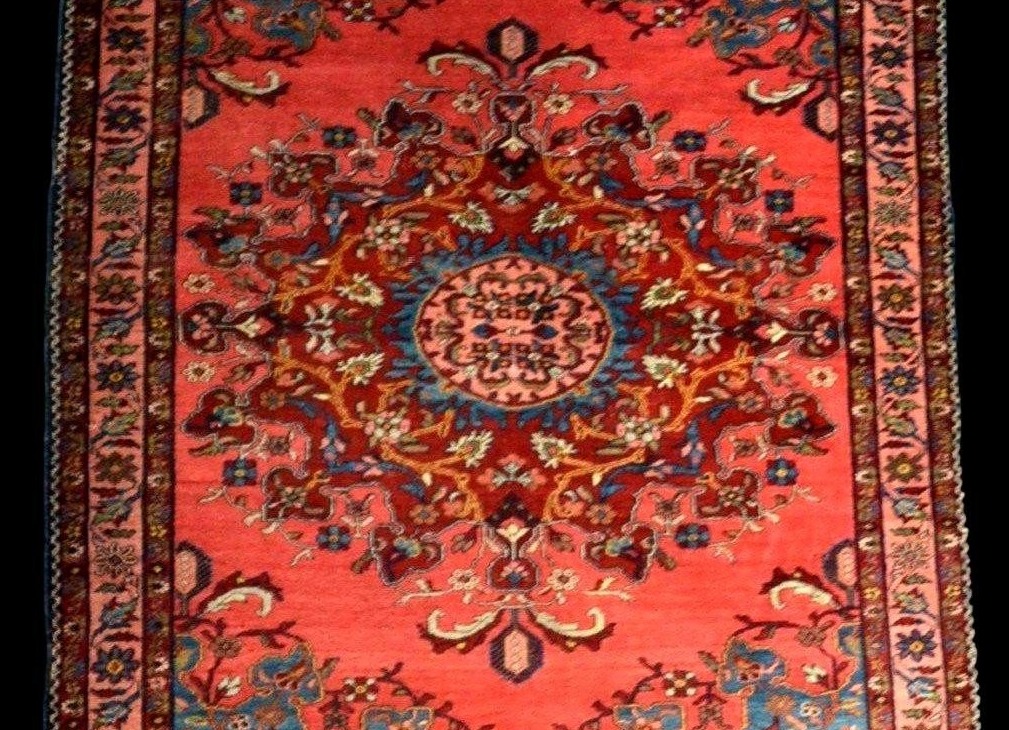
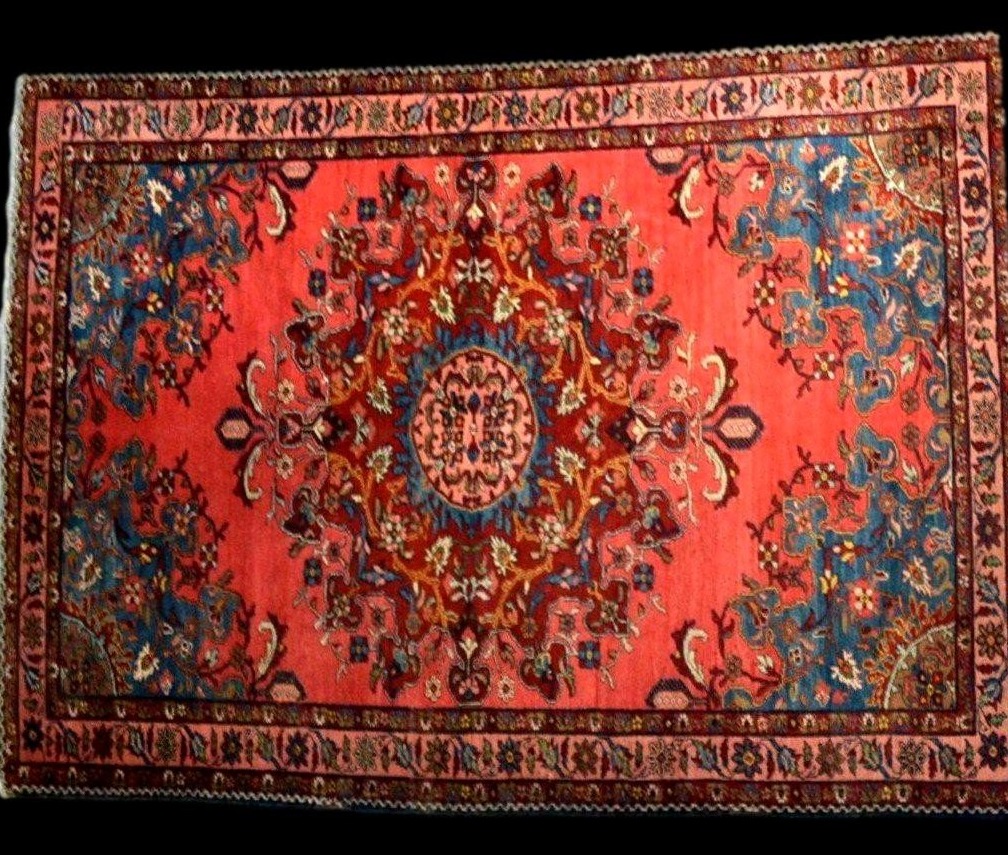
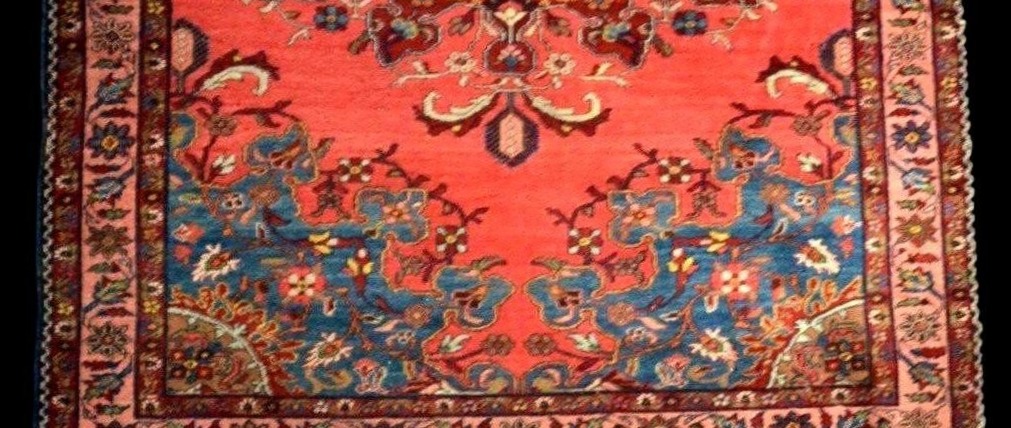
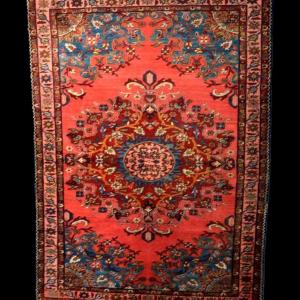
Our model features this floral medallion, set against a pink, almost salmon-colored field, framed by four richly floral blue spandrels—a truly beautiful effect—surrounded by a design of stylized branches.
Note the two pendants adorned with tassels.
## The salmon-pink hue, known as “dughi,” was achieved in the 19th century by adding yogurt, called “dugh,” to the other natural dyes used in these antique rugs.
Subsequently, the artisans of Arak used a distinctive process to achieve the pink background (also known as “dughi pink” or “milky pink”).
This color is achieved by immersing wool mixed with alum in a serous solution made from madder.
After two days, the wool is soaked for 24 hours in running water, which gives it this specific hue with almost bluish undertones.
A striking contrast is created by a blend of wool containing a small amount of silk, which is lustrous and fine.
The borders feature a superb golden-brown luster, with stylized flowers arranged in a row.
The central frieze features pink and stylized star-shaped flowers.
Very slight wear is visible throughout this superb rug, which is a magnificent sight to behold.
We showcase other breathtakingly beautiful 19th- and 20th-century Tafresh rugs in our Proantic gallery.
A piece from the Qajar Dynasty (1789–1925)
This rug has been professionally cleaned using eco-friendly methods.
Dimensions: Width: 142 cm (56") x Length: 196 cm (77")
FREE SHIPPING TO FRANCE, just like all our rugs!!!
FR 0€ / EUR 25€ / WORLD 50€ -
# - Colissimo shipping, delivery by La Poste requiring a signature upon receipt
For any inquiries, please feel free to contact me at:
06 13 36 09 30 or at winsteinprovence@gmail.com
You’ll find a wide selection of Persian, Anatolian, and Caucasian rugs on our website.
www.winsteinprovence.com
( text and photo credits: Winstein, all rights reserved )
Made of high-quality wool, this Persian rug measures 142 cm wide by 196 cm long.
These magnificent rugs, knotted in Tafresh—a small Iranian town near Arak—are quite rare.
This particular style is distinctive, featuring much more vibrant patterns and color nuances than those knotted in neighboring areas of the Hamadan district.
The weave of these pieces is simple; on the back, you can see the two loops forming the knot, which makes them very durable.
The defining feature of these carpets, which are quite rare on the market, is the large, highly sophisticated medallion with tassels that adorns the center of their field.
Our model features this floral medallion, set against a pink, almost salmon-colored field, framed by four richly floral blue spandrels—a truly beautiful effect—surrounded by a design of stylized branches.
Note the two pendants adorned with tassels.
## The salmon-pink hue, known as “dughi,” was achieved in the 19th century by adding yogurt, called “dugh,” to the other natural dyes used in these antique rugs.
Subsequently, the artisans of Arak used a distinctive process to achieve the pink background (also known as “dughi pink” or “milky pink”).
This color is achieved by immersing wool mixed with alum in a serous solution made from madder.
After two days, the wool is soaked for 24 hours in running water, which gives it this specific hue with almost bluish undertones.
A striking contrast is created by a blend of wool containing a small amount of silk, which is lustrous and fine.
The borders feature a superb golden-brown luster, with stylized flowers arranged in a row.
The central frieze features pink and stylized star-shaped flowers.
Very slight wear is visible throughout this superb rug, which is a magnificent sight to behold.
We showcase other breathtakingly beautiful 19th- and 20th-century Tafresh rugs in our Proantic gallery.
A piece from the Qajar Dynasty (1789–1925)
This rug has been professionally cleaned using eco-friendly methods.
Dimensions: Width: 142 cm (56") x Length: 196 cm (77")
FREE SHIPPING TO FRANCE, just like all our rugs!!!
FR 0€ / EUR 25€ / WORLD 50€ -
# - Colissimo shipping, delivery by La Poste requiring a signature upon receipt
For any inquiries, please feel free to contact me at:
06 13 36 09 30 or at winsteinprovence@gmail.com
You’ll find a wide selection of Persian, Anatolian, and Caucasian rugs on our website.
www.winsteinprovence.com
( text and photo credits: Winstein, all rights reserved )
1 160 €
Period: 20th century
Style: Orientalism
Condition: Good condition
Material: Wool
Length: 196 cm - 77"
Width: 142 cm - 56"
Reference (ID): 1830048
Availability: In stock
Print